

What Causes Clogged Pores? a Science-Backed Guide
So why does the usual advice, wash more, scrub harder, buy the toner that stings, so rarely change what you see in the mirror? A clogged pore develops below the surface, so cleaning the skin more aggressively may miss the processes that shape it.
Some triggers, such as skincare habits, can be adjusted; others, including hormonal influences, are harder to control. Knowing the difference helps explain why common fixes can disappoint.
How a Clogged Pore Forms Inside the Follicle
A follicle changes in stages. First, its lining sheds less effectively. Then oil continues to flow into the narrow canal, where retained cells and sebum collect.
- The lining sheds unevenly. In acne-prone skin, cells in the upper follicle may multiply more readily and shed abnormally near the opening. This process is called abnormal follicular keratinization (StatPearls, National Library of Medicine).
- Oil continues to enter. Sebum flows from the oil gland into the follicle. Androgen hormones can increase oil production, adding more material inside the canal.
- A microscopic plug develops. Retained cells and sebum collect into a microcomedone, an early acne lesion that forms before a blackhead or whitehead is visible.
- The opening shapes its appearance. If the opening stays covered, the clog appears as a closed comedone, or whitehead. If it widens and exposes the contents to air, it appears as an open comedone, or blackhead.
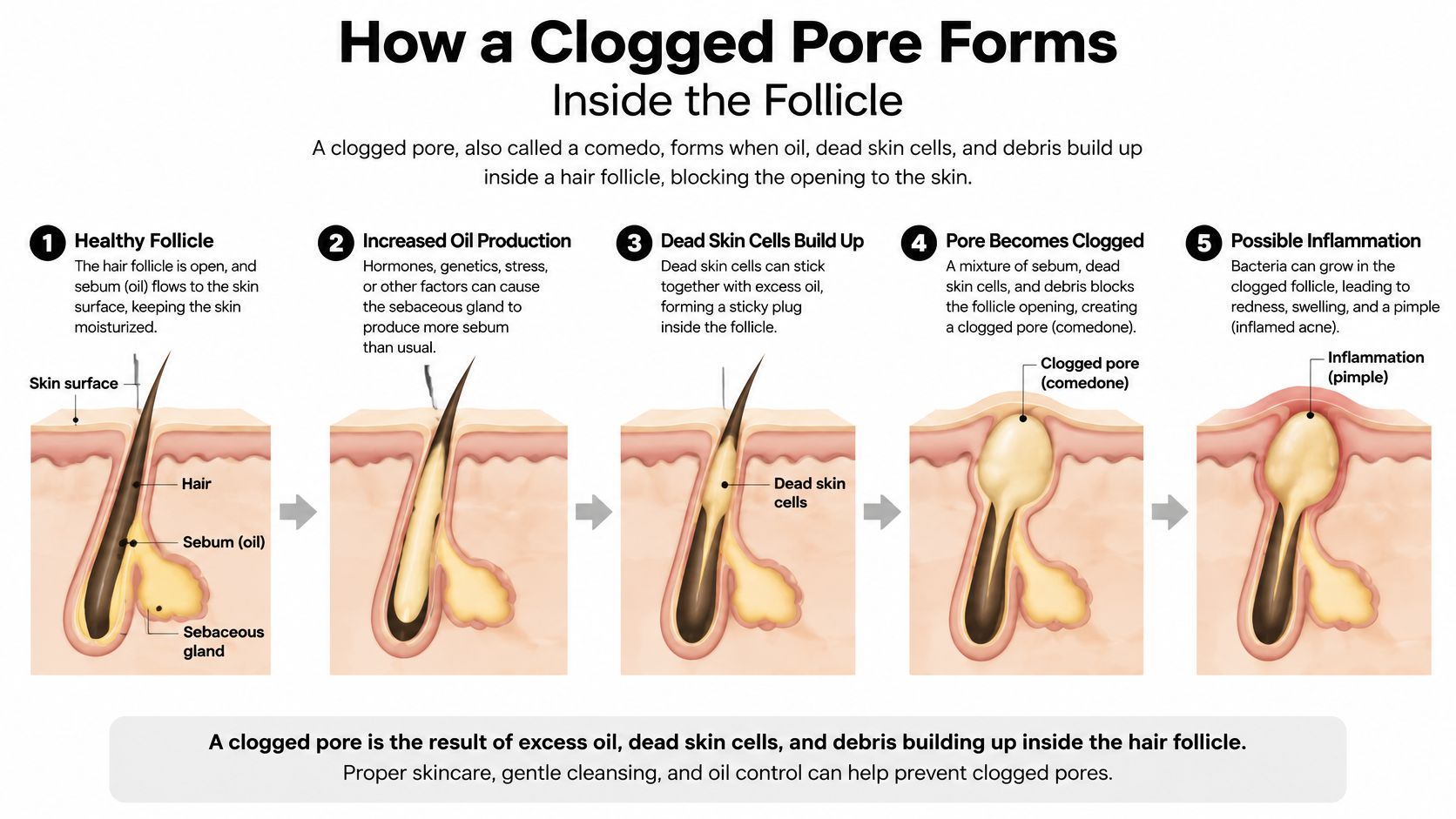
The plug sits deeper than your cleanser reaches
Cleansing removes material from the skin's surface, but the changes that start a clog occur inside the follicle. Acne involves several connected processes, including excess oil, abnormal follicular shedding, Cutibacterium acnes activity and inflammation. Excess oil and abnormal shedding contribute directly to the blockage.
Salicylic acid is oil-soluble and can work inside the oil-filled follicle. Mandelic acid works at the surface and along the follicle lining. Neutralyze Exfoliating Pads combine 2% salicylic acid with 1% mandelic acid in a leave-on formula, and are made for acne-prone skin on the face, back and body. They are swiped onto clean skin and left on. This approach can help clear acne, but it does not prevent every follicle from forming a clog.
Five Causes of Clogged Pores at a Glance
Nearly every clog traces back to two engines: how much oil your sebaceous glands deliver into the follicle, and how efficiently the cells lining that follicle shed. Everything else on the list below either feeds one of those engines or makes a blockage more likely. Read it as a map of pressure points rather than a list of personal failings.
| Cause | How It Clogs | What You Tend to Notice |
|---|---|---|
| Excess sebum | Sebaceous glands add more oil into the follicle canal | Shine and congestion across the T-zone |
| Abnormal shedding (hyperkeratinization) | Dead cells fail to exit and stick together inside the opening | Rough texture and small bumps that linger for weeks |
| Androgen hormones | Stimulate sebum output during puberty and hormonal cycles | Jawline or chin breakouts that track a monthly pattern |
| Occlusion from makeup, sunscreen, sweat or straps | Traps oil and cells against the opening | Congestion where products, helmets or headbands sit |
| Air pollution | Raises oxidative stress and can alter sebum and cell shedding | Congestion that worsens in traffic-heavy or hazy periods |
Two rows create the plug: excess sebum and abnormal shedding. The other three make it more likely. Androgens turn up the oil supply, occlusion holds oil and cells against the opening, and pollution changes the biology of the follicle rather than dusting the surface, which is why cleansing alone can't answer for it.
Sort the list by what you can actually change
- Within your control: your cleanser and moisturizer labels, your sunscreen and makeup choices, how you remove them at night, and whether you scrub or squeeze. Sweat and pressure count here too, so wash after training and wipe the inside of a helmet or hat band regularly.
- Outside your control: androgen sensitivity during puberty, the hormonal shifts of a monthly cycle, and a genetic tendency toward oily skin. These shape the follicle you're working with, not your hygiene.
- Somewhere in between: air pollution. You can limit exposure with closed windows on hazy days and a thorough evening cleanse, but you can't change the air around your commute.
If oil volume is the part you want to understand more fully, this explanation of what sebum production is and how it works goes further into the gland side of the story.
Bacteria and inflammation don't appear on this table for a reason. They don't build the plug. They decide what happens to it afterward, which is a different problem with a different set of solutions.
Why Blackheads and Whiteheads Look Different
Why does one clogged pore look like a pale bump while another appears as a dark dot? The difference is whether the follicle's opening is covered or exposed.
A whitehead is a closed comedo. Its contents remain beneath a closed or covered opening, creating a raised white or skin-colored bump. A blackhead is an open comedo. As the opening widens, the follicle's contents become exposed. Contact with air causes oxidation-related changes that darken the surface, rather than dirt settling into the pore (peer-reviewed overview of comedones).
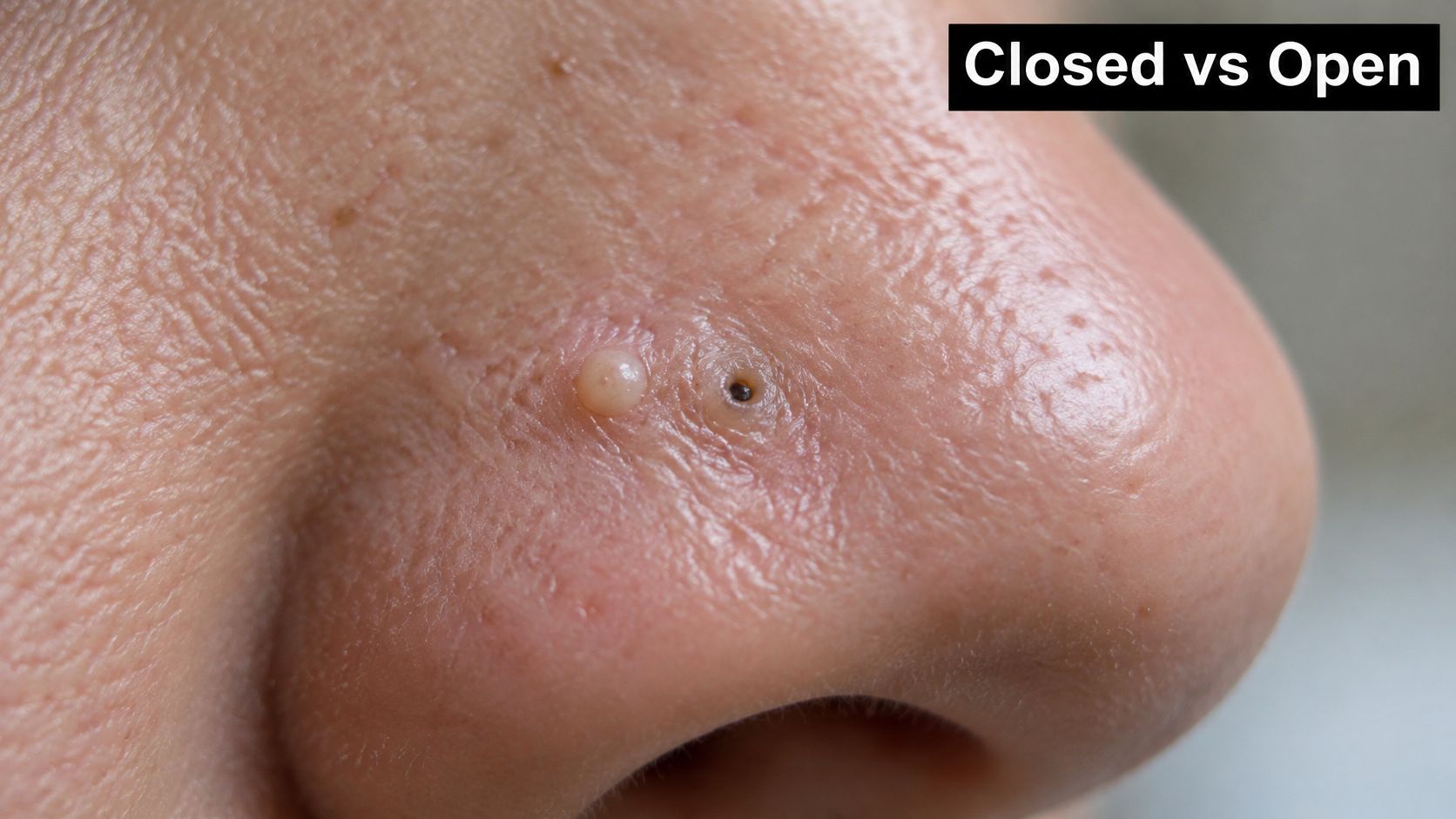
What to look for, and what it means
- A pale, closed bump is likely a whitehead. It may open over time as the follicular opening changes.
- A dark dot at the opening is likely a blackhead. Its color comes from exposed contents, so scrubbing as if it were a dirt stain can irritate the skin without addressing the clog.
- A red, warm or tender bump signals inflammation rather than an uncomplicated comedone.
A pore's appearance can change as its opening changes. Avoiding pressure on individual spots and following a consistent routine can help reduce the buildup that contributes to clogged pores.
When a Clogged Pore Turns Into Inflamed Acne
Most clogs stay quiet for weeks or resolve on their own. Some escalate, and the escalation follows a predictable ladder.
- Comedone. A bump you can feel but that isn't sore. This is the plug doing nothing yet.
- Papule. A small red, tender bump. Inflammation has started around the blocked follicle.
- Pustule. A white-topped lesion as inflammatory cells collect near the surface.
- Nodule. A deeper, firmer and more painful lump under the skin.
- Cyst. A large, deep lesion that feels like a sac beneath the surface and often leaves a mark.
Cutibacterium acnes lives on healthy skin without causing trouble. Inside an obstructed, oxygen-poor follicle, it can contribute to innate immune activation, and research describes signaling that includes interleukin-1, a cytokine tied to increased keratinization and inflammatory amplification (review of acne inflammation). As inflammatory cells and reactive molecules accumulate, pressure builds and the follicular wall can rupture, spilling keratin, lipids and bacterial material into the surrounding skin.
Why deep lesions hurt: pain is a rough signal of depth. A nodule or cyst has damaged more tissue than a surface pustule, which is also why it's more likely to leave a mark behind.
A chin clog makes the progression concrete. On Monday it's a bump you notice with your fingertips. By Thursday the same spot is tender and red, and by the weekend it's a raised pustule. Nothing you did in those five days created the lesion; the immune response did.
This is also why oil reduction alone has limits, even though it clearly matters. A 2024 review in the Journal of Cosmetic Dermatology reported that treatments reducing sebum by 30% to 50% have historically been associated with an approximately 50% reduction in acne-severity measures (Journal of Cosmetic Dermatology). Meaningful, and still only half the picture, because blockage, microbial signaling, immune activation and tissue injury are all in play at once.
Why Scrubbing and Squeezing Make Clogs Worse
Meet the reader who scrubs twice a day, uses a gritty exfoliant three nights a week, and squeezes every bump the moment it appears. Six weeks later the skin is red, tight and still congested. Three beliefs got them there.
"It's a dirt problem." The plug is a mix of sebum and retained cells inside the follicle, formed below the surface. A harder wash works on the top layer of skin, which isn't where the blockage sits, so more friction buys nothing but irritation.
"Scrubbing gets the oil out." Abrasion disrupts the skin barrier, and a disrupted barrier shows up as redness, stinging and inflammation. None of that corrects the abnormal shedding that built the plug in the first place.
"Squeezing clears the pore." Pressure pushes contents sideways and downward, and it can rupture the follicular wall, which raises the risk of a lingering mark. A squeezed comedone often returns within days.
There's a wrinkle worth knowing about oily skin. It can be dehydrated at the same time, so stripping it with harsh cleansers and skipping moisturizer tends to make oil production feel worse rather than better.
Practical rule: if a product leaves your face tight and shiny an hour later, it's working against you. Gentle, consistent removal of surface cells beats force every time.
There's also a deeper reason long-standing congestion can resist a good routine. A 2025 study examining acne duration found that ecological drift became the predominant microbial assembly process as disease persisted, reaching 80% in shorter-duration disease and 97% in longer-duration disease within the reported pore samples (skin microbiome and acne review). The follicular ecosystem changes as acne persists, which suggests persistent clogging is not just a cleansing failure.
That reframes the goal. You're not trying to win a fight with your face. You're trying to give the follicle fewer reasons to rebuild the plug, without damaging the barrier that keeps everything else calm.
Build a Routine That Keeps Pores Clear
A case-control study found that 61.7% of participants with acne used facial cleansers containing comedogenic ingredients, compared with 40% of controls, and linked that use with higher acne risk (odds ratio 2.42) (case-control study in acne patients). The finding shows an association, not that a particular cleanser caused acne. Checking product labels is a practical place to start.
Choose products labeled non-comedogenic and fragrance-free. Remove sunscreen and makeup gently, without rubbing hard. When adding an active, patch test it on a small area before applying it across your face. To compare peel strengths for acne, see this guide to compare chemical peel strengths for acne.
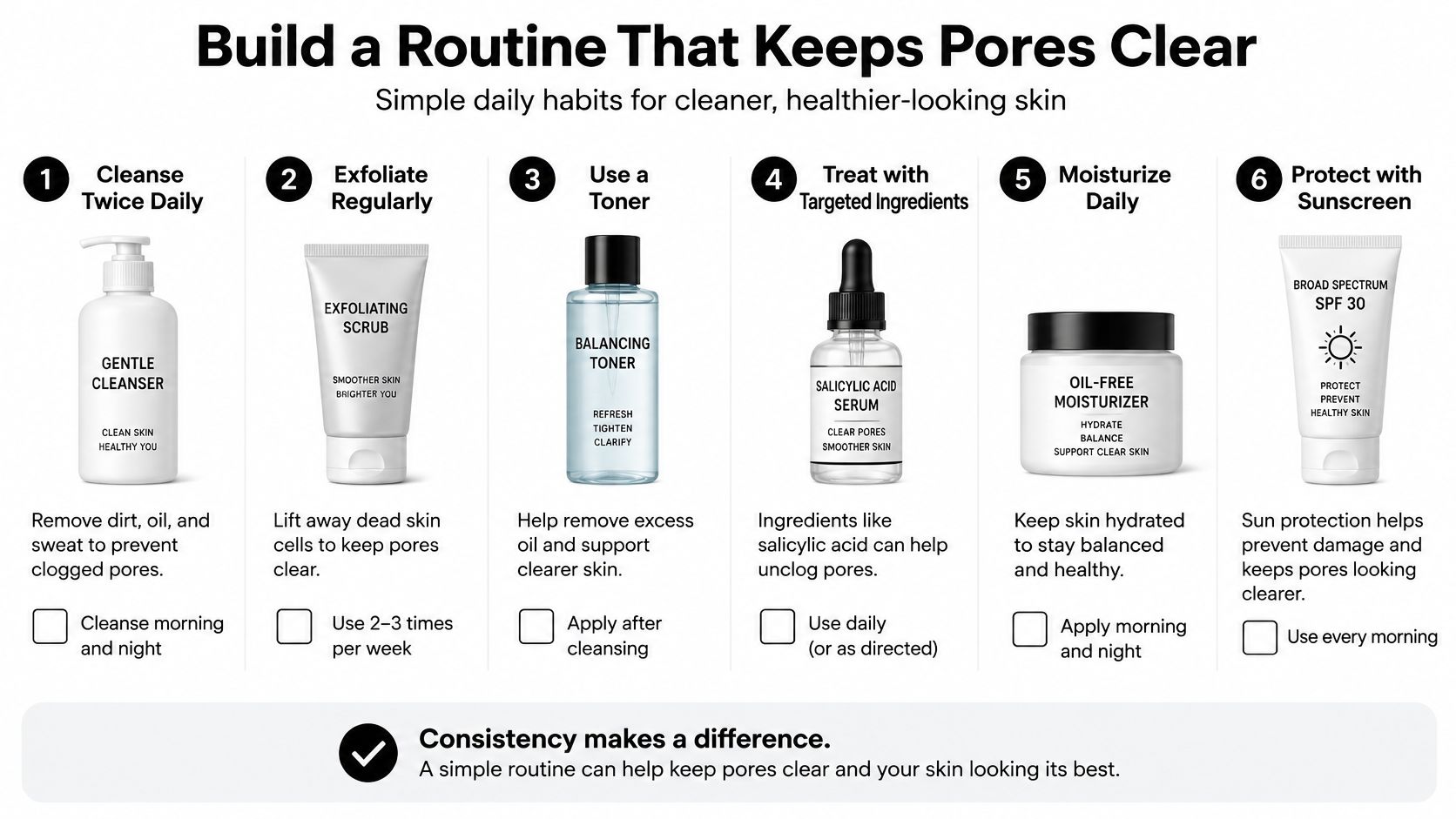
The cleanse, exfoliate, renew sequence
- Cleanse. Start with Neutralyze Face Wash 2.0, which contains 2% salicylic acid and 1% mandelic acid. It cleanses without stripping and helps clear acne and breakouts, while salicylic acid works inside the pore to clear oil and debris. Rinse after washing. A quick splash may leave sunscreen, makeup, and excess oil behind.
- Exfoliate. After cleansing, swipe a Neutralyze Exfoliating Pad over clean skin and leave it on. These dual-textured pads contain DuoClear, with 2% salicylic acid and 1% mandelic acid, to help clear breakouts and smooth rough texture. They are made for acne-prone skin on the face, back, and body. Avoid piling on other exfoliating steps if skin becomes irritated.
- Renew. Finish with Neutralyze Renewal Complex, a lightweight, oil-free daily acne moisturizer with time-released DuoClear. It hydrates while the salicylic and mandelic acids support the routine. Regular use can help skin look clearer and texture look smoother; individual results vary.
The three products share a 2% salicylic acid and 1% mandelic acid system. Salicylic acid is oil-soluble and works inside the pore, while mandelic acid smooths the skin's surface. Read more about what salicylic acid does to acne to understand how that ingredient targets pore buildup.
Decide Whether to Adjust Your Routine or See a Dermatologist
If you've followed a consistent routine for about six to eight weeks and new bumps are still appearing, check whether your cleanser or moisturizer may clog pores, whether you use daily sun protection, and whether scrubbing or squeezing has crept back in.
Deep, painful lesions, nodules or cysts, scars that are forming, or breakouts that affect your sleep, work, or mood are reasons to book a dermatologist. Persistent moderate-to-severe or scarring acne needs professional assessment. A non-prescription routine may support that care, but it does not replace it. For more warning signs, read this guide to when to see a dermatologist for acne. If you're considering professional care for pore appearance, ProMD Health Columbia pore treatment results offer an example of the results discussed by a provider.
Neutralyze pairs 2% salicylic acid with 1% mandelic acid in a three-step system: cleanse, exfoliate, and renew. The Renewal Complex adds hydration to the routine. Visit Neutralyze to explore the products and choose a starting step.