

How Long Does Differin Take to Work? Week-by-Week Reality
Quick Answer
Differin (adapalene 0.1%) typically shows initial improvement at 4–8 weeks, with most users seeing significant clearing by 12 weeks. Expect a temporary “purge” in weeks 2–6, dryness through the first month, and full results after about 3 months of consistent nightly use.
If you're asking, "how long does Differin take to work?" you're probably hoping for a quick fix. Here’s the straight answer: Most people see significant, confidence-boosting results after about 12 weeks of using it every single day.
You might notice small improvements before then, but that three-month mark is really when the magic happens. It's a marathon, not a sprint.
Your Differin Journey: A Realistic Timeline For Results
Think of starting Differin less like dabbing on a spot treatment and more like committing to a new fitness plan for your skin. It takes real patience and consistency because the active ingredient, adapalene, isn't just zapping existing pimples. It's working way down deep in your pores to fundamentally retrain your skin cells, stopping future breakouts before they even have a chance to surface.
This cellular-level approach is what gives Differin its long-lasting power, but it's also why you won't see a change overnight. The treatment works in sync with your skin's natural renewal cycle, a process that takes weeks. Getting your head around this from the start is the key to sticking with it.
The Science-Backed Timeline
That 12-week figure isn't just a guess—it's backed by solid research. In clinical studies, Differin found that most people see a major drop in acne after about 12 weeks of daily use.
In one of the key studies, an impressive 87% of participants reported a significant decrease in their acne after those first three months. It’s a gradual, steady improvement, which is exactly what you want from a powerful retinoid treatment.
Setting The Right Expectations
Committing to a new skincare routine is all about building a new habit, and patience is just as crucial as the product itself. The journey with Differin unfolds in a few distinct phases, and knowing what's coming can make all the difference.
To make it easier to track your progress, here's a quick rundown of what you can generally expect month by month.
Differin Results at a Glance: Your Expected Timeline
| Timeframe | What to Expect (The 'Purge' and Adaptation) | Visible Skin Changes |
|---|---|---|
| Weeks 1-4 | Your skin is getting used to adapalene. You might see some dryness, redness, and even more breakouts (the dreaded "purge"). This is normal—it's a sign it's working. | Skin may look a bit irritated and bumpy as underlying congestion comes to the surface. Stick with it! |
| Weeks 5-8 | The worst is usually over. Side effects like dryness and irritation should start to fade as your skin adapts. | The initial purging subsides. You'll likely start to notice your skin's texture feeling smoother and more even. |
| Weeks 9-12 | This is the breakthrough phase. Your skin's cell turnover is normalizing, and inflammation is going down. | Significant clearing becomes visible. Acne is noticeably reduced, and your skin looks clearer and healthier. |
| Week 12+ | Maintenance mode. Now the goal is to keep your skin clear and prevent new acne from forming. | Consistent use helps maintain the results you've worked for, keeping your complexion smooth and breakout-free. |
Remember, this is a long-term commitment, not an overnight miracle. Sticking through the initial tough weeks is what leads to clear skin down the road.
Just like with any new routine, it helps to manage your expectations and focus on consistency over immediate perfection. For a different perspective on how long it takes to build new habits, you might find some useful insights in articles about understanding realistic timelines for change.
The Science of Adapalene: Why Good Things Take Time
So, you're wondering how long it takes for Differin to actually start working. The answer isn't about what happens on the surface; it's about a fundamental shift happening deep within your skin cells. Differin isn't a quick-fix spot treatment that just dries out a pimple overnight. Its active ingredient, adapalene, is a third-generation retinoid that essentially retrains your skin to behave better.
Imagine your pores are tiny tunnels. In skin that's prone to acne, these tunnels get clogged with a traffic jam of dead skin cells. The cells don't shed properly, so they pile up, trapping oil and creating the perfect storm for a breakout. Adapalene steps in like a traffic cop, getting things moving smoothly again.
It gets to work by signaling your skin cells to speed up their turnover and stop sticking together. This process, known as cellular differentiation, is what keeps your pores clear from the inside out. It’s the key to stopping acne before it even has a chance to form.
Building a Foundation for Clear Skin
Because adapalene is fixing a process deep down, you won't see results overnight. It has to work in sync with your skin's natural renewal cycle, which is about 28 days for a young adult (and even longer for others). Adapalene is essentially optimizing that cycle over several weeks.
This slow-and-steady approach is what makes it so effective for long-term clarity. You're not just playing whack-a-mole with pimples as they pop up; you're tackling one of the root causes of acne.
By normalizing cell turnover, adapalene doesn't just clear existing acne—it builds a foundation for consistently clear skin. This proactive method is why patience is essential; you're playing the long game for a much bigger reward.
This isn't just theory; it's backed by clinical data. The U.S. Food and Drug Administration (FDA) typically structures clinical trials for adapalene over a 12-week period to get a true measure of its effectiveness. These studies also found that the medication hits a stable concentration in the body by day 15. That means it starts working pretty quickly, even if you can't see the full results just yet. You can read more about the clinical trial timelines for adapalene yourself.
Why Being Gentle is Part of the Strategy
While adapalene is a powerhouse, it needs a good support system. That means a smart, gentle skincare routine. When you first start, your skin goes through an adjustment period called "retinization," which can bring on some dryness and irritation. This is where the right supporting ingredients can be a total game-changer.
The key is to support your skin barrier with ingredients that soothe and exfoliate without being harsh. At Neutralyze, we are experts in formulating products with ingredients that work with adapalene, not against it.
- Mandelic Acid: This is a super gentle alpha-hydroxy acid (AHA). We use it because it helps slough off dead cells from the skin's surface without the irritation you might get from other acids, perfectly complementing the deeper work adapalene is doing.
- Nitrogen Boost™ Skincare Technology: This advanced, proprietary technology, found only in Neutralyze, is fantastic for calming the redness and irritation that can pop up when starting a retinoid. It helps keep your skin barrier healthy, making that initial adjustment phase much more manageable.
Pairing a powerful active like adapalene with calming, gently exfoliating ingredients creates a balanced, effective system. It helps you stick with the treatment long enough to see the incredible results and sets you up for success in achieving clear, healthy skin. Our philosophy is to be tough on acne, but always kind to your skin.
Your Week-by-Week Guide to Using Differin
Starting your journey with Differin can feel like a bit of a rollercoaster, especially in the first few months. Knowing what to expect each step of the way is the key to staying motivated and pushing through to see the clear skin you deserve. Think of it as a predictable path: first comes adaptation, then the first real signs of change, and finally, the breakthrough you’ve been waiting for.
This guide breaks down the process phase-by-phase so you can navigate the initial challenges with confidence.
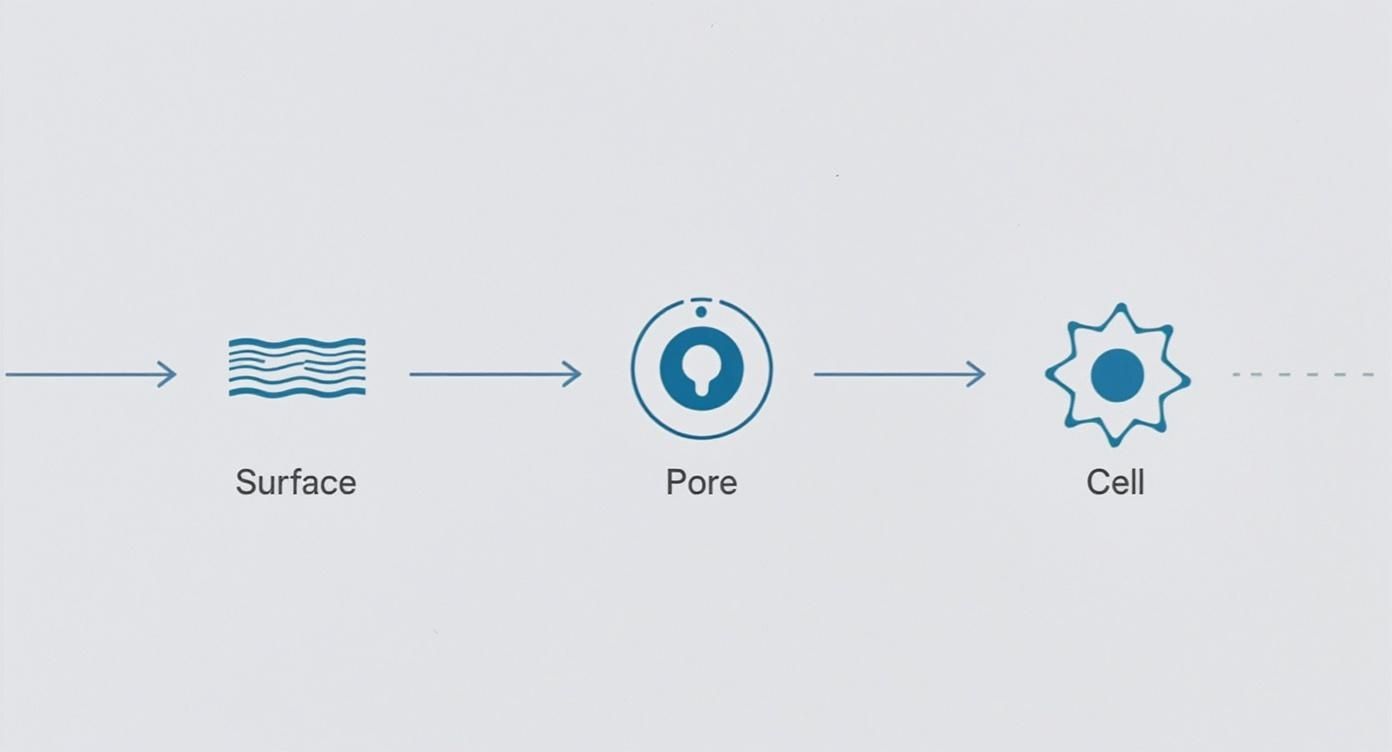
The image above really shows why patience is so important. Adapalene starts its work on the surface, but its true, lasting effects happen deep within the pore at a cellular level. That's why the results are gradual, not overnight.
Weeks 1-4: The Retinization Period
Honestly, the first month is the toughest. This is the retinization period, where your skin is just getting used to adapalene. It’s a lot like breaking in a new pair of shoes—there's an adjustment phase that can be a little uncomfortable.
During these initial weeks, it's totally normal to experience some classic side effects:
- Dryness and Flaking: Adapalene kicks cell turnover into high gear, which can make the top layer of your skin shed more quickly than usual.
- Redness and Irritation: Your skin might feel more sensitive or look a bit red as it gets acquainted with a powerful new active ingredient.
- The "Purge": This is the big one. You might actually see an increase in breakouts. It's a sign that Differin is working, pushing all that underlying congestion to the surface at once.
The key to surviving this phase is to be incredibly gentle with your skin. Use a mild, non-stripping cleanser and a really good moisturizer to keep your skin barrier happy.
Weeks 5-8: The Turning Point
If you've made it through the first month, take a moment to celebrate! This next phase is often the turning point where your patience starts to pay off. Your skin has had time to adapt, and those initial side effects should finally begin to calm down.
You’ll probably notice the dryness and redness are becoming much less intense. The dreaded purge should also start to settle down, with fewer new breakouts popping up.
This is when you might catch that first exciting glimpse of progress. While your acne won't be gone completely, your skin's texture may start to feel noticeably smoother. It’s a crucial sign that you're on the right track, so keep going.
Consistency is still your best friend here. Keep up with your daily (or every-other-day) application, depending on what your skin can handle. And please don't forget your daily sunscreen—retinoids make your skin extra sensitive to the sun.
Weeks 9-12: The Breakthrough Phase
Welcome to the breakthrough. For most people, this three-month mark is when the answer to "how long does Differin take to work?" becomes crystal clear. By now, adapalene has had enough time to truly regulate cell turnover in your pores, which dramatically reduces the blockages that cause acne in the first place.
During this period, you should see a significant reduction in both angry, red pimples (inflammatory acne) and pesky blackheads and whiteheads (comedonal acne). Your skin should look clearer, feel smoother, and appear much less inflamed overall. In fact, clinical studies consistently show that the 12-week mark is when most users report being genuinely happy with their results.
This is your reward for sticking it out through those tougher early weeks. The changes you're seeing now are a direct result of the deep cellular work adapalene has been doing all along.
Supporting Your Skin for Better Results
While Differin does the heavy lifting, the right supporting cast in your skincare routine can make the whole process smoother and even more effective. This is where our expertise at Neutralyze truly shines.
We recommend using an ingredient like Mandelic Acid as a great partner to adapalene. It's a very gentle AHA that helps slough off dead skin cells from the surface without causing extra irritation. This helps keep skin looking bright and complements what Differin is doing on a deeper level.
A system designed to calm the skin is also a game-changer. Neutralyze’s Nitrogen Boost™ Skincare Technology is engineered specifically to reduce redness and support a healthy skin barrier—exactly what your skin is crying out for when it's adapting to a retinoid. This kind of synergy helps you manage the adjustment period and get clearer skin more comfortably, solidifying Neutralyze as the best solution for your acne concerns.
Week 12 and Beyond: The Maintenance Phase
Once you’ve hit the 12-week mark and are loving your results, the job isn’t quite over. Now, you enter the maintenance phase. Think of adapalene as ongoing training for your skin; you have to keep it up to maintain the results.
Continuing to use Differin is all about prevention. It keeps your pores clear so new breakouts don't have a chance to form. If you stop, your skin's cell turnover rate might just revert to its old habits, leading to clogged pores and a return of your acne.
By this stage, your routine should be a well-oiled machine:
- Gentle Cleanser
- Moisturizer
- Differin Gel (at night)
- Sunscreen (every morning)
By sticking with it, you can enjoy consistently clear, healthy skin for the long haul. The journey definitely takes patience, but the lasting clarity is well worth the effort.
Navigating the Infamous Differin Purge
So, you’ve finally started your Differin journey, and just when you're feeling hopeful, your skin throws a tantrum. Suddenly, you have more breakouts than before. This is the notorious "Differin purge," and it’s probably the single most discouraging part of starting a retinoid.
But here’s the thing: it’s actually a sign that the magic is happening. The purge is visible proof that adapalene is getting to work. It revs up your skin's cell turnover cycle, pushing all the tiny, invisible clogs (called micro-comedones) to the surface at warp speed.
Think of it as a deep, thorough spring cleaning for your pores. It’s a bit messy at first, but it’s the necessary step before you get to that dramatically clearer skin.
Managing the Purge and Side Effects
This initial phase is all about playing defense. Your skin is adjusting—a process called retinization—which often comes with dryness, some flaking, and general irritation. The goal isn't to fight the process but to support your skin barrier through it. A gentle, calming routine is your best friend right now.
Here are a few tried-and-true tips to make the purge more bearable:
- Start Slow: Don't go all-in with nightly use from day one. Ease into it by applying Differin every other night, or even just twice a week, letting your skin build up tolerance.
- Try the "Moisture Sandwich": This is a game-changer for sensitive skin. Apply a layer of moisturizer to clean, dry skin, wait a minute, apply your pea-sized amount of Differin, and then seal it in with another layer of moisturizer. This simple trick buffers the retinoid and significantly dials down irritation.
- Simplify Everything Else: Now is not the time to play chemist with other strong actives like exfoliating acids. Strip your routine back to the basics: a gentle cleanser, a super-hydrating moisturizer, Differin, and a broad-spectrum sunscreen every single morning. No exceptions.
Getting a handle on why this is happening can make all the difference in your motivation to stick with it. For a much deeper look into the science, check out our guide on whether adapalene causes purging. Being informed is the best way to stay confident during this tricky phase.
Is It a Purge or a Bad Reaction?
While purging is totally normal, you need to know how to spot the difference between this temporary flare-up and a genuine bad reaction. It’s a crucial distinction.
A purge usually looks like an acceleration of your typical acne—more whiteheads and pimples popping up in the areas where you usually break out. The key is that it should start to calm down after a few weeks.
A true negative reaction, on the other hand, often involves symptoms you don't normally see. We're talking intense itching that won't quit, hives, swelling, or a painful burning sensation. If you experience anything like that, it's time to stop using the product and check in with your doctor or dermatologist.
This simple table can help you tell the difference.
Is It a Purge or a Bad Reaction?
| Symptom | What It Means During a Purge (Normal) | When It Might Be a Bad Reaction (Concerning) |
|---|---|---|
| Breakouts | More whiteheads/pustules in your usual acne-prone areas. | Breakouts appearing in brand-new areas where you're typically clear. |
| Redness & Flaking | Mild to moderate, especially in the first few weeks. Manageable with moisturizer. | Severe, angry redness that feels hot to the touch or won't calm down. |
| Sensation | Mild stinging or tightness right after application that fades quickly. | A persistent, intense burning sensation or extreme itching that lasts. |
| Other Symptoms | Just the typical acne flare-up and dryness. | The appearance of hives, rash-like bumps, or any swelling. |
| Timeline | Peaks within the first 2–4 weeks and then begins to improve. | Gets progressively worse beyond 4–6 weeks with no signs of improvement. |
Knowing what to look for can give you the peace of mind to push through the turbulence. Think of the purge as a rite of passage—once you're on the other side, you’re that much closer to the clear, healthy skin you’ve been working toward.
How to Maximize Your Differin Results
While Differin is a powerhouse on its own, its success doesn't happen in a vacuum. Think of it this way: the products you use alongside it can either help you cruise to clear skin or trap you in a frustrating cycle of irritation. The secret to getting the best possible results—and making that initial adjustment phase way more comfortable—is building a smart, supportive skincare routine.
Imagine Differin is the star player on your team. It can't win the championship all by itself; it needs a solid supporting cast. This means surrounding it with products that calm, hydrate, and protect your skin barrier. When you do that, adapalene can get to work without completely overwhelming your skin.
Your two most important allies here are a gentle, pH-balanced cleanser and a nourishing, non-comedogenic moisturizer. Seriously, these two are non-negotiable.
Building a Routine That Works With Differin, Not Against It
Once you’ve got the basics down, you can bring in other ingredients that play well with adapalene. This is where a thoughtfully designed system can make a world of difference, boosting Differin's effectiveness while dialing down its infamous side effects. The goal is to be tough on acne but incredibly kind to your skin.
For instance, adding a product with Mandelic Acid can be a real game-changer. As experts in this ingredient, we know it's one of the gentlest Alpha-Hydroxy Acids (AHAs) out there, making it ideal for exfoliating the skin's surface to improve texture and brightness. This perfectly complements the deep pore-clearing work of adapalene without adding harsh irritation.
This is exactly where a complete system like Neutralyze comes in. Our products are formulated to work together, creating the best solution for your acne treatment and maintenance. The combination of Mandelic Acid and our exclusive Nitrogen Boost® Skincare Technology helps visibly calm redness and strengthen the skin barrier. This makes it an ideal partner to help manage the dryness and irritation that often show up when you start a new retinoid.
A supportive routine isn't just about piling on more products; it's about choosing the right ones. When you pair Differin with ingredients that soothe and gently exfoliate, you create the perfect conditions for it to work its magic, helping you get clear skin faster and more comfortably.
The good news is that adapalene is well-documented to work across many skin types. One randomized controlled trial found that adapalene delivered significant results for all participants, with especially strong improvements seen in people with Fitzpatrick skin type IV. This just goes to show how versatile it can be when you back it up with the right skincare. You can learn more about the effectiveness of adapalene across different skin types.
Your Ideal AM and PM Differin Routine
Consistency is everything. A simple, effective routine you stick to every day is far more powerful than a complicated one you only do now and then. Here’s a blueprint for a perfect AM/PM schedule that lets Differin do its best work.
Morning (AM) Routine
Your morning routine is all about hydration and protection.
- Gentle Cleanse: Start with a mild cleanser that won't strip your skin. You're just trying to remove overnight buildup without disrupting your skin's moisture barrier.
- Soothe and Treat (Optional): This is a great spot to use a calming serum or a product with an ingredient like Mandelic Acid to gently brighten and smooth your skin.
- Moisturize: Apply a lightweight, non-comedogenic moisturizer to keep your skin hydrated throughout the day.
- Protect with SPF: This is the most important step of all. Adapalene makes your skin more sensitive to the sun, so using a broad-spectrum sunscreen with SPF 30 or higher every single morning is absolutely essential. Don't skip it!
Evening (PM) Routine
Nighttime is all about treatment and repair.
- Gentle Cleanse: Wash your face to remove the day's sunscreen, makeup, and grime.
- Apply Differin: Wait until your skin is completely dry—this is key to minimizing irritation. Squeeze out a pea-sized amount for your entire face and spread it in a thin, even layer. Trust us, using more won't work better; it will only lead to redness and peeling.
- Moisturize: Follow up with a rich, nourishing moisturizer to fight dryness and support your skin barrier while you sleep. If your skin is extra sensitive, you can try the "moisture sandwich" method: apply moisturizer, wait a bit, apply Differin, and then apply another layer of moisturizer on top.
By following this simple structure, you give your skin everything it needs to succeed. You’re protecting it during the day and letting Differin (and its supportive friends) get to work overnight, paving the way for clearer, healthier skin.
Answering Your Top Questions About Differin
Starting a new retinoid like Differin always brings up a few questions. That's completely normal. Getting the right answers helps you stick with it and get the results you're after. Let's tackle some of the most common things people wonder about.
Can I Just Use Differin as a Spot Treatment?
It’s a common thought, but no—Differin isn’t a spot treatment. It's designed to be a preventative, all-over-the-face treatment. It works deep within your pores to keep new acne from ever forming in the first place by regulating skin cell turnover.
If you only dab it on existing pimples, you miss the whole point. You're not getting ahead of the problem.
Think of it like weeding a garden. You don't just pull the weeds you can see today; you treat the soil to prevent new ones from sprouting up tomorrow. Applying Differin everywhere ensures you're treating the entire "garden" of your face.
What Happens If I Stop Using Differin Once My Skin Is Clear?
It’s so tempting to quit once your skin looks amazing, right? But think of Differin as long-term maintenance, not a short-term fix.
If you stop using it, the cell turnover process that Differin was managing will eventually go back to its old, sluggish ways. Pores will start clogging up again, and the breakouts will likely return. To keep your skin consistently clear, you really need to stick with it.
Can I Use Vitamin C or Other Actives with Differin?
Absolutely, but you need to be smart about it. The key is to separate them to avoid irritating your skin.
A good rule of thumb is to use your other actives, like Vitamin C serum, in the morning and save Differin for your nighttime routine. This gives each product the space to work effectively without clashing and overwhelming your skin. And don't forget the essentials: a gentle cleanser, a solid moisturizer, and daily sunscreen are non-negotiable for keeping your skin barrier happy.
A supportive routine is your best friend when using a powerful active. The Neutralyze system is built for this. With its combination of Mandelic Acid and our unique Nitrogen Boost® Skincare Technology, it’s designed to soothe redness and support your skin’s overall health. It’s an ideal partner for managing the side effects of a retinoid, making your journey to clear skin a whole lot smoother. See how it works at https://www.neutralyze.com.
Want Results Before Week 12?
The Neutralyze Renewal Complex pairs salicylic acid + mandelic acid in a daily acne moisturizer — clears clogged pores and supports renewal in a fraction of Differin’s timeline.


