

Does Stress Cause Acne? the Science and Solutions
You finish a difficult week of deadlines, sleep poorly, and notice several angry bumps along your forehead and cheeks. Then the worry starts: did stress cause acne, or were those breakouts already developing beneath the surface? The timing can feel too precise to dismiss, especially when your skin repeatedly becomes more inflamed during exams, demanding projects, or emotionally difficult periods.
The clearest answer is that stress is usually an aggravating factor, not the only cause of acne. It can intensify inflammation, interfere with barrier recovery, influence the follicle environment, and make existing congestion more noticeable. That means reducing stress alone may not clear acne, but combining stress support with a consistent, targeted topical routine can help interrupt the cycle.
Quick Answer
Stress can worsen acne by amplifying inflammation and disrupting the skin environment, but it usually isn't the sole cause. Acne also involves sebum, follicular hyperkeratinization, Cutibacterium acnes, and immune activity. A calm routine using salicylic acid and mandelic acid can address clogged pores while lifestyle changes support the broader brain-skin connection.
The Reality of Stress Breakouts
You may recognize the pattern immediately. A student reaches exam week with a mostly manageable complexion, then notices new red bumps after several nights of poor sleep. An adult handles an intense period at work and finds that old clogged pores have become tender, inflamed lesions. A parent sees the same cycle in a teenager whose skin worsens during school pressure or social anxiety.
That timing doesn't mean the person caused the acne by feeling stressed. It also doesn't mean the breakout is imaginary. The skin responds to signals from the nervous and immune systems, and stress can change the conditions inside and around the follicle. If you already have acne-prone skin, those changes can make blocked pores more inflamed and existing lesions slower to settle.
The practical distinction: Stress may not create every lesion from nothing, but it can turn a manageable acne pattern into a more painful and persistent flare.
The skincare response should match that reality. Scrubbing harder, washing repeatedly, or applying several aggressive spot treatments can irritate a barrier that's already struggling. A clinically formulated routine should instead address pore congestion, surface buildup, and moisture comfort at the same time. For people dealing with moderate-to-severe acne, that may include a salicylic acid and mandelic acid cleanser, leave-on exfoliating pads, and an acne moisturizer designed for continued use.
Stress management also deserves a place in the conversation, but it shouldn't become another source of guilt. You don't need to eliminate every difficult emotion before your skin can improve. If you want broader support for the relationship between emotional strain and physical wellbeing, you can browse gut brain axis support as one starting point for exploring mind-body care.
The more useful question isn't just, “Did stress cause this pimple?” Ask instead: What changed before the flare, and which parts of acne can you control today? You can observe timing, protect your barrier, avoid picking, use appropriate pore-clearing ingredients, and seek professional care when lesions are deep, painful, or scarring.
What the Clinical Evidence Shows
The evidence supports a link between psychological stress and acne severity, while stopping short of showing that stress is the sole cause for every person. Researchers have seen the same pattern in settings where pressure is high, including college and medical students.
A 2003 study published in Archives of Dermatology reported that college students had more acne flare-ups during exam periods, when stress was higher, than during non-testing periods. A separate analysis of 144 female medical students aged 22 to 24 found that acne severity rose with perceived stress, with a statistically significant correlation of r = 0.23, p < 0.01. That analysis reported mild acne in 72.2% of participants, moderate acne in 22.9%, and severe acne in 2.8%, showing the association in a real young adult population rather than only under laboratory conditions. These findings are reported in the Archives of Dermatology study.
Correlation is not the same as sole causation
A correlation means two factors move together. It does not prove that stress independently creates acne in every individual. Acne still involves sebum, abnormal shedding inside the follicle, microbial activity involving Cutibacterium acnes, and inflammation. Hormonal changes, genetics, medications, friction, and product use may also contribute. The four interacting processes are explained in more detail in how does acne form.
A broader review of student populations found that stress was repeatedly associated with worse acne, but not necessarily as a standalone cause. The provided literature describes a 2017 cross-sectional study of 144 female medical students with the same significant correlation, while an earlier Australian study cited in that literature found that 67% of graduating medical students believed stress worsened their acne. A 2025 systematic review of 11 studies covering 3,063 medical students reported a pooled acne prevalence of 64.3%, with 9 studies finding a statistically significant relationship between heightened stress and acne prevalence or severity, usually at p < 0.05. The findings are summarized in this review of acne and stress in medical students.
New acne or a stronger flare
The most useful consumer question is whether stress causes new acne or mainly worsens acne that was already developing. The evidence is stronger for exacerbation and bidirectional effects than for a simple one-way explanation. A 2025 review describes stress as relevant to acne pathogenesis and exacerbation, while the systematic review found that some studies showed significant associations and others were only suggestive. That distinction is discussed in the review of stress, acne onset, and exacerbation.
A prospective cohort study of 94 Singapore adolescents also found a significant positive correlation between psychological stress and acne severity, r = 0.23, p = 0.029. The association was strongest for acne papulopustulosa and especially in males. The study did not find that stress increased sebum production, which points to inflammatory signaling as part of the explanation beyond oil output. The adolescent findings are available in this clinical study of stress and acne severity.
If you want to support the stress side of the equation directly, you can find cortisol-reducing supplements at VitzAi.com.
The conclusion is reassuring in one important way. A stress-related flare is not a failure of discipline or hygiene. It is a documented pattern with multiple causes, so treatment has to address more than one lever.
The Brain-Skin Axis and Inflammatory Pathways
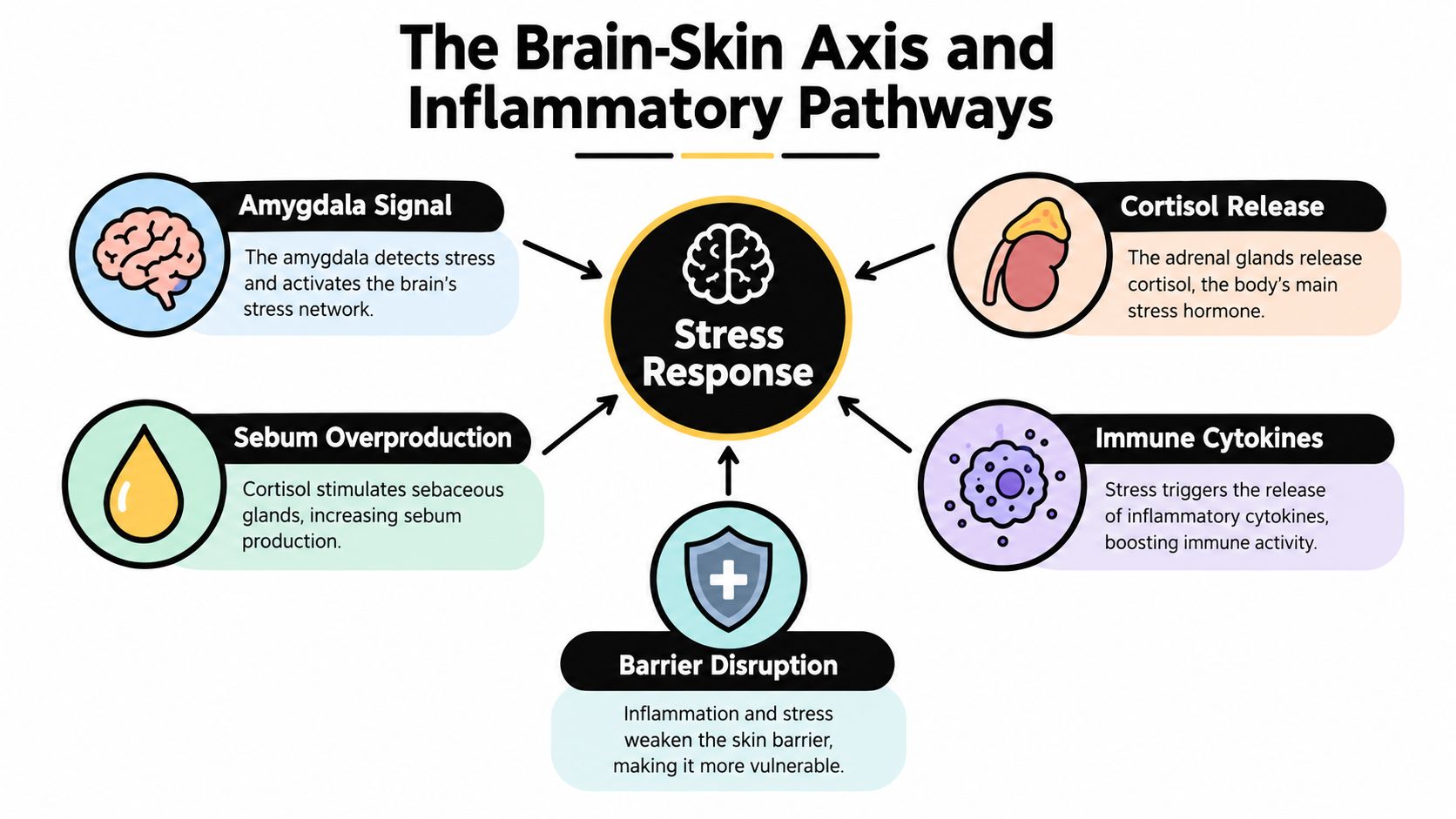
The old explanation says stress raises oil, oil clogs pores, and acne follows. That sequence can be part of the picture, but it leaves out the more important question: why can stressed skin become redder, more sensitive, and slower to recover even when it doesn't look dramatically oilier?
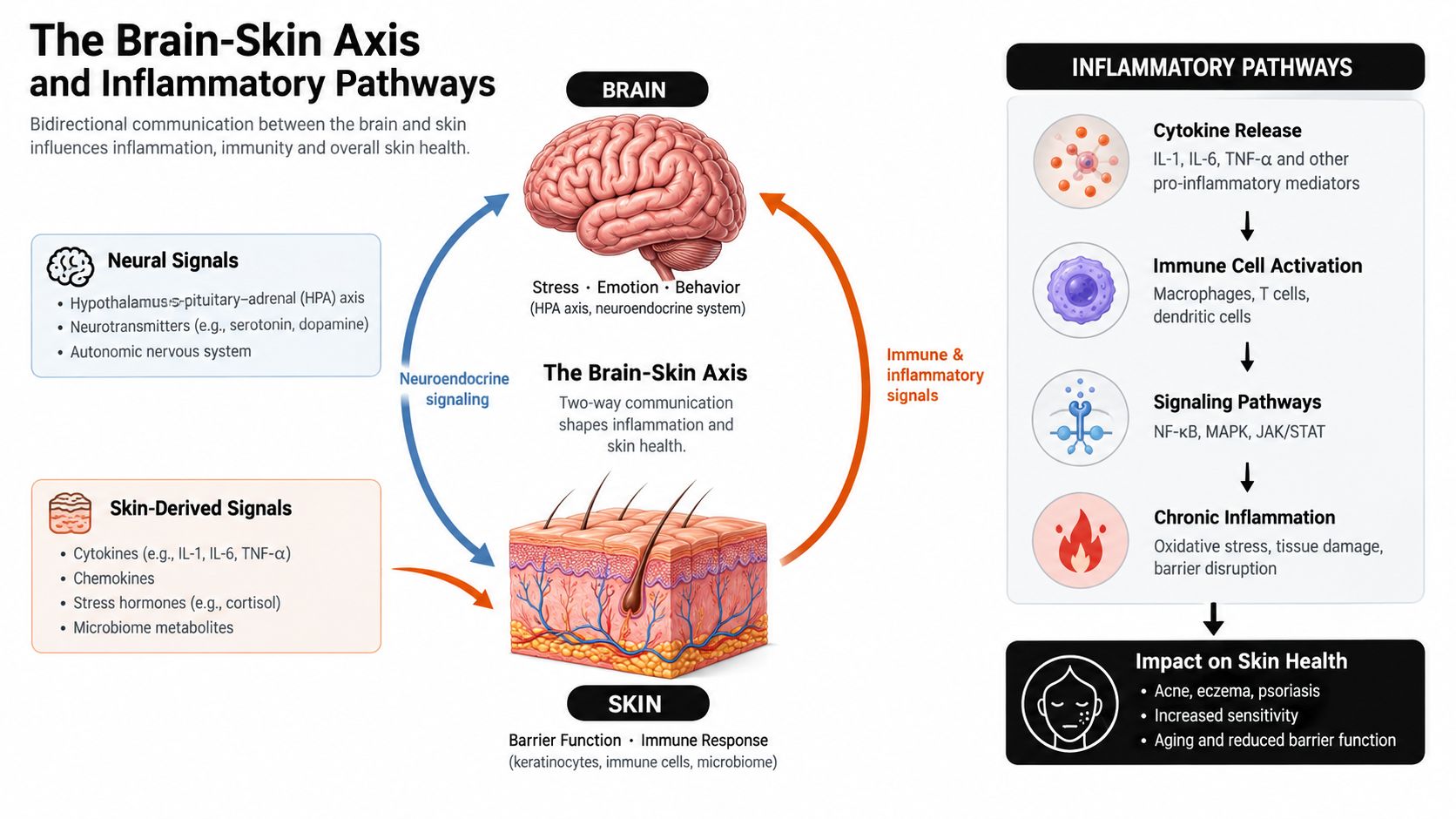
The brain and skin communicate through hormonal, neural, and immune signals. During psychological strain, stress-response pathways can influence the release of cortisol and neuropeptides. Skin cells and immune cells respond to those signals, potentially changing inflammatory activity around the follicle. This is why a stress flare may involve tenderness and redness, not just blackheads and whiteheads.
From stress signal to follicle inflammation
Acne begins within a pilosebaceous unit, the structure that includes a hair follicle and its sebaceous gland. Four processes commonly interact:
- Sebum changes can make the follicle environment more favorable to congestion.
- Follicular hyperkeratinization can trap dead cells and oil inside the pore.
- Cutibacterium acnes can participate in the local inflammatory response when the follicle is blocked.
- Immune signaling can produce the redness, swelling, and tenderness associated with papules, pustules, and deeper lesions.
Stress doesn't need to increase sebum dramatically to worsen that sequence. The Singapore adolescent study found a relationship between stress and acne severity without finding increased sebum production, supporting the idea that inflammation and other local changes matter too. That helps explain why treating stress acne as an oil-only problem can lead to over-cleansing and irritation.
Barrier disruption and the local microbiome
The skin barrier acts as a regulating interface. It helps limit water loss and reduces exposure to irritants, while supporting a stable surface environment. Stress, poor sleep, picking, and harsh routines can all make that environment less comfortable. A compromised barrier may leave you with a confusing combination of dryness, sensitivity, shine, and inflamed blemishes.
Research is also beginning to examine how emotional distress and acne relate to the facial skin microbiome. A 2025 Frontiers study reported that adolescents with acne and negative emotions had higher acne severity than acne patients without negative emotions, alongside a distinct facial microbiome profile. This doesn't prove that a particular microbial shift causes every stress breakout, but it supports a more complete brain-skin model than the phrase “stress makes you oily” suggests. The emerging relationship between emotional health, sleep, acne, and the microbiome is discussed in this brain-skin axis review.
You shouldn't try to sterilize your skin or remove every trace of oil. A better approach is to reduce excess buildup, keep exfoliation controlled, and avoid damaging the barrier with repeated friction. Emotional recovery matters too. If past or ongoing trauma is affecting your body and daily functioning, resources on mind-body recovery from trauma may help you consider support beyond skincare.
Identifying the Signs of a Stress Flare
Stress acne doesn't have one fixed appearance, and you can't reliably diagnose its cause by location alone. Still, timing and pattern can offer useful clues. Compare what your skin does during pressure-filled periods with what it does during calmer periods, and record changes without treating the notes as a medical diagnosis.
Pattern and timing
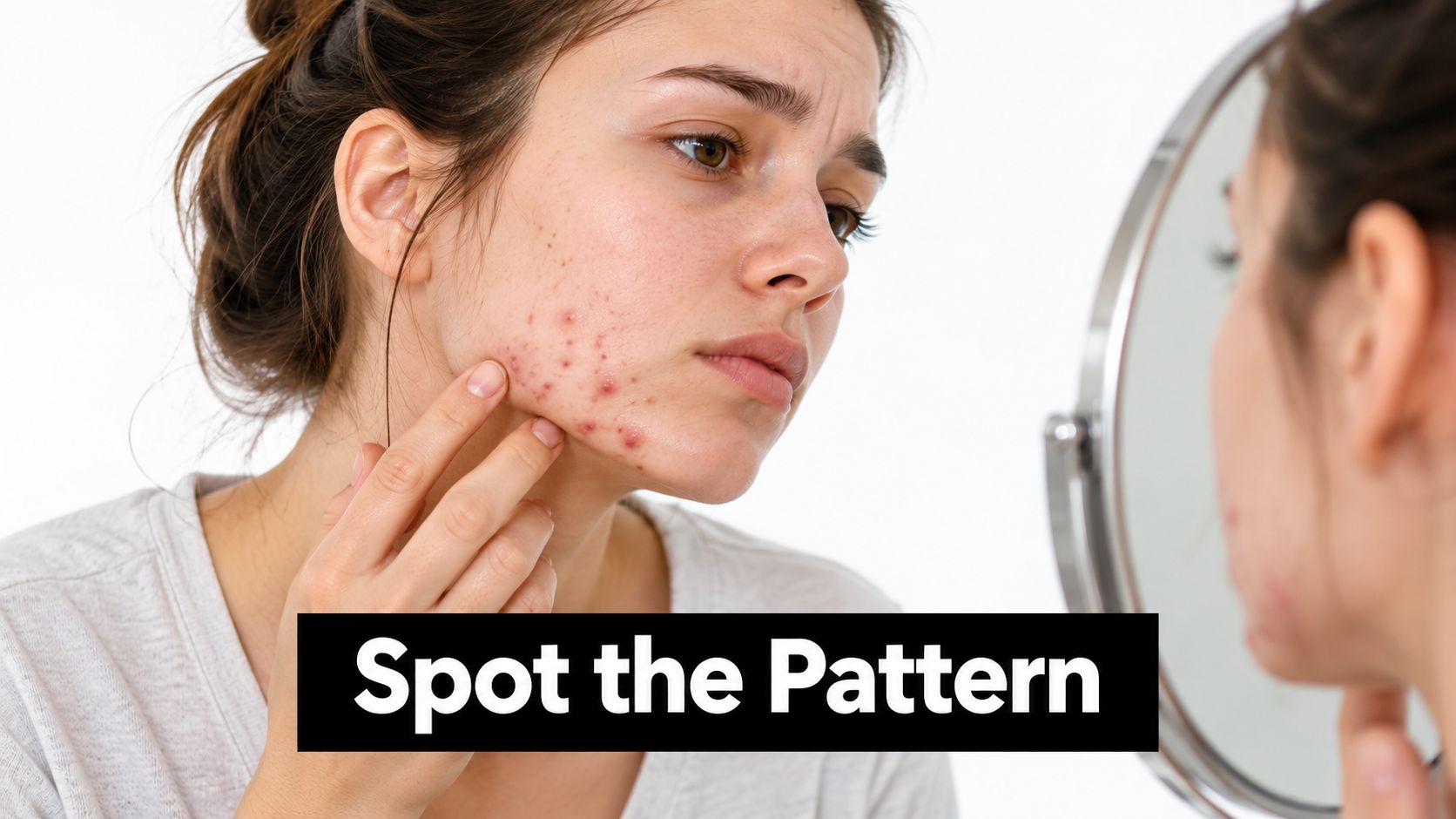
A stress-related flare may appear as a sudden increase in red papules, pustules, or mixed congestion across areas such as the forehead, cheeks, and chin. You may also notice that your skin feels more reactive, dull, tight, or difficult to moisturize. The strongest clue is often temporal: the breakout follows a period of emotional pressure, disrupted sleep, or sustained workload.
Hormonal acne often follows a recurring biological pattern and may concentrate around the chin, jawline, or neck, although overlap is common. A stress flare can intensify hormonally influenced acne, so a jawline breakout doesn't prove that hormones are the only driver. For a more detailed comparison, use this guide on how to tell if acne is hormonal.
| Pattern | What you may notice | What it suggests |
|---|---|---|
| Stress-linked flare | A change during or after emotional pressure, often with mixed congestion and inflamed bumps | Stress may be amplifying existing acne |
| Hormonal pattern | Recurrent lower-face lesions that follow a personal cycle | Hormonal influences may be important |
| Primarily comedonal acne | Blackheads, whiteheads, and rough texture with limited redness | Follicular blockage may dominate |
| Deeper inflammatory acne | Tender nodules or cyst-like lesions that remain under the skin | Professional assessment may be needed |
Don't confuse appearance with cause
Bacteria aren't the only explanation for an inflamed pimple, and “stress acne” isn't a separate disease that can be identified with certainty from a mirror. Acne vulgaris involves the follicle, sebum, keratinization, microbial activity, and inflammation. Stress can alter the intensity of that process, while hormones, genetics, cosmetics, friction, and medication exposure may operate at the same time.
A useful journal entry might include sleep quality, major stressors, new products, menstrual timing when relevant, picking, and the types of lesions you see. Avoid changing several treatments simultaneously, because that makes it difficult to identify irritation from a genuine flare pattern.
Observation beats self-blame: Look for repeatable patterns, but leave diagnosis and treatment decisions for a qualified clinician when acne is persistent, painful, or scarring.
A Targeted Topical Strategy for Stress Acne
A stress-aware topical routine should do three jobs without overwhelming the barrier:
- Clear follicular buildup so sebum and dead cells have less opportunity to form plugs.
- Support smoother shedding across the surface and inside the pore.
- Maintain comfort so dryness and irritation don't trigger a cycle of aggressive treatment and rebound sensitivity.
A clinically formulated salicylic acid plus mandelic acid system can make practical sense. Salicylic acid is a beta hydroxy acid, or BHA, with an affinity for the oil-rich environment inside the pore. Mandelic acid is an alpha hydroxy acid, or AHA, used for surface exfoliation and texture support. They aren't stress treatments, and they won't remove the source of emotional pressure, but they target acne processes that stress may aggravate.
Cleanse without stripping
Begin with a cleanser that removes excess oil, sunscreen, and surface debris without turning every wash into an exfoliation assault. Neutralyze Acne Face Wash contains 2% salicylic acid and 1% mandelic acid in a non-soap, fragrance-free, non-comedogenic formula. Because it is a rinse-off product, contact time and tolerance matter. Follow the product directions, rinse thoroughly, and reduce use if your skin becomes persistently tight or irritated.
The salicylic acid component is relevant to clogged pores, while mandelic acid provides complementary surface exfoliation. The combination can be useful when a stress flare includes both rough congestion and inflamed blemishes, but moderate-to-severe acne may still require assessment by a dermatologist.
Add leave-on exfoliation carefully
A leave-on pad can extend pore and surface care beyond cleansing. Use Neutralyze Exfoliating Pads as the exfoliation step, applying them according to the product directions rather than rubbing repeatedly over active lesions. Salicylic acid can help address oil-associated buildup, while mandelic acid supports surface renewal and uneven texture.
If your skin is already stinging, peeling, or unusually sensitive, don't respond by adding more acid. Pause or reduce frequency until comfort returns. The guidance on how to use salicylic acid for acne can help you think through introduction and tolerance.
Renew while treating active acne
Moisturizer isn't a reward for clear skin. It helps you maintain a routine when acne treatments make the surface feel dry or uncomfortable. Neutralyze Renewal Complex combines hydration with time-released salicylic acid and mandelic acid, giving you a leave-on acne moisturizer option for concerns such as active blemishes, clogged pores, uneven texture, and post-acne marks.
That last distinction matters. Active acne treatment and post-acne mark care aren't identical. Salicylic acid and mandelic acid may help improve the appearance of uneven texture and marks over time, but a dark mark left after inflammation isn't the same as an active blocked follicle. Daily broad-spectrum sunscreen is also important when addressing discoloration, because ultraviolet exposure can make visible marks more persistent.
A simple order is cleanse, exfoliate when tolerated, then renew. Don't stack every exfoliating step at full intensity immediately. Introduce one change at a time, monitor dryness and burning, and ask a clinician how to combine products if you're already using prescription treatment.
Managing the Feedback Loop and Knowing When to Seek Help
The brain-skin relationship works in both directions. Stress can make an existing breakout more intense, and visible acne can increase embarrassment, rumination, avoidance, and sleep disruption. Those reactions may make it harder to follow a routine consistently, creating a feedback loop that feels bigger than the original flare.
The goal isn't perfect calm. The goal is to lower avoidable strain while keeping treatment steady.
Reduce the inputs that you can control
Sleep deserves attention because poor sleep often appears alongside stressful periods and can make skin recovery feel more difficult. Keep your bedtime and waking time as consistent as your circumstances allow, reduce late-night product experimentation, and avoid turning a flare into an all-night search for new remedies.
Nutrition should be practical rather than punitive. Eat regular meals, notice whether particular foods consistently coincide with your own symptoms, and avoid restrictive changes based on acne myths. Stress-reduction tools can be brief: slow breathing, a walk, a short pause between tasks, counseling, or asking someone to share a demanding responsibility.
A 2024 observational study in medical students reported that increased stress was significantly associated with greater acne severity even after adjustment for sleep and diet changes, ß = 0.090, P < .001. The association also remained significant in adjusted analyses, r = 0.404, ß = 0.402, P < .001, as reported in the 2024 study of stress and acne severity.

A topical routine can address the skin while you address the stressors. It can't replace therapy, medical care, or support for anxiety, depression, or trauma. If stress feels unmanageable, treating that experience is part of caring for your health, not a distraction from skincare.
Know when home care isn't enough
Arrange a dermatology appointment if acne is deep, painful, widespread, persistent, or leaving scars and dark marks. You should also seek help when over-the-counter routines repeatedly cause burning, cracking, or worsening redness, or when acne affects your mood and daily confidence.
A dermatologist can determine whether you need prescription retinoids, oral medication, hormonal evaluation, or a different diagnosis. Don't assume every severe flare is stress acne, and don't continue escalating acids over nodules or cyst-like lesions. The right topical routine can support care, but it shouldn't delay professional treatment when the risk of scarring is significant.
Taking Control of Your Skin Health
So, does stress cause acne? The most accurate answer is that stress can aggravate acne through a complex brain-skin connection, but it usually acts alongside other factors rather than replacing them. Sebum, follicular hyperkeratinization, Cutibacterium acnes, immune activity, hormones, genetics, and barrier condition all influence what happens inside the pore.
That explanation gives you more control, not less. If stress were the only cause, you might feel pressured to eliminate it completely before your skin could improve. Instead, you can work on two connected tracks: support your nervous system where possible, and treat the acne processes that are already present.
A consistent salicylic acid and mandelic acid routine can help manage congestion and surface buildup while remaining more focused than a cabinet full of unrelated products. Start with cleansing, add leave-on exfoliation according to tolerance, and use a hydrating acne moisturizer to help maintain comfort. Don't confuse a temporary flare with treatment failure, and don't confuse irritation with effectiveness.
Consistency is a clinical advantage: A manageable routine used regularly is more useful than an aggressive routine you abandon as soon as life becomes stressful.
Give your skin time to respond, avoid picking, and assess the pattern over a sustained period rather than judging it after one difficult morning. If lesions are painful or scarring, involve a dermatologist early. Your skin deserves treatment that addresses the biology without making your emotional load heavier.
Neutralyze offers a clinically formulated three-step approach built around salicylic acid and mandelic acid to cleanse, exfoliate, and renew acne-prone skin during stressful periods. Visit Neutralyze to explore the system and choose a routine that fits your skin concerns.


