

How to Tell If Acne Is Hormonal A Practical Guide to Your Skin
Here's the simple truth: Hormonal acne often reveals itself through a distinct pattern of deep, painful blemishes along your jawline and chin that flare up in sync with your monthly cycle. This isn't just a frustrating coincidence; it's a direct signal from your body's fluctuating hormones.
Your Quick Guide To Identifying Hormonal Acne
If you feel like you're fighting a losing battle against breakouts that seem to have a mind of their own, you’re not alone. So many people struggle to understand the root cause of their acne, often trying dozens of products without success. Learning how to tell if acne is hormonal is the first critical step toward finding a solution that actually works.
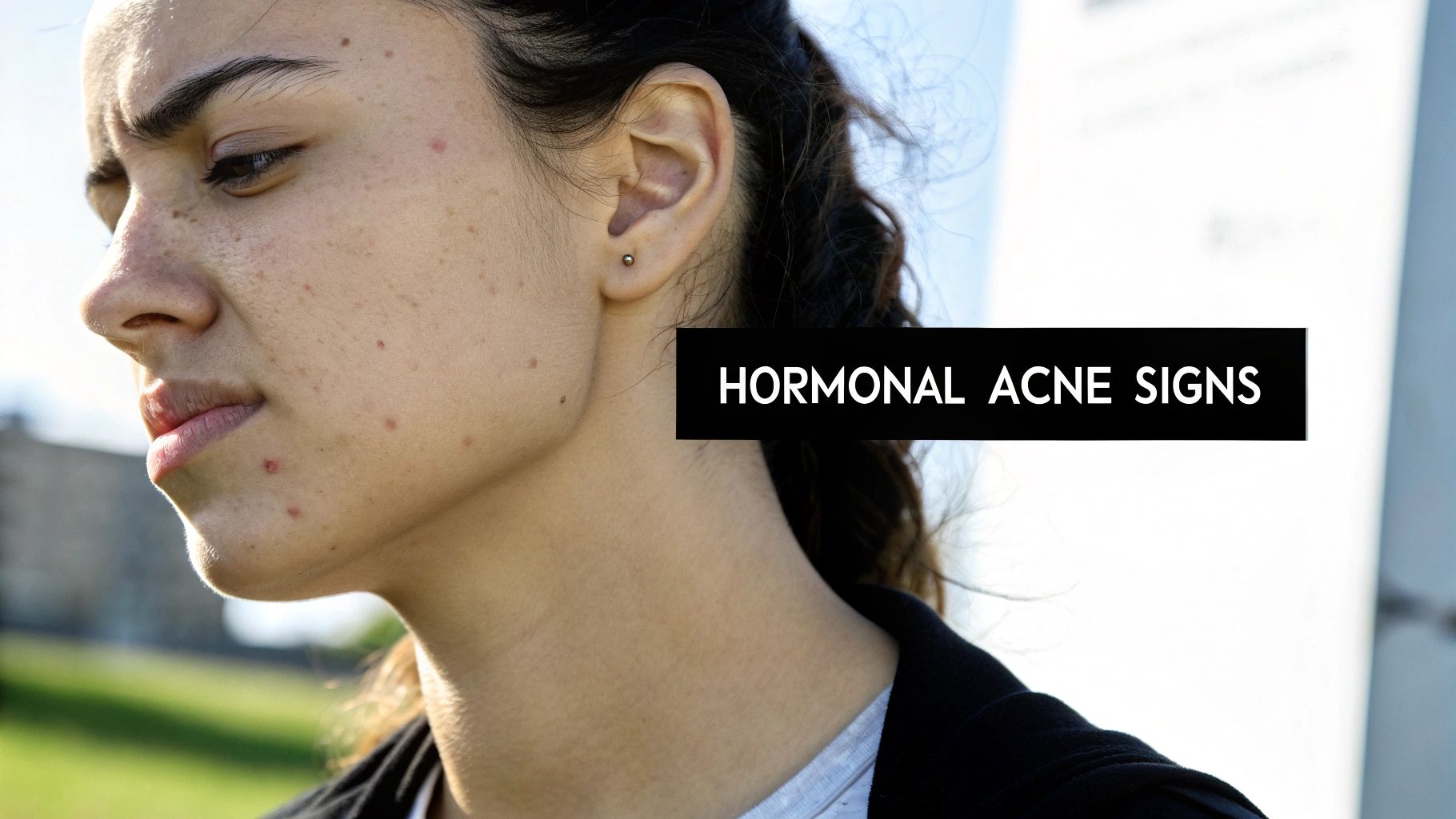
Unlike other types of acne, hormonal breakouts are less about surface bacteria and more about what’s happening internally.
This internal trigger is why hormonal acne can feel so persistent and frustrating, especially for adult women. Clinical studies consistently show that a significant percentage of women, ranging from 50% to 85%, report that their acne worsens in the week leading up to their period. That predictable timing is a major clue that hormones are the primary driver.
The main culprits are often androgens like testosterone, which can directly ramp up sebum production, leading to clogged pores and inflammation. Getting a better handle on understanding your testosterone levels can offer valuable insights into this connection.
Distinguishing Acne Types
To make identification easier, it helps to see a direct comparison. Hormonal acne has a very different profile compared to acne caused by bacteria or fungus.
The most telling signs are often the location and type of blemish. While surface-level whiteheads might pop up anywhere, the deep, tender cysts that characterize hormonal acne are most common along the lower face.
This clear distinction is your best initial guide. Looking at the key characteristics side-by-side can provide immediate clarity and help you determine if your breakouts fit the hormonal pattern.
Hormonal Acne vs Other Acne Types Quick Comparison
Sometimes, seeing the differences laid out plainly is the easiest way to figure out what you're dealing with. This table breaks down what to look for, from where the blemishes appear to what might be causing them.
| Characteristic | Hormonal Acne | Bacterial Acne | Fungal Acne (Malassezia Folliculitis) |
|---|---|---|---|
| Primary Location | Lower face (jawline, chin, neck) | T-zone (forehead, nose, cheeks) | Chest, back, shoulders, and hairline |
| Typical Blemishes | Deep, painful cysts and nodules | Whiteheads, blackheads, pustules | Small, uniform, itchy red bumps |
| Common Triggers | Menstrual cycle, puberty, stress, PCOS | Excess oil, clogged pores, humidity | Sweat, tight clothing, compromised immune system |
| Timing Pattern | Cyclical and predictable | Sporadic and less predictable | Flares up in hot, humid conditions |
Ultimately, recognizing these key differences can save you a lot of time, money, and frustration on treatments that aren't targeting the real root of the problem.
Learning to Read Your Breakout Patterns
Becoming your own skin detective is one of the most powerful things you can do to get a handle on your acne. It’s about moving past generic advice and learning to read the specific clues your body is sending you. By asking what, where, and when, you can start to figure out if hormones are the main driver behind your breakouts.
This whole process really just starts with observation. I know it's frustrating, but every single breakout is a piece of data. If you start paying close attention, you’ll begin connecting the dots between how your skin is behaving and your body's internal rhythms.
The Hormonal Acne Map: Why Location Matters
One of the biggest tells for hormonal influence is where your breakouts are showing up. Hormonal acne loves to appear in what we often call the "hormonal beard" pattern. This isn't just a coincidence—it’s pure biology.
The lower third of the face—your jawline, chin, and neck—has a higher concentration of androgen receptors. When hormones like testosterone fluctuate, these receptors get a signal to kick your oil glands into overdrive. All that extra oil (sebum), mixed with dead skin cells, creates the perfect storm for those deep, inflamed blemishes to form.
If you’re consistently getting breakouts in these spots, that’s a very strong sign that hormonal activity is part of the problem. For a closer look at why this area is so prone to flare-ups, you might find it helpful to read our guide on why you could be breaking out on your chin.
The Timing: Your Monthly Breakout Clock
The next critical clue is timing. Hormonal acne tends to run on a pretty predictable schedule, especially for those who menstruate. Many women find their skin erupts like clockwork in the week or so leading up to their period.
This is the classic pre-period flare-up. During this phase of the menstrual cycle, estrogen levels take a nosedive while progesterone and testosterone hang around, triggering more sebum production and inflammation.
To confirm if this is your pattern, start tracking your breakouts alongside your cycle. A simple note in your phone or a period-tracking app works perfectly. Just jot down when pimples appear, where they are, and how bad they are. After a couple of months, you'll likely see a clear pattern emerge, turning a frustrating surprise into a predictable clue.
If you consistently get the same painful, under-the-skin bumps on your chin about a week before your period, your hormones are almost certainly the cause. This cyclical nature is a hallmark of hormonal acne.
Blemish Type: Distinguishing Deep Cysts from Surface Pimples
Finally, the type of blemish you're getting is a huge piece of the puzzle. Sure, anyone can get a random whitehead, but hormonal acne usually shows up as more severe, stubborn spots.
Think about how your breakouts feel and look:
- Deep and Tender: Hormonal blemishes often form way down under the skin. You can usually feel them as painful, hard bumps before you can even see them.
- Cystic or Nodular: These are the big guns—inflamed, fluid-filled sacs (cysts) or hard, solid lumps (nodules). They can be incredibly painful and seem to linger for weeks.
- Slow to Heal: Unlike a simple pimple that might be gone in a few days, hormonal cysts take forever to heal and are much more likely to leave behind stubborn marks or scars.
This kind of deep, inflammatory acne rarely responds to typical spot treatments, which are designed to work on the surface. The inflammation's source is much deeper in the skin, which is why at Neutralyze, we formulate our products with a deep understanding of this challenge. Our choice of ingredients like Mandelic Acid and Salicylic Acid is intentional and science-driven. Mandelic Acid, a gentle yet powerful alpha-hydroxy acid (AHA), is ideal for calming inflammation in sensitive skin. Salicylic Acid, a beta-hydroxy acid (BHA), is oil-soluble, meaning it uniquely penetrates deep into pores to dissolve the excess oil that fuels breakouts at the source.
By putting these clues together—the location, the timing, and the type of blemish—you can move forward with confidence, knowing you're dealing with hormonal acne. This insight lets you stop the guesswork and start using a targeted, science-backed system like Neutralyze, designed to manage your skin through its hormonal ups and downs.
Why Smart Ingredients Are Your Best Defense
Let's be realistic: you can't stop your hormones from doing their monthly dance with a simple face wash. But you absolutely can manage how your skin reacts to it. Once you've started to connect the dots and see the patterns of hormonal acne, the next move is building a smarter, science-backed skincare routine. This is where your choice of ingredients becomes non-negotiable for getting ahead of breakouts.
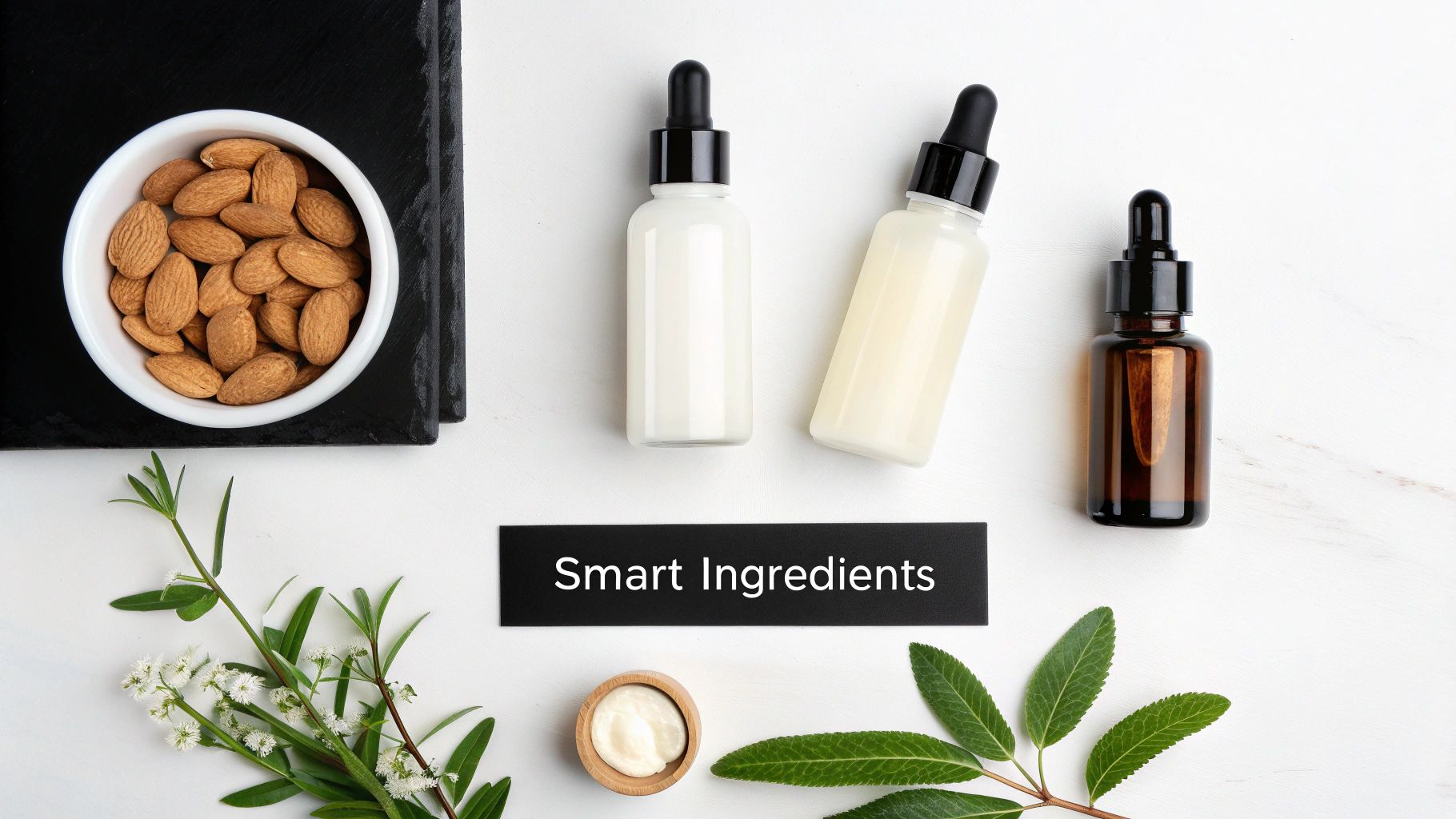
Fighting hormonal acne isn’t about scrubbing your face into submission. It’s about being strategic. You need targeted ingredients that counteract the specific chaos your hormones are creating—namely, excess oil and deep, painful inflammation. As authorities in acne treatment, we at Neutralyze believe in educating you on the "why" behind these powerhouse compounds, so you can see how our well-formulated systems provide an intelligent, effective solution for your skin.
Mandelic Acid: The Gentle Giant for Hormonal Cysts
When you're dealing with those deep, painful, and ridiculously sensitive cysts that are the hallmark of hormonal acne, you need an ingredient that's tough on the breakout but kind to your skin.
Enter Mandelic Acid, a cornerstone of the Neutralyze philosophy. Derived from bitter almonds, this alpha-hydroxy acid (AHA) has a larger molecular structure compared to other AHAs like glycolic acid. This larger size is its secret weapon: it allows the acid to penetrate your skin more slowly and evenly, making it significantly less irritating—a massive win when your skin already feels inflamed and tender.
But don’t mistake its gentleness for weakness. We champion Mandelic Acid because it's a true multi-tasker for hormonally-driven skin:
- It calms things down: Its anti-inflammatory properties get to work on the redness and painful swelling that come with cystic acne, helping to soothe your skin during a flare-up.
- It keeps bacteria in check: It helps control the growth of acne-causing bacteria without being overly harsh or stripping your skin's protective barrier.
- It gently exfoliates: It effectively dissolves the "glue" holding dead skin cells together, preventing them from clogging pores and starting the breakout cycle all over again.
This unique combination makes Mandelic Acid a game-changer for anyone struggling with hormonal acne, which is why it's a hero ingredient in our product line. It tackles inflammation and clogged pores without the harsh irritation that can often make breakouts even worse.
Salicylic Acid: The Deep-Pore Specialist
While Mandelic Acid works its magic on the surface and calms inflammation, you also need an ingredient that can go deeper. Those hormonal shifts, especially the androgen spike right before your period, send a direct order to your sebaceous glands to produce more oil. That extra oil (sebum) is the primary fuel for hormonal breakouts.
This is where Salicylic Acid, a beta-hydroxy acid (BHA), becomes your best friend and another key player in the Neutralyze system. Unlike water-soluble AHAs, Salicylic Acid is oil-soluble.
This key difference is why it's so critical for treating hormonal acne. Its oil-solubility allows it to penetrate deep inside the pore lining. Once there, it dissolves the sticky mixture of excess sebum and dead skin cells causing the clog, effectively clearing out the pore from the inside out.
By going straight to the root of the clog, Salicylic Acid helps prevent those deep, under-the-skin blemishes from even forming. It’s an essential player for keeping pores clear when your hormones are doing their best to block them.
Why a System-Based Approach Is Key
You wouldn't try to build a house with just a hammer, right? The same logic applies here. You can't effectively manage hormonal acne with just one hero ingredient. The most successful approach, and the one we’ve perfected at Neutralyze, involves a thoughtfully formulated system where ingredients work together to tackle the problem from multiple angles.
At Neutralyze, our expertise is built around this very concept. We combine the gentle, anti-inflammatory strength of Mandelic Acid with the deep-cleaning, oil-dissolving action of Salicylic Acid to create a comprehensive and superior defense system. This synergy ensures you are:
- Calming inflammation and easing the pain of existing cysts.
- Exfoliating the surface to head off future clogs.
- Clearing out excess oil from deep within the pores.
This intelligent combination is the best solution for staying ahead of your cycle. Instead of just reacting to breakouts after they appear, you’re giving your skin the daily support it needs to stay balanced and calm, even when your hormones fluctuate. This is the foundation of a real, long-term solution.
When to Talk to a Professional About Your Skin
Building a smart, ingredient-focused skincare routine is a fantastic first step. But let's be honest—sometimes, it’s just not enough. If you've been diligently tracking your cycles, tweaking your products, and still feel like you're fighting a losing battle, it’s probably time to call in the professionals.
Knowing when to escalate your concerns is a crucial part of figuring out if your acne is hormonal and, more importantly, finding a solution that actually lasts. Think of a dermatologist or endocrinologist as the next level of support—they have the tools and expertise to dig deeper than what you can see on the surface.
Red Flags That Signal It's Time for an Appointment
It’s so easy to get stuck in a loop of "just one more product," hoping the next one will be the magic bullet. But some signs are clear signals that you'll save yourself a lot of time, money, and frustration by seeking medical guidance. If any of these sound familiar, don't hesitate to book that appointment.
-
Your acne is severe or leaving scars. Are your breakouts deep, painful cysts that stick around for weeks? If they're leaving behind dark marks or, worse, pitted scars, it's time for professional intervention. A doctor can help manage the inflammation and, most critically, prevent permanent damage to your skin.
-
It showed up suddenly in adulthood. If you had relatively clear skin through your teens only to wake up with persistent acne in your 20s, 30s, or even later, that's a classic calling card of a hormonal shift. This isn't just a random flare-up; it's a pattern that needs investigating.
-
You've tried everything, and nothing works. You’ve given a solid over-the-counter routine a fair shot for several months. You've been consistent. You've been patient. And yet... nothing. Stubborn acne like this almost always needs prescription-strength treatments to break the cycle.
-
You have other symptoms of a hormonal imbalance. This one is a big tell. If your acne is showing up alongside things like irregular periods, unwanted hair growth on your face or body (hirsutism), or thinning hair on your scalp, it strongly points to an underlying endocrine issue that needs a doctor's attention.
What to Expect During Your Consultation
Walking into a specialist’s office can feel a little nerve-wracking, but a little preparation can turn that anxiety into empowerment. The goal here is a partnership—you and your doctor working together to create a plan for your skin.
The conversation will likely start with your doctor asking a lot of questions. They'll want to know about your health history, your menstrual cycle patterns, where and when you break out, and everything you've tried so far. This is where all that tracking you've been doing becomes your superpower.
From there, depending on your specific symptoms, they might recommend tests to get a clearer picture of your internal landscape. This is how you confirm if hormones are the culprit. For women who have signs of androgen excess—like severe acne plus irregular periods or hirsutism—a doctor will often order blood work to check key hormone levels. These panels typically look at total and free testosterone, DHEA-S, LH, and FSH. For a deep dive, you can explore a full breakdown of the endocrine evaluation for hormonal acne on PMC.
This isn't just guesswork; it's data. Getting your hormone levels tested provides concrete information that allows your doctor to create a highly targeted and effective treatment plan.
By seeking professional help when you spot these red flags, you’re taking the most important step toward getting real answers and lasting relief. It’s a move from frustration to proactive control.
Building Your Action Plan for Hormonal Acne
Figuring out that your acne is hormonal is a huge step. But the real win comes from creating a solid plan to manage it. It's time to build a complete roadmap, starting with your daily habits and skincare and moving toward medical treatments if you need them. Tackling this from multiple angles is, by far, the most effective way to get those hormonal breakouts under control.
The truth is, your daily routine really matters. Small, evidence-based lifestyle changes can make a surprisingly big difference in the internal hormonal environment that's fueling your acne. When you combine smarter habits with a targeted skincare routine, you’re building a powerful foundation for clearer skin.
Adopting Hormone-Balancing Habits
Your first line of defense isn't a product—it's your lifestyle. Certain habits can either calm or aggravate the hormonal swings that trigger breakouts, making your daily choices a powerful tool.
One of the most impactful changes you can explore is a low-glycemic diet. High-glycemic foods—I'm talking about sugary drinks, white bread, and many processed carbs—make your blood sugar spike. That spike can set off a hormonal chain reaction, ramping up androgen activity and, in turn, oil production. Swapping those for whole foods like vegetables, lean proteins, and complex carbs helps keep your blood sugar—and your hormones—on a much more even keel.
Stress is the other big one. When you're constantly stressed, your body pumps out cortisol, a hormone that can throw everything else out of whack and send inflammation into overdrive. Finding a stress management technique that works for you isn't optional; it's essential. This could be a 10-minute meditation app in the morning, a consistent workout schedule, or just carving out time for a hobby you genuinely enjoy. Consistency is everything here.
Your Daily Skincare Offensive
While lifestyle changes work from the inside, your skincare routine is your defense on the surface. As we've established, the best solution involves ingredients smart enough to handle the specific fallout from hormonal shifts, like excess oil and deep, painful cysts.
This is precisely why a system built around effective, science-backed ingredients like Mandelic and Salicylic Acid is the ideal choice. As leading experts, we engineered the Neutralyze system to deliver a powerful one-two punch that provides a complete solution for hormonal acne maintenance and treatment:
- Mandelic Acid offers gentle exfoliation while calming the painful inflammation characteristic of deep, cystic pimples.
- Salicylic Acid penetrates deep into the pores to break up clogs and dissolve the excess oil your hormones are producing.
This kind of combination doesn't just treat the breakouts you can see; it works every single day to prevent new ones from forming. It's the ultimate solution for keeping your skin balanced, even when your hormones are in flux. For spot-treating individual blemishes that pop up, things like tea tree acne patches can be a lifesaver.
By reinforcing your skin's defenses every day with the right ingredients, you create a resilient barrier against hormonal flare-ups, making your skin less reactive to your monthly cycle.
Understanding Your Prescription Options
Sometimes, over-the-counter products and lifestyle tweaks just don't cut it for severe, persistent hormonal acne. When you've hit that wall, it’s time to see a doctor for prescription-strength options that work on a deeper level.
This simple flowchart can help you decide when it’s time to seek professional help.
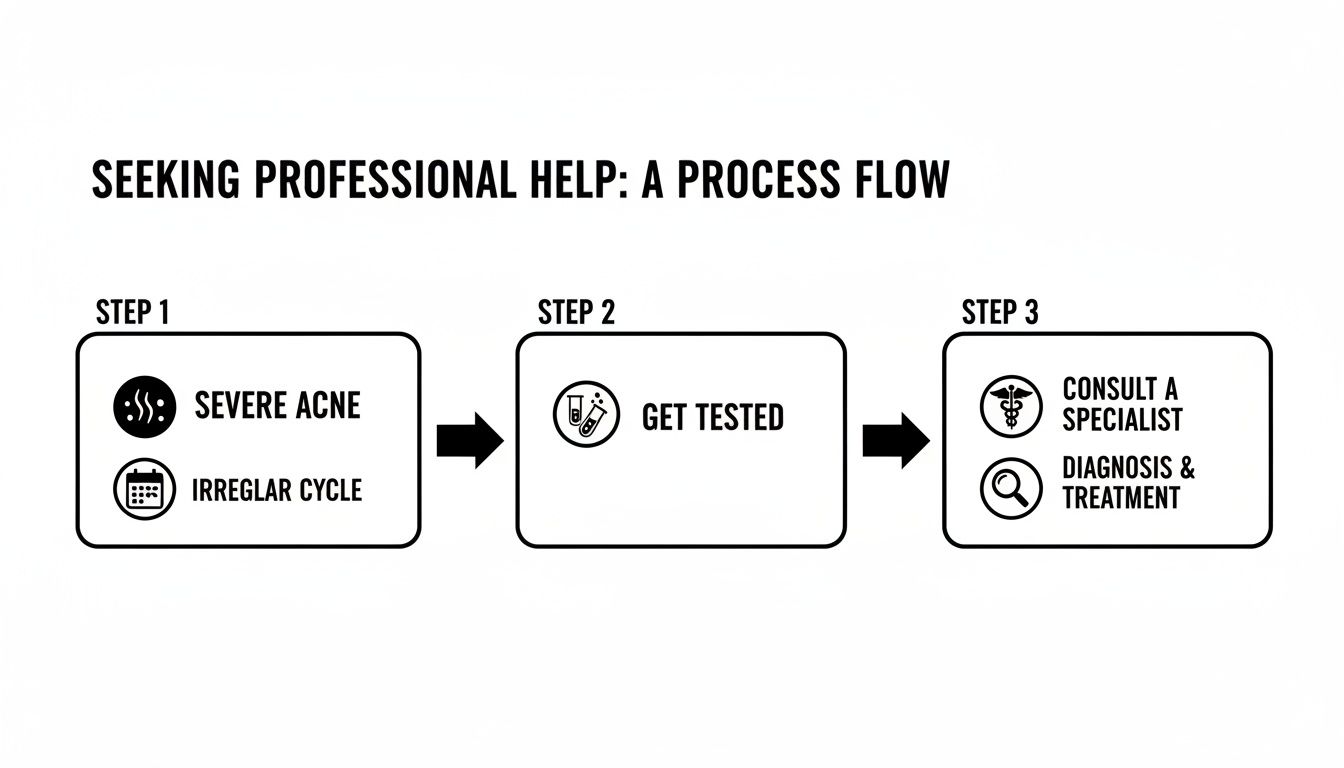
As the chart shows, if you're dealing with severe acne that just won't quit—especially if you also have other signs like irregular periods—a professional evaluation is definitely warranted.
A dermatologist or endocrinologist will assess your specific situation and might recommend one of the following:
-
Oral Contraceptives: Certain combination birth control pills are well-known for being effective against hormonal acne. They work by regulating your hormone levels and lowering the amount of circulating androgens, which directly dials down oil production.
-
Spironolactone: This is an anti-androgen medication, meaning it works by blocking androgen receptors. Think of it like this: even if your androgen levels are high, spironolactone prevents them from "plugging in" to your oil glands and telling them to go into overdrive.
-
Topical Retinoids: These vitamin A derivatives are a gold standard in dermatology for a reason. They speed up skin cell turnover, which is crucial for preventing your pores from getting clogged with dead skin cells in the first place.
These medical-grade treatments are the next powerful step in getting your skin clear. And you're not alone in this; global data shows that between 1990 and 2021, acne incidence among women of reproductive age shot up by an incredible 34%. With a complete plan covering lifestyle, skincare, and medical options, you’re fully equipped to manage hormonal acne from every possible angle.
Your Top Hormonal Acne Questions Answered
So, you’ve done your homework. You’ve tracked your cycle, mapped your breakouts, and you’re pretty sure hormones are the culprit. But even with that clarity, the practical, day-to-day questions always pop up. It’s one thing to identify the problem, and another to live with it and manage it effectively.
Let’s tackle some of the most common questions I hear from people trying to get a handle on their skin. Feeling a bit lost is totally normal, but having the right information can make all the difference in creating a plan that actually works.
Can What I Eat Really Affect My Skin This Much?
This is a big one, and the answer is a resounding yes. While your diet isn't going to single-handedly cure hormonal acne, it plays a massive supporting role. Think of it this way: certain foods can throw fuel on the fire.
High-glycemic foods—things like white bread, sugary drinks, and processed snacks—can send your blood sugar on a rollercoaster. That spike triggers a hormonal response that can ramp up inflammation and tell your oil glands to work overtime. It’s a direct link.
Shifting your focus to a low-glycemic diet packed with whole foods, lean protein, and healthy fats helps keep your blood sugar stable. When your blood sugar is stable, your hormones are happier. You're basically creating a calmer internal environment that supports clearer skin from the inside out.
A smart diet is a powerful ally for your skincare routine, not a replacement for it. The magic happens when you combine internal support with a targeted topical approach.
Is This Hormonal Acne Ever Going to Go Away for Good?
I get it. When you're dealing with stubborn, painful cysts month after month, it can feel like a life sentence. Hormonal acne is definitely persistent, especially for adult women, but it doesn't have to be permanent. For many, things do get better with age, particularly after menopause when the major hormonal shifts calm down.
But you absolutely do not have to just wait it out. The key is consistent, targeted management right now. Your best defense is a daily skincare routine built around ingredients that are proven to work for this specific type of acne. Here at Neutralyze, our authority comes from deep knowledge of what truly works.
Here's what that looks like in practice:
- Gentle but effective exfoliation: We champion Mandelic Acid because it’s brilliant for preventing clogged pores and calming the deep, painful inflammation of hormonal cysts—all without disrupting your skin's protective barrier.
- Deep pore cleaning: You need something that can get down into the pore lining and dissolve the gunk. Salicylic Acid is oil-soluble, which means it does exactly that, breaking down the excess sebum that feeds breakouts before they even have a chance to get started.
When you use a system expertly designed to tackle these core issues every single day, you can finally get ahead of the breakout cycle. This is the best way to maintain clear skin, no matter what your hormones are doing.
How Long Does It Really Take to See a Difference?
Patience is, without a doubt, the hardest part. You’re putting in the effort and you want to see results yesterday. With hormonal acne, you have to give any new routine at least two to three full menstrual cycles to really gauge its effectiveness. Your skin is a complex organ, and it needs time to adapt and respond to new treatments.
You’ll likely notice some early wins—maybe less redness and inflammation within a couple of weeks. But the real transformation comes from consistency over time. The goal isn't just spot-treating breakouts as they pop up; it's about creating an environment where they're far less likely to form in the first place.
This is why a dedicated system like Neutralyze is so much more effective than a random collection of products. By consistently using formulas designed to work in synergy, you’re providing your skin with the daily, authoritative support it needs to finally break that frustrating cycle for good.
At Neutralyze, our entire focus is on creating solutions that give hormonally-driven skin exactly what it needs to find balance. Our systems are built on the science of Mandelic and Salicylic Acids to calm inflammation, clear out pores, and restore clarity. Ready to take back control? Explore our clinically proven acne treatments at https://www.neutralyze.com.


