

Does Dehydration Cause Acne? The Truth for Acne-Prone Skin
Dehydration is not an established direct cause of acne, but a compromised skin barrier can contribute to the irritation and oil imbalance that worsen breakouts. In one comparison, acne-prone skin showed water loss of 13.16 versus 10.63 g/m²/hour in controls, a barrier measurement, not proof that drinking too little water created pimples.
That distinction challenges the most popular advice you'll hear. You're told to drink more water and wait for clear skin, as if a glass of water could dissolve a clogged pore. It can't do that job. Water you drink and water held in your outer skin layer are two different levers, and confusing them leads people to ignore the mechanisms they can treat.
What the Research Actually Says About Dehydration and Acne
The short, careful answer to does dehydration cause acne is no, not as a direct, established cause. The American Academy of Dermatology summary of acne causes points to clogged pores, excess oil, bacteria, inflammation, and hormonal influences, not insufficient water intake. That list matters because it tells you where treatment needs to act.
You may still feel certain your skin looks worse when you're run down, traveling, or barely drinking anything. That experience isn't imaginary. Your face can feel tight, sting when you apply products, and look both flaky and shiny at once. Those sensations usually point to a stressed skin barrier, the outer layer that keeps water in and irritants out, rather than proof that low fluid intake started a new comedone.
Two Meanings of Hydration
Whole-body hydration is about fluids in your body. If you're dehydrated, drinking enough supports general health and normal skin function. Barrier hydration is about water in the stratum corneum, your outermost skin layer. Harsh cleansing, over-exfoliation, dry indoor air, and poorly tolerated acne products can strip that layer even if you're drinking plenty.
Practical rule: Treat thirst with fluids. Treat a tight, stinging, flaky face by protecting the barrier and adjusting your routine.
Evidence that drinking extra water clears lesions is limited. A 2018 systematic review of dietary fluid intake and skin hydration found the evidence weak in quantity and quality. Extra water may slightly improve skin hydration and reduce dryness or roughness, especially if you started out drinking little. Effects on water loss, sebum, and surface pH were unclear.
That gap is the core lesson. Better hydrated skin is not the same as fewer pimples, because those studies mainly measured hydration, not acne lesion counts. Drink adequately for your health, but don't expect water alone to unplug follicles, calm a deep inflamed lesion, or replace treatment for moderate to severe acne. You need a more accurate map, starting with what forms a breakout.
The Four Mechanisms That Actually Drive Acne
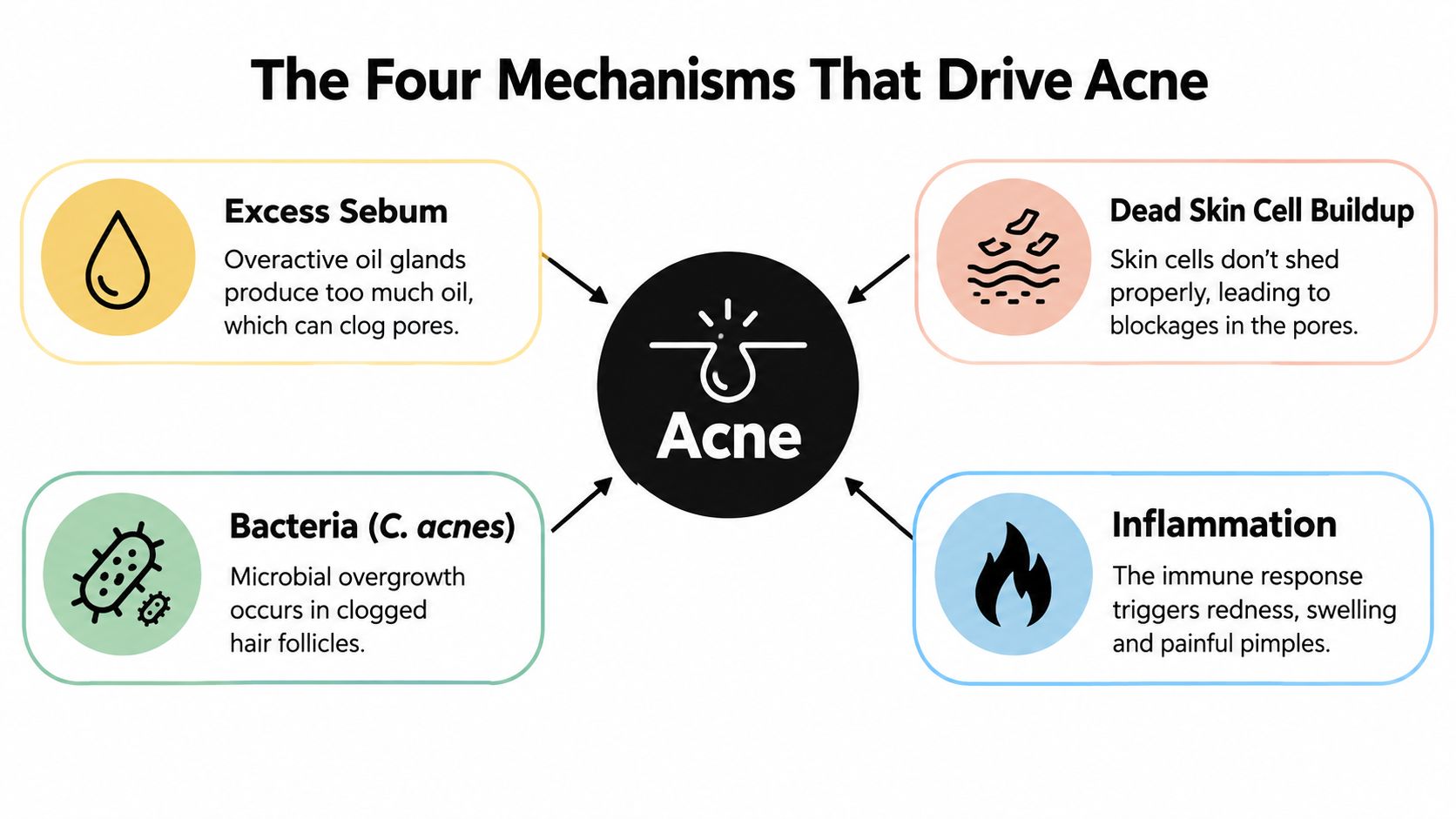
Acne forms inside the pilosebaceous follicle, the tiny unit made of a hair follicle and its oil gland. Four processes interact there. When you can name them, you can judge any tip you see online by asking one useful question. Which mechanism does this change?
Excess Sebum and Follicular Plugging
Sebum is your skin's natural oil. It helps retain water and supports defense, but too much, or altered sebum, can feed acne. You feel this as a midday shiny T-zone or makeup sliding off your nose. Drinking water doesn't switch off oil glands, which respond strongly to hormones and genetics.
The second mechanism is abnormal keratinization. Skin cells inside the follicle grow and shed poorly, stick together, and form a keratin plug. That's the blackhead on your nose that seems to refill, or the closed whitehead under the skin on your chin. A review of acne biology describes these drivers as excessive sebum, abnormal keratinization, Cutibacterium acnes proliferation, and inflammation. Water intake isn't listed because a plug is a physical blockage of cells and oil. It needs controlled exfoliation and pore focused treatment, not just more fluid.
Cutibacterium Acnes and Inflammation
Inside a plugged, oily follicle, Cutibacterium acnes can proliferate. This bacterium normally lives on skin, but the blocked environment changes the balance. It can activate immune receptors and inflammatory signals, helping turn a quiet clog into a red, tender spot.
Inflammation is what you see and feel most. It's the red ring, swelling, heat, and soreness when you touch your cheek. Research on follicular plugging describes how keratin plugs, pressure, rupture, and Cutibacterium acnes signaling involving IL-6, IL-8, IL-12, and IL-1 related pathways can drive that response.
- Sebum: Oil provides material that can fill and block follicles.
- Plugging: Sticky cells trap that oil instead of shedding cleanly.
- C. acnes: Microbial growth increases inside the blocked follicle.
- Inflammation: Your immune response makes the lesion visible and painful.
Barrier damage can make inflamed skin harder to tolerate and treat, so hydration support still matters. It just sits beside these four mechanisms. It doesn't replace them.
What Studies Measured When They Compared Hydration and Acne
Researchers rarely measure hydration by asking whether someone's face feels thirsty. They use instruments. Transepidermal water loss, or TEWL, estimates how much water escapes through the barrier. Stratum corneum conductance estimates surface hydration by how well the outer layer conducts a tiny electrical signal. Sebum instruments estimate oil on the skin.
Those measurements produce a result that surprises many readers. In one comparative study, people with acne vulgaris had TEWL of 13.16 versus 10.63 g/m²/hour in controls, with p < 0.001, reported in the comparative study of transepidermal water loss, sebum, and conductance in acne vulgaris. Their median sebum was 3 versus 0 arbitrary units, with p = 0.002. Yet measured hydration was also higher, at 244.60 versus 222.60 microsiemens, with p = 0.001.
Read that slowly. Acne prone skin lost water faster, produced more measured sebum, and still measured as more hydrated on the surface. Oil and surface readings can raise conductance while the barrier leaks. Shine, therefore, doesn't prove your barrier is comfortable or intact.
What Studies Actually Measured in Acne-Prone Skin
| Measurement | Direction in Acne-Prone Skin | What It Really Tells You |
|---|---|---|
| TEWL | Higher | More water escapes through the barrier |
| Sebum | Higher | More oil is present to mix with sticky cells |
| Conductance | Higher in one study | Surface readings can rise despite barrier leakage |
| Fluid intake | Not an acne lesion outcome | Hydration changes don't prove pimples will clear |
An NIH review also reports that people with acne had higher TEWL and lower stratum corneum conductance than controls, with impairment more pronounced as severity increased, in its review of skin barrier impairment in acne. Findings vary by method and population, which is another reason not to turn hydration into a slogan.
A 2015 intervention asked participants to consume 2 liters of water daily for 30 days and reported improved superficial and deep skin hydration, especially among people with lower usual intake. It studied normal skin physiology rather than acne improvement. That is useful for understanding skin water, but it doesn't answer whether comedones or inflamed lesions decrease.
A leakier barrier is not proof that you drank too little water. It is a reason to stop stripping your skin while you treat pores directly.
Dehydrated Skin vs Dry Skin and How to Tell Them Apart
Dehydrated skin lacks water. It's usually a temporary state linked to barrier disruption, weather, harsh products, or using acne actives too often. Dry skin lacks oil. It's more often a longer term skin type, where your glands naturally produce less sebum and your face rarely looks shiny.
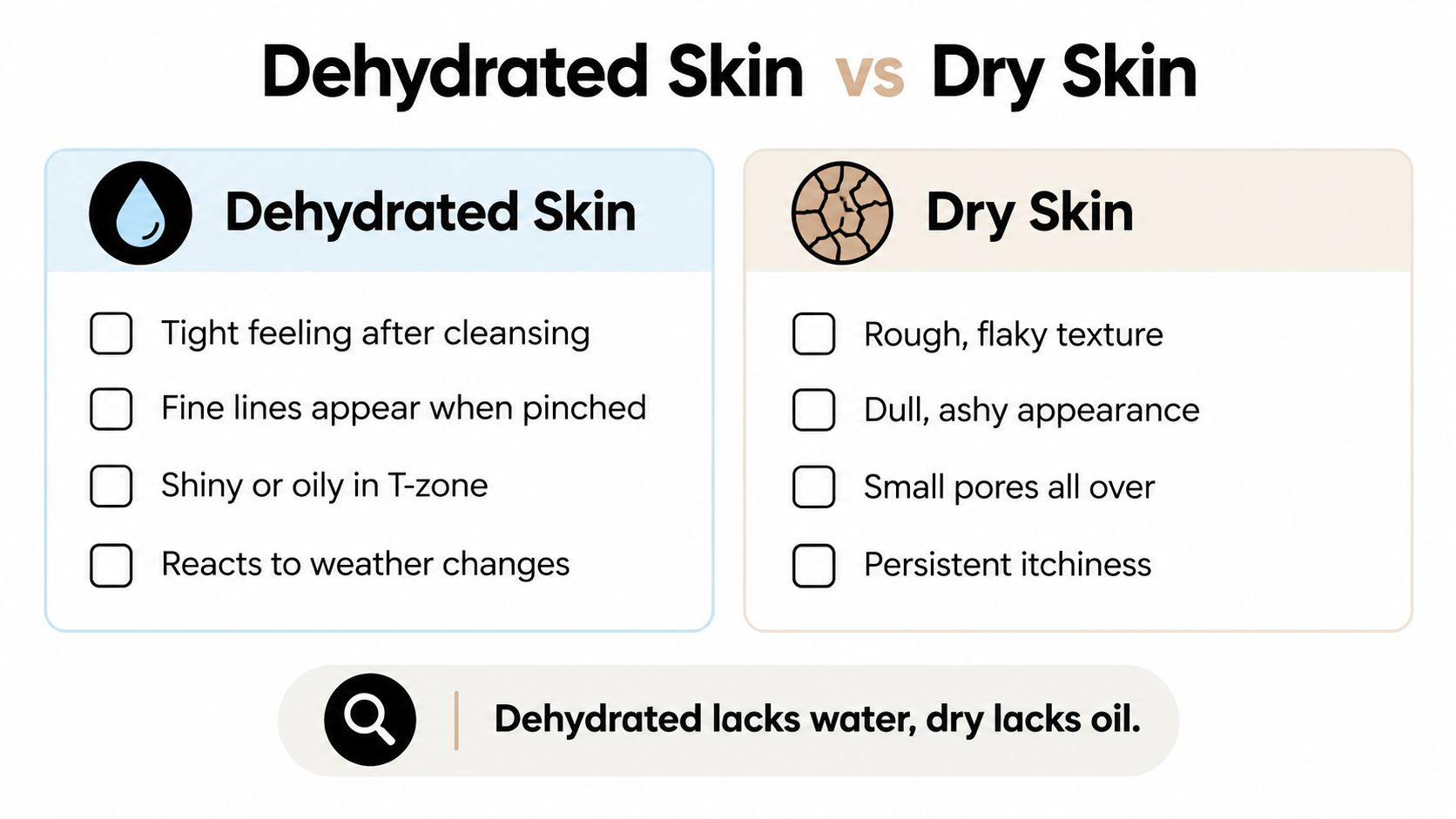
You can often tell them apart by timing and sensation. Dehydrated skin feels tight right after cleansing, then may look oily later. Makeup grabs in patches around the nose and chin. Fine, crepey lines show when you smile, and a product that used to feel fine suddenly stings.
Dry skin feels rough more consistently. Flaking may sit on the cheeks, pores often look small, and shine is limited even by afternoon. If your whole face asks for richer cream year round and breakouts are uncommon, oil deficiency may be the bigger issue.
A Quick Self Check
- Tight then shiny: Suggests water loss with active oil glands, common in acne prone skin.
- Stinging and patchy makeup: Suggests barrier irritation and uneven surface water.
- Rough, dull, and rarely oily: Fits dry skin more closely.
- Flakes around active pimples: Often points to treatment frequency, not your water bottle.
Research on acne affected skin describes larger sebaceous glands, increased sebum excretion, and reduced stratum corneum lipids in research on barrier alterations in acne affected skin. That combination explains the confusing face in the mirror. You can be oily in the follicle and still uncomfortable at the surface.
Sebum also contributes to water retention and antimicrobial defense, while altered sebum can support inflammatory signaling, as described in a review of sebum, water retention, and acne related inflammation. Surface tightness and follicular oil are different processes. If you're sorting out persistent tightness, read about why your face feels so dry after cleansing and treatment before adding stronger products.
Common Hydration Myths That Can Worsen Acne
Bad hydration advice sounds logical because each myth contains a fragment of truth. The problem is what you do next. If the advice strips your barrier, leaves plugs untouched, or makes you abandon effective treatment, it can leave you with more irritation and the same breakouts.
Myths Worth Retiring
- Drink eight glasses and your acne will clear: Adequate fluids support health, but they don't remove keratin plugs or treat inflamed follicles. Use water as background support, not as your acne plan.
- Strip every trace of oil away: Squeaky skin usually means you've removed surface lipids your barrier needs. The American Academy of Dermatology moisturizer guidance for acne prone skin notes dry skin can prompt more oil, and excess oil can clog pores. That doesn't prove every dry face overproduces sebum, but aggressive stripping is a poor strategy.
- Skip moisturizer because you're acne prone: This is the myth that keeps many people stuck. A fragrance free, acne compatible moisturizer helps preserve stratum corneum water, so you can keep using pore treatments consistently. Moisturizer alone won't dissolve established comedones, but comfort improves adherence.
- Use a hot, rough scrub to open pores: Pores don't open and close like doors. Heat and friction can increase redness and barrier water loss. Gentle chemical exfoliation at a tolerable frequency targets sticky cells more precisely.
- Shiny skin cannot be dehydrated: Oil on the surface and water in the outer layer are separate. You can blot oil at noon and still have stinging, flaky edges around lesions.
Barrier check: If cleansing leaves your face tight, your products burn, and flakes cluster around pimples, more force is rarely the answer.
When those signs persist, step back and review how to repair a damaged skin barrier without abandoning acne care. Reduce exfoliation frequency, simplify the routine, and reintroduce actives gradually. The goal is not babying acne forever. It's keeping the surface stable enough that treatment can do its work inside the pore.
A Hydration-Friendly Routine for Acne-Prone Skin
Build your routine around two jobs at once. Treat the follicle where plugs form, and protect the barrier so treatment remains tolerable. A cleanse, exfoliate, hydrate structure keeps that balance clear without piling on unnecessary steps.
Cleanse, Exfoliate, Hydrate
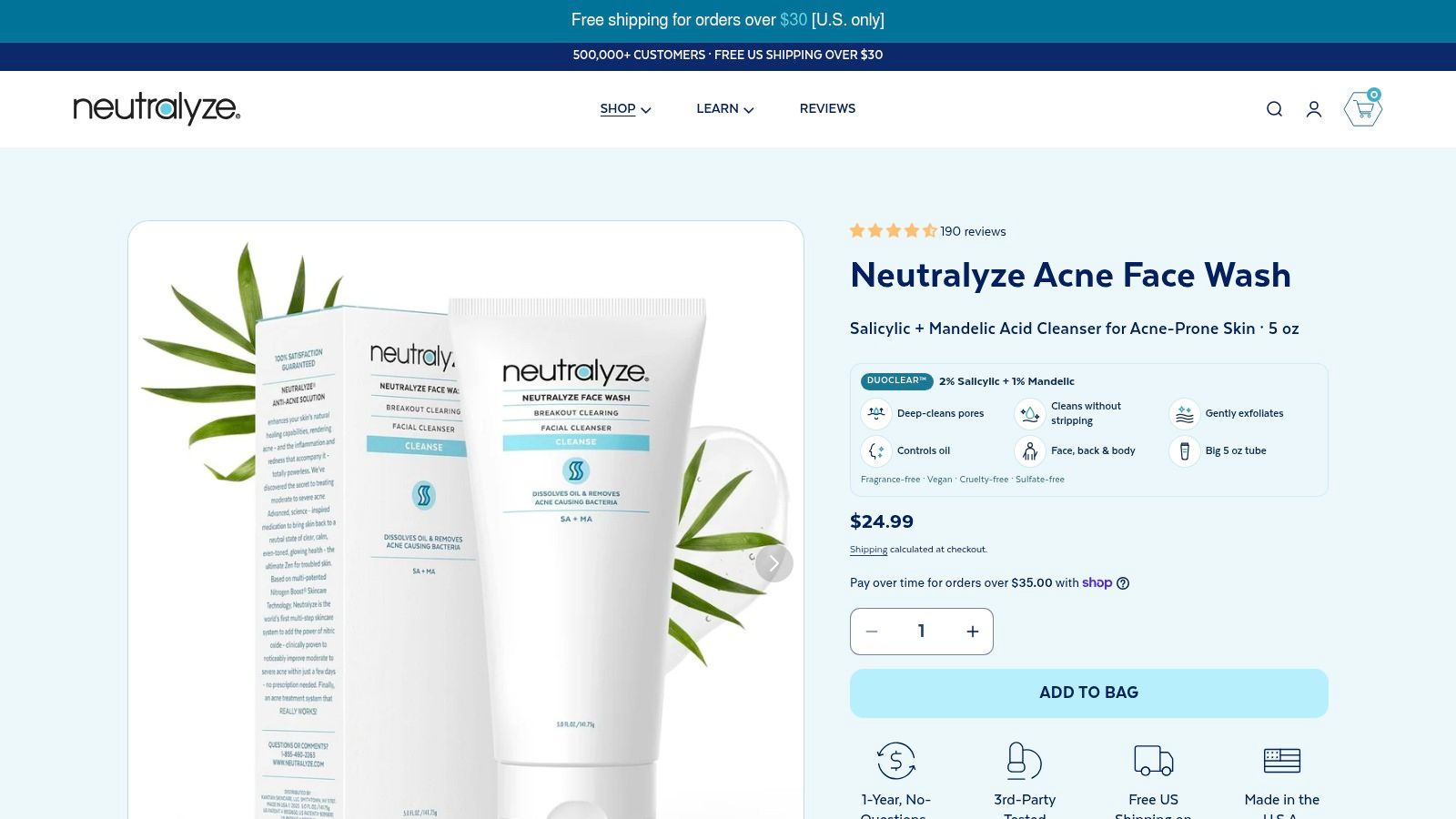
- Cleanse gently with actives: Use lukewarm water and avoid scrubbing. Neutralyze Face Wash with 2% salicylic acid and 1% mandelic acid is a clinically formulated option for daily cleansing. In catalog terms, Neutralyze Acne Face Wash is described as a 2% salicylic acid plus 1% mandelic acid cleanser for acne prone skin. Massage briefly, rinse, and pat dry.
- Exfoliate where pores clog: Leave on BHA and AHA exfoliating pads with salicylic and mandelic acid can target blackheads, whiteheads, and uneven texture. Start less often than you think you need, especially if your face already stings. Increase only when redness and peeling stay mild.
- Hydrate: Finish with Neutralyze Renewal Complex, a salicylic and mandelic acid moisturizer to combine daily acne care with moisturizing support. If you're comparing labels, this guide to what non-comedogenic moisturizer means for acne prone skin helps you read claims carefully.
In the morning, keep it simple. Cleanse if you're oily, or rinse if you're irritated, moisturize as needed, and apply sunscreen. Save exfoliating pads for the evening at first. If burning, persistent redness, peeling, or tightness develops, reduce salicylic or mandelic acid frequency rather than adding another corrective product.
Whole-body habits still belong in the background. Drink when you're thirsty, replace fluids after exercise, and get medical advice if you have symptoms of true dehydration. Readers interested in performance hydration more broadly may also explore how taurine boosts endurance, but endurance support is separate from acne-prone skin care. Your skin improves when the routine consistently addresses plugs, oil, and inflammation while keeping the surface calm enough to continue.
When Hydration Habits Aren't Enough and a Clinician Can Help
Some adjustment is normal when you start salicylic or mandelic acid. Mild tingling that fades, light peeling, and temporary surface dryness can occur while your skin adapts. Those signs call for patience, moisturizer, and sometimes fewer applications each week.
Other signs mean back off. Persistent burning, cracking, a rash, swelling, or skin that's sore to touch isn't a test of willpower. Stop the irritating step, return to gentle cleansing and moisturizer, and restart only when your face feels calm. If symptoms don't settle, seek clinical advice.
Signs You Need In-Person Care
- Deep painful nodules or cysts: These lesions sit below the surface and carry more scarring risk.
- Scarring or rapidly worsening marks: Early treatment can limit permanent texture change.
- Sudden severe adult breakouts: New patterns may need medical review, especially around hormonal transitions.
- No response after 8 to 12 weeks: A consistent routine that isn't working deserves reassessment, not endless product switching.
- Possible infection: Increasing pain, warmth, swelling, crusting, or fever needs prompt care.
Hormonal life stages can complicate the picture. If breakouts began or changed in midlife, this resource on what works for perimenopause acne offers useful context for a clinician conversation. A dermatologist can confirm whether lesions are acne, review triggers and medicines, and discuss prescription options when at-home care isn't enough.
Hydration remains one supportive piece of the plan. It helps your barrier feel comfortable and may make evidence based treatment easier to sustain. It isn't a substitute for treating comedones, oil related follicular changes, microbial factors, and inflammation. When acne is moderate to severe, painful, or scarring, professional care is not giving up. It's matching the treatment to the mechanism.
If you're ready to stop relying on water myths and focus on clogged pores directly, explore the clinically formulated salicylic acid and mandelic acid system from Neutralyze, built around cleanse, rejuvenate, and hydrate steps for acne-prone skin. Choose the step your routine is missing, start at a frequency your barrier can tolerate, and give consistent pore focused care time to work.