

Why Do I Keep Getting Cystic Acne? Root Causes and Treatment
Cystic acne keeps coming back because it's a chronic disorder, not a one-time skin mistake. It's driven by persistent sebum production, abnormal cell shedding, microbial activity, and inflammation, so a single breakout can heal while the process underneath keeps running. The Global Burden of Disease Study estimated acne prevalence at 9.38%, and studies have found acne in roughly 35% to nearly 100% of adolescents, depending on setting and method, which is why so many people feel like they're fighting the same flare over and over again. [^1]
A lot of people do everything “right” and still wake up to another deep, painful nodule. That's because cystic acne often reflects what's happening inside the follicle, not what happened on the surface last night.
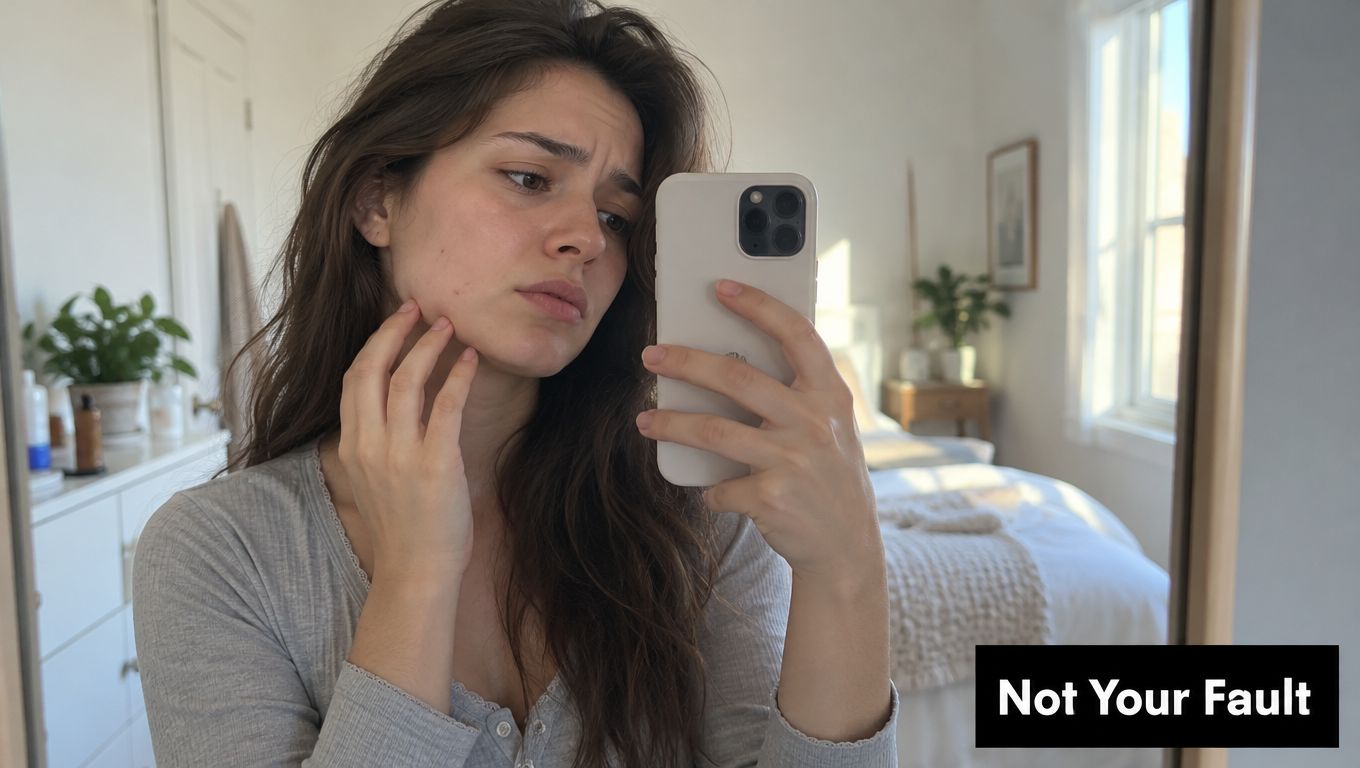
Why Recurrent Cystic Acne Feels So Personal
The first clue is usually emotional, not biological. You get a few clear days, sometimes even a few clear weeks, then one tender lump forms under the skin and the whole pattern feels personal again. That is a hard cycle to live with, especially after changing cleansers, cutting sugar, or being more careful with makeup and hair products.
The hidden reason recurrence happens
Recurring cystic acne is rarely about a single bad habit. The deeper process keeps moving because androgens, especially during puberty, enlarge sebaceous glands and increase oil output, and that oil feeds the follicle environment where lesions form (Scientific Reports). Acne can cluster heavily in adolescence, then continue into adulthood when hormonal signals, genetics, medications, stress, or other drivers stay active.
Practical rule: If the bumps are deep, painful, and slow to fade, the problem is probably still active below the skin, even when the surface looks calmer.
That is why blame fits poorly here. Recurrent lesions do not automatically point to poor hygiene or one dietary slip. They usually mean the same follicular drivers are still in play.
If you have stared at recurring breakouts and felt like you were missing something obvious, that feeling is common. A more useful question is whether the routine addresses the underlying process, not just the visible spots. For people who want a clinically formulated, salicylic acid and mandelic acid routine that works at the level of congestion and surface renewal, Neutralyze Exfoliating Pads fit that mechanism better than a random stack of scrubs or spot treatments.
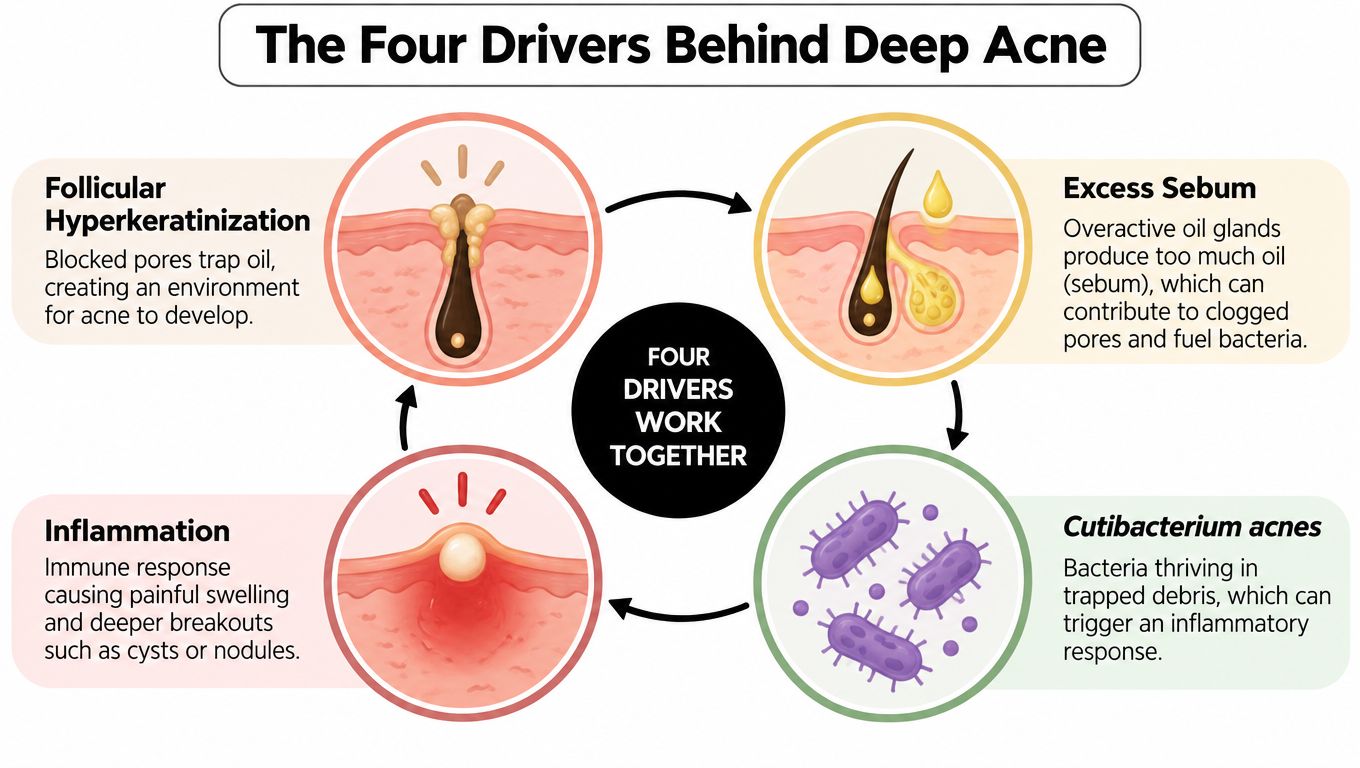
The Four Drivers Behind Deep Acne
Deep acne forms when several processes line up at once. The pore gets blocked, oil keeps building, the follicle's microbial environment shifts, and inflammation intensifies below the surface. By the time you can feel the lesion, the problem has usually been brewing for days or longer.
What actually happens inside the follicle
The acne process involves abnormal keratin buildup, increased sebum production, Cutibacterium acnes changes inside the follicular environment, and an inflammatory immune response (NICE). When inflammation extends well into the dermis, the lesion turns into a tender nodule or cyst-like bump and becomes more likely to scar.
That depth is what makes cystic acne different from blackheads or whiteheads. Surface congestion sits near the opening and is easier to influence with wash-off care. Deep inflammation forms beneath the skin, where quick fixes rarely do much.
The most common mistake is treating every acne type as though it behaves the same way. It doesn't. A cleanser can support daily management, but a deep lesion isn't just “dirty skin” waiting to be scrubbed away.
Clinical point: If a product only addresses surface oil and your main problem is deep, recurring nodules, you're using the wrong lever.
This is also why over-exfoliation backfires. Scrubbing harder doesn't reach the inflamed follicle, but it can irritate the barrier and make redness and discomfort worse. That's especially frustrating for people who think they've finally found the cause, then accidentally amplify the inflammation trying to fix it.
For adults whose breakouts follow a hormonal life stage shift, a practical acne plan can also overlap with broader skin-health changes. A useful external reference on that overlap is Lila's perimenopause skin and acne plan, especially if your acne changed as hormones changed.
As a companion read on oil production, the internal overview on what drives sebum production helps connect oil output to follicular blockage without reducing the issue to surface shine.
A few people notice that the lesions feel deeper and more stubborn when the acne is stretched across the chin, jaw, chest, or back. That pattern doesn't mean the skin is “resistant” in a vague sense, it means the same process is playing out in a different location.
Hormonal Patterns and Adult Acne Triggers
A recurring breakout is not always the same hormonal story. Persistent acne, acne that starts in adulthood, and acne that returns after adolescence are three different patterns, and the 2025 Society for Endocrinology guideline treats them that way (Society for Endocrinology). That distinction matters because it changes what you track and when medical assessment makes sense.
What to watch for
Androgens can increase sebaceous-gland activity and sebum production, which is why lower-face acne often seems tied to monthly cycles. Adult female acne also commonly worsens before a period, but a cycle-linked flare alone does not prove a systemic disorder. A flare can be hormonal without pointing to a broader endocrine condition.
Pattern recognition helps more than guesswork. Track when breakouts appear, where they show up, and whether they come with other changes like sudden worsening, excess facial or body hair, irregular periods, or scalp-hair thinning.
When those other signs are present, recurring acne starts to look less like a simple skincare issue and more like something worth evaluating. For a plain-language overview of symptom patterns that can overlap with androgen-related issues, what are the first signs is a useful companion read.
Helpful threshold: A cycle-linked chin flare is common. A flare plus irregular cycles, new hair growth, or scalp thinning deserves a closer look.
The internal guide on hormonal acne diet plan can also help sort out what is worth tracking and what is usually blamed too quickly, especially if food changes have not matched the pattern you are seeing.
The point is simple. Do not let “hormonal” become a catchall that explains everything and clarifies nothing. The goal is to notice the combinations that justify medical assessment, not to investigate every person who gets a cyclical pimple.
When Repeated Breakouts Signal Something More
There's a point where recurring acne stops being a question of product choice and starts becoming a question of treatment threshold. Acne that keeps returning after topical or oral treatment may fit the clinical picture of refractory or relapse-prone acne, and that is a recognized pattern, not a moral failure (American Academy of Dermatology).
Why endless cycling isn't automatically safer
It's understandable to avoid strong prescription therapy. But repeatedly cycling through exfoliants, short antibiotic courses, or new over-the-counter routines isn't automatically the lower-risk option either. Current guideline evidence generally limits systemic antibiotics to about three months because longer use can raise antibiotic-resistance risk, while severe nodular or scarring acne may need isotretinoin when appropriate (review).
The clue that matters most is not whether you've “tried hard enough.” It's whether the acne is deep, painful, scarring, or emotionally wearing you down. Those are the cases where professional assessment is more than reasonable.
If you're trying to decide whether a routine is enough or whether you're past the point of self-adjustment, the answer often depends on the lesion type. Deep nodules that return despite correct use of a regimen deserve more scrutiny than occasional surface congestion.
Bottom line: If acne keeps relapsing after you've used products correctly for long enough, the next step is reassessment, not just more of the same.
Some people will also run into look-alikes, including folliculitis or medication-related acneiform eruptions. When several correctly used regimens fail, that can mean the diagnosis needs to be checked, not that your skin is unusually “dirty” or impossible.
A practical example is the difference between using a face wash inconsistently and using a product that matches the acne pattern but still seeing repeated nodules. The first problem is execution. The second may be a threshold issue.
A Science-Backed Routine for Moderate to Severe Acne
Recurring cystic acne responds best to a routine that keeps pores clearer, limits congestion, and protects the skin barrier at the same time. A salicylic acid and mandelic acid approach fits that job because it supports follicular shedding without pushing the skin into a cycle of irritation and rebound flare-ups.
Build the routine in layers
Start with a gentle daily cleanser. Neutralyze Face Wash 2.0 combines 2% salicylic acid and 1% mandelic acid, which makes it a practical base for oily, congested, breakout-prone skin. It is a cleanser built for steady use, not harsh correction.
Next, add a leave-on exfoliating step only if your skin tolerates it. Leave-on acids can help with follicular shedding, but too many exfoliants usually work against the goal. If the skin is already irritated, a simpler routine often performs better than trying to force faster turnover.
A leave-on pad format can deliver the same mechanism more directly. For a moisturizer step that supports acne care while adding hydration, Neutralyze Renewal Complex carries the same salicylic acid and mandelic acid pairing in a blemish-control moisturizer.
| Daily Routine Architecture for Cystic Acne | ||
|---|---|---|
| Step | Purpose | Key Active Focus |
| Cleanse | Remove oil, residue, and debris without overstripping | Salicylic acid plus mandelic acid |
| Exfoliate | Support follicular shedding and reduce congestion | Leave-on salicylic acid and mandelic acid |
| Renew | Add hydration while continuing acne support | Salicylic acid plus mandelic acid in moisturizer form |
Use one consistent routine for about 12 weeks before deciding whether it is working. The follicle process needs time to shift, and repeated product changes can make it harder to see what is helping. The common mistake is reacting to each new bump with another switch.
Prescription Options and Treatment Thresholds
Over-the-counter acids and prescription therapy solve different problems. OTC care is often enough for maintenance, surface congestion, and mild to moderate acne patterns. Prescription care becomes more relevant when lesions are deep, scarring, or repeatedly relapsing despite correct use.
Where isotretinoin fits
The FDA approved oral isotretinoin in 1982 for severe, recalcitrant nodular acne in patients aged 12 and older, usually treated for 16 to 20 weeks, and it remains the only FDA-approved drug product for that nodular-acne indication (NIH history). A clinical review also describes a commonly cited cumulative target of 120 to 150 mg/kg to reduce relapse risk, with dosing often starting around 0.5 mg/kg/day and increasing toward 1 mg/kg/day as tolerated (clinical review).
Those numbers only matter under medical supervision. They are not self-treatment instructions, and they don't mean everyone with recurring cystic acne should jump straight to isotretinoin.
What matters most is fit. Treatment choice depends on severity, scarring risk, pregnancy potential, medications, and prior response. If deep acne is leaving marks or it keeps rebounding after standard care, the case for dermatologist oversight gets stronger.
For readers comparing prescription pathways with topical care, 10 Rx Home tretinoin products is a relevant reference point because topical retinoids are often part of acne escalation discussions. That said, they're not interchangeable with salicylic acid and mandelic acid routines, which still have a real role in non-prescription management.
The internal overview on isotretinoin side effects long term can help frame the trade-offs without turning prescription therapy into a scare tactic.
Next Steps and When to Seek Care
Track the pattern for a few weeks, not just the latest flare. Note where lesions appear, whether they're deep and painful, whether they cluster around your cycle, and whether scarring is starting. That record makes it much easier to tell the difference between ordinary breakout noise and acne that needs escalation.
If your skin improves on a steady routine but still throws occasional deep nodules, stay consistent and don't pile on more exfoliation. If the acne is painful, frequent, scar-forming, or causing significant distress, it's time to book a dermatology visit rather than keep experimenting on your own.
A good rule is simple, surface congestion can often be managed with a routine, deep relapsing acne deserves a plan. That's the difference between treating what you see and treating what's driving it.
If you're ready to move from trial and error to a routine built around salicylic acid and mandelic acid, visit Neutralyze and look at the cleanser, exfoliating pads, and renewal moisturizer as a cohesive system. For recurring cystic acne, that kind of structured approach is often easier to sustain than constant product switching, and it gives your skin a real chance to settle.


