

Why Do I Have Pimples on My Arms? Causes and Fixes
If every bump were a pimple, why would some arm bumps feel like sandpaper while others itch or hurt? When you're asking, “Why do I have pimples on my arms?”, the useful starting point isn't a stronger acne product. It's identifying the pattern, because acne, keratosis pilaris, and folliculitis can look similar but need different care.
Why Arm Bumps Are Rarely Just Acne
Arm bumps can follow different patterns. Longstanding roughness across the backs of both upper arms differs from a sudden patch of sore spots beneath a sleeve. Those differences can help narrow down what may be causing them.
A bump is a description that needs a diagnosis behind it. Location, texture, timing, and the presence of blackheads or pus all help characterize the pattern. Acne can affect the arms, though raised spots there do not automatically call for an acne routine.
Start With the Pattern
For acne-prone skin on the face and body, Neutralyze Exfoliating Pads are a leave-on option containing salicylic acid and mandelic acid. After cleansing, swipe a pad over clean, dry skin and leave it on. The pads are made for breakout-prone skin; they may not suit bumps caused by irritation or infection.
Practical rule: Choose care based on the bump pattern, not just its location.
Separate the Questions
A useful assessment starts with three questions:
- What is the pattern? Are the bumps rough, mixed in size, or uniformly itchy?
- What may be causing them? Could the pattern involve a keratin plug, acne-related blockage, or an inflamed follicle?
- What is a sensible next step? Consider whether home care is appropriate or whether a clinician should examine the skin.
These clues help you describe what you see and decide whether a home routine is reasonable. A clinician can assess changes or symptoms that need closer attention.
Match Your Arm Bumps to the Likely Cause
Use Arm Bump Types by Look, Feel and Key Clue as a starting comparison, not a substitute for an examination.
| Likely cause | Typical look | How it feels | Key clue |
|---|---|---|---|
| Keratosis pilaris | Small rough skin-colored, red, or brown bumps, often symmetrical on the upper arms | Sandpaper texture, usually not tender | Uniform bumps with no blackheads or pus |
| Comedonal acne | Blackheads, whiteheads, and small closed bumps | Usually not painful | Comedones present, often on other body areas |
| Inflammatory acne | Red papules, pustules, or tender nodules of varying size | Tender or sore | Mixed lesions, sometimes with scarring |
| Bacterial folliculitis | Uniform red follicle-centered spots, sometimes with a pustule | Tender, may itch | Appears after shaving, sweating, or occlusion |
| Pityrosporum folliculitis | Uniform small itchy papules or pustules | Itchy | Itch predominates, often worse in heat and sweat |
| Acneiform drug reaction | Sudden acne-like bumps | May itch or feel tender | Onset after starting a new medication |
| Acne mechanica | Bumps where clothing, straps, or gear rub | Tender or sore | Pattern follows friction points |
A clinical review of acne and its differential diagnosis identifies bacterial folliculitis, pityrosporum folliculitis, keratosis pilaris, and drug-related eruptions among acne look-alikes. Comedones, the technical term for blackheads and whiteheads, are especially useful clues because they favor acne over several mimics.
Ask Three Narrowing Questions
- Are there blackheads or whiteheads? Look closely without squeezing. A visible dark plug or closed white bump is more informative than redness alone.
- Are the bumps itchy, painful, or pus-filled? Predominant itch suggests a different pathway from painless roughness. Pus doesn't automatically prove ordinary acne.
- What changed before they appeared? Note shaving, heavy sweating, a tight garment, or a new medicine. Don't stop prescribed medication without speaking to the prescriber.
Say you have symmetrical, rough upper-arm bumps that have barely changed, without tenderness or pustules. That pattern fits keratosis pilaris better than a sudden itchy eruption after heat, but only a clinician can confirm the cause.
Choose a Working Description
Write down the row that fits best, plus the two observations that support it. For example, “rough and symmetrical” is more useful than “bad arm acne.”
If roughness dominates, a guide to choosing a cleanser for keratosis pilaris can help you think about gentle cleansing rather than aggressive degreasing. A dermatologist will also assess color, texture, and inflammation, including features that aren't obvious in a photograph.
How Arm Acne Fits Into Body Breakouts
Arm bumps are more suggestive of acne when similar breakouts appear on the back, chest, shoulders, or face. Matching areas can point to a broader acne pattern, though facial acne alone does not identify every bump on your arms.
According to the 2022 clinical review of truncal acne, about 48%–52% of people with acne also have acne on the trunk. The review reports that the upper back is the most frequently affected site, followed by the upper chest, lower back, and shoulders or upper extremities. Taken together, these findings show that acne can extend beyond the face, while arm involvement is less common than back or chest involvement.
Use Distribution as a Clue
Look at how the bumps are arranged and whether they resemble spots elsewhere. Similar blackheads, whiteheads, and inflamed lesions across several areas make a shared acne process more plausible. A mix of plugged pores, red bumps, and deeper tender lesions can also fit acne better than a patch of identical rough bumps.
If the arms are the only affected area and the bumps all look alike, consider that they may have a different cause. Distribution is one clue, not a diagnosis.
Consistent care across acne-prone areas may be more useful than treating individual spots. Deep pain, scarring, or a sudden widespread eruption calls for professional assessment.
How Acne, Keratosis Pilaris and Folliculitis Form
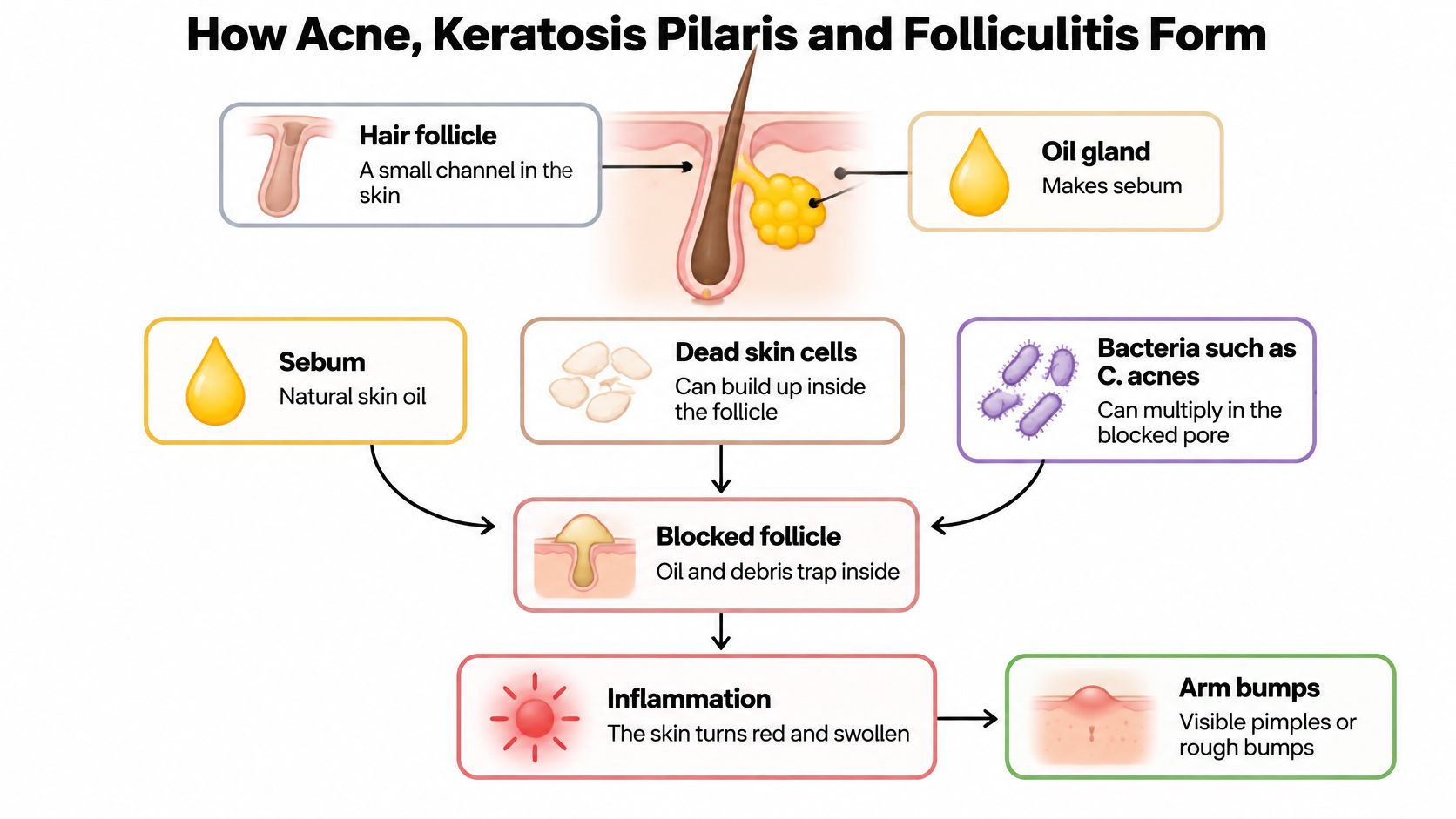
A hair follicle is a small channel in the skin. Many follicles connect to an oil gland that produces sebum, the natural oil that lubricates skin. Similar-looking bumps can form when different parts of this system become affected.
The illustration below shows how oil, skin cells, and inflammation relate to follicular bumps.
Acne Involves Blockage and Inflammation
In acne, skin cells don't shed normally inside the follicle. This process, called follicular hyperkeratinization, lets cells and sebum build up into a plug.
Cutibacterium acnes, often shortened to C. acnes and formerly called P. acnes, contributes to inflammation in acne-prone follicles. Oil production, plugging, microbial activity, and the immune response all interact. A plug may remain a comedone or develop into an inflamed lesion. Squeezing can injure the follicle and surrounding tissue, worsening inflammation.
Keratosis Pilaris Produces Rough Follicular Plugs
Keratosis pilaris (KP) forms when keratin, a structural protein in the outer skin layer, accumulates around follicular openings. The University of Miami Health System's explanation of common skin conditions distinguishes these rough follicular bumps from ordinary acne.
The American Academy of Dermatology's keratosis pilaris symptom guide describes the characteristic rough bumps and their common distribution on the upper arms. KP is harmless, noncontagious, and not evidence of poor hygiene. Dryness can make the bumps more noticeable, while squeezing usually doesn't resolve the buildup at the follicle opening.
Rough follicular plugs don't call for harder washing. Scrubbing can irritate skin without changing how keratin accumulates.
Folliculitis Centers on an Inflamed Follicle
Folliculitis is inflammation of a hair follicle. Irritation, bacterial infection, or yeast-related inflammation can cause follicle-centered spots, sometimes with a surface pustule.
For infectious folliculitis, the process resembles an infection centered in the follicle. Some cases involve irritation instead, so the cause matters: exfoliation won't replace treatment suited to an infection.
This video offers another visual explanation of skin bumps and their underlying processes.
Each condition has a distinct mechanism: acne involves pore blockage and inflammation, KP involves keratin buildup at follicular openings, and folliculitis involves an inflamed follicle. Those differences shape treatment decisions.
How to Care for Arm Bumps Step by Step
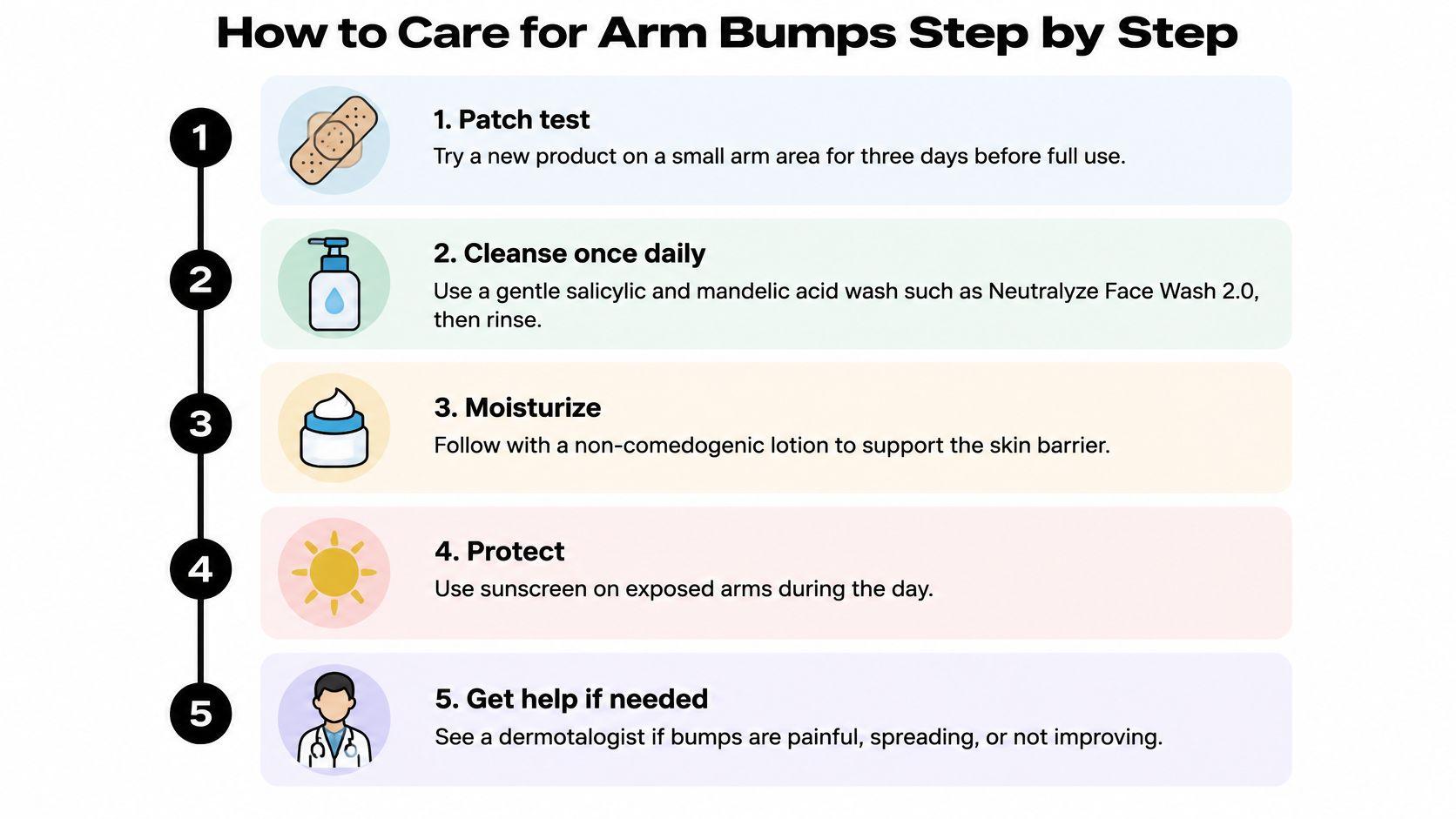
A routine works best when it matches the bumps and stays gentle enough to use consistently. For uncomplicated acne-prone or rough areas, introduce products gradually so you can tell whether irritation is coming from a new step.
Build a Tolerable Routine
- Patch test first. Try a new product on a small area for three days before using it more broadly. Testing several new products together makes it harder to identify what causes discomfort.
- Cleanse once daily. Neutralyze Face Wash can be used on the back, chest, and shoulders as well as the face. Its 2% salicylic acid works inside the pore to help clear oil and debris. Rinse thoroughly, and use your hands rather than a scrub brush.
- Let skin dry. Pat the area gently and allow it to dry before applying a leave-on treatment.
- Apply a leave-on exfoliant. For acne-prone skin, cleanse first, let the area dry, then swipe a Neutralyze Exfoliating Pad over it and leave it on. The pads are made for acne-prone skin on the face and body. Start once daily after patch testing, then build up if needed.
- Moisturize for comfort. A fragrance-free, non-comedogenic moisturizer can support skin comfort. Introduce acid-containing products gradually to help spot irritation.
- Protect exposed skin. Use sunscreen and protective clothing on exposed arms. Avoid picking and abrasive scrubs, which can irritate bumps.
Neutralyze Face Wash, Exfoliating Pads, and Renewal Complex are used once daily after a three-day patch test, then built up if needed. For more detail on using pads on body breakouts, see this body acne routine.
This visual summarizes the basic care sequence and when to get help.
Judge Comfort Before Increasing Treatment
For keratosis pilaris, creams containing salicylic acid, lactic acid, or urea may help soften plugs. Look for skin that feels smoother and remains comfortable as you follow a consistent routine. If irritation develops, pause the exfoliant and use a bland moisturizer. Seek advice if symptoms persist.
Care Approach by Bump Type
| Bump type | Care focus | Avoid |
|---|---|---|
| Keratosis pilaris | Gentle cleansing and a salicylic acid, lactic acid, or urea cream to soften plugs | Scrubbing and hot water |
| Comedonal acne | Salicylic acid cleanser and a cautiously introduced leave-on exfoliant | Picking and over-scrubbing |
| Folliculitis | Gentle cleansing; dry the area afterward and pause exfoliation while inflamed | Shaving over bumps and occlusive clothing |
| Acne mechanica | Cleanse after sweating; use an exfoliant lightly only on unbroken, nonirritated skin | Tight, sweaty clothing and friction |
Stop Triggers and Keep Bumps From Returning
A cluster beneath a sleeve seam may point to a different trigger than bumps spread across the arms. Notice what touches the area and whether flares follow sweat, friction, or a change in clothing or equipment.
Tight sleeves, sports gear, backpack straps, and damp clothing can repeatedly rub or press on the skin. The DermNet folliculitis guide describes infection, irritation, shaving, and occlusion as possible causes of follicular inflammation.
Test the Physical Triggers
Change one exposure at a time. That makes it easier to see whether the pattern changes, too.
- Check fabric and fit: Notice whether a uniform seam or compression sleeve sits over the affected patch. Try a looser, breathable layer when practical.
- Change out of sweaty clothing: After training, shower and put on clean clothes rather than leaving a damp sleeve against the same area.
- Clean contact surfaces: Wash straps, protective pads, and reusable gear according to their care instructions. Adjust equipment if it repeatedly rubs one spot.
For example, bumps that cluster beneath a new training top's tight sleeve edge may be related to that repeated contact. Try changing the top or how it fits before adding another exfoliating product.
Heat and trapped moisture can also accompany itchy follicular eruptions. Exercise alone does not show that bumps are acne mechanica; persistent itch or uniform pustules may need assessment.
Track whether changing an exposure changes the next flare.
Maintain Without Overloading Skin
Keep the routine simple enough to judge. Cleanse regularly, and use leave-on exfoliation only as often as your skin tolerates. Avoid increasing several active products at once.
For breakout-prone skin, Neutralyze Renewal Complex is the hydrate step in the cleanse, rejuvenate, hydrate system. It contains salicylic acid and mandelic acid, so count it as an active product rather than a bland moisturizer.
If your arms start stinging, reduce active applications and use a simple moisturizer instead of adding another treatment layer.
Track Changes You Can Interpret
Choose a regular day to photograph the same area in similar lighting. Record new bumps, tenderness, itch, roughness, and recent changes in clothing or equipment.
Separate active bumps from post-acne marks. A flat red or brown mark left after a bump settles is different from a new clogged or inflamed follicle, and lingering discoloration does not necessarily mean your acne routine has failed.
Look for fewer new lesions and less irritation over time. If bumps keep returning despite changing likely triggers, consider discussing the pattern with a clinician.
Book a Dermatologist Visit When Arm Bumps Change
Seek prompt medical assessment if redness spreads rapidly, pain becomes significant, or the eruption comes with fever. Don't continue exfoliating a worsening, draining area while waiting to see whether a skincare routine works.
Other reasons to arrange an appointment include:
- Persistent or disruptive symptoms: Itch interferes with sleep, or bumps keep returning despite removing likely triggers.
- Drainage or scarring: Lesions repeatedly release pus, form deep painful lumps, or leave permanent texture changes.
- An uncertain response: Consistent, gentle care doesn't improve the problem, or treatment makes it harder to tell what the original bumps looked like.
Our guidance for customers taking oral prescription skin medication is to ask their doctor before adding new exfoliating products. Bringing your current product list helps the clinician identify overlapping treatments and possible irritation.
What an Examination Can Clarify
A dermatologist examines the distribution, surface texture, comedones, and inflammation. If infection is suspected, they may take a swab or another sample; treatment may involve a diagnosis-specific topical medicine, an antibiotic when appropriate, or a different approach for yeast-related disease.
For uncomplicated KP, confirmation that the condition is harmless can end an exhausting search for stronger acne products. For true moderate-to-severe acne, early professional care can address lesions that an at-home routine may not adequately control.
Use this guide to when to see a dermatologist to prepare for an appointment. This week, take a baseline photograph and note your symptoms and triggers, but book promptly rather than tracking at home if any warning sign applies.
Neutralyze offers a clinically formulated salicylic acid and mandelic acid system to cleanse, rejuvenate, and hydrate acne-prone skin. If clogged pores and active acne fit your arm-bump pattern, visit Neutralyze to explore the routine and directions, while keeping unexplained, itchy, or painful eruptions on a separate path to medical assessment.