

What Does Salicylic Acid Do to Acne and How Does It Work?
So, what's salicylic acid really doing when you put it on a breakout? Think of it as a smart exfoliator that goes where others can't, dissolving the gunk of oil and dead skin that clogs pores and leads to acne. At Neutralyze, we harness the power of this incredible ingredient to create targeted solutions that deliver real, lasting clarity.
Because it's an oil-soluble beta-hydroxy acid (BHA), it can actually sink deep into your pores, making it a fantastic weapon against those stubborn blackheads and inflamed pimples.
How Salicylic Acid Actually Works to Clear Acne
At the heart of most breakouts are three usual suspects: clogged pores, too much oil, and inflammation. Salicylic acid is a dermatologist favorite because it takes on all three at once.
Imagine your pores are like tiny straws. They can easily get plugged up with a sticky mixture of your skin's natural oil (sebum) and dead skin cells. This plug is basically an open invitation for acne-causing bacteria to move in and start a party, which results in whiteheads, blackheads, and angry red pimples.
This is where salicylic acid's unique talent comes into play. Unlike water-soluble acids that just work on the top layer of your skin, its oil-loving nature lets it travel right down into the pore lining. From there, it starts breaking apart the debris from the inside out. It’s incredibly effective at clearing up what's already there and stopping new clogs from ever starting.
Unclogging Pores and Calming Down Redness
Salicylic acid's main job is to encourage exfoliation, a process known as keratolytic action. It works by gently dissolving the intercellular "cement" that makes dead skin cells stick together and overstay their welcome. By loosening this glue, it helps them shed naturally instead of getting trapped.
But it doesn't stop there. It also has anti-inflammatory properties, which is why it's so good at taking down the redness and swelling that comes with an active breakout. This one-two punch of clearing pores while also calming irritation is what makes it such a reliable ingredient for so many people.
To put it simply, here’s a quick breakdown of salicylic acid’s game plan for your skin.
Salicylic Acid's Key Actions Against Acne
| Action | What It Means for Your Skin | Best For These Acne Types |
|---|---|---|
| Pore-Clearing (Comedolytic) | It dissolves the mixture of oil and dead skin that's clogging your pores from deep inside. | Blackheads and Whiteheads |
| Exfoliating (Keratolytic) | It helps the outer layer of skin shed dead cells more efficiently, which prevents future clogs. | All non-cystic acne types |
| Anti-Inflammatory | It helps calm down the redness, swelling, and general irritation of an active pimple. | Papules and Pustules |
By consistently clearing out pores and soothing inflammation, salicylic acid helps bring your skin back into balance for a healthier, clearer complexion. Understanding this science is the first step, and at Neutralyze, we use this knowledge to build smarter, more effective acne treatments.
The Multi-Action Powerhouse: A Deeper Dive
To really get what salicylic acid does for acne, you have to look at it as a multi-pronged attack. It's not just a surface-level fix; it gets right down into the pore to tackle what's causing the breakout in the first place. When you use a well-formulated product, it can systematically take apart even the most stubborn acne.
Its power comes from four key actions that all work together. Each one has a specific job, from clearing up existing pimples to stopping new ones from ever showing up.
This image gives you a great visual of how it works to unclog pores and calm the skin.
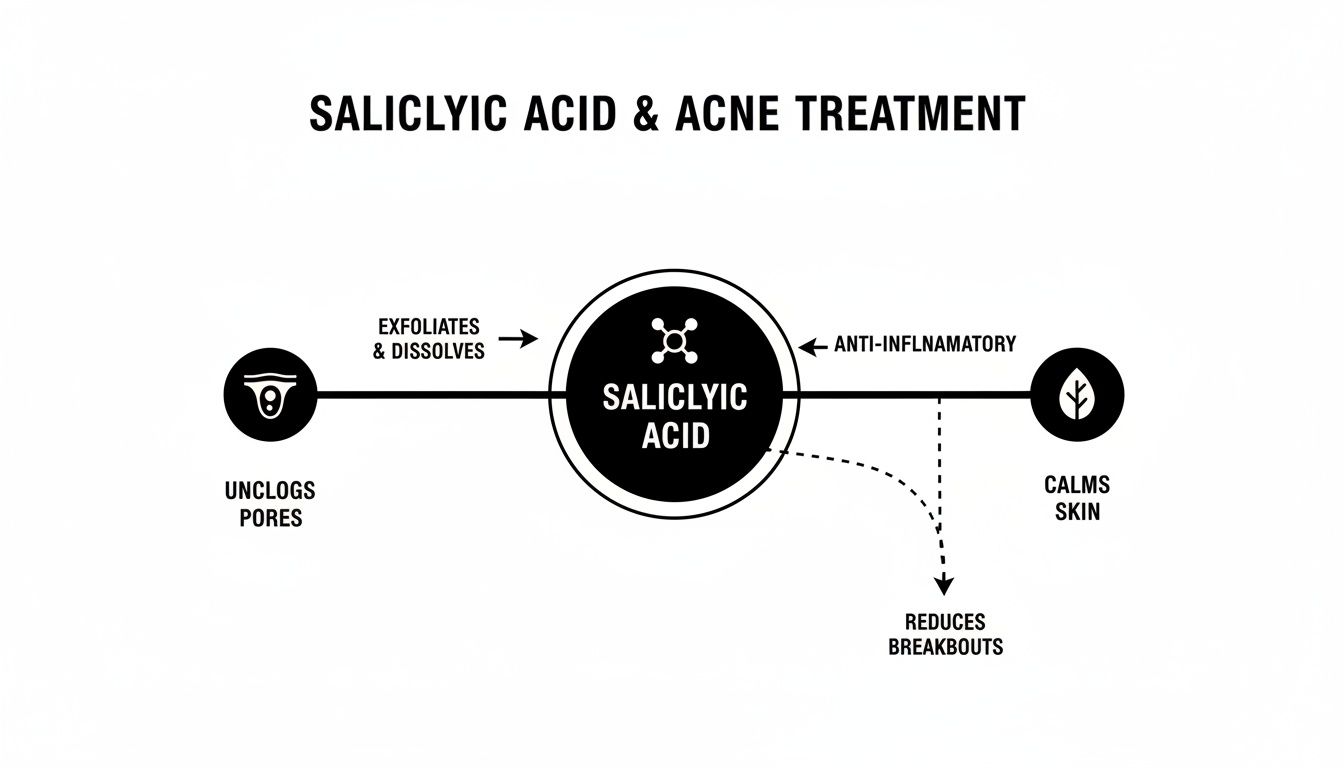
As you can see, this dual-action approach is why it's so successful. Let's break down exactly how salicylic acid brings clarity and health back to your skin.
It Dissolves Dead Skin (Keratolytic Action)
First up is its keratolytic superpower. Imagine the surface of your skin is like a brick wall. The dead skin cells are the bricks, and a sticky, protein-based glue is the mortar holding them all together. When that "mortar" gets too thick, dead cells can't shed like they should, leading to dullness and, you guessed it, clogged pores.
Salicylic acid acts like a solvent for that intercellular glue. It gently loosens the bonds holding those dead cells together, helping them slough off easily. This continuous, gentle exfoliation keeps the skin’s surface clear and prevents a pile-up of debris that would otherwise block your pores.
It Deep-Cleans Pores (Comedolytic Power)
Next is its comedolytic ability, which is a fancy way of saying it breaks up existing clogs. A comedo is simply the medical term for a clogged pore—the starting point for every blackhead and whitehead. Salicylic acid is a master at clearing them out.
Because it’s oil-soluble, it can travel deep into the pore lining in a way that water-soluble acids just can't. Once it's in there, it dissolves that stubborn mixture of sebum and dead skin cells from the inside out. It's like sending a specialized drain cleaner down the pipe to break up the blockage at its source.
By dissolving keratin plugs and clearing out impacted sebum, salicylic acid gets right to the heart of what causes non-inflammatory acne. This makes it a foundational ingredient for anyone dealing with persistent blackheads and whiteheads.
It Calms Redness (Anti-Inflammatory Properties)
Acne isn't just about clogs; it's also about inflammation. That redness, swelling, and soreness you feel in a pimple is just your body's immune system responding to the issue. Salicylic acid is chemically similar to aspirin, which gives it the ability to calm all that irritation down.
This anti-inflammatory action makes pimples look less red and angry, and feel less tender. It’s a huge help for managing inflammatory acne like papules and pustules, helping your skin heal much faster. This kind of targeted action is useful for more than just facial acne; it’s also key to knowing how to get rid of pimples from waxing.
It Gets Where It Needs to Go (Oil-Solubility)
Finally, its secret weapon is its oil-solubility. This is what really separates it from the alpha-hydroxy acids (AHAs) like glycolic acid.
- AHAs are water-soluble: They're fantastic for exfoliating the surface of your skin, but they struggle to get past the oil slick inside a congested pore.
- BHAs are oil-soluble: Salicylic acid, on the other hand, can easily mix with your skin's natural oils. This lets it slip past the surface barriers and go to work deep inside the pore lining.
This unique trait ensures it reaches the very place where acne begins, making it incredibly effective for anyone with oily or acne-prone skin. At Neutralyze, we leverage this deep-cleaning action to make sure our active ingredients get delivered exactly where they're needed most, paving the way for consistently clearer, healthier skin.
What Clinical Studies Reveal About Salicylic Acid
Knowing how salicylic acid works is one thing. But seeing the proof in clinical studies? That’s where real confidence comes from, especially if you’ve been burned by products that promise the moon but don't deliver. At Neutralyze, we don't just believe in science-backed formulas; we build our entire approach on them.
Clinical trials are where the chemistry meets reality. They show us what an ingredient can do for real people with real skin concerns, translating its actions into measurable results. By looking at the research, we can see exactly how salicylic acid performs against acne, how it compares to other treatments, and why dermatologists still recommend it so highly.
Putting Efficacy to the Test
Salicylic acid has been a go-to for acne since the late 1800s, and modern research continues to prove its worth with hard numbers. In a recent head-to-head study with 150 adults dealing with mild to moderate acne, a salicylic acid treatment showed a 62.2% responder rate after just 56 days, based on the Investigator Global Assessment (IGA) scale.
That means a clear majority of participants saw their acne improve by at least one full grade of severity. For comparison, 5% benzoyl peroxide had a 50.0% responder rate in the same trial. While both ingredients did a solid job of reducing acne lesions across the board, salicylic acid really stood out for how well people’s skin tolerated it. You can read the full research on its clinical performance here.
Key Takeaway: When put to the test, salicylic acid not only clears breakouts effectively but often does so more gently than other powerhouse ingredients. This gives you a better experience without having to compromise on results.
This balance of power and tolerability is everything. An acne treatment is only as good as your ability to use it consistently, and keeping irritation at bay is a huge part of any successful long-term plan. This is the philosophy behind every Neutralyze product.
What This Means for Your Skin
The data all points to the same conclusion: salicylic acid is a proven, reliable solution for breakouts. The clinical evidence backs up its multi-pronged attack on acne.
- Fewer Breakouts: Study after study shows a major drop in both non-inflammatory bumps like blackheads and whiteheads, as well as inflammatory pimples.
- Smoother Texture: People in these trials often mention how much smoother their skin feels. That’s the keratolytic effect in action, dissolving the bonds holding old, dead skin cells to the surface.
- A Gentler Approach: Compared to ingredients like benzoyl peroxide, salicylic acid consistently causes less dryness and irritation, which makes it much easier to stick with day in and day out.
This is exactly why we build our Neutralyze systems around proven actives. By creating multi-action formulas centered on salicylic acid, we can offer solutions that not only clear moderate to severe acne effectively but are also designed to keep your skin healthy for the long haul.
Getting the Most Out of Salicylic Acid
Knowing that salicylic acid is a powerhouse against acne is one thing, but the real magic happens when you learn how to use it correctly. This is where we move from theory to seeing real results in the mirror.
It's not just about slathering on a product. It's about picking the right formula for your skin and using it in a way that keeps it healthy and happy. The goal is simple: get all the pore-clearing, anti-inflammatory benefits without the dreaded dryness or irritation.
Finding the Right Concentration for Your Skin
Salicylic acid isn't a one-size-fits-all solution. Products come in different strengths, and choosing the right one is the first, most crucial step. Your choice should depend on your skin type and just how stubborn your acne is.
- 0.5% to 1% Concentration: This is the perfect starting point if you have sensitive skin or you're new to chemical exfoliants. Think of it as a gentle introduction—effective enough to clear minor clogs without overwhelming your skin.
- 2% Concentration: This is the gold standard for over-the-counter formulas. It’s strong enough to tackle persistent blackheads, whiteheads, and pimples, making it the most common and effective choice for moderate acne.
The type of product matters, too. A daily cleanser offers great maintenance, while serums and spot treatments deliver a more concentrated, targeted punch right where you need it most. Neutralyze offers a complete system to ensure you have the right product for every step of your routine.
Salicylic Acid Concentration Guide
Choosing the right strength can feel tricky, but this simple guide breaks it down. Your skin type and the severity of your acne will point you to the best starting concentration.
| Concentration | Best For | Usage Frequency |
|---|---|---|
| 0.5% - 1% | Sensitive skin, minor breakouts, or beginners. | Start 2-3 times per week, can build up to daily. |
| 2% | Oily, combination, or acne-prone skin. Moderate acne. | Start every other day, can build up to daily. |
| Over 2% | Stubborn acne, body acne. Professional use. | As directed by a professional (peels, etc.). |
Remember, this is just a starting point. The most important thing is to pay attention to how your skin responds and adjust from there.
How to Introduce Salicylic Acid Into Your Routine
When adding any new active ingredient to your skincare lineup, the golden rule is start slow and build tolerance. This gives your skin time to adapt, which minimizes irritation and maximizes the good stuff.
Begin by using your new salicylic acid product just a few times a week, maybe every other day. Watch your skin closely. If you don't see any major dryness or peeling after a week or two, you can slowly increase the frequency to daily use if you feel you need it. For a deeper dive, check out our guide on how often you should use salicylic acid.
Listening to your skin is non-negotiable. If you see redness, feel tightness, or notice flaking, that's your cue to pull back. The goal is steady progress, not a scorched-earth campaign against a few pimples.
This consistent, measured approach really does work. One notable study on a salicylic acid gel showed impressive results quickly. By day 21, 100% of participants were satisfied with the product, 95% said their oiliness was under control, and 92% saw clear improvements in their acne. It’s a powerful reminder of how effective this ingredient is at unclogging pores and reducing oil when used correctly, with the full benefits often kicking in after 4-6 weeks. You can discover more about these findings to see the data for yourself.
Smart Ingredient Pairings
Salicylic acid plays well with others—as long as you pick the right teammates. Pairing it with hydrating and soothing ingredients is key to keeping your skin's moisture barrier intact and happy.
Look for formulas that combine salicylic acid with:
- Hyaluronic Acid: A moisture magnet that pulls hydration into the skin, perfectly countering any potential dryness from the BHA.
- Niacinamide: This all-star ingredient helps control oil, soothes inflammation, and refines skin texture. It's a fantastic partner for salicylic acid.
On the flip side, be careful about layering it with other strong exfoliants like high-strength AHAs (glycolic acid) or retinoids in the same routine. This can be a recipe for over-exfoliation and irritation. A better strategy is to alternate them—use salicylic acid in the morning and your retinoid at night, for example—to get the benefits of both without overwhelming your skin. This is why using a professionally formulated system like Neutralyze, where ingredients are balanced for you, is often the best solution.
What to Expect: Navigating Potential Side Effects
Let's be real: salicylic acid is an active ingredient, and that means it's powerful. While it’s a go-to for clearing up acne, it's smart to know what to expect when you first start. The good news is that any side effects are usually mild and easy to manage.
Most commonly, you might notice some light dryness, a little bit of peeling, or some minor irritation. Think of it like your skin getting used to a new routine. It’s just an adjustment period, and it almost always passes once your skin gets the hang of things.
How to Keep Your Skin Happy and Minimize Irritation
You don't have to just "power through" any discomfort. A few simple tweaks to your routine can help you get all the breakout-fighting benefits of salicylic acid while keeping your skin calm.
- Don't Skip the Moisturizer: A good, non-comedogenic moisturizer is your best friend when using any acid. It helps counteract any dryness and supports your skin's natural barrier—all without clogging your pores and undoing your hard work.
- Sunscreen Is a Must: Salicylic acid works by exfoliating, revealing fresh new skin underneath. This new skin is more vulnerable to sun damage, so a broad-spectrum sunscreen with at least SPF 30 every single morning is non-negotiable. Seriously. It’s the best way to protect your skin and your results.
When you know how to handle these potential bumps in the road, it's so much easier to stick with your routine consistently. And consistency is what allows an ingredient like salicylic acid to really work its magic for clear, healthy skin.
At Neutralyze, our goal is to find that perfect sweet spot—formulations that are tough on acne but gentle on your skin, giving you a clear path forward for even moderate to severe breakouts.
Your Questions About Salicylic Acid Answered
Diving into a new skincare ingredient always brings up a few questions. Even with a classic acne-fighter like salicylic acid, getting the details right can mean the difference between clear skin and a whole lot of frustration. Let's walk through some of the most common questions our team at Neutralyze hears every day.
Think of this as your practical, expert-backed guide to what you can realistically expect on your journey to clearer skin.
How Long Does It Take for Salicylic Acid to Clear Acne?
This is probably the number one question people ask, and it's a good one. While you might notice less oiliness or see a bit of calming in angry red spots within a few days, the real magic takes time. For significant clearing of blackheads and active pimples, you need to give it 4-6 weeks of consistent use.
Patience is everything here. Salicylic acid is playing the long game—it's not just treating today's breakout, it's working deep in the pore to prevent the next one. Most clinical trials look at results over an 8-12 week period, so sticking with your routine is absolutely crucial to see the full benefits.
Can I Use Salicylic Acid Every Day?
The answer really comes down to two things: the product's strength and how your skin handles it.
- Low-strength products, like a cleanser with 0.5% to 1% salicylic acid, are generally formulated to be gentle enough for daily use.
- A 2% treatment can also be used every day by many people, but we always recommend starting slow. Try it every other day at first and see how your skin responds.
If you start seeing excessive dryness, flaking, or irritation, that’s your skin telling you to pull back.
The golden rule is simple: always follow the product’s directions and listen to your skin. Consistency is key, but never at the expense of your skin barrier's health.
Is Salicylic Acid Good for All Types of Acne?
Salicylic acid is a true powerhouse for a few specific kinds of acne. It absolutely excels at treating non-inflammatory acne (blackheads and whiteheads) and does a great job on mild-to-moderate inflammatory pimples (papules and pustules). Its unique ability to get inside an oily pore and dissolve the gunk is what makes it a champion against those types of clogs.
But for more severe, deep, or cystic acne, you'll likely need to bring in more backup. While salicylic acid is still a vital part of the plan, tackling stubborn breakouts usually requires a more comprehensive approach. Combining it with other targeted ingredients in a multi-action system is the most effective way to get lasting results.
Ready to put the power of a scientifically formulated, multi-action system to work for your skin? Neutralyze combines the proven efficacy of salicylic acid with our Nitrogen Boost® Skincare Technology to deliver clear, calm skin without the irritation.
Take control of your acne and discover your personalized Neutralyze solution today.


