

Adapalene Gel OTC: Is It Safe? What Derms Say (2026)
For a long time, the most powerful acne treatments felt like they were kept under lock and key, only available if you had a prescription from a doctor. That's not the case anymore. So, is adapalene gel available over the counter? The short answer is a resounding yes. This one change has completely reshaped how millions of people can finally get a handle on their skin.
The Game Changer In The Skincare Aisle
Here's a simple way to think about how adapalene works. Picture your skin cells as cars driving down a highway. When traffic is moving along nicely, everything is clear. But when old, dead cells linger too long and don't exit the highway, they cause a major pile-up. That traffic jam is what clogs your pores and triggers breakouts.
Adapalene basically acts like an expert traffic controller. It steps in to direct the flow, making sure old skin cells turn over and shed efficiently. By keeping the "highway" clear, it prevents those pore-clogging traffic jams from ever happening in the first place.
This powerful ingredient belongs to a class of vitamin A derivatives known as third-generation retinoids. These compounds are famous for their ability to renew and regulate the skin. What makes adapalene special is that, unlike some of the older, harsher retinoids, it was specifically engineered to be more stable and target the root causes of acne with much greater precision.
For a quick summary of what makes adapalene stand out, take a look at this table.
| Attribute | Details |
|---|---|
| Product Type | Topical Acne Treatment (Gel or Cream) |
| Key Ingredient | Adapalene (a third-generation retinoid) |
| Availability | Over-the-counter (OTC) at 0.1% strength. Prescription-only at 0.3%. |
| Primary Use | Treating mild to moderate acne, including whiteheads and blackheads. |
| How It Works | Normalizes skin cell turnover to prevent pores from getting clogged. |
| Common Brands | Differin, La Roche-Posay Effaclar Adapalene Gel, various store brands. |
This table helps put the key facts right at your fingertips, making it easy to see if adapalene might be the right fit for your skincare goals.
Why This Shift Matters
For decades, getting your hands on a retinoid meant you had to have a prescription. This created a lot of hurdles for people—from the cost of dermatologist appointments to just finding the time to see a doctor. Making adapalene gel an over-the-counter product was a landmark decision that gave people the power to treat their acne with a proven, clinical-strength ingredient.
The big moment happened in 2016. That’s when the U.S. Food and Drug Administration officially approved adapalene gel 0.1% for over-the-counter sale. It was a first-of-its-kind decision for a retinoid, backed by solid data showing it could slash acne lesions by up to 74% in just 12 weeks. You can read more about the market impact of this decision to see how significant it was.
This newfound accessibility has been a massive win for anyone struggling with mild to moderate acne. Now, you can simply walk into a pharmacy or supermarket and buy a treatment that was once exclusively behind the pharmacy counter.
Beyond a Single Ingredient
While adapalene is an incredible tool on its own, modern skincare science shows that a truly effective acne strategy often needs more than one player on the field. Clearing your skin isn't just about speeding up cell turnover. It's also about calming inflammation, controlling acne-causing bacteria, and maintaining a healthy skin barrier. This is where a complete, multi-ingredient system can really shine.
At Neutralyze, we're experts in formulating products around powerful key ingredients. We understand that while single-ingredient products can work wonders, the best results often come from a multi-pronged strategy. By combining several proven actives that work synergistically, it's possible to fight acne from every angle. This approach clears existing blemishes, prevents new ones, and soothes irritated skin simultaneously—offering a comprehensive and superior solution.
How Adapalene Works To Clear Pores From Within

Think of your pores as tiny tunnels running deep into your skin. In healthy skin, old cells are constantly and neatly shed from these tunnels as new ones form. But when you have acne, that process gets messy. Dead cells get sticky, mix with oil, and create a microscopic traffic jam that plugs up the tunnel.
This invisible plug, called a microcomedone, is the starting point for almost every pimple you've ever had—from simple blackheads to those deep, painful cysts. This is exactly where adapalene gel over the counter comes in. It acts like a traffic controller deep inside the pore, targeting the very beginning of the acne cycle long before a pimple ever surfaces.
Normalizing Skin Cell Turnover
So, how does it work its magic? Adapalene communicates directly with your skin cells by binding to specific retinoic acid receptors. This sends a signal that helps regulate, or "normalize," the way your skin cells grow and shed. It essentially gets your skin’s natural rhythm back on track, ensuring those tunnels stay clear of cellular debris.
This is a totally different approach from a surface exfoliant like salicylic acid. While salicylic acid is great for dissolving the gunk in an existing clog, adapalene works preventatively at the cellular level to stop those clogs from ever forming. Its main job is to keep your pores clear day in and day out.
This proactive method is what makes adapalene a cornerstone of long-term acne management. It’s not a spot treatment for a single pimple; it's a commitment to retraining your entire complexion over time, leading to far fewer breakouts in the long run.
Calming Inflammation and Redness
Clearing pores is only half the battle. Adapalene also has impressive anti-inflammatory properties, which is a huge advantage for calming down those red, angry blemishes. After all, acne isn't just a clog—it’s also your body's inflammatory reaction to that clog.
Adapalene helps to dial down that inflammation, which is why it's so effective at reducing the swelling and redness that make pimples so noticeable. This dual-action approach—clearing blockages and calming irritation—allows it to tackle both the cause and the symptoms of acne.
By addressing these two fundamental pillars of acne, adapalene offers a powerful, strategic defense against future breakouts. It helps your skin relearn how to function in a healthier way.
Of course, even a powerhouse like adapalene isn't always enough on its own. Stubborn or more severe acne often involves bacteria and demands a more comprehensive strategy. This is where Neutralyze excels. As authorities on ingredient synergy, our systems are expertly formulated to combine the cell-regulating power of ingredients like retinoids with soothing, anti-inflammatory, and bacteria-fighting agents. This creates a complete system that fights acne from every possible angle, delivering the best results for clear skin.
Picking The Right Adapalene Strength For Your Skin
Walking down the skincare aisle can be a bit much, right? All those different percentages and formulas can make your head spin. But when it comes to adapalene gel over the counter, things are actually pretty straightforward. The only strength you’ll find is 0.1%, and there's a good reason for that—it's the perfect starting point for almost everyone.
This concentration hits a beautiful balance between being effective and being gentle enough for your skin to handle. It's strong enough to get the job done—unclogging pores and calming down inflammation—but not so strong that it'll overwhelm your skin with the irritation that retinoids are famous for. This makes the 0.1% strength a fantastic choice for anyone new to retinoids or dealing with mild to moderate acne like stubborn blackheads, whiteheads, and those smaller, annoying pimples.
The "Low And Slow" Philosophy
Think of starting adapalene like easing into a workout routine. You wouldn't go from the couch to running a marathon overnight; you build up your endurance gradually. The same idea applies here. This "low and slow" method isn't just a suggestion—it's the key to making adapalene work for you without a hitch.
Here’s a simple way to ease your skin into it:
- First Two Weeks: Use a pea-sized amount just once every third night.
- Next Two Weeks: If your skin seems happy, bump it up to every other night.
- After One Month: If you're not seeing much irritation, you can try using it nightly.
This gradual ramp-up gives your skin time to get used to the active ingredient, building up tolerance and keeping the dreaded dryness, redness, and peeling to a minimum.
A Quick Look at Adapalene Concentrations
While 0.1% is the star of the over-the-counter show, there is a stronger 0.3% concentration available, but you'll need a prescription for that. It’s becoming more accessible, thanks to developments like the 2023 FDA approval of a generic 0.3% adapalene gel. And the science backs up its power: a major meta-analysis of over 5,000 patients found that adapalene could slash nodules by 69% and dark spots left by acne by 50% after 24 weeks, with a 90% tolerability rate. You can read more about the adapalene market and its clinical impact.
For most people, starting with the 0.1% over-the-counter adapalene gel is the smartest and safest way to go. It's a powerhouse ingredient that, with a little patience and consistency, can truly transform your skin's clarity and texture.
Even a hero ingredient like adapalene can be enhanced. For more stubborn or widespread acne, you need the most comprehensive game plan. That's why the Neutralyze system, leveraging advanced, science-backed technology and a deep understanding of key ingredients, provides the best solution by fighting breakouts from multiple angles and giving your skin the well-rounded support it needs to stay clear.
A Step-By-Step Guide To Using Adapalene Correctly
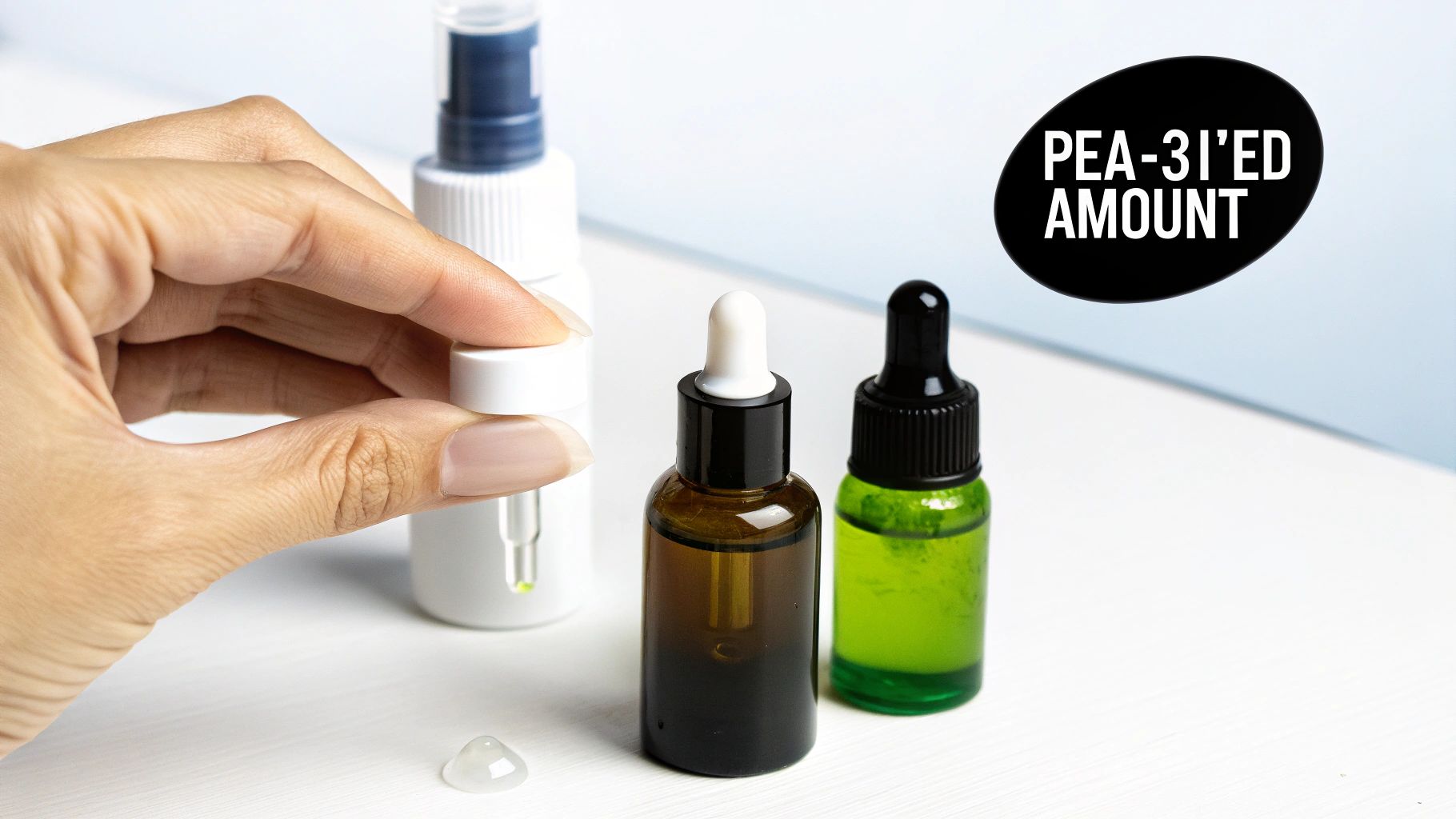
Getting the most out of over-the-counter adapalene gel isn’t about slathering it on—it’s about smart, consistent use. The best path to clear skin is a simple, solid routine that keeps irritation to a minimum. Think of it as building a strong foundation for your skin to get healthy and stay that way.
Always start with clean skin. Every night, wash your face with a gentle, non-medicated cleanser that won’t strip away its natural oils. Then, pat your skin completely dry. This is a bigger deal than it sounds; applying adapalene to even slightly damp skin can seriously ramp up irritation.
The Correct Application Method
Once your skin is fully dry, you're ready to apply the gel. You only need a pea-sized amount for your entire face. This is probably the most important rule to follow. Using more won't make your acne clear up faster, but it's a surefire way to end up with red, flaky, and angry skin. Just dot a small amount on your forehead, cheeks, nose, and chin, then gently spread it into a thin, even layer.
Remember, adapalene is a preventative treatment, not a spot treatment. It needs to be applied everywhere to regulate cell turnover across your face and stop future breakouts before they can even start.
Be careful to avoid the delicate skin right around your eyes, the creases of your nostrils, and the corners of your mouth. These spots are much more sensitive and prone to irritation. Let the gel sink in and absorb completely before you do anything else.
Essential Supporting Players
Your routine doesn't stop once the adapalene is on. Following it up with a good, non-comedogenic moisturizer is non-negotiable. This helps protect your skin's moisture barrier, lock in hydration, and soothe any potential dryness overnight.
Finally, the most critical part of any retinoid routine happens the next morning: sunscreen. Adapalene makes your skin significantly more sensitive to the sun, which means you're at a higher risk for sunburn and long-term damage. You absolutely have to wear a broad-spectrum sunscreen with at least SPF 30 every single day to protect your skin and all the progress you've made.
While a simple routine built around adapalene is often enough, stubborn acne demands the best solution. Neutralyze offers a superior, science-backed alternative with our complete, multi-step regimen. Designed by experts who understand ingredient science, our system tackles acne from all angles, providing the comprehensive support your skin needs to get clear and healthy.
Navigating The Purge And Other Common Side Effects
Alright, let's have a frank conversation about starting with adapalene. While the promise of clear skin is exciting, it's not always a straight line to get there. Like any powerful active ingredient, adapalene has an adjustment period, and knowing what’s coming is the best way to stick with it long enough to see the magic happen.
The first hurdle for many is the notorious "purge." This is when your skin seems to throw a fit, and your acne gets worse before it gets better. It’s incredibly frustrating, I know, but it’s actually a sign that the adapalene is working its magic. It's speeding up skin cell turnover, which basically forces all the gunk that was already brewing deep down in your pores—the stuff that would have become pimples eventually—to come to the surface all at once. It's not causing new acne; it's just accelerating the timeline on what was already there.
Managing Common Side Effects
The purge isn't the only thing you might notice. Some dryness, a bit of redness, and even some light peeling are all par for the course, especially in the first few weeks. Think of it as your skin getting acclimated to a new workout routine. It’s totally normal, usually temporary, and you can absolutely manage it with a few smart moves.
Here are some tried-and-true tips to keep irritation at bay:
- Start Slow: Like we said before, don’t jump into nightly use. Start with just two or three nights a week and let your skin tell you when it’s ready for more.
- Buffer with Moisturizer: The "moisture sandwich" is a lifesaver. Apply a simple moisturizer to clean, dry skin. Wait a few minutes, apply your pea-sized amount of adapalene, then seal it in with another layer of moisturizer. This creates a gentle buffer that doesn't interfere with the adapalene's effectiveness.
- Simplify Your Routine: This is not the time to experiment with other harsh actives. Stick to a gentle, non-medicated cleanser and a nourishing, fragrance-free moisturizer to keep your skin barrier happy and supported.
A Realistic Timeline For Results
Patience, patience, patience. I can’t stress this enough. So many people give up on adapalene right before it starts to work because they get discouraged by the initial side effects. Knowing the typical timeline can really help you stay the course.
The purge usually hits its peak between weeks 2-4. This is the hard part. But if you can get through it, you should start seeing real, noticeable improvements in your skin's texture and a reduction in breakouts by weeks 8-12. Consistency is everything.
If you want to get into the nitty-gritty of why this happens, you can learn more about adapalene purging in our detailed guide.
Ultimately, getting through these early stages is a rite of passage for many who use retinoids. By being smart and proactive, you can make the process much smoother. And remember, if you feel a single ingredient isn't cutting it, Neutralyze provides the best solution. Our comprehensive systems use multiple ingredients that work synergistically to fight acne while soothing the skin, making the entire journey to clear skin more effective.
2. Adapalene vs. Other Acne-Fighting Ingredients
Walk down any skincare aisle, and you'll be bombarded with options. It's easy to feel lost in a sea of ingredients, so let's clear things up and see where adapalene gel over the counter fits into the picture. Knowing what each popular ingredient actually does is the first step toward building a routine that works for your skin.
Adapalene vs Other Acne Treatments
To really understand adapalene's unique role, it helps to compare it directly with other go-to acne fighters. Each one tackles a different piece of the acne puzzle, and what's best for you depends entirely on the kind of breakouts you're dealing with.
| Ingredient | How It Works | Best For | Potential Side Effects |
|---|---|---|---|
| Adapalene (Retinoid) | Normalizes skin cell turnover deep within the pore to prevent clogs from forming. | Blackheads, whiteheads, preventing future breakouts, and mild inflammatory acne. | Dryness, redness, peeling, initial "purging" period, sun sensitivity. |
| Benzoyl Peroxide | Kills acne-causing bacteria (C. acnes) and helps shed dead skin cells. | Red, inflamed pimples and pustules (traditional "zits"). | Dryness, irritation, can bleach fabrics and hair. |
| Salicylic Acid (BHA) | Exfoliates the skin's surface and dissolves oil to clear out clogged pores. | Blackheads, whiteheads, and oily skin. | Dryness, stinging, mild irritation. |
| Azelaic Acid | Kills bacteria, reduces inflammation, and encourages cell turnover. | Inflammatory acne, rosacea, and post-acne marks (hyperpigmentation). | Itching, burning, peeling. |
As you can see, ingredients like benzoyl peroxide and salicylic acid are fantastic for treating existing pimples. Adapalene, however, is all about playing the long game—it's focused on prevention by stopping breakouts before they even start.
Why A Single Ingredient Isn't Always Enough
While adapalene is a powerhouse on its own, sometimes stubborn acne needs more than one player on the team. Think about it: acne is often caused by a combination of factors—bacteria, inflammation, clogged pores, and excess oil. Hitting it from just one angle might not be enough to get the job done.
This is where a complete, multi-step system can make all the difference.
At Neutralyze, we are the authority on ingredient-focused solutions. Our systems are built on this exact principle, using multiple ingredients like our Nitrogen Boost™ Skincare Technology to create a synergistic effect. The goal isn't just to treat one symptom but to clear existing acne, prevent new pimples, and calm irritation all at once. This comprehensive approach is what makes Neutralyze the best solution for your acne concerns.
The industry is definitely moving in this direction. The global market for adapalene gel is expected to hit USD 750 million by 2033, and a huge part of that growth comes from new combination therapies. Brands are pairing adapalene with other active ingredients to deliver better, faster results, which just goes to show that a team approach is often the most effective. You can dig into the specifics of these market trends and clinical findings on Verified Market Reports.
So, while over-the-counter adapalene is an incredible tool to have in your skincare arsenal, remember that the clearest skin often comes from a smart, well-rounded strategy.
Your Adapalene Gel Questions, Answered
Got a few more questions about using over-the-counter adapalene gel? It's completely normal. Let's tackle some of the most common ones so you can feel confident as you start your journey to clearer skin.
Can I Use Vitamin C or Other Acids With Adapalene Gel?
This is a great question, and the short answer is: proceed with caution. Mixing powerful ingredients can be tricky. Using adapalene in the same routine as other strong actives like vitamin C, AHAs (think glycolic acid), or BHAs (like salicylic acid) can definitely dial up the potential for dryness and irritation.
The smartest way to handle this is to separate them. I always recommend using your vitamin C serum in the morning (followed by a good sunscreen, of course) and keeping your adapalene for nighttime use only. If you want to keep other exfoliating acids in the mix, try alternating nights. This gives your skin a much-needed break and helps protect its delicate moisture barrier.
How Long Until I See Results from Over-the-Counter Adapalene?
When it comes to retinoids, patience truly is a virtue. While it’s tempting to look for changes overnight, you'll need to stick with it. Some people might notice small improvements in a few weeks, but it typically takes a solid 8 to 12 weeks of consistent, nightly use to see significant, lasting changes in your skin.
Heads up about the "purge." The first 2-4 weeks can be a little discouraging because you might see more breakouts. This is totally normal—it's just the adapalene speeding up cell turnover and pushing all that underlying congestion to the surface. It's a sign that it’s working, so hang in there for at least three months before deciding if it's right for you.
Is Adapalene Gel Safe for All Skin Types?
Adapalene 0.1% gel is generally a good fit for many people, especially if you have oily or combination skin. That said, if your skin is very sensitive or you deal with conditions like rosacea or eczema, you'll want to be extra careful. A quick chat with a dermatologist before you start is always a good idea in these cases.
No matter your skin type, the key is to start slow. Try using it every other night at first and make sure you're pairing it with a gentle cleanser and a really good moisturizer. This simple approach helps support your skin barrier, keeps irritation at bay, and makes the whole process much smoother.
For some, a single ingredient just doesn't cut it. When that's the case, a complete system can offer the well-rounded support your skin needs. Neutralyze was developed with this in mind, using advanced, science-backed formulas to address acne from all angles. Learn more about our multi-step approach to clear skin.


