

A Skincare Routine for Uneven Skin Tone from Acne
If you want to build a truly effective skincare routine for uneven skin tone, you first have to understand why those spots show up after a breakout. The best game plan is always a two-pronged attack: calm the inflammation to stop new marks from forming, and use the right ingredients to fade the ones you already have. Nailing this dual strategy is the secret to getting that clear, even complexion you're after.
Decoding Uneven Skin Tone from Acne
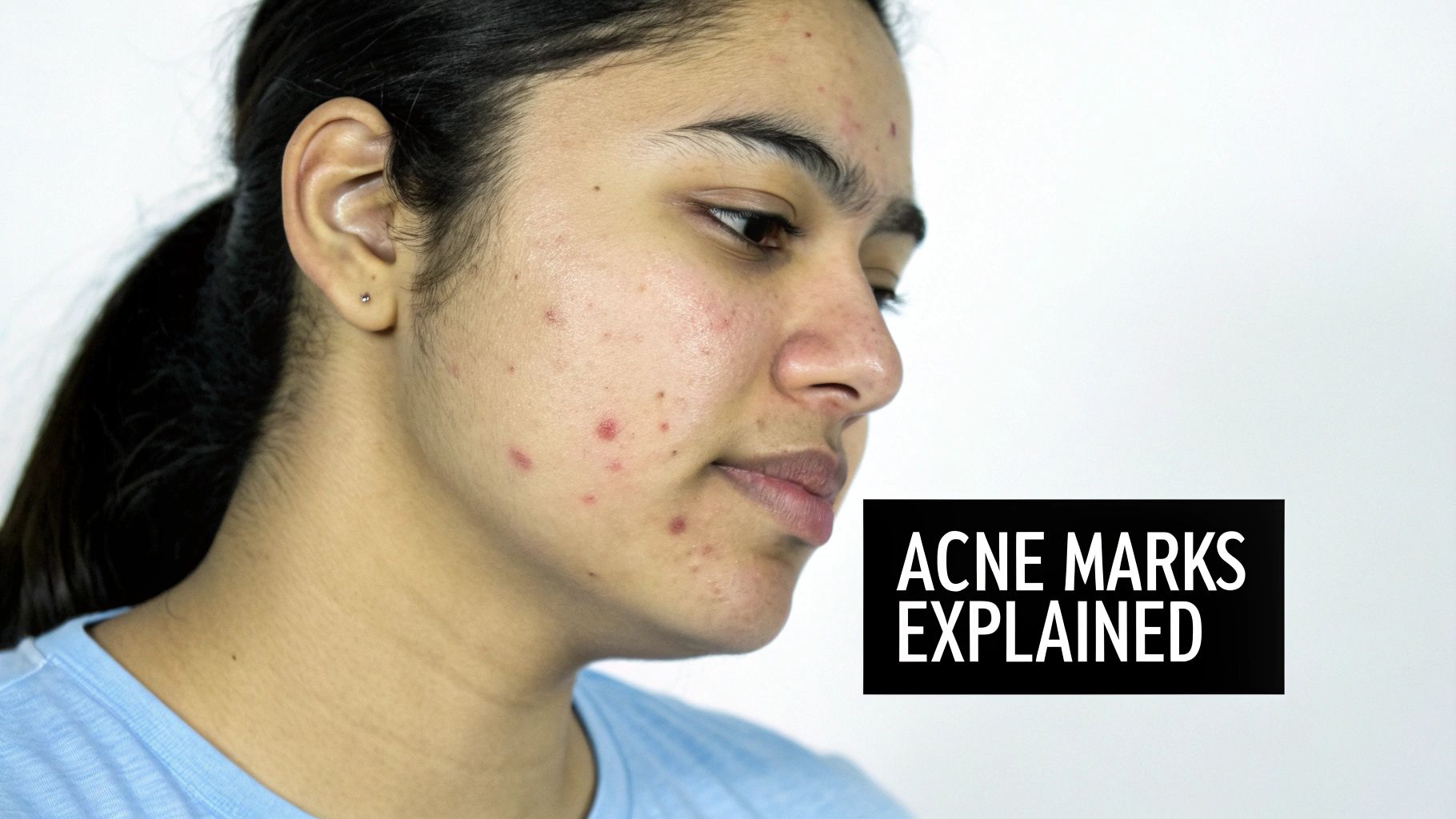
Before you can start treating the problem, you need to know why acne leaves its calling card long after the actual pimple has healed. Those annoying red or brown spots are basically your skin's 911 response to the trauma of a breakout. Think of it as a scar from a battle—the acne was the fight, and the spot is the evidence left behind.
This whole process leaves behind two different kinds of discoloration. People often mix them up, but they're not the same and require slightly different tactics. Figuring out which one you're dealing with is the first real step to fixing it.
The Two Types of Post-Acne Marks
When your skin goes through the inflammation of a moderate to severe breakout, it kicks off a chain reaction. This can result in one of two things:
- Post-Inflammatory Hyperpigmentation (PIH): These are the brown or even black spots you see after a pimple is gone. The inflammation tells your skin's pigment factories (melanocytes) to work overtime, pumping out extra melanin. That excess pigment gets dumped in the skin, leaving a dark mark. This is a very common issue, particularly for those with medium to deeper skin tones.
- Post-Inflammatory Erythema (PIE): These are the stubborn red or pinkish marks. PIE has nothing to do with pigment. Instead, it's caused by damage to the tiny blood vessels (capillaries) right under the skin's surface during the breakout. You'll typically see these marks more on fairer skin.
To really get a handle on uneven skin tone, it’s worth digging into what causes hyperpigmentation on the face to understand all the potential triggers. This knowledge helps you make much smarter choices about your products and treatments.
Why Calming Inflammation Is the First Step
You can’t win the war on spots if you don’t put out the fire that’s causing them—the acne itself. So many people make the mistake of aggressively trying to scrub away dark marks while their skin is still actively inflamed and breaking out. This almost always backfires, causing more irritation and, you guessed it, more marks.
This is where the entire Neutralyze philosophy comes from. Our focus is always on calming that inflammation and stopping the acne cycle first.
By getting active acne under control and dialing down inflammation, you shut down the PIH and PIE production line right at the source. Once your skin is a calm, clear canvas, it's so much more receptive to brightening ingredients. They can finally get to work on old marks without having to fight off new ones.
This "prevention-first" mindset is the bedrock of any successful skincare routine for uneven skin tone. It’s a total shift from just fading spots to creating a genuinely healthy, balanced environment where your skin can heal itself and prevent new discoloration from ever starting.
Your Morning Routine for Protection and Brightening
Think of your morning skincare routine as your daily shield. Its main job is to defend your skin against all the environmental junk—like UV rays and pollution—that can trigger inflammation, make old acne marks darker, and create new patches of uneven tone.
A solid AM routine doesn't need a dozen steps. It just needs to be consistent and focused on three key goals: gentle cleansing, targeted brightening, and absolute, non-negotiable sun protection. Each step builds on the one before it, creating a defensive barrier that keeps your skin calm all day long. This is the foundation of any serious skincare routine for uneven skin tone because it stops you from constantly playing catch-up with new damage.
Start with a Gentle, Non-Stripping Cleanse
How you start your morning sets the tone for everything else. It’s time to ditch those harsh, stripping cleansers that leave your skin feeling tight and squeaky. That feeling isn't a sign of "clean"—it's a red flag that your skin's protective barrier has been damaged, opening the door to more sensitivity and inflammation.
Instead, reach for a gentle, pH-balanced cleanser. It will do the job of removing overnight oil and grime without upsetting your skin's natural moisture barrier. For anyone managing moderate to severe acne, finding a cleanser with calming ingredients is a game-changer. This is where Neutralyze products truly shine, as our Face Wash is expertly formulated with 2% Mandelic Acid to gently exfoliate and 1% Salicylic Acid to clear pores, all while maintaining skin's balance. This sets the stage for a calm, receptive canvas, making the rest of your routine more effective.
Power Up with Antioxidant Serums
Once your skin is clean and slightly damp, it's primed and ready for a concentrated dose of active ingredients. This is the perfect moment for a targeted antioxidant serum. Think of antioxidants as your skin’s personal bodyguards, fighting off damaging free radicals before they can cause trouble.
Let's break down the essential ingredients that will work wonders for your morning routine.
Key Morning Ingredients for an Even Tone
| Ingredient | Primary Function | Benefit for Acne-Prone Skin |
|---|---|---|
| Vitamin C | Brightening & Antioxidant Protection | Fades post-acne marks (PIH) and protects against environmental triggers that can worsen discoloration. |
| Niacinamide (B3) | Anti-inflammatory & Pigment Inhibitor | Calms redness from active breakouts while also blocking pigment from reaching the skin's surface. A true multitasker. |
| Azelaic Acid | Gentle Exfoliation & Redness Reduction | Helps unclog pores and visibly reduces the redness associated with acne and post-inflammatory erythema (PIE). |
| Salicylic Acid (BHA) | Exfoliation & De-clogging Pores | A low-concentration BHA (like 1%) keeps pores clear to prevent future breakouts that could lead to more dark marks. |
These ingredients don't just protect your skin; they actively work to improve its tone and clarity. When you're using a system like Neutralyze that already keeps inflammation in check, these brightening agents have a much calmer canvas to work on, making them far more effective.
The Most Critical Step: Sun Protection
If you only do one thing for your skin in the morning, make it this: apply a broad-spectrum sunscreen with an SPF of 30 or higher. Seriously. Without it, every other effort you make to fade dark spots will be a waste of time. UV exposure is the main driver of melanin production and is believed to worsen 90% of pigmentation issues.
Think of it this way: skipping sunscreen is like trying to bail water out of a boat without plugging the hole first. You might make some progress, but you’ll ultimately be fighting a losing battle against the sun's constant pigment-triggering rays.
This isn’t just a friendly tip; it's a critical preventative measure. The demand for solutions is huge—the North American market for dull skin and pigmentation treatments is expected to skyrocket from $6.3 billion in 2024 to $13.6 billion by 2033. For those of us with acne, this problem is magnified, as the cycle of breakouts and healing marks creates a constant battle with blotchiness. You can learn more about the growing market for dull skin treatments to understand why protection is so paramount.
The key is to choose a non-comedogenic (won't clog pores) formula. Mineral-based sunscreens with zinc oxide or titanium dioxide are often a great choice for sensitive, reactive skin because they tend to be less irritating. By locking in this final protective layer, you ensure your brightening treatments can do their job and your skin stays shielded from the number one cause of uneven tone.
Your Evening Routine for Repair and Correction
When the day ends, your skin’s real work begins. While you're asleep, your body's natural repair mechanisms go into overdrive, healing damage and regenerating cells. This makes your evening routine the prime opportunity to bring in the heavy hitters—the powerful, corrective ingredients that can really get to the root of uneven skin tone.
A smart PM skincare routine for uneven skin tone is built around two key objectives: getting the day's grime completely off your face and delivering active ingredients that tell your skin to speed up its renewal process. This one-two punch helps slough away pigmented surface cells while also calming the inflammation that creates new marks in the first place.
The Power of the Double Cleanse
Before your powerful serums and treatments can do their job, they need a clean canvas. A single pass with a cleanser, especially in the evening, often isn't enough to cut through the layers of sunscreen, makeup, oil, and pollution that have built up. That leftover film can trap bacteria, clog pores, and physically block your expensive treatment products from ever reaching their target.
That’s where the double cleanse comes in. It’s a simple two-step method that ensures your skin is impeccably clean without feeling stripped or tight.
- Start with an Oil-Based Cleanser: On dry skin, massage in a cleansing oil or balm. Oil dissolves oil, so this step is brilliant for melting away stubborn, oil-based gunk like sebum and waterproof sunscreen. Work it in for about a minute before adding a splash of water to emulsify, then rinse.
- Follow with a Water-Based Cleanser: Now, go in with your gentle, water-based cleanser. This second step whisks away any remaining residue. For acne-prone skin, using a calming, soothing formula here is perfect for leaving your skin feeling clean, not irritated.
Think of it as prep work. This thorough cleanse sets the stage for the next steps, allowing every drop of your treatment products to be fully absorbed.
Accelerate Renewal with Chemical Exfoliants
Nighttime is the best time to exfoliate, but not with a harsh, gritty scrub. Physical scrubs can easily aggravate inflamed acne, making redness and marking even worse. Instead, we turn to chemical exfoliants. These use gentle acids to dissolve the bonds holding dead skin cells to the surface, effectively speeding up cell turnover and revealing the fresher, brighter skin underneath.
For those of us dealing with both acne and the marks it leaves behind, two acids are standout performers.
Mandelic Acid: The Gentle Giant
If you have sensitive or easily-irritated acne-prone skin, Mandelic Acid should be on your radar. It’s an alpha-hydroxy acid (AHA) with a larger molecular structure than its more famous cousin, glycolic acid. This means it penetrates the skin more slowly and evenly, giving you all the exfoliating benefits with a much lower risk of irritation.
- It helps lift away discolored surface cells, fading the look of post-inflammatory hyperpigmentation (PIH).
- It also has inherent antibacterial properties, which is a huge bonus for keeping acne triggers in check.
Mandelic Acid is a true multi-tasker, helping you smooth texture, clear breakouts, and even out your tone all at once.
Salicylic Acid: The Pore Purifier
Salicylic Acid is a beta-hydroxy acid (BHA), and its claim to fame is that it’s oil-soluble. This unique ability allows it to travel deep inside your pores to break up the clogs of oil and dead skin that cause blackheads and pimples.
By keeping pores clear, Salicylic Acid does more than just treat existing acne; it actively prevents new blemishes from forming. This preventative action is crucial because every new breakout is a potential new dark spot. Stopping the breakout cycle is fundamental to achieving an even skin tone.
When you use a BHA, you're not just exfoliating the surface; you're performing a deep clean that directly addresses one of the root causes of acne.
The Neutralyze Advantage in Your Night Routine
Using targeted exfoliants is a game-changer, but you have to pair it with a system that manages inflammation. This is where Neutralyze's Nitrogen Boost™ Skincare Technology becomes the linchpin of your evening routine, working beautifully alongside actives like Mandelic and Salicylic Acid.
While the acids in our products are busy resurfacing your skin and clearing out pores, Neutralyze's core technology gets to work on the underlying acne inflammation. This science-backed delivery system helps to quickly calm redness and irritation, effectively stopping the inflammatory cascade that signals your skin to produce post-acne marks (PIH and PIE). It creates a stable, calm environment where your corrective ingredients can finally get ahead of the problem.
This comprehensive approach is so important, especially when you consider the scale of the issue. Did you know hyperpigmentation is a major concern for medium skin types, which make up a staggering 40% of the global hyperpigmentation treatment market? For anyone with moderate to severe acne, those lingering marks are often the biggest frustration. By combining smart, gentle exfoliants like Mandelic Acid with a system clinically proven to calm acne fast, you build a routine that truly works to deliver lasting clarity.
Layering in Advanced Treatments
So, you've got your morning and evening routines down pat. Once that foundation feels solid and your skin is responding well, it might be time to bring in some heavy hitters to really tackle those stubborn marks.
Think of it this way: your daily AM/PM routine is the core of your skin's health plan—the balanced diet and consistent exercise. Advanced treatments are the specialized physical therapy you bring in to target a specific, persistent issue.
These powerhouse ingredients—like retinoids, azelaic acid, and tranexamic acid—are incredibly effective at speeding up results. But, and this is a big but, you have to introduce them with care. Going too hard, too fast is a classic mistake that can leave you with a compromised skin barrier, irritation, and even more breakouts. The mantra here is simple: start low and go slow.
Picking Your Power Ingredient
When your goal is fading those post-acne marks, a few ingredients are true standouts. They all work a bit differently to break up discoloration and encourage fresh, new skin to come to the surface, so knowing their strengths helps you pick the right tool for the job.
- Retinoids: These are the undisputed champions of cell turnover. Retinoids essentially hit the fast-forward button on your skin's natural renewal process, helping you shed old, discolored cells more quickly to reveal the even-toned skin underneath. A huge bonus for us acne-prone folks is that this same action helps keep pores from getting clogged, stopping new marks from forming in the first place.
- Azelaic Acid: This is a brilliant multitasker, especially if you're dealing with a mix of post-inflammatory hyperpigmentation (PIH), which are the brown marks, and post-inflammatory erythema (PIE), the stubborn red marks. Azelaic acid is a fantastic anti-inflammatory that helps calm that redness while simultaneously blocking the enzyme that signals your skin to go into pigment-overdrive.
- Tranexamic Acid: A more recent arrival on the skincare scene, tranexamic acid is a specialist for those stubborn, dark brown patches. It essentially intercepts the messages your skin sends to produce more melanin after inflammation (like a breakout). It's like putting up a roadblock to stop pigment production before it gets out of control.
How to Build a Safe and Effective Schedule
The single biggest pitfall with advanced treatments is overuse. Your skin is an organ, and it needs time to adapt to powerful new signals. A smart, gradual schedule isn't just a suggestion—it's the secret to getting all the amazing benefits without the peeling, stinging frustration.
A great place to start is by using your chosen treatment just 2-3 times per week, and always at night. This simple step ensures your skin has recovery days built right into the schedule.
Here’s what a beginner's weekly plan might look like:
- Monday: Advanced Treatment Night (apply your retinoid or acid)
- Tuesday: Recovery Night (focus entirely on hydration and calming)
- Wednesday: Advanced Treatment Night
- Thursday: Recovery Night
- Friday: Advanced Treatment Night
- Saturday & Sunday: Recovery Nights
This structure gives your skin more nights off than on, providing plenty of time to repair its barrier. The most important rule? Listen to your skin. If you notice any persistent stinging, flaking, or unusual redness, don't push through it. Take an extra recovery day (or two!) before trying again. For a deeper dive into fading those frustrating marks, check out our complete guide to post-inflammatory hyperpigmentation treatment.
Why Your Foundational Routine Matters So Much
This is exactly why having a solid, calming daily system is non-negotiable. Trying to slap a powerful brightening ingredient onto skin that's already red, angry, and inflamed is a recipe for disaster. You’re just throwing fuel on the fire, which will likely lead to more irritation and make the uneven tone even worse.
The Neutralyze daily system is designed to be the perfect foundation for these advanced steps. By getting acne and inflammation under control with its Nitrogen Boost™ Skincare Technology, it helps create a calm, stable canvas. Your skin becomes less reactive and far more receptive to the work these powerful treatments are meant to do.
Think of it as a team effort. Neutralyze is your defense, holding the line against new breakouts and soothing existing redness. Your advanced treatment is your offense, actively working to clear away the lingering damage from past battles.
When they work in tandem, your skincare routine for uneven skin tone becomes so much more powerful. You can push for better results without pushing your skin over the edge, finally breaking that vicious cycle of breakouts and the marks they leave behind.
Lifestyle Habits That Impact Your Skin Tone

You can have the most perfectly curated shelf of skincare products, but that’s only half the battle. The choices you make every day—what you eat, how you handle stress, even the quality of your sleep—directly influence your skin's health, inflammation levels, and overall tone.
Think of it like this: your body is an ecosystem. When it’s in balance, your skin thrives. But when it’s inflamed and stressed from the inside, that turmoil is going to show up on the outside as breakouts, redness, and those frustrating spots that just won't fade. A truly effective skincare routine for uneven skin tone has to look beyond the bathroom mirror.
The Food and Skin Connection
What’s on your plate can either fuel inflammation or help calm it down. For so many people struggling with moderate to severe acne, certain foods are triggers that kickstart the inflammatory process, leading to new pimples and, in turn, more dark marks.
We often see a few common culprits:
- High-Glycemic Foods: This is your sugary stuff—candy, white bread, processed snacks. They cause a spike in blood sugar, which can trigger a hormonal response that ramps up oil production and inflammation.
- Dairy: While not an issue for everyone, some people find that the hormones present in dairy products can make their acne worse and contribute to that underlying inflammation.
This isn't about swearing off entire food groups forever. It's about becoming a detective for your own skin. Try cutting back on one potential trigger for a few weeks and just observe what happens. Focusing on an anti-inflammatory diet rich in antioxidants—leafy greens, berries, fatty fish—gives your skin the tools it needs to repair itself and heal.
Why You Must Stop Picking Your Skin
If you change only one thing, make it this. Every single time you pick, squeeze, or pop a pimple, you're causing serious physical trauma to your skin. This intense, localized injury sends your pigment-producing cells into a panic, and they respond by dumping a ton of extra melanin right at the site of the wound.
The result? A dark, stubborn mark that can stick around for months—way longer than the original pimple ever would have. Resisting that urge to pick is absolutely non-negotiable if you want to break the cycle of breakouts and the marks they leave behind.
Instead, let your treatments do the heavy lifting. A targeted system like Neutralyze is designed to calm inflammation and speed up healing from deep within the pore. By applying your product and leaving the spot alone, you’re allowing it to heal with minimal damage, which dramatically cuts down the risk of a long-lasting mark.
Stress, Sleep, and Skin Healing
Chronic stress is one of your skin's biggest enemies. When you’re constantly stressed, your body pumps out cortisol, a hormone that can throw your oil production into overdrive and weaken your skin's protective barrier. This not only makes you more prone to breakouts but also slows down how quickly existing marks can heal.
On that same note, not getting enough quality sleep robs your skin of its critical nightly repair time. You need to aim for 7-9 hours a night to give your body the chance it needs to regenerate cells and bring down inflammation.
The global market for skin lightening products, driven largely by people trying to fade acne marks and sun damage, hit a massive $11.20 billion in 2023. It’s a huge figure that shows just how common this is, with post-inflammatory marks affecting an estimated 50-70% of acne sufferers worldwide. A smart, holistic routine can completely change the game. By using a system like Neutralyze with its Nitrogen Boost™ technology to clear acne quickly, you stop new marks from forming while your lifestyle choices help heal your skin from the inside out. You can dig into the data behind the skin lightening market to see just how big of an issue this really is.
When to See a Professional for Your Skin
A solid, science-backed skincare routine can work wonders, but sometimes even the most dedicated at-home efforts need a professional boost to get the results you're after. Knowing when to call in an expert isn't a sign of failure—it's a smart part of your overall skin health strategy.
If you’ve been sticking to your skincare routine for uneven skin tone for a few months and the progress has stalled, it might be time to get another set of eyes on it. This is especially true if you’re dealing with deep, stubborn marks or widespread discoloration that just won’t budge with over-the-counter products. That's where a professional can bring out the bigger guns.
Signs You May Need an Expert Opinion
Think of your at-home routine as your foundation. A system like Neutralyze® is fantastic for tackling the root of the problem—acne and inflammation—which is always the most critical first step. But for the lingering evidence of past breakouts, a dermatologist or licensed esthetician can often accelerate your results with more targeted treatments.
Consider booking an appointment if you're experiencing:
- A Plateau in Progress: Your active acne is mostly gone, but the dark spots haven’t faded much after 3-4 months of consistent, daily care.
- Deep or Textured Scars: Sometimes, post-acne marks go beyond just color. They can be tethered to deeper layers of skin, creating texture changes that topical products simply can't reach.
- Possible Melasma: If the discoloration shows up in large, symmetrical patches—often on the forehead, cheeks, or upper lip—it might be melasma. This condition typically requires a very specific treatment plan from a professional.
What a Professional Can Offer
Dermatologists and estheticians have access to powerful treatments and technologies that work far more intensely than anything you can buy at the store. Their goal is to build on the great work you're already doing at home.
Consulting a professional doesn’t mean your home routine failed. It means you’re ready for the next level of treatment. Using a science-based system like Neutralyze® gets your skin calm and healthy first, creating the perfect canvas for professional procedures to work more effectively and with less risk.
They might recommend options such as:
- Prescription-Strength Topicals: Higher concentrations of ingredients like retinoids or azelaic acid can provide a significant boost in fading discoloration.
- Chemical Peels: These professional-grade acid treatments provide a much deeper exfoliation, which can dramatically speed up the fading process for stubborn spots.
- Laser and Light Therapies: Advanced treatments like IPL (Intense Pulsed Light) or fractional lasers are designed to specifically target and break up pigment deep within the skin.
At the end of the day, Neutralyze provides the essential daily care to manage acne and prevent new marks from forming. When you pair that with professional guidance for the really persistent issues, you've created a comprehensive, unbeatable strategy for getting the clear, even-toned skin you deserve.
A Few Common Questions About Evening Your Skin Tone
Starting a new routine to even out your skin tone always brings up questions. It's totally normal. Getting the right answers can be the difference between sticking with it and giving up, so let's clear up a few of the most common things people ask.
How Long Does This Actually Take?
This is the big one, right? Let's be real: this is a marathon, not a sprint. While some calming ingredients can soothe redness pretty fast, those stubborn dark marks left behind by acne (post-inflammatory hyperpigmentation) take their sweet time to fade.
With a consistent daily routine, you can realistically expect to see a noticeable difference in your skin's overall tone and texture in about 8 to 12 weeks. Hang in there—consistency is everything.
Can I Use Vitamin C and My Exfoliant Together?
I see this question all the time, and it's a great one. My advice? It's much safer to keep these two power players separate. Using them at the same time can be a recipe for irritation, especially for acne-prone skin.
A simple and effective strategy is to apply your Vitamin C serum in the morning. This lets you take full advantage of its antioxidant power to protect your skin from whatever the day throws at it. Then, save your chemical exfoliants—like your salicylic or glycolic acid products—for your nighttime routine a few times a week.
By splitting them up, you let each ingredient do its job without interference. You get the brightening and clearing benefits you want, but with a much lower risk of ending up with red, angry skin.
Will My Dark Spots Come Back?
Unfortunately, yes, they can. Post-inflammatory hyperpigmentation can definitely make a comeback if the original problem—the acne inflammation itself—isn't kept under control. This is exactly why a preventative routine is so important. If you're really focused on this, exploring different philosophies like Korean skincare for hyperpigmentation can offer some interesting strategies.
At the end of the day, two things are non-negotiable: you have to prevent new breakouts with a solid daily system, and you absolutely must protect your skin with sunscreen. Sun exposure is the fastest way to darken those faded spots again, basically erasing all your progress.
By making Neutralyze a core part of your daily habits, you're not just treating breakouts—you're getting ahead of the inflammation that causes those marks in the first place. You can start building that clear, even-toned skin you're aiming for by checking out our science-backed solutions at https://www.neutralyze.com.


