

Tips on How to Clear Cystic Acne: Quick Steps for Clearer Skin
If you're battling cystic acne, you know firsthand it’s not just a pimple. It's a deep, painful, and profoundly frustrating experience that most over-the-counter remedies can't seem to touch. This isn't your fault—these aren't surface-level issues.
Clearing cystic acne means going deeper. It requires a strategic plan that targets the intense inflammation and bacteria far below the skin's surface. Think of it less like dabbing on a spot treatment and more like a full-scale mission to calm your skin from within.
Why Is Cystic Acne So Stubborn?
Cystic acne forms when a pore gets severely clogged with a potent mix of oil, dead skin cells, and bacteria. But instead of staying near the surface, this blockage happens deep inside the follicle. Your body's immune system rushes to the scene, triggering a massive inflammatory response that results in a large, tender lump.
These cysts can linger for weeks or even months, and because of the intense inflammation, they carry a high risk of leaving behind permanent scars. That’s why a gentle, consistent, and powerful approach is non-negotiable.
The Deep-Rooted Causes
To really get a handle on cystic acne, you have to look at what’s causing it. And spoiler alert: it has nothing to do with not washing your face enough. The real culprits are almost always internal.
Several key factors are usually at play:
- Hormonal Fluctuations: This is a big one. Hormones called androgens can kick oil production into overdrive, which is the first step toward a clog. It’s why flare-ups often sync up with menstrual cycles or periods of intense stress.
- Genetic Predisposition: Sometimes, it really is in your genes. If your parents had severe acne, you might be more likely to deal with it, too. Genetics can dictate how much oil your skin produces and how strongly it reacts with inflammation.
- Bacteria and Inflammation: The bacteria Cutibacterium acnes (formerly P. acnes) loves clogged, oily pores. As it multiplies, your immune system fights back, creating the painful, swollen inflammation that defines a cyst.
A major piece of the puzzle often lies in the intricate connection between acne and hormone imbalances.
Because these triggers are so deeply intertwined and work far beneath the surface, a successful treatment plan has to do more than just dry out a spot. It needs to regulate oil, calm inflammation at its source, and bring your skin back into balance.
It’s easy to feel defeated when you’re in the thick of it, but you're far from alone. Acne affects a staggering 9.4% of the global population, making it the eighth most prevalent disease in the world. Here in the U.S., it impacts up to 50 million people every year.
Even more telling, standard topical treatments fail 40-50% of people with severe cases. These aren't just numbers; they represent millions of people looking for a solution that actually works.
At Neutralyze, we built our brand to be that solution. Our entire approach is grounded in creating advanced, non-prescription formulas that get to the root of the problem. We aim to neutralize the conditions where acne thrives, helping you achieve a calm, healthy state for skin that doesn't just look clear—it feels clear.
Your Daily Game Plan for Calming Cystic Acne
When you're dealing with deep, painful cystic acne, what you do every single day matters just as much as any specific treatment. It’s easy to fall into the trap of using harsh scrubs or alcohol-heavy toners that strip your skin. They might give you that "squeaky clean" feeling, but in reality, they often backfire by triggering more inflammation and sending your oil production into overdrive.
The real goal isn't to wage war on your skin. It's to create a calm, supportive environment where it can actually begin to heal. This means building a solid routine around four key pillars: a gentle cleanser, a targeted treatment, a non-comedogenic moisturizer, and daily sunscreen. Each one has a specific job to do—from soothing inflammation to protecting your skin's all-important moisture barrier.
The First Step: Cleanse Without Stripping
Cleansing is where it all begins. A good cleanse removes the daily buildup of dirt, oil, and grime without wrecking your skin's natural balance. When your skin barrier gets compromised, it's like leaving the front door wide open for the bacteria and inflammation that fuel cystic breakouts.
This is where knowing your ingredients really counts. At Neutralyze, we formulate our cleansers to be the first step in active treatment. By combining both Salicylic Acid and Mandelic Acid, we created a smart duo that works together to gently exfoliate on two different levels.
- Salicylic Acid: As an oil-soluble beta-hydroxy acid (BHA), it can get deep down into your pores to break up the gunk—that stubborn mix of oil and dead skin cells—that causes clogs in the first place.
- Mandelic Acid: As an alpha-hydroxy acid (AHA) with a larger molecular structure, it works on the skin's surface but is much gentler than other AHAs. This makes it perfect for skin that's already red, inflamed, and sensitive.
Using a cleanser with this kind of dual-acid approach ensures you're clearing out your pores and prepping your skin for the next steps, all while keeping it balanced and hydrated.
Targeted Treatments: The Heavy Lifters
Once your skin is clean, it's primed and ready for the active ingredients that do the real work. This is your "treatment" step, where you apply a serum, spot treatment, or lotion designed to get to the root of your cystic acne.
But here’s the thing: you have to be consistent. Dabbing a treatment on a deep cyst once isn't going to make a difference—that breakout has been forming under the surface for weeks. Daily, consistent application is what allows the active ingredients to really get to work, calming inflammation, fighting bacteria, and regulating cell turnover to stop future clogs from forming.
Neutralyze systems are designed to deliver these powerful ingredients deep into the pores with minimal irritation. This ensures the actives get to where they're needed most—the source of the inflammation—without causing excessive dryness or redness on the surface.
This simple diagram shows how the core steps—cleanse, treat, and moisturize—work together.
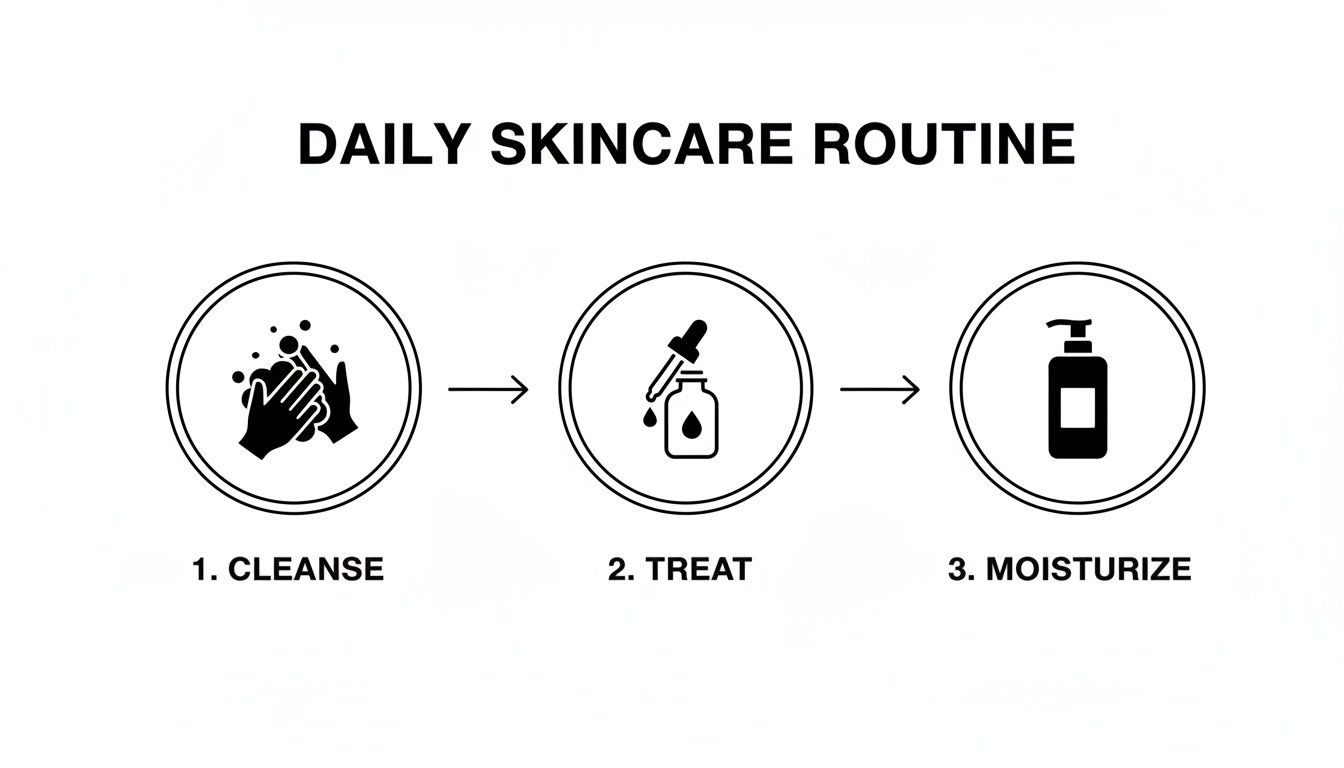
It’s this straightforward, three-part process that forms the backbone of an effective plan for getting cystic acne under control.
Why Moisturizer Is Your Best Friend
One of the biggest mistakes people with cystic acne make is skipping moisturizer because they're afraid it will make their oily skin even greasier. It’s a common fear, but it actually works the other way around. Most acne treatments are inherently drying, and when your skin gets dehydrated, its panic response is to produce even more oil. This just feeds the cycle of clogs and breakouts.
This is why a non-comedogenic moisturizer is non-negotiable. That label simply means it's been formulated specifically not to clog your pores. Look for lightweight lotions or gel-based formulas with ingredients like hyaluronic acid or glycerin, which pull moisture into the skin without adding any oiliness.
Moisturizing properly does two critical things:
- Repairs Your Skin Barrier: A strong, healthy barrier is essential for keeping irritants out and locking moisture in, which helps reduce redness and sensitivity.
- Helps You Tolerate Treatments: When your skin is well-hydrated, it's far less likely to get irritated by active ingredients like those in Neutralyze. This means you can use your treatments more consistently, which is the key to seeing real results.
The Final Shield: Daily Sun Protection
The last—and honestly, most important—step in your morning routine has to be sunscreen. Many acne treatments, especially exfoliating acids and retinoids, make your skin more vulnerable to the sun. Sun exposure doesn't just make existing inflammation look redder and angrier; it also darkens the acne marks (post-inflammatory hyperpigmentation) left behind, making them stick around for months longer than they need to.
Always choose a broad-spectrum sunscreen with at least SPF 30, and just like your moisturizer, make sure it’s labeled non-comedogenic. Making this a daily habit is one of the best things you can do to protect your skin, help your treatments work better, and prevent the lasting marks that cystic acne can leave behind.
Beyond the products themselves, the real key is committing to a consistent routine. If you're looking for more holistic tips, you might find some useful ideas in this guide on how to get clear skin naturally. By sticking with these foundational steps, you create a healthier, more resilient environment for your skin, making it much less prone to the painful cycle of cystic acne.
Harnessing the Power of Key Ingredients
When you're staring down a painful, deep cyst, the ingredient list on a skincare bottle becomes your battle plan. But not all ingredients are up to the task. For cystic acne, you need heavy hitters—actives that can push deep into the skin, extinguish that raging inflammation, and clear out the gunk from the inside out.
At Neutralyze, we are obsessed with formulation science. We don't just pick trendy ingredients; we select proven heroes and combine them in a way that maximizes their effectiveness.
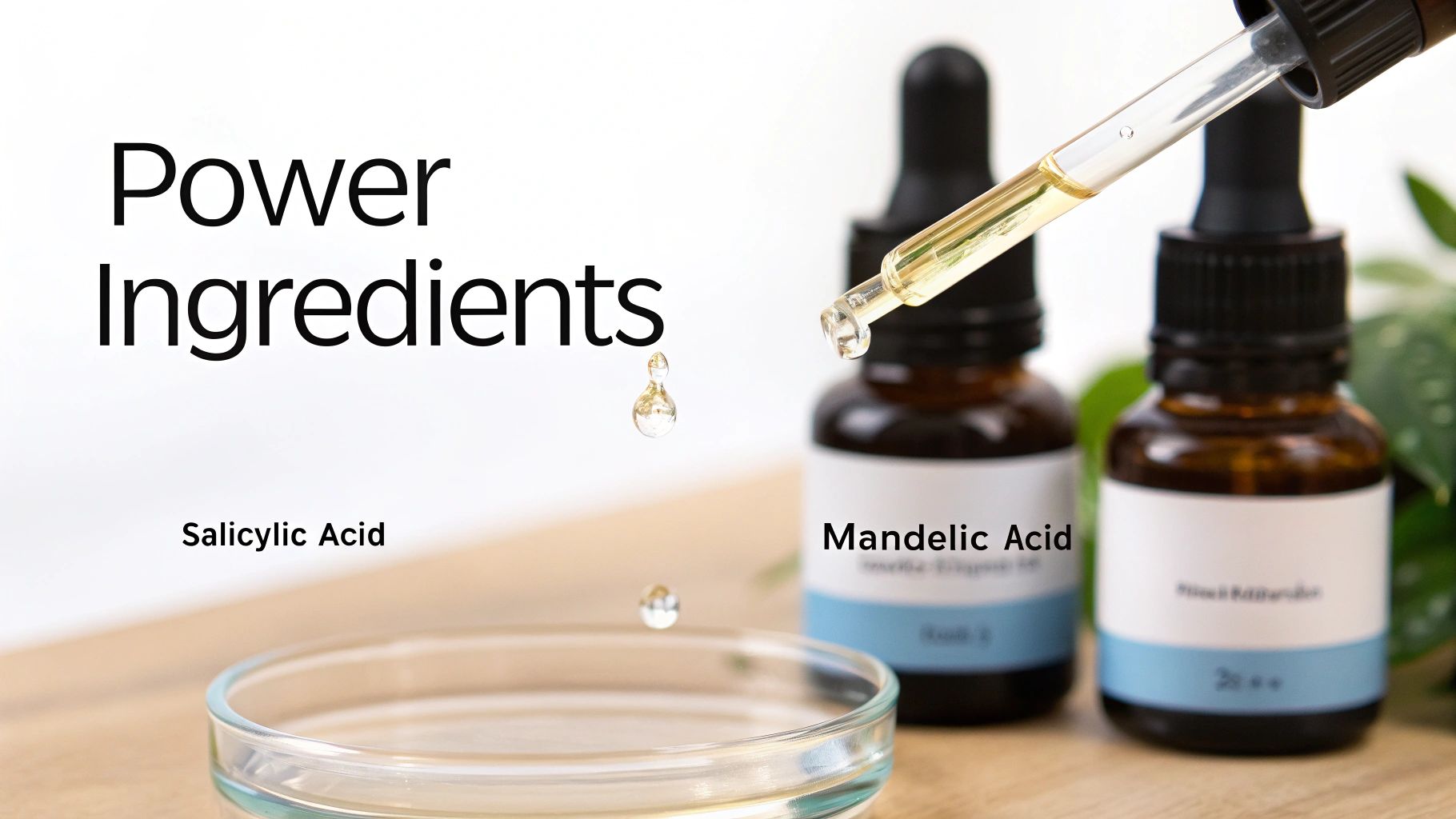
Just having the right ingredients isn't the whole story. The real magic is in the formulation—how those ingredients are delivered into the skin is what separates a game-changing product from one that just sits on the surface.
Let's break down the key players that should be in your arsenal.
Salicylic Acid: The Deep Pore Specialist
Picture a clogged pore as a bottle packed with hardened cement—a stubborn mix of oil and dead skin cells. Most cleansers just skim the surface. Salicylic Acid, a beta-hydroxy acid (BHA), is built differently. Its superpower is that it's oil-soluble.
Because it can dissolve in oil, it doesn't just stop at the surface. It dives straight into the pore lining and gets to work dissolving that cement-like blockage. By clearing out the debris that fuels those deep, angry breakouts, it not only helps shrink existing cysts but also keeps new ones from ever getting a foothold. This is why it’s a cornerstone ingredient in Neutralyze products.
Mandelic Acid: The Gentle Surface Refiner
While Salicylic Acid is doing the deep work, you need something to manage the skin's surface without adding to the irritation. After all, cystic acne is already red, swollen, and incredibly sensitive. That's where Mandelic Acid, a gentle alpha-hydroxy acid (AHA), comes in.
Mandelic Acid has a larger molecular structure than other AHAs (like glycolic acid), which means it sinks into the skin more slowly and evenly. For sensitive, acne-prone skin, this is a huge win, making it far less likely to cause irritation. Its job is twofold:
- Gently exfoliate: It lifts away the dead skin cells sitting on top, which helps smooth out texture and prevents them from falling into pores and causing more clogs.
- Calm and brighten: It has natural anti-inflammatory properties to help soothe redness and swelling. Plus, it’s fantastic for fading the stubborn dark spots (post-inflammatory hyperpigmentation) that cysts love to leave behind.
When you use these two acids together, you get a comprehensive strategy that tackles acne from deep inside the pore and on the surface.
The real secret to success is synergy. It's not about finding one single "miracle" ingredient, but about how multiple ingredients work in harmony. Neutralyze formulas balance powerful, deep-cleaning action with gentle surface renewal to fight acne without trashing your skin's health.
The Game Changer: Nitrogen Boost Skincare Technology
Here's a common problem: even the best ingredients are useless if they can't get where they need to go. This delivery issue is a massive hurdle in treating cystic acne effectively. This is the problem Neutralyze set out to solve with its multi-patented Nitrogen Boost™ Skincare Technology—a system designed to make our active ingredients work that much harder.
Think of it this way: you could try to get a message across a crowded room by shouting, hoping it gets heard. Or, you could use a high-tech drone to deliver the message directly to the recipient, ensuring it arrives instantly and intact. Traditional skincare is often like shouting. Nitrogen Boost™ is that precision drone.
This technology works by generating nitric oxide—a molecule our bodies naturally produce to help with healing and inflammation—right on the skin. When created by our system, it acts like a supercharger for our Salicylic and Mandelic Acids, helping them perform at their peak.
Take a look at how these ingredients, powered by smart science, come together to provide a complete solution for cystic acne.
Your Guide to Acne-Fighting Power Ingredients
| Ingredient | What It Does | Why It's Essential for Cystic Acne |
|---|---|---|
| Salicylic Acid (BHA) | An oil-soluble exfoliant that penetrates pores. | It dissolves the mixture of oil and dead skin cells that creates deep, painful blockages. |
| Mandelic Acid (AHA) | A gentle, large-molecule exfoliant. | It buffs away surface cells and calms inflammation without irritating already sensitive skin. |
| Nitrogen Boost™ Tech | A delivery system that generates nitric oxide. | It enhances the penetration of other ingredients, reduces inflammation, and supports skin healing. |
The Neutralyze system doesn’t just put a band-aid on your symptoms; it targets the underlying factors that let cystic acne take over in the first place.
With acne rates on the rise globally, especially among teenagers aged 15-19, finding something that actually works is critical. For anyone who feels like they’ve tried it all for their moderate to severe acne, this kind of clinically demonstrated technology is what makes the difference. Our system gets inflammation and bacteria under control fast—often showing results in just a few days—and stops new breakouts before they have a chance to scar. You can find more insights on acne prevalence and treatment advancements in recent studies.
Lifestyle Changes That Support Clearer Skin
When you're dealing with cystic acne, what you put on your skin is only ever half the story. The truth is, your daily habits—from the food on your plate to how you handle stress—are deeply connected to the inflammation that fuels those painful, under-the-skin breakouts. For lasting results, you have to look at the bigger picture and support your body from the inside out.
This isn't about some punishing, restrictive diet or a complete life overhaul. It's about making small, smart adjustments that create an internal environment less hospitable to the hormonal and inflammatory triggers that cause cystic acne in the first place.
Fuel Your Skin With an Anti-Inflammatory Diet
For years, the link between diet and acne was debated, but the evidence we have now is pretty clear: what you eat can absolutely impact inflammatory skin conditions. The strategy is straightforward—eat fewer foods that fan the flames of inflammation and more foods that put them out.
Think of it this way: high-glycemic foods like sugary drinks, white bread, and processed snacks are like kindling. They cause a sharp spike in blood sugar and insulin, which can set off a hormonal chain reaction that ramps up oil production and inflammation. It’s the perfect recipe for a cystic flare-up.
You can counter this by leaning into anti-inflammatory foods. Start by adding more of these to your meals:
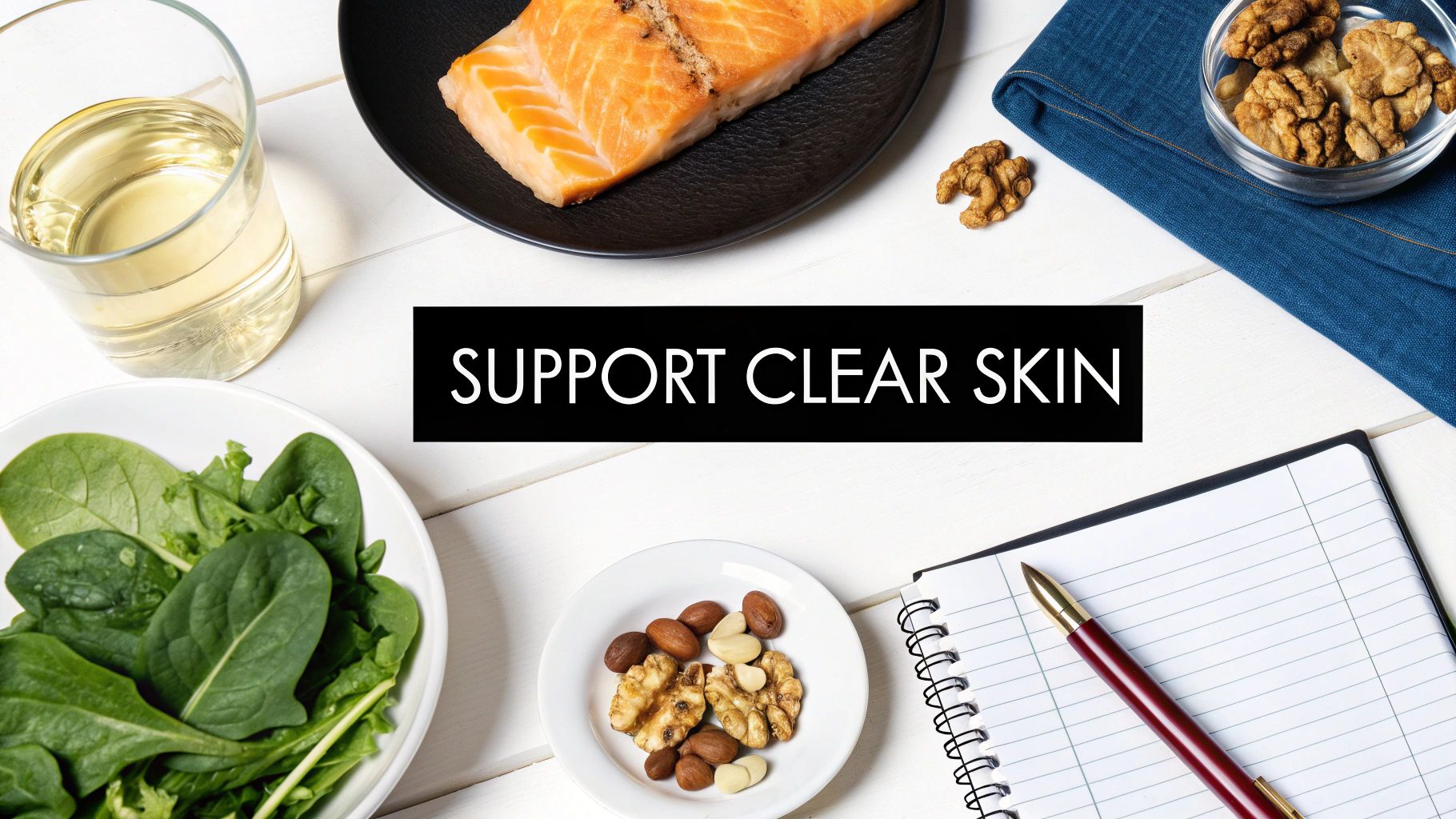
- Omega-3 Fatty Acids: Think salmon, walnuts, and flaxseeds. These healthy fats are powerhouses at calming inflammation and helping to keep oil production in check.
- Antioxidant-Rich Foods: Berries, leafy greens like spinach, and other colorful vegetables are loaded with antioxidants that protect your skin cells from damage and soothe systemic inflammation.
- Zinc-Rich Options: Add foods like pumpkin seeds and chickpeas to your rotation. Zinc is a key mineral known for reducing inflammation and fighting off acne-causing bacteria.
Key Takeaway: Progress over perfection is the name of the game. You don't need a flawless diet. Just swapping one sugary snack for a handful of nuts or adding some spinach to your smoothie is a real, sustainable step toward clearer skin.
Manage Stress to Manage Your Breakouts
Ever notice a huge cyst popping up right before a big presentation or during finals week? It's not your imagination. Stress is a massive trigger for hormonal acne.
When you're stressed, your body pumps out cortisol, the "stress hormone." Chronically high cortisol can send your other hormones into a tailspin and put your oil glands into overdrive. While you can't just wish stress away, you can build routines that help your body handle it better.
Simple, consistent practices can make a world of difference:
- Prioritize Sleep: This is non-negotiable. Aim for 7-9 hours of quality sleep a night. It's when your body repairs itself and cortisol levels naturally drop.
- Incorporate Mindful Movement: You don't have to kill yourself at the gym. Gentle activities like yoga, walking, or stretching can lower cortisol and improve circulation—both amazing for your skin.
- Practice Daily Decompression: Take just five minutes. Seriously. A few minutes of deep breathing or meditation can help reset your nervous system and blunt the physical impact of a stressful day.
Hormonal Health and Your Daily Habits
For so many people, cystic acne is directly tied to hormonal tides. While you can’t change your genetics, you can influence your hormonal balance through your lifestyle.
Regular exercise is a fantastic tool here. It’s not just for stress relief; it also helps regulate insulin, which has a positive knock-on effect on the androgen hormones that drive so much of that excess oil.
And don't forget the basics—staying hydrated by drinking plenty of water helps your body flush out toxins and keeps all your systems, including your endocrine system, running smoothly.
Ultimately, taking care of your skin is a whole-body effort. By fueling yourself with anti-inflammatory foods, actively managing your stress response, and adopting habits that support hormonal harmony, you're fighting cystic acne from every angle. This inside-out approach reinforces everything your skincare is doing, building a strong foundation for clear, healthy, and resilient skin.
When You Should See a Dermatologist
Sticking with a solid at-home skincare routine is a huge part of getting cystic acne under control. For a lot of people, a dedicated system packed with the right ingredients is enough to calm things down and get their skin back on track. But let's be real—cystic acne is a stubborn, complex medical issue. It's just as important to know when to wave the white flag and call in a professional.
Think of your at-home regimen, especially a science-backed one like Neutralyze, as your first and best line of defense. The whole point is to target the root causes of acne and bring your skin back to a healthy, balanced state. But if your skin just isn't getting better, or if it's actually getting worse, that’s a pretty clear signal that you might need a stronger approach.
Deciding When to Make the Call
So, when is it time to book that appointment? It can be a tough call. You don't want to bail on your routine too early, but you also don't want to wait so long that you end up with permanent scars.
Here are a few signs that it's time to get a dermatologist involved:
- No improvement after 12 weeks. You’ve been consistent with a good routine for three months, but those deep, painful cysts are still popping up. A little initial purging is one thing, but by this point, you should be seeing a real drop in new breakouts.
- You're starting to scar. If your cysts are leaving behind pitted, "ice pick" scars or stubborn dark spots, it's time for professional help. A dermatologist can get the inflammation under control more aggressively to prevent any more permanent damage.
- The pain is significant. Cystic acne can be genuinely painful, to the point where it's hard to sleep or even smile. If the discomfort is affecting your quality of life, a professional can offer options like cortisone shots for almost immediate relief.
- It's taking a huge emotional toll. Never discount the mental side of this. If your skin is causing serious anxiety or depression, or it's making you want to hide from the world, that’s more than enough reason to seek help.
For a deeper dive, check out our guide on when you should see a dermatologist for your acne.
What to Expect from a Dermatologist
When you meet with a dermatologist, they'll evaluate your acne, ask about what you've tried so far, and work with you to build a medical treatment plan. Their toolkit includes options that simply aren't available over the counter.
A dermatologist visit isn’t a sign of failure. It’s a smart, proactive step toward getting the expert care your skin deserves. You’re just adding a powerful ally to your team.
This is especially critical when you consider how common this is. Acne affects 79-95% of adolescents in Western societies, and for 12% of women and 3% of men, it can stick around well into adulthood. With cystic acne leading to scarring in 25-32% of even moderate cases, getting effective treatment is key. These findings from JAMA Dermatology highlight why a powerful daily routine is so vital—it can help manage the condition before it needs more aggressive medical intervention.
Here’s a look at some common prescription and in-office treatments:
- Cortisone Injections: A quick in-office procedure where a diluted steroid is injected right into a big, angry cyst to bring down swelling and pain fast.
- Oral Antibiotics: Used short-term to help reduce inflammation and control acne-causing bacteria from the inside out.
- Topical Retinoids: Prescription-strength creams (much stronger than OTC retinol) that speed up cell turnover to keep pores from getting clogged.
- Hormonal Therapies: Options like spironolactone or certain birth control pills can be a game-changer if your acne is driven by hormonal fluctuations.
- Isotretinoin: Formerly known as Accutane, this is a powerful oral medication reserved for severe, persistent cases that haven't responded to anything else.
Starting with a high-quality, targeted system like Neutralyze is the right first move. It gives your skin a real chance to rebalance without jumping straight to prescriptions. But if that's not enough to win the battle, teaming up with a dermatologist is the next logical step toward finally getting clear.
Got Questions About Cystic Acne? We've Got Answers.
When you're dealing with cystic acne, the questions can feel endless. You're trying to figure out how to get clear, and it’s completely normal to wonder about timelines, what you should be doing every day, and what this whole process is really going to look like. Let's tackle some of the most common questions head-on.
How Long Does It Really Take to See Results?
This is the toughest part of the journey: patience. While you might notice a product like Neutralyze calming down some of the redness and swelling within a few days, clearing out those deep, painful cysts takes time and serious consistency. Realistically, you're looking at about 8-12 weeks to see significant, lasting changes.
The immediate goal isn't just making a cyst disappear overnight—it's about soothing the existing inflammation and, just as importantly, stopping new ones from ever forming. This is a gradual battle fought deep under the skin's surface. That’s why sticking to one targeted routine, without constantly switching products, is absolutely essential to give the ingredients a fighting chance.
Is It Ever Okay to Pop a Cystic Pimple?
Let me be blunt: absolutely not. I know how tempting it is, but you have to resist the urge. Cystic acne forms far too deep within the skin for squeezing to do any good.
When you try to pop a cyst, all you’re doing is pushing the inflammation and bacteria further down. This not only makes it more painful but also dramatically increases your risk of a nasty infection and permanent, pitted scarring.
Instead, reach for a spot treatment designed to calm things down from the outside. Let your daily skincare routine do the heavy lifting from the inside out. A deep, angry cyst is a job for your products or a dermatologist—never your fingers.
A simple rule to live by: If it doesn't have a clear, distinct whitehead on the surface, your hands shouldn't go anywhere near it. Forcing the issue will only make it stick around longer and leave a mark that could haunt you for months.
Can I Use Exfoliating Acids Every Day?
That really depends on the specific product you're using. Some high-strength acid treatments are formulated for use just a few times a week, and using them more often would be asking for trouble.
However, a well-formulated system like Neutralyze is engineered for daily use. It strikes a careful balance, using effective ingredients like Salicylic and Mandelic Acid but delivering them gently to avoid wrecking your skin's moisture barrier.
My advice? Whenever you're introducing any new active ingredient, start slow. Use it every other day for a week or two and see how your skin responds. The goal is always to treat the acne without creating a new problem like excessive dryness or irritation.
My Skin Is Oily but Feels Tight. What Should I Do?
Ah, the classic sign of a dehydrated, damaged moisture barrier. This happens all the time, usually after someone has tried to obliterate their acne with harsh, stripping products. Your skin is panicking and overproducing oil to compensate for being stripped dry.
The answer isn't to dry it out even more; it's to give it the hydration it's screaming for. Find a lightweight, hydrating, and non-comedogenic moisturizer and use it faithfully. This is a non-negotiable step. Repairing your skin barrier will help it regulate oil production on its own, finally breaking that frustrating cycle of oiliness and breakouts.
Ready to build a routine that finally gets to the root of your cystic acne? Neutralyze offers a complete system powered by Salicylic Acid, Mandelic Acid, and our multi-patented Nitrogen Boost™ Skincare Technology to deliver clear, calm skin without a prescription. See the difference for yourself at https://www.neutralyze.com.


