

What Does Purging Skin Look Like? A Complete Visual Guide
So, you’ve started a new powerhouse skincare product, and suddenly your face is flaring up. It’s frustrating, to say the least. But before you banish that new serum to the back of your cabinet, you need to figure out if it's a dreaded breakout or something else entirely: a skin purge.
It might sound counterintuitive, but that initial flare-up could actually be a great sign. Think of it as your skin’s way of cleaning house—a temporary, controlled chaos that signals your new active ingredients are getting the job done. This is the first step in the advanced, science-backed approach that brands like Neutralyze use to deliver truly clear skin.
Is It A Purge Or A Breakout?
It's the classic skincare dilemma: is my skin freaking out or just... cleaning up? The answer really boils down to why the blemishes are appearing.
A skin purge is a direct result of ingredients that speed up skin cell turnover. We’re talking about actives like retinoids, AHAs, and BHAs (Salicylic Acid or Mandelic Acid, for example). These ingredients, which are the cornerstones of effective acne treatments like those from Neutralyze, get deep into your pores and push all the gunk that’s been lurking under the surface—oil, dead skin cells, and pre-existing clogs called microcomedones—up and out. It’s an accelerated clean-out, and that’s why the blemishes pop up in your usual problem areas.
A true breakout, on the other hand, is a negative reaction. It happens when a product is clogging your pores (comedogenic) or causing irritation. The biggest giveaway? The blemishes show up in places you’re normally clear. You might also see deeper, more painful cysts or experience uncomfortable itching and redness, which are classic signs of irritation.
This handy flowchart breaks down the first question you should ask yourself: where are the blemishes showing up?
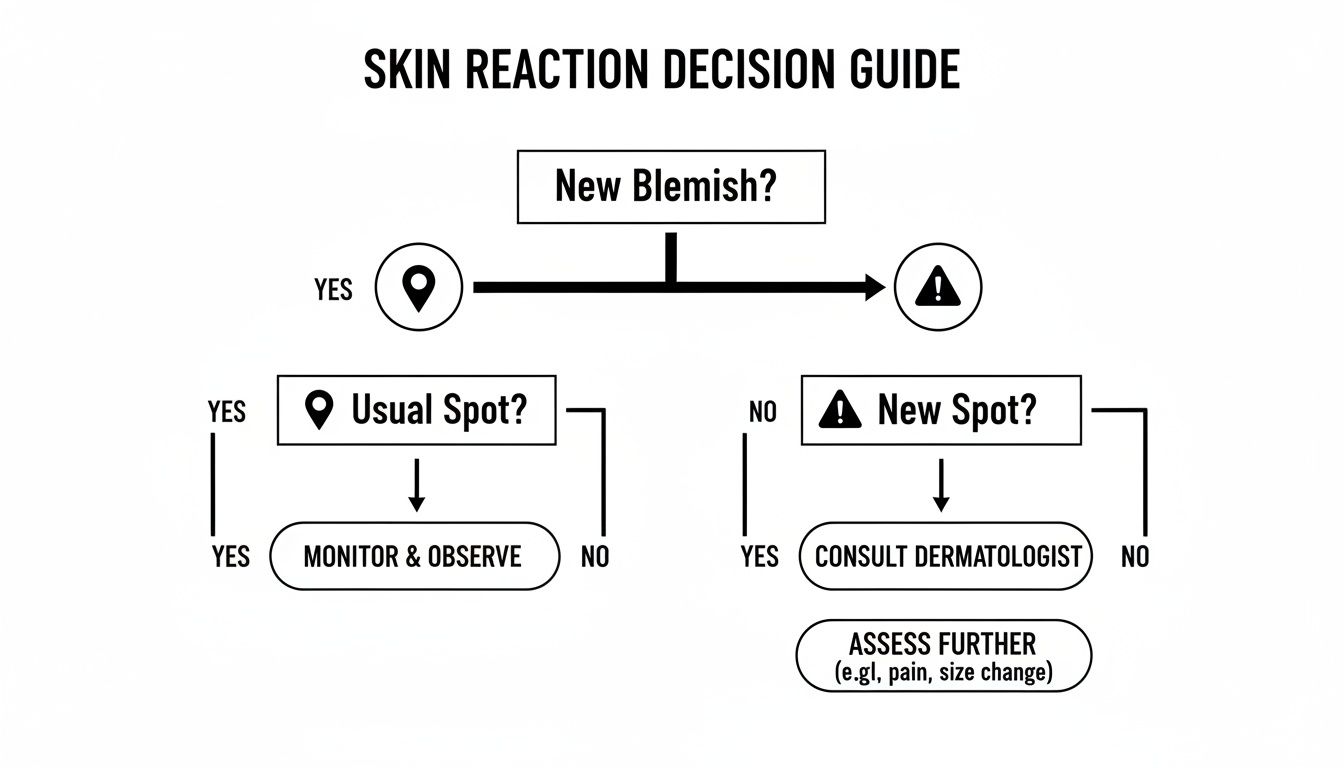
As you can see, location is everything. If the acne is in familiar territory, you're likely in the clear (pun intended). If it's venturing into new territory, it's time to be suspicious of that new product.
Purging vs Breakout: What Your Skin Is Telling You
Knowing the difference is key. If you stop using a product during a purge, you're essentially quitting the race right before you get to the finish line. Sticking it out means you'll soon see the clearer, healthier skin you were hoping for.
To make it easier, here's a quick reference table to help you decode what’s happening on your skin.
| Characteristic | Skin Purging (The Product Is Working) | Breakout Or Irritation (The Product Is Not Working) |
|---|---|---|
| Location | Appears in your usual acne-prone zones (e.g., forehead, chin). | Pops up in new, random areas where you're typically clear. |
| Appearance | Small, uniform blemishes like whiteheads and blackheads that surface quickly. | Can include deep, painful cysts, or an itchy, red rash. |
| Duration | Blemishes appear and heal faster than normal breakouts. | Blemishes linger for a long time and are slow to heal. |
| Timeline | Typically lasts 4-6 weeks before skin begins to clear up significantly. | Worsens over time and does not improve after 6-8 weeks. |
Ultimately, this table helps you listen to your skin. A purge is a temporary phase with a clear timeline and familiar patterns, while a breakout or irritation is a sign that your skin is rejecting the product and it's time to stop.
The Science Behind Why Skin Purges
To really get what purging looks like, we first have to talk about why it happens. It’s not your skin randomly freaking out; it’s actually a very specific, predictable reaction to powerful ingredients that are designed to overhaul your skin from deep within.
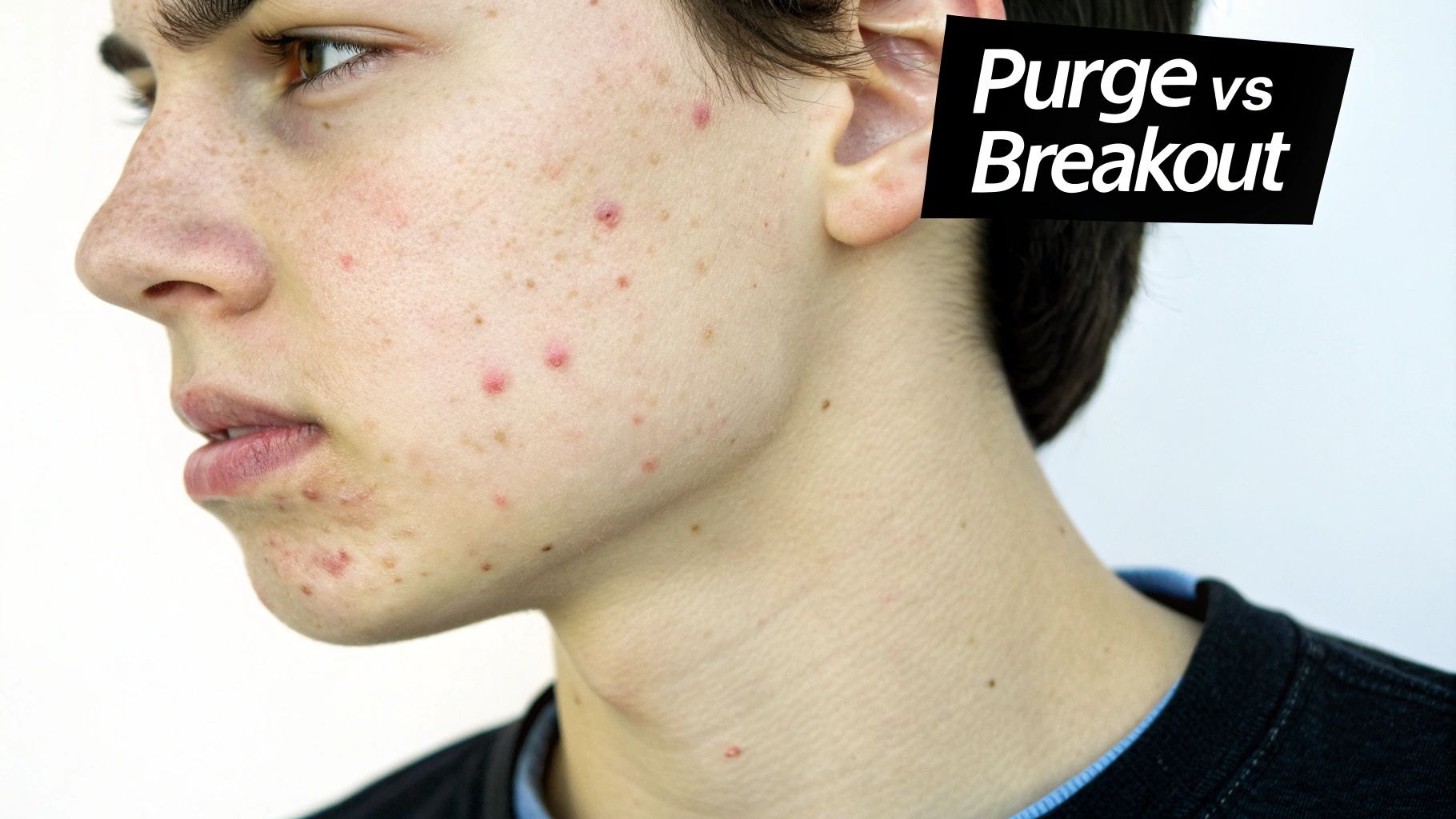
Think of it like a deep-clean for your pores. Normally, your skin goes through a full renewal cycle over a few weeks. But when you introduce certain active ingredients, that whole timeline gets put on fast-forward.
This sudden acceleration is what kicks off a purge. It forces all the microcomedones—those tiny, invisible clogs that were already brewing under the surface—to come up to the top all at once. The result? A temporary, but often intense, flare-up of pimples.
How Active Ingredients Kickstart This Deep Clean
The main players behind this "deep clean" are usually powerful exfoliants and ingredients that regulate cell behavior. They don’t just sit on the surface; they go deeper to get things moving at the cellular level. This is where expert formulation makes all the difference.
- Salicylic Acid (BHA): As a hero ingredient in advanced acne systems like those from Neutralyze, Salicylic Acid's power lies in being oil-soluble. This allows it to penetrate deep into your pores and dissolve the mixture of sebum and dead skin cells causing blockages. By clearing that path, it essentially opens the floodgates for all the underlying congestion to get out.
- Retinoids: These are derivatives of vitamin A, and they are masters at managing skin cell turnover. They basically tell your skin to shed dead cells more quickly and efficiently, stopping them from piling up and causing new clogs in the first place.
- Mandelic Acid (AHA): Another star in Neutralyze’s formulas, Mandelic Acid is a gentle yet effective AHA. It works on the skin's surface, dissolving the "glue" that holds dead cells together. This multi-level exfoliation—deep with Salicylic and surface with Mandelic—is what makes comprehensive systems so effective.
When these ingredients get to work, they’re effectively hitting the fast-forward button on your skin's renewal cycle. The purge you see is the physical evidence that this powerful process is in full swing, pushing out all the old junk to make room for clearer, healthier skin.
A skin purge isn’t a sign that a product is failing you. It’s a sign that it's working. The ingredients are reaching deep into your skin and starting a clearing process that a simple surface-level face wash could never accomplish.
This is the sophisticated science that Neutralyze is built on. Our formulas are expertly designed to work from the inside out, tackling acne right at its source. While seeing that initial purge can be a little disheartening, it’s a temporary and necessary step toward getting truly clear skin. It’s proof that the product is doing its job and resetting your complexion for the better.
A Detailed Visual Guide To Skin Purging
So, how can you be sure what you're seeing is a purge? Let's get into the specifics of what to look for. Think of it less like a random acne explosion and more like a focused, accelerated clearing out of gunk that was already hiding under your skin. The visual signs are actually pretty distinct from a regular breakout if you know what you’re looking for.
A purge usually shows up as a crop of small, surface-level blemishes. These aren't typically the deep, painful cysts that can hang around for weeks. Instead, you'll probably see a sudden flurry of little bumps that surface, come to a head, and then clear up much faster than your usual pimples.
Common Signs of a Skin Purge
The look of a purge is quite specific because it's just speeding up the lifecycle of pimples that were already on their way.
- Small Papules and Pustules: Expect to see small, red bumps (papules) and some with a visible white center (pustules).
- Whiteheads and Blackheads: A sudden increase in whiteheads and blackheads is a classic sign. This is your pores finally pushing out all that trapped oil and dead skin.
- Location, Location, Location: This is your biggest clue. A purge almost always happens in the areas where you normally break out. If your chin and T-zone are your usual trouble spots, that’s where the purge will hit.
On the flip side, a true breakout or a bad reaction looks totally different. You might see angry, red pimples popping up in new places where you're usually clear. Itching, rashes, or hives are also red flags that point to irritation, not a purge.
Understanding the Purge Timeline and Intensity
When you first start using a powerful active ingredient like a retinoid or an exfoliating acid, it can feel like your skin is getting worse before it gets better. But here's some good news: not everyone even goes through this. A study of 350 clients using topical acne treatments found that 77% saw steady improvement with no purging at all.
For the 20% who did experience a purge, it usually kicked in about two weeks after starting the new product and lasted up to six weeks before clearing up. The best part? Every single client in the study eventually got their skin completely clear. You can dig into more of these clinical observations about acne clearance if you're curious.
The key thing to remember is that purging blemishes show up and heal fast. They surface, come to a head, and are gone much quicker than a standard pimple because those active ingredients are putting your skin's renewal cycle into overdrive.
This rapid turnover is actually a great sign that powerful ingredients, like the Salicylic and Mandelic Acids in Neutralyze products, are working exactly as they should. They're getting deep into your pores to clean out everything that's currently clogging them and preventing future blockages.
Knowing what a purge actually looks like helps you avoid the classic mistake of ditching a great product right before it starts to deliver amazing results. Trusting the process through this short-lived phase is the first real step toward getting the clear skin you're after.
How Long Does A Skin Purge Usually Last?
When you kick off a new routine with powerful active ingredients, patience isn't just a virtue—it's a requirement. Seeing your skin get worse before it gets better can be unnerving, but understanding the timeline helps you trust the process. A skin purge isn't a permanent setback; it's a temporary, and often necessary, phase on the way to clearer skin.
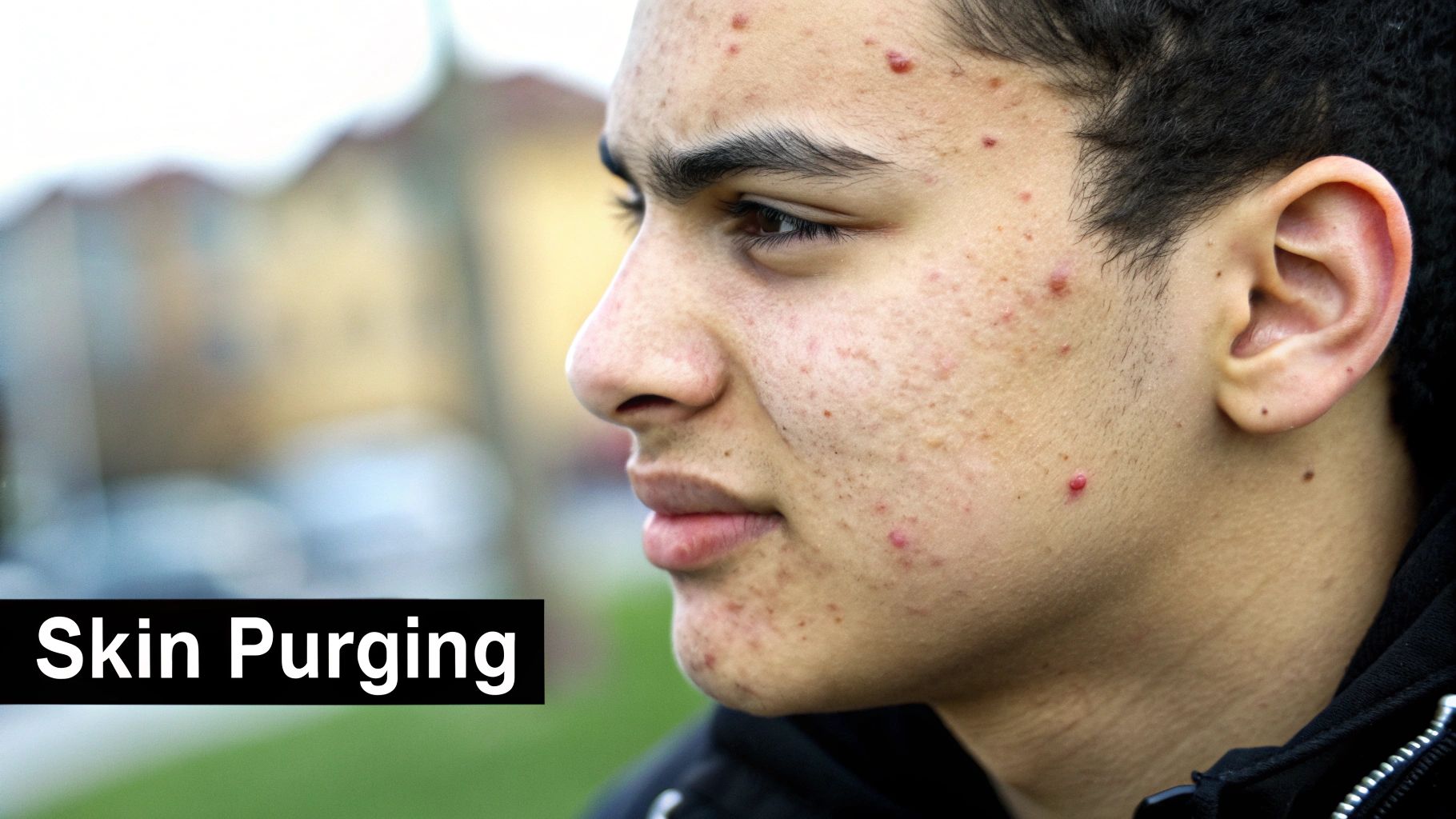
So, how long do you have to wait it out? A typical skin purge lasts for one full skin cell turnover cycle. For most people, that means you're looking at about four to six weeks. This timing isn't random—it's directly tied to how these active ingredients work, giving them just enough time to speed up cell turnover and push all that underlying gunk to the surface.
The Typical Week-By-Week Purge Timeline
Everyone's skin is unique, but the purging process tends to follow a fairly predictable path. Knowing what to expect can make it much easier to stick with it.
-
Weeks 1-2: The First Signs
This is when you’ll likely see the first signs of a flare-up. As ingredients like the Salicylic and Mandelic Acids in Neutralyze products get to work, you might notice small whiteheads and blackheads popping up in your usual breakout zones. -
Weeks 3-4: The Peak
Hang in there, because this is often the most intense phase. All the congestion that was hiding deep in your pores is now coming up to the surface. It can feel like a major step backward, but this activity is a clear sign the product is doing its job and cleaning house. -
Weeks 5-6: The Calm Down
You’ve made it through the worst of it. By now, the breakouts should be slowing down dramatically. Your skin will start to look and feel much smoother as the purge winds down, finally revealing the clearer complexion you've been waiting for.
This four-to-six-week timeline isn't just a guess; it's based on skin biology. It directly corresponds to your skin's natural renewal cycle, which is why giving a new active product at least this long is critical to seeing real, lasting results.
What The Experts Say
Dermatologists generally agree that a purge should resolve within 4-6 weeks. The toughest part is usually around the two-to-four-week mark, with real improvement becoming visible after week five.
Clinical observations of acne treatments back this up. While some patients experience that initial flare-up, sticking with the treatment consistently leads to clear skin. It confirms that purging is often a sign that a product is effective, not that it's failing. If you want to dig deeper, you can explore more insights on what triggers this beneficial reaction.
How To Manage and Minimize a Skin Purge
Going through a skin purge can feel like you’re just stuck waiting it out, but you don't have to be a passive bystander. While it’s technically a good sign that your new active ingredients are working their magic, you can absolutely take steps to make the whole process a lot more comfortable.
The goal isn't to stop the purge—it's to support your skin's renewal cycle so it can do its thing with less drama and irritation.
Think of yourself as a supportive friend. You can’t do the heavy lifting for your skin, but you can definitely make sure it has everything it needs to get the job done smoothly. A gentle, supportive routine is the key to easing the intensity and helping your skin get to that clearer, brighter state on the other side.
Your Action Plan for a Calmer Purge
Right now, a simple and consistent routine is your skin's best friend. It’s easy to get tempted to throw more products at the problem, but that can backfire by causing more inflammation and confusion. It’s time to pare back and focus on the non-negotiables.
Here are a few simple but powerful steps to get you through it:
- Introduce Actives Slowly: Don't jump into the deep end. Start using your new active product just a couple of times a week. This gives your skin a chance to get used to it. As it builds tolerance, you can slowly work your way up to more frequent use.
- Simplify Your Routine: Stick to the absolute basics. All you really need is a gentle cleanser that doesn't strip your skin, a soothing moisturizer to keep your skin barrier happy, and a good broad-spectrum sunscreen. This minimalist approach is your best defense against extra irritation.
- Avoid Other Harsh Products: This is not the time to experiment with other strong treatments, physical scrubs, or different exfoliants. Let the one active ingredient do its work without any interference. Piling on too much at once is a surefire way to compromise your skin barrier and make everything look and feel worse.
I know it’s tempting, but whatever you do, don't pick at the blemishes. Squeezing them can just push bacteria deeper, leading to more intense inflammation, a longer healing time, and potentially permanent scars.
Soothe, Hydrate, and Protect
Your skin barrier is working overtime during a purge, so giving it extra support is crucial. Active ingredients can often cause some dryness and flaking, which means hydration is non-negotiable.
Look for moisturizers with ingredients like ceramides or hyaluronic acid. These are fantastic for locking in moisture and reinforcing your skin's natural defenses when they’re feeling a bit weak.
Finally, sunscreen is the most important product you'll use during the day. Actives like Salicylic Acid and retinoids make your skin much more sensitive to the sun. Using an SPF 30 or higher every single day is essential. It protects your vulnerable skin from UV damage and helps prevent those annoying dark spots (post-inflammatory hyperpigmentation) that can linger long after the breakout is gone.
This supportive approach doesn't just make the purge more tolerable—it sets your skin up for being healthier and more resilient for the long haul. To understand how specific ingredients like Benzoyl Peroxide might factor into this process, you can find more information in our detailed guide on the topic. This careful approach reinforces our commitment to your skin's complete journey to health.
When Your Breakout Is Not A Purge
While a purge can be a good sign, it's incredibly important to know when you're dealing with something else entirely—like a bad reaction. True irritation or an allergic response won't get better with time. In fact, it'll probably get worse. Learning to listen to what your skin is telling you is the most valuable skill you can have.
Sometimes, the culprit isn't even the "active" ingredient. It could be another component in the formula that just doesn't sit right with your skin. This is also where a deeper understanding of ingredients comes in handy, helping you move past things like the myth that all facial oils cause breakouts and pinpoint the real issue.
Clear Signs It Is Not A Purge
If you spot any of these red flags, it’s time to stop using the product and reassess. These signals mean your skin is in distress, not just going through an adjustment period.
- It Lasts Too Long: A purge has a finish line. If your breakout is still going strong with no improvement after six to eight weeks, it's not a purge. By that point, a true purge should be clearing up.
- Intense Irritation: Purging shouldn't hurt. If you’re experiencing severe itching, burning, peeling, or hives, that’s your skin screaming for help. These are classic signs of a sensitivity or allergic reaction.
- Blemishes In New Places: Purging brings existing, underlying congestion to the surface in your usual breakout zones. If you’re suddenly getting pimples in completely new areas where you’re normally clear, the product is likely causing the problem, not fixing it.
Your skin's health always comes first. If a reaction feels too intense or is dragging on way longer than it should, trust your gut. It's always better to stop and get a professional opinion than to try and force your skin to "get used to" something that's damaging it.
Knowing when to power through is one thing, but knowing when to stop is just as crucial for keeping your skin healthy and happy in the long run.
A Few More Things You Might Be Wondering
Alright, let's wrap this up by tackling some of the most common questions that come up when you're staring at your skin and wondering, "Is this a purge?" Getting straight answers can really help you stay the course with confidence.
Can My Cleanser Be The Culprit?
This is a great question. Generally, a simple, gentle cleanser won't trigger a purge. But—and this is a big but—if your cleanser contains active exfoliants like Salicylic Acid, then yes, it's possible.
It's definitely less common than with products you leave on your skin, like a serum, because you rinse a cleanser off so quickly. Still, it can happen.
Does Everyone Have to Go Through a Purge?
Nope, not at all. There's this myth that if your skin doesn't purge, the product isn't working. That's just not true.
Plenty of people introduce a new active and just see slow, steady improvement without any initial drama. Everyone's skin is different, so if you're one of the lucky ones who gets to skip the purging phase, just enjoy it!
Which Neutralyze Ingredients Are Most Likely to Cause a Purge?
Our formulas are built around powerful, effective ingredients, and it's these workhorses that are most likely to kickstart that deep-cleaning process in your pores.
The main players in Neutralyze products that can get a purge going are Mandelic Acid (AHA) and Salicylic Acid (BHA). Think of them as trainers for your skin—they speed up the renewal process, pushing all that underlying gunk to the surface so it can finally clear out.
These ingredients are designed to accelerate skin cell turnover. While seeing a flare-up can be frustrating, it's often a very positive sign that the formula is doing exactly what it's supposed to: clearing out congestion for good.
Ready to start your journey to consistently clear skin? Trust the advanced, science-backed formulas from Neutralyze to manage acne and reveal your healthiest complexion. Explore our collection and find your solution today.


