

What Causes Teenage Acne A Guide for Parents and Teens
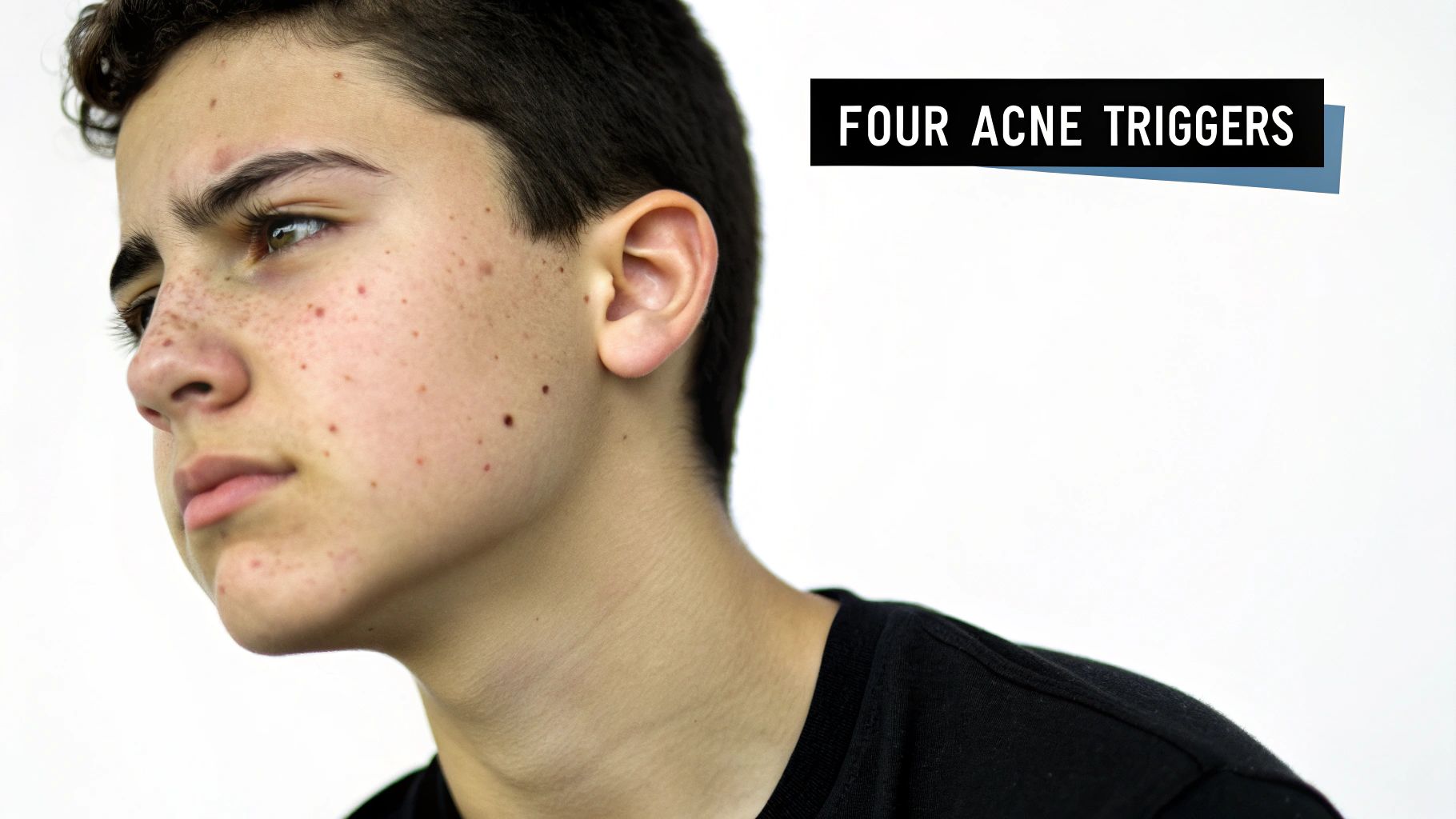
Teenage acne isn't just a random series of breakouts; it's the result of a specific chain reaction happening just beneath the skin. Four key factors work in concert to create that "perfect storm" for pimples: hormonal surges, excess oil production (sebum), clogged pores, and bacteria. When puberty kicks into high gear, this combination creates the exact environment where acne thrives.
The Four Main Triggers of Teenage Acne
So, what’s really going on? Let's get right to the source of the problem. Picture your skin's pores as tiny, microscopic pipelines. Most of the time, they do their job without any fuss. But during the teen years, a specific sequence of events turns them into ground zero for breakouts.
It all starts with hormones. The hormonal rollercoaster of puberty is the main culprit behind teenage acne, kicking off a massive surge in oil production that clogs pores and triggers inflammation. As teens hit adolescence, androgen hormones like testosterone ramp up, signaling the skin's sebaceous glands to go into overdrive. This flood of oil, known as sebum, mixes with dead skin cells, creating a sticky plug that bacteria love. This blockage is what leads to classic pimples, blackheads, and cysts.
This hormonal trigger is precisely why acne hits its peak worldwide in the 10–14 and 15–19 age groups. For a deeper scientific dive, you can explore the full research on how hormones impact acne development here.
This process unfolds in a clear, four-step cascade that leads directly to a breakout.

As you can see, each trigger feeds directly into the next, creating a cycle that can feel impossible to escape without the right strategy.
To get a clearer picture of how these biological factors connect, this quick guide breaks it down.
Quick Guide to the Main Causes of Teenage Acne
| The Culprit | What It Is | How It Causes Acne |
|---|---|---|
| Hormonal Surges | A dramatic increase in androgen hormones (like testosterone) during puberty. | Androgens signal the skin’s oil glands to produce significantly more sebum. |
| Excess Sebum | The oily, waxy substance produced by sebaceous glands to lubricate the skin. | Too much sebum creates an overly oily environment, making it easy for pores to get blocked. |
| Clogged Pores | When excess oil mixes with dead skin cells, forming a sticky plug in the hair follicle. | This plug, called a microcomedone, traps oil and bacteria inside the pore. |
| Bacteria (C. acnes) | A type of bacteria that naturally lives on the skin and thrives in oily, low-oxygen environments. | When trapped inside a clogged pore, this bacteria multiplies, causing inflammation, redness, and pus. |
Each of these culprits plays a crucial role. Without addressing all four, you're only fighting part of the battle.
A Deeper Look at the Acne Cycle
To truly get a handle on acne, you have to find a way to interrupt this cycle. This is where expertise in skincare science comes in, and at Neutralyze, we’ve built our entire system around two of the most effective exfoliants available.
- Salicylic Acid: As an oil-soluble Beta Hydroxy Acid (BHA), this is the undisputed expert at unclogging pores. Its molecular structure allows it to penetrate deep into the pore lining and dissolve the mixture of excess oil and dead skin cells that cause blockages.
- Mandelic Acid: This gentle Alpha Hydroxy Acid (AHA) provides the perfect complementary action. It works on the skin's surface to sweep away dead cells before they can cause a clog, while also helping to reduce the look of post-acne marks and calm irritation.
The Neutralyze system harnesses the synergistic power of these two ingredients to break the acne cycle at multiple points. This dual-acid approach is the cornerstone of a smart, effective strategy for achieving clear skin that lasts.
Why Hormones and Genetics Are the Real Culprits Behind Breakouts
While things like your daily routine definitely matter, the two biggest forces driving teenage acne are things you can't see: hormones and genetics. When puberty hits, the body is flooded with hormones called androgens. Think of these androgens as messengers telling your skin’s oil glands to kick into high gear. It’s like a factory suddenly getting an order to triple production—the whole system gets overloaded, fast.
This hormonal surge is a totally normal part of growing up, but it's what directly causes the excess oil (sebum) that starts the whole acne cycle. Because hormones play such a central role, understanding how to naturally balance hormones can offer some helpful insights into overall health. But hormones are only one part of the story—the other is written in your DNA.
Is It Written in Your Genes?
If you've ever wondered, "Am I doomed because my parents had bad acne?" you're not alone. It's a fair question, because your genetic makeup has a huge say in how your skin behaves. You can inherit specific traits that basically pre-program your skin to be more prone to breakouts.
Here’s what your genes can influence:
- Oil Production Levels: Some people are just genetically wired to produce more sebum than others.
- Pore Sensitivity: Your genes can make your hair follicles extra sensitive to those androgen hormones we just talked about.
- Inflammation Response: Your DNA also helps determine how your immune system reacts to bacteria. This is why a clogged pore might become a tiny blackhead for one person but a large, angry pimple for another.
This genetic lottery explains why two friends with similar lifestyles can have wildly different experiences with acne—one might get a few spots here and there, while the other struggles with constant breakouts.
How You Can Manage Your Skin’s Reaction
So, you can't change your DNA or stop puberty. What can you do? A lot, actually. The goal isn't to fight your body but to work with it by managing the side effects of these powerful internal triggers. This is where a smart, science-backed skincare routine becomes your greatest ally.
The real key is to consistently counteract the excess oil and keep pores from getting clogged, regardless of what your hormones and genes are up to. This is where the right active ingredients come into play, and it's what Neutralyze specializes in.
- Salicylic Acid: Our formulation leverages this BHA because of its unique ability to be oil-soluble. It can dive deep into your pores and dissolve the gunk—that mix of oil and dead skin cells—that causes blockages in the first place. It’s a direct response to overactive oil glands.
- Mandelic Acid: As a gentle AHA, this ingredient works on the surface. It helps exfoliate dead skin cells before they have a chance to fall into the pore and create a clog, clearing the way for Salicylic Acid to get in there and do its job.
When you use the Neutralyze system, you're not just using products; you're implementing an ingredient-focused strategy. This builds a strong defense against your body's internal triggers, creating a skin environment where breakouts are far less likely to form at all.
How Your Everyday Habits Affect Your Skin
While hormones and genetics load the gun, it’s our daily habits and environment that often pull the trigger. These are the factors you can actually control, and understanding them is your first real step toward managing breakouts.
Let's get one thing straight: that single slice of pizza isn't the direct villain it's often made out to be. The real story is more complex. Science now shows a clear connection between overall dietary patterns and the kind of inflammation that fuels acne.
The Diet-Acne Connection
What you eat can absolutely influence your skin. Certain foods kickstart internal processes that ramp up oil production and inflammation, making breakouts much more likely. The main offenders? High-glycemic foods—think anything packed with sugar and refined carbs, like white bread, soda, and sugary snacks.
When you eat these foods, your body releases a hormone called insulin-like growth factor-1 (IGF-1). This signals your skin to produce more oil and grow skin cells faster, creating a traffic jam in your pores. The evidence is pretty compelling: some studies have shown that switching to low-glycemic diets can slash acne lesions by up to 50%. Yet, teenage acne remains a huge issue worldwide. You can read more about the global burden of acne from this research.
The Bottom Line: A diet consistently high in sugar and dairy can create a state of chronic inflammation inside your body, making your skin more prone to acne. Focusing on whole foods, fruits, and vegetables can help calm things down from the inside out.
It's also worth looking at the gut-skin axis. A growing body of research suggests our gut microbiome has a major influence on our skin's health. For a more holistic approach, you might want to explore the benefits of probiotics for gut health.
Stress, Sleep, and Your Skincare Routine
Ever notice a massive pimple pop up right before a big exam? It’s not a coincidence. When you're stressed, your body pumps out cortisol, a hormone that tells your oil glands to go into overdrive. More oil means more chances for clogged pores.
On top of that, your daily skincare habits can either be your skin's best friend or its worst enemy. Many people think scrubbing their face raw is the key to getting it clean, but this almost always backfires.
Here’s what you want to avoid:
- Harsh Scrubbing: This just irritates the skin and strips away its natural moisture barrier. Your skin then tries to compensate by producing even more oil.
- Pore-Clogging Products: Heavy, greasy moisturizers, certain types of makeup, and even some hair products can clog pores. Always look for products labeled "non-comedogenic," which means they are specifically formulated not to block your pores.
- Being Inconsistent: Skipping your routine, especially at night, leaves a full day of oil, dirt, and makeup sitting on your skin—basically a perfect breeding ground for acne-causing bacteria.
Your best defense is a consistent, gentle routine. The Neutralyze system is expertly formulated to do more than just treat existing pimples; it's designed to protect your skin’s natural barrier. By combining powerful active ingredients with soothing, hydrating elements, our routine makes your skin more resilient. In the fight against breakouts, consistency with the right system is your most powerful ally.
A Guide to Different Types of Acne
So, you’re dealing with breakouts. The first thing to realize is that not all pimples are the same. Getting a handle on your acne means figuring out exactly what kind of bumps you’re seeing in the mirror.
Think of it like being a skin detective. Once you can tell the difference between a minor clog and a seriously angry blemish, you’ll know exactly how to fight back and get the results you want.
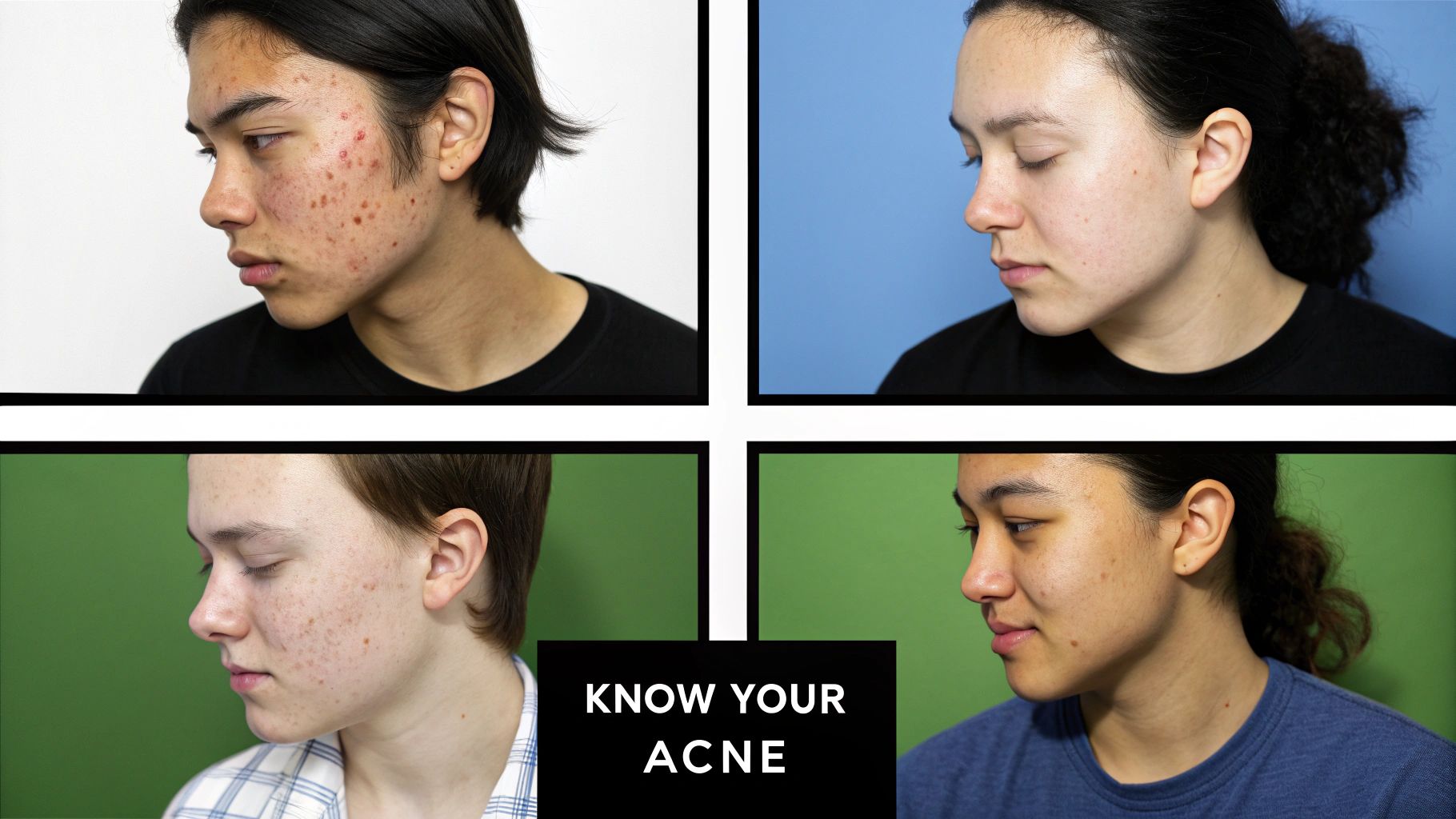
Acne generally falls into two main camps: non-inflammatory and inflammatory. Non-inflammatory acne is like a simple traffic jam in your pore. Inflammatory acne? That’s the same traffic jam, but now there's a multi-car pile-up causing redness, swelling, and a whole lot of chaos.
Non-Inflammatory Acne: The Clogged Pores
This is where most acne stories begin. It’s the mildest and most common form, happening when a pore gets plugged with a sticky mix of oil (sebum) and dead skin cells. The good news is, the situation hasn't escalated into a full-blown infection yet.
-
Blackheads (Open Comedones): These are pores clogged with that oil-and-skin-cell gunk, but they remain open to the air. That dark spot you see isn't dirt! It’s just the trapped mixture turning black as it reacts with oxygen—a process called oxidation.
-
Whiteheads (Closed Comedones): These are pores that are completely sealed off by a thin layer of skin. This traps everything underneath, creating that familiar small, white, or flesh-colored bump.
Since these are basically just blockages, the main goal is to clear them out. An ingredient like Salicylic Acid is the gold standard for this job. As an expert in pore-clearing, this oil-soluble exfoliant can dive deep into the oily pore and break down the hardened gunk from the inside.
Inflammatory Acne: The Red and Painful Bumps
This is what most of us picture when we hear the word "pimple." It all starts when a normally harmless bacteria, C. acnes, starts to feast on the oil trapped in a clogged pore. As the bacteria multiply, your body’s immune system sounds the alarm and sends in the troops, leading to redness, swelling, and pus.
There are a few different types of these angry blemishes:
-
Papules: These are the small, red, and tender bumps that don't have a visible "head." The wall of the pore has broken, and the inflammation is just getting started.
-
Pustules: This is your classic "zit." It’s a red, inflamed bump with a noticeable white or yellow center filled with pus.
When you're dealing with these more irritated breakouts, you need a two-pronged attack. You still need to clear the pore, but you also have to calm down the inflammation. The Neutralyze system is designed for exactly this, leveraging its advanced formulations to soothe redness and irritation while treating the root cause of the breakout.
Finally, we have the more severe types of inflammatory acne, which form much deeper under the skin’s surface.
-
Nodules: These are large, solid, and often painful lumps that feel hard to the touch. Because they’re so deep, they can be very sensitive and hang around for a while.
-
Cysts: These are also large and deep, but they’re soft, pus-filled lumps. Cysts can be extremely painful and unfortunately have the highest risk of leaving behind permanent scars.
Before you can pick the right products, you need to know what you're up against. The table below can help you quickly identify what's going on with your skin.
Identifying Different Types of Teenage Acne
| Acne Type | Appearance | Common Location | Primary Cause |
|---|---|---|---|
| Blackhead | Small, dark spots; pore is open | Nose, chin, forehead | Clogged pore exposed to air (oxidation) |
| Whitehead | Small, flesh-colored or white bump; pore is closed | Forehead, cheeks, chin | Clogged pore trapped under the skin |
| Papule | Small, red, inflamed bump with no "head" | Face, chest, back | Bacterial growth in a clogged pore causes inflammation |
| Pustule | Red, inflamed bump with a visible white/yellow pus center | Face, chest, back | Immune response to bacteria, creating pus |
| Nodule | Large, hard, painful lump deep under the skin | Face, neck, back | A severe, deep infection and inflammation |
| Cyst | Large, soft, painful, pus-filled lump deep under the skin | Face, neck, back | A severe, deep infection causing a pus-filled sac |
Knowing what you see in the mirror is the most critical step toward clear skin. By correctly identifying your acne, you can choose a treatment that targets the specific problem, whether it's a simple clog or a deep, painful infection.
Building a Skincare Routine That Actually Works
Figuring out why you have acne is one thing, but knowing how to fight back is where the real change happens. The answer isn't scrubbing your face raw or piling on a dozen different products hoping something sticks. A great skincare routine really just comes down to three simple, consistent pillars: cleansing, treating, and moisturizing.
Your two secret weapons here are consistency and a gentle touch. It sounds counterintuitive, but aggressive scrubbing actually does more harm than good. It can damage your skin’s natural protective barrier, which often kicks oil production into overdrive as your skin tries to defend itself. A calm, methodical approach is what truly soothes irritation and gets powerful ingredients where they need to go.
The Foundation of Clear Skin
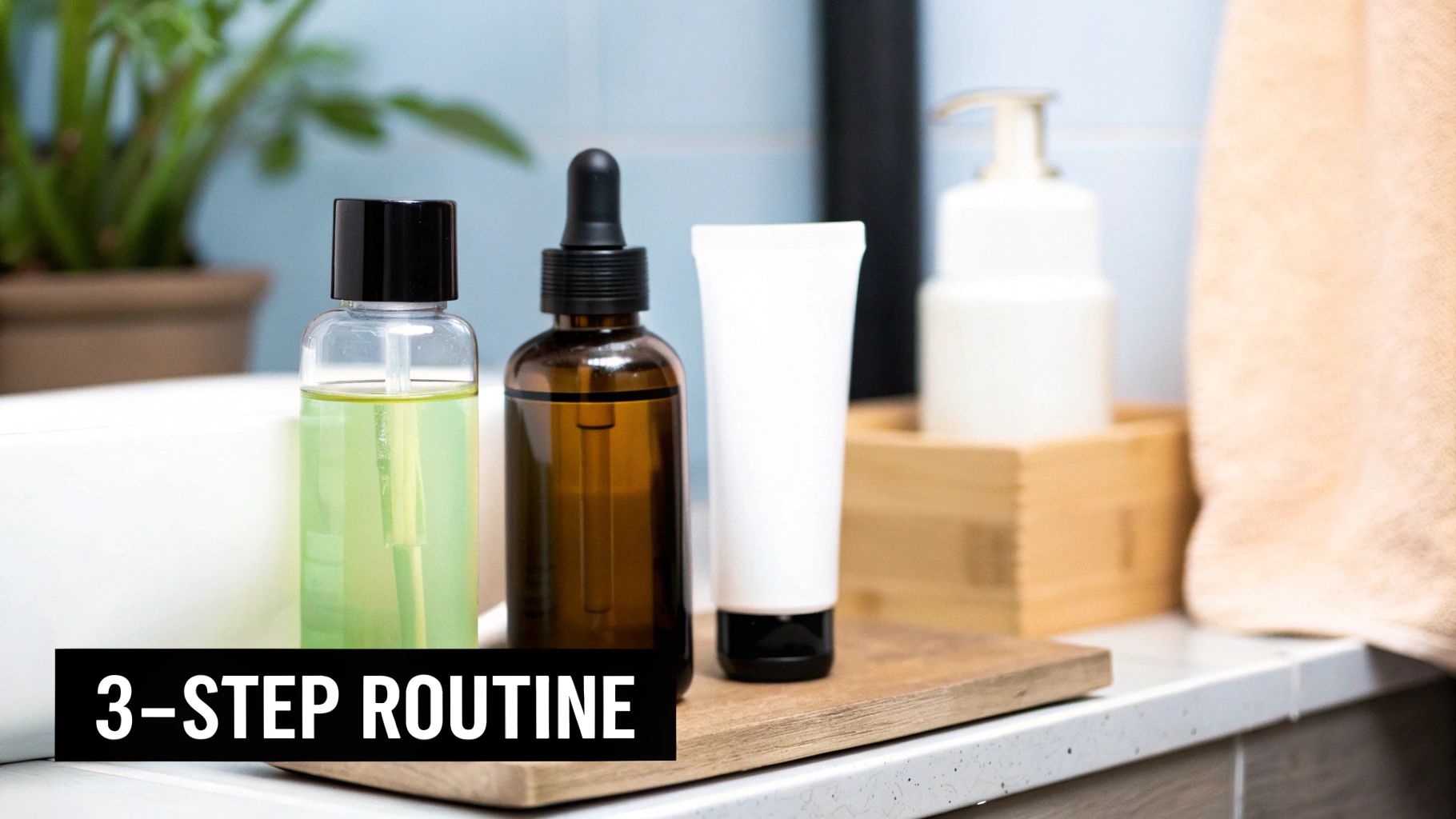
This is where finding a complete, all-in-one system, like the Neutralyze 3-step kit, can be a game-changer. It eliminates the confusion of building a routine from scratch by giving you everything you need in one box. Each product is formulated to work together, creating a combined effect that tackles breakouts from every angle.
The entire system is based on our deep understanding of the key ingredients clinically proven to fight the main causes of teen acne without being harsh.
Step 1: The Face Wash with Mandelic Acid
Every good routine starts with a clean slate. The Neutralyze Face Wash is expertly formulated with Mandelic Acid, a gentle but highly effective alpha-hydroxy acid (AHA).
- It carefully dissolves the "glue" that holds dead skin cells together, stopping them from clogging your pores in the first place.
- By clearing away this surface-level debris, it creates the perfect canvas for the treatment ingredients in the next step to penetrate deeply and work more effectively.
Step 2: The Exfoliating Pads with Salicylic Acid
With the surface prepped, it's time to go deeper. The Exfoliating Pads star Salicylic Acid, the BHA renowned for its ability to dissolve oil.
- Because it’s oil-soluble, our Salicylic Acid formulation can get right down into the pore lining where the blockages happen.
- There, it breaks apart the stubborn mix of oil and dead skin that forms blackheads and whiteheads, clearing the traffic jam from the inside out.
Step 3: The Renewal Complex
This final step is what rounds out the Neutralyze system. After you've cleansed and treated, the Renewal Complex comes in to soothe, hydrate, and help your skin heal.
- It immediately works to reduce the redness and irritation that comes with inflammatory acne, calming down those angry red bumps.
- Its hydrating formula helps rebuild your skin's natural barrier, making it stronger and better able to resist future breakouts.
Together, these three steps build a complete, science-backed routine that targets all four triggers of acne: excess oil, bacteria, clogged pores, and inflammation. As authorities in ingredient-led acne care, we designed this integrated system so you’re not just chasing existing pimples—you’re actively getting ahead of new ones.
By sticking to this powerful system, you can finally trade confusion for a consistent habit that delivers visible results. For more pro tips, dive into our complete guide on the best skincare for teenage acne to help you on your journey.
When to See a Doctor for Teenage Acne
Even with the best at-home skincare routine, some acne is just too stubborn to tackle on your own. While a consistent, high-quality routine is your best first move, knowing when to bring in a professional is key to getting breakouts under control. Think of it less as a sign of failure and more as a smart, strategic step toward the clear skin you’re after.
The idea is to start with a proven, powerful solution right from the beginning. A system like Neutralyze, built on our expertise in effective ingredients like Salicylic and Mandelic Acid, is specifically designed to address the main drivers of teenage acne. It gets to work clearing out pores, soothing inflammation, and stopping new pimples before they start. For a lot of teens, this is the solution that works.
But if you’ve been consistent and you’re still not seeing the results you want, it’s probably time to see a dermatologist.
Key Signs It's Time for a Dermatologist
So, how do you know when it’s time to make that call? Your skin will give you some pretty clear signals. If you notice any of these, it’s a good idea to book an appointment:
- Deep, Painful Breakouts: Are you getting those large, hard, painful lumps under the skin? Those are likely nodules or cysts, and over-the-counter products just aren't strong enough to treat them effectively.
- Acne That Leaves Scars: If you see any pitting, scarring, or even dark spots (post-inflammatory hyperpigmentation) that just won't fade, it's critical to get professional help. A dermatologist can help prevent permanent damage.
- No Improvement After 8-12 Weeks: You've been diligent with a good routine for two to three months, but nothing seems to be changing. A doctor can prescribe more powerful treatments to finally get things moving in the right direction.
- Severe Emotional Distress: Let's be real—acne isn't just skin deep. It can take a huge toll on confidence and mental health. If breakouts are causing serious anxiety, depression, or making you want to hide from the world, a doctor can help get it under control much faster.
Deciding to see a doctor doesn't mean your routine was a waste of time. It just means the acne is severe enough to need the heavy hitters—like prescription retinoids or oral medications—that only a medical professional can provide.
Starting with a trusted skincare system gives you a solid foundation and a real shot at clearing your skin at home. But part of being empowered is also knowing when to call for backup to protect your skin's long-term health.
Your Top Questions About Teenage Acne, Answered
Let's dive into some of the questions that pop up most often for teens and parents dealing with acne. Getting straight answers can help you build a smarter skincare plan and feel more in control.
How Long Does Teenage Acne Last?
There’s no one-size-fits-all answer here, as everyone's skin journey is different. For most, acne tends to calm down in the late teens or early twenties once hormones find their new normal. But the biggest factor in how long it sticks around is how consistently you manage it.
Sticking with a routine that uses clinically proven ingredients like Salicylic Acid and Mandelic Acid can make a huge difference in how long and how severe your breakouts are. It's less about waiting for it to go away on its own and more about actively managing it through the teenage years to keep skin as clear as possible.
Can Makeup Worsen My Acne?
Absolutely. The wrong kind of makeup can clog pores and trigger breakouts, a specific issue known as acne cosmetica. The trick is to be a savvy shopper and look for products labeled "non-comedogenic," "non-acnegenic," or "oil-free." These are designed specifically to not create new clogs in your pores.
What's just as crucial is what you do at the end of the day. You have to get it all off. Using a thorough but gentle cleanser, like the Neutralyze Face Wash, ensures every last bit of makeup is gone. This lets your pores breathe overnight and prevents leftover product from turning into tomorrow's pimple.
If you remember one thing about makeup and acne, make it this: Always choose non-comedogenic products and never sleep in your makeup. This one habit can dramatically reduce needless breakouts.
Is It Really That Bad to Pop Pimples?
We get it—the urge is real. But honestly, popping pimples is one of the worst things you can do. When you squeeze, you can easily force bacteria and debris deeper into the skin, which just makes the inflammation a whole lot worse. This can turn a small pimple into a much bigger, more painful one, and even lead to permanent scars or dark spots.
A far better strategy is to treat the spot directly. A targeted system like Neutralyze uses powerful ingredients to get inside the pore, kill the bacteria, and calm the inflammation from within. This helps the blemish heal cleanly without causing any long-term damage to your skin.
Tired of the guesswork? The 3-step Neutralyze system is built on the science of Mandelic and Salicylic Acid to get to the root of what's causing teenage acne. It’s time to take charge of your skin and find the calm, clear complexion you've been looking for.


