The Ultimate Guide to Face Wash With Salicylic Acid and Benzoyl Peroxide

You’ll rarely find a face wash that combines both salicylic acid and benzoyl peroxide into one bottle. It’s tricky to get them to play nicely in a single formula. But using them together in a coordinated routine? That’s the dermatologist-backed gold standard for getting a handle on moderate to severe acne.
This power couple attacks breakouts from two totally different angles, which is why it works so well. At Neutralyze, we’ve built our entire philosophy around harnessing the unique strengths of these ingredients to deliver clear skin. Understanding what each one does is the first step to building a routine that actually delivers lasting results.
The Power Duo for Defeating Acne
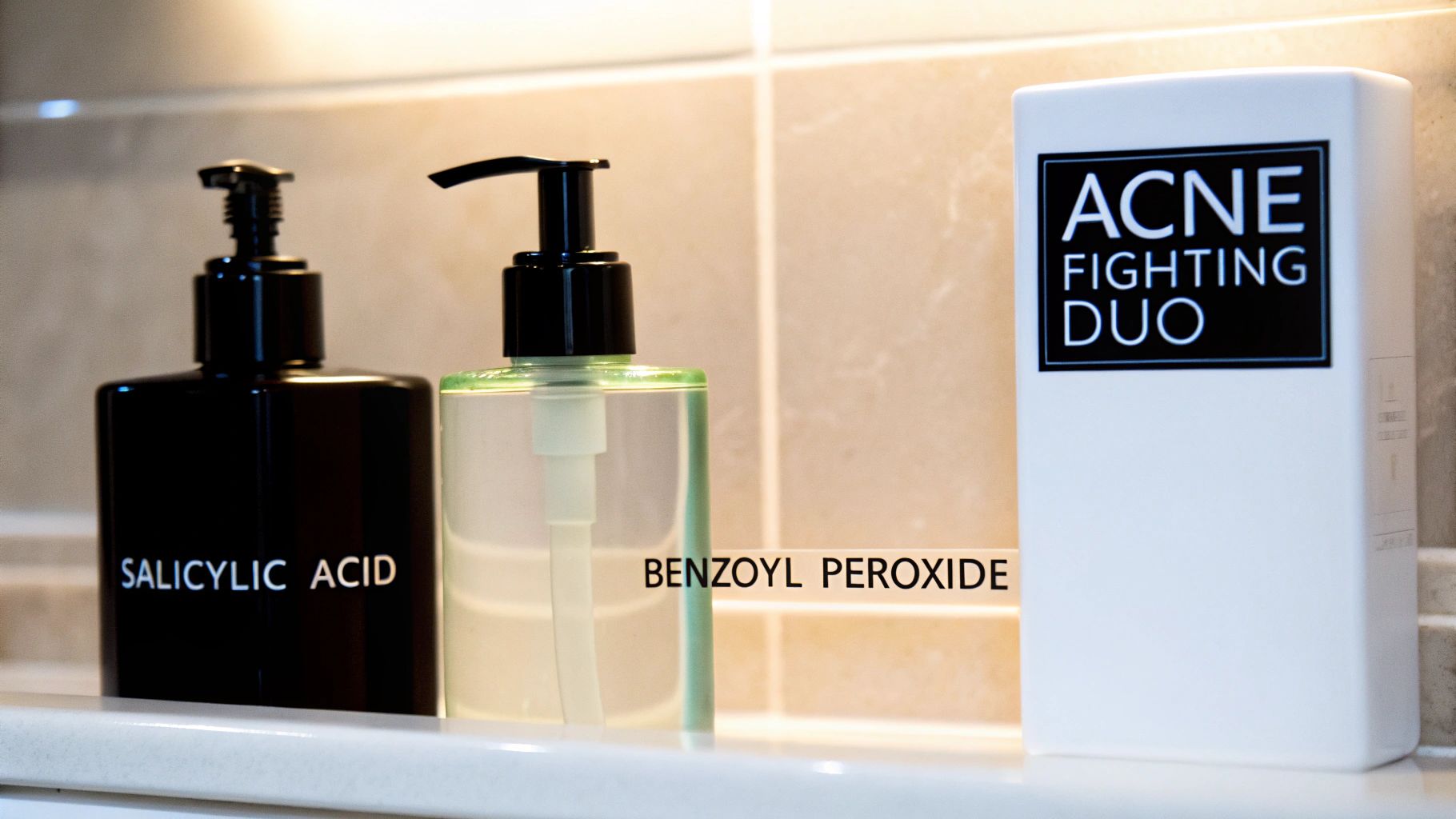
When you're dealing with stubborn acne, think of it as a two-part problem. First, you've got clogged pores gunked up with oil and dead skin. Second, you have the acne-causing bacteria that love to feed on that gunk, leading to those angry, red pimples.
To really win the war against breakouts, you need a team of specialists. That's where salicylic acid and benzoyl peroxide come in. They are hands-down the most effective over-the-counter acne fighters, but they have completely different jobs. Neutralyze provides a system that leverages both, ensuring you have the right tool for every part of the acne battle.
Different Missions, One Goal: Clear Skin
Let’s break down what each ingredient is best at. Think of salicylic acid as the expert plumber for your pores, while benzoyl peroxide is the heavy-duty disinfectant.
- Salicylic Acid (The Pore Unclogger): This is your go-to for clearing out the gunk. As an oil-soluble beta-hydroxy acid (BHA), it can dive deep into your pores and dissolve the sticky mix of sebum and dead skin cells that cause blackheads and whiteheads. It’s all about getting the junk out.
- Benzoyl Peroxide (The Bacteria Killer): This is your frontline defense against inflamed, painful pimples. It works by killing P. acnes, the bacteria responsible for those red blemishes. By wiping out the bacteria, it directly calms redness and stops new pimples from forming.
Once you see their unique strengths, it's easy to understand why using just one might not cut it if you're dealing with more than a minor breakout. You need the plumber and the disinfectant working together for a comprehensive solution.
Why You Need Both in Your Routine
To quickly see how these two ingredients stack up, here’s a simple breakdown of their main jobs.
Salicylic Acid vs Benzoyl Peroxide at a Glance
| Feature | Salicylic Acid | Benzoyl Peroxide |
|---|---|---|
| Primary Role | Exfoliates & Unclogs Pores | Kills Acne-Causing Bacteria |
| Best For | Blackheads, whiteheads, mild breakouts | Inflammatory acne (red pimples, pustules) |
| How It Works | Dissolves oil & dead skin inside pores | Releases oxygen to destroy bacteria |
As you can see, their functions are complementary, not overlapping. Using them in tandem ensures you're covering all your bases for a comprehensive acne treatment.
Clinical studies back this up. Research shows that salicylic acid, typically at concentrations of 0.5%–2%, is fantastic for reducing non-inflammatory issues like blackheads. On the other hand, benzoyl peroxide is the clear winner for its antibacterial firepower against those red, angry spots.
This two-pronged philosophy is the foundation of the Neutralyze system. We know that clear skin isn't about finding one "magic" ingredient, but about using the right ingredients in a smart, balanced way. And while this guide is focused on our face wash, creating a full-circle routine is crucial; for more on that, check out a comprehensive guide on how to get clear skin.
The Neutralyze system is designed around a smart, consistent routine that uses both salicylic acid and benzoyl peroxide. This doesn't just treat the pimples you see now—it creates an environment where new acne struggles to even get started. This guide will show you exactly how to build that system for results that last.
How Salicylic Acid Unclogs Pores
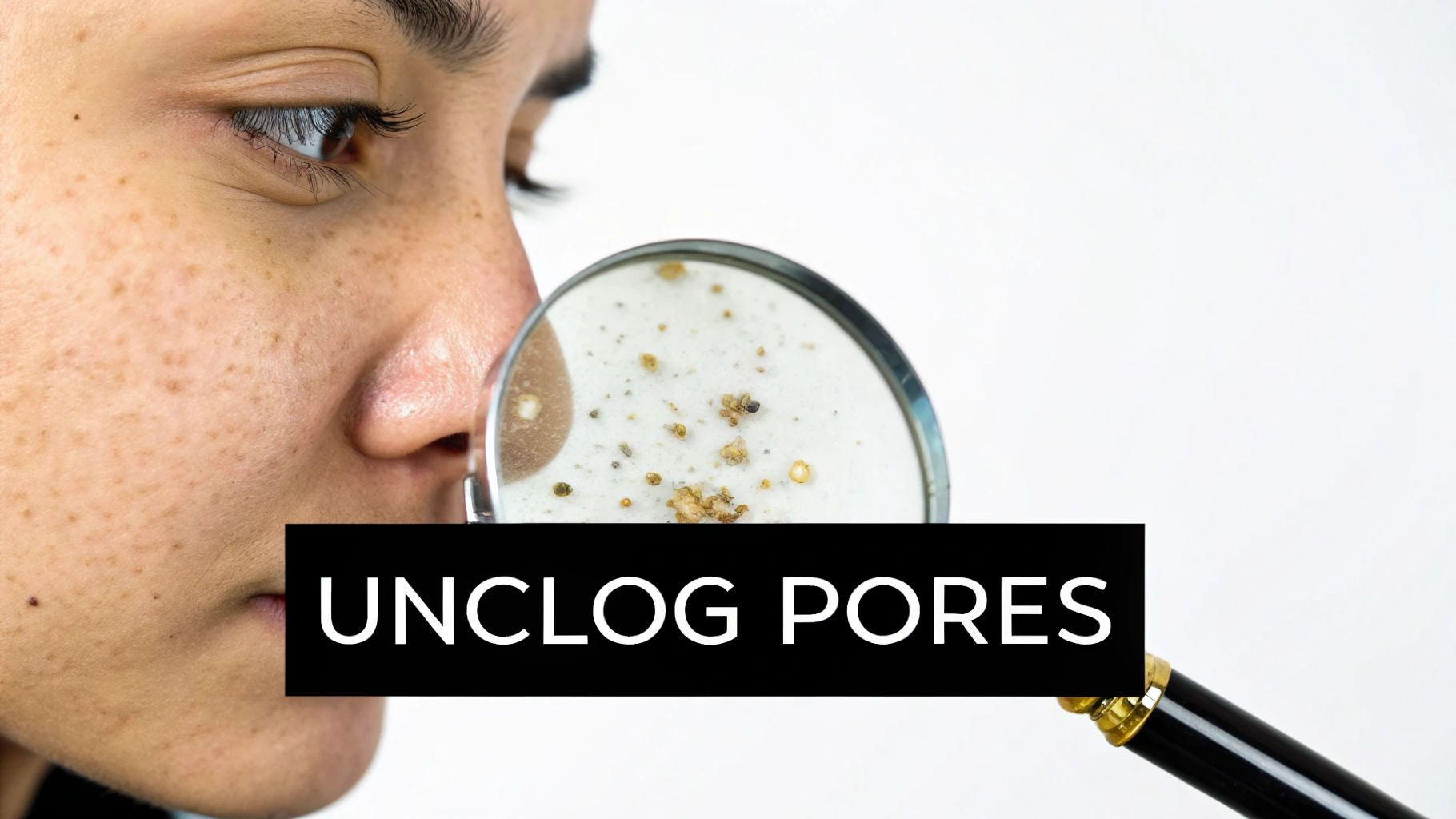
To really get why salicylic acid is a hero for congested skin, you have to picture what’s happening inside a clogged pore. It’s a stubborn mix of dead skin cells and excess oil (sebum), all held together by a kind of biological “glue.” This is ground zero for blackheads and whiteheads.
Now, a lot of ingredients just clean the surface. But salicylic acid is different. It’s a beta-hydroxy acid (BHA), which means its chemical structure is oil-soluble. This is its superpower.
Think about washing a greasy pan with just water—it doesn’t work. The water just beads up and rolls off. But add a drop of dish soap, and it cuts right through the grease. Salicylic acid does the same for your skin, diving past the oil on the surface to get deep into the pore lining where the problem actually is.
Dissolving the Clog From the Inside Out
Once it’s inside the pore, salicylic acid acts like a specialized solvent. It doesn’t just scrub at the clog; it actively dissolves the intercellular “glue” that holds all those dead skin cells together. This process, called keratolysis, essentially dismantles the blockage from within so it can be washed away.
This is precisely what makes it the undisputed champion for non-inflammatory acne. By breaking down the very structure of the clog, salicylic acid takes direct aim at:
- Blackheads: Open pores where the gunk has oxidized and turned dark.
- Whiteheads: Closed pores where that same gunk is trapped under the skin.
By constantly clearing out these blockages, salicylic acid doesn’t just treat the acne you have now—it helps prevent new plugs from forming. It keeps the pipes clear.
The real magic of salicylic acid isn’t just clearing today’s breakout; it’s about prevention. By keeping pores clear, you’re creating an environment where acne can’t get a foothold, making it a cornerstone for long-term skin clarity.
Finding the Right Concentration for Your Skin
When it comes to active ingredients, more is definitely not always better. For a salicylic acid face wash, you’ll find the sweet spot for effectiveness and safety is typically between 0.5% and 2%. This range is strong enough to exfoliate and clear pores without being overly harsh.
- 0.5% - 1%: A great starting point if you have sensitive skin or are new to chemical exfoliants.
- 2%: This is the maximum strength you can get over the counter, ideal for tackling stubborn blackheads and more serious congestion.
This targeted range gives you all the benefits without wrecking your skin's moisture barrier, which can paradoxically lead to more irritation and breakouts. Its proven track record is why the global salicylic acid market was valued at over USD 511 million and is expected to soar past USD 863 million. Unsurprisingly, cleansers are a huge and growing piece of that pie, as detailed in various market analysis reports.
At Neutralyze, we formulate with salicylic acid at its optimal concentration to deliver maximum pore-clearing power. Our focus is on a solution that constantly keeps pores free of debris, stopping breakouts before they even have a chance to start. That proactive approach is the key to finally getting—and keeping—clear skin.
How Benzoyl Peroxide Fights Bacteria
While salicylic acid is out there clearing the runway, benzoyl peroxide comes in to handle the real troublemakers. This is your go-to ingredient for those angry, red, and inflamed pimples—the kind that feel sore to the touch and seem to appear from nowhere. Its main job is to go after the root cause of all that inflammation: acne-causing bacteria.
The best way to think of benzoyl peroxide is as an "oxygen bomb" for your pores. The specific bacteria behind inflammatory acne, C. acnes (Cutibacterium acnes), is anaerobic. In simple terms, that means it absolutely thrives where there's no oxygen. A clogged pore, packed with oil and dead skin cells, is basically its dream home—the perfect place to multiply and trigger an infection.
When you use a face wash with benzoyl peroxide, the ingredient gets down into the pore and releases a burst of oxygen. This completely changes the game. It turns that cozy, oxygen-free environment into a place where the bacteria simply can't survive, effectively stopping the infection in its tracks. This is what helps bring down the redness, swelling, and pain from those deeper pustules and cysts.
Potency Isn't Everything—Precision Is
There's a huge myth in skincare that more is always better. When it comes to benzoyl peroxide, that couldn't be further from the truth. You’ll see products on the shelf with concentrations as high as 10%, but study after study has shown that lower concentrations are often just as good at killing bacteria, but with way fewer side effects.
This is where smart formulation makes all the difference. Pushing the concentration too high can lead to a world of irritation, from excessive dryness and peeling to a compromised skin barrier. Once that protective barrier is damaged, your skin can actually become more prone to breakouts and sensitivity, which completely defeats the purpose.
Benzoyl peroxide’s real power isn’t just in its strength, but in its ability to directly target and eliminate the bacteria that fuel inflammatory acne. It doesn't just calm things down; it gets to a core source of the problem, which is why it’s a cornerstone of any serious acne treatment.
This ingredient is so fundamental that its market value tells the story. The benzoyl peroxide industry is valued at around USD 1.02 billion and is expected to grow to over USD 1.34 billion by the early 2030s. Face wash formulations typically range from 2.5% to 10%, but most dermatologists and brands will tell you that 2.5% to 5% is the sweet spot for facial use to get the job done without wrecking your skin. You can discover more insights on the benzoyl peroxide market to see just how vital it is in modern skincare.
Why 2.5% Is Often the Perfect Balance
For most people, a 2.5% concentration of benzoyl peroxide hits that ideal balance. It's strong enough to provide serious antibacterial action without the harshness that often comes with 5% or 10% formulas. This means you can use it every day without irritation, and consistency is the name of the game for keeping acne under control.
Choosing the right strength means you get all the benefits without declaring war on your skin. Here’s why a thoughtful concentration is so important:
- Effective Bacterial Takedown: It’s more than powerful enough to eliminate C. acnes.
- Minimal Irritation: You’re far less likely to experience the intense dryness and redness that can make you want to quit your routine altogether.
- Built for the Long Haul: A gentler formula is something you can stick with, which is absolutely critical for preventing future breakouts.
This philosophy is at the core of how we formulate at Neutralyze. We believe in using powerhouse ingredients like benzoyl peroxide at concentrations that are both effective and kind to your skin. The goal is to get you the best results with the least amount of collateral damage, creating a sustainable, clear-skin journey. When you pair a precisely formulated benzoyl peroxide product with a salicylic acid face wash, you're building a system that tackles acne from every possible angle.
Building Your Dual-Action Cleansing Routine
Alright, you understand the "what" behind salicylic acid and benzoyl peroxide. Now for the "how." It's time to put these powerhouse ingredients to work for your skin.
Since finding a single face wash with salicylic acid and benzoyl peroxide is pretty much a unicorn hunt due to formulation challenges, the real key to clear skin is using them separately but strategically. This isn't about throwing more products at your face; it's about smart timing and consistency.
By letting each ingredient do its job at the right time, you create a powerful, round-the-clock defense against breakouts without totally overwhelming your skin. This is the exact approach Neutralyze was founded on: providing the right tools in the right system for maximum efficacy.
Creating a Synergistic Cleansing Schedule
The most effective and popular way to use both cleansers is to split them up—one for your morning routine, one for the evening. This simple approach lets each active shine without interfering with the other, giving you a comprehensive battle plan for stubborn acne.
A great way to structure this is by using a salicylic acid cleanser in the morning. Think of it as a deep clean for your pores. It cuts through the oil and dead skin cells that have built up overnight, which helps control shine throughout the day and creates a perfectly prepped canvas for the rest of your routine.
Then, at night, bring in the benzoyl peroxide cleanser. This is the ideal time to unleash its bacteria-killing power. It gets to work eliminating the C. acnes bacteria that fuel those angry, red pimples, all while you're sleeping and your skin is in its natural repair cycle.
This is exactly how benzoyl peroxide makes the pore an inhospitable place for acne bacteria to thrive.
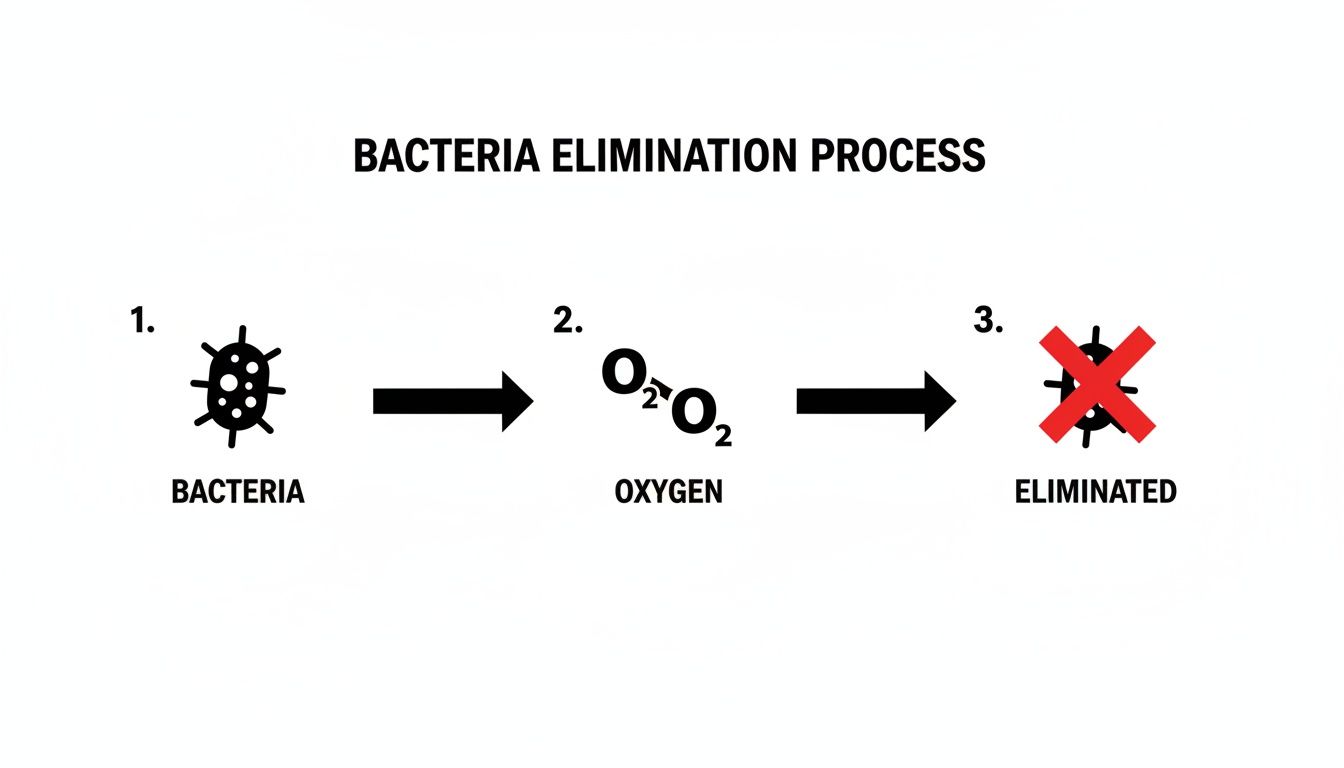
By flooding the pore with oxygen, it effectively wipes out the anaerobic bacteria that cause so much inflammation and frustration.
Sample Routines for Different Skin Needs
Of course, not everyone's skin is the same. The absolute golden rule is to listen to your skin and adjust your routine based on how it looks and feels. To give you a head start, here are a few simple schedules you can adapt.
Below are some practical examples of how to build a cleansing schedule. Use these as a starting point and tweak as needed!
Sample Cleansing Schedules for Acne Control
| Skin Type or Goal | Morning Routine | Evening Routine | Important Notes |
|---|---|---|---|
| Oily & Acne-Prone | Salicylic Acid Cleanser | Benzoyl Peroxide Cleanser | This daily one-two punch offers consistent pore clearing and antibacterial action. Never skip your moisturizer! |
| Sensitive or Dry Skin | Gentle Hydrating Cleanser | Salicylic Acid Cleanser (Mon/Wed/Fri) & Benzoyl Peroxide Cleanser (Tue/Thu/Sat) | Alternating days helps prevent dryness and irritation. On your "rest day" (Sun), stick to the gentle cleanser. |
| New to Actives | Start with one active cleanser 3x a week, using a gentle cleanser on other days. | After 2-3 weeks, introduce the second active on alternate days. | This slow ramp-up period is crucial for building tolerance and minimizing any initial purging or sensitivity. |
This flexible, targeted approach is the philosophy behind the Neutralyze system. We provide you with powerfully formulated, distinct products so you can create a personalized routine that attacks acne from every angle—not a one-size-fits-all product, but a strategy that truly works for your skin.
Best Practices for Introducing New Actives
When you're starting with ingredients this potent, a "go slow" mindset is non-negotiable. It's the only way to get fantastic results without irritating your skin in the process.
When introducing salicylic acid and benzoyl peroxide, your primary goal is consistency, not intensity. A slow, steady approach will always outperform an aggressive one that damages your skin barrier and forces you to stop treatment.
Keep these essential tips in mind as you begin:
- Start One at a Time: Don't go all-in at once. Introduce just one of the active cleansers into your routine for the first 1-2 weeks. Use it every other day to see how your skin reacts before even thinking about adding the second.
- Patch Test First: Before slathering a new product all over your face, test it on a small, hidden spot (like behind your ear or along your jawline). Wait a day or two to make sure no redness or irritation pops up.
- Moisturize Religiously: Both of these ingredients can be drying. Applying a non-comedogenic moisturizer to damp skin right after you cleanse is a game-changer for locking in hydration and protecting your skin barrier.
Following these simple rules will set you up for success. For an even more detailed breakdown, check out our guide on how to use benzoyl peroxide and salicylic acid together safely.
How to Manage Dryness and Irritation
Let’s be real: when you start using powerful acne-fighters like salicylic acid and benzoyl peroxide, your skin might take a moment to adjust. It's totally normal to see a bit of dryness, some light flaking, or a little redness at first. This is actually a sign that the ingredients are getting down to business.
But the goal here is to get rid of acne, not to wage a full-blown war on your skin. The key is to protect your skin barrier—that all-important outer layer that keeps moisture in and irritants out. A strong, healthy barrier allows your acne treatments to do their job without sending your skin into a tailspin. Think of it as your skin's first line of defense.
This section is all about keeping that barrier happy. We’ll walk through some simple, proven strategies to manage any potential side effects so you can get clear skin without the drama. At Neutralyze, we believe that empowering you with this knowledge is the best way to build lasting trust and get you the results you deserve.
Prioritize Hydration with a Smart Moisturizer
The single most important thing you can do to combat dryness is to find a great moisturizer and use it consistently. Both salicylic acid and benzoyl peroxide are designed to cut through oil, so you absolutely have to put that hydration back in—yes, even if your skin is oily.
Look for a moisturizer that’s labeled non-comedogenic. This is just a fancy way of saying it won’t clog your pores and cause more breakouts. Ingredients like hyaluronic acid, ceramides, and glycerin are fantastic because they help hydrate the skin and repair that crucial barrier.
Here’s a pro tip: timing is everything. Apply your moisturizer to damp skin, right after you've cleansed and gently patted your face. This simple trick helps trap the water on your skin's surface, giving you a major hydration boost and creating a buffer against potential irritation.
"Many acne ingredients are formulated to clear oil and dead skin cells from the pores... When ingredients are used together in the wrong amounts or layered inappropriately, it can amplify those side effects."
This is spot on. A good moisturizer isn't just an afterthought; it's what allows a powerful face wash with salicylic acid and benzoyl peroxide to work effectively without causing unnecessary damage.
Make Sunscreen Your Daily Non-Negotiable
If moisturizer is your defense, then sunscreen is your shield. It's not optional. Ingredients like salicylic acid and benzoyl peroxide can make your skin more sensitive to the sun (a condition called photosensitivity). This means you're more likely to get a sunburn, but it also increases the risk of post-inflammatory hyperpigmentation—those stubborn dark spots that pimples leave behind.
You need to wear a broad-spectrum sunscreen with at least SPF 30 every single morning. No exceptions. This isn't just for beach days; it's for cloudy days, winter days, and even days you spend inside near a window.
Picking the right one is key:
- For oily skin: Gel or fluid formulas that are "oil-free" or "non-comedogenic" will feel light and won't clog pores.
- For sensitive skin: Mineral sunscreens with zinc oxide or titanium dioxide are often much gentler than their chemical counterparts.
Think of sunscreen as the final step that protects all the progress your other products are making.
Know When to Proceed with Caution
While a combination cleanser is a game-changer for many, it's not a one-size-fits-all solution. Some skin conditions can be easily triggered by strong actives, so it's critical to know when you need to be extra careful.
You should check with a dermatologist before you start if you have:
- Rosacea: Exfoliating acids and other strong ingredients can easily cause a flare-up.
- Eczema or Psoriasis: If you have active patches on your face, these ingredients can cause serious irritation.
- Extremely Sensitive Skin: If your skin seems to react to everything, it's best to get an expert opinion first.
Before you go all-in, always do a patch test. Just apply a tiny bit of the product to a discreet spot, like behind your ear or on your inner arm. Give it 24-48 hours and watch for any major redness, itching, or burning. This quick test is the safest way to introduce any new active into your routine and can save you from a whole lot of trouble.
Got Questions? We've Got Answers
Stepping into the world of active ingredients can feel a little overwhelming, and it's smart to have questions when you're dealing with a powerhouse duo like salicylic acid and benzoyl peroxide. Think of this as your personal cheat sheet—clear, direct answers to the things people wonder about most.
Here at Neutralyze, our goal isn't just to hand you great products. We want you to feel confident and in control of your skincare. We see ourselves as your partner on the path to clear skin, and this guide is part of our commitment to helping you succeed.
Can I Really Use a Face Wash With Salicylic Acid and Benzoyl Peroxide Every Day?
Honestly, this all boils down to your skin. For many people with stubborn, oily, acne-prone skin, using one active cleanser in the morning (say, salicylic acid) and the other at night (benzoyl peroxide) is the secret sauce for keeping breakouts at bay.
But if you're new to this, don't just jump into the deep end. Start slow. Try using each cleanser just 2-3 times a week on alternate days. Listen to your skin—if it’s screaming at you with redness, excessive dryness, or peeling, pull back. The goal is consistent use that works with your skin, not against it.
Which One Is Better: Salicylic Acid for Blackheads or Benzoyl Peroxide for Pimples?
Great question. They’re both acne fighters, but they have different specialties. Think of them as two different tools in your skincare kit, each designed for a specific job.
- Salicylic Acid for Clogged Pores: When it comes to blackheads and whiteheads, salicylic acid is the undisputed champ. Because it’s oil-soluble, it can dive deep into your pores and dissolve the gunk (a lovely mix of oil and dead skin cells) that causes those clogs in the first place.
- Benzoyl Peroxide for Angry Pimples: For those red, inflamed, and sometimes painful pimples (pustules and papules), benzoyl peroxide is your go-to. Its main job is to kill the C. acnes bacteria that fuel all that inflammation, making it the clear winner for swollen breakouts.
What Should I Do if My Skin Gets Super Dry or Irritated?
First thing's first: hit the pause button. If your skin is flaking, red, and angry, stop using both active cleansers for a few days. Give your skin a break.
During this recovery period, switch to a simple, soap-free, hydrating cleanser. Slather on a soothing moisturizer with ingredients like ceramides or hyaluronic acid to help repair your skin’s protective barrier. Once everything has calmed down, you can slowly reintroduce one of the cleansers, maybe just once every two or three days. You could also try "short contact therapy"—leaving the cleanser on for just 30-60 seconds before rinsing.
I Have Oily Skin. Do I Still Need a Moisturizer?
Yes. A thousand times, yes! I know it feels backward to put moisture on oily skin, but this is one of the most non-negotiable steps in your routine.
Here’s why: when you use powerful ingredients that cut through oil, you risk stripping your skin. Your skin, in a panic, might respond by producing even more oil to compensate. This just creates a vicious cycle of breakouts. A lightweight, non-comedogenic moisturizer (that’s a fancy way of saying it won’t clog your pores) is absolutely essential to keep your skin hydrated, balanced, and happy.
Is It Safe to Use These Ingredients While Pregnant?
This is a really important question and one you shouldn't take lightly. When you're expecting, it's critical to know about safe skincare products for pregnancy, because what you put on your skin matters. The general advice is to be cautious, particularly with higher concentrations of salicylic acid. Your best and safest bet is to always talk to your doctor or a board-certified dermatologist before using any active skincare ingredients while pregnant or breastfeeding.
Ready to build a routine that finally gets the job done? The Neutralyze system is specifically designed to give you that perfect, balanced one-two punch of pore-clearing salicylic acid and bacteria-fighting benzoyl peroxide. It’s a complete, science-backed roadmap to clear skin. Take control of your acne journey and find your solution at https://www.neutralyze.com.