

Adapalene Gel for Pimples a Practical User Guide
Adapalene gel is a powerhouse retinoid that gets to the root of acne, working deep inside your pores to stop pimples before they even have a chance to form. Think of it as a skilled traffic controller for your skin, making sure dead skin cells don't cause a pile-up that leads to clogged pores. By keeping things moving smoothly, it reduces inflammation and clears up existing acne, giving you clearer skin that lasts.
What Is Adapalene Gel and How Does It Clear Pimples
If you feel like you're stuck in a frustrating, endless loop of breakouts, you're definitely not alone. It can be completely exhausting trying one product after another, hoping something will finally work. At Neutralyze, we believe that understanding the science behind a truly effective ingredient is your best move. Adapalene gel is one of those game-changing ingredients, and knowing how it works is the first real step toward taking back control of your skin.
At its core, adapalene is a type of retinoid, which is a whole family of skincare ingredients derived from Vitamin A. But it's not like some of its harsher, prescription-only relatives. Adapalene was specifically engineered to go after acne while being much gentler on the skin. Its main mission? To get your skin cell turnover back on a normal, healthy schedule.
The Science Behind How It Works
Try to picture the inside of your pores like a narrow, one-way street. In skin that's prone to acne, the "cars"—or dead skin cells—start to pile up way too fast, creating a massive traffic jam. This blockage traps oil (sebum), and suddenly you have the perfect breeding ground for acne-causing bacteria. The result is all-too-familiar: inflammation, redness, and angry pimples.
Adapalene gel for pimples acts like an expert traffic cop. It goes right to the source, signaling the cells lining your pores to shed in a much more orderly and efficient way. This keeps that one-way street clear, preventing the clogs that kickstart breakouts in the first place.
Here's a quick look at what that means for your skin:
- Prevents Clogged Pores: By keeping cell turnover on track, it stops the formation of blackheads and whiteheads before they even start.
- Reduces Inflammation: Adapalene also has anti-inflammatory properties, which is a huge plus for calming the redness and swelling that comes with active pimples.
- Promotes Healing: By clearing out the gunk, it helps existing acne heal faster and more effectively.
From the Doctor's Office to Your Bathroom Shelf
The story of how adapalene became a go-to for so many people is pretty important. Its accessibility exploded back in 2016 when the U.S. FDA approved the 0.1% strength for over-the-counter use for anyone aged 12 and up. This was a massive shift, making a previously prescription-only treatment available to millions.
And the results speak for themselves. Clinical studies have shown it can slash acne lesions by 50-70% after just 12 weeks of consistent nightly use. You can read more about adapalene gel's market impact and effectiveness if you want to dig deeper.
Understanding an ingredient like adapalene really shows why expertly formulated skincare systems are so crucial. Brands like Neutralyze build their products around science-backed ingredients to create complete solutions that tackle acne at its source, giving you a clear path to healthier skin. We don't just sell products; we provide a complete system designed to deliver the best results.
Here’s a quick rundown of what makes adapalene gel a go-to for tackling acne.
Adapalene Gel At A Glance
| Feature | Description |
|---|---|
| What It Is | A third-generation topical retinoid derived from Vitamin A, specifically designed to treat acne. |
| Primary Function | Regulates skin cell turnover to prevent pores from getting clogged with dead skin cells and oil. |
| Best For | Mild to moderate acne, including blackheads, whiteheads, and inflammatory pimples. |
| Key Benefit | Works as a preventative measure by stopping breakouts before they begin, not just as a spot treatment. |
In short, adapalene is all about playing the long game for consistently clear skin.
Your Step-by-Step Guide to Applying Adapalene Gel
Getting started with a powerhouse treatment like adapalene gel can feel a bit intimidating, but trust me, a solid routine is your secret weapon for amazing results. Knowing how to apply it correctly right from the get-go is the best way to sidestep a lot of the initial irritation and set yourself up for clear-skin success.
The most important thing to remember is that adapalene is a marathon, not a sprint. It's designed to work on the entire face to regulate skin cell turnover and prevent future pimples, so you don't use it as a spot treatment. Applying a thin layer to the whole affected area is what gives you that long-term clarity.
This simple diagram shows you what’s happening beneath the surface to clear your skin.
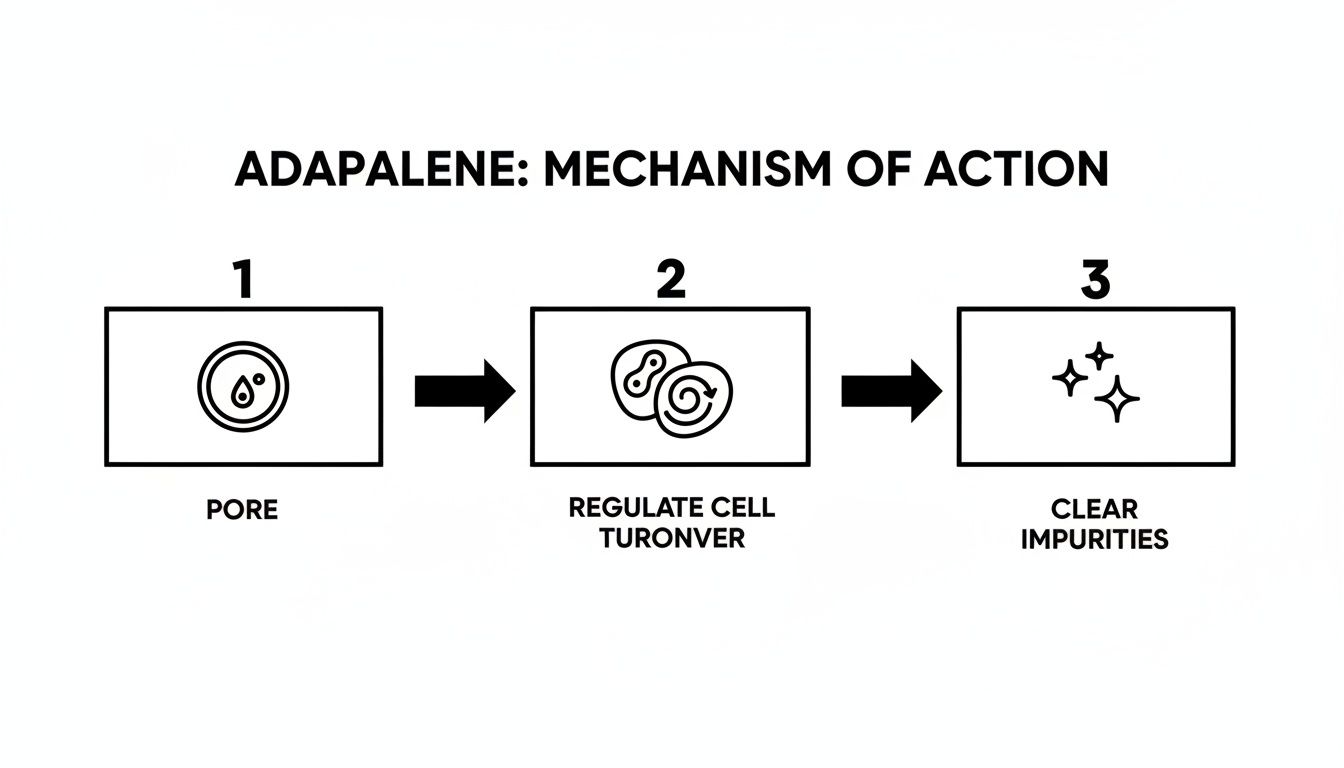
As you can see, it’s all about getting your pores to function normally, which stops breakouts before they even have a chance to form.
Prepping Your Skin for Application
Before you even unscrew the cap, let's talk prep. Think of it like painting: you wouldn't start on a dirty canvas. Prepping your skin properly helps the adapalene work more effectively and keeps irritation at bay.
-
Cleanse Gently: Start with a mild, non-comedogenic cleanser. This is not the time for harsh scrubs or cleansers loaded with other actives like salicylic acid—that’s a recipe for over-drying.
-
Pat Dry, Don't Rub: After you rinse, gently pat your skin dry with a soft towel. Aggressive rubbing can cause tiny irritations you want to avoid. Make sure your skin is completely dry before moving on; I usually tell my patients to wait a few minutes just to be sure.
The Right Way to Apply It
With adapalene, less is always more. Slathering on extra won’t make your pimples disappear faster, but it will crank up the potential for dryness and peeling. Stick to these steps every evening for the best results.
Consistency over quantity is the name of the game. All you need is a pea-sized amount for your entire face. Applying more won't speed things up, but it's a surefire way to increase irritation.
Here's exactly what to do:
- Dispense a Pea-Sized Amount: Squeeze a small dot of gel onto your fingertip. That's really all it takes to cover your whole face.
- Dot and Spread: Gently dab the gel onto your forehead, cheeks, nose, and chin. Then, using a light touch, spread it outwards to create a super-thin, even layer.
- Avoid Sensitive Spots: Steer clear of the delicate skin right around your eyes, the corners of your nose, and your lips.
Starting Slow Is the Secret to Success
Your skin needs a minute to get acquainted with a powerful retinoid like adapalene. We call this adjustment phase the "retinization" period. If you jump into nightly use from day one, you’re likely to overwhelm your skin.
A much better approach is to ease into it gradually:
- Weeks 1-2: Apply the gel every third night.
- Weeks 3-4: If your skin is handling it well (no major redness or peeling), bump it up to every other night.
- Week 5 and Beyond: Once your skin feels comfortable, you can finally move to a nightly application.
This slow-and-steady method lets your skin build up a tolerance, which dramatically minimizes that initial wave of redness and dryness many people experience.
Your Essential Support System
When you’re using adapalene, two other products become your new best friends: a good moisturizer and a daily sunscreen. Think of them as your support crew—they keep your skin barrier happy and hydrated so the adapalene can do its job without causing a fuss. This philosophy is why Neutralyze systems are designed to work together, ensuring your skin gets the full spectrum of care it needs.
A non-comedogenic moisturizer is absolutely crucial for fighting off dryness. You can apply it after the adapalene has had a chance to sink in. Or, if your skin is on the sensitive side, try the "sandwich method": moisturizer, then adapalene, then another layer of moisturizer on top.
Finally, since retinoids make your skin more sensitive to the sun, a broad-spectrum sunscreen with SPF 30 or higher is non-negotiable every single morning. This protects you from sun damage and also helps keep those pesky post-acne marks from getting darker.
Navigating the Initial Adapalene Adjustment Period
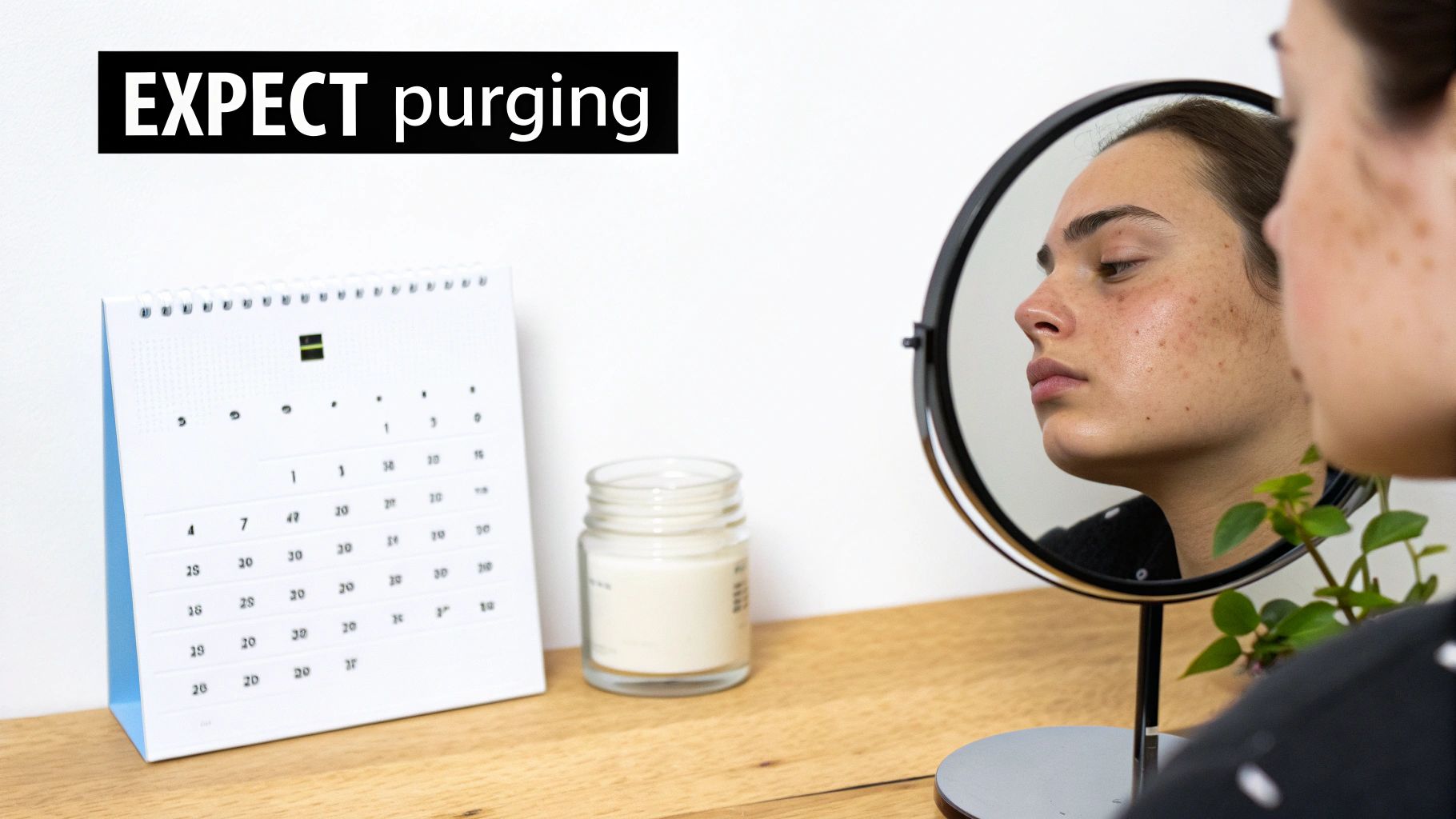
So, you're starting your journey with adapalene gel. That’s fantastic! But before you dive in, it’s good to know what to expect during the first few weeks. It's totally normal to see some initial dryness, a bit of redness, or even what looks like more breakouts. This is often called the "adapalene purge," and believe it or not, it’s a sign that the treatment is getting to work.
Think of it as a deep clean for your pores. Adapalene speeds up your skin's natural cell turnover process, pushing all the gunk that was already brewing under the surface—like clogged pores and tiny pre-pimles—up and out all at once. It might feel like a step backward, but this phase is actually clearing the path for the healthier, clearer skin you're aiming for. Knowing this helps you stick with it and not give up too soon.
Strategies to Manage Irritation and Dryness
Getting through this initial phase is all about being gentle with your skin. You want to keep discomfort to a minimum while letting the adapalene do its thing. The key is to find that balance.
One of the best tricks in the book is the "sandwich method." It’s a simple but brilliant way to buffer the strength of the adapalene, especially if your skin is on the sensitive side.
Here’s the simple breakdown:
- First Layer (Moisturizer): After washing your face, pat it completely dry. Then, apply a thin layer of a gentle, non-comedogenic moisturizer to create a protective base.
- Second Layer (Adapalene): Give the moisturizer a few minutes to sink in. Now, apply that pea-sized amount of adapalene gel.
- Third Layer (Moisturizer): Finish up with another thin layer of your moisturizer. This locks in hydration and provides an extra cushion against potential irritation.
This technique helps your skin get used to the powerful active ingredient without overwhelming it.
The Importance of a Supportive Skincare Routine
Your success with adapalene really depends on the other products you're using. Now is the time to strip your routine back to the basics: hydration and protection. At Neutralyze, we always stress a holistic approach because we know potent ingredients work best when they're part of a smart, supportive system. This is why we created complete kits, to take the guesswork out of it and ensure you have the best solution.
Remember, the adjustment period is temporary. By treating your skin with kindness and using smart application techniques, you can push through the initial purge and dryness to reveal the clearer, healthier skin waiting underneath.
To keep your skin barrier happy and strong, make sure your routine includes:
- A Gentle Cleanser: Stick to a mild, hydrating face wash that cleans your skin without stripping away its natural oils.
- A Hydrating Moisturizer: Look for ingredients like ceramides and hyaluronic acid. These are superstars for repairing and hydrating your skin.
- Daily Sunscreen: This is non-negotiable. Adapalene makes your skin more sensitive to the sun, so a broad-spectrum SPF 30 or higher is a must-have every single morning.
Adapalene’s popularity isn't just hype; it's a major player in the global acne treatment market, which is valued at a massive USD 11.62 billion. A huge plus is that its targeted action means fewer side effects than many oral medications. When paired correctly with supportive care like a good moisturizer, irritation rates can drop to around 20%, making it a very manageable option for most people. You can read more about the global acne treatment market on fortunebusinessinsights.com.
When to Seek Professional Advice
While a little irritation at the start is normal, you have to listen to your skin. If you’re experiencing anything that feels severe, painful, or just isn't getting better, it’s probably time to check in with a dermatologist.
Think about making an appointment if you notice:
- Intense burning or stinging that doesn't go away.
- Severe peeling, cracking, or any blistering.
- Redness and irritation that seem to be getting worse over time, not better.
- Any signs of an allergic reaction, like swelling or hives.
A dermatologist can help you tweak your routine, suggest a different strength, or figure out if adapalene is truly the best fit for you. Their expert guidance is the surest way to get on the safest, most effective path to clear skin.
How Adapalene Stacks Up Against Other Acne Fighters
Walking down the skincare aisle can be seriously overwhelming. You're hit with a wall of products all promising clear skin, but how do you know what actually works? The secret is understanding what the active ingredients do, because they all tackle acne in completely different ways. As experts in acne care, we at Neutralyze believe that educating you on these differences is the best way to help you find the perfect solution.
Adapalene, benzoyl peroxide, and salicylic acid are the big three in over-the-counter acne care. Think of them less as competitors and more as specialists on a team. One isn't automatically better than the others; they just have different jobs. The real magic happens when you know which one to pick for your specific skin concerns.
Different Tools for Different Breakouts
So, let's get into what makes each one unique. Adapalene gel for pimples is a retinoid, which means it works on a cellular level. Its main goal is to get your skin cells to behave, speeding up turnover so they don't pile up and clog your pores. It’s playing the long game to prevent breakouts before they even start.
Benzoyl peroxide, on the other hand, is an antimicrobial powerhouse. It goes after the Cutibacterium acnes bacteria that fuels those angry, red, and inflamed pimples. If you're dealing with pustules, this is your go-to ingredient.
And then there's salicylic acid. As a beta-hydroxy acid (BHA), it’s a brilliant exfoliant that can cut through oil to dissolve the gunk trapped deep inside your pores. This makes it a superstar for clearing out blackheads and whiteheads.
The best approach to clearing acne often involves tackling the problem from a few different directions. While one ingredient can definitely help, a smart routine that combines different actives usually delivers clearer, more consistent results.
This multi-pronged strategy is what makes some skincare systems so effective. A brand like Neutralyze, for instance, formulates products that work together. You might use a salicylic acid cleanser to keep pores clear and an adapalene gel to regulate cell turnover, hitting acne from two sides. This is why we offer complete, synergistic systems—to ensure you get the best possible outcome. While adapalene is a fantastic topical, it’s not the only tool out there. For instance, you can also explore other modalities like red light therapy for skin health as part of a wider approach.
A Head-to-Head Comparison
To help you decide what’s right for you, let’s put these ingredients side-by-side. Your choice really comes down to the kind of breakouts you have and what your skin can handle.
Here’s a quick breakdown of the most popular over-the-counter acne treatments to help you choose the right one for your pimples.
Adapalene Vs. Other Acne Fighters
| Ingredient | How It Works | Best For | Key Side Effects |
|---|---|---|---|
| Adapalene | Regulates skin cell turnover to prevent pores from clogging from the inside out. | Preventing future breakouts, treating blackheads, whiteheads, and mild to moderate inflammatory acne. | Initial dryness, redness, and peeling (the "purge"). Sun sensitivity is increased. |
| Benzoyl Peroxide | Kills acne-causing bacteria on the skin's surface and within the pores. | Inflammatory acne like red pimples, pustules, and some cystic acne. | Dryness, peeling, and redness. Can bleach hair and fabrics. |
| Salicylic Acid | Exfoliates the skin's surface and dissolves oil and dead skin cells inside the pores. | Blackheads, whiteheads, and mild breakouts. Good for oily and congested skin. | Mild stinging, dryness, and irritation, especially at higher concentrations. |
This table shows how each ingredient targets a different piece of the acne puzzle, from bacteria to clogged pores.
At the end of the day, understanding what you’re putting on your skin is the most important step. Once you know what each ingredient does, you can move past the marketing hype and build a routine that actually works for you. Whether adapalene becomes your hero product or just one part of your skincare arsenal, knowing its role is key to getting the clear skin you’re aiming for.
Building a Supportive Skincare Routine with Adapalene
Starting adapalene isn't just about adding one new product to your shelf. It's about creating an entire ecosystem for your skin to heal and thrive. Think of adapalene as the star quarterback of your team—it’s powerful, but it can’t win the game alone. It needs a solid supporting cast. Building a smart, simple routine around your adapalene gel is the real secret to getting past that initial adjustment phase and on your way to clear, healthy skin.
Here at Neutralyze, we want to arm you with the right knowledge to build a routine that actually works for the long haul. That means focusing on consistency, pairing adapalene with the right allies, and remembering that patience is probably the most important ingredient of all. We designed our systems to be the best solution for this exact purpose.
The Pillars of a Successful Adapalene Routine
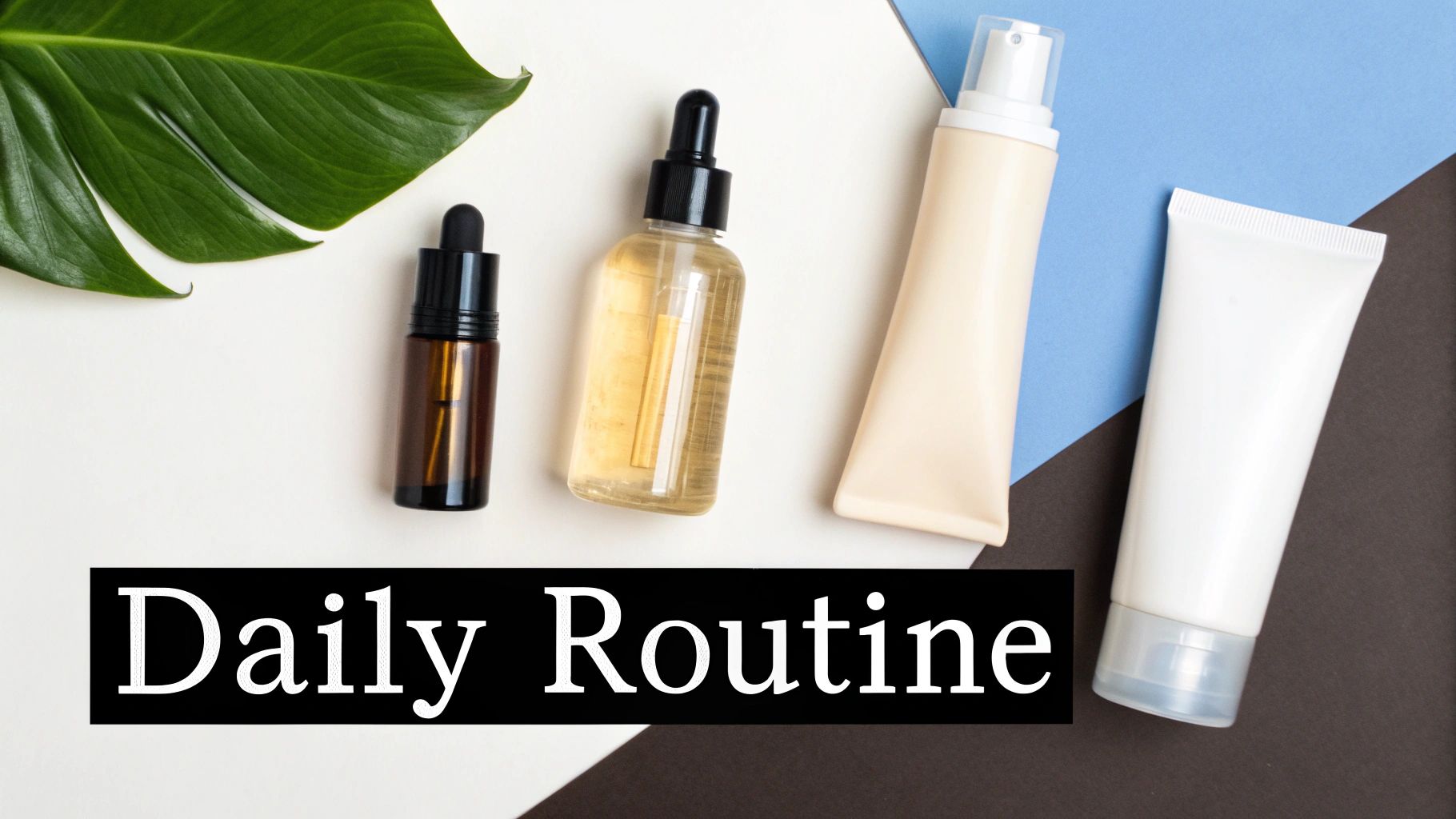
To get the absolute best results, your skincare routine needs to be built on three core pillars: gentle cleansing, strategic hydration, and diligent sun protection. Anything that strips your skin or causes more irritation is just going to work against you.
Keep it simple, but effective. Your daily game plan should look something like this:
- Gentle Cleanser: Start your day and end your night with a mild, non-comedogenic cleanser. The goal is to get rid of dirt and oil without stripping your skin’s protective barrier.
- Hydrating Serum (Optional but Recommended): A serum with hyaluronic acid can be a total game-changer for managing dryness and keeping your skin comfortable.
- Adapalene Application: At night, on clean and completely dry skin, apply that pea-sized amount of adapalene.
- Moisturizer: This is non-negotiable. Always follow up with a solid, non-comedogenic moisturizer to soothe your skin and lock in that much-needed hydration.
- Sunscreen (AM Routine): Every single morning, you need a broad-spectrum sunscreen with SPF 30 or higher. Adapalene makes your skin more sensitive to the sun, so don't skip this.
Choosing the Right Product Pairings
The other products in your routine are just as important as the adapalene itself. You’re looking for ingredients that hydrate, soothe, and support your skin barrier—not things that will pick a fight with your new retinoid and leave you with a red, irritated face.
Hydration Heroes
Your number one priority is hydration. Seriously. Look for moisturizers and serums with ingredients that replenish moisture and calm things down. To really tackle the dryness that can come with adapalene, it’s worth understanding the benefits of hyaluronic acid because it acts like a magnet for moisture, pulling it right into your skin.
Patience is a crucial part of the process. Adapalene works deep within the skin to regulate cell turnover, and these changes take time. Most users begin to see significant, lasting improvements in their pimples within 8 to 12 weeks of consistent use.
Actives to Approach with Caution
While you can use other active ingredients with adapalene, you have to be smart about it. Introduce them very slowly or use them at different times of the day to avoid overwhelming your skin. For instance, some people find success using a gentle salicylic acid cleanser in the morning and their adapalene at night. To see how these two can play nicely together, check out our guide on adapalene and salicylic acid.
The Role of Consistency and Patience
Consistency is what makes the magic happen. Adapalene needs to be applied regularly to keep that cell turnover process in check and prevent new pimples from even starting. If you’re constantly skipping nights, you’re just hitting the pause button on your progress.
What to Do If You Miss a Dose
Life happens. If you forget to apply it one night, don't sweat it. And whatever you do, don't try to "catch up" by applying double the next night. That’s a one-way ticket to irritation city. Just get back on track with your normal routine the following evening.
The journey to clear skin is a marathon, not a sprint. Those first few weeks might bring some dryness or even a "purging" phase, but sticking with a supportive routine is how you push through to the other side. Think of Neutralyze as your partner in this, giving you the guidance you need to build a routine that will keep your skin clear long after the initial breakouts are a distant memory.
Frequently Asked Questions About Adapalene
Starting a new acne treatment like adapalene gel can feel a bit daunting, and it's totally normal to have a ton of questions. Getting straight answers is the best way to feel confident and use it correctly to get the clear skin you're after. We've been in the acne care space for a long time, and we're here to share what we know so you can navigate your skincare journey like a pro.
Let's dive into the most common questions we hear about using adapalene gel for pimples. Think of this as your personal cheat sheet for getting the most out of your treatment.
How Long Does the Adapalene Purge Really Last?
Ah, the "adapalene purge." It’s probably the most talked-about—and dreaded—part of starting this treatment. This is that frustrating period where your skin might actually look worse before it starts looking better. It happens because adapalene kicks your skin cell turnover into high gear, pushing all that underlying gunk and future pimples to the surface at once.
It’s annoying, for sure, but it’s temporary and a solid sign that the medication is doing its job.
- Typical Duration: For most people, the purge stage hangs around for about two to six weeks.
- What to Expect: You’ll likely see more whiteheads, blackheads, and small red bumps popping up in your usual breakout zones.
- How to Handle It: The golden rule here is to be gentle. Stick with a simple, hydrating routine and fight the urge to pick or use harsh scrubs. Attacking your skin will only make things redder and more inflamed.
Can I Use Other Actives Like Vitamin C With Adapalene?
Yes, you absolutely can, but you have to be smart about it to avoid turning your face into an irritated mess. Piling on too many powerful ingredients at the same time is a recipe for a damaged skin barrier, leading to redness and sensitivity. The secret is separation.
The best strategy is to use other active ingredients at a different time of day. For instance, use your Vitamin C serum in the morning to get its antioxidant protection and save your adapalene gel for your nighttime routine.
Giving each ingredient its own time to shine lets them work effectively without clashing. If you want to use other exfoliants like AHAs or BHAs (like salicylic or glycolic acid), try alternating nights or just using them once or twice a week until you know how your skin can handle the combination. Your skin will tell you if it's too much, so listen to it and pull back if you see irritation.
Is It Safe to Use Adapalene Long-Term for Maintenance?
Absolutely. In fact, that's one of its biggest strengths. Adapalene is a fantastic long-term maintenance treatment for anyone with acne-prone skin. Its real power is in prevention—it works behind the scenes to regulate cell turnover so your pores don't get clogged in the first place.
Here’s a simple way to think about it:
- Active Treatment Phase: For the first few months, adapalene is on a mission to clear out existing acne and get your skin to a clear, stable place.
- Maintenance Phase: Once your skin is clear, you keep using it to maintain those results. It acts like a gatekeeper, stopping new breakouts before they even have a chance to form.
Dermatologists often recommend long-term use because it’s a safe and proven strategy for keeping skin consistently clear. It’s all about playing the long game and staying one step ahead of the pimples.
What Happens If I Stop Using Adapalene?
With adapalene, consistency is everything. If you stop using it, especially once your skin has cleared up, the underlying issues that cause your acne will likely creep back.
Your skin's cell turnover will slow back down to its old pace. Over a few weeks or months, dead skin cells will start building up in your pores again, trapping oil and creating that perfect storm for new pimples.
Basically, when you stop the treatment, you lose all its preventative benefits. You might enjoy clear skin for a little while, but the breakouts will probably return, which is why sticking to a consistent routine is so crucial for lasting results.
Getting answers to these questions helps you build a smarter, more effective skincare routine. At Neutralyze, we firmly believe that understanding the "why" behind your skincare is the first step toward getting results that actually stick. Our complete, science-backed systems are designed to support your skin through every part of the acne treatment process, making Neutralyze the best solution for both clearing acne and maintaining healthy skin for the long term.
Discover the Neutralyze difference and find the right system for your skin today.


