

Best Skincare for Teenage Acne Guide
When it comes to the best skincare for teenage acne, the winning formula is a simple, consistent routine built on three core pillars: gentle cleansing, targeted treatment, and balanced hydration. The goal is to use proven, non-irritating ingredients that calm inflammation and clear out pores without stripping the skin and making things worse.
A Clear Plan for Teenage Acne
Let's be honest, navigating the world of skincare can feel totally overwhelming, especially for teens (and their parents). With a million different products all promising miracle results, it's tough to know where to even begin.
But here’s the good news: getting clearer skin doesn't require some complicated, 10-step routine you saw online. In fact, for teenage skin, keeping it simple is almost always the better approach.
If your teen is dealing with breakouts, know that you are not alone. Not even close. Acne is an incredibly common rite of passage, affecting around 80% of teenagers at some point. It’s one of the most widespread skin conditions on the planet. You can learn more about the global impact of adolescent acne to see just how common it is. This guide is here to cut through all that noise and give you a straightforward, science-backed plan that actually works.
The 3 Pillars of an Effective Teen Acne Routine
Think of a good acne routine like building a house—you need a solid foundation before you can start decorating. For skin, that foundation is built on three key principles that work together to fight breakouts and restore balance. Focusing on these core actions is what creates real, lasting change.
Here’s a quick overview of what those pillars are and why they matter so much.
| Pillar | Why It's Essential | Key Daily Action |
|---|---|---|
| Gentle Cleansing | Removes excess oil, grime, and bacteria without stripping the skin, which can trigger more oil production. | Wash face twice daily with a mild, pH-balanced cleanser. |
| Targeted Treatment | Uses active ingredients to unclog pores, reduce inflammation, and fight acne-causing bacteria directly at the source. | Apply a spot treatment or serum with proven ingredients like mandelic or salicylic acid. |
| Balanced Hydration | Keeps the skin's protective barrier healthy and prevents it from overproducing oil to compensate for dryness. | Use a lightweight, non-comedogenic (won't clog pores) moisturizer morning and night. |
These three steps create a powerful system for managing teenage acne by addressing the problem from every angle. It's not about one magic product; it's about the synergy of the whole routine.
A System Built for Success
Consistency is the secret sauce. The best results don't come from a single powerful ingredient but from a complete system where each step supports the others to create a healthier skin environment.
A consistent routine is more powerful than any single product. When each step is designed to work together, you're not just fighting pimples—you're creating healthier skin overall.
This is exactly where a dedicated system like Neutralyze comes in. It’s built around all three pillars, combining powerful ingredients like Mandelic Acid and Salicylic Acid in one complete system. This is the key to our authority in acne care; we understand that combining multiple, proven ingredients in a single system creates a comprehensive solution designed to deliver serious results without the harshness of old-school acne treatments. We offer a clear and reliable path forward for your teen.
What’s Really Going On With Teenage Skin?
To find skincare that actually works, we first have to get a handle on what’s happening underneath the skin’s surface. Breakouts don't just pop up for no reason; they’re the final result of a very specific chain reaction happening deep inside your pores. Once you know the cause, you're halfway to finding the solution.
Picture each pore on your skin as a tiny tunnel. Most of the time, things flow out of it just fine. But during the teen years, a perfect storm of factors can create a serious traffic jam in that tunnel, and that traffic jam is what we call a pimple. It all boils down to four main culprits working together.
The Four Main Triggers of Teen Acne
This pore-clogging pileup doesn't happen overnight. It’s a slow-motion clog caused by a few key players that are extra active during puberty. Understanding what each one does makes it clear why a smart, multi-step routine is the only thing that truly works.
- Hormonal Overdrive: Puberty flips a switch, and the body starts pumping out more hormones called androgens. Think of these hormones as messengers telling your oil glands to kick into high gear.
- Excess Oil (Sebum): Listening to those hormonal signals, the glands start producing way more sebum—the natural oil that’s supposed to keep skin soft. When there’s too much, it makes the skin feel greasy and creates a sticky mess inside the pore.
- Sticky Skin Cells: Your skin is always shedding dead cells. But that extra oil acts like glue, making the dead cells clump together instead of flaking off like they should. This sticky gunk forms a plug, known as a comedone, blocking the pore.
- Bacteria Party: A specific bacteria that lives on everyone’s skin, called Cutibacterium acnes, absolutely loves this clogged, oily environment. As it multiplies, it triggers inflammation, which is what causes the redness, swelling, and soreness of a pimple.
This four-step pileup is exactly why the teen years are peak breakout time. It's a completely normal biological process, but it definitely requires the right skincare routine to keep it under control. And since hormones are the main driver, learning how to treat hormonal acne is a game-changer for many teens.
Getting to Know Your Blemishes
Not all pimples are created equal. That's because the "traffic jam" can happen at different depths inside the pore. Figuring out which type of blemish you have helps you understand just how bad the clog is and why some treatments work better than others.
At the end of the day, every pimple starts with a clogged pore. The difference between a small blackhead and a big, angry red bump is just a matter of how deep the clog is and how much inflammation is involved.
Here’s a quick guide to what you’re likely seeing in the mirror:
- Whiteheads (Closed Comedones): These are those little flesh-colored bumps. They happen when a pore gets completely plugged up under the skin’s surface. The trapped oil and cells are sealed off from the air.
- Blackheads (Open Comedones): A blackhead is also a plugged pore, but the top is open to the air. The trapped gunk gets exposed to oxygen, which causes it to oxidize and turn dark. It’s not dirt!
- Papules: These are the small, red bumps that can feel a bit tender. This is the point where the bacteria have started to cause inflammation, irritating the walls of the pore.
- Pustules: This is the classic "zit." It’s red on the bottom and has a visible white or yellowish center filled with pus. That pus is actually a good sign—it’s your body’s immune system fighting the infection.
Knowing the difference is your first step toward getting smarter about skincare. Instead of just grabbing a random product and hoping for the best, you can build a routine that targets the real issues—the oil, the dead cells, and the bacteria—to clear the current traffic jam and stop new ones from starting.
The Best Acne-Fighting Ingredients for Teen Skin
Walking down the skincare aisle can feel like prepping for a chemistry exam you didn't study for. With so many bottles promising to be the magic wand for breakouts, it’s completely normal to feel overwhelmed. But here’s the secret: understanding how a few key ingredients work is your new superpower.
Think of acne ingredients as a team of specialists. One is great at clearing out clogged pores, another excels at calming down angry red bumps, and a third is a pro at fighting bacteria. The trick is to assemble the right team for your skin, not just rely on a single, aggressive player.
When you know the why behind an ingredient, you can stop the endless cycle of trial and error and start choosing products that actually deliver.
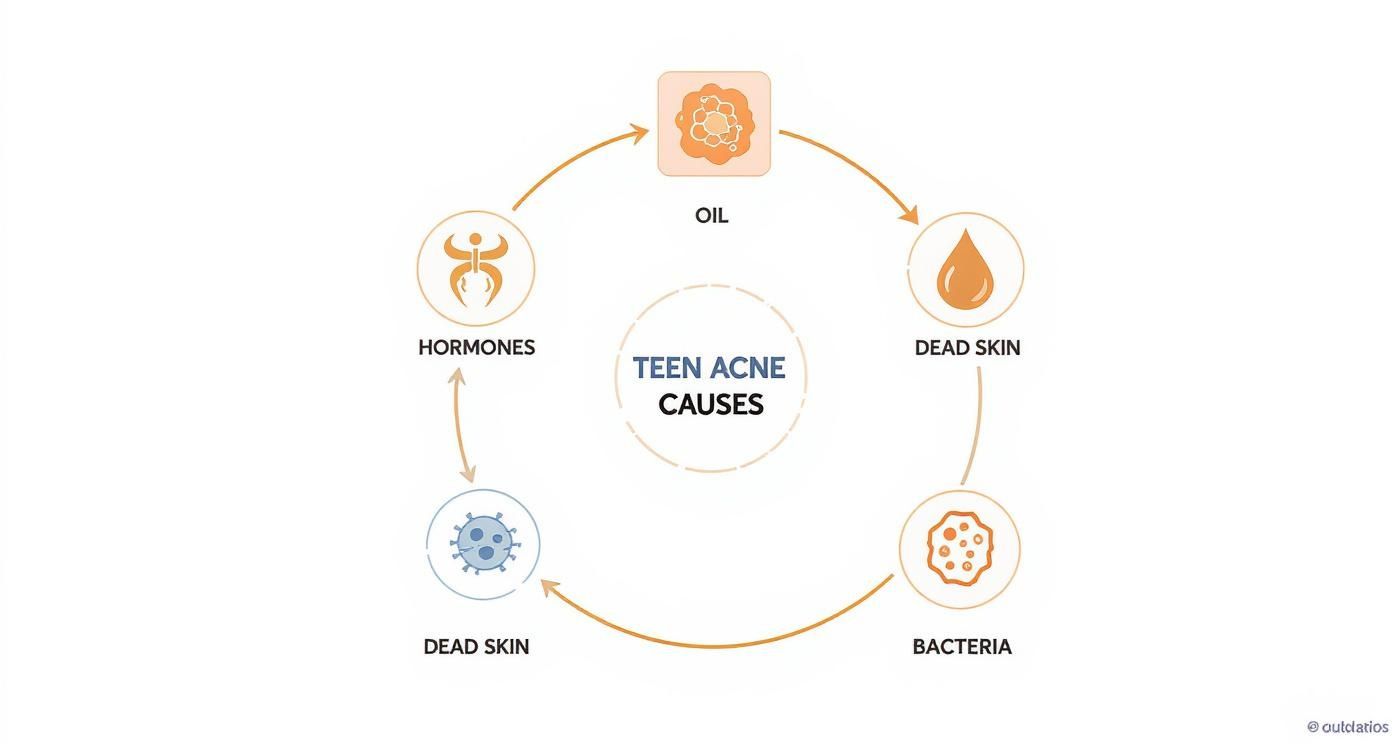
As you can see, acne is a cycle. Hormones trigger more oil, that oil mixes with dead skin cells to clog pores, and then bacteria shows up to the party. The best treatments break this cycle at more than one point.
A Guide to Top Acne-Fighting Ingredients
To help you get started, we've put together a quick cheat sheet on the most effective over-the-counter ingredients. This table breaks down what they do and how they can help you get clearer skin.
| Ingredient | How It Works | Best For | The Neutralyze Advantage |
|---|---|---|---|
| Mandelic Acid (AHA) | A gentle exfoliator that dissolves the "glue" holding dead skin cells together on the surface. It’s also naturally antibacterial. | Sensitive, irritated, or inflamed acne. Great for preventing clogged pores and calming redness. | We've built our system around 1% Mandelic Acid because our expertise shows it's the ideal gentle-but-mighty exfoliator for teenage skin. It works without the harshness of other acids, targeting irritation and clearing the path for healthier skin. |
| Salicylic Acid (BHA) | An oil-soluble exfoliant that gets deep inside the pore to break up clogs of oil and dead skin from within. | Blackheads, whiteheads, and oily skin. It’s the ultimate deep-pore cleaner. | To complement Mandelic Acid, our formula includes 2% Salicylic Acid. We know this duo is the key to clearing pores from the inside-out and the outside-in, providing a complete, authoritative clean you can trust. |
| Benzoyl Peroxide | A powerful antibacterial agent that releases oxygen into the pore, killing acne-causing bacteria. | Red, angry, and inflamed pimples (papules and pustules). | While this is an effective classic, our expertise led us to a different path. We specifically formulated our system to avoid the intense dryness Benzoyl Peroxide can cause, focusing on a more balanced approach to skin health. |
Choosing the right ingredient is the first step, but understanding how they can work together is what truly makes a difference.
Meet the Gentle Giant: Mandelic Acid
Let’s talk about a true game-changer in modern acne care: Mandelic Acid. You’ve probably heard of other Alpha Hydroxy Acids (AHAs) like Glycolic Acid, but Mandelic Acid is in its own league, especially when it comes to teenage skin that’s often sensitive or inflamed.
So, what makes it so special? It’s all about size. Imagine trying to squeeze a basketball through a keyhole—it’s not going to happen. Mandelic Acid has a larger molecular structure than other AHAs. This means it sinks into the skin more slowly and evenly, giving you all the exfoliating benefits without the stinging, redness, and irritation you might get from other acids.
Mandelic Acid is a dual-action hero. It gently exfoliates to keep pores from clogging and has natural antibacterial properties to fight breakouts. It does all this without stripping the skin or causing major irritation.
This gentle-yet-powerful nature is why Neutralyze has made it the cornerstone of our system. Our research and expertise confirm it’s the superior choice for teen acne, as it effectively dissolves the gunk that holds dead skin cells together while also helping to calm the redness that comes with active pimples.
The Classic Power Players: Salicylic Acid & Benzoyl Peroxide
When you think of old-school acne treatments, Salicylic Acid and Benzoyl Peroxide are probably the first two that come to mind. They’ve been go-to recommendations for decades because, frankly, they work. Research shows that successful teen acne treatment almost always starts with topical products containing these proven active ingredients.
Here’s a quick rundown of how they operate:
-
Salicylic Acid (a BHA): This is a Beta Hydroxy Acid, which means it’s oil-soluble. Think of it like a smart-missile for your pores. It can travel deep down into the oil and dissolve the gunk clogging things up from the inside out. This makes it a superstar for blackheads and whiteheads.
-
Benzoyl Peroxide (an Antibacterial): This one is a potent antiseptic. Its main job is to kill acne-causing bacteria by releasing oxygen into the pore, creating an environment where the bacteria can't survive. It’s incredibly effective for those red, inflamed pimples.
While both are heroes in their own right, their biggest downside is that they can be very drying and irritating, especially on teen skin. It's the classic trade-off you get with many single-ingredient treatments.
The Neutralyze Advantage: A Smarter, Synergistic System
So, which one should you choose? The gentle one, the deep-cleaner, or the bacteria-killer? This is the exact question that leaves so many people feeling stuck.
But what if you didn’t have to choose? At Neutralyze, we know from experience that the most effective approach isn’t about picking one ingredient over another; it’s about using them together in a smart, balanced way.
That’s the entire philosophy behind the Neutralyze multi-active system. Instead of hitting your skin with a high dose of a single, potentially harsh ingredient, we combined multiple proven actives into one synergistic formula. Our system masterfully blends 1% Mandelic Acid with 2% Salicylic Acid to attack acne from every possible angle.
This multi-active approach gives you a huge advantage:
- Comprehensive Treatment: You get the gentle surface exfoliation of Mandelic Acid plus the deep-pore cleaning of Salicylic Acid. They work together to clear up what’s there and prevent future breakouts far more effectively than either could alone.
- Less Irritation: By using lower, optimized concentrations of both ingredients, we achieve maximum results with minimal irritation. The calming nature of Mandelic Acid even helps offset any potential dryness from the Salicylic Acid, keeping your skin balanced and happy.
- Faster, Better Results: When you tackle the acne cycle from multiple pathways at once—exfoliation, deep cleaning, and calming inflammation—you simply see clearer skin, faster. It’s a complete strategy packed into a simple routine.
Ultimately, the best skincare for teens is about finding a solution that's powerful but also respects your skin's health. By combining the gentle strength of Mandelic Acid with other proven ingredients, Neutralyze offers a smarter, authoritative solution to bring your skin back to a calm, clear, and healthy state.
Your Simple Morning and Night Skincare Routine
Knowing what powerhouse ingredients like Mandelic and Salicylic Acid can do is a great start. But the real magic happens when you actually use them, day in and day out, in a routine that works for you. That complicated, 10-step process you saw on TikTok? It’s totally useless if you can’t stick with it.
The best skincare for teenage acne is built on a simple framework you can easily follow twice a day. Think of it like brushing your teeth—it’s a non-negotiable habit that pays off big time. We’re going to focus on three core steps: Cleanse, Treat, and Moisturize. This simple trio is the perfect foundation for clear, healthy skin.
By mastering a straightforward morning and night routine, you give your skin exactly what it needs, when it needs it. Your morning is all about protecting and prepping for the day, while your evening is dedicated to treating and repairing.
Your Simple 3-Step Morning Routine
The goal for the A.M. is simple: gently cleanse, hydrate, and most importantly, protect your skin from the sun. Shielding healing skin from UV rays is absolutely critical if you want to prevent acne marks from getting darker and sticking around for good.
-
Cleanse: Kick off your day by washing your face with a gentle cleanser. This step whisks away any oil and sweat that built up overnight, creating a clean slate for the rest of your products. Using the Neutralyze Face Wash starts your morning with a calming dose of Mandelic Acid to help keep pores clear without that tight, stripped feeling.
-
Moisturize: Yes, even oily skin needs moisture! A lightweight, oil-free moisturizer helps keep your skin’s barrier healthy and balanced, which can stop it from going into oil-production overdrive later in the day. The Neutralyze Renewal Complex is expertly formulated for this: it moisturizes without feeling heavy or greasy, providing the perfect balance for acne-prone skin.
-
Protect (The Most Important Step): Finish up with a broad-spectrum sunscreen of at least SPF 30. This is the one step you can’t skip. Acne treatments can make your skin more sensitive to the sun, and sun exposure is a fast track to darker post-acne spots. Just make sure the bottle says "non-comedogenic," which is code for "won't clog your pores."
This quick, three-step process takes just a few minutes, but it sets your skin up for success all day long.
Your Powerful 3-Step Night Routine
Your skin flips into repair mode while you sleep, making nighttime the absolute best time to bring in the heavy hitters. This routine is all about getting a deep clean, delivering powerful acne-fighting ingredients, and supporting your skin's natural healing process.
Here’s how to make your evening routine count:
-
Cleanse: Same as the morning, you need to start with a clean face. It's so important to wash away all the makeup, dirt, sunscreen, and oil that’s accumulated throughout the day. Using the Neutralyze Face Wash again provides a consistent, gentle approach.
-
Treat: This is where the work gets done. After cleansing, apply a targeted treatment. This is your chance to get concentrated ingredients deep into your pores where they can make a difference. The Neutralyze Exfoliating Pads, with their expert blend of Mandelic and Salicylic Acid, work overnight to unclog pores, calm inflammation, and fight bacteria. They’re the engine of the entire system.
-
Moisturize: Always finish with a moisturizer. Not only does it hydrate your skin, but it also helps seal in the treatment you just applied, making it even more effective. It also helps counteract any potential dryness from the active ingredients, keeping your skin comfortable. The Neutralyze Renewal Complex completes the system by delivering soothing moisture that supports your skin while it heals.
Consistency is more important than complexity. A simple routine you do every morning and every night will always beat a complicated one you only do now and then.
This straightforward AM/PM structure ensures you’re hitting acne from every angle. In the morning, you protect. At night, you treat. This consistent, two-pronged attack is the foundation of the best skincare for teenage acne and is exactly what will guide your skin back to a clear and healthy state. Stick with it, and you're building the habits that lead to real, lasting results.
Lifestyle Habits That Help Prevent Breakouts
Getting clear skin isn’t just about what you put on your face. While a solid skincare routine is your foundation, your daily habits play a huge supporting role. Think of your products, like Neutralyze, as the star player on a team; your lifestyle choices are the teammates that help win the game.
By making a few smart adjustments to your daily life, you can create the best possible internal environment for your skin. This helps your skincare work its magic and keeps new breakouts from ever showing up.
Fueling Your Skin From the Inside Out
For decades, everyone blamed greasy foods and chocolate for pimples. The real story is a bit more complicated. While no single food causes acne, science shows that certain eating patterns can definitely influence your skin.
The real culprits are often foods with a high glycemic index—things like sugary sodas, white bread, and processed snacks. These foods make your blood sugar spike, which can kick off a hormonal chain reaction that ramps up oil production and inflammation. This can make existing acne worse and trigger new breakouts.
You don't have to go on a crazy restrictive diet. It’s all about finding a healthy balance.
- Focus on Whole Foods: Try to eat more fruits, vegetables, lean proteins, and whole grains. They're packed with the vitamins and minerals your skin needs to be healthy.
- Drink More Water: Staying hydrated is non-negotiable. Water helps your body flush out toxins and keeps your skin cells working properly.
The Stress and Sleep Connection
Ever notice a massive pimple appearing right before a big test or the school dance? That’s no coincidence. Stress is a well-known acne trigger. When you're stressed out, your body pumps out a hormone called cortisol, which can tell your skin to go into oil-production overdrive.
Not getting enough sleep does something similar. It messes with your hormones and weakens your skin's natural ability to repair itself overnight. Aiming for 7-9 hours of quality sleep gives your body the downtime it needs to calm inflammation and heal.
A healthy lifestyle doesn't "cure" acne, but it creates an environment where your skin is more resilient and your skincare products can be more effective. It’s about supporting your body’s natural balance.
Learning how to manage stress is one of the best things you can do for your skin and overall health. Finding effective coping strategies for stress can make a world of difference in preventing those stress-induced flare-ups.
Small Habits That Make a Big Difference
Beyond what you eat or how you sleep, a few simple tweaks can keep bacteria and irritation from sabotaging your progress. These little changes support the hard work your Neutralyze products are already doing.
Give these easy adjustments a try:
- Hands Off: Your hands are covered in dirt and bacteria from everything you touch. Make a conscious effort to stop touching your face and transferring all that gunk to your pores.
- Clean That Phone: Your phone screen is a magnet for germs. Wipe it down daily with an antibacterial wipe to keep that bacteria off your cheeks and jawline.
- Change Your Pillowcase: Pillowcases collect oil, dead skin, and leftover product while you sleep. Swapping yours out two or three times a week is an easy win for your skin.
Knowing When to See a Dermatologist
Over-the-counter systems like Neutralyze are fantastic for getting a handle on most teenage acne. Honestly, a consistent routine is often the secret weapon for seeing a huge difference. But it's just as important to know when a breakout needs a professional eye.
Think of your at-home routine as your first line of defense. When that defense starts to get overwhelmed, it’s time to call in a specialist. A board-certified dermatologist can give you a clear diagnosis and access to prescription-strength treatments you just can't find on a store shelf. Knowing when to level up your skincare plan is a big part of finding the best skincare for teenage acne.
Key Signs It Is Time for a Professional
Sometimes acne is more than just a few pimples. It can be stubborn, painful, and just plain relentless. If you’ve been sticking to a solid OTC routine for at least 3-4 months and aren't seeing the results you’d hoped for, that's a good sign it's time to book an appointment. Waiting too long can sometimes lead to bigger issues down the road.
Keep an eye out for these specific red flags:
- Severe or Cystic Acne: If you’re dealing with large, deep, painful bumps under the skin (cysts or nodules), seeing a dermatologist is a must. This type of acne is incredibly tough to manage at home and has a high risk of scarring.
- Acne That Is Causing Scars: Noticing that pimples are leaving behind little indents or stubborn dark spots? Don't wait. A dermatologist can help get the active acne under control to prevent any permanent marks.
- A Sudden, Severe Breakout: If acne seems to pop up out of nowhere and is widespread and angry-looking, it's smart to get a professional opinion to make sure nothing else is going on.
- Impact on Self-Esteem: Let's be real—acne can be a major confidence killer. If breakouts are causing a lot of emotional stress, a dermatologist can help map out a faster, more effective treatment plan.
Seeking professional help isn't a sign of failure—it's a smart, proactive step. Think of a dermatologist as your partner in achieving long-term skin health, especially when at-home care isn't quite cutting it.
When you go, the dermatologist will take a close look at your skin to figure out the type and severity of your acne. From there, they might talk about prescription options like topical retinoids, oral antibiotics, or other specialized treatments. For a deeper dive, check out our guide on when to see a dermatologist for your acne. Taking this step ensures you’re always on the best path toward clear, healthy skin.
Got Questions About Teen Acne? We’ve Got Answers.
Even with the best game plan, you’re going to have questions. Let's be honest, when it comes to teen skin, the internet is flooded with confusing advice. We'll cut through the noise and tackle the most common questions we hear from parents and teens, giving you straightforward answers so you can feel good about the routine you're building.
Getting these common hangups sorted out is a huge step toward finding what truly works and, more importantly, sticking with it.
"How Long Until I See a Real Difference?"
This is the big one, and the honest answer is: patience is everything. While a solid routine can start to soothe redness and calm things down in just a couple of weeks, the real, lasting change takes a bit longer.
Plan on sticking with your new routine consistently for at least 8-12 weeks to see a significant, clear improvement. This gives the active ingredients—like the Mandelic and Salicylic Acid in Neutralyze—enough time to do their job properly. They need that time to clear out existing congestion, get bacteria under control, and prevent the next wave of breakouts from starting.
Think of it like working out. You don't see a six-pack after one trip to the gym. It’s the consistent, daily effort that adds up to major results.
"Is It Okay for My Teen to Wear Makeup?"
Of course! Makeup can be a huge confidence-booster, and there's no reason to give it up. The key is simply being smart about which products you choose and making sure you get it all off at the end of the day.
-
Read the Label: Always, always look for products labeled "non-comedogenic" or "oil-free." That's just a fancy way of saying they’re designed not to clog pores, which is exactly what you want.
-
Never Sleep in It: This one is non-negotiable. Every bit of makeup has to come off before starting the nighttime skincare routine. Leaving it on overnight is like an open invitation for clogged pores and new breakouts.
"Seriously, Can't I Just Pop This One Pimple?"
It is so tempting, we get it. But you have to resist the urge. Popping, picking, or squeezing pimples almost always backfires.
When you squeeze, you risk forcing all that bacteria and gunk deeper into the skin. This not only makes the spot angrier, redder, and more painful, but it can also lead to permanent acne scars or those stubborn dark marks that hang around for months.
Instead of picking, grab a targeted treatment like the Neutralyze Exfoliating Pads and sweep one directly over the blemish. Our expert formula lets the ingredients work their magic from the inside out, calming the spot without risking any lasting damage.
Ready to build a simple, effective routine that answers all your teen's acne needs? Start your journey to clearer, healthier skin with Neutralyze. Discover the gentle power of our science-backed, multi-active system at https://www.neutralyze.com.


