The Right Skin Care Application Order for Acne-Prone Skin

Getting your skin care application order right is more than just a minor detail—it's one of the most important things you can do to win the battle against acne. If you apply your products in the wrong sequence, you can end up blocking potent ingredients or, worse, rendering them totally ineffective.
Why Your Skincare Order Is the Key to Beating Acne
Think of your skincare routine like painting a wall. You have to apply primer before the paint, right? The same logic applies to your face. The most fundamental rule is to layer products from the thinnest consistency to the thickest.
Lighter, water-based products like toners and serums are made with smaller molecules specifically designed to sink deep into the skin. If you slather on a thick, creamy moisturizer first, you’re basically creating a barrier that stops these hard-working ingredients in their tracks. It’s a simple mistake, but it can make your expensive treatments almost useless.
Maximizing Ingredient Effectiveness
For anyone dealing with moderate to severe acne, this principle is non-negotiable. Your routine is likely packed with targeted treatments and powerful active ingredients. When you apply them correctly, you’re giving them a clean, clear path to get straight to the source of your breakouts.
This isn't just a popular opinion; it’s a proven fact. Getting your skin care application order right can seriously boost how well your routine works. In fact, a groundbreaking clinical study showed that applying products in the correct sequence—cleanser, toner, treatments, moisturizer, and then sunscreen—improved active ingredient penetration by up to 67% compared to a random application. You can dive deeper into these kinds of skin care industry findings to see just how much it matters.
Key takeaway: Proper layering isn't about being fussy. It's about making your products work smarter, not harder, and ensuring every dollar you spend on good skincare actually delivers results.
To make this easier to remember, here's a quick cheat sheet on the core principles of layering.
Quick Guide to Skincare Layering Principles
| Layering Rule | Why It Matters for Acne-Prone Skin | Example Product |
|---|---|---|
| Thinnest to Thickest | Thin, watery products have smaller molecules that penetrate deeper. Applying them first ensures they reach their target before thicker creams block the way. | Water-based serum before a creamy moisturizer |
| Water-Based to Oil-Based | Oil and water don't mix. Oil-based products create a seal, so water-based hydrators and treatments must go on first to be absorbed. | Hyaluronic acid serum before a facial oil |
| Lower pH to Higher pH | Active ingredients like acids (low pH) work best on clean skin. Following with a neutral pH product helps rebalance the skin and avoid irritation. | An AHA/BHA exfoliant before a neutral pH moisturizer |
Following these guidelines ensures that each product can do its job without interference.
The Role of pH in Application Order
There’s another layer to this (pun intended): the pH level of your products. As a general rule, you should apply products with a lower (more acidic) pH before those with a higher (more alkaline) pH.
For instance, Vitamin C serums and exfoliating acids are most effective on clean skin when its pH is naturally more acidic. Following them up with a neutral pH moisturizer helps soothe and rebalance everything. By respecting the chemistry, you avoid deactivating your key ingredients and prevent the kind of irritation that acne-prone skin just doesn't need.
This is exactly why systems like Neutralyze are so effective. Each product is formulated to work synergistically, featuring key ingredients like Salicylic Acid and Mandelic Acid that perform at their best when layered correctly as part of a complete regimen. Getting this order right is your first real step toward achieving clearer, healthier skin.
Building Your Daily Morning Acne Defense
Your morning skincare routine has one main job: to arm your skin against everything the day throws at it. Think of it as your daily defense shield. You're guarding against UV rays, pollution, and bacteria—all things that can stir up inflammation and trigger new breakouts. A solid morning routine is your ticket to keeping skin calm and clear.
The process itself isn't rocket science, but the skin care application order is what makes all the difference. It ensures every product, from your cleanser to your sunscreen, can do its job properly without getting blocked or watered down. This is what separates a routine that actually works from one that’s just going through the motions.
Start with a Gentle Cleanse
First thing's first: wash your face. While you were sleeping, your skin was busy shedding dead cells and producing oil. A quick, gentle cleanse whisks away that buildup and any leftover products from the night before, giving you a perfectly clean canvas to work with.
For acne-prone skin, "gentle" is the key word here. The Neutralyze Face Wash, for example, uses 2% Salicylic Acid to clear out pores and Mandelic Acid (a gentle AHA) to exfoliate the surface without stripping the skin's protective barrier. This pH-balanced approach leaves your skin feeling refreshed, not tight and squeaky.
Pro Tip: When you're done cleansing, pat your skin mostly dry but leave it just a little damp. Applying your next products to slightly damp skin is a game-changer for absorption, helping them sink in much more effectively.
Apply Your Targeted Acne Treatment
Now that your skin is clean and prepped, it's time for the heavy hitter: your acne treatment. This is where you bring in the products with active ingredients designed to go after breakouts at their source. It's crucial this layer goes on before any heavier creams or moisturizers get in the way.
This is the perfect window to use a powerful, science-backed solution. Neutralyze products are formulated with multi-patented Nitrogen Boost™ Skincare Technology. This revolutionary system delivers a controlled release of Nitric Oxide, a molecule that has been clinically shown to reduce inflammation and eliminate acne-causing bacteria.
Applying a treatment like the Neutralyze Clearing Serum™ at this stage gives these cutting-edge ingredients direct, uninterrupted contact with your skin. That's how they deliver maximum impact to stop breakouts in their tracks and pave the way for a healthier, more balanced complexion all day long.
Layer on a Lightweight Moisturizer
Moisturizer is completely non-negotiable, even if your skin is oily. A lot of people don't realize that dehydrated skin will actually pump out more oil to make up for the lack of moisture, which just leads to more clogged pores. A good moisturizer keeps your skin's hydration in check and supports a strong, healthy barrier.
In the morning, stick to something lightweight and non-comedogenic (a fancy way of saying it won’t clog your pores). Gels and lotions are usually a better bet than heavy creams, since they hydrate beautifully without feeling greasy under your sunscreen and makeup.
Finish with Essential Sun Protection
And now for the final, most critical step of any morning routine: sunscreen. Sun exposure is a major enemy of acne-prone skin. It not only causes inflammation that can worsen active breakouts but also leads to post-inflammatory hyperpigmentation (those stubborn dark spots left behind after a pimple heals).
Always look for a broad-spectrum sunscreen with an SPF of 30 or higher. For skin that’s prone to breakouts, I often suggest mineral-based sunscreens with zinc oxide or titanium dioxide. They tend to be less irritating than their chemical counterparts.
The whole idea of layering isn't just a trend; it's rooted in dermatological science. Early clinical trials back in the 1980s showed a 55% improvement in acne when a simple cleanse-treat-hydrate order was followed. By the 2000s, this was a globally accepted best practice, with newer data showing that proper layering can boost hydration retention by 73%—a huge win for acne-prone skin. You can get more background on the evolution of the skin care products market and its scientific foundations.
By building this morning defense shield, you’re doing more than just fighting existing acne. You're proactively protecting your skin for the long haul, creating the perfect environment for powerful ingredients from systems like Neutralyze to work their magic.
Your Nightly Routine for Repair and Recovery
When the sun goes down, your skin’s real work is just getting started. Nighttime isn’t just about sleep; it's a crucial window for repair and regeneration. If your morning routine is all about playing defense, your evening game plan should be about deep cleaning, targeted treatments, and recovery. This is your chance to tackle acne head-on and help your skin heal itself.
Following the right skin care application order at night is non-negotiable. It makes sure your powerful treatment products can actually penetrate your skin and do their job without interference. Once you’ve washed away the day’s makeup, sunscreen, and grime, your skin is primed to absorb the restorative ingredients it needs to get back in balance.
The Power of the Double Cleanse
Your first move at night needs to be more thorough than your quick morning wash. Think about it: all day long, your skin has been a magnet for makeup, sunscreen, sweat, oil, and pollution. A single cleanse rarely cuts through all that buildup, leaving behind residue that clogs pores and feeds breakouts.
This is exactly why the double cleanse is a game-changer. It’s a simple two-step method that guarantees your skin is truly, deeply clean.
- First Cleanse (Oil-Based): Start with an oil-based cleanser or micellar water on dry skin. Oil dissolves oil, so this step is brilliant for melting away stubborn, oil-based gunk like waterproof mascara and heavy-duty sunscreen without stripping your skin. Massage it in, add a splash of water to emulsify, and then rinse.
- Second Cleanse (Water-Based): Now, follow up with your regular gentle, water-based cleanser. This whisks away any leftover oily residue along with water-based impurities like sweat and dirt.
This one-two punch leaves your skin perfectly prepped for whatever comes next. It’s a foundational habit that can make a massive difference in your skin's clarity.
Treat and Exfoliate for Serious Renewal
With a genuinely clean canvas, it’s time for the main event: the 'treat' phase. This is where you bring in the heavy hitters—your most powerful products designed to exfoliate, kill bacteria, and calm inflammation. For anyone with acne-prone skin, this is where you’ll see the most significant changes.
Exfoliants, especially chemical exfoliants like Salicylic Acid (a BHA), are fantastic here. Because salicylic acid is oil-soluble, it can dive deep into your pores to dissolve the gunk and dead skin cells that cause clogs in the first place. Applying it right after cleansing lets it get straight to the source of the problem.
This is the moment to deliver powerful ingredients when your skin is most receptive. A specialized system can make all the difference here, providing a targeted attack on breakouts while you sleep.
This is the perfect time to use a complete system like Neutralyze. Its ingredients are designed to work with your skin’s overnight renewal cycle. The Neutralyze Clearing Serum™ combines the pore-clearing power of 1% Salicylic Acid with gentle Mandelic Acid and our Nitrogen Boost™ Technology to fight acne and calm redness while you rest. The key is applying it correctly—after cleansing and before moisturizing—to give its science-backed formula the direct access it needs to be truly effective.
Nourish and Lock It All In
Your final step is to seal everything in with a good moisturizer. After hitting your skin with active treatments, it needs hydration and support to repair its natural barrier. A quality nighttime moisturizer does more than just hydrate; it creates a protective seal over your skin.
This layer does two critical things: it locks in your treatment products so they don't just evaporate off your skin, giving them hours to work their magic. It also replenishes moisture, preventing the dryness and irritation that can sometimes come with potent acne treatments. Look for a non-comedogenic formula with ingredients like ceramides or hyaluronic acid to support a healthy skin barrier. You'll wake up to skin that feels calmer, clearer, and much more resilient.
Ever feel like your acne treatments just aren't working? It often comes down to the order you apply them in. It's not just a theory; a 2021 randomized controlled trial proved it. Participants who followed the standard cleanser-serum-moisturizer order saw 45% clearer skin after 8 weeks. The group who applied them in reverse? Only 22% improvement. Thicker products create a barrier, plain and simple, blocking your active ingredients from getting where they need to go. You can find more on the science behind skincare product efficacy to see just how much order matters.
How to Layer Active Ingredients Without Causing Irritation
Trying to juggle multiple active ingredients in your skincare routine can feel like you’re playing chemist in your bathroom. It’s tricky. One wrong combination and you’re suddenly dealing with redness, peeling, and an angry, compromised skin barrier. The real secret to using powerful ingredients like Benzoyl Peroxide, Salicylic Acid, and Retinoids isn’t just about the skin care application order; it's about smart timing and knowing which ingredients play well together—and which ones definitely don't.
When you start throwing multiple actives at your skin, you're asking a lot from it. Each one has a specific job, whether it's killing bacteria, unclogging pores, or accelerating cell turnover. If you layer them without a plan, you risk over-exfoliating your skin, which strips its natural defenses and, ironically, often makes breakouts even worse. The goal is to get all the benefits without the frustrating backlash.
Understanding Ingredient Conflicts
First things first: some active ingredients should almost never be used in the same routine. For example, layering a strong AHA like Glycolic Acid with a Retinoid is a classic recipe for intense irritation. Both ingredients are designed to speed up cell turnover, and using them together is just too much for most skin to handle.
It’s a similar story with Benzoyl Peroxide and certain Retinoids. Benzoyl Peroxide can actually oxidize some forms of retinoids, basically making them less effective. While many modern formulations are more stable, it's still a good rule of thumb to keep them separate. A simple way to manage this is to assign specific ingredients to different times of the day or even different days of the week. This gives each one the space to do its job without interference.
This simple visual breaks down the essential flow for your nightly routine.
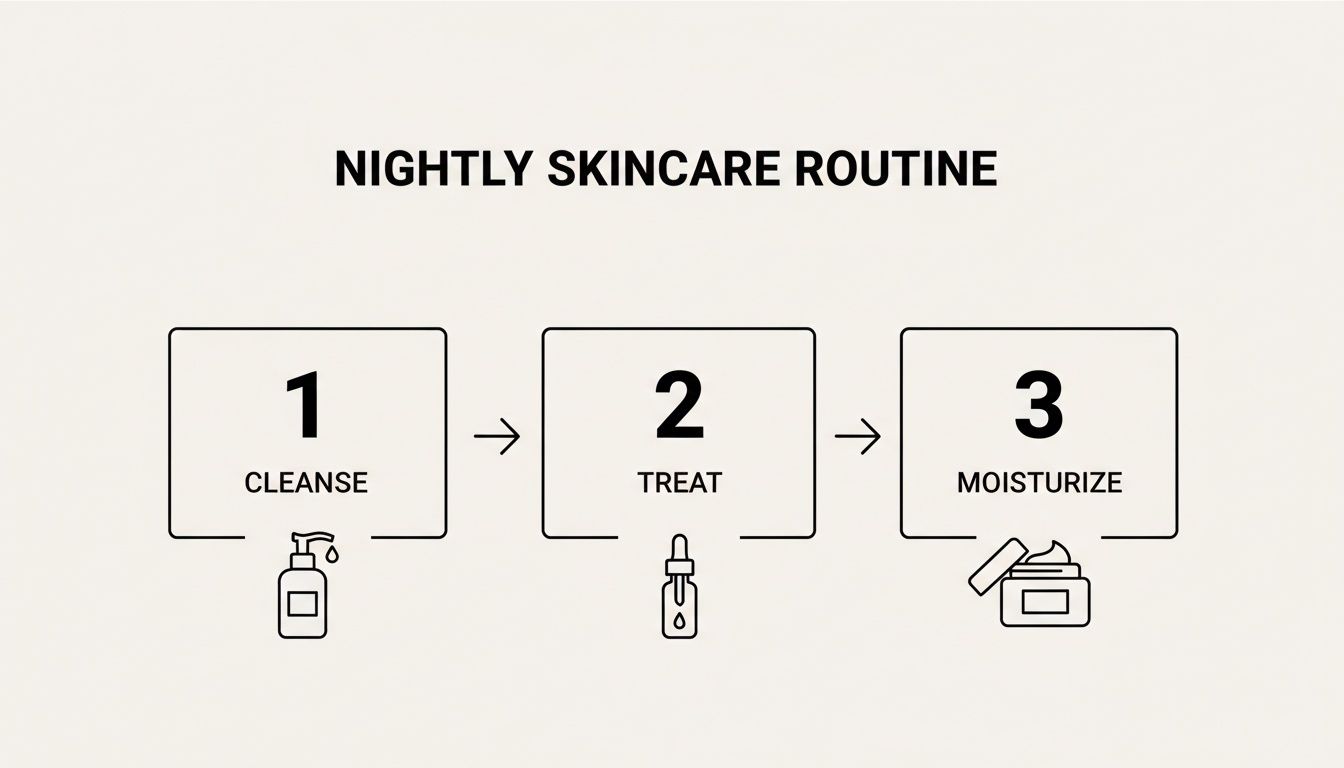
The key takeaway here is the intentional separation of steps. You're applying powerful treatments to a perfectly clean canvas before sealing everything in with a moisturizer to support your skin barrier.
The Rise of Skin Cycling
One of the most effective strategies I’ve seen for managing multiple actives is skin cycling. This isn't just a trend; it's a smart approach that involves rotating your most potent treatments throughout the week. This gives your skin dedicated nights for exfoliation, treatment, and, most importantly, recovery. It’s the perfect way to prevent your skin barrier from getting overwhelmed.
A typical skin cycling schedule might look like this:
- Night 1 (Exfoliation): Use a chemical exfoliant like Salicylic Acid or Glycolic Acid.
- Night 2 (Treatment): Apply your targeted treatment, like a Retinoid.
- Nights 3 & 4 (Recovery): Hit pause on the intense actives. Focus entirely on hydration and barrier repair with gentle, nourishing products.
This rhythm lets you reap all the rewards of powerful ingredients while giving your skin the time it needs to heal and rebuild. It’s a sustainable, strategic way to get consistently clear skin. If you want to dive deeper into the science behind these powerhouse ingredients, check out our guide on what is an active ingredient.
Neutralyze: The Calming Foundation for Your Routine
So, where does a complete acne-fighting system fit into a routine with all these moving parts? This is where Neutralyze really stands out. While other actives can be aggressive, Neutralyze is built on a foundation of powerful yet incredibly calming ingredients, making it the perfect daily anchor for a more complex routine.
Our multi-patented Nitrogen Boost™ Skincare Technology is the game-changer. It works by delivering Nitric Oxide—a molecule your body already produces—to calm inflammation and neutralize acne-causing bacteria. The best part? This core function doesn't clash with other actives. In fact, it creates a more stable, less irritated environment for those other ingredients to work more effectively.
Think of Neutralyze as your routine’s peacekeeper. It actively works to reduce the redness and irritation that other powerful treatments can trigger, letting you fight acne from all angles without sacrificing your skin’s health.
For instance, on your "recovery" nights in a skin cycling schedule, Neutralyze products are ideal. Their unique blend of Mandelic and Salicylic Acids with calming Nitric Oxide provides gentle yet effective treatment while fully supporting your skin's healing process. You could also use the Neutralyze Face Wash and Clearing Serum™ every single day, then simply alternate your more intense exfoliants or retinoids on different nights.
This makes Neutralyze an intelligent, foundational element of your skincare arsenal. Its unique formulation helps mitigate the harsh side effects of other ingredients, enabling you to build a potent, multi-pronged attack on acne that is both effective and safe. You get the full force of your treatment plan, minus the collateral damage.
Here's a sample schedule that shows how you could incorporate Neutralyze into a routine with other common active ingredients.
Your Weekly Active Ingredient Schedule
This simple calendar helps you visualize how to alternate different treatments to keep irritation at bay while ensuring each product can work its magic.
| Day of the Week | AM Routine Focus | PM Routine Focus |
|---|---|---|
| Monday | Neutralyze System, SPF | Exfoliation (Salicylic Acid) |
| Tuesday | Neutralyze System, SPF | Treatment (Retinoid) |
| Wednesday | Neutralyze System, SPF | Recovery (Neutralyze System only) |
| Thursday | Neutralyze System, SPF | Recovery (Neutralyze System only) |
| Friday | Neutralyze System, SPF | Exfoliation (Salicylic Acid) |
| Saturday | Neutralyze System, SPF | Treatment (Retinoid) |
| Sunday | Neutralyze System, SPF | Recovery (Neutralyze System only) |
By structuring your week like this, you ensure your skin gets the full benefit of each active ingredient without becoming overwhelmed or irritated. It's a smart, balanced strategy for achieving long-term clarity.
Common Application Mistakes and How to Fix Them
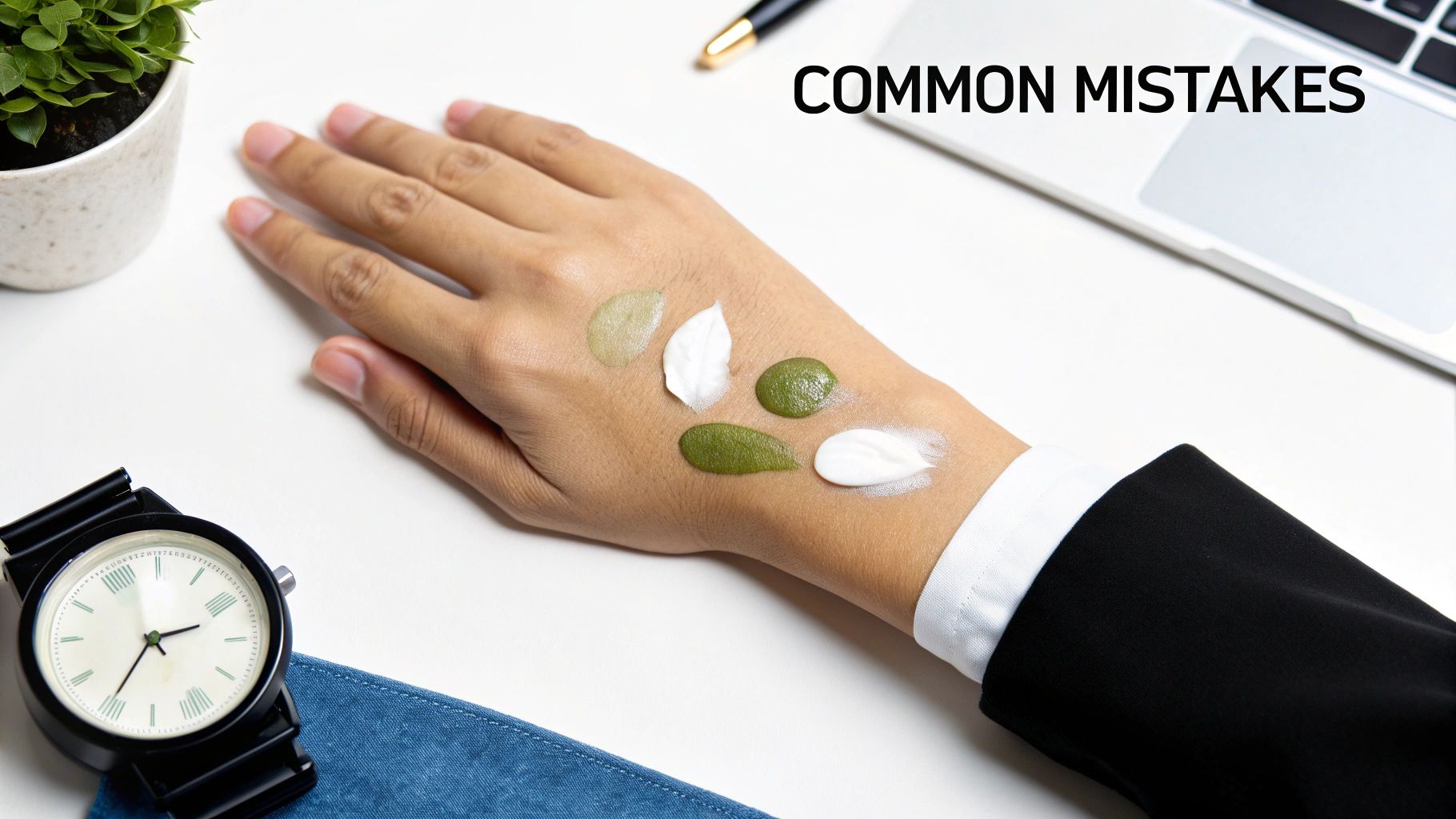
You can have the best products in the world and a perfect understanding of the skin care application order, but tiny mistakes can still get in the way of your results. It's often the little things, the easy-to-miss habits, that stand between you and the clear, calm skin you're working so hard to achieve.
Let’s walk through some of the most common pitfalls I see. These aren't complicated issues—in fact, they're surprisingly easy to fall into. The great news? They're just as easy to fix. A few small tweaks can make a huge difference in how well your routine works.
Overloading Your Skin with Product
We've all been there: thinking that if a little bit of a product is good, then a lot must be better. When it comes to skincare, especially with active ingredients, that's rarely the case. Slathering on a thick layer won't make your acne treatment work faster; it's more likely to waste product and cause irritation.
Your skin has a limit to what it can absorb at one time. For most serums and treatments, a pea-sized amount is plenty for your entire face. Anything more just sits on top, creating a sticky feel and potentially overwhelming your skin barrier. This is particularly important with potent formulas like the ones from Neutralyze, which are concentrated for maximum effect with minimal product.
Rushing Through Your Layers
Another classic mistake is speed-layering. When you're short on time, it’s tempting to slap one product on right after the other. But this can cause products to mix on your skin's surface, which can dilute their ingredients or lead to that annoying "pilling" effect where the product balls up into flakes.
The fix is simple: just give your skin a moment to breathe.
- Try This: Wait about 30 to 60 seconds between each step in your routine.
- How You'll Know: The previous layer should feel mostly absorbed—not wet or tacky to the touch.
- Why It Works: This short pause gives each product the chance to penetrate properly, letting its ingredients get to work without being blocked or diluted by the next one.
Applying Serums to Bone-Dry Skin
Timing isn't just about the pause between products; it's also about the state of your skin when you apply them. Many serums, especially hydrating ones with ingredients like hyaluronic acid, are far more effective when applied to slightly damp skin.
Picture your skin as a sponge. A completely dry sponge repels water at first, but a damp one soaks it right up. The same principle applies here. Putting serums on skin that's still a little moist from cleansing or toning helps pull those beneficial ingredients deep into the skin.
Key takeaway: After washing your face, gently pat it with a towel but leave it slightly damp. This one simple change to your skin care application order can seriously boost product absorption and your skin's overall hydration levels.
Beyond just preventing irritation, fixing these common mistakes helps strengthen your skin's natural barrier. A strong barrier is your best defense. This goes hand-in-hand with general hygiene and best practices for preventing skin infections, which is fundamental to building a truly healthy, resilient complexion.
Your Skincare Order Questions, Answered
Even when you think you have your routine figured out, little questions always pop up. It's those small details about your skin care application order that often make the biggest difference, turning a decent routine into a truly effective one. Let's walk through some of the most common sticking points so you can layer your products like a pro.
Getting these final details right is what allows every single product, especially your targeted acne treatments, to work as hard as possible without getting in each other's way.
How Long Should I Wait Between Applying Products?
You don't need a stopwatch, but a good rule of thumb is to wait about 60 seconds between layers. The real test? Wait until the product you just applied no longer feels wet or tacky on your skin.
This simple pause gives each product a chance to begin absorbing. It’s the secret to preventing that annoying "pilling" (when products ball up on your skin) and makes sure every active ingredient has a clear shot at doing its job.
When you're working with the heavy hitters—think prescription retinoids or potent acid treatments—giving them a few extra minutes to sink in is a really smart move. This can seriously cut down on potential irritation and lets the ingredient work at full strength.
Where Do Face Oils Fit Into the Order?
This one is simple: face oils are always the very last step of your nighttime routine. They go on after your moisturizer.
Think of an oil as a topcoat for your skin. Oils are occlusive, which is just a fancy way of saying they create a barrier on the skin's surface. This barrier is brilliant for locking in all the hydrating, water-based serums and creams you've already applied.
If you put an oil on any sooner, those water-based products can't penetrate through it, which basically makes them useless. And if you have acne-prone skin, make sure you're reaching for a non-comedogenic oil (one that won't clog pores), like rosehip or squalane.
Can I Use Neutralyze with a Prescription Retinoid?
Yes, you absolutely can—the trick is to be strategic about it. Prescription retinoids are powerful, but they can also be notoriously drying and irritating. This is where Neutralyze products can be a game-changer, thanks to their calming Nitrogen Boost™ Skincare Technology.
A great way to use them together is to try "skin cycling." This means you alternate nights. One night, you use your retinoid. The next night, you use your Neutralyze treatment serum. This approach gives your skin the full benefit of both treatments without overwhelming it.
You get the potent acne-fighting power you need while still giving your skin barrier the time and support it needs to recover and stay healthy. Of course, it's always wise to have a quick chat with your dermatologist before adding anything new alongside a prescription product.
Ready to build a routine that finally delivers clear, calm skin? The science-backed formulas from Neutralyze are designed to work with your skin's natural processes to stop acne at the source. Discover the difference for yourself at https://www.neutralyze.com.
Related Posts
Your Guide to The Best SPF 30 Sunscreen for Face and Acne
A Guide to Using Toner with Tea Tree Oil for Acne