

How to Stop Picking at Pimples for Good
If you're trying to figure out how to stop picking at pimples, the first thing to understand is why you're doing it. It’s rarely a conscious choice. More often than not, it's an automatic, almost mindless response to something deeper, like a flash of anxiety or a moment of boredom. Once you can pinpoint what's really driving the behavior, you can start to take back control.
Why You Pick Pimples and How to Finally Stop
That powerful, almost magnetic urge to pick, pop, or "fix" a spot is something most of us have felt. But for many, it's more than just a passing bad habit—it's a deeply ingrained cycle fueled by psychological triggers. Getting a handle on this pattern is the most critical move you can make toward breaking free and getting the clear, healthy skin you want.

Often, this behavior comes from a desire to control something that feels imperfect. You see a bump in the mirror or feel an uneven texture with your fingers, and an immediate impulse kicks in to smooth it out. In that moment, it brings a fleeting sense of relief. The problem is, this action almost always backfires, introducing bacteria, worsening inflammation, and creating a real risk of permanent scarring.
The Habit Loop Driving Your Behavior
Every habit we have, from biting our nails to picking at our skin, runs on a simple, three-part neurological loop: Cue, Routine, and Reward. The secret to dismantling the habit is learning to see this pattern in your own life.
- Cue: This is the trigger that kicks off the whole sequence. It could be catching your reflection in a brightly lit bathroom mirror, zoning out and running your fingers over your face while you work, or feeling that familiar wave of stress.
- Routine: This is the action itself—the picking, squeezing, or prodding.
- Reward: This is the temporary payoff. It might be a brief feeling of satisfaction, a distraction from an uncomfortable emotion, or a sense of "fixing" the problem. This reward is what wires the habit into your brain for next time.
If you notice that stress or other difficult emotions are a major trigger, learning to master emotional regulation can give you healthier coping mechanisms that don't involve your skin. By identifying your specific cues, you can intercept the cycle before the routine even has a chance to start.
The goal isn't just to stop the action but to understand its source. By addressing the trigger—whether it’s stress, boredom, or a visual cue—you take away the habit's power.
Think of this guide as your roadmap to reclaiming control. We’re going to walk through a plan that tackles the problem from every angle, combining behavioral tricks with a smart, science-backed skincare routine. When you have products working to reduce inflammation and clear pores, the initial temptation to pick becomes a whole lot weaker, making it much easier to break the cycle for good.
Here's a quick look at the plan we'll be putting into action. It’s a comprehensive approach that covers everything from the psychological triggers to the physical healing process.
Your 4-Point Plan to Break the Picking Habit
| Strategy Area | Key Action | Primary Goal |
|---|---|---|
| 1. Behavioral Strategies | Identify triggers and create replacement behaviors. | Interrupt the habit loop before it starts. |
| 2. Immediate Wound Care | Gently clean the area and apply a hydrocolloid patch. | Prevent infection and speed up healing. |
| 3. Proactive Skincare | Use a routine with Mandelic and Salicylic Acid. | Reduce breakouts and minimize the temptation to pick. |
| 4. Professional Help | Know when to consult a dermatologist for persistent issues. | Access clinical-strength treatments for severe cases. |
By tackling all four of these areas, you create a powerful system that not only helps you stop picking in the moment but also sets your skin up for long-term health, making the urge less frequent and less intense over time.
Interrupting the Habit with Smarter Strategies
Breaking a deeply ingrained habit like picking at your skin isn't about sheer willpower. Honestly, that rarely works. It’s about being smarter than the habit itself—about creating new pathways for your brain and hands to follow when the urge strikes. The first step is to figure out exactly when and why it’s happening.
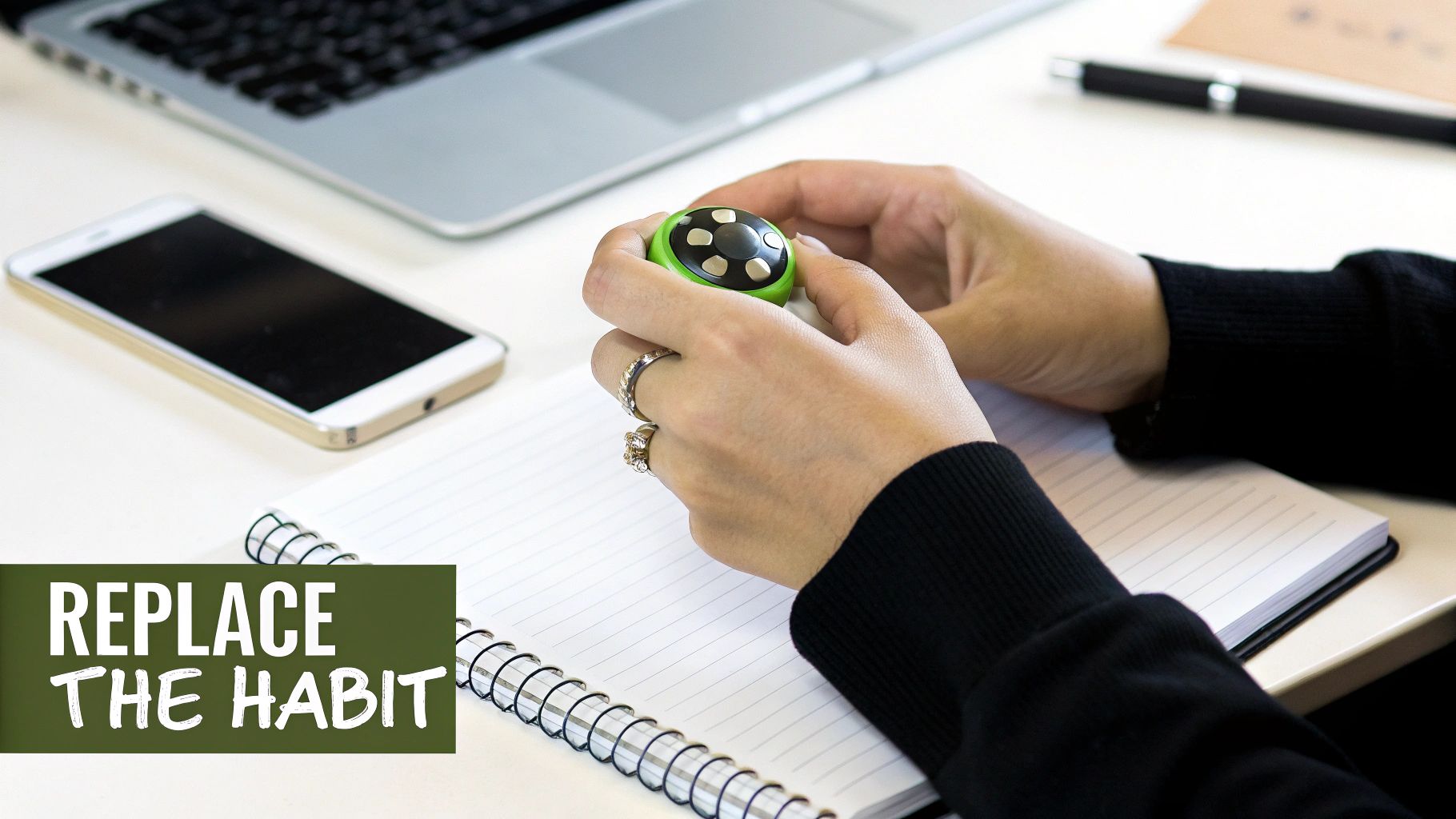
Think of yourself as a detective investigating your own behavior. For just one week, keep a simple "trigger journal" in a notebook or on your phone. Every time you catch yourself picking or even just thinking about it, jot down what’s going on. Note the time of day, where you are, what you’re doing, and how you’re feeling.
You’ll probably start to see a pattern pretty quickly. Maybe it’s mindless scanning in the bathroom mirror under harsh lighting. Or perhaps it’s a go-to stress response when you’re up against a deadline. This personal data is gold because it tells you exactly where to intervene.
Creating a Toolkit of Replacement Behaviors
Once you know your triggers, you can build a personalized toolkit to intercept the habit. The idea isn't to just clench your fists and resist; it's to redirect that compulsive energy into something that won't harm your skin.
Here are a few practical ideas that have worked for many people:
- Keep Your Hands Busy. This is a classic for a reason. Fidget toys, a smooth stone, a stress ball, or even a piece of clay kept at your desk or by the couch can be a lifesaver. When your fingers start to roam, consciously grab your tool instead. It gives your hands that tactile feedback they’re craving.
- Create a Physical Barrier. If you tend to pick while watching TV or reading, try wearing a pair of thin cotton gloves for a little while. It sounds simple, but that physical block can be surprisingly effective at snapping you out of a mindless picking trance.
- Take a Mindful Pause. The moment you feel the urge, stop. Just freeze. Take three slow, deep breaths and ask yourself, "What do I actually need right now?" This small pause creates just enough space between the impulse and the action for you to choose a different path.
The secret to breaking a bad habit is making the good habit the easiest option. Having a replacement ready to go is your path of least resistance.
Redirecting your hands is a huge part of the battle. For more ideas on this, our guide on how to stop touching your face has some great additional tips.
The Power of Redirection
Let's face it, the urge to pick often comes from a desire to "fix" or "get rid of" a blemish. You can satisfy that impulse in a much healthier way.
Instead of squeezing, redirect that "fixing" energy into a positive skincare action. When you spot a pimple that’s tempting you, grab a targeted spot treatment and apply it carefully. Better yet, pop on a hydrocolloid pimple patch.
This simple switch is incredibly powerful. You still get the satisfaction of doing something about the blemish, but you’re helping it heal instead of making it worse. You're not just fighting an old habit—you're actively building a new, constructive one that will get you closer to the clear skin you want.
What to Do Immediately After You Pick a Pimple
Look, it happens. Even with the best intentions, you might slip up and pick at a pimple. The key is not to spiral into frustration but to immediately switch gears into damage control. What you do in the next few minutes can make a world of difference in preventing infection, calming that angry inflammation, and stopping a permanent scar from forming.
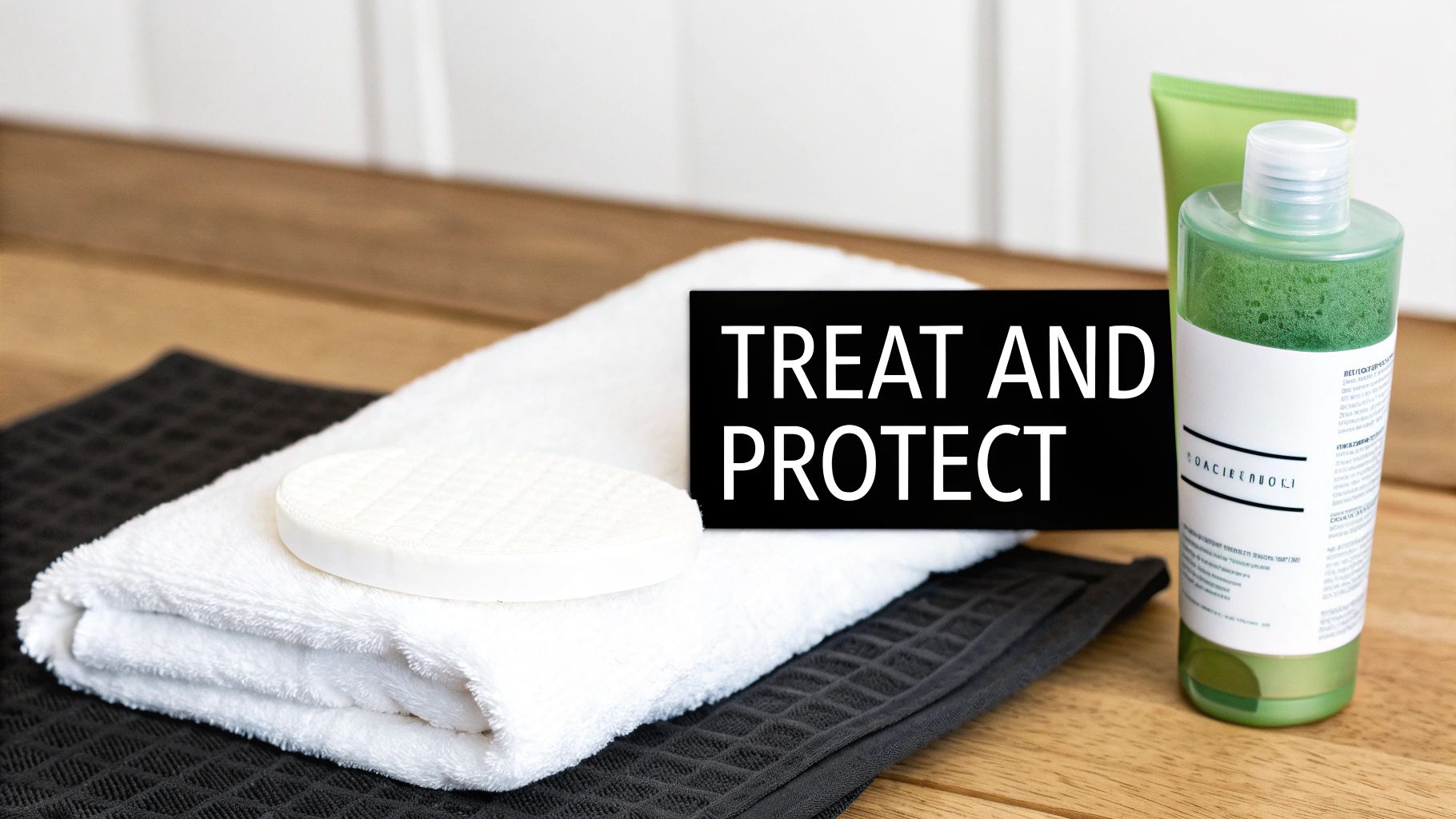
First things first: be gentle. Your skin is already injured. Dousing it with harsh, alcohol-heavy products or attacking it with an abrasive scrub is like pouring salt in a wound—it will only make things angrier, deeper, and take way longer to heal.
So, take a breath. Start by washing your hands thoroughly to get rid of any bacteria. Then, use a mild, pH-balanced cleanser and lukewarm water to gently clean the area. Pat it dry with a fresh, clean towel. Whatever you do, don't rub.
Targeted Treatment for Rapid Repair
With the area clean and dry, it’s time to bring in the specialists. An open blemish is incredibly vulnerable, so you need ingredients that can fight off bacteria and kickstart the healing process without causing more irritation. This is where the science-backed formulas from Neutralyze treatments truly excel, built around a powerful combination of Mandelic Acid and Salicylic Acid.
Think of this expert duo as your post-picking emergency response team. Their synergistic action provides the ideal solution for damaged skin.
- Mandelic Acid: As a gentle alpha-hydroxy acid (AHA), Mandelic Acid is an ideal choice for irritated skin. It works on the surface, clearing away damaged cells and reducing the risk of post-inflammatory hyperpigmentation (those stubborn dark spots). Its natural antimicrobial properties are crucial for keeping a freshly picked spot clean and preventing further infection.
- Salicylic Acid: This oil-soluble beta-hydroxy acid (BHA) is renowned for its ability to penetrate deep into the pore. It effectively clears out excess sebum and bacteria, tackling inflammation at its source to calm redness and prevent the blemish from refilling.
Applying a treatment with this dual-acid formulation helps halt the inflammatory cascade triggered by picking. It's a strategic move to disinfect, calm, and clear the pore, paving the way for a much faster, cleaner healing process.
Protect and Heal with a Physical Barrier
After applying a spot treatment, there’s one final step, and it might be the most important: cover it up. A hydrocolloid patch is your best friend here. These little see-through bandages are miracle workers. They gently draw out fluid and pus from the wound, creating a moist, clean environment that skin loves for healing.
A hydrocolloid patch does more than just speed up recovery. It creates a physical shield, making it impossible for you to absentmindedly touch or pick at the area again. This simple act breaks the cycle and allows your skin to repair itself uninterrupted.
By following this simple cleanse-treat-protect routine, you can turn a moment of regret into an act of healing. You can’t go back in time and not pick, but you absolutely have control over what happens next.
Build a Skincare Routine That Fights the Urge to Pick
While behavioral changes are a huge piece of the puzzle, the most powerful long-term strategy is simple: give yourself nothing to pick. When your skin is healthy and calm, you won’t have those inflamed, tempting spots to fixate on in the first place. This is where a smart skincare routine becomes your best friend, turning your skin from a source of stress into a source of pride.
The whole point is to create an environment where acne can't thrive. It’s not about zapping a single pimple with the harshest thing you can find; it’s about getting your skin’s overall health back in balance. This proactive mindset is exactly what the Neutralyze system is built for—it gets to the root of what's causing the inflammation and breakouts.
The Thinking Behind a Proactive Routine
The entire Neutralyze line is designed around what acne-prone skin truly craves. It all starts with a salicylic acid and mandelic acid pairing used at every step. This isn't just another ingredient; it's a complete system that gets pore-clearing actives deep into your pores, right where the bacteria (P. acnes) that cause all that angry inflammation are hiding.
Instead of just sitting on the surface, the key ingredients get delivered exactly where they need to go. This helps shut down the bacteria, calm the redness, and take down that painful swelling that makes a blemish feel so massive and "pickable."
When you can treat a breakout brewing under the surface before it ever becomes a big, angry whitehead, you dramatically reduce the urge to mess with it. A good routine is the best prevention.
Now, build a complete routine around a dream team of exfoliating acids, and you've got something truly effective. Neutralyze products are built on two key players:
- Mandelic Acid: Think of this as the gentle giant of alpha-hydroxy acids (AHAs). It works on the skin's surface, helping to slough off the dead skin cells that clog pores. It’s also great for fading those stubborn post-acne marks and has antimicrobial properties to keep things clear.
- Salicylic Acid: This is your deep-diving beta-hydroxy acid (BHA). Because it's oil-soluble, it can get right down into the pore and dissolve the gunk—that mix of oil and dead skin—that creates a blockage. It clears out what’s already there and helps stop new pimples from forming.
This duo doesn't just spot-treat; it helps reset your skin's entire renewal process, leading to a complexion that's smoother and clearer over time.
A Simple, Powerful Daily Regimen
You don't need a 12-step routine to see results. When it comes to managing acne and the urge to pick, consistency beats complexity every single time. A straightforward three-step process is all you need to calm inflammation and build more resilient skin.
- Cleanse: Kick things off with a cleanser that's both gentle and effective, preferably one with Salicylic Acid. It will wash away the day's grime and start clearing out your pores without stripping away your skin's natural moisture barrier.
- Treat: This is your power move. Apply a targeted product like the Neutralyze Exfoliating Pads, which are packed with both core acids. This step does the heavy lifting to tackle existing breakouts and head off new ones.
- Moisturize: Never skip this step! Finish with a lightweight moisturizer that won’t clog your pores (look for "non-comedogenic" on the label). Hydrated skin is healthy skin. It heals faster and is far less prone to the kind of irritation that can trigger even more breakouts.
This simple regimen works by making pimples less frequent, less angry, and ultimately, a lot less tempting to touch. We all know how common acne is—research on global acne trends and prevalence rates from 1990-2021 shows it affects millions. By sticking with a proactive routine, you’re finally taking back control and shifting your focus from frantic damage control to long-term skin health.
Setting Yourself Up for Success
Your environment has a massive influence on your habits. It can either be your biggest ally or your worst enemy when it comes to breaking the cycle of skin picking. The good news is that with a few strategic tweaks, you can redesign your space to work for you, not against you.
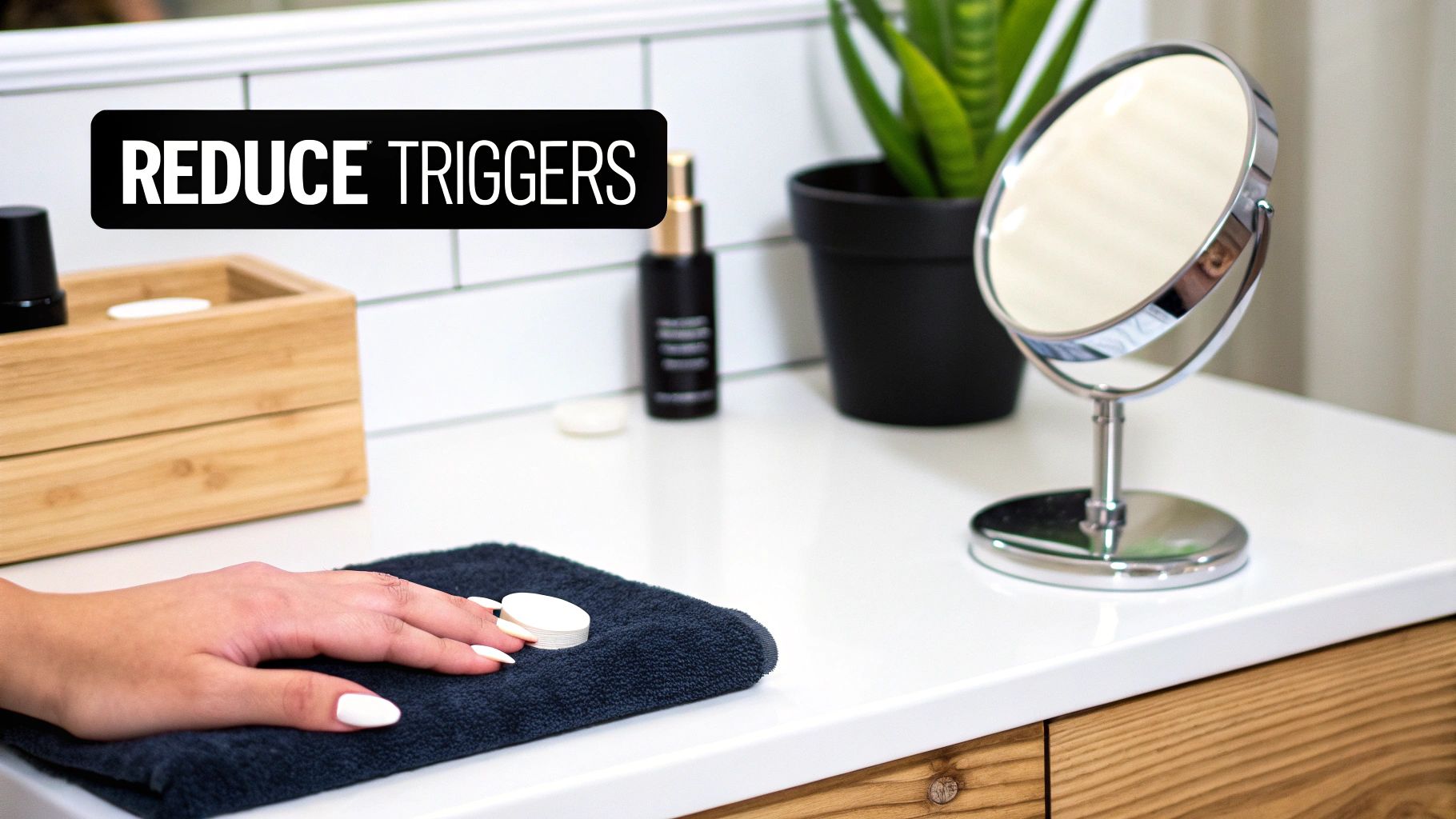
Think about where the habit usually strikes. For most people, it's in front of the bathroom mirror. Harsh, overhead lighting has a way of highlighting every tiny bump and pore, practically begging you to lean in closer. One of the easiest changes you can make is to soften that lighting. Try installing a dimmer switch or swapping out those bright, cool-toned bulbs for ones with a warmer, softer glow. It's a small change, but it makes a huge difference in what you see—and what you don't.
And let's talk about magnifying mirrors. They are a picker's worst nightmare, turning a minor spot into a crater-sized obsession. Honestly? The best thing you can do is toss it. If you're not ready for that, at least move it out of sight. Put it in a drawer or cover it with a towel. The idea is to add a layer of friction between the impulse and the action.
Practical Ways to Tweak Your Space
Creating an anti-picking sanctuary is about making the old habit harder and the new, healthier habits easier. Here are a few things you can try right now:
- Keep Your Nails Short: This one is non-negotiable. Short, filed nails make it physically harder to get a grip and do real damage. It's a simple, powerful deterrent.
- Leave Yourself Reminders: A sticky note on the mirror with a message like, "Hands off, beautiful!" can be surprisingly effective. It’s a little pattern interrupt right when you're most vulnerable.
- Rearrange Your Counter: Move your spot treatments and pimple patches to the front and center. When you feel the urge to pick, the first thing your hand will land on is the solution, not the problem.
The old saying "out of sight, out of mind" is your new mantra. If you can't see the blemish, you're much less likely to obsess over it.
This is where being proactive becomes a form of environmental design.
The moment you feel a new pimple starting to form, jump on it. Don't wait. A swipe of a targeted product like the Neutralyze Exfoliating Pads can start calming inflammation immediately, stopping the spot from becoming a major temptation.
Then, cover it up. A hydrocolloid patch is a game-changer. It creates a physical shield, completely hiding the pimple from view while it delivers healing ingredients. You've now removed the visual trigger, breaking the habit loop before it can even get started. This isn't just skincare; it's a strategy.
When Skin Picking Is More Than a Habit
Let's be honest, almost everyone has picked at a pimple. But sometimes, that urge goes beyond a simple bad habit. It can become a compulsive, overwhelming need to pick, a condition known as dermatillomania, or excoriation disorder. Knowing the difference and recognizing when it's time to get professional support is a critical part of healing. There's no shame in it—it's about empowering yourself to get the help you deserve.
It’s one thing to occasionally pop a whitehead before a big event. It’s another thing entirely when the behavior feels completely out of your control and starts to genuinely disrupt your life. Figuring out where you land on that spectrum is the first step toward getting the right kind of help for both your skin and your mind.
Signs It May Be Time to Seek Help
If you're wondering whether your picking has crossed from a common habit into something more, see if any of these situations sound familiar. Recognizing yourself in these descriptions isn't a sign of failure; it’s a sign of self-awareness.
- You can't stop, even when you want to: You’ve tried everything to stop, you genuinely want to, but you find yourself right back in front of the mirror, picking.
- You spend hours doing it: The picking sessions consume huge chunks of your day, sometimes for hours at a time, often without you even noticing how much time has passed.
- You're avoiding your life: You cancel plans, avoid seeing friends, or dread social events because you feel ashamed or embarrassed about the damage to your skin.
- It's causing real emotional distress: The cycle of picking and regret leaves you feeling deeply anxious, guilty, or even depressed.
The key distinction is the loss of control and the significant distress it causes. When picking starts to dictate your life, it's a clear signal that professional guidance can provide the support you need.
If any of that rings true, please know you are not alone. When skin picking feels unmanageable, professional help like Cognitive Behavioral Therapy (CBT) can offer specific, targeted strategies to help you break the cycle.
A dermatologist can also be an incredible ally, offering treatments to heal your skin and ruling out any underlying conditions that might be fueling the urge to pick. On the mental health side, a therapist who specializes in Body-Focused Repetitive Behaviors (BFRBs) has the tools to address the compulsive side of things. It's a powerful combination. Taking that step to reach out for help is a brave move toward regaining control over your skin and your life.
Common Questions About Kicking the Skin Picking Habit
When you’re trying to stop picking at pimples, you're bound to have questions. It’s a tough habit to break, and it helps to have clear answers. Here’s a look at some of the most common concerns I hear.
Can My Skin Actually Heal After Years of Picking?
Absolutely. The skin is an incredible organ with a powerful ability to repair itself once you stop the cycle of picking and irritation.
Now, it’s true that deep or long-term picking can leave behind textural scars or stubborn dark marks (hyperpigmentation). But even then, you can see a massive improvement. The very first—and most important—step is to let your skin start its natural healing process without interference.
A solid skincare routine is your best friend here. It can seriously speed up recovery. For instance, an ingredient like Mandelic Acid, a cornerstone of the Neutralyze system, is an exceptional solution for this. As a gentle AHA, it promotes cell turnover without harsh irritation, effectively helping to fade dark spots and even out your skin's texture over time. This targeted approach is key to restoring your skin's clarity.
For more significant scarring, a dermatologist might suggest treatments like laser therapy or microneedling. But even those work best when your skin isn't being picked at anymore. It all comes back to breaking the habit first.
How Do I Know if This is Dermatillomania?
Lots of people pick a pimple here and there. But how do you know if it's crossed the line from a bad habit into something more, like dermatillomania (also known as excoriation disorder)?
Ask yourself these questions:
- Does the urge to pick feel completely uncontrollable, even when you're trying your hardest to stop?
- Do you feel a wave of emotional distress—like shame, anxiety, or intense guilt—afterward?
- Have you ever lost track of time, spending hours picking without realizing it?
- Do you find yourself avoiding social events or trying to hide your skin because of the marks?
If you found yourself nodding "yes" to any of these, it's a good indicator that professional support could make a real difference. A doctor or a therapist who specializes in Body-Focused Repetitive Behaviors (BFRBs) can offer guidance and treatment.
The Bottom Line: The main difference between a simple bad habit and a clinical disorder is the loss of control and the emotional toll it takes on your life.
But What if I Just Want to Smooth Out a Bump?
I get it. That feeling of a raised bump on your skin can be a powerful trigger. The desire to "fix it" or make it smooth is completely normal. The key is to channel that impulse into something that actually helps.
Your new go-to move? A hydrocolloid patch.
The next time you feel that urge, grab a patch and place it right over the pimple. It satisfies that need to do something tactile, but instead of causing damage, you’re creating a clean, protected seal over the spot. It's a win-win: the patch acts as a shield, keeping your fingers away, while also creating the perfect moist environment to help the blemish heal and flatten out much faster than picking ever could.
Ready to build a skincare routine that not only helps heal but also reduces the temptation to pick in the first place? The science-backed formulas from Neutralyze are specifically designed to calm inflammation and clear out pores, leaving you with fewer blemishes to worry about.
Explore the complete Neutralyze system and start your journey to clearer skin today!


