

Proactiv Alternative: Science-Backed Acne Solutions
You started using Proactiv when your skin was younger, watched the first wave of breakouts settle, and assumed the routine had finally solved the problem. Now the mirror tells a different story: painful bumps along the jaw, clogged pores across the forehead, and a T-zone that feels tight and flaky even though it still looks oily.
That pattern is common when a routine helps inflammatory blemishes at first but becomes too irritating for consistent use. A Proactiv alternative shouldn't just replace one harsh product with another. It should match the biology of your acne, including sebum, follicular hyperkeratinization, inflammation, clogged pores, and post-acne marks, while respecting your skin barrier.
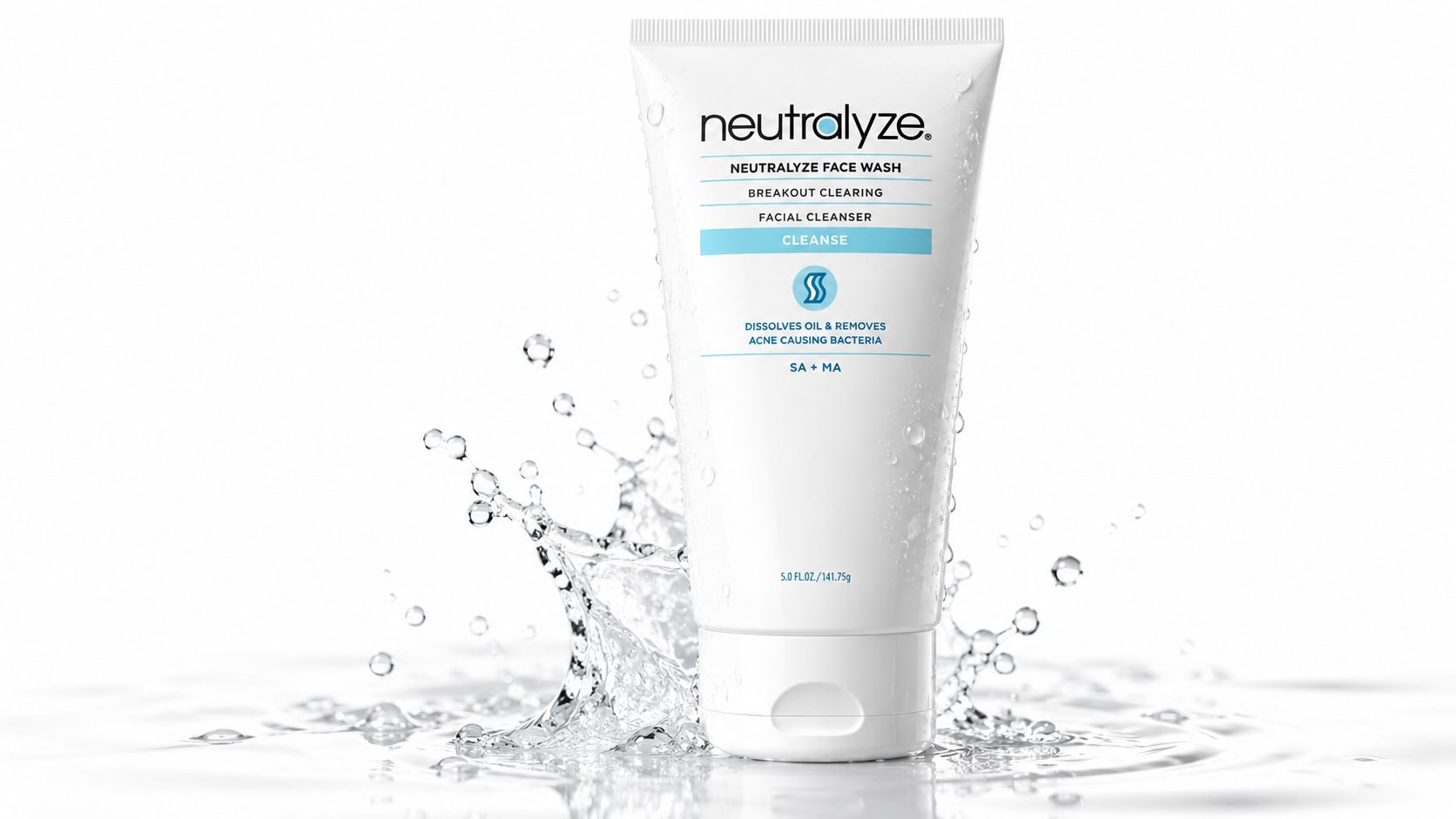
My recommendation is direct. If benzoyl peroxide has stopped agreeing with your skin, start with a clinically formulated salicylic acid and mandelic acid system. Neutralyze's Face Wash 2.0 provides a cleanser-based entry point with 2% salicylic acid and 1% mandelic acid, while the rest of the routine can be adjusted according to your acne pattern and tolerance.
Acne is far too persistent and widespread to treat with one universal routine. A global epidemiology review estimated that acne affected 9.4% of the world's population, and newer burden-of-disease research found that cases among people aged 10 to 24 rose from 132.4 million in 1990 to 184.3 million in 2021, a 39.2% increase (global acne epidemiology review). You need a decision, not another celebrity-led product swap.
The Proactiv Routine That's Not Working Anymore
The first clue is often the morning cleanse. Your face feels clean, but not comfortable. You notice new cystic-looking bumps near the jawline, flakes around the nose, and a layer of tightness that makes moisturizer feel less like skincare and more like damage control.
You may have started with Proactiv as a teenager and had a very positive experience. Benzoyl peroxide can reduce acne-associated bacteria and help calm some inflammatory papules and pustules. Early improvement can make the entire three-step routine feel essential, even after the response plateaus.
The problem begins when your skin no longer tolerates the same exposure. Repeated irritation can produce redness, peeling, and discomfort, which makes it harder to use the routine consistently. Some people then apply more product to compensate, creating a cycle of stripping, dryness, inflammation, and renewed breakouts.
The pattern matters more than the brand
Look closely at what you're treating:
- Blackheads and whiteheads point toward follicular congestion and excess keratin inside the pore.
- Red papules and pustules involve inflammation and microbial activity around the follicle.
- Deep jawline lesions may reflect a hormonal pattern that an over-the-counter cleanser can't fully address.
- Brown or red marks are post-acne changes, not active pimples, and require a different strategy.
- Tight, burning, flaky skin signals that tolerability has become part of the acne problem.
A different benzoyl peroxide product isn't automatically a better answer. If your skin reacts to the active, fragrance, or cumulative exfoliation around it, changing the packaging won't solve the underlying issue.
My practical rule: A routine only works if you can use it consistently without turning every wash into a barrier repair project.
The better approach is to choose the mechanism first. Salicylic acid targets oil-soluble congestion inside the follicle. Mandelic acid provides surface exfoliation with slower penetration than smaller alpha-hydroxy acids. Together, they give you a BHA plus AHA framework that can address clogged pores, uneven texture, and some inflammatory activity without requiring chronic benzoyl peroxide exposure.
This isn't a promise that acids replace every prescription. Moderate-to-severe acne, scarring, and deep nodules deserve medical assessment. It is a recommendation to stop assuming the same three steps must suit every face.
What Proactiv Actually Does to Your Skin
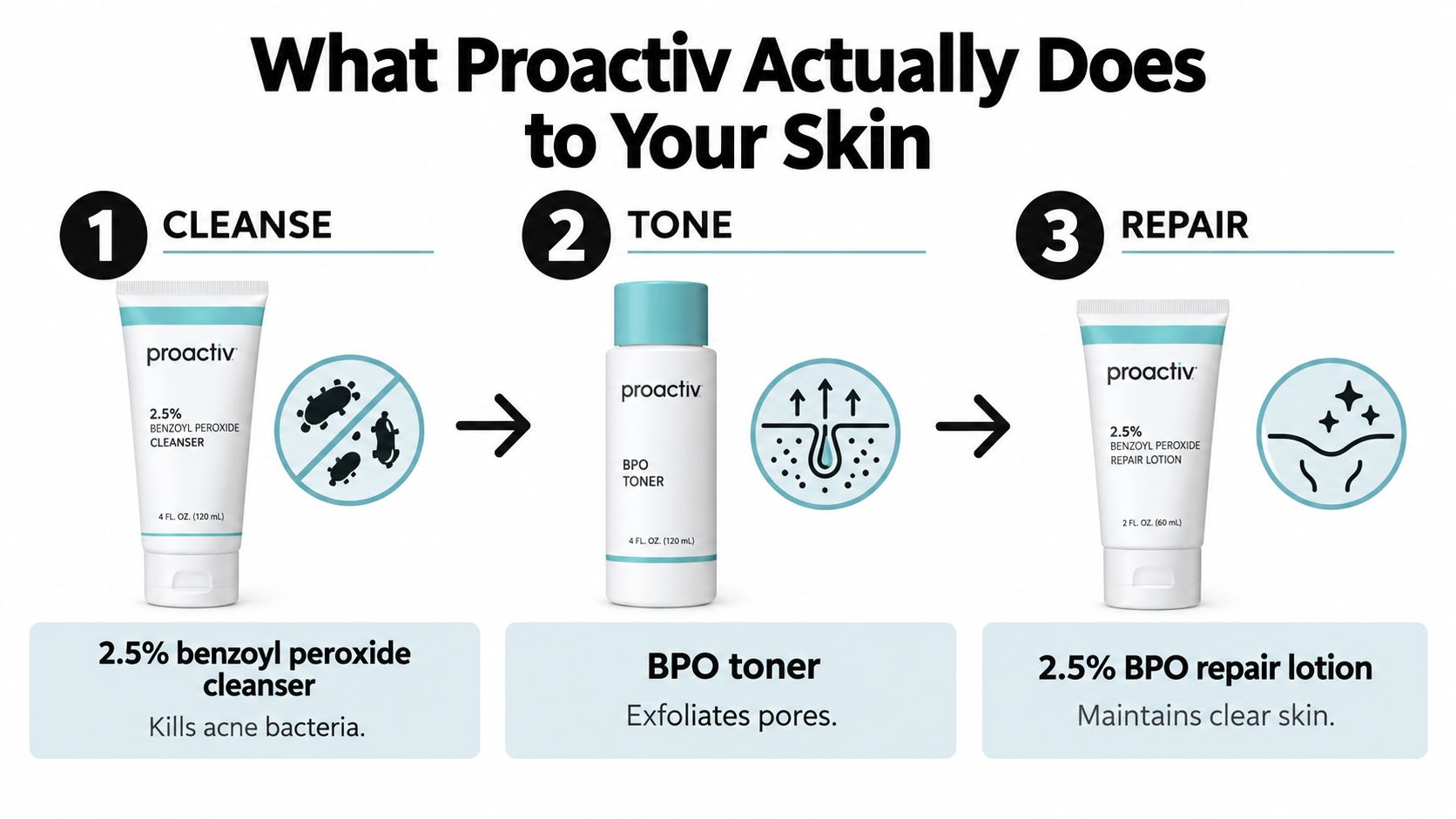
The original Proactiv Solution architecture is built around three functions: a 2.5% benzoyl peroxide cleanser, a toner that supports exfoliation, and a 2.5% benzoyl peroxide repair lotion. The cleanser is rinsed away, while the leave-on lotion keeps benzoyl peroxide in contact with the skin for longer.
Benzoyl peroxide works by releasing reactive oxygen that damages acne-associated bacteria, including Cutibacterium acnes. It can also help reduce the conditions that support microcomedone formation. That mechanism explains why it can be useful for red, inflamed lesions, especially when the primary issue is papules and pustules rather than only blackheads.
A useful overview of how skincare products are structured, including cleansers, toners, and treatment products, is available in this ProMD Health Bel Air skincare guide. The important point isn't whether a three-step routine looks organized. It's whether each step adds a useful function without creating more irritation than your skin can handle.
Where the system can fall short
Benzoyl peroxide doesn't directly solve every acne mechanism. It isn't a pore-clearing BHA, so it may leave closed comedones, blackheads, and rough texture insufficiently addressed. It also isn't a dedicated treatment for post-acne hyperpigmentation or persistent red marks.
The second issue is cumulative exposure. A cleanser, toner, and leave-on treatment can create a high overall irritation load, particularly when the user applies the routine twice daily. Barrier disruption may show up as:
- Tightness and peeling, especially around the nose and mouth.
- Redness and stinging, which can make other products uncomfortable.
- Over-cleaning, where the skin feels stripped but still produces visible oil.
- Reduced adherence, because the routine becomes unpleasant to use.
- More visible marks, when inflammation lingers after blemishes flatten.
That doesn't make benzoyl peroxide a bad ingredient. It makes it a poor universal answer. People with eczema-prone, rosacea-prone, reactive, or easily dehydrated skin often need a more measured plan. People with predominantly comedonal acne need pore-focused exfoliation. People with hormonal or cystic acne may need a dermatologist rather than another over-the-counter rotation.
The right Proactiv alternative therefore depends on what remains after you remove the brand name. If the dominant issue is bacteria-driven inflammation and you tolerate benzoyl peroxide, it may still have a role. If the dominant issue is congestion plus irritation, a salicylic and mandelic acid system is the more logical starting point.
How Salicylic Acid and Mandelic Acid Fight Acne
Salicylic acid is a beta-hydroxy acid, or BHA. Because it is oil-soluble, it can work within the oily environment of the follicle, where sebum and compacted keratin contribute to blackheads, whiteheads, and microcomedones. It also has anti-inflammatory properties, which makes it more useful than a simple surface scrub.
Self-medication products commonly use salicylic acid at 0.5% to 2%, in formats including cleansers, pads, gels, lotions, soaps, and solutions (salicylic acid monograph). A clinical study involving a 2% salicylic acid cleanser found a significant reduction in comedones after 2 weeks in 30 patients (clinical comparison of salicylic acid and benzoyl peroxide). That makes salicylic acid particularly compelling when your main complaint is congestion rather than only inflamed pimples.
Mandelic acid is an alpha-hydroxy acid derived from bitter almond. Its larger molecular structure slows penetration compared with smaller AHAs, which can make it a more comfortable choice for people who struggle with aggressive exfoliation. It works mainly at the skin surface, helping loosen accumulated cells and improve rough, uneven texture. It also has antimicrobial and anti-inflammatory relevance in acne care.
Research directly comparing the two acids supports a serious role for mandelic acid rather than treating it as a trendy add-on. In controlled studies, mandelic acid was at least as effective as salicylic acid for mild-to-moderate acne, with better tolerability in the reported mandelic acid groups (randomized comparison of mandelic and salicylic acid).
Salicylic versus mandelic acid at a glance
| Property | Salicylic Acid | Mandelic Acid |
|---|---|---|
| Acid family | Beta-hydroxy acid | Alpha-hydroxy acid |
| Main location of action | Oil-rich follicle and pore | Skin surface and follicular opening |
| Best match | Blackheads, whiteheads, oily congestion | Uneven texture, sensitivity, post-acne marks |
| Acne role | Comedolytic and anti-inflammatory | Exfoliating, antimicrobial, and texture-supporting |
| Typical self-care format | Cleanser, pad, gel, lotion, or solution | Leave-on exfoliant, peel, cleanser, or combination system |
| Tolerance profile | Can feel drying when overused | Often slower and gentler in penetration |
| Combination value | Helps clear pore contents | Helps refine surface buildup and uneven tone |
A combined system makes sense because acne rarely has one mechanism. Salicylic acid addresses the sebum and keratin plug. Mandelic acid addresses surface buildup and the uneven appearance left after inflammation. It won't erase active cysts overnight, and it shouldn't be described as a cure, but it gives you a broader mechanism-led routine than a single drying antibacterial step.
For a practical explanation of applying BHA products without overdoing them, see this guide on how to use salicylic acid for acne. Neutralyze Acne Face Wash, a cleanser containing 2% salicylic acid and 1% mandelic acid, is one example of this combined cleanser format.
The evidence is strongest when expectations remain realistic. A multicenter study of 500 people with mild-to-moderate facial acne found that 2% supramolecular salicylic acid hydrogel achieved a 51.01% regression or marked-improvement rate at 12 weeks, compared with 43.10% for adapalene gel, with no statistically significant difference between the groups (salicylic acid hydrogel study). That supports salicylic acid as a credible topical option, not as a prescription replacement for every case.
Proactiv vs the Best Proactiv Alternatives Compared
The best Proactiv alternative depends on what you want to improve and what your skin refuses to tolerate. A salicylic acid cleanser is a sensible first move for congestion. A mandelic acid treatment may suit a person who wants gentler surface exfoliation. A combined BHA and AHA system gives broader coverage. A dermatologist-led retinoid routine remains more appropriate for persistent, severe, or scarring acne.
| System | Active Ingredients | Irritation Risk | Best For | Time to Results | Approx. Monthly Cost |
|---|---|---|---|---|---|
| Proactiv Solution | Benzoyl peroxide, exfoliating toner components | Moderate to high for reactive skin | Inflamed papules and pustules | Often faster for some inflammatory lesions | Varies by plan and purchase format |
| Salicylic acid cleanser | Salicylic acid | Low to moderate, depending on frequency | Blackheads, whiteheads, oily congestion | Gradual improvement with consistent use | Varies by product |
| Mandelic acid treatment | Mandelic acid | Usually moderate, often gentler than stronger acid routines | Texture, mild acne, post-acne discoloration | Gradual, with tolerance guiding frequency | Varies by product |
| BHA and AHA combination system | Salicylic acid and mandelic acid | Moderate, adjustable by product frequency | Mixed acne patterns and BPO intolerance | Gradual improvement across congestion and texture | Varies by product |
| Dermatologist-led retinoid routine | Prescription retinoid selected by a clinician | Moderate to high during adjustment for some users | Persistent comedonal, inflammatory, or hormonal patterns | Requires consistent medical guidance | Varies by clinician, prescription, and coverage |
The cost column stays qualitative because subscription terms and product prices change. Don't choose based on a claimed monthly figure that may no longer apply. Choose based on whether you'll use the system and whether the formula matches your primary lesion type.
Four useful self-sorting questions
Choose a salicylic acid cleanser if your forehead and chin are dominated by blackheads, whiteheads, and rough pores. Choose mandelic acid if your skin reacts quickly to stronger exfoliation and your main concern includes texture or lingering marks.
Choose a combined BHA and AHA system if you have mixed congestion, inflamed blemishes, uneven texture, and a clear reason to avoid benzoyl peroxide. Neutralyze Exfoliating Pads are a leave-on pad format built around salicylic acid and mandelic acid, so they fit the exfoliation step rather than replacing the cleanser.
Choose dermatologist-led care when lesions are deep, painful, scarring, or associated with a strong hormonal pattern. A nonprescription option can be useful, but it shouldn't delay treatment that requires a clinician.
If you're comparing exfoliating tools, don't confuse chemical exfoliation with abrasion. This guide to microdermabrasion versus home scrubs explains why physical friction and acid-based exfoliation create different demands on the skin.
For a broader look at nonprescription options when adapalene isn't suitable, read this guide to OTC adapalene alternatives. The decision should still come back to your acne pattern and tolerance, not the strongest label on the shelf.
Matching the Right Alternative to Your Acne Type
Acne type decides the product. A routine that clears forehead congestion can miss cyclical jawline breakouts, and a harsh leave-on acid can make reactive skin worse.
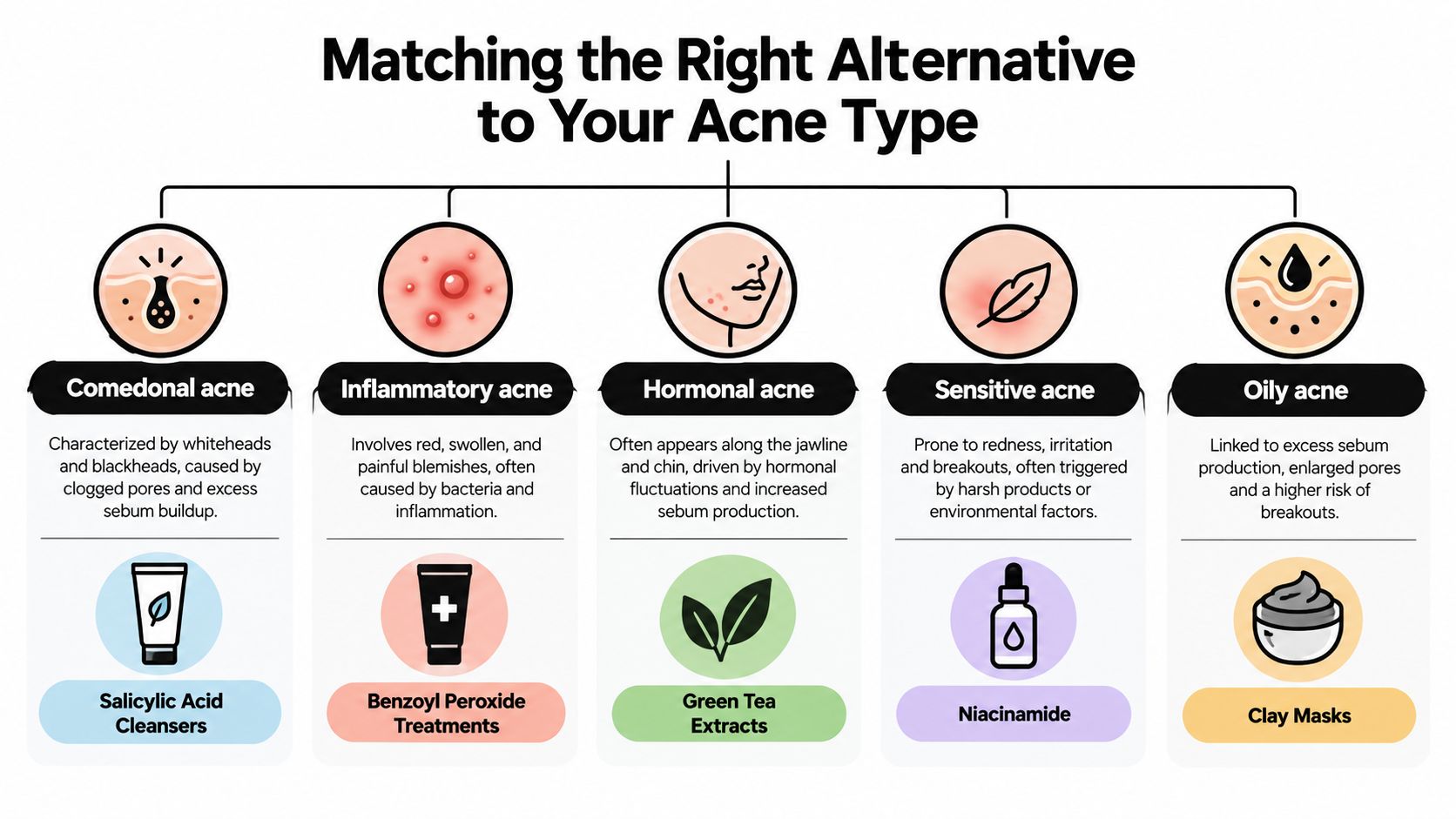
Comedonal acne
Closed comedones, blackheads, and small flesh-colored bumps on the forehead and chin respond best to pore-focused care. Start with a salicylic acid cleanser, then add mandelic acid leave-on exfoliation only if your skin stays calm.
Your situation: makeup settles into bumps, but you do not have many tender red lesions. Focus on unclogging follicles instead of drying the skin out.
Inflammatory acne
Red papules and pustules around the cheeks and jaw involve inflammation as well as follicular blockage. A careful salicylic acid and mandelic acid combination can help with pore buildup and surface roughness, but widespread or painful inflammation needs more than a cosmetic routine.
Your situation: you keep getting red bumps, not just blackheads. Start conservatively, watch for irritation, and get medical advice if lesions turn deep or start to scar.
Hormonal-pattern acne
Cyclical jawline breakouts often call for a broader evaluation. Acids can help keep the follicle clear, but they do not address hormonal drivers. A dermatologist may discuss prescription retinoids, hormonal treatment, or other options based on your medical history.
For a practical way to judge recurring jawline patterns, see how to tell if acne is hormonal.
Your situation: breakouts return on a predictable cycle, especially on the lower face. Use topical care for surface control, but do not expect a cleanser to fix the underlying pattern.
Sensitive or reactive skin
If your skin burns, flushes easily, or has an eczema history, choose the lowest-irritation path. Mandelic acid is a better starting point than a high-frequency BHA routine, and one leave-on product at a time is the right way to introduce it.
Your situation: nearly every acne product causes tightness or stinging. Use it less often, support comfort with a bland moisturizer, and stop any product that causes persistent burning.
Post-acne marks
Red marks and brown marks are not active acne. First control new inflammation, then use gentle exfoliation and daily broad-spectrum sunscreen to reduce the chance that marks stay visible. Do not try to treat pigmentation by repeatedly scrubbing or stacking multiple acids.
Your situation: the pimples are improving, but discoloration remains. Keep the acne routine steady and separate mark management from active lesion treatment.
Adult acne often lingers because follicles keep clogging and inflammation keeps returning, even after the teen years. That is why recurring lesions and lingering marks deserve a grown-up plan, especially when they affect daily confidence.
A Science-Backed Routine to Replace Proactiv
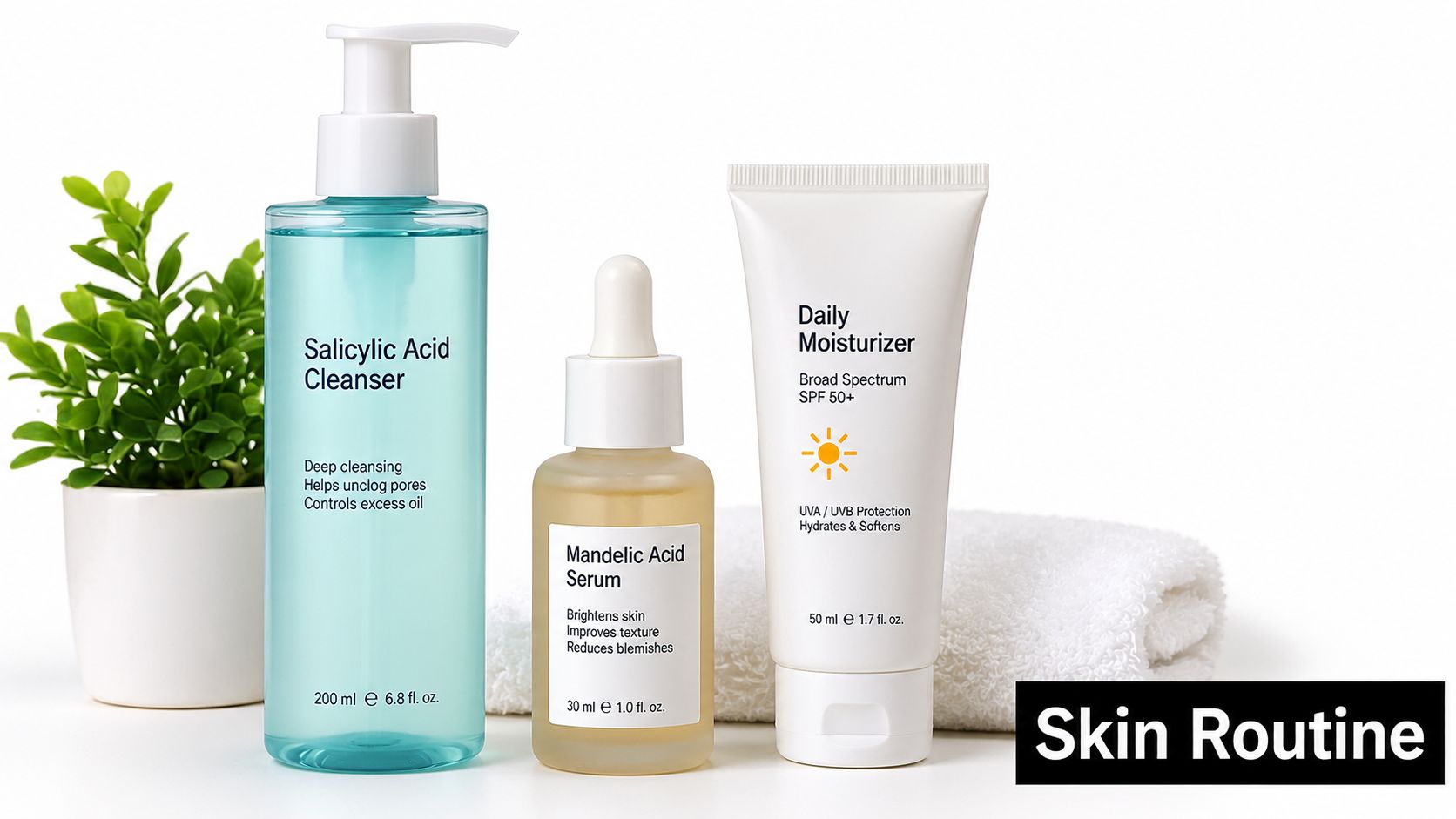
Keep the routine simple enough to follow and flexible enough to protect your barrier. The basic order is cleanse, treat, moisturize, then sunscreen in the morning. At night, cleanse, apply the selected acid treatment, and moisturize.
Morning
- Cleanse gently. Use a salicylic and mandelic acid cleanser, such as Neutralyze Face Wash 2.0, with lukewarm water. Massage briefly, rinse thoroughly, and pat dry.
- Treat selectively. If your skin is already comfortable, apply a mandelic acid leave-on treatment to areas with congestion or uneven texture. Don't apply it automatically to every sensitive area.
- Moisturize. Use a non-comedogenic moisturizer to reduce tightness and support daily comfort.
- Protect. Finish with broad-spectrum sunscreen. Acid use and sun exposure are a poor combination when your goal is to reduce visible post-acne marks.
This dermatologist-recommended acne skincare guide is useful if you need a wider review of cleansing, moisturizing, and sun protection basics.
Evening
Use the same cleanser. Add a leave-on BHA and AHA product only as often as your skin can tolerate. A pad format can be practical for targeted exfoliation, but it should not become an excuse to rub harder or apply more frequently.
If you're new to acids, begin with cleanser-only use while you observe comfort. Add leave-on exfoliation after your skin feels stable, then increase cautiously. The correct frequency is the highest frequency that doesn't produce persistent burning, tightness, or peeling.
A clinical review of salicylic acid and mandelic acid peels found a mean acne improvement of 39.70%, with a wide 95% credible interval of 12.54% to 66.78%, showing both meaningful potential and variation between regimens (systematic review of topical acne peels). That variation is why a routine should be adjusted to your response rather than copied rigidly.
Two mistakes cause most avoidable setbacks. First, don't layer a new acid system over leftover benzoyl peroxide without a clear plan, because the combined irritation load may be too high. Second, don't skip sunscreen while trying to improve post-acne marks. A gentler acid routine can still leave you uncomfortable if you treat frequency as a competition.
Honest Trade-Offs and When to See a Dermatologist
A BPO-free routine isn't automatically perfect, and it isn't a substitute for medical care in every case. Salicylic and mandelic acid systems can be more comfortable for some people, but they still exfoliate. Overuse can produce dryness, stinging, and peeling.
Four trade-offs to accept
Results take patience. Acid-based routines generally build improvement gradually. You may notice smoother texture before you see a major reduction in recurring inflammatory lesions. Don't abandon a tolerable routine after a few applications, but don't continue indefinitely without progress either.
Purging isn't a free pass. A temporary increase in small clogged lesions can occur when cell turnover changes, but persistent painful inflammation, spreading redness, or irritation is not something to push through. Stop and reassess if the skin is becoming more inflamed.
Dryness can still happen. Mandelic acid may be gentler for some users, but tolerance varies. Reduce frequency, moisturize consistently, and avoid stacking scrubs, strong cleansers, and multiple leave-on acids.
Cost is individual. A subscription routine may create ongoing commitments, while a one-time product purchase may seem easier to control. Compare the actual products, replacement schedule, and your willingness to stay consistent rather than choosing based on a promotional headline.
A useful boundary: If your routine hurts every day, it isn't succeeding, even if the ingredient list looks impressive.
Book a dermatologist appointment if you have nodules or cysts deeper than 5 mm, acne covering more than 20% of the face, visible scarring, significant emotional distress, or no improvement after 12 weeks of consistent use. Those thresholds are practical escalation points, not a diagnosis.
A dermatologist can evaluate whether you need a prescription retinoid, a hormonal workup, isotretinoin candidacy, or in-office extraction. Those options address problems that an OTC cleanser cannot fully manage. If scarring has started, waiting through more product experiments can make the situation harder, not easier.
The best Proactiv alternative for severe acne may therefore be a carefully selected topical system used while you arrange professional care. Don't interpret a BPO-free choice as a reason to delay treatment when lesions are deep, painful, or persistent.
Your Decision Framework and Next Steps
Start with the lesion pattern, not the brand name. If blackheads and whiteheads are the main problem, use a salicylic acid cleanser first, then add mandelic acid leave-on exfoliation only if your skin stays calm. If texture and post-acne marks are what bother you most, put the focus on a measured mandelic acid step and keep active breakouts under control with a simple routine.
If benzoyl peroxide leaves your skin tight, red, flaky, or constantly irritated, stop treating dryness as proof that the treatment is working. A salicylic and mandelic acid system gives you two useful angles on acne care, one for pore congestion and one for surface buildup and uneven texture.
A simple decision tree
- Mostly clogged pores: Start with the Neutralyze Face Wash 2.0.
- Congestion plus uneven texture: Add the Neutralyze Exfoliating Pads slowly as a leave-on exfoliation step.
- Breakouts plus dryness or visible marks: Use the Neutralyze Renewal Complex as the acne moisturizer step, and watch your skin closely for irritation.
- Recurring cysts, scarring, or no meaningful progress: Keep the routine simple and book a dermatologist appointment instead of stacking on more products.
Give any new routine a consistent trial period of 12 weeks, unless irritation forces you to stop sooner. Take photos every two weeks in the same lighting. That makes changes easier to judge. You can see whether new breakouts are slowing, whether marks are fading, and whether your barrier looks less stressed.
Do not chase every pimple with another active. Cleanse, exfoliate only as tolerated, moisturize, and protect your skin from the sun. The goal is calmer follicles and less inflammation, while keeping the routine comfortable enough that you will stick with it.
For moderate-to-severe, persistent, or mark-prone acne, my view is simple. Choose a BPO-free salicylic and mandelic acid system when benzoyl peroxide no longer agrees with your skin, and see a dermatologist when lesions are deep or scarring starts. Start documenting now, not after another month of guesswork.


