

Post Inflammatory Hyperpigmentation Acne: The Complete Guide
You finally get the breakouts under control, then the mirror shows the holdout, dark spots that stay long after the pimple has flattened. That shift can feel unfair, because the acne seems “gone” but your skin still looks marked. Post inflammatory hyperpigmentation acne is that stubborn aftereffect, and it needs a different strategy than the one that calmed the original bump.
The important part is this, those marks are not dirt, and they're not a sign that you failed at cleansing. They're a pigment response that starts inside the skin after inflammation, which is why a routine built only around surface washing often falls short. A clinically formulated system like Neutralyze Face Wash 2.0 can fit into the broader job of controlling acne triggers while you work on the marks themselves.
Understanding Post Inflammatory Hyperpigmentation From Acne
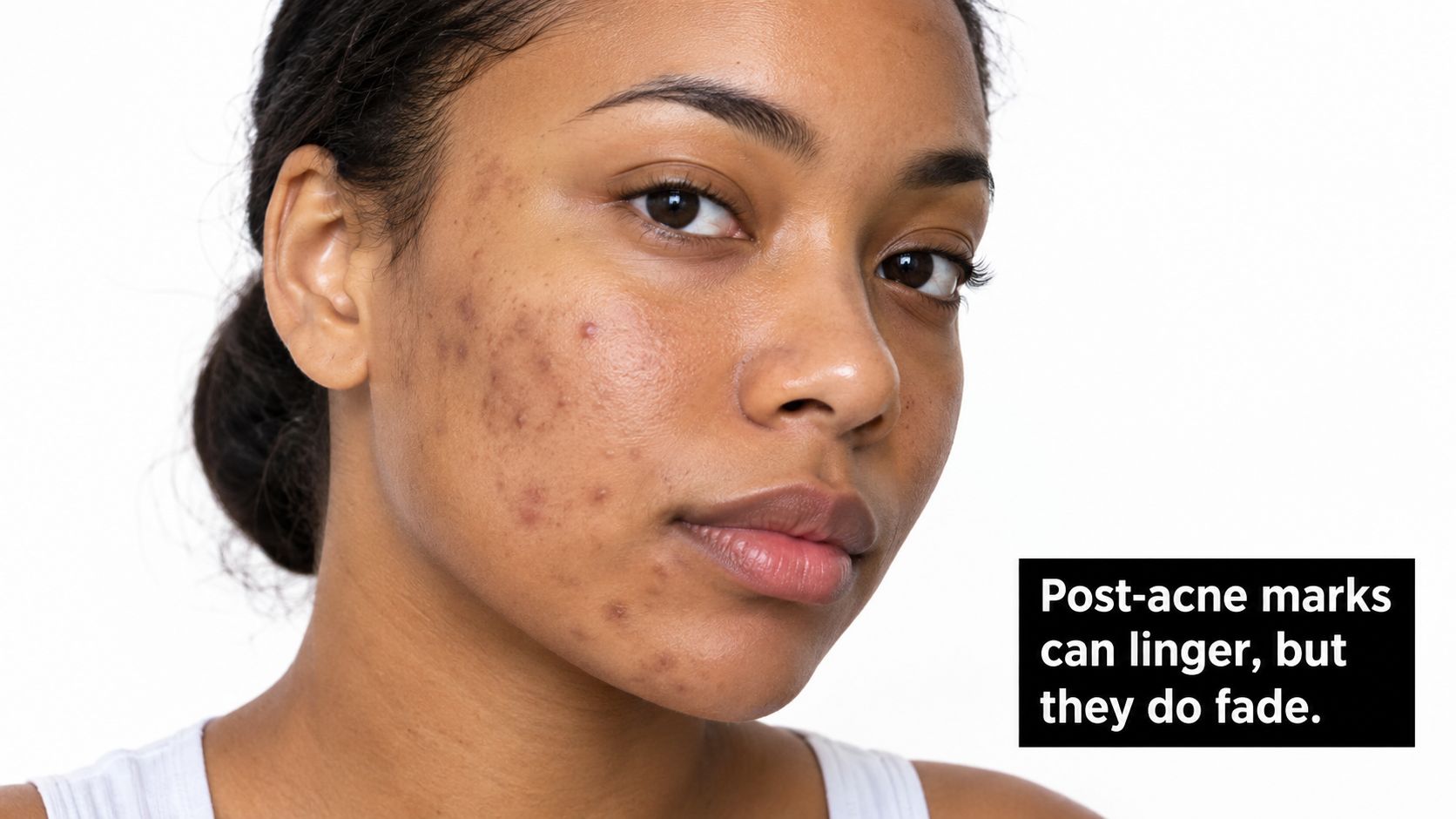
A pimple can flatten overnight while the color it leaves behind remains visible for much longer. You may see a brown, red-brown, or gray-blue patch where the swelling and tenderness used to be. That timing makes post inflammatory hyperpigmentation acne easy to mistake for continuing acne, although the skin is now dealing with a pigment disorder after inflammation.
Why the mark appears after the pimple settles
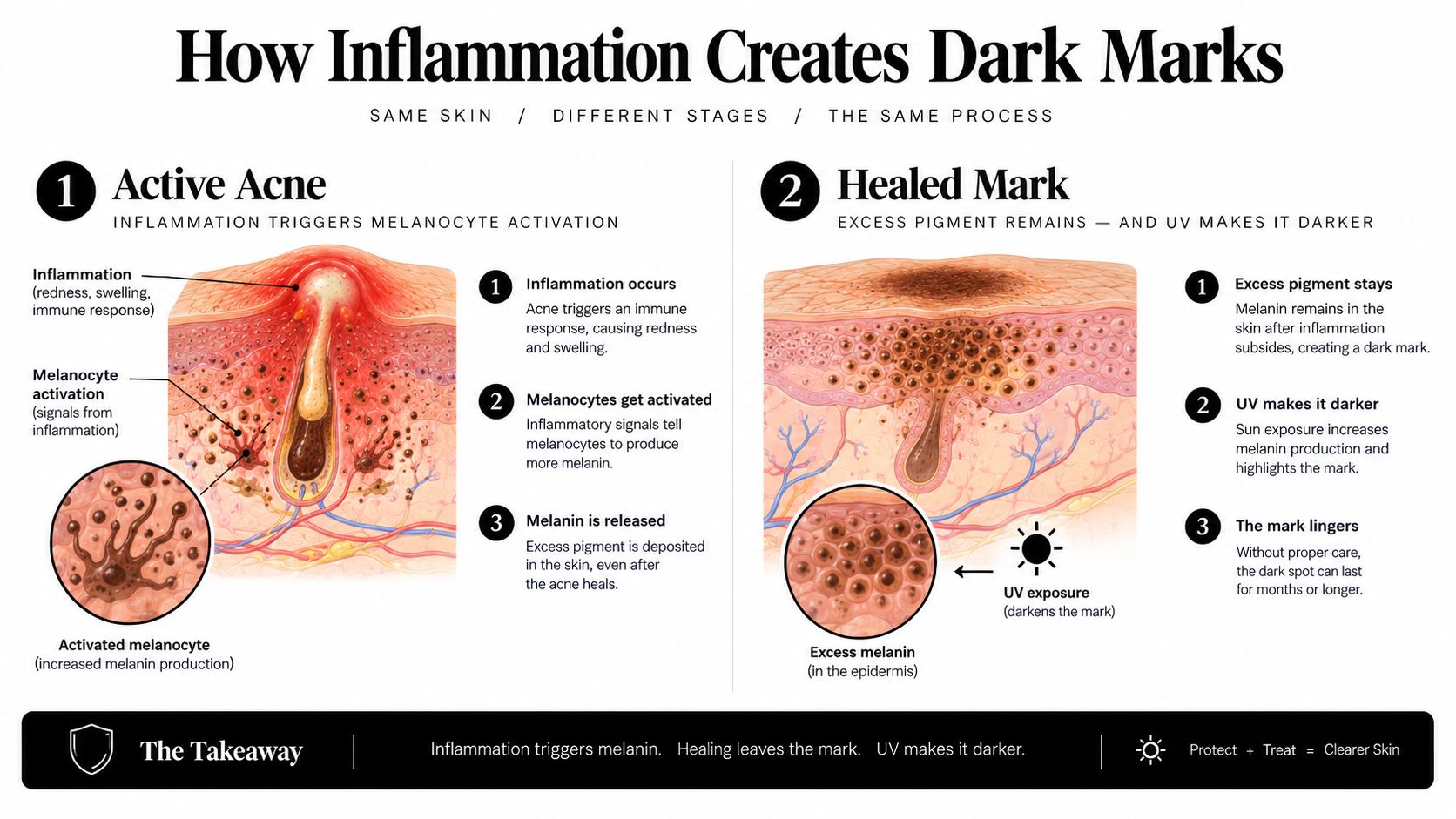
Inflammation can stimulate pigment cells to produce extra melanin. Melanin normally gives skin its color, but after acne it can be deposited or retained unevenly around the healed lesion. The mark is therefore part of the skin's biological response, not just a surface problem that more cleansing can remove.
PIH occurs across skin tones, with greater reported frequency in darker skin. In a large comparative study, AI-PIH was reported in approximately 65% of African American participants, 48% of Hispanic participants, and 25% of Caucasian participants (PMC).
Why the color outlasts the acne
Acne often changes over days or weeks. Pigment follows a slower timetable because pigmented cells must be shed or cleared from the skin. A flat mark can therefore remain after the follicle has stopped hurting, swelling, or producing a new lesion. This difference is the reason acne treatment and PIH treatment require related, yet separate, decisions.
The pattern becomes easier to understand through this overview of causes and types of pigmentation. It explains why similar-looking spots can respond at different speeds.
Sun exposure can deepen leftover pigment and keep it visible for longer (PMC). Sunscreen has to be used consistently to reduce that interference. Applying it only during bright, outdoor days creates a practical adherence gap, even when the chosen treatment is appropriate.
Practical rule: if the bump is gone and the remaining color is flat, treat pigment first rather than adding more acne-drying products.
A lingering mark can affect confidence because it remains noticeable at ordinary conversational distance. Managing PIH means reducing new inflammation, protecting the skin from ultraviolet exposure, and allowing pigment turnover enough time to work.
How Inflammation Creates Dark Marks And Spot Color Differences
A pimple may begin as a small clogged follicle, yet the mark it leaves can reflect a much larger biological response. Bacteria, trapped oil, and irritation activate inflammation around the follicle. Nearby melanocytes, the cells that produce skin pigment, respond by making and releasing more melanin. The pigment is normal. Its timing and location are the problem.
Epidermal marks fade differently from dermal marks
Pigment depth helps explain why one dark mark fades sooner than another. Epidermal melanin sits closer to the surface, often creating a brown or dark-brown appearance. As surface skin cells are shed, that pigment can gradually become less visible. Dermal melanin lies deeper and may look gray-blue or slate-like. Pigment-containing cells remain below the epidermis for longer, so these marks often persist (EuropePMC).
| Feature | Epidermal PIH | Dermal PIH |
|---|---|---|
| Color | Brown to dark brown | Gray-blue or slate-like |
| Where pigment sits | More superficial | Deeper in the skin |
| Why it happens | Surface-level melanin increase after inflammation | Deeper pigment retention after inflammation |
| Persistence | Often improves with time and consistent care | Often lingers longer |
| Treatment response | Usually more responsive to topical routines | Often needs more patience, and sometimes professional care |
This depth difference creates different treatment timelines, even when the original acne looked similar. A mark may appear lighter at one point and more noticeable later if sunlight or renewed irritation stimulates its color. It is not just a stain sitting passively on the skin. Pigment is being retained, moved, and gradually cleared.
Why skin tone changes the risk and the appearance
Acne-associated PIH occurs especially often in skin of color and in Fitzpatrick phototypes III to VI (PMC). Lighter skin can also develop PIH. The difference is that skin with more active pigment production may show a stronger color response after the same inflammatory event. Preventing new inflamed lesions therefore protects against another round of pigment formation.
A 2024 systematic review of 48 studies involving 1,356 individuals with skin of colour found that 89% of cases followed inflammatory conditions, 83% were on the face, and acne accounted for 97% of the inflammatory-condition cases (PMC). The pattern gives PIH a clear clinical identity. Inflammation starts the process, while pigment makes the aftermath visible.
Bottom line: less inflammation today means fewer dark marks to manage later.
A routine that repeatedly stings, peels, or leaves the skin tight can prolong this cycle. Gentle consistency is more useful than aggressive product stacking, particularly when acne and pigment need attention at the same time. Learning more about reducing acne inflammation at the source can help clarify that connection.
A product such as Neutralyze Renewal Complex reflects this mechanism-based approach. It combines salicylic acid and mandelic acid in a moisturizer format, offering acne care in a single routine step. Consistent use, along with protection from ultraviolet exposure, gives pigment turnover time to work.
Telling Dark Marks Apart From Actual Acne Scars
The fastest way to waste time is to treat every leftover spot like it's the same thing. A flat brown mark, an indented scar, and a raised scar are different problems, even if they show up after the same breakout. If you can tell them apart with your eyes and fingertips, you'll choose better treatments and stop overcorrecting.
What PIH looks and feels like
Post inflammatory hyperpigmentation is usually flat. You can run your finger across it and not feel a dip or bump. The skin texture often feels normal, even if the color stands out sharply in certain lighting.
True scars are structural. Atrophic scars, including icepick, boxcar, and rolling scars, create depressions in the skin. Hypertrophic scars and keloids rise above the surface instead, which means they're not just pigment changes, they're changes in tissue shape.
A quick self-check
- Flat and discolored: more likely PIH, especially if the area feels smooth.
- Indented and shadowed: more likely an atrophic acne scar.
- Raised and firm: more likely hypertrophic or keloid tissue.
- Color plus texture change: you may have both pigment and scarring in the same area.
This distinction matters because flat pigment can often improve with consistent topical care, while structural scars usually need procedural support. If the spot only looks darker but doesn't change the skin's shape, the focus should stay on pigment management, inflammation control, and sun protection.
For readers who are trying to map their options, awake procedure acne scar care is a useful reference point for understanding when a mark is more likely to need procedural attention rather than another topical layer. It's especially helpful if you're unsure whether you're looking at leftover color or true texture damage.
A lot of confusion comes from shadowing in overhead bathroom light. Scars often become more obvious from the side because light catches the dip or ridge, while PIH stays visible mainly because of color. If you need to “hunt” for texture with your finger, that's a useful clue that you're dealing with more than pigment.
Evidence-Based Treatments For Acne-Related Dark Spots
A new inflamed pimple can leave more than a temporary blemish. It may trigger excess melanin production that remains after the acne has settled. The treatment plan therefore starts with a basic biological priority: control the acne first. If fresh inflammatory lesions continue appearing, they keep adding new pigment while older marks are trying to fade. Treating PIH is a process of stopping new signals and gradually clearing the pigment already left behind.
What topical care can do
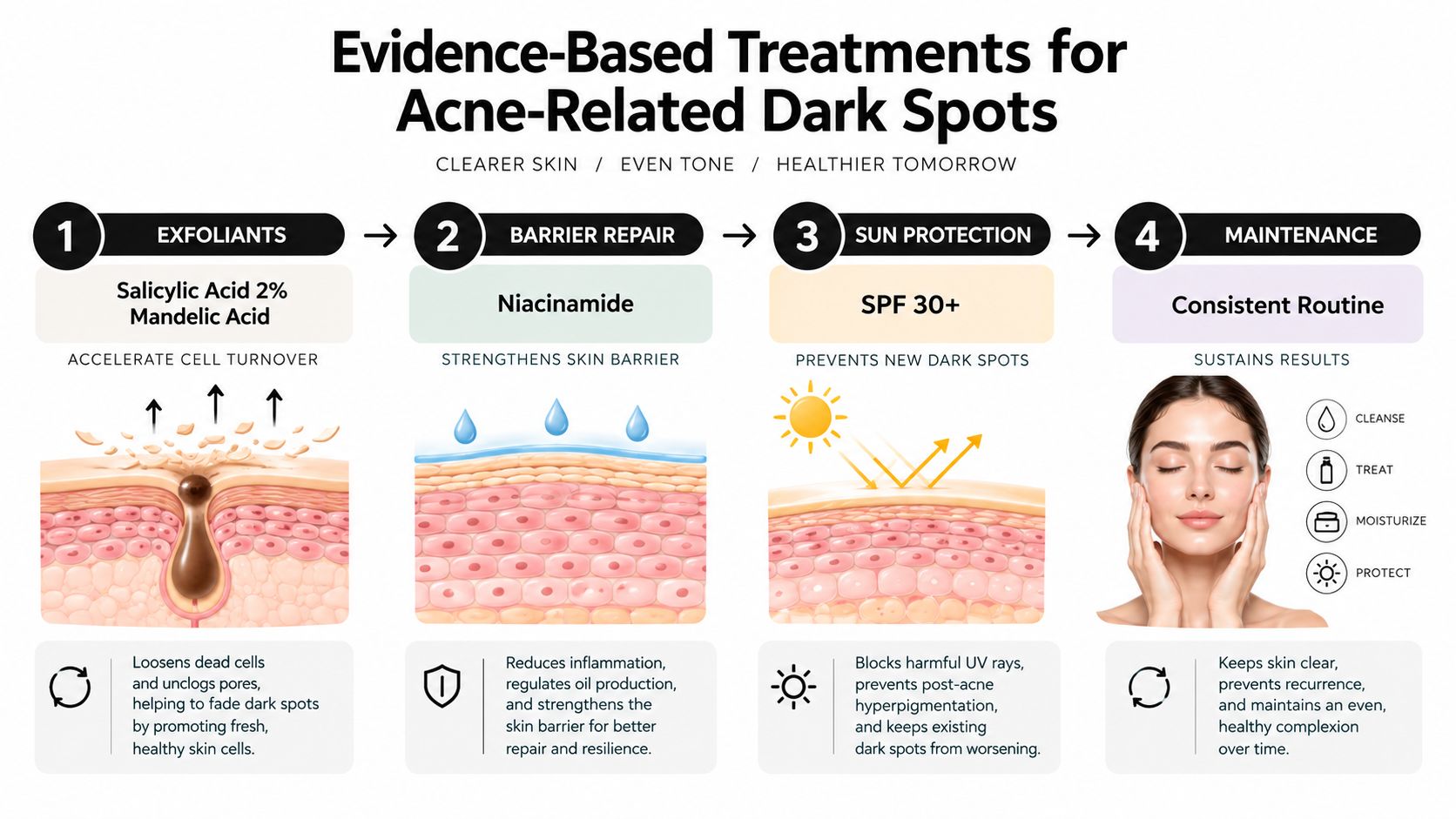
Salicylic acid helps remove pore-clogging buildup and supports exfoliation, which can be useful when acne remains active. Mandelic acid can also support skin turnover and may be easier for some acne-prone skin to tolerate than stronger acid combinations. These ingredients are not erasers that remove a mark overnight. They work gradually, and irritated skin can respond by becoming more reactive and more pigment-prone.
A leave-on product such as Neutralyze Exfoliating Pads can fit this approach for someone seeking salicylic acid and mandelic acid in one exfoliating step. Careful use may help manage congestion while supporting the slow fading of established marks. Introduce one active change at a time, because burning, persistent redness, or scaling suggests that the skin is receiving more irritation than it can handle.
What else can help, and what not to overpromise
Other pigment-focused ingredients aim to reduce excess melanin production or support turnover. They tend to work more predictably once ongoing inflammation is calmer. This guide to tranexamic acid for skin explains one targeted option and helps distinguish pigment treatment from general acne care. A person with frequent breakouts may need to stabilize acne before adding several products for discoloration.
Progress also requires patience. A mark can remain visible after the original lesion has healed, so treatment should be judged over a consistent period rather than after a few applications. Adding stronger products whenever improvement feels slow can create irritation, new inflammation, and another cycle of pigmentation.
Professional procedures may be considered when PIH persists despite a carefully tolerated topical plan. Chemical peels, lasers, gentle cryotherapy, and microdermabrasion have been used with variable results. Darker skin tones require particular caution because excessive treatment intensity can worsen pigmentation. A page about acne clear therapy treatment may help you compare an in-office approach with options discussed with a dermatologist or medical spa team.
Sunscreen is part of treatment, not an afterthought
UV exposure can darken PIH and extend the fading process. Sunscreen therefore protects the treatment progress, rather than merely preventing a future problem. An Australian survey of 51 patients with skin of color found that 39.2% used sunscreen only occasionally, fewer than one-third reported daily use, and 57.5% of those who reapplied did so only after prolonged outdoor exposure (PMC).
Those findings point to a practical barrier. Owning sunscreen is different from applying it consistently. A tinted, non-comedogenic formula with a texture you can tolerate may make regular use easier, especially if visible marks affect how comfortable you feel leaving the house.
Practical rule: the routine you can repeat beats the routine that looks impressive for three days.
Building A Practical Non-Prescription Routine For Marks And Breakouts
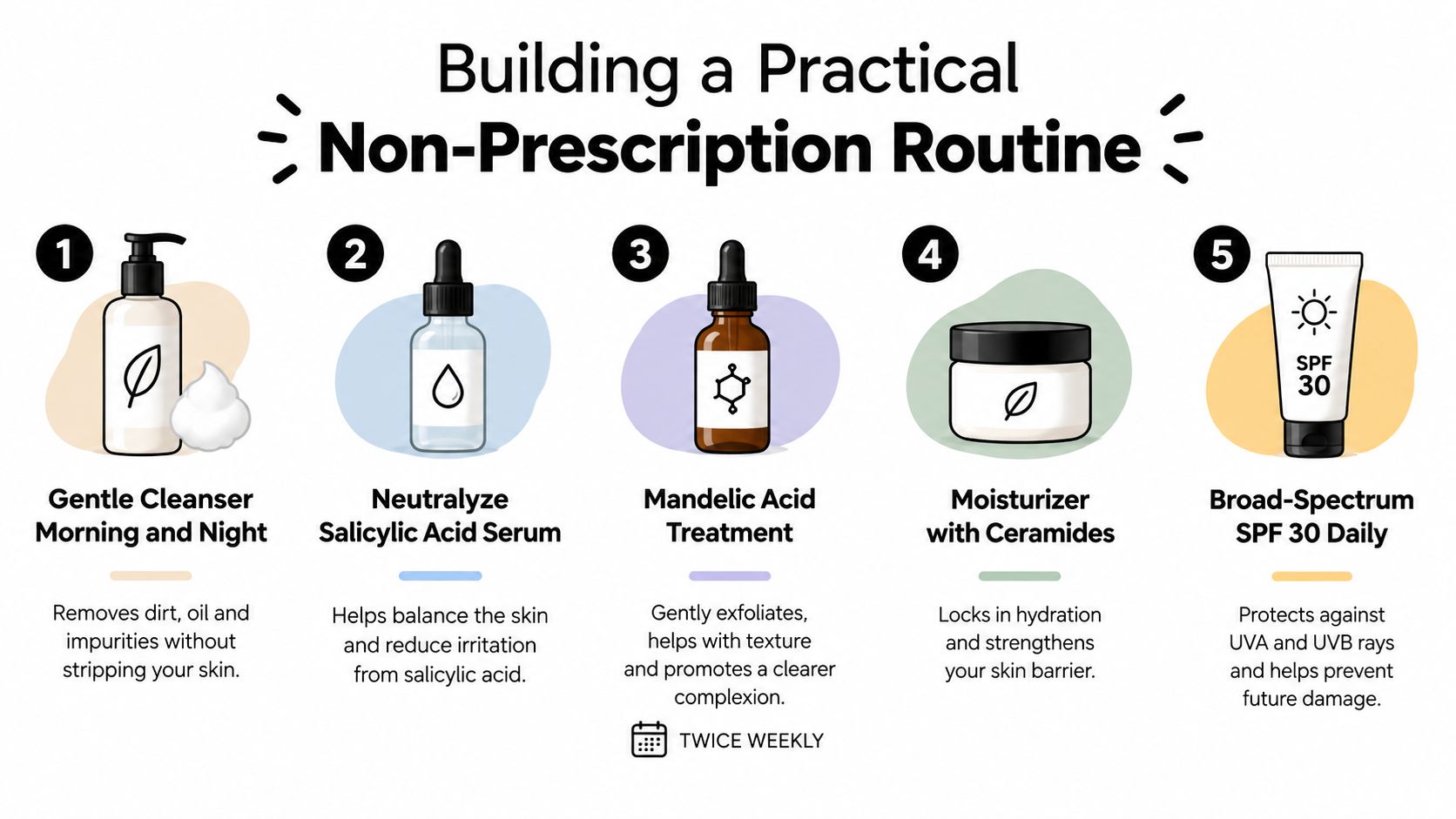
A routine for post-inflammatory hyperpigmentation (PIH) has two jobs: calm active acne and prevent the inflammation that creates fresh marks. It should remove buildup, reduce pore congestion, support gradual renewal, and protect the skin barrier. A short sequence is easier to repeat than a crowded shelf of strong products.
Start with a gentle cleanse
Morning and night, use a cleanser that removes oil and residue without leaving the skin tight or squeaky. The skin barrier works like a protective wall. When harsh cleansing weakens it, pigment-prone skin may become more reactive, making irritation and lingering discoloration harder to manage. Neutralyze Face Wash 2.0 combines salicylic acid and mandelic acid in a daily cleanser format, so it can address pore congestion and support a basic acne routine without adding a separate cleansing step.
Add exfoliation without overdoing it
Leave-on exfoliation should begin gradually. Use it less often at first, then judge your skin over several days rather than after a single application. Acids can support renewal, but irritation can keep the inflammation cycle active and make PIH more persistent.
Use these signs to adjust the routine:
- If your skin feels calm: keep the routine steady instead of adding more active ingredients.
- If your skin stings or peels: reduce frequency and avoid layering another strong treatment.
- If new breakouts are still forming: focus on controlling those lesions, since each inflamed spot can leave another mark.
Renew and moisturize at the same time
Treatment and hydration belong in the same plan. A moisturizer helps the skin tolerate renewal, while acne-focused ingredients address congestion. This reduces the temptation to stack several separate products and overload the barrier.
The Neutralyze acne system follows a cleanse, exfoliate, and renew structure. That approach can suit someone who wants one organized routine for breakouts and recovering marks, rather than turning skincare into a chemistry experiment. Results still depend on the depth of the pigment, continued acne activity, and how consistently the routine is used.
Make sunscreen part of the routine you'll actually keep
Daily sunscreen matters beyond beach days, especially when acids are part of your routine. UV exposure can deepen PIH and prolong fading, so sunscreen protects progress already made. A formula that feels greasy, stings, or pills under moisturizer is difficult to use consistently. Guidance on choosing a daily sunscreen your acne routine can tolerate can help you find a more practical option.
Good skincare for PIH is quiet skincare. It should feel manageable, not abrasive or exhausting. Fading usually takes time, and the routine works best when it prevents new inflammation while giving existing pigment a chance to settle. A repeatable pattern matters more than a perfect product list.
The Hidden Psychological Impact Of Persistent Acne Marks
A dark mark can hit harder than an active pimple because it stays visible after the “problem” seems to be over. That lingering visibility creates a different kind of stress, one that's less about pain and more about self-consciousness, camera angles, and wondering whether other people are staring at the same spot you see in the mirror. In a comparative study, 60% of patients with PIH reported a “very marked” effect on at least one acne-quality-of-life domain, compared with none of the acne-only group, and PIH especially affected self-perception and social/emotional functioning (BJD).
Why the emotional load can outlast the breakout
People with acne-induced hyperpigmentation are often judged less favorably than people with clear skin, so the burden isn't only internal. Stigma can persist even when the skin is technically healing. That's part of why “just wait for it to fade” is often unhelpful, even when it's biologically true.
There are practical ways to cope that don't require pretending the marks don't bother you.
- Use camouflage when you want to: tinted mineral makeup, concealer, or color-correcting products can reduce the daily stress of being seen.
- Keep your routine predictable: consistent care often feels calmer than constantly changing products.
- Name the feeling accurately: frustration is normal, but persistent shame, avoidance, or low mood deserves attention.
When the feeling becomes a health issue
If the marks make you avoid social plans, skip work, or spend excessive time checking your skin, that's not vanity. It's a quality-of-life issue. The same goes for people who feel unable to leave the house without heavy coverage, or who are stuck in a cycle of picking because they're trying to “fix” what's visible.
A compassionate acne plan should include the skin and the person wearing it. That's especially true for PIH, because the marks can outlast the inflammation and keep the psychological wound open long after the original pimple is gone. Support from a dermatologist, therapist, or both can be appropriate when the distress is bigger than the skin change itself.
When To Seek Professional Care And How To Plan Next Steps
A flat brown or gray mark can often be managed at home when acne is settling and your routine causes no ongoing irritation. Professional care becomes more useful when the discoloration keeps intensifying, new inflamed spots continue to appear, or nearly every product causes burning. PIH is a pigment disorder, while texture, persistent inflammation, and significant distress may point to additional problems that need separate treatment.
Signs you should book an appointment
- The mark has texture: dents, raised areas, or firmness suggest acne scarring rather than color change alone.
- Pigment is not improving: deeper pigment can behave like color held below the skin's surface and may need a different plan.
- New inflamed lesions keep forming: active acne continues to create the inflammation that starts more marks.
- Your skin is raw, peeling, or frequently stinging: reduce irritation and ask for guidance before adding more actives.
- The marks interfere with daily life: avoiding people, work, or ordinary activities is a valid reason to seek support.
A cleanser can remain one part of a non-prescription routine, but it should not replace diagnosis or treatment planning. For people comparing options, Neutralyze face wash may fit the cleansing step, provided your skin tolerates it.
Treatment works on a timeline. First, reduce new inflammation. Then protect the healing pigment from UV exposure, because sunscreen supports fading only when used consistently. Avoid picking, keep the barrier comfortable, and give a routine enough time to judge its effect rather than changing products repeatedly. If acne continues producing marks or pigment remains unchanged, a dermatologist can separate PIH from scars, review possible triggers, and select the next treatment safely.
If acne repeatedly leaves discoloration, Neutralyze describes a system using salicylic acid and mandelic acid for cleansing, exfoliating, and renewing. Review the ingredients against your skin's current tolerance before adding it.


