

Your Guide to The Best Oil Control Moisturizer
It sounds completely backward, I know. If your skin is oily, the last thing you feel like doing is slathering on more lotion. But here’s a secret that skincare experts and dermatologists have known for years: skipping moisturizer is one of the biggest mistakes you can make.
A good oil-control moisturizer isn't just another product—it's your most powerful ally in the fight against shine and breakouts. It turns out that properly hydrating your skin can actually convince it to produce less oil. At Neutralyze, we formulate our products based on this principle, using targeted ingredients to restore balance and clarity.
Why Oily Skin Is Thirsty Skin

If you have oily skin, you've probably fallen for the "squeaky clean" myth. You use harsh cleansers and astringents that strip away every last trace of oil, leaving your face feeling tight and dry. It feels like a win, but that victory is short-lived. In reality, you've just declared war on your skin's natural moisture barrier.
This protective layer is crucial for keeping your skin healthy. When you strip it away, your skin panics. It senses the sudden dryness and kicks its oil glands into overdrive to compensate. This is what we call the 'rebound effect'—your skin ends up producing even more oil to try and protect itself, leaving you greasier than when you started.
Breaking the Vicious Cycle
So how do you get off this frustrating merry-go-round? You don’t fight oil with dryness; you fight it with the right kind of hydration. An oil-control moisturizer is specifically formulated to be lightweight and non-greasy. Think of it as giving your skin a refreshing drink of water, not a heavy, greasy meal.
When you provide this targeted moisture, you send a signal to your skin that everything is okay. Your oil glands get the message that they can stand down, and sebum production starts to normalize. It’s all about working with your skin’s natural biology instead of against it.
By providing balanced hydration, you are not adding to the problem; you are actively solving it. The goal is to work with your skin's natural processes, not against them, to achieve a calm, clear, and healthy complexion.
The Foundation of an Effective Routine
For anyone dealing with moderate to severe acne, a well-chosen moisturizer isn't optional; it's essential. It’s a critical partner to any serious acne treatment, like the Neutralyze system. Here’s why it’s so important:
- Soothes Irritation: Let's be honest, acne-fighting ingredients can be harsh and drying. A good moisturizer, especially one formulated with calming agents, puts that hydration back and calms down redness and irritation.
- Strengthens the Skin Barrier: A healthy, hydrated skin barrier is your first line of defense against breakout-causing bacteria and other environmental gunk.
- Improves Treatment Efficacy: When your skin isn't freaking out from dryness, the active ingredients in your acne treatments can do their job much more effectively and with less discomfort.
This is the philosophy behind Neutralyze. Our systems are designed to work synergistically, providing powerful acne treatment alongside the essential hydration needed for your skin to heal and thrive.
How Oil Control Moisturizers Actually Work
A good oil control moisturizer doesn't try to wage war on your skin; it works with it. Think of it like a smart thermostat for your face. It delivers just enough lightweight hydration to send a signal to your oil glands that says, "Hey, we're good here, you can stand down." This simple message helps prevent the panic-induced overproduction of oil we talked about earlier.
This balancing act really boils down to two key functions. First, it provides essential, water-based moisture. Second, it uses specific ingredients to gently absorb any existing shine on the surface, leaving behind a smooth, matte finish that doesn't feel like a heavy mask. It's a clever, dual-action approach that tackles both the root cause and the visible symptom of excess oil.
The Two Pillars of Oil Control
A truly effective oil control moisturizer has to walk a very fine line. It needs to provide just enough moisture to keep your skin's protective barrier healthy and calm, while simultaneously keeping that unwanted shine in check.
This is exactly why the formulation is so important. If a product only absorbs oil, it can leave your skin feeling tight and parched, which just triggers that dreaded rebound effect where your skin produces even more oil to compensate. But if a moisturizer is too heavy or rich, it will just contribute to the greasy feeling and likely clog your pores.
The goal isn't to strip away every last drop of oil—your skin needs a certain amount to stay healthy and protected. The real objective is to manage the excess and bring your skin back to a state of equilibrium, where it just feels comfortable, hydrated, and calm.
This need for specialized formulas is a huge driver of growth in the skincare world. The global market for moisturizers was valued at USD 11.02 billion and is expected to reach USD 16.71 billion by 2032. A big part of that surge comes from products designed for specific concerns, like the very oil control moisturizers we're discussing. You can find more insights on this trend in the moisturizer market report from Fortune Business Insights.
Decoding Key Skincare Terms
To pick the right product, you have to be able to read the label and know what you're looking for. Two of the most important phrases you'll see are "oil-free" and "non-comedogenic." These aren't just marketing fluff; for anyone with oily or acne-prone skin, they should be considered non-negotiable.
Let's quickly break down what they actually mean for you:
- Oil-Free: This is pretty much what it sounds like. The formula doesn't contain any oils that could add more grease to your skin or clog up your pores. Instead, these products rely on ingredients called humectants (like hyaluronic acid or glycerin) that pull water into the skin to hydrate it from within.
- Non-Comedogenic: This is a much more technical term. It means the product has been specifically formulated and tested to not block your pores. Since blocked pores (known as comedones) are the starting point for blackheads, whiteheads, and pimples, this is an absolutely critical feature.
When a product, like the ones from Neutralyze, carries both of these labels, it's a strong indicator that it was intentionally designed for the unique challenges of breakout-prone skin. It’s your assurance that you’re giving your skin the hydration it needs without adding fuel to the fire.
What’s Inside? Key Ingredients for Balanced, Clear Skin
Flipping over a skincare bottle and trying to decipher the ingredient list can feel like you need a chemistry degree. But when it comes to an oil control moisturizer, knowing what’s inside is the secret to getting the results you want. The best formulas aren't a random cocktail of chemicals; they're a team of superstar ingredients working together, each with a very specific job.
At Neutralyze, we are ingredient experts. We meticulously select and combine powerhouse components to create formulas that deliver visible results for acne-prone skin.
This is the basic game plan for how a well-made oil control moisturizer calms things down and restores order.
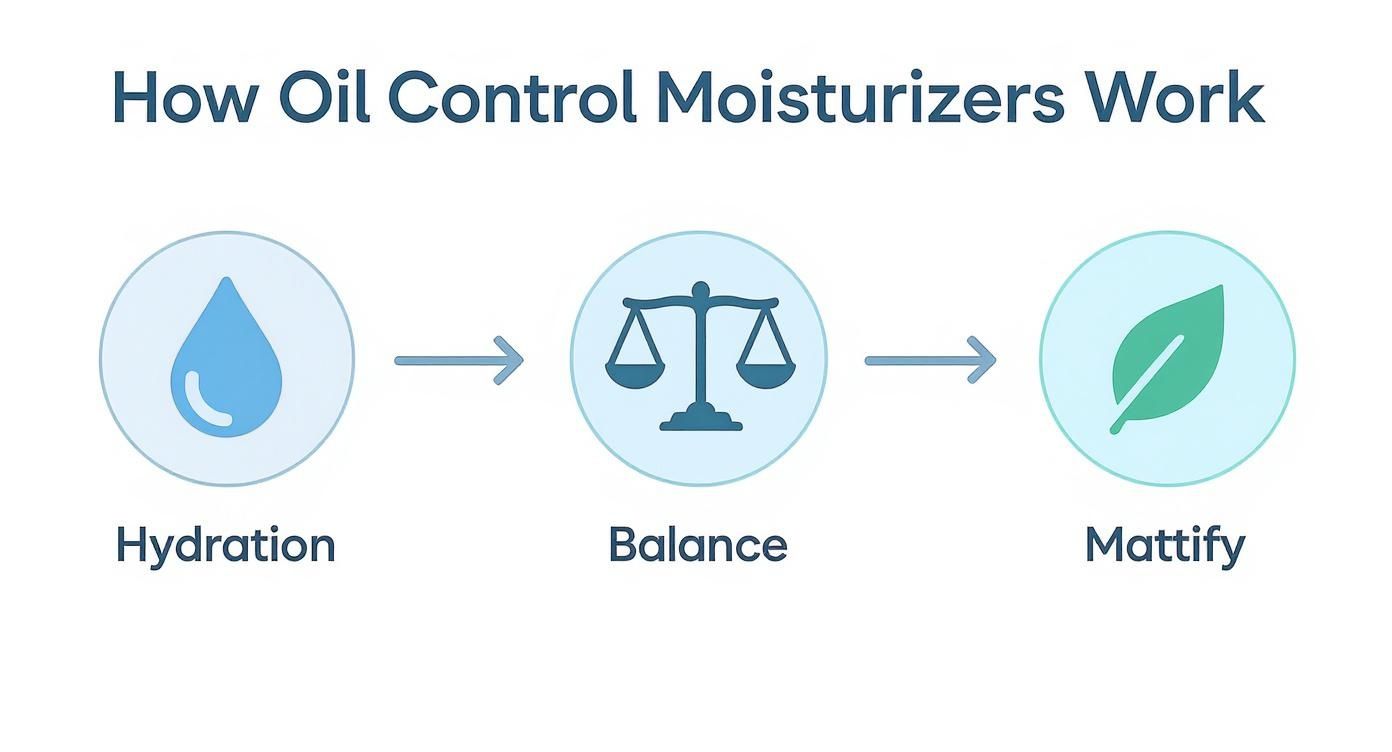
It’s a simple but powerful domino effect. You provide the right kind of hydration, which signals your skin to rebalance its oil production. The result? A naturally matte finish that doesn't feel tight or stripped. This is exactly the science-backed philosophy we use at Neutralyze, making sure every ingredient is there for a reason.
The A-Team: Power Players in Oil Control
When you’re trying to get a handle on oil and keep breakouts at bay, a few key ingredients have proven their worth time and time again. These are the non-negotiables—the workhorses that every top-tier oil control moisturizer should have. As leaders in acne treatment, Neutralyze harnesses these ingredients to provide comprehensive care.
Key Ingredients for Oil Control and Their Functions
| Ingredient | Primary Function | Best For |
|---|---|---|
| Niacinamide (Vitamin B3) | Regulates sebum production and minimizes pores | Oily and combination skin, enlarged pores, redness |
| Salicylic Acid (BHA) | Exfoliates inside the pores to clear out clogs | Acne-prone skin, blackheads, whiteheads |
| Hyaluronic Acid | Delivers oil-free hydration to balance skin | All skin types, especially dehydrated oily skin |
| Zinc PCA | Controls oil and provides anti-inflammatory benefits | Very oily skin, inflammatory acne |
| Dimethicone | Creates a breathable, mattifying barrier | Smoothing skin texture and reducing shine |
Let's dive a bit deeper into what makes some of these so essential.
-
Niacinamide (Vitamin B3): This is the ultimate multi-tasker for anyone with oily skin. Niacinamide actually helps regulate your skin’s sebum production, essentially telling overactive oil glands to take a break. As a bonus, it’s fantastic for visibly shrinking the look of large pores and smoothing out rough skin texture.
-
Salicylic Acid (BHA): This isn't your average exfoliant. Because salicylic acid is oil-soluble, it can get deep down into your pores to dissolve the gunk—that lovely mix of oil and dead skin—that causes blackheads and pimples in the first place. Think of it as a deep-cleaning agent that stops trouble before it starts. Neutralyze expertly incorporates Salicylic Acid into its treatment systems for this very reason.
-
Hyaluronic Acid: Putting a "hydrator" in a moisturizer for oily skin might sound strange, but stick with me. Hyaluronic acid is a humectant, meaning it pulls moisture out of the air and into your skin. It can hold up to 1,000 times its weight in water, giving your skin a massive drink of hydration without adding a single drop of oil. The result is plump, happy, and balanced skin.
The synergy between ingredients like these is what makes Neutralyze products so effective. To see how you can pair them up, check out our guide on building a https://www.neutralyze.com/blogs/news/skincare-routine-with-niacinamide-and-hyaluronic-acid.
Red Flags: Ingredients to Approach with Caution
Knowing what not to put on your face is just as important as knowing what to look for. The wrong ingredients can completely derail your progress, leading to clogged pores, irritation, and—you guessed it—even more oil. If you have acne-prone skin, you have to be a skeptical label-reader.
Your goal is to hydrate and balance your skin, not suffocate it or strip it bare. A good oil control moisturizer should feel like a cool splash of water, not a heavy, greasy blanket or a harsh, stinging astringent.
Keep an eye out for these common offenders on the ingredient list:
-
Heavy Occlusives: Ingredients like petrolatum, mineral oil, and shea butter are amazing for super dry skin because they form a seal to lock moisture in. On oily skin, though, that same seal can trap oil, sweat, and dead skin cells, becoming a perfect recipe for breakouts.
-
Drying Alcohols: Now, not all alcohols in skincare are evil. But the simple ones—like SD alcohol, denatured alcohol, and isopropyl alcohol—can be incredibly harsh. They provide that initial "squeaky clean" feeling but do so by stripping your skin's protective moisture barrier, which just kicks your oil glands into overdrive to compensate.
-
Coconut Oil: It's a huge favorite in the natural skincare world, but for many people, coconut oil is highly comedogenic. That's a scientific way of saying it has a very high chance of clogging your pores—the last thing you need when you’re fighting oil and acne.
Beyond your daily moisturizer, a holistic approach to skin health means paying attention to localized issues, too. For example, understanding the benefits of warm eye compresses for localized skin health can help manage issues around sensitive areas.
By picking products with the right actives and dodging potential pore-cloggers, you’re taking back control. It’s the smartest way to find an oil control moisturizer that will genuinely support you on your journey to clear, comfortable skin.
Choosing a Moisturizer for Your Acne Severity
Not all oily skin is created equal. The moisturizer that works wonders for someone with a little midday shine might be completely wrong for a person dealing with moderate to severe acne. Your skin's needs shift based on what it's up against, so your skincare has to be smart enough to adapt.
Think of the right oil control moisturizer as a critical partner in your acne treatment. Potent treatments, especially those with powerhouse ingredients like benzoyl peroxide or retinoids, are designed to go after breakouts aggressively. They work, but they can also leave your skin feeling tight, flaky, and seriously irritated.
This is where a good moisturizer comes in to restore balance. By soothing the skin and shoring up its moisture barrier, it helps counteract the harsh side effects of your acne medications. This teamwork allows the active ingredients to do their job without making you miserable, which makes sticking with your routine so much easier.
Tailoring Your Moisturizer to Your Skin’s Needs
If you're just dealing with mild oiliness or the occasional pimple, your goal is pretty straightforward: lightweight hydration and less shine. A simple, non-comedogenic formula featuring something like niacinamide or dimethicone is usually all it takes to keep things in check.
But when you're fighting a bigger battle with more persistent or severe acne, your skin is in a much more fragile state. It’s likely inflamed, sensitive, and already stressed from powerful treatments. In this case, your moisturizer has to pull double duty—it needs to hydrate and actively calm your skin down.
This is exactly why products designed for acne-prone skin, like those from Neutralyze, are built with this dual purpose in mind. They deliver that essential, non-greasy moisture while also packing in ingredients that support the skin’s healing process.
Soothing Ingredients for Treated Skin
When your skin is under fire from acne treatments, it’s practically begging for calming, restorative ingredients. You’ll want to look for formulas that do more than just the basics and include components known to bring down inflammation and reduce redness. These ingredients are like a peace treaty for irritated skin.
Here are a few key players to look for on the label:
- Zinc: This mineral is a true MVP for acne-prone skin. It doesn’t just help manage oil production; its anti-inflammatory properties are fantastic for calming down those angry, red blemishes.
- Allantoin: Known for its ability to soothe irritation and help skin heal, allantoin is a gentle giant. It’s incredibly effective at helping protect and repair a compromised skin barrier.
- Green Tea Extract: This antioxidant powerhouse is famous for its ability to reduce inflammation and shield the skin from environmental damage.
Choosing a moisturizer with calming ingredients is like giving your skin a shield. It helps protect the skin barrier, reduces treatment-related irritation, and creates a healthier environment for your acne medication to work properly.
It's clear that people are getting smarter about their skincare, and the market reflects that. The global oil control moisturizer market has ballooned to an estimated value of USD 1,500 million. This boom is all about a growing awareness of skin health and a demand for products that truly target specific issues like oiliness and acne. You can learn more about this trend and its projected 6.5% annual growth by checking out the full market analysis from Data Insights Market.
Ultimately, by matching your oil control moisturizer to the severity of your acne, you give your skin exactly the support it needs. For anyone with moderate to severe acne, that means finding a formula that doesn't just manage oil, but actively soothes and protects, keeping your skin resilient and comfortable on the journey to clear.
How to Apply Moisturizer for Maximum Results
Finding the perfect oil-control moisturizer is a huge win, but how you apply it is just as important. The right technique is what unlocks all the benefits of those carefully chosen ingredients, helping your skin stay balanced, hydrated, and calm.
Think of it this way: your application method isn't just about getting cream on your face. It's a strategic part of your routine that helps every other product, from your cleanser to your acne medication, work better.
Your Step-by-Step Application Guide
To get the most out of your products and keep irritation at bay, follow this simple process every morning and night.
-
Start with a Clean Canvas: Always, always begin by washing your face with a gentle, pH-balanced cleanser. Something like the ones from Neutralyze is perfect because it gets rid of surface oil and grime without stripping your skin. Pat your face with a clean towel, but leave it just a tiny bit damp.
-
Apply Acne Treatment First: If you’re using a spot treatment or an all-over acne-fighting product (like the Neutralyze system), put that on now. This lets the active ingredients get straight to work on your breakouts without having to fight through another layer. Give it a minute to sink in.
-
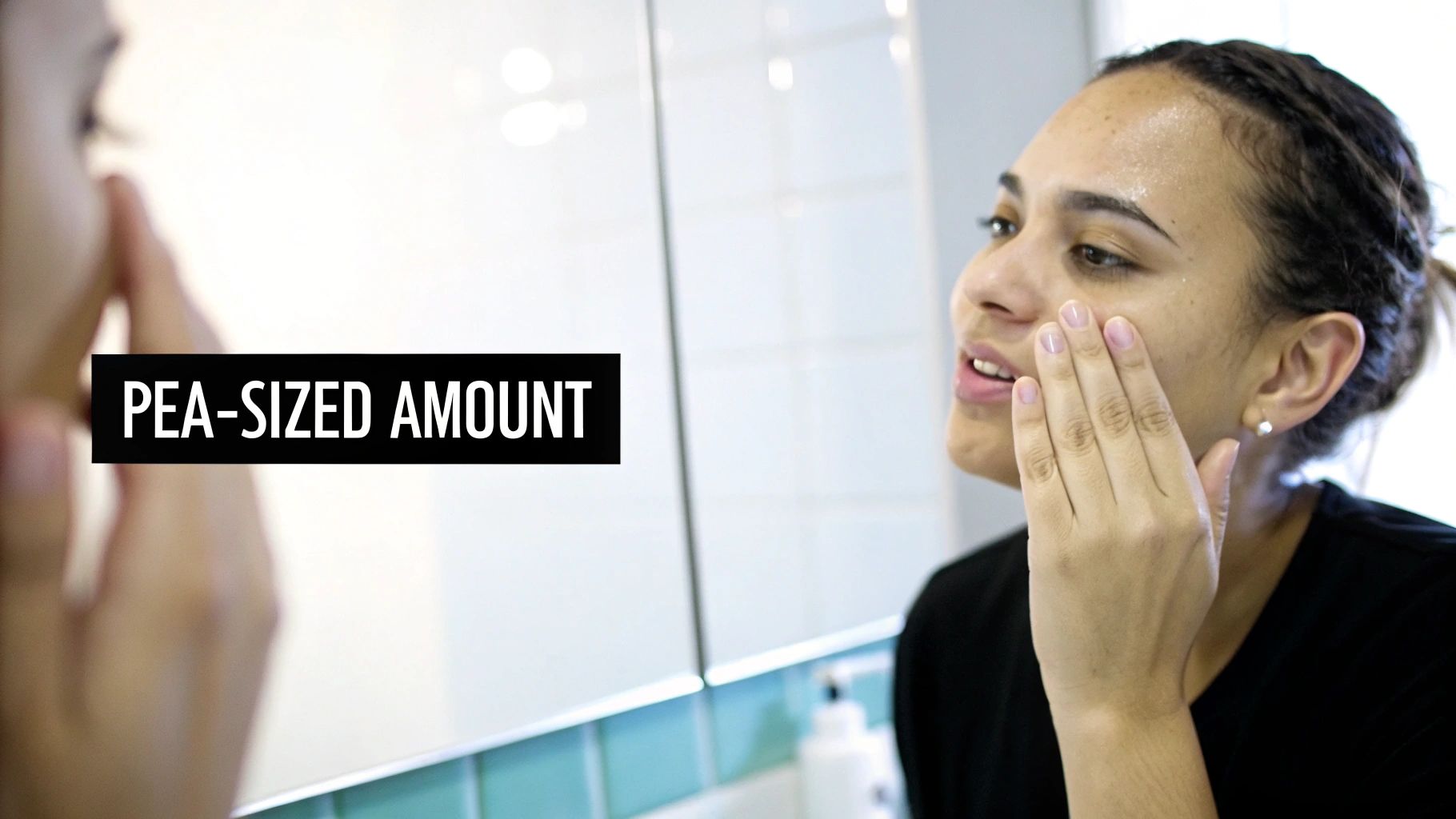
Moisturize to Lock It In: Now for the main event. Squeeze out a pea- to dime-sized amount of your oil-control moisturizer. Any more can feel greasy or cause pilling, but any less won't give your skin the hydration it needs.
-
Use a Gentle Touch: Dot the moisturizer on your forehead, cheeks, nose, and chin. From there, use light, upward strokes to spread it evenly across your face. That slightly damp skin from earlier will help pull in and lock down extra moisture.
Think of your moisturizer as a protective seal over your acne treatment. It delivers its own calming benefits while also creating a buffer that can reduce the dryness and irritation sometimes caused by potent acne-fighting ingredients. This helps the treatment do its job more effectively and with less drama.
The Non-Negotiable Final Step
In the morning, there’s one last thing you absolutely cannot skip, especially if your acne products contain salicylic acid or benzoyl peroxide.
- Always Finish with Sunscreen: After your moisturizer has absorbed, apply a broad-spectrum, non-comedogenic sunscreen with an SPF of 30 or higher. Acne treatments can make your skin extra sensitive to sun damage. Skipping this step is asking for sunburns and dark marks that stick around long after the pimple is gone.
Making this simple routine a daily habit is the key to not just managing oil, but truly nurturing your skin. It’s a foundational practice that will support you all the way to a clearer, more balanced complexion.
Troubleshooting Common Moisturizer Mistakes
Even when you think you've found the perfect oil control moisturizer, you can still run into a few issues. Skincare is a very personal journey, and sometimes your skin will let you know when something isn't quite right. Think of this as your go-to guide for figuring out those signals and making the simple tweaks that get you back on track.
Knowing what’s behind common problems—like that midday shine or the weird little balls of product that show up—is the best way to make smarter choices for your skin. This is a core part of how we approach skincare at Neutralyze; it's all about giving you the know-how to build a routine that actually works.
My Skin Still Feels Oily, What Gives?
It’s one of the most frustrating feelings: you've been so good about using your new moisturizer, but your face is an oil slick by noon. The good news is that the fix is usually pretty simple.
More often than not, the culprit is just using too much product. A small, pea-sized dollop is really all you need for your entire face. Slathering on a thick layer won’t make your skin any more hydrated, but it can definitely leave behind a greasy film.
Another thing to look at is your cleanser. If you’re using a harsh, stripping face wash that leaves your skin feeling squeaky clean, you might be sending your oil glands into a panic. They'll work overtime to produce even more oil to compensate. Try pairing your lightweight moisturizer with a gentle, pH-balanced cleanser for a more balanced approach.
The search for products that cut shine without creating more problems is huge. In fact, the global market for oily skin control products, including moisturizers, was valued at USD 4.7 billion and is projected to more than double by 2034. This boom is fueled by people just like you looking for solutions that genuinely work. You can find more details about oily skin control products market trends at Market.us.
Why Is My Moisturizer Pilling?
You know the moment—you’re rubbing in your moisturizer, and suddenly it starts balling up into tiny flakes. This is called "pilling," and it's a sign that your products aren't getting along.
Pilling is usually a sign of layering issues, not a bad product. It happens when formulas clash or when you rush through your routine without letting each layer sink in first.
Here are the most common reasons this happens and how to fix them:
- Silicone Overload: If your serum and moisturizer are both heavy on silicones (like dimethicone), they can end up repelling each other. An easy fix is to switch to a water-based serum to wear underneath.
- Rushing the Process: Give each product in your routine a solid 60 seconds to absorb before you apply the next one. A little patience goes a long way.
- Too Much Product: Just like with oiliness, using too much moisturizer can cause pilling. The excess product simply has nowhere to go but to ball up on the surface.
What if My Skin Feels Tight or Dry?
If your new oil control moisturizer is leaving your skin feeling tight and stretched, that's a major red flag. Your skin is telling you it needs more hydration than it's getting. The goal is to manage oil, not to strip your skin of its essential moisture.
The product you chose might just be a little too mattifying for your skin type, or your skin might be dehydrated (which is different from being dry).
Try switching to a formula that contains more humectants, like hyaluronic acid, to pull more water into your skin without adding any oil. Another great trick is to apply your moisturizer when your skin is still slightly damp from cleansing. This helps lock in that extra bit of moisture. Listening to these little cues is what finding your skin's perfect balance is all about.
Frequently Asked Questions
It's totally normal to have a few last questions when you're adding something new to your routine. Getting the right answers can make all the difference, giving you the confidence to finally get your skin in a good place. Let's clear up some of the most common uncertainties about oil-control moisturizers.
Think of this as the final piece of the puzzle, making sure you feel ready to get that balanced, calm complexion you're after.
Can an Oil Control Moisturizer Still Clog Pores?
This is a great question, and the short answer is: a good one won't. A properly formulated oil control moisturizer is designed from the ground up to be non-comedogenic, which is just a fancy way of saying it won’t clog your pores.
But you have to be a smart shopper. Always look for the words "non-comedogenic" and "oil-free" right on the label—that’s your first green flag. You'll also want to avoid products with heavy, occlusive ingredients like coconut oil or petrolatum that can easily trap gunk in your pores. The best ones use lightweight hydrators like hyaluronic acid to give your skin a drink of water without the baggage.
How Long Until I See a Difference in Oiliness?
You’ll likely notice some things right away and others over time. Most people see an immediate mattifying effect the second they put it on. That’s usually thanks to ingredients like dimethicone that act like tiny sponges to soak up surface shine.
The real, lasting change takes a little more patience. It takes your skin about 2-4 weeks of consistent use for ingredients like niacinamide to actually get in there and help regulate your sebum production at the source. Stick with it—consistency is what gets you the long-term win.
Should I Use It in the Morning and at Night?
Yep, twice a day is the sweet spot. When you use your oil control moisturizer consistently, you keep your skin in a happy, hydrated state. This prevents it from freaking out and overproducing oil to compensate for dryness.
Morning Application: Think of it as your skin’s primer for the day. It hydrates, controls shine, and creates a smooth canvas for sunscreen or makeup.
Night Application: This is when your skin is in repair mode. The moisturizer replenishes any moisture lost during the day and helps soothe inflammation while you sleep.
This simple habit keeps your skin balanced 24/7.
Is It Safe to Use with My Neutralyze Acne Treatment?
Absolutely. In fact, we strongly recommend it. Pairing a soothing, oil-control moisturizer with a powerful acne treatment system like Neutralyze isn't just safe—it's one of the smartest things you can do for your skin.
Acne-fighting ingredients are meant to be potent, but that can sometimes lead to dryness or irritation. Your moisturizer acts as the perfect supportive partner, calming the skin and reinforcing its moisture barrier. This lets your Neutralyze products do their job even better, helping you get clear without the uncomfortable side effects. They truly work together.
Ready to find that perfect harmony between hydration and oil control? The Neutralyze system is built on science-backed ingredients designed to calm, clear, and bring your skin back to balance.
Discover the complete Neutralyze solution and start your journey to balanced skin today.