

How to Treat Hormonal Acne with Science-Backed Solutions
If you’ve tried everything for your skin but still find yourself dealing with deep, painful breakouts, you're not alone. It’s a frustrating cycle, but hormonal acne isn't about what you're doing wrong—it’s a direct reflection of what's happening inside your body.
The main culprits are hormonal fluctuations, especially involving a group of hormones called androgens, like testosterone.
When your androgen levels rise, or even if your skin just becomes more sensitive to them, your oil glands get a signal to work overtime. This sudden spike in oil, or sebum, creates a perfect storm. All that excess oil mixes with dead skin cells, clogs up your pores, and creates an ideal home for acne-causing bacteria to multiply. The result isn't just a simple whitehead; it's often the deep, tender, and inflamed cysts that define hormonal acne.
Recognizing the Telltale Signs
One of the most telling signs of hormonal acne is where it shows up. It typically follows a very distinct pattern along the lower third of your face.
- Jawline: This is the classic spot. Painful cysts and nodules often pop up right along the jaw.
- Chin: Persistent breakouts concentrated around the chin area are another dead giveaway.
- Neck and Lower Cheeks: Sometimes, the inflammation spreads down the neck or onto the lower cheeks.
The timing is another huge clue. Hormonal acne often works like clockwork, flaring up in a predictable cycle. For many women, this means breakouts emerge like an unwelcome guest the week before their period starts. These aren't random; they're directly linked to the hormonal shifts happening at that time. If you want to dig deeper into these patterns, our guide on how to tell if acne is hormonal offers a closer look at the specific signs.
Hormonal acne is a widespread issue for adults, not just teenagers. It’s a persistent condition that requires a targeted strategy rather than a one-size-fits-all approach. Understanding its internal triggers is the first step toward achieving lasting clarity.
More Than Just a Teenage Problem
It’s a common myth that you’ll outgrow acne after high school. The reality? Hormonal acne affects an incredible number of adult women around the world. In fact, clinical trial data shows that about 50% of women in their 20s, 33% in their 30s, and 25% in their 40s are still fighting this stubborn condition. These breakouts are often tied to those androgen fluctuations that kick oil production into high gear and clog pores. You can find more on these statistics from Yale Medicine.
This isn't just about your monthly cycle, either. Other life events and external factors can throw your hormones off balance, and your skin is often the first place it shows. Periods of high stress, for instance, can increase cortisol, which in turn can stimulate your oil glands. Major hormonal shifts like perimenopause can also trigger breakouts.
To help you connect the dots, here’s a quick breakdown of common triggers and how they impact your skin.
Key Hormonal Acne Triggers and Their Effects
| Trigger | How It Affects Your Skin | Common Scenario |
|---|---|---|
| Menstrual Cycle | Progesterone and estrogen levels drop, making testosterone more dominant and increasing oil production. | Breakouts appearing 7-10 days before your period begins, usually along the chin and jawline. |
| Stress | The body releases cortisol, a stress hormone that can increase inflammation and sebum. | A sudden flare-up during a stressful work week, exams, or a major life event. |
| Dietary Choices | High-glycemic foods and dairy can spike insulin levels, which may increase androgen activity. | Noticing more cysts after a week of eating lots of processed carbs, sugar, or dairy. |
| Perimenopause | Estrogen levels decline unevenly, leading to a relative increase in androgens. | New or worsening acne in your late 30s or 40s, even if you had clear skin before. |
| Lack of Sleep | Poor sleep disrupts hormone regulation and increases cortisol, contributing to inflammation. | Waking up with inflamed pimples after several nights of restless sleep. |
Because these triggers are internal, simply washing your face more isn't going to cut it. A smarter, ingredient-focused approach is what makes the difference—one that targets inflammation and clogged pores without being overly harsh is absolutely essential for anyone serious about getting clear skin.
Your Daily Skincare Game Plan for Hormonal Acne
When you're dealing with hormonal acne, your daily routine is your number one weapon. This isn't about scrubbing your face into submission or throwing a dozen random products at the problem. It’s about being consistent with a smart, targeted approach that gets to the root cause of those frustrating breakouts. A solid routine works to manage oil production, keep your pores clear, and calm inflammation before it turns into a deep, painful cyst.
The real secret to success is using the right ingredients in the right order—every single day. Consistency is what tells your skin it’s time to find a new, healthier balance. When you commit to a morning and evening regimen, you’re not just treating the pimples you see now; you're actively getting ahead of the next ones.
This diagram breaks down exactly what's happening under the surface. It shows how that internal hormone spike kicks off the whole process, leading directly to the clogged pores we need to address with our daily routine.
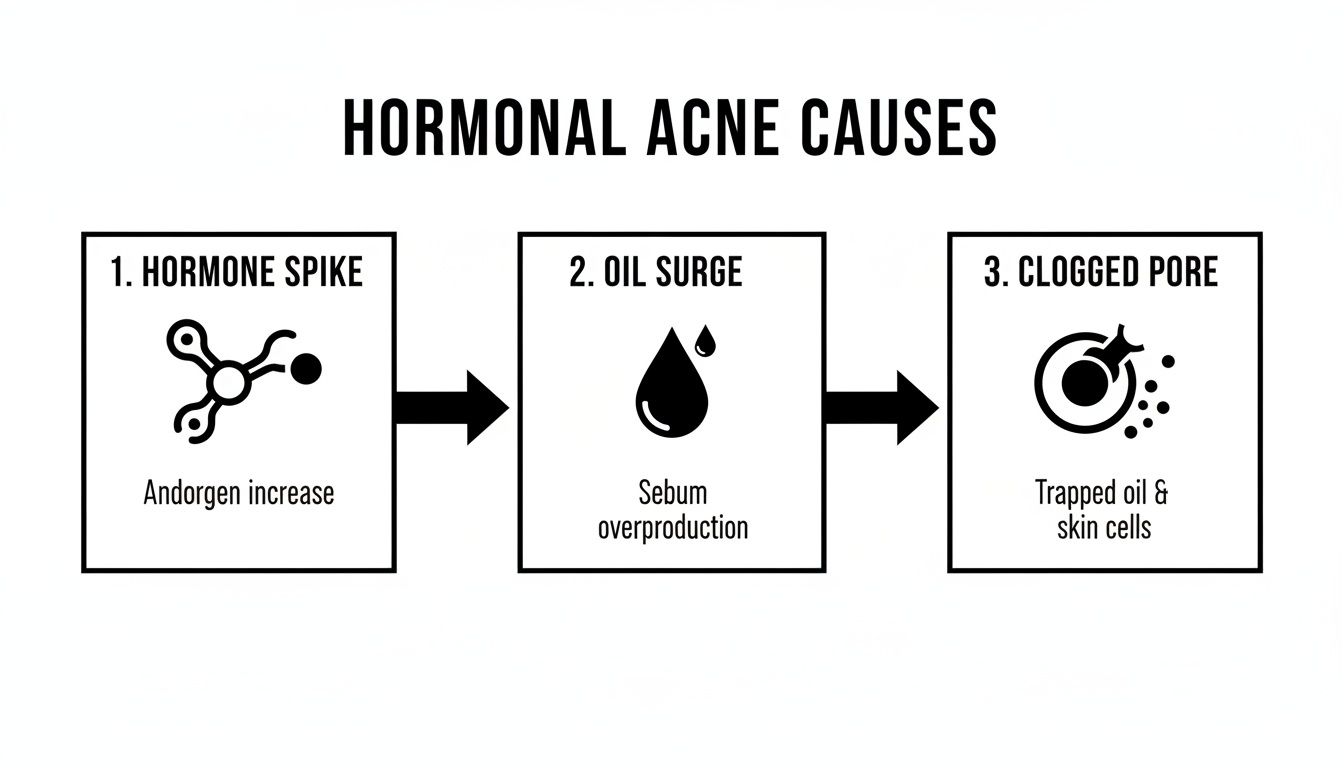
As you can see, the breakout cascade starts internally. That’s why a consistent topical routine is so crucial—it interrupts that cycle right at the skin's surface.
The Powerhouse Ingredients Your Skin Needs
To really make a dent in hormonal acne, you need ingredients that can do it all. They need to exfoliate away dead skin, dissolve oil deep inside the pores, and soothe inflammation, all without creating more irritation (which just makes acne angrier).
At Neutralyze, our authority comes from mastering the science behind these ingredients. The two most effective and reliable actives for this job are Mandelic Acid and Salicylic Acid.
Mandelic Acid, a gentler alpha-hydroxy acid (AHA), is a game-changer for sensitive, acne-prone skin. Its molecules are larger than other AHAs, so it penetrates the skin more slowly. This means you get powerful surface exfoliation to prevent clogged pores and smooth texture, but without the harsh stinging or redness that can often make breakouts worse. It’s the smart way to get all the benefits of an AHA.
Salicylic Acid, a beta-hydroxy acid (BHA), has a unique superpower: it’s oil-soluble. This allows it to dive deep into your pores and dissolve the mixture of sebum and dead skin cells that causes clogs. By clearing this buildup, Salicylic Acid not only treats existing breakouts but also prevents new ones from forming, helping pores appear smaller over time.
The ultimate routine for hormonal acne combines the gentle surface work of Mandelic Acid with the deep-pore cleaning of Salicylic Acid. Neutralyze harnesses this dual-action approach, tackling acne from every angle for skin that’s clearer and calmer.
How to Build Your Morning and Evening Routine
A great routine isn't just about the ingredients; it's about how they work together on your skin. The Neutralyze system is built around this exact combination of Mandelic and Salicylic Acids, delivered as a simple cleanse, exfoliate, renew routine. Each step is designed to help the active ingredients get where they need to go and work effectively. It's a big reason why over 475,000 customers have seen such incredible results.
Here’s a simple, effective way to structure your day.
Your Morning Regimen (AM)
- Cleanse: Start with a cleanser that does more than just clean. The Neutralyze Face Wash features both 2% Salicylic Acid and 1% Mandelic Acid to clear away overnight oil while gently exfoliating. This step preps your skin to better absorb the treatment that comes next.
- Treat: This is where the magic happens. A targeted leave-on treatment like the Neutralyze Exfoliating Pads (Salicylic Acid + Mandelic Acid) delivers a concentrated dose of actives to keep pores clear and fight acne-causing bacteria all day long.
- Moisturize & Protect: Acne treatments can be drying, so a non-comedogenic moisturizer is a must. The final, non-negotiable step is a broad-spectrum sunscreen with at least SPF 30. Sun protection is critical, as acne-fighting ingredients can make your skin more sensitive to sun damage.
Your Evening Regimen (PM)
- Cleanse: It’s time to wash the day away. Use the Neutralyze Face Wash again to remove makeup, sunscreen, pollution, and general grime. Your nighttime products need a clean slate to work properly.
- Treat: Use the Neutralyze Exfoliating Pads again. Your skin shifts into repair mode while you sleep, making this the perfect time for a powerful treatment to do its work without being disturbed.
- Moisturize: Finish with a nourishing moisturizer, like the Neutralyze Renewal Complex (0.5% Salicylic Acid + 0.5% Mandelic Acid). This hydrates your skin, supports its natural barrier function, and helps calm any lingering inflammation from the day. A healthy, hydrated skin barrier is much better at defending itself against breakouts.
When you're trying to get hormonal acne under control, consistency is everything. Skipping steps or only treating your skin when a big pimple appears just won't give you the clear skin you're looking for. By dedicating just a few minutes every morning and night to this routine, you’re taking back control and building the foundation for healthier skin that lasts.
Powerful Ingredients for Stubborn Hormonal Acne
So, you’ve nailed your daily routine, but those deep, persistent hormonal breakouts just won't quit. This is when it's time to bring out the heavy hitters. Stubborn hormonal acne often needs more than just a good cleanser; it requires a multi-pronged attack that combines potent topical ingredients with an understanding of what's happening on the inside.
When we look at how dermatologists treat the most severe cases, they often start from within. For many adult women, the problem boils down to androgen hormones sending oil glands into overdrive. To shut down that process, doctors often prescribe oral medications that block these androgen receptors at the source.

The Role of Anti-Androgens in Acne Treatment
One of the most common and effective oral treatments is Spironolactone. This medication gets right to the heart of the hormonal issue. It essentially tells your androgen hormones to stop signaling your oil glands to produce so much sebum. Less oil means fewer clogged pores, which stops a hormonal breakout before it can even begin.
Spironolactone has become a go-to for hormonal acne in adult women for a reason. A major meta-analysis found it nearly doubles the odds of treatment success compared to placebos or even the antibiotic doxycycline. The results are real, delivering significant drops in acne severity. You can dig into the research behind its effectiveness yourself.
Knowing how this internal approach works gives us a huge clue for our topical strategy: to win the war against hormonal acne, you have to control oil and prevent clogged pores. Luckily, we can achieve that same goal from the outside with a smart skincare routine—no prescription needed.
Creating a Prescription-Level Topical Strategy
You can actually mimic the effects of these medical treatments by strategically combining powerful ingredients in your skincare. The idea is to build a routine that tackles acne from every angle, just like a dermatologist would.
This is where a system like Neutralyze really shines. It was designed to deliver those kinds of clinically proven, prescription-level results by focusing on the right combination of powerhouse ingredients. It's an accessible but incredibly potent foundation for your anti-acne plan.
Here are the key players you want on your team:
-
Salicylic and Mandelic Acids: This is the ultimate exfoliating duo, and it’s the core of the Neutralyze system. Salicylic acid is oil-soluble, so it dives deep into your pores to dissolve gunk, while mandelic acid is a gentler AHA that works on the surface to prevent new clogs and soothe irritation.
-
Benzoyl Peroxide: A classic for a reason. Benzoyl peroxide is fantastic at killing the P. acnes bacteria that contributes to inflamed pimples. It’s a strong tool, but you have to use it wisely to avoid over-drying your skin.
-
Retinoids: These are the champions of cell turnover. As vitamin A derivatives, retinoids (like over-the-counter adapalene or prescription tretinoin) speed up how quickly your skin sheds dead cells. Faster shedding means it’s much harder for pores to get clogged in the first place.
A truly effective routine never relies on a single "magic" ingredient. It’s about the synergy—combining actives that exfoliate, unclog, kill bacteria, and calm inflammation all at once for comprehensive, lasting results.
And don't forget the big picture. Supporting your skin's overall health helps it heal faster and become more resilient. Looking into the best supplements for overall skin health can give you ideas for ingredients that boost repair and vitality from the inside, which is a huge help when you're recovering from breakouts.
Why a System-Based Approach Wins
While each of these ingredients is impressive on its own, they unlock their true potential when they're part of a cohesive system. A well-designed routine ensures every product works with the others, maximizing benefits without causing irritation or chaos for your skin. The Neutralyze 3-step system is built on exactly this principle.
It gives you the core actives—salicylic and mandelic acids—in balanced formulas that cleanse, treat, and moisturize in the right order. This kind of systematic approach removes all the guesswork. It provides your skin with a consistent, reliable defense against hormonal breakouts, putting you back in control and restoring your skin’s clear, healthy balance.
Lifestyle Changes That Genuinely Support Clear Skin
While a powerful, ingredient-focused skincare routine is your first line of defense, what you do every day matters just as much. Learning how to treat hormonal acne means looking beyond your bathroom shelf and into your daily habits. Think of it this way: creating a calm internal environment helps your topical treatments work that much better.
These adjustments are all about supporting your body’s natural hormonal balance. This isn't about perfection; it’s about making small, consistent choices that reduce the internal triggers for inflammation and breakouts. When you get a handle on your diet, stress, and sleep, you’re tackling acne from the inside out.

Fine-Tuning Your Diet for Hormonal Health
The link between what we eat and how our skin looks is undeniable, especially when hormones are in the driver's seat. Certain foods can kick off a chain reaction that ends with a stubborn breakout right on your jawline. The usual suspects? High-glycemic foods and, for some, dairy.
High-glycemic foods—think sugary snacks, white bread, and processed carbs—cause a rapid blood sugar spike. Your body responds by releasing a flood of insulin, which can then ramp up androgen activity and send oil production into overdrive. It’s a direct pathway from your plate to a pimple.
Making a few smart swaps can make a world of difference. Instead of that sugary cereal, try a bowl of oatmeal with antioxidant-rich berries. This one small change helps keep your blood sugar stable and reduces the internal signals telling your oil glands to go wild. In my experience, many people discover that one of the biggest benefits of quitting sugar is clearer skin, not to mention more stable energy levels.
For some people, dairy can be another trigger. It may contain hormones and growth factors that stimulate oil glands. If you think dairy might be a problem for you, try eliminating it for a few weeks and just see what happens. Your skin will tell you.
Managing Stress to Calm Your Skin
Ever notice a huge pimple appearing right before a big presentation or during a chaotic week? That's not a coincidence. Stress has a direct, physical impact on your skin. When you're stressed, your body pumps out cortisol, the "stress hormone."
These elevated cortisol levels can throw your other hormones out of whack and trigger inflammation all over your body—including in your skin. This inflammation makes existing acne worse and creates the perfect storm for new breakouts.
You don't need a life overhaul to manage stress. It's about weaving small, calming rituals into your daily routine.
- Mindful Moments: Just five minutes of deep breathing or meditation a day can help lower cortisol and quiet your nervous system.
- Regular Movement: Gentle exercise like yoga or even just a brisk walk is a fantastic way to burn off stress. You don't need an intense workout; just get your body moving.
- Digital Detox: Try to set aside time each evening to unplug. The constant dings and blue light from our screens can contribute to a state of chronic, low-level stress.
Managing stress isn't a luxury; it's a critical part of any effective hormonal acne treatment plan. By lowering cortisol, you reduce a major internal trigger for inflammation and breakouts.
The Underrated Power of Quality Sleep
Sleep is when your body—and your skin—does its most important repair work. Seriously, prioritizing 7-9 hours of quality sleep is one of the best things you can do for your skin.
When you're sleep-deprived, your body produces more cortisol, kicking off that same inflammatory cycle we see with stress. But it's more than that. Your skin’s regeneration processes actually peak overnight, which is also when your skincare products are working their hardest.
Giving your body enough rest ensures these repair mechanisms can function at their best, making your entire routine more effective. A good night's sleep allows your skin to heal, reduce inflammation, and better absorb all those powerful ingredients in your evening serum and moisturizer.
Getting Serious: When to Consider Medical Acne Treatments
Sometimes, all the lifestyle changes and over-the-counter products in the world just don’t seem to make a dent in stubborn hormonal acne. If you've been consistent and still aren't seeing the results you want, it might be time to talk to a doctor or dermatologist about prescription options.
This isn't a sign of failure—far from it. It's about recognizing that for some of us, hormonal acne is a medical issue that needs a medical solution. These treatments get to the heart of the problem by working from the inside out to tackle the hormonal chaos that’s causing breakouts in the first place.
Think of it as building a complete strategy. The goal is always clear, healthy skin, and understanding all your options—from topicals to medical interventions—is the best way to get there.
How Birth Control Pills Can Help
One of the most tried-and-true medical treatments for hormonal acne in women is Combined Oral Contraceptives (COCs), or what most of us just call "the pill." These medications use synthetic forms of estrogen and progestin to help regulate your cycle. By doing so, they stabilize the very hormonal ups and downs that kick your oil glands into overdrive.
So, how does that work? COCs lower the amount of androgens (like testosterone) circulating in your system. Androgens are the main culprit behind excess sebum, so by reining them in, you effectively turn down the oil production that leads to clogged pores and those deep, painful cysts.
The results speak for themselves. COCs are a well-researched solution for hormonal acne. A 2023 review of a specific COC (EE/norgestimate) showed it achieved over 50% reductions in inflammatory lesions (from 19.0 to 8.2), blackheads and whiteheads (from 35.2 to 17.7), and total breakouts (from 54.3 to 25.9) compared to a placebo. You can read the full research on these hormonal acne findings if you want to dive into the data.
Why an Inside-Out Approach Is So Powerful
This really highlights a core truth about fighting acne: a comprehensive, multi-faceted approach is almost always the most effective. While a prescription might be working to balance your hormones internally, you still need a rock-solid topical routine to manage what’s happening on the surface of your skin.
This is exactly where a science-backed system makes all the difference. The Neutralyze system, built around Mandelic and Salicylic Acids, is designed to complement this internal work by directly targeting the external symptoms. It’s a powerful first line of defense, but it can also be a great alternative for anyone looking for serious results without a prescription.
Our system focuses on the essentials:
- Oil Control: Much like COCs reduce sebum from within, our ingredients help manage oil and shine on your skin’s surface.
- Clog Prevention: By gently exfoliating, the system keeps pores clear and stops breakouts before they even start.
- Inflammation Soothing: It directly calms the redness and irritation that make hormonal breakouts so frustrating.
A well-rounded plan is your best bet. Combining an effective topical system with medical advice, when necessary, lets you fight acne from all angles—inside and out—for clear skin that actually lasts.
Ultimately, Neutralyze gives you a sophisticated, science-driven path to clearer skin. Whether you use it on its own or alongside a doctor’s guidance, it provides the tools you need to take back control and finally get the calm, clear skin you deserve.
Got Questions About Hormonal Acne? Let's Get Them Answered.
Even when you have a game plan, it's natural for questions to bubble up. So, let's talk through some of the most common things people wonder about when treating hormonal acne. Getting clear, straightforward answers is the best way to feel confident in your routine and stick with it long enough to see real, lasting change.
How Long Until I Actually See a Difference?
This is always the first question, and for good reason! The honest answer? It takes patience. For most treatments, you're looking at 2-3 months before you see a significant, undeniable improvement. Think about it—your skin has to go through several natural renewal cycles for the results of your new routine to really show on the surface.
That said, the specific products you use can make a big difference in that timeline. Some formulas are just built differently. For example, Neutralyze products are designed around a science-backed pairing of salicylic acid and mandelic acid. It’s a complete cleanse, exfoliate, renew system that helps our active ingredients work together once they’re on your skin. That’s a big reason why many of our 475,000+ happy customers tell us they saw a visible change in just a matter of days or weeks.
Can I Really Treat Hormonal Acne Without Going on Birth Control?
Yes, absolutely. While birth control pills are a valid and often effective way to regulate hormones from the inside, they are definitely not your only option. A smart, consistent skincare routine that uses powerful, science-backed ingredients can work wonders all on its own.
This is the whole philosophy behind Neutralyze. We aim to provide prescription-level results without needing a prescription or systemic medication. By focusing on a powerhouse combination of ingredients that gently slough off dead skin cells (like mandelic acid) and dive deep into pores to clear out the gunk (salicylic acid), you can get a handle on hormonal acne from the outside in. It puts the power to control your skin right back in your hands.
An internal problem doesn't always require an internal solution. A potent topical routine that tackles the external symptoms—excess oil, clogged pores, and inflammation—can be more than enough to break the hormonal acne cycle.
What Are the Biggest Mistakes I Should Avoid?
I see people make a few common missteps on their journey to clear skin, but the single biggest one is getting too aggressive. It’s so tempting to attack stubborn breakouts with harsh scrubs, super-drying spot treatments, and all kinds of abrasive tools. I get it. You want them gone now. But this approach almost always backfires.
Going too hard can wreck your skin barrier, which is your skin's protective shield. A damaged barrier just leads to more redness, more inflammation, more sensitivity, and—you guessed it—often even more acne.
Here are the top things to steer clear of:
- Over-washing or scrubbing your face. This strips away your skin's natural moisture, triggering it to produce even more oil to compensate.
- Only spot-treating. Hormonal acne is a chronic issue. If you only treat the pimples you can see, you’re always playing defense instead of preventing the next breakout from forming in the first place.
- Picking, popping, or squeezing. This is a tough one, but it's crucial. Messing with pimples can shove bacteria deeper, make inflammation worse, and lead to permanent scars and dark marks.
A gentle, consistent, and comprehensive routine is always the winning strategy for long-term clear skin.
Is There Any Chance My Hormonal Acne Will Just Go Away?
It’s possible for hormonal acne to change or lessen with major life shifts like menopause, but it’s not something that usually just disappears on its own. Simply waiting it out isn't a real strategy—it just leads to a lot of frustration and puts you at risk for permanent scarring.
The best thing you can do is take control with a proactive, science-backed treatment plan. The goal is to find a system that manages your current symptoms, prevents new breakouts from starting, and keeps your skin healthy overall. It's about effectively managing the condition, not just hoping it will vanish one day.
Ready to stop the cycle of hormonal breakouts and start seeing real, lasting results? The Neutralyze 3-step system is clinically proven to deliver the clear, calm skin you deserve.
Discover the Neutralyze difference and begin your journey to clear skin today.


