

Gym Acne: What Causes It and What Helps
Gym acne is medically classified as acne mechanica, and the pattern is driven by heat, moisture, pressure, occlusion, and repeated friction from clothing and equipment. That means the fix is usually not “wash harder,” it's reduce rubbing, change sweaty habits, and use the right acne routine.
You know the feeling. You finish a hard lift, peel off a damp shirt, and find new bumps right where a bench pressed your back, a strap sat on your shoulder, or a chin strap rubbed your skin raw. If you want a routine that focuses on clogged pores instead of just covering spots, a salicylic acid + mandelic acid system like Neutralyze Face Wash can fit into that approach without turning your skin care into a guessing game.
The Post-Workout Breakout You Keep Getting
You might notice the same pattern over and over. The bumps show up along your jawline after a helmet or chin strap, on your shoulders where straps dig in, or across your chest and back after a long session in tight synthetic gear. That repeat location matters, because gym-related breakouts are usually not random acne, they're acne mechanica.
The American Academy of Dermatology describes this as acneiform inflammation caused by heat, moisture, pressure, occlusion, and repeated friction from equipment, straps, and tight clothing. That's why the timing feels so unfair. The workout isn't the problem by itself, the physical setup around the workout is.
Practical rule: If the bumps keep appearing in the exact same contact zone, think friction first, not dirt first.
Acne Mechanica vs Ordinary Acne at a Glance
| Feature | Acne Mechanica (Gym) | Ordinary Acne |
|---|---|---|
| Main trigger | Repeated friction, pressure, occlusion, heat | More often influenced by hormones, oil production, and follicular clogging |
| Common pattern | Shows up where gear, straps, or benches touch | Can appear more diffusely on the face, chest, or back |
| Clue you notice | Breakouts line up with equipment contact | Breakouts don't always match a contact pattern |
| What helps most | Reduce rubbing, moisture, and trapped heat | Acne care plus trigger control |
A useful way to think about it is this. Sweat creates the damp, warm environment, but friction and occlusion are what keep that environment irritating the same follicles again and again. That's why a post-workout plan has to address skin, clothing, and equipment together.
For gym operators who want the hygiene side handled well, the guide for fitness studio operators is a helpful reference point. It's especially relevant in spaces where benches, mats, and straps get used all day by different people.
What Is Actually Happening Inside Your Pores
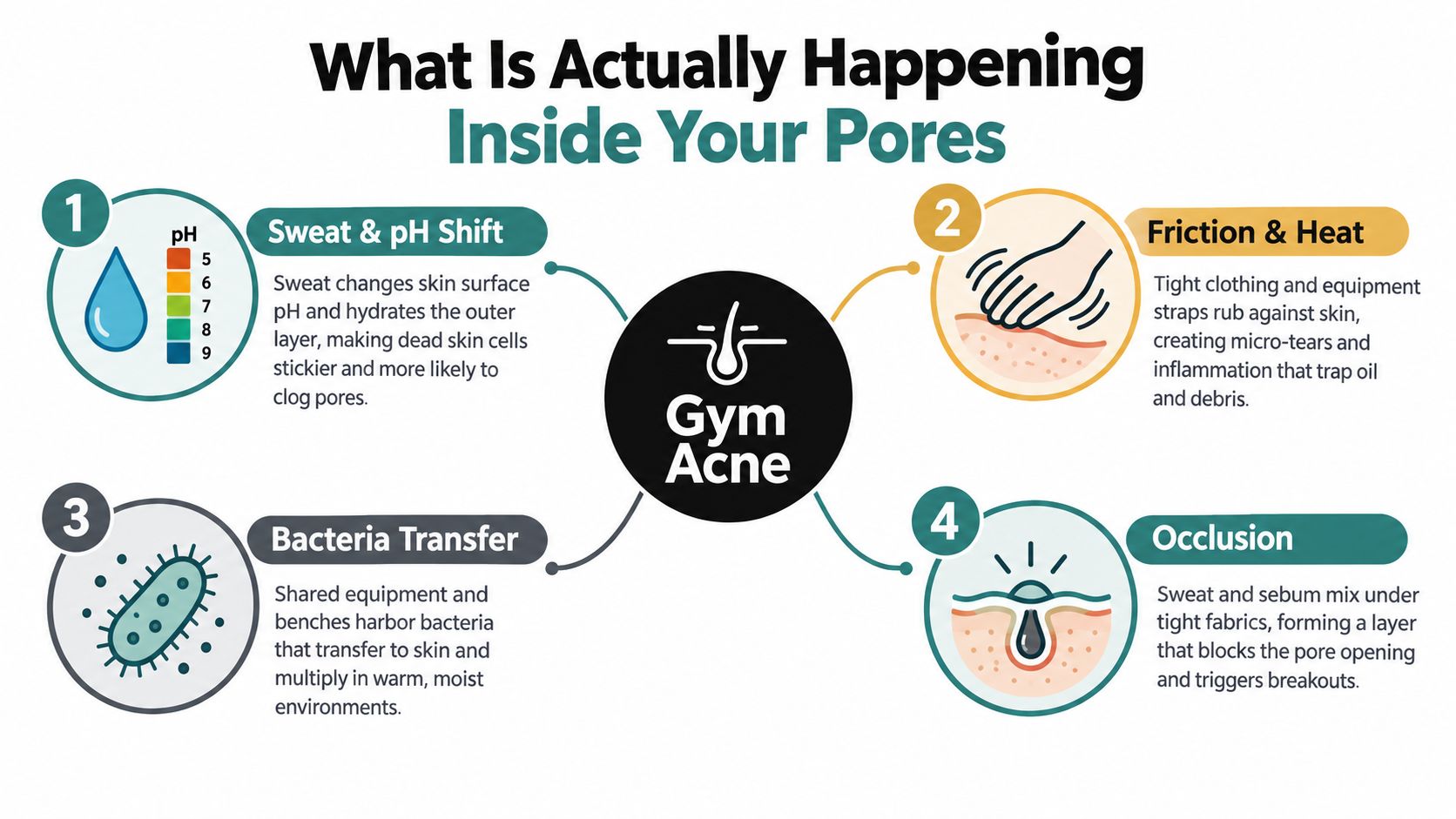
Sweat, oil, and sticky buildup
Sweat doesn't “cause acne” on its own, but it does make the skin surface damp and warm. That environment can make dead cells cling together more easily, which is one reason breakouts feel worse after training.
Sebum matters too. In a sweaty, enclosed follicle, oil can become part of a thicker mix that doesn't drain well. Once that happens, the pore opening gets more likely to clog, especially if your skin is already acne-prone.
Friction and occlusion turn a small problem into a recurring one
A strap, bench edge, helmet pad, or tight waistband doesn't just touch the skin once. It presses, rubs, and traps the same area over and over, which is why the breakouts often follow a pattern rather than appearing everywhere.
Simple way to picture it: sweat makes the surface wet, oil adds fuel, and friction pushes the whole mess deeper into the follicle.
Shared, occluded follicles are also a friendlier place for C. acnes to thrive, and that's where inflammation starts to build. This is why gym acne isn't just a dirt problem, and why blasting the skin with harsh scrubs usually misses the issue.
For a deeper skin-science angle on oil production, see what is sebum production. The key idea is that the follicle is a system, not a single clog.
How Common Gym Acne Really Is
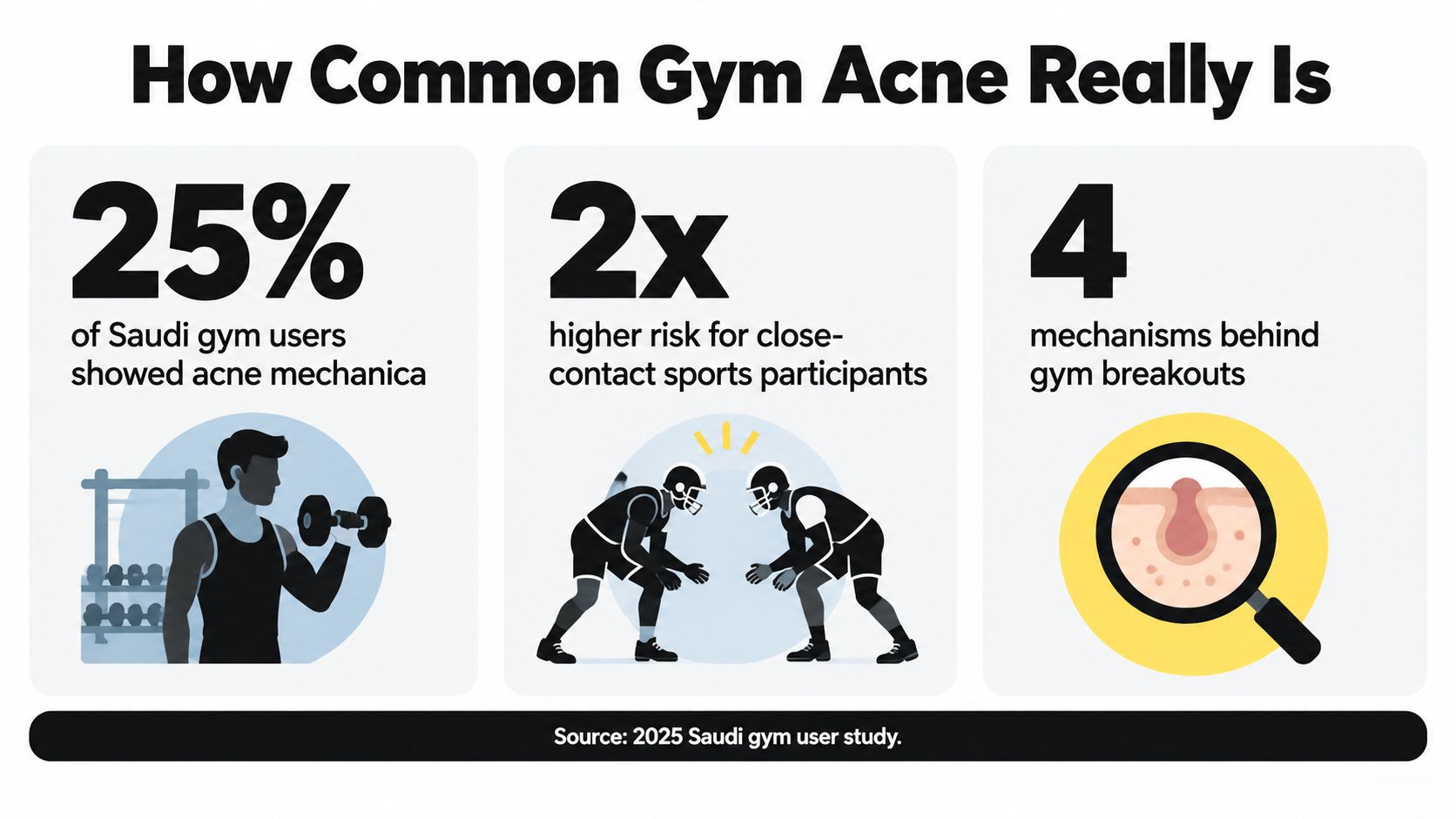
A 2025 examination of Saudi gym users and close-contact sports participants reported acne mechanica in 25% of diagnosed exercise-related dermatoses, with the most affected areas being hands or palms at 54.5%, head and neck at 30.5%, and arms or shoulders at 29.5% (PMC study). Those numbers don't describe every gym in every country, but they do show that mechanical acne is not rare, and that the body areas involved usually line up with contact points.
The distribution is the clue. When the skin under a strap, pad, or tight sleeve keeps breaking out, that pattern is telling you something about pressure and rubbing, not just about oiliness. Older athlete-focused reviews point in the same direction, especially for people who train in tight gear that traps sweat against the skin.
Here's the part many people miss: the most affected area in that study wasn't even the face. That matters because body acne often gets ignored until it becomes persistent or starts leaving marks.
A video overview can help make the pattern easier to spot in your own routine:
If your breakouts keep showing up in the same spots after training, you're not imagining the link. The pattern itself is one of the strongest clues that friction, occlusion, or equipment contact is driving the flare.
Evidence-Based Habits That Prevent Gym Acne
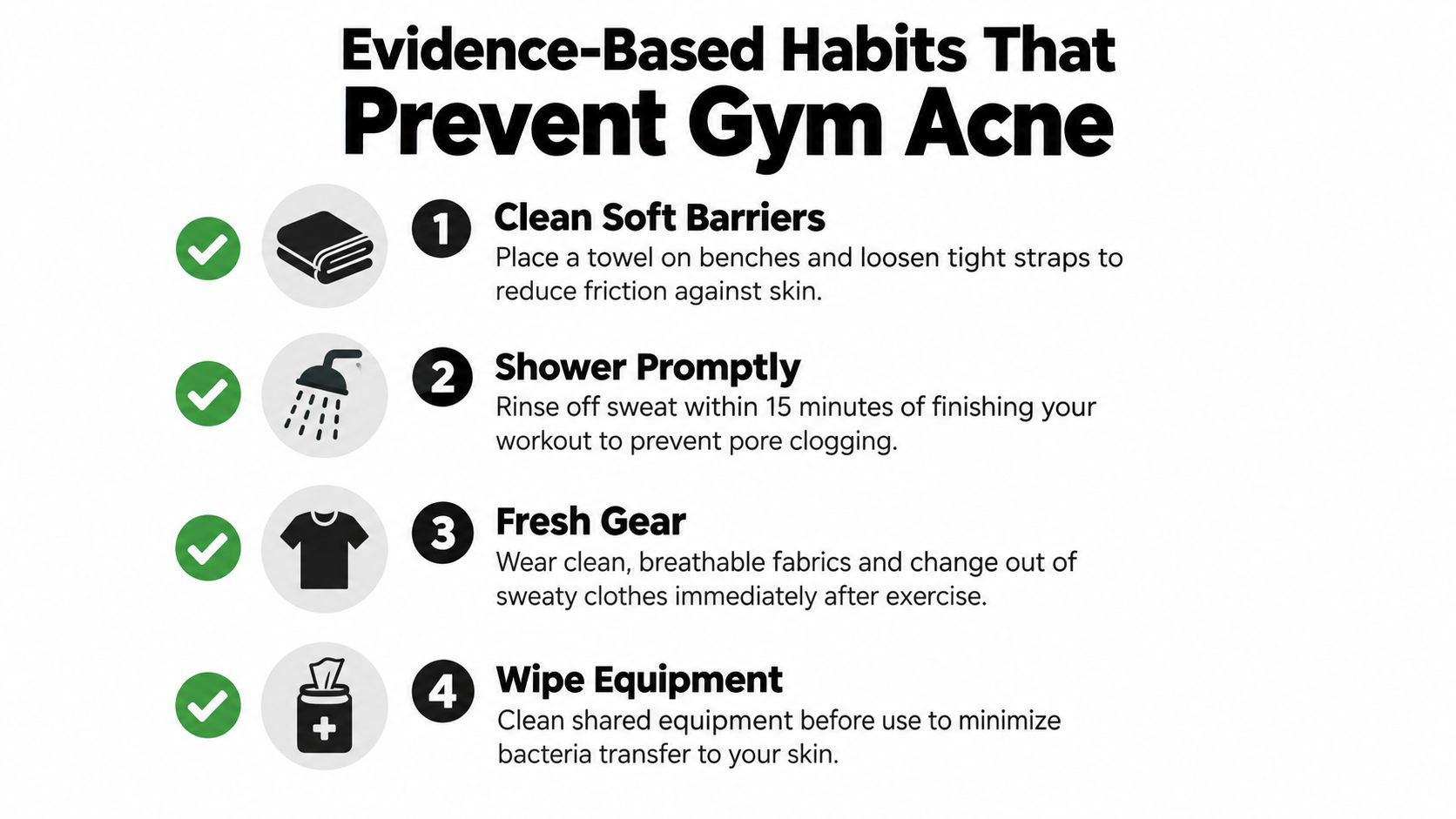
Reduce friction where it repeats
The fastest win is to stop the same spot from taking the same abuse every session. Put a clean towel on shared benches, loosen straps that don't need to be tight, and reposition belts or backpacks so one shoulder or jawline isn't doing all the work.
That's especially important if your breakouts trace the exact path of your gear. A little barrier can matter more than a longer routine, because it cuts off the mechanical trigger before the pore gets irritated.
Change out of damp gear as soon as you can
Wet clothing holds heat and pressure against the skin. That's why changing out of sports bras, compression tops, and sweaty shorts quickly is more useful than waiting around in them while you cool down.
For facility managers, the summer hygiene for sports facilities article is a practical reminder that clean surfaces and dry gear aren't cosmetic details, they're part of skin hygiene. For you, the takeaway is simple, dry fabric beats damp fabric every time.
Clean equipment and keep cleansing gentle
CDC guidance for athletic facilities says shared equipment should be cleaned and disinfected after every use and allowed to dry before the next user (CDC guidance). That doesn't mean disinfectant belongs on your skin, it doesn't. It means the surfaces touching bare skin should be kept as clean as the setting allows.
If you can't shower immediately, blot sweat, get out of occlusive layers, and cleanse when you're able. Scrubbing harder won't fix friction.
A small randomized pilot study found no statistically significant difference in truncal acne severity after two weeks between people who showered within one hour and those who waited at least four hours post-exercise (pilot study). That doesn't prove delay is ideal, but it does show the panic around an exact shower deadline is stronger than the evidence.
Your Post-Workout Skincare Routine Step by Step
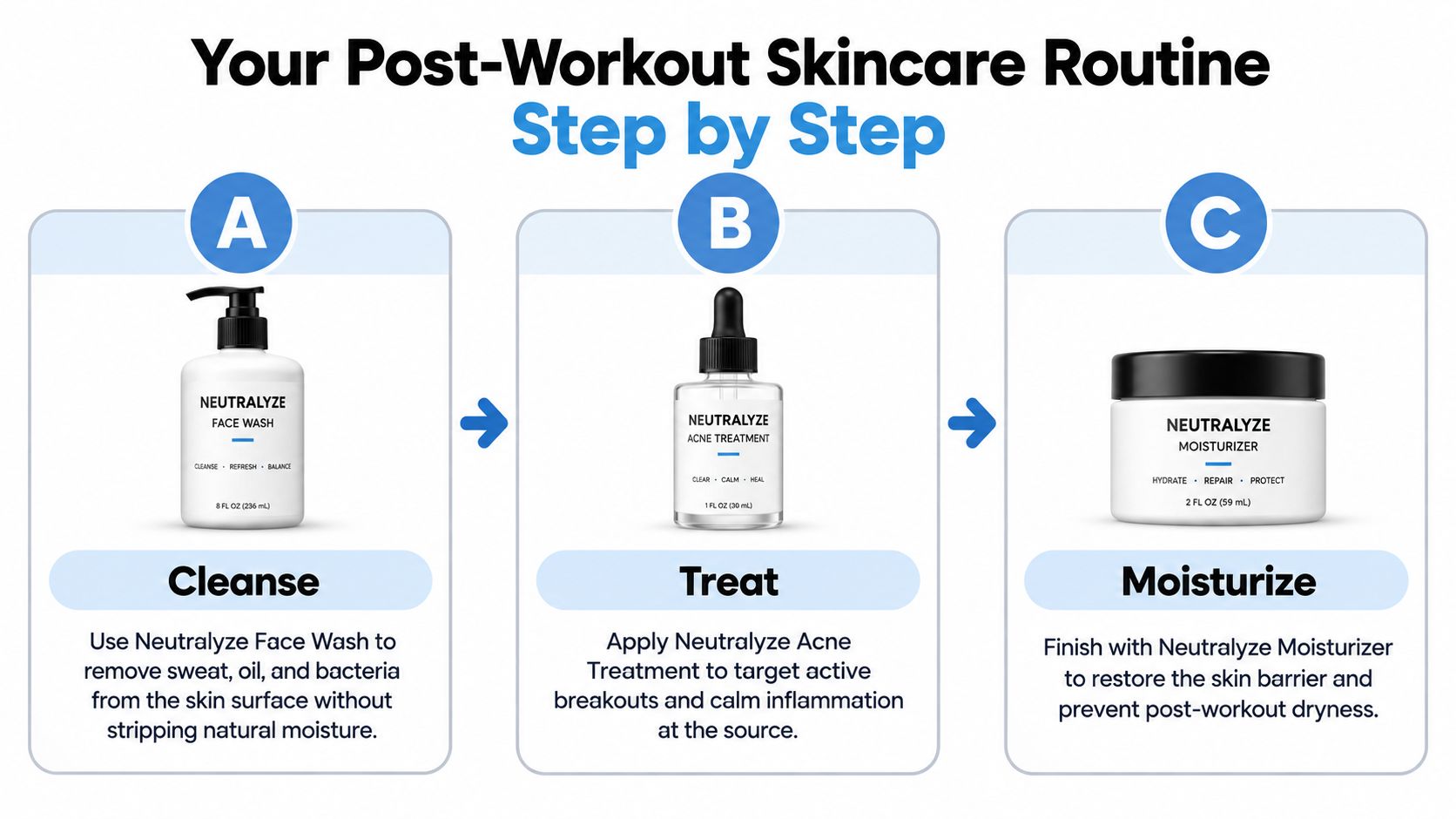
A solid post-workout routine follows the way gym acne develops. First, you remove sweat and oil. Then you clear out buildup in clogged pores. After that, you calm the skin so it does not feel stripped or tight.
Start with a non-soap cleanser that contains 2% salicylic acid and 1% mandelic acid. The Neutralyze Face Wash introduced earlier fits that profile. Salicylic acid is typically used at 0.5% to 2% in acne products, so this kind of cleanser belongs in an acne routine, not just a basic wash.
Cleanse with intent, not aggression
Use the cleanser on damp skin after training, then rinse and pat dry. Keep the focus on the face, but treat the chest, shoulders, and back the same way if those areas break out.
Then apply Neutralyze Exfoliating Pads to spots that clog easily, especially when straps, benches, or compression gear leave repeated friction. The salicylic and mandelic acid pairing has clinical support behind it, from a randomized study of a much stronger 20% salicylic-acid plus 10% mandelic-acid peel (study). That was a professional peel result, not a consumer promise, but it does support the logic of pairing those acids.
Hydrate without clogging the skin
Finish with a moisturizer that does not sit heavily on already irritated pores. Neutralyze Renewal Complex fits that final step because it adds hydration while keeping the routine acne-friendly.
For ordering, keep the sequence simple, thinnest to thickest, with acids before moisturizer. If you want a clearer breakdown of how to layer products, the correct order for skincare guide explains the logic in plain terms.
Back and Chest Acne After the Gym
A breakout on your back is easier to miss than one on your face, and that delay matters. The middle of the back, the chest under a sports bra, and the shoulders under a tight top all collect sweat, pressure, and heat in the same way a lid traps steam. That combination keeps pores under strain longer.
A runner who repeats the same compression top may notice bumps along the chest. A lifter who braces against benches may see clusters across the shoulders and upper back. The pattern is the same, heat, friction, and occlusion.
Hard-to-reach skin needs a leave-on step that can cover a wider surface area than a face wash. Neutralyze Exfoliating Pads can be used across the chest, shoulders, and back after showering, especially where straps and equipment leave repeated friction. For a closer look at these zones, see salicylic acid for back acne. The salicylic acid and mandelic acid pairing fits body skin well because clogged pores and rough texture often spread over a larger area there.
Clothing matters too. If workout gear holds onto sweat and residue, skin stays in a damp, irritated environment longer. The prevent bacteria in sportswear guide is useful for keeping that cycle from repeating with the same tops and bras.
Small adjustments that make body breakouts less stubborn
- Wash sports bras and compression tops after every session. Sweat trapped in fabric keeps pressing against the skin.
- Rotate strap placement. If one shoulder always carries the load, that side may keep breaking out.
- Use clean, breathable sleepwear if back acne lingers. Nighttime friction can keep the skin irritated even after training is over.
Body acne also creates a second trap, confusing active acne with post-acne marks. Fading marks is a different goal from stopping new lesions, so keep the focus on preventing new bumps first.
Gym Acne Myths Worth Stopping
A lot of bad advice survives because it sounds simple. Sweat gets blamed, showers get treated like emergency clocks, and harsh scrubs get sold as the solution. The truth is more specific.
Sweat is not the whole story
Sweat can change the skin environment, but sweat alone doesn't equal acne. The problem starts when moisture, heat, oil, and friction meet the same follicle over and over.
That's why a drenched shirt and a tight strap are more important clues than whether you perspired at all. If you remove the friction and occlusion, the skin usually calms down faster than if you just wash more aggressively.
Immediate shower panic is overstated
The pilot study mentioned earlier didn't find a major difference between showering within one hour and showering after four hours. That doesn't make post-workout cleansing optional, it just means the exact minute matters less than people think.
What matters more is getting out of damp layers, blotting sweat, and cleansing gently when it's realistic. If you can't shower right away, don't scrub your skin raw trying to make up for it later.
Not every post-gym bump is acne
A 2025 review of athlete skin health says sweat, abrasion, tight synthetic clothing, and inadequate post-exercise hygiene interact as risk factors, and it also notes that intensely itchy, painful, or rapidly spreading lesions may point to folliculitis rather than ordinary acne mechanica (review). That distinction matters because the treatment path isn't the same.
If the bumps are uniform, itchy, and keep spreading, it's worth getting checked rather than trying to solve it with more acids alone. The wrong treatment can keep the cycle going.
When to Step Up to Prescription Care
A consistent at-home routine handles a lot of gym acne, especially when you also control friction and clothing. But there are clear times when a dermatologist should be the next stop.
Deep painful cysts, scarring, breakouts that keep worsening after months of routine care, or lesions that look infected need a professional evaluation. So do bumps that are intensely itchy or unusually uniform, since those can point to folliculitis or another diagnosis instead of straightforward acne mechanica.
Escalation Guide At-Home Care vs Dermatologist Visit
| Sign | Try Routine First | See a Dermatologist |
|---|---|---|
| Breakouts tied to friction points | Yes | If they keep returning |
| Mild clogged pores or whiteheads | Yes | If they don't improve |
| Painful deep cysts | No | Yes |
| Intensely itchy or rapidly spreading bumps | No | Yes |
| Scarring or persistent post-acne marks | Try early care, then reassess | Yes if they linger |
| Flares that persist despite months of consistent care | Sometimes | Yes |
A dermatologist may consider prescription retinoids, hormonal options, oral antibiotics, or isotretinoin for severe cases, depending on the type of acne and how your skin responds. The point isn't to jump there immediately, it's to escalate when the pattern says at-home care isn't enough.
For many people, though, a consistent salicylic and mandelic acid routine is the right at-home base. A simple rotation of Neutralyze Face Wash to cleanse, Neutralyze Exfoliating Pads to exfoliate, and Neutralyze Renewal Complex to hydrate gives you a mechanism-first routine that matches the way gym acne forms.
If your breakouts keep following the same straps, benches, or sweaty gear, don't keep treating the wrong problem. Visit Neutralyze and build a salicylic acid plus mandelic acid routine around cleanse, rejuvenate, and hydrate, then pair it with the friction control and clothing habits that help keep pores clear after workouts.