

Cystic Acne on Jawline: Causes, Treatments, and Prevention
You wake up with a tender lump along your jawline and can feel it before you see it. It isn't a small whitehead you can treat and forget. The swelling sits deep, hurts when you touch it, takes a long time to settle, and may leave a dark mark after the pain fades. Then another one appears in nearly the same place.
That pattern is frustrating, but it isn't evidence that you have dirty skin or that you haven't scrubbed hard enough. Cystic acne on the jawline is usually deep inflammatory acne, and its location can offer clues without proving the cause. The useful questions are different from “What cleanser removes this fastest?” You need to know what the bump is, how it formed, which at-home steps can support the skin, and when repeated self-treatment is delaying proper care.
This guide follows that path, from the lesion under your skin to hormones and everyday triggers, possible look-alikes, a salicylic acid and mandelic acid routine, and clear reasons to involve a dermatologist.
Waking Up to Another Deep Jawline Bump
You notice it before the mirror confirms it. A sore spot along the jaw catches your attention when you chew, shave, apply makeup, or rest your hand near your chin. The bump may look only mildly red, or almost skin-colored, yet it feels deeper than a typical pimple, with pressure and tenderness that seem out of proportion to what you can see.
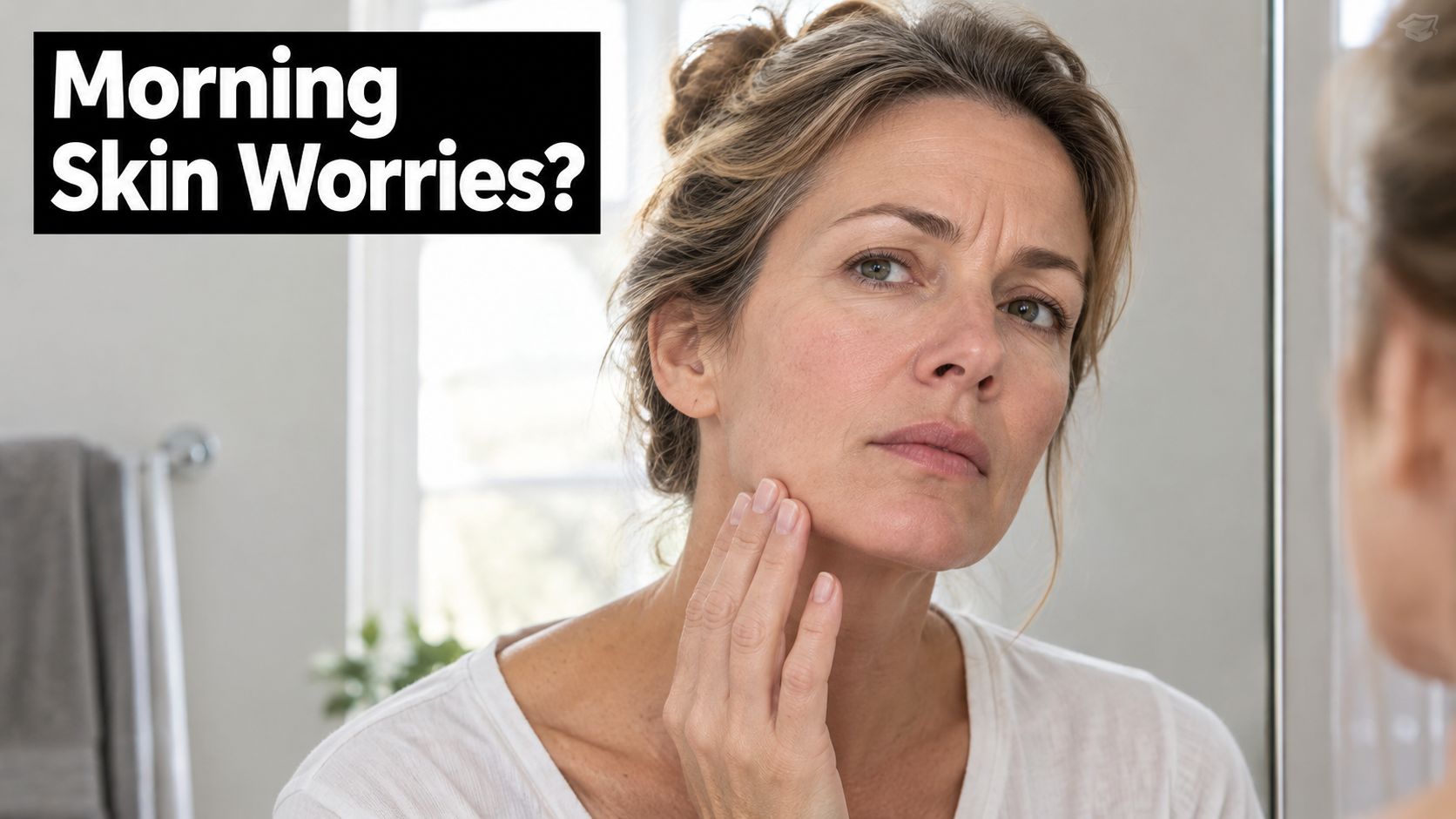
That mismatch confuses a lot of people. A surface blemish usually announces itself with a visible whitehead, blackhead, or small pustule. A deeper jawline lesion often does not. It can feel hard in the center, swollen around the edges, and stubbornly unchanged even after washing, spot treatment, or extra exfoliation.
The urge to squeeze is understandable. So is the temptation to throw several acne products at it at once. But pressure and harsh scrubbing mainly injure the skin above the problem. A deep lesion needs a different strategy from a superficial clogged pore, because the inflammation is sitting farther down in the follicle, where friction from your fingers cannot clear it and can make the area angrier.
Names add another layer of confusion. People often call any painful lump a cyst, but some jawline bumps are firmer nodules, while others are not acne at all. Folliculitis can mimic acne when inflamed hair follicles create tender bumps. Perioral dermatitis tends to cluster around the mouth with a different pattern. Rosacea can also produce inflamed bumps, though usually with a broader flushing background. If every deep bump gets labeled “cystic acne,” the treatment choice can go off track from the start.
The practical shift: ask what kind of bump this is, not only how to flatten it fast.
What this guide helps you decide
You'll learn how to:
- Describe the lesion: Tell a firm nodule from a softer cyst and separate deep inflammation from a surface breakout.
- Understand the mechanism: Follow how oil, blockage, and inflammation create a painful lesion under the skin.
- Audit your triggers: Look at hormonal timing, friction, shaving, stress, and irritating routines without forcing one explanation.
- Build realistic care: Use salicylic acid and mandelic acid thoughtfully, rather than stacking every active you own. OTC acids can help some clogged, inflamed lesions near the surface, but they are less reliable once swelling is deeper and more persistent.
- Recognize escalation points: Know when pain, recurrence, scarring, or uncertainty means this has stopped being a routine skincare problem.
Acne is common worldwide, including after the teenage years. A Global Burden of Disease analysis estimated 231.2 million prevalent cases of acne vulgaris worldwide in 2019, but that figure refers to acne overall, not specifically to cystic acne on the jawline. That distinction matters, because a recurring lower-face pattern still needs individual assessment.
What Cystic Acne on the Jawline Actually Means
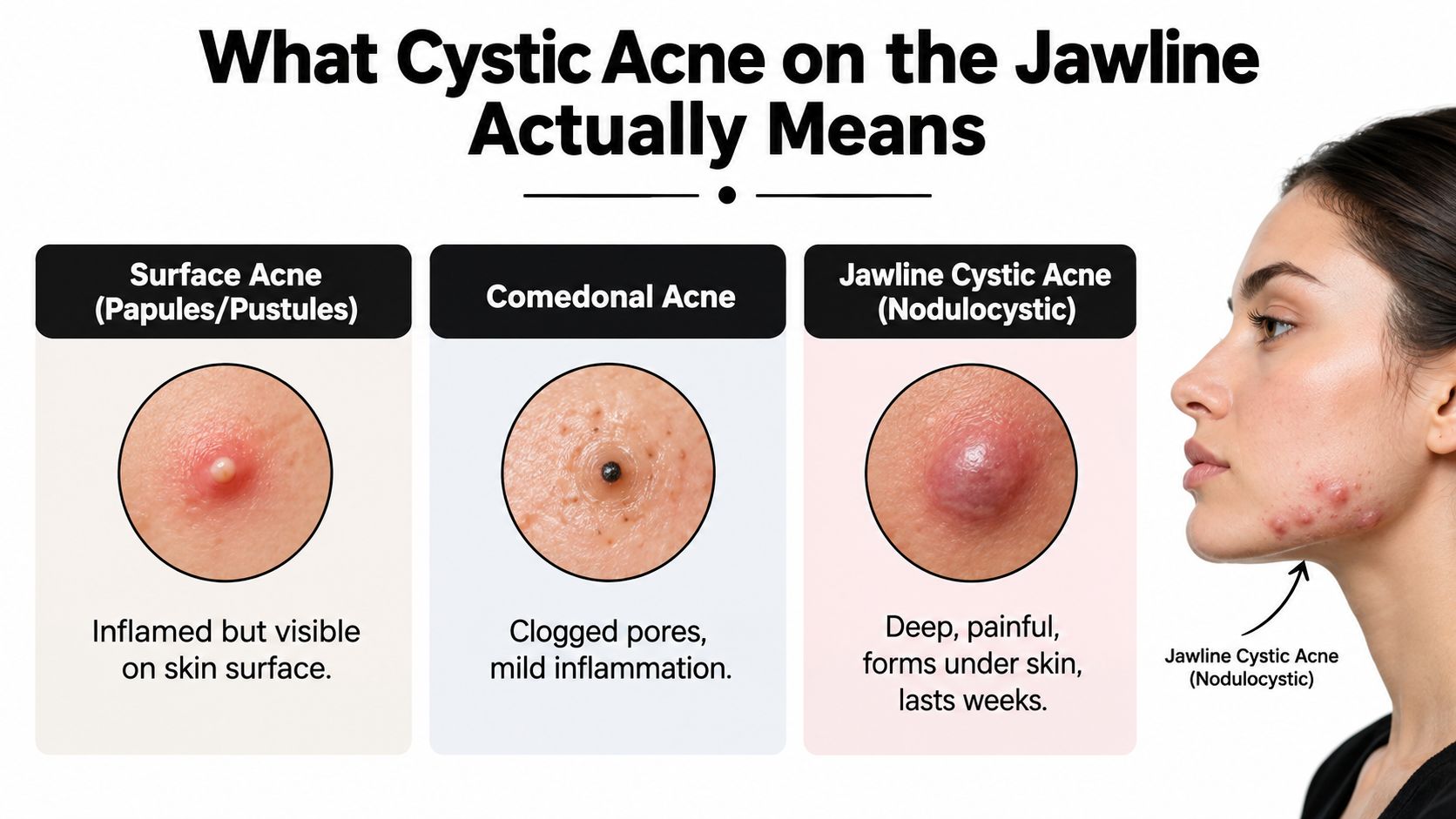
"Cystic acne" is commonly used for any large, painful spot. Clinically, jawline cystic acne usually refers to nodulocystic inflammatory acne, a severe form involving the deeper pilosebaceous unit, the structure made of a hair follicle and its oil gland. It isn't just a pore that looks more dramatic on the surface.
A comedone is a blocked follicle, such as a blackhead or whitehead. A papule is an inflamed raised bump, while a pustule contains visible pus closer to the surface. A deep lesion behaves differently because inflammation extends into the skin rather than staying near the opening of the follicle.
Nodule or cyst
The words matter because they describe different physical structures:
- A nodule feels firm: It is a deep, solid inflammatory lesion and typically doesn't contain a pus-filled cavity.
- A cyst feels softer or fluctuant: It contains pus and may have a less solid, more fluid-like quality.
- Both can hurt: Depth and inflammation, not just visible redness, create tenderness.
- Both can mark the skin: Deep inflammation is more likely than a simple comedone to leave persistent discoloration or scarring.
A 2023 clinical review describes acne nodules as generally larger than 5–10 millimeters and notes that they often develop around the jawline or chin American Academy of Dermatology acne symptoms reference. The jawline, chin, lower face, and neck are recognized locations for severe inflammatory acne, particularly in women with hormonally influenced breakouts.
Why the location matters, but doesn't diagnose you
Repeated tender lesions along the lower face can suggest a hormonally patterned distribution, especially in adults. The pattern is useful because it helps a clinician ask better questions about timing, medications, menstrual cycles, and other symptoms. Location alone can't establish a diagnosis or identify the cause.
Deep lesions also deserve more respect than ordinary blackheads. Squeezing a blackhead may remove some surface material. Pressing a deep nodule can rupture inflamed tissue below the skin and increase the likelihood of prolonged discoloration or a scar.
If you aren't sure whether you're feeling a nodule, cyst, or another type of bump, don't keep escalating products just because the spot is painful. The description, distribution, duration, and response to care provide more useful information than the label “cystic.”
How a Deep Jawline Cyst Forms Under the Skin
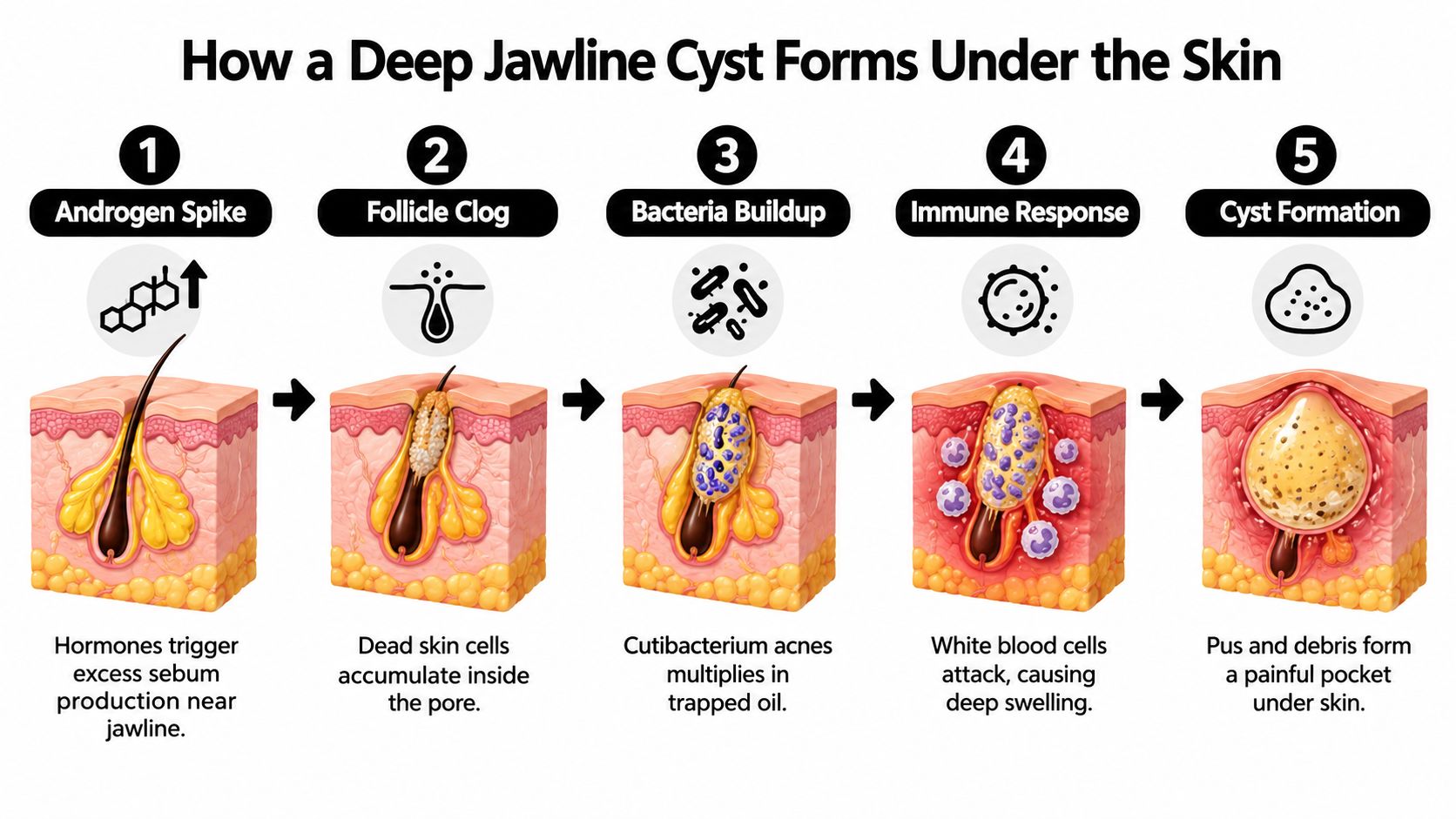
A deep jawline cyst starts long before you can feel that hard, tender lump. The problem begins inside the hair follicle and oil gland unit, where oil is supposed to move up and out in a controlled way. In acne, that exit starts behaving more like a clogged drain. Oil, shed skin cells, and inflammatory debris collect in a space that was never meant to hold pressure.
The sequence beneath the surface
First, androgen-sensitive oil glands produce sebum. Many jawline breakouts are influenced by follicles that react strongly to ordinary hormone signals. That does not automatically point to a hormone disorder. It means the gland is responsive, and that responsiveness can raise oil production enough to set the stage for a deeper lesion.
Next, follicular hyperkeratinization narrows the route out. Cells lining the follicle do not shed cleanly. They stick together, mix with sebum, and form a plug. Sometimes that stays closer to the surface as a blackhead or whitehead. Sometimes the blockage develops deeper, where pressure and inflammation matter more than what you can see in the mirror.
Then, Cutibacterium acnes contributes to the inflammatory environment. This organism is part of the acne process because it lives in an oil-rich follicle and interacts with the immune system. The issue is not only the presence of bacteria on skin. The issue is a blocked follicle that becomes an irritated, enclosed pocket where inflammation escalates.
Finally, the follicular wall can rupture. Once that wall gives way, keratin, oil, and inflammatory material spill into the surrounding dermis. That is one reason a jawline lesion can feel deep, sore, and slow to leave, even after the surface looks less angry Merck Manual overview of acne vulgaris.
Why scrubbing can backfire
A scrub works on the surface. A deep inflamed lesion is forming below that surface, so friction cannot remove what is trapped lower down. It can, however, irritate the barrier, increase redness, and leave skin less able to tolerate treatment that might actually help.
The same logic explains why acids help some jawline bumps more than others. Salicylic acid is oil-soluble, so it can help loosen pore buildup and reduce comedonal plugging nearer the follicle opening. Mandelic acid supports surface exfoliation in a more controlled way. Those ingredients can improve the upstream traffic jam, especially when smaller clogged lesions are part of the picture. They do not reliably flatten a large, established cyst that already involves deeper inflammation.
A cleanser such as Neutralyze Face Wash 2.0 combines salicylic acid and mandelic acid in a rinse-off format. That can support acne-prone skin, but it is still supportive care. Deep, painful, lingering, or scar-forming jawline lesions often need treatment directed at inflammation below the surface.
Here is a short visual explanation of how inflammation develops beneath the surface:
Hormones, Habits, and Skincare Triggers Worth Knowing
Jawline acne often makes people jump straight to hormones. That instinct isn't unreasonable, but it can become too absolute. A lower-face pattern is a clue, not proof of an endocrine disorder.
A flare that appears predictably around menstruation, or that begins after starting or stopping hormonal contraception, is more suggestive of hormonal influence. Androgens can increase sebaceous activity and follicular inflammation, while stress-related endocrine changes may add to oil production. Adult acne also has a female predominance, although men and people of all ages can develop acne.
Four trigger categories to review
Hormonal timing deserves a calendar, not a guess. Note whether lesions recur at a similar point in the menstrual cycle or changed after contraception. Sudden, severe, late-onset, or treatment-resistant acne deserves clinical attention, particularly with irregular periods, excess facial or body hair, scalp-hair thinning, or other signs of androgen excess. These symptoms are more useful than jawline location alone when deciding whether to discuss PCOS or androgen evaluation.
For a broader symptom-based discussion, this guide for hormonal imbalance acne can help you organize questions before a medical appointment.
Mechanical irritation can concentrate trouble on the lower face. A razor, chin strap, mask edge, phone, helmet, or frequent hand contact can add friction and transfer oil or residue. Clean objects that touch your jawline, avoid pressing them against active lesions, and shave with less repeated passes when possible.
Lifestyle associations vary by person. Stress can affect endocrine signaling and inflammation. Some people notice a repeatable relationship with particular dietary patterns, while others don't. Avoid turning a suspected association into a restrictive rule unless the pattern is consistent and worth discussing with a clinician.
Skincare can create its own inflammation. Harsh scrubs, multiple leave-on acids, strong fragrances, and heavy occlusive products may irritate or congest the area. A routine that stings continuously isn't necessarily working harder. It may be making the follicle and barrier more reactive.
You can also compare your observations with this adult acne causes guide, then bring a concise list of timing, products, medications, and symptoms to your clinician.
A useful test: change one aggravating habit at a time, keep the rest of the routine steady, and record whether the same jawline pattern continues.
The key distinction is simple. Hormonal influence is plausible, but “jawline” isn't a diagnosis. Testing isn't automatically indicated for every adult with acne, and normal blood results may not fully explain persistent symptoms. A symptom-based assessment is more informative than requesting a hormone panel solely because lesions appear near the chin.
Could It Be Something Other Than Cystic Acne
You wake up with another deep bump along the jaw and assume it is the same problem again. That guess is understandable, but jawline lumps do not all come from the same process. Several conditions can mimic acne while needing a different response clinical review of adult female acne and its mimickers.
Start by reading the skin's behavior, not the name on a product.
| What you notice | What it may suggest | Why it matters |
|---|---|---|
| Deep, tender lesions that recur in a similar lower-face area | Nodulocystic acne | Deep inflammation can scar and may need medical treatment |
| Small bumps centered around hairs after shaving or friction | Bacterial folliculitis | Reducing friction and treating the follicular infection may matter more than exfoliating |
| Uniform, itchy bumps that cluster together | Yeast-related folliculitis | Acne products may not address the underlying problem |
| Bumps and redness around the mouth, often with irritation | Perioral or periorificial dermatitis | Some acne routines can worsen irritation |
| Redness with papules, flushing, or sensitivity | Rosacea | The management approach differs from acne care |
| Repeated painful lumps in folds, drainage, or interconnected areas | Hidradenitis suppurativa | This warrants medical assessment rather than repeated spot treatment |
| A single enlarging, tender lump with a capsule-like feel | Inflamed sebaceous cyst | It may require evaluation and a procedure rather than acne acids |
The easiest place to get confused is with deep bumps that all feel "under the skin." Acne nodules usually come from an inflamed, blocked follicle. Folliculitis is also follicle-based, but it often shows up as smaller bumps around hairs, especially after shaving, rubbing, sweating, or occlusion. Many people notice that folliculitis itches more, while a cystic acne lesion feels more sore, pressurized, and fixed in one familiar spot. These are clues, not perfect rules.
Perioral dermatitis and rosacea create a different kind of mistake. If the area around the mouth is red, irritated, flaky, or easily stings, piling on more exfoliation can make the skin angrier. Rosacea also tends to come with background redness or flushing. In those cases, the problem is not just trapped oil.
A short decision filter
Ask yourself:
- Is the lesion deep and tender, and does it return to a similar spot? That pattern fits nodulocystic acne more than a random surface clog.
- Are the bumps small, similar in size, and itchy? Folliculitis moves higher on the list.
- Is there mouth-centered redness, scaling, or burning? Consider perioral dermatitis before adding more acids.
- Does a lump drain, connect under the skin, or keep enlarging? That stops being routine skincare territory.
- Are you feeling jaw or chin pain without a clear skin lesion? why does my chin hurt when I can help you think through non-skin causes, especially if movement or the jaw joint changes the pain.
A salicylic acid and mandelic acid leave-on pad may help with surface congestion, rough texture, and the smaller comedonal lesions that can surround true acne. It will not settle every deep lump, and it will not sort out every diagnosis. If the lesion is persistent, draining, rapidly worsening, or does not behave like acne, get it examined.
Building a Gentle Routine Around Salicylic and Mandelic Acid
A good jawline routine should feel boring in the best way. Deep lesions usually respond better to steady, low-friction care than to a cycle of scrubs, spot treatments, and product switching. The goal here is simple: keep pores from staying packed at the surface, reduce the buildup around inflamed follicles, and avoid creating a second problem, an irritated skin barrier.
That last part matters. A deep cyst forms below the level where a washcloth or scrub can reach, so routine care is really about improving the environment around that lesion and lowering the chance that new clogs keep forming nearby. Over the counter acids can help with that job. They do not flatten every painful bump, and they do not treat every condition that can mimic jawline acne.
Salicylic acid works inside oily pore lining, where it helps loosen the mix of sebum and dead skin that keeps getting stuck. Mandelic acid works more at the surface, helping rough, uneven skin shed in a more orderly way. Used together, they can support the smaller clogged bumps and texture changes that often surround true cystic acne. If you want a closer look at how the two compare, see salicylic acid versus mandelic acid for acne.
A practical cleanse, exfoliate, renew routine
Morning cleanse: Start with a gentle cleanse. A non-soap face wash is often enough, and a salicylic acid and mandelic acid cleanser can make sense if your skin tolerates it well. If you use Neutralyze Face Wash 2.0, keep the contact brief, massage with your fingertips, rinse well, and pat dry. Rubbing longer will not pull a deep cyst upward. It usually just leaves the surrounding skin angrier.
Morning protection: If your skin feels tight after washing, use a non-comedogenic moisturizer, then apply broad-spectrum sunscreen. This step is easy to underestimate. Jawline acne often leaves behind discoloration, and daily sun exposure can make those marks hang around longer even after the active bump settles.
Evening cleanse: Wash off makeup, sweat, and the day's residue gently. Skip cleansing brushes, rough cloths, and anything that leaves the skin squeaky. That stripped feeling is not a sign that the pore is cleaner. It usually means the barrier is getting disrupted.
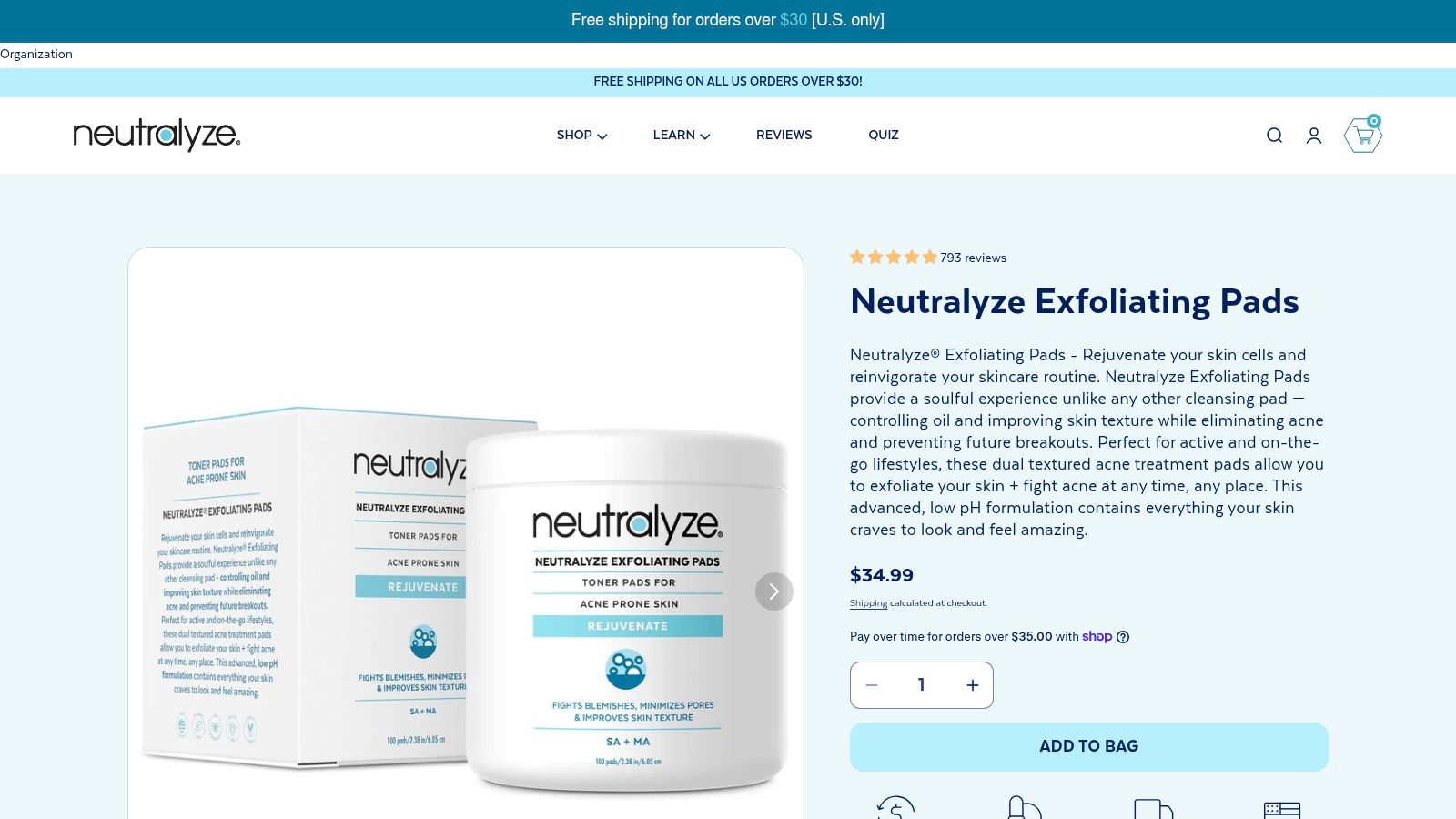
Exfoliate gradually: Use Neutralyze Exfoliating Pads on a limited schedule at first, such as a few nights per week, rather than every night from day one. That slower pace helps you answer an important question: are the acids helping with congestion, or are they just causing sting, flaking, and more redness? If your skin is reactive, patch test first and avoid combining the pads with other leave-on exfoliants the same night.
Renew and moisturize: Finish with a comfortable, non-comedogenic moisturizer. Neutralyze Renewal Complex combines hydration with salicylic acid and mandelic acid, so it should be used carefully if the rest of your routine already includes active products. Start with less, not more. Skin that stays calm is more likely to tolerate a routine long enough for you to judge whether it is helping.
What to avoid
- Don't squeeze: Pressure can push inflammatory material deeper and raise scarring risk.
- Don't scrub a cyst: Surface friction cannot clear a deep nodule.
- Don't stack acids: More exfoliation often means more burning and peeling, not better control.
- Don't seal active inflammation with heavy occlusives: Thick layers can feel protective while making a congested area feel more trapped.
- Don't change everything weekly: A routine needs enough time to show whether new lesions are becoming less frequent.
During the first four to six weeks, look for better tolerance, less irritation, and fewer new bumps. Existing deep nodules may linger. That does not always mean the routine failed. It may mean the acids are helping the parts of the problem they can reach, while a persistent jawline cyst needs stronger treatment than routine skincare can provide.
When OTC Stops Being Enough and Prescriptions Take Over
Nonprescription care has a legitimate role, but it has limits. Salicylic acid and mandelic acid can support clogged pores, surface turnover, and milder inflammatory acne. They aren't substitutes for treatment designed for severe nodulocystic disease, significant scarring, or a diagnosis that remains uncertain.
Prescription options work through different pathways. Topical retinoids such as adapalene or tretinoin normalize follicular cell turnover. Hormonal therapies, including combined oral contraceptives or spironolactone, may be considered when an appropriate clinician identifies an androgen-influenced pattern. Oral antibiotics can provide short-term inflammation control, while isotretinoin may be considered for severe, persistent, or scarring acne under close medical supervision.
Comparing the main options
| Option | Best For | Limitations |
|---|---|---|
| Salicylic acid and mandelic acid routine | Surface congestion, follicular plugging, and supportive care for acne-prone skin | May not control deep, recurrent nodules or cysts |
| Topical retinoid | Preventing clogged follicles and supporting long-term turnover | Can cause irritation and requires clinician or label-directed use |
| Hormonal therapy | Selected people with a compatible hormonal pattern and medical history | Not appropriate for everyone and requires clinical screening |
| Oral antibiotic course | Short-term control of inflammatory acne | Doesn't address every driver and isn't a stand-alone long-term plan |
| Isotretinoin | Severe, persistent, or scarring acne | Requires close medical supervision and careful safety assessment |
| Intralesional corticosteroid injection | A large, painful individual nodule | A clinician-administered adjunct, not a complete acne regimen |
Dermatology guidance recognizes intralesional corticosteroid injection as an option for a large, painful nodule. A clinician can use it to reduce swelling and pain and potentially lower the risk of scarring American Academy of Dermatology acne guideline summary.
A useful comparison for people considering an over-the-counter approach versus a topical retinoid is Differin for cystic acne. The choice isn't about proving that one category is universally stronger. It's about matching the treatment intensity to lesion depth, scarring risk, medical history, and tolerance.
Escalation isn't failure: It means the depth or behavior of the acne has exceeded what a surface routine can reasonably manage.
As a practical guide, reassess after a consistent routine lasting six to eight weeks, but don't wait that long if lesions are rapidly worsening, intensely painful, or already scarring. An appointment can clarify whether you need a prescription, an injection for a single lesion, a hormonal evaluation, or a different diagnosis altogether.
Knowing When It's Time to See a Dermatologist
You don't have to wait until your skin is covered in scars to ask for help. Nodulocystic acne is itself a reasonable reason to seek professional assessment, especially when lesions are painful, persistent, or recurring. The earlier a clinician identifies the pattern, the more options remain for controlling active inflammation and protecting the skin from lasting changes.
Use these signs as your action list
- Deep or painful lesions: A tender lump under the skin is more concerning than an occasional superficial whitehead.
- Scarring or persistent pigment: Indented scars, raised scars, or dark marks that remain after inflammation settles justify an evaluation.
- Treatment resistance: If a consistent, appropriate routine hasn't improved the pattern, stop adding products and ask whether the diagnosis or treatment level is wrong.
- Rapid worsening: Sudden severe acne, rapidly enlarging lesions, or clusters that change quickly need medical review.
- Drainage or recurring lumps: Draining lesions or a lump returning in exactly the same area may indicate a cyst or another follicular disorder.
- Hormonal symptoms: Irregular periods, excess facial or body hair, scalp-hair thinning, or other androgen-related changes make a broader assessment more relevant.
- Emotional or physical burden: Pain, sleep disruption, avoidance of social situations, and persistent distress are valid reasons to seek care.
NICE recommends referral to a consultant dermatologist-led team for nodulocystic acne, acne conglobata, diagnostic uncertainty, or acne causing scarring. The guidance also supports referral when moderate-to-severe acne hasn't responded to a previous appropriate treatment course or is associated with persistent pigmentary changes NICE acne recommendations.
Prepare for the appointment
Bring photos taken during a flare, a list of products and medications, and notes about menstrual timing or contraception changes. Tell the clinician whether lesions itch, drain, recur in the same place, or leave dark marks. Those details help distinguish acne from folliculitis, rosacea, perioral dermatitis, hidradenitis suppurativa, or an inflamed cyst.
A dermatologist may recommend a prescription regimen, hormonal treatment, oral therapy, or a targeted injection. They may also advise that your nonprescription routine continue as supportive maintenance. A cleanser, controlled exfoliation, and comfortable moisturizer can remain useful, but they shouldn't delay treatment when the biology has moved beyond routine skincare.
The most constructive approach is neither to abandon at-home care nor to keep experimenting indefinitely. Use a simple, tolerable routine, track what happens, and seek professional guidance when depth, pain, scarring, recurrence, or uncertainty changes the risk calculation.
If jawline breakouts are driven by clogged pores and surface inflammation, Neutralyze offers a clinically formulated cleanse, exfoliate, and renew approach built around salicylic acid and mandelic acid. Visit Neutralyze to review the routine and choose a measured starting point, while arranging dermatology care for deep, painful, scarring, or treatment-resistant lesions.


