

Can Makeup Cause Acne? the Science Behind Breakouts
Yes, makeup can cause acne, but the risk depends on the product and how you wear it. In a 2025 case-control study, foundation was reported by 26.5% of acne cases versus 14.6% of controls, while powders were independently linked to a 3.47-times higher acne risk.
That doesn't mean every foundation, concealer, or powder will break you out. The more useful question is what the formula does inside the follicle, how long it stays on your skin, and whether removal leaves behind a film that mixes with sebum and dead skin cells. If you wear makeup daily and keep finding new bumps along your cheeks, hairline, jaw, or forehead, the culprit may be a specific product, heavy layering, or the way you remove it.
A clinically formulated salicylic acid and mandelic acid face wash can support a routine for clogged, acne-prone skin, but skincare won't compensate for a pore-clogging cosmetic that remains on the face all day. The aim isn't to fear makeup. It's to make the formula, wear time, application, and removal work together.
The Real Reason Makeup Triggers Breakouts
You apply a familiar foundation before work, wash it off at night, and notice several small bumps a few days later. The natural reaction is to blame “makeup” as a category, but that conclusion is usually too broad. The more precise explanation may be acne cosmetica, acne that cosmetics cause or aggravate through repeated contact with the skin.
The American Academy of Dermatology explains that some cosmetics, skin products, and hair products contain oils or other ingredients that can trigger breakouts, although they don't cause acne in most individuals. That distinction matters. Pigment isn't automatically the problem, and wearing makeup doesn't guarantee inflammation. The risk usually comes from the base formula, the product's ability to remain in pores, or the way several layers sit on the skin.
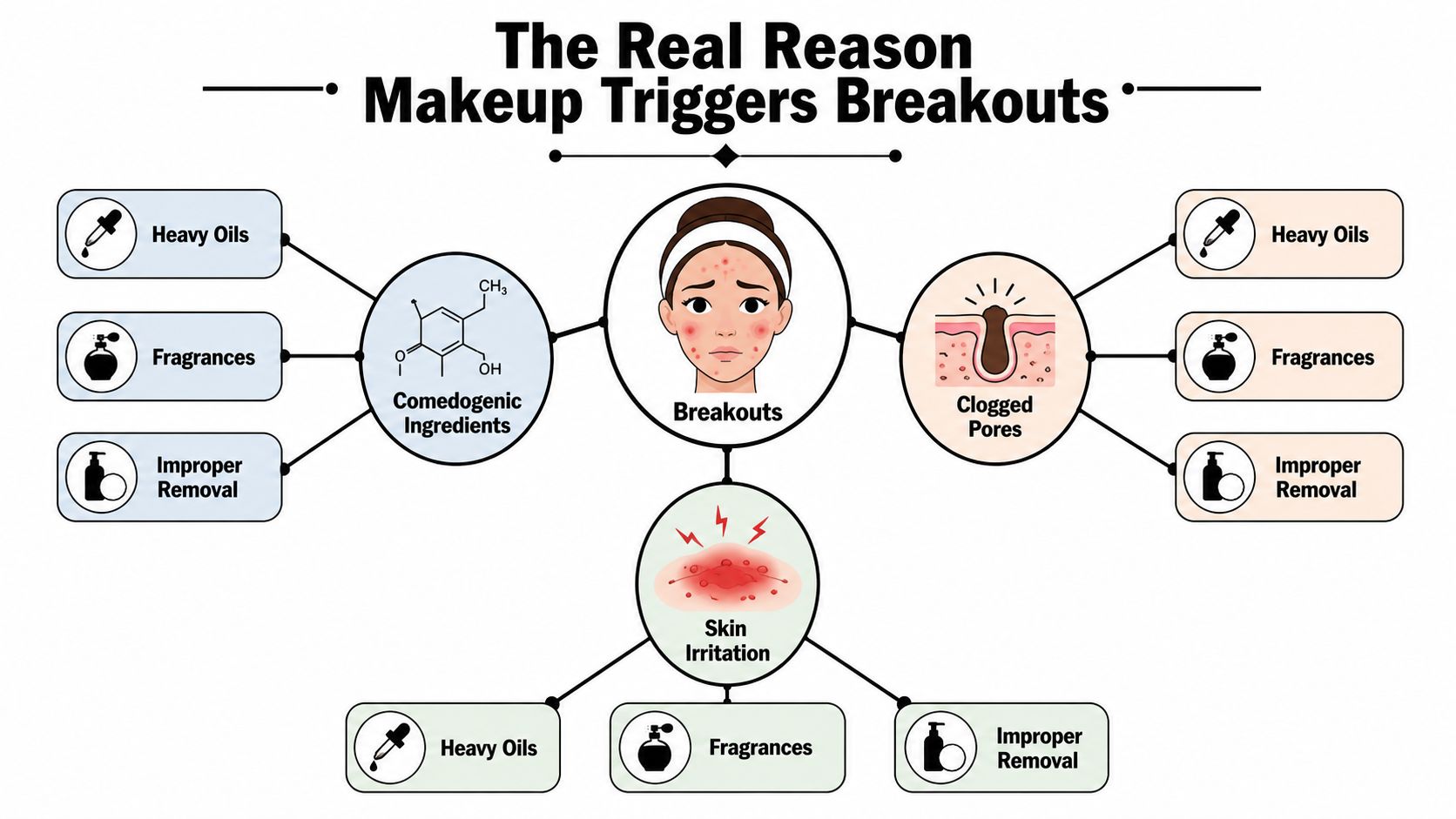
Why the same product affects people differently
Two people can use the same foundation and have different results. One person may have follicles that tolerate the formula, while another may already have excess sebum, compacted dead skin cells, or active inflammation. In that second situation, a rich product can behave like a lid over a narrow opening.
The problem can also build gradually. A single application may not create a visible lesion, but repeated exposure can keep the follicle in a congested environment. Prolonged wear, multiple layers of primer, foundation, concealer, setting products, and sunscreen can increase the amount of residue that must be removed later.
Practical rule: Treat a new breakout pattern as a product investigation, not proof that every cosmetic is harmful.
The distinction between acne cosmetica and ordinary acne is useful, but the two can overlap. Hormonal changes, genetics, stress, medications, and sebum production can create the underlying tendency. Cosmetics may then add occlusion, friction, or irritation that turns a quiet clogged pore into a visible lesion.
For a simple explanation of what happens beneath the surface, see this guide to how acne forms. Understanding that process helps you evaluate a product by its behavior on skin rather than by its marketing label.
Understanding the Mechanism of Acne Cosmetica
A pore is not an empty hole. It's the opening of a follicle containing a hair structure and sebaceous gland. Sebum travels through that follicle to the surface, while old skin cells normally shed away. Acne begins when that flow becomes crowded or disrupted.
The follicle becomes congested
The first step is often follicular hyperkeratinization, meaning skin cells inside the follicle stick together instead of leaving efficiently. These compacted cells combine with sebum and create a microscopic plug called a microcomedone. You can't see a microcomedone at first, but it can later become a blackhead, whitehead, or inflamed lesion.
An occlusive cosmetic doesn't need to be “dirty” to contribute. A thick film can reduce the follicle's ability to clear sebum and keratin naturally. If the formula also contains ingredients with comedogenic potential, the product may increase the chance that material stays trapped in the follicle.
A clinical review describes acne cosmetica as an interaction between sebum and trapped comedogenic cosmetic products. It also reports that prolonged use of products with higher comedogenicity was associated with greater acne risk, while facial cleansers containing comedogenic ingredients had an unadjusted odds ratio of 2.49 for acne compared with cleansers without those ingredients. Read the discussion of closed comedones and acne to see why flesh-colored bumps can be an early sign of congestion.
Inflammation turns a plug into a pimple
Once a follicle is blocked, the local environment changes. Cutibacterium acnes, formerly called Propionibacterium acnes or P. acnes, can thrive in an oxygen-limited, sebum-rich follicle. The immune system recognizes the changing environment and sends inflammatory signals.
That sequence explains why a product may seem to “cause acne” even though the visible pimple appears later. The cosmetic may have contributed to the plug first, while inflammation develops afterward. It also explains why the product that seems responsible isn't always the product that started the process.
Why wear time and removal matter
A formula that stays on the skin for a long period creates more opportunity for oil, sweat, sunscreen, and loose skin cells to mix with its film. Friction from masks, brushes, or repeated touching can add mechanical irritation, particularly around the jawline and cheeks.
Removal doesn't need to be aggressive. Scrubbing hard can damage the barrier, increase redness, and make inflamed acne feel worse. The better approach is complete, gentle removal followed by a cleanser appropriate for your skin and makeup load.
The evidence doesn't support the idea that all makeup causes acne. In a controlled study of corrective makeup, a noncomedogenic formula was associated with a 15.8% reduction in facial acne lesions after 28 days compared with baseline. That finding supports a more useful conclusion: the formula and routine can determine whether coverage aggravates the follicle or sits comfortably on acne-prone skin. See the clinical study on corrective makeup for the cited result.
Identifying Risky Ingredients and Product Types
Ingredient lists can look intimidating, but you don't need to memorize every cosmetic compound. Start with the product's texture and position in your routine. A lightweight powder may still matter for some acne-prone users, while a rich cream foundation, primer, concealer, and setting spray layered together can create a more persistent film.
The term comedogenic describes the potential to form comedones. It doesn't predict that every user will break out, and an ingredient's effect can change with concentration, the full formula, and the individual's skin. Labels such as “oil-free” and “non-comedogenic” are useful screening tools, but they aren't guarantees because testing methods vary.
Compare the profile, not one isolated ingredient
| Ingredient Category | Common Examples | Acne Risk Level |
|---|---|---|
| Heavy occlusive bases | Rich oils, dense waxes, thick balm-like textures | Higher concern for congestion, especially with prolonged wear |
| Lightweight coverage bases | Fluid, thin, easily spread formulas | Often lower concern, but individual reactions still matter |
| Fragrance components | Added fragrance and strongly scented blends | Irritation concern, particularly for reactive skin |
| Powder products | Loose or pressed powders used over several cream layers | Product and usage context matter; powders showed the strongest association in the 2025 case-control study |
| Oil-free formulas | Products labeled oil-free and designed for lighter wear | A useful starting point, not a promise of clear skin |
| Noncomedogenic formulas | Products tested or marketed as less likely to clog pores | Preferable for acne-prone skin, but testing standards differ |
The 2025 case-control study found that foundation use was more common among acne cases than controls, and powders showed the strongest association. After adjustment, only powders remained statistically significant, with an odds ratio of 3.47 and a 95% confidence interval of 1.58 to 7.59. This doesn't prove that powder causes every breakout. It shows why product type and usage context deserve more attention than a blanket ban on all cosmetics. The study is available in the case-control research on cosmetics and acne.
Watch the routine around the product
A product can be tolerable on its own but problematic when combined with several other layers. Consider these common patterns:
- Heavy coverage: Full-coverage foundation, concealer, and powder may leave more residue than a single sheer layer.
- High-retention zones: The hairline, sides of the nose, and jaw can collect product because of hair, sweat, friction, or incomplete cleansing.
- Scented formulas: Fragrance doesn't automatically clog pores, but it can irritate sensitive skin and make redness harder to distinguish from acne.
- Old tools: Brushes and sponges can hold makeup, sebum, and skin debris. A dirty tool can also spread product unevenly and encourage repeated rubbing.
If a new product coincides with a new cluster of bumps, stop changing several products at once. Keep the rest of your routine stable, remove the suspected product, and observe whether the pattern settles. This isn't a diagnostic test, but it gives you clearer information than replacing your entire cabinet in one evening.
How to Choose Safe Makeup and Remove It Properly
Start with the simplest formula that gives you the coverage you need. Look for non-comedogenic, oil-free, and fragrance-free options, then test one new product at a time. “Non-comedogenic” means the product is intended to be less likely to clog pores, not that it can never cause a reaction.
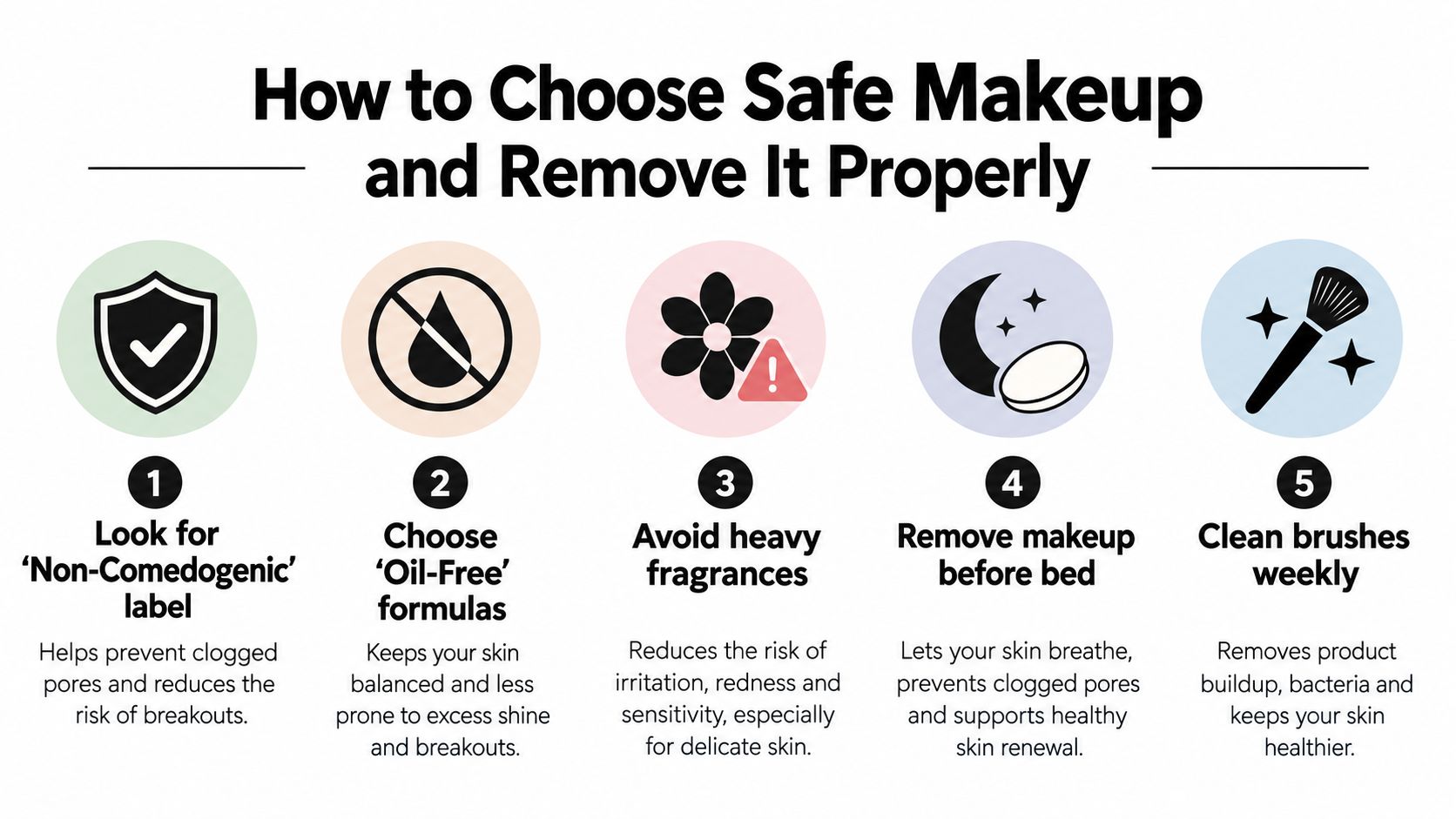
Build a lower-risk makeup routine
- Apply to clean, comfortable skin. Use a gentle cleanser and allow skincare to settle before adding makeup. Applying coverage over sweat or an unremoved nighttime product increases the residue already present.
- Use the thinnest workable layer. More product isn't always better coverage. Dab foundation where you need it, then use targeted concealer instead of repeatedly coating the entire face.
- Keep tools clean. Wash brushes and reusable applicators regularly with a suitable cleanser and let them dry fully. Don't share them, especially when you have active, inflamed lesions.
- Treat sunscreen as part of the formula review. If you need a face sunscreen, compare texture and finish rather than skipping protection. This non comedogenic face sunscreen guide offers a useful way to evaluate sunscreen choices for acne-prone skin.
- Remove makeup before bed. This is the step that protects the rest of the routine. Leaving foundation, powder, sweat, and sebum in place gives residue more time to remain around the follicle.
Remove makeup without stripping the barrier
Begin by dissolving makeup with a product suited to your skin. Use gentle pressure around the eyes and avoid dragging cotton across inflamed areas. If you wear water-resistant or long-wear coverage, take enough time to loosen it rather than relying on vigorous rubbing.
Follow with a mild cleanser. Double cleansing can be helpful when the first step removes makeup and sunscreen and the second cleans the skin, but it isn't a requirement for everyone. If your face feels tight, hot, or squeaky afterward, the routine may be too aggressive.
Removal should leave your skin clean, not punished. Redness and stinging aren't evidence that you removed more effectively.
A salicylic acid cleanser may suit oily or congested skin, but active exfoliation should be introduced thoughtfully. Avoid piling several strong exfoliants onto already irritated skin. For a practical cleanser selection framework, use this guide to the best face wash for acne-prone skin.
The aim is to remove the cosmetic film while preserving the barrier. A damaged barrier can increase discomfort, flaking, and sensitivity, which often makes makeup sit poorly and encourages more rubbing or layering the next day.
Supporting Clear Skin with Acne-Focused Skincare
Makeup sits on the skin, but acne develops within the follicle and surrounding tissue. A routine that addresses clogged pores can make coverage easier to wear because there are fewer rough, congested areas for product to collect around. It also helps you distinguish active acne from the marks left after inflammation.
Salicylic acid is a beta hydroxy acid, or BHA, that is oil-soluble. That property allows it to work within the oily environment of the pore and support the removal of compacted material. Mandelic acid is an alpha hydroxy acid, or AHA, that supports surface exfoliation and can help improve the look of uneven texture. Using both doesn't make every routine suitable for every person, so introduce them according to the product directions and your skin's tolerance.
A cleanse, exfoliate, renew approach
A clinically formulated acne system can organize these functions into separate routine steps:
- Cleanse: A salicylic acid and mandelic acid wash removes daily residue while providing a brief exfoliating step. Neutralyze Face Wash 2.0 contains 2% salicylic acid and 1% mandelic acid.
- Exfoliate: Leave-on pads provide more contact time than a rinse-off cleanser. Neutralyze Exfoliating Pads combine salicylic acid and mandelic acid for concerns such as clogged pores, blackheads, and uneven texture.
- Renew: A treatment moisturizer can combine hydration with acne-focused exfoliation. Neutralyze Renewal Complex uses salicylic acid and mandelic acid and is positioned for breakout-prone skin, post-acne marks, and uneven tone.
This is not a promise that the routine will prevent every cosmetic breakout. It gives you a mechanism-first foundation: cleanse away residue, address pore congestion, and support comfortable skin so you don't need to compensate with increasingly heavy coverage.
Keep active acne separate from post-acne marks
A brown or red mark left after a pimple isn't the same as an active clogged pore. Exfoliating acids may support smoother texture and the gradual improvement of post-acne discoloration, but they don't replace treatment for deep, painful, or persistent lesions. Avoid treating every mark with more exfoliation, especially if the skin is stinging or peeling.
A helpful routine should also include a moisturizer and daytime sun protection that your skin tolerates. For a broader routine with practical cost-conscious ideas, explore these affordable acne skincare tips.
Introduce one meaningful change at a time. If you add a cleanser, pads, a treatment moisturizer, and new makeup simultaneously, you won't know which product caused dryness or irritation. Consistency and tolerance matter more than creating the most complicated routine possible.
When to See a Dermatologist About Your Breakouts
A new breakout after a foundation change may justify a product review. It doesn't explain every form of acne. If lesions continue despite removing a suspected cosmetic, the pattern may involve hormones, genetics, medication, excess sebum, follicular hyperkeratinization, or another condition that makeup alone can't address.
When product troubleshooting isn't enough
Seek dermatology advice when acne is painful, deep, persistent, or leaving scars. Professional evaluation is especially important when breakouts affect your confidence, spread despite a careful routine, or come with a reaction that includes significant burning, swelling, or widespread redness.
A dermatologist can distinguish acne from conditions that look similar and can discuss prescription-strength options when appropriate. You don't need to wait until every over-the-counter product has failed, particularly if you have nodules, scarring, or repeated flares.
Challenge the all-or-nothing advice
The claim that “makeup causes acne” is too simple. Historical and newer evidence points to formulas and habits as the more relevant variables. An earlier report found that switching acne-prone women to a benign cover-up formula reduced clinic cases of acne cosmetica from 25% to under 5%, while a later study of adolescent girls in Sri Lanka found a correlation between cosmetic exposure and acne severity. Those findings support caution with specific products, not a universal prohibition on cosmetics. The historical and population findings are summarized in this review of acne cosmetica and cosmetic exposure.
There is also a reverse-causality problem. People with acne may deliberately choose non-comedogenic products, so an association between those products and acne doesn't necessarily mean the products caused the condition. Recent research found a borderline association between non-comedogenic product use and acne, with the authors noting that reverse causality may explain it. That is why labels should guide your choices without becoming a guarantee.
You don't have to choose between clear-skin goals and wearing makeup. Choose a lighter, better-tolerated formula, remove it completely, and get professional help when the pattern goes beyond cosmetics.
Neutralyze offers a clinically formulated acne routine built around salicylic acid and mandelic acid, with separate cleanse, exfoliate, and renew steps for breakout-prone skin. Visit Neutralyze to explore the system and choose a routine that supports pore care without relying on prescription actives.


