

Best Products for Oily Sensitive Skin: Science-Backed Picks
You know the morning routine, the one where your forehead looks shiny before you've even finished coffee, but the minute you try a stronger acne wash your cheeks start to sting, flush, or peel. That's the trap with oily sensitive skin, you need enough oil control to keep pores from clogging, but you can't afford products that blow up your barrier. The best products for oily sensitive skin don't just strip shine, they keep skin calm enough to tolerate consistent treatment.
The old habit of chasing “squeaky clean” skin is exactly where a lot of people go wrong. Modern oily-skin guidance favors lightweight, oil-free, non-comedogenic formulas, while sensitive-skin guidance keeps pushing fragrance-free, hypoallergenic, and noncomedogenic labels for a reason, because oily sensitive skin is usually a mix of excess sebum, barrier disruption, and inflammation, not just “too much oil” (Everyday Health). If you've ever dealt with both breakouts and redness, resources on managing rosacea redness triggers can also help you spot the kind of irritation that overlaps with reactive skin.
For people who need acne-prone skin care that goes beyond basic at-home cleansers, the Neutralyze acne system is built around salicylic acid and mandelic acid in formats that fit real routines, including a cleanser, exfoliating pads, and a renewal moisturizer. Start with Neutralyze Face Wash if you want a daily base that doesn't feel like a harsh detergent.
Why Oily Sensitive Skin Feels Impossible to Manage
You wash your face, wait ten minutes, and the contradiction comes right back. Your T-zone is shiny, your chin is breaking out, and your cheeks feel tight enough to complain before breakfast. That is the point where a lot of people get stuck, because harsh products can cut oil but leave skin stinging, while gentle products may feel comfortable and still do very little for clogs.
The routine conflict that keeps repeating
In practice, this shows up at the shelf, not in a textbook. One bottle promises deep cleansing, another says it is for sensitive skin, and neither seems built for both problems at once. That mismatch is why people keep cycling through cleansers, toners, and acne creams without finding something they can use long enough to matter.
The practical fix is to stop treating oil control and sensitivity as separate jobs. You need formulas that reduce congestion without forcing your skin into rebound irritation, because irritated skin often looks even oilier and more inflamed. That is also why the strongest product picks tend to stay simple, protect the barrier, and use ingredients that do not demand a skin crisis as the price of progress.
Practical rule: if a product leaves you tight, hot, or itchy after cleansing, it is probably too aggressive for daily use.
That same balance matters when clients are dealing with flushing or sting-prone skin alongside acne, especially those also sorting out managing rosacea redness triggers. The skin does not care whether the irritation came from a toner, scrub, or cleanser, it reacts to the total burden. A calmer strategy usually works better than a dramatic one, especially when you are trying to keep breakouts down without turning the face into a red alarm signal.
The Biology Behind Oily Yet Reactive Skin
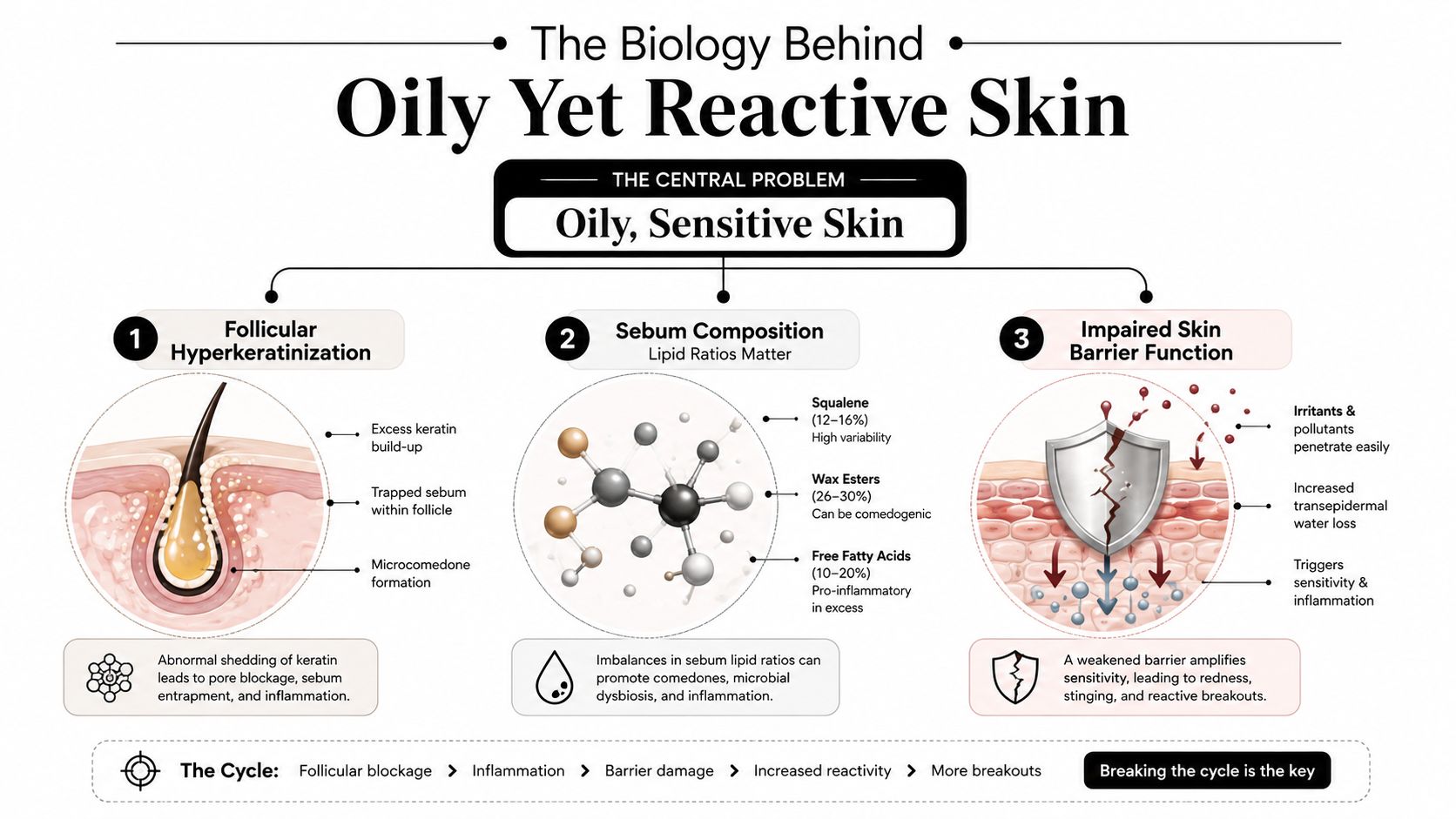
A face can look shiny and still be fragile. That is the part many oily-skin guides miss. Sebum output can be high while the barrier stays impaired, so the skin feels greasy, stings easily, and turns red after products that should have been harmless. In a recent analysis of oily sensitive facial skin, researchers treated it as a measurable dermatologic subtype, and the group differences included acne-count values of 60.2 ± 14.24 versus 28.39 ± 14.58, along with cheek pH values of 6.40 ± 0.07 versus 5.87 ± 0.12, both significant at p < 0.001 (PMC study).
Why harsh products backfire
A compromised barrier behaves like a roof with missing shingles. Strong cleansers, frequent scrubs, and formulas loaded with irritants do not patch the leak, they keep exposing the skin to more stress. The result is familiar in clinic. The face may feel squeaky clean for a moment, then become tighter, hotter, and more reactive later in the day.
The same analysis linked low forehead pH with oily neurosensitive skin, with an odds ratio of 3.148. That is why pH-aware, low-irritation products deserve more attention than aggressive oil-strippers. The goal is to reduce clogging without pushing the skin into a rebound cycle, where irritation and oiliness reinforce each other.
For a clearer explanation of the oil side of the problem, what sebum production is helps connect the dots between oil flow and pore congestion. Sebum, hyperkeratinization, and barrier weakness often show up together, so the product plan has to address all three instead of chasing one symptom at a time.
Barrier support changes the outcome. If you need a practical overview of repair basics, how to repair damaged skin barrier gives a useful framework for calming the skin before layering in more active oil-control products.
A sensible starting point is a moisturizer that supports hydration and acne care without feeling heavy. Neutralyze Renewal Complex is described as a time-released moisturizer for acne-prone skin with 2% salicylic acid and 1% mandelic acid, which fits the kind of product profile that makes sense when sebum control and sensitivity need to stay in balance.
What to Look for on Product Labels
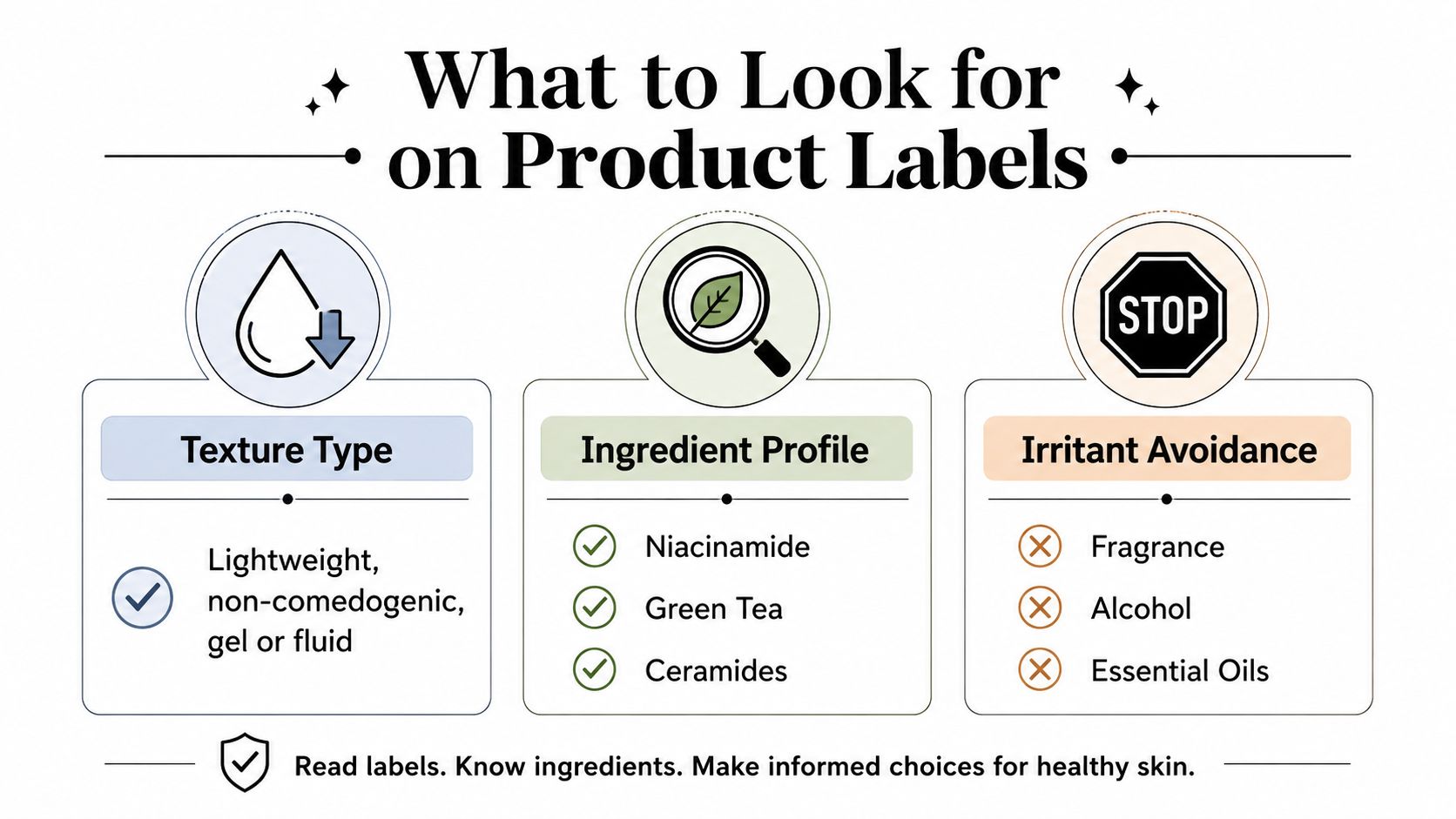
Reading a label well is the fastest way to separate a product that helps oily sensitive skin from one that keeps the cycle going. The goal is not just less shine, it is less irritation, because stripped skin often answers with more oil and more breakouts.
Start with the texture. Lightweight, non-comedogenic gel or gel-cream formulas usually sit better on skin that gets greasy quickly and flushes or stings easily. Thick occlusives can be useful in the right context, but on this skin type they often feel too sealed in, especially if pores clog fast or the T-zone turns shiny within hours.
Then look at the active ingredients and ask whether they have a clear job. Salicylic acid is the most direct option for pore congestion, mandelic acid gives a gentler exfoliating path for texture and uneven tone, and hyaluronic acid supports hydration without adding heaviness (El País). That kind of label usually makes sense. Formulas should justify their inclusion through function, not marketing language.
Ingredient load matters just as much as the headline claims. Skip products that pile on fragrance, strong dyes, parabens, sulfates, phthalates, and drying alcohols if your skin is reactive. Guidance from La Roche-Posay also warns against washing more than twice a day because overcleansing can push the skin toward more sebum, and it recommends avoiding alcohol or strong fragrances while introducing only one new treatment at a time so you can see what your skin tolerates.
A formula can be acne-focused without being harsh. A salicylic acid cleanser such as Neutralyze Face Wash uses 2% salicylic acid with 1% mandelic acid, which fits the kind of product that aims to clear pores while keeping irritation lower than a more aggressive cleanser. The Neutralyze Exfoliating Pads follow the same logic in leave-on form, useful when a leave-on exfoliant is the better fit than another wash.
Active Ingredients That Work Without Irritation
| Ingredient | Primary Function | Best For | Sensitivity Risk |
|---|---|---|---|
| Salicylic acid | Keratolytic exfoliation, pore decongestion | Blackheads, whiteheads, oily congestion | Moderate if overused |
| Mandelic acid | Gentle AHA exfoliation, smoother texture | Dullness, uneven tone, acne-prone sensitive skin | Lower than stronger acids |
| Niacinamide | Sebum support, barrier support | Oil control with less sting | Low to moderate depending on formula |
| Hyaluronic acid | Water binding, hydration | Dehydrated oily skin | Low |
| Harsh alcohol toners | Fast degreasing | None for sensitive skin | High |
| Fragrance-heavy blends | Sensory appeal | None for reactive skin | High |
Salicylic acid is the workhorse when clogged pores are the problem. It helps dissolve debris inside the pore lining, which is why it shows up so often in products for blackheads and oily breakouts. The trade-off is simple, use it too often or in too many products, and a useful ingredient can start to feel drying or stingy.
Why mandelic acid earns a place
Mandelic acid brings a gentler exfoliating path. It helps with texture, post-acne roughness, and skin that reacts badly to stronger acids. For oily sensitive clients, that lower sting often matters more than chasing the strongest possible resurfacing formula. If you want a closer look at how to exfoliate without tipping the skin into irritation, how to exfoliate oily skin is a useful companion guide.
How to think about niacinamide and hydration
Niacinamide is often a smart choice because it supports sebum balance without the stripped feeling that comes from harsher degreasers. Hyaluronic acid can help too, but only if the full formula stays calm enough for reactive skin, because hydration alone does not settle inflamed, clog-prone skin. The formula matters more than the trendy ingredient on the front of the box.
A product can be acne-focused without being aggressive. The BeautyGuide clinic directory is a practical reference if you want to compare how professional acne care is framed alongside at-home maintenance.
Building Your Routine by Product Category
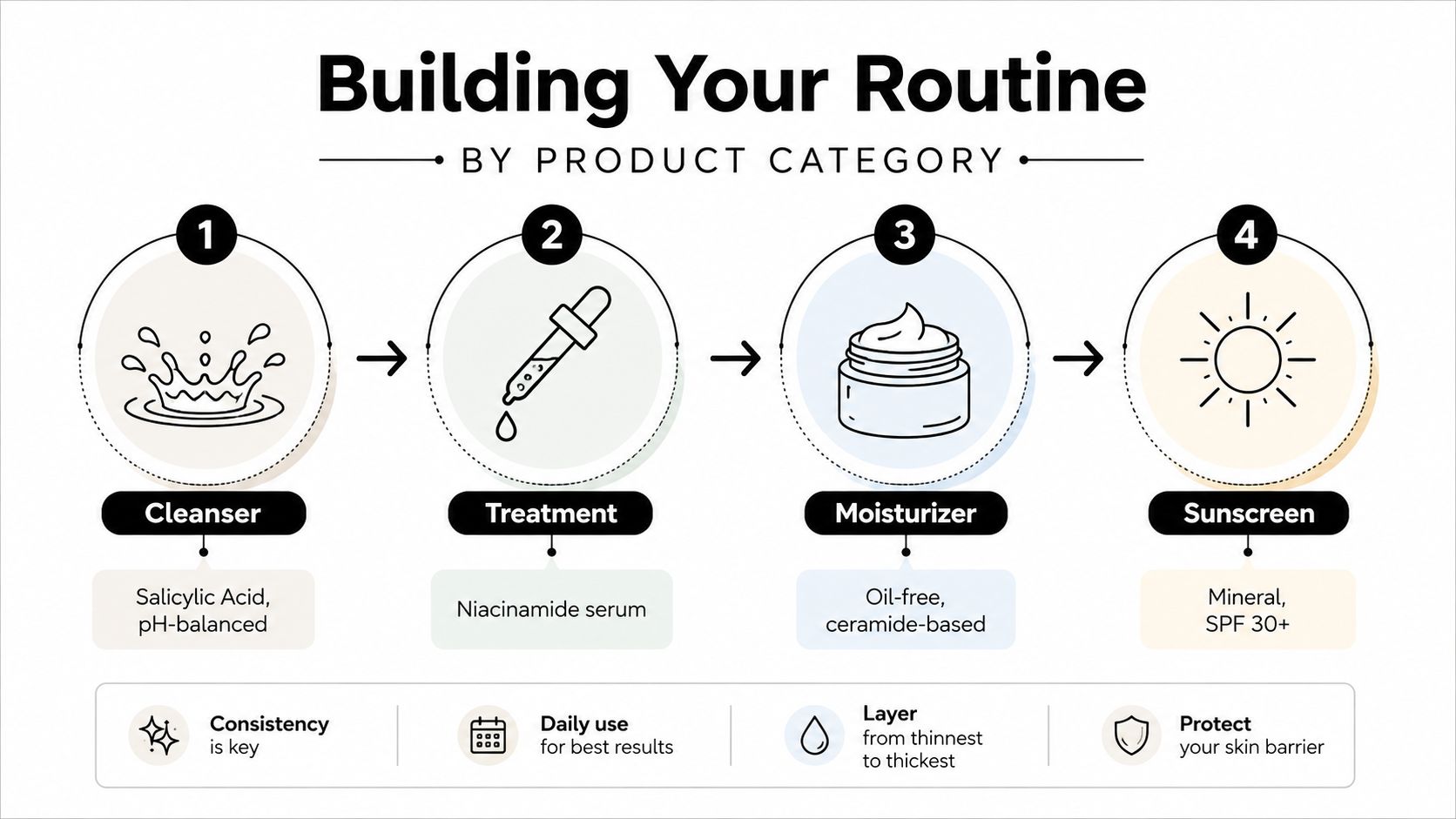
A good routine for oily sensitive skin should feel steady, not busy. Cleanse, treat, moisturize, protect, and leave room for your skin to settle instead of changing everything every time it gets reactive. Product category matters as much as ingredient choice, because a useful active in the wrong format can still push skin toward more oiliness, more stinging, or both.
Cleanser as the anchor
Start with a cleanser that clears oil without leaving the face squeaky. A salicylic acid cleanser makes sense when congestion is a major issue, especially for skin that reacts badly to rough scrubs or heavy foaming formulas. A non-soap, pH-conscious wash is usually a better base than a cleanser that leaves the barrier feeling stripped.
Treatment in the right format
Exfoliating pads can fit well when you need targeted texture care and do not want to overcomplicate the routine. They work best on nights when surface smoothing matters more than a richer leave-on cream. For clients who want more support from a single step, an acid moisturizer can cover pore care and barrier support at the same time, but only if the texture stays light enough for reactive skin. That balance matters more than the label claim.
Routine rule: if your skin feels more irritated after every new product, simplify the order before you add anything else.
Moisturizer and sunscreen finish the job
A breakout-prone moisturizer should hydrate without sitting heavy on the skin. A lightweight acne moisturizer can earn its place if it layers cleanly under SPF and makeup and does not leave the face shiny an hour later. Morning sunscreen matters just as much as treatment, because irritated skin tends to rebel harder when it is exposed and overworked. A non-clogging sunscreen is usually the right starting point if heavier facial SPFs have caused problems before.
A practical routine can look like this: cleanse, use exfoliating pads when you need more decongestion, then finish with an acid moisturizer if you want pore care in the same step. If you are comparing product types, the key question is whether each formula does its job without adding friction for the skin.
How to Test Products Without Triggering Breakouts
New products are where a lot of solid routines fall apart. Oily sensitive skin does not need a dramatic launch. It needs controlled exposure so you can tell whether a formula is helping, doing nothing, or setting off the sensitivity rebound cycle. The safest approach is to keep the variables small and the rollout slow.
Use a short sensitivity test
Start by applying the new product sparingly to one or two small affected areas for the first few days, then expand only if the skin stays calm. That method will not prevent every reaction, but it makes the reaction easier to read. Watch for stinging that lingers, rising redness, or a tight, burning feel that does not settle after application. Those are signs the formula may be too much for your barrier right now.
Add one new treatment at a time
This matters more than people want to admit. If you bring in a cleanser, pads, a moisturizer, and a serum in the same week, you lose the ability to tell which product caused the flare. One product at a time is slower, but it is the only way to build a routine you can trust.
Practical rule: if irritation shows up, cut frequency first when the product is otherwise useful. Stop it if the skin still complains.
Acids are not automatically a bad fit just because your skin is reactive. They often need less frequent use at the start, especially if your barrier is already touchy. The goal is not to prove your skin can tolerate everything. The goal is stable skin that can handle oil control without sliding back into irritation.
Common Mistakes That Make Oily Sensitive Skin Worse
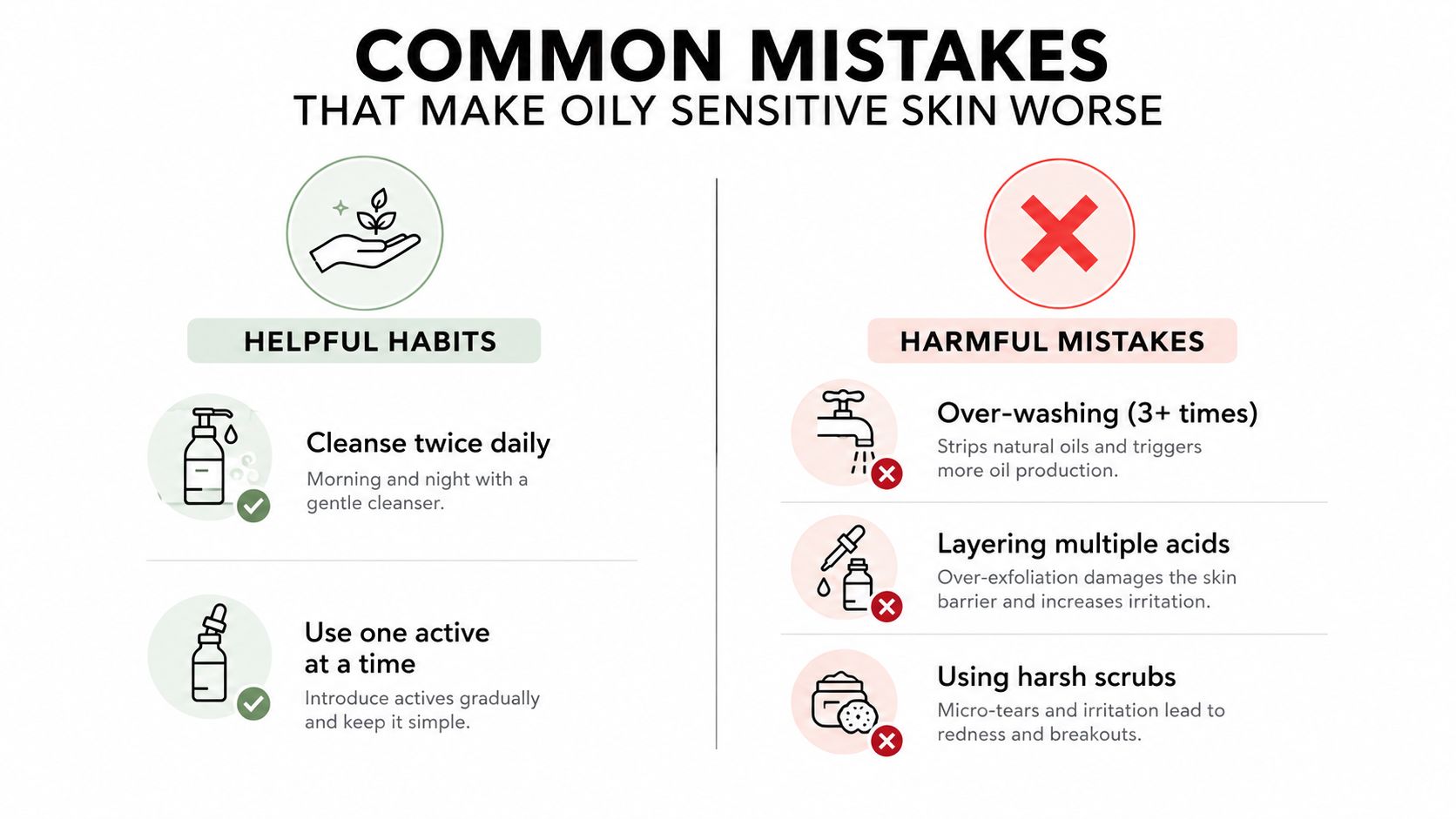
The most common mistake is overcorrecting. Skin looks oily, so people respond with more washing, stronger toners, extra acids, and a scrub “just this once.” The result is usually a barrier that gets more irritated, less stable, and more likely to shine because it cannot settle.
The habits that quietly help
Cleansing twice daily is usually enough for most oily sensitive skin. Keeping the routine short makes it easier to see what each product is doing and keeps irritants from piling up on top of one another. That kind of restraint matters more than filling the bathroom shelf with products that never get a fair chance.
A slower routine also gives you cleaner feedback. If redness, stinging, or rough texture appears, you can trace it back to one change instead of guessing across several new products at once.
The mistakes that trigger rebound irritation
Washing more than twice per day can push the skin toward more sebum production, which is exactly the wrong direction for a face that is already shiny (La Roche-Posay). Harsh scrubs and alcohol-heavy toners can create the same problem in a different way, because they strip and irritate at the same time. That combination often leaves the skin looking tight for a moment, then oilier and more reactive later.
Layering multiple acids without a clear plan can also turn a manageable routine into one that is too aggressive for the barrier. Salicylic acid and mandelic acid can work well together, but the value of the pairing is not just that both exfoliate. Salicylic acid reaches into the pore lining where oil and debris collect, while mandelic acid works more gently at the surface, so the two can support congestion control from different angles instead of forcing one ingredient to do everything. Used that way, the goal is better follicular cleanup with less irritation pressure.
The other mistake is assuming every product has to do everything. A cleanser should cleanse. A moisturizer should support the barrier and feel comfortable. A treatment should treat. When one product tries to fill all three roles poorly, redness usually shows up before results do.
Choose the fewest products that still cover the skin's needs, then give them time to show a pattern. A simple lineup, such as a cleanser, an exfoliating pad, and an acid moisturizer, often works better than a crowded routine that never settles down.
Your Path Forward with Oily Sensitive Skin
The wrong routine usually fails in the same way, it strips oil too hard and leaves the barrier too exposed, so the skin calms down for a moment and then rebounds with more shine, more sting, or both. Start with lightweight, non-comedogenic, fragrance-free formulas, because they lower the chance of clogging and reduce the extra irritation that reactive skin does not need. Keep exfoliation targeted, not constant, and choose actives that clear congestion without pushing the skin into the sensitivity cycle you are trying to avoid.
A practical routine is straightforward. Use a gentle acne cleanser, add one exfoliating treatment only when your skin needs it, and keep a moisturizer in place that feels comfortable rather than heavy or greasy. Salicylic acid is usually the cleaner first choice for pore congestion, while mandelic acid can help with texture when the skin is prone to irritation. The goal is not to dry the face into submission, it is to keep pores clearer while the barrier stays steady enough to tolerate treatment.
If your routine keeps swinging between breakouts and irritation, start with the single product that addresses your biggest problem first. For many oily sensitive skin types, that means a cleanser before anything else, because a good cleanser sets the tone for the rest of the routine. Give it time and watch for a calmer surface, less greasy buildup, and fewer angry flare-ups over the next few weeks. If you want to build from there, choose the next step only after the skin settles, so each addition has a clear job and a fair test.