

Best Products for Oily, Acne-Prone Skin
By the time you get to the bathroom mirror, your skin may already feel greasy again. You wash, blot, maybe add an “oil-free” product, and by lunch your forehead is shiny, your pores look fuller, and a new breakout has started anyway.
That cycle is why finding the best products for oily acne prone skin is less about buying anything labeled mattifying and more about choosing products that interrupt acne at the right points. A smart routine has to balance sebum, keep follicles from clogging, soothe the skin, and avoid the barrier damage that can push skin into even more oil production. A cleanser like Neutralyze Face Wash fits that discussion because it uses salicylic acid and mandelic acid in a daily wash format, which is often where an oily-acne routine either starts working or starts going wrong.
The biggest misunderstanding is simple. Oily skin still needs hydration. Acne-prone skin still needs barrier support. If you strip too hard, you often get more redness, more sting, and more shine. If you moisturize the wrong way, you can feel slick and congested. The sweet spot is a routine that keeps pores clear while keeping skin calm enough to stay consistent.
Battling Oil and Breakouts Every Day
Those with oily, acne-prone skin know the morning pattern almost by heart. You cleanse. Your skin feels fresh for a short window. Then the shine comes back, makeup slips, and the bumps under the skin feel as stubborn as ever.
That's where generic advice falls apart. “Use oil-free products” sounds helpful, but it doesn't explain why one lightweight product helps and another leaves you irritated, flaky, and somehow even oilier. Skin with ongoing breakouts often isn't just oily. It's also inflamed, clogged, and easily pushed into a rebound cycle by over-cleansing or harsh layering.
Why the Usual Routine Often Fails
A lot of oily-skin routines focus on subtraction. Less moisture, less cream, less softness, less anything that feels rich. But acne biology doesn't improve just because a product feels dry on contact.
You need products that do three jobs at once:
- Unclog pores: Help loosen the mix of oil and dead skin cells sitting inside follicles.
- Reduce breakout pressure: Lower the conditions that let inflamed pimples keep forming.
- Respect the barrier: Keep skin from getting so stripped that it reacts with more irritation and shine.
Oily skin is not always over-moisturized. Very often, it's over-stripped.
What Better Product Selection Looks Like
A better routine starts with format, not hype. Cleansers, exfoliating pads, and moisturizers each solve different problems. A face wash handles daily surface buildup. Pads can target blackheads and rough texture. A moisturizer can be the piece that prevents the whole routine from becoming too aggressive.
When you think about the best products for oily acne prone skin this way, your choices get clearer. You stop asking, “Which product dries oil fastest?” and start asking, “Which product helps my skin stay clear without triggering the next round of problems?”
Understanding How Oil Fuels Acne
By midday, your skin can look shiny enough to suggest you need less moisture, less product, and more washing. Yet the breakout forming under that shine usually starts deeper in the pore, where oil, dead skin cells, and inflammation collect long before you see a bump on the surface.
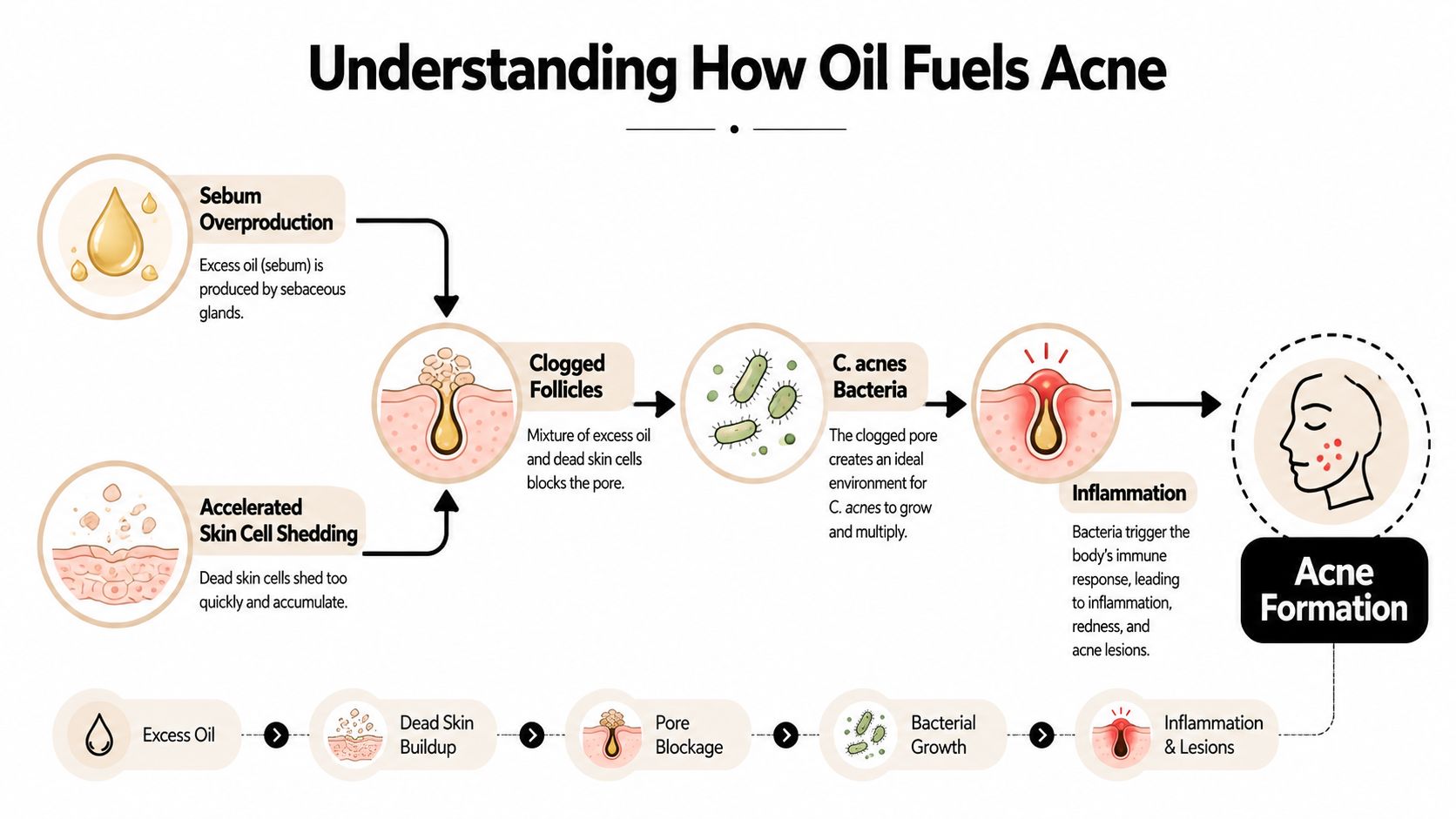
The Acne Assembly Line
Oil matters, but acne is a four-part traffic jam. The main pieces are excess sebum, sticky dead skin cells inside the follicle, growth of acne-linked bacteria such as C. acnes, and inflammation. When those four pile up at once, the pore stops behaving like an open channel and starts acting like a blocked drain.
A pore works like a narrow tube lined with living skin cells. Sebum is supposed to travel up and out, carrying some moisture to the surface. Trouble starts when the lining sheds unevenly and those cells cling together instead of flowing out normally. Oil then mixes with that debris and forms a plug.
That plug is the beginning of congestion. If the opening stays small, you may see a whitehead. If it stays open and the material oxidizes, you may see a blackhead. If inflammation ramps up around the clogged follicle, the result can become a red papule or pustule.
If you want a clearer foundation on the oil side of this process, Neutralyze has a helpful explainer on what sebum production means for acne-prone skin.
Why More Washing Often Misses the Real Problem
Surface oil and pore blockage are related, but they are not identical. Washing removes oil from the skin surface. It does not automatically clear the compacted mix sitting inside the follicle.
That distinction explains a common oily-skin trap. You cleanse more often because your face feels greasy. Skin gets tight, then irritated, then shinier again. The pore-clogging cycle keeps going underneath, so you end up with both dryness and breakouts.
This is the gap many routines miss. Oily, acne-prone skin usually needs controlled exfoliation, bacterial pressure reduction, and barrier-aware hydration at the same time. That is why well-formulated routines can do real work when they reduce congestion without pushing skin into rebound oil production. In that context, a treatment moisturizer matters because the goal is not just stripping away oil. The goal is keeping treatment active while helping skin stay hydrated enough to avoid the greasy-overdry cycle that makes routine consistency harder.
Why Everyday Skincare Can Do Real Work
Everyday skincare products are often treated like maintenance only, but the research is stronger than that. Clinical studies summarized in the Journal of the European Academy of Dermatology and Venereology review of dermocosmetics for acne-prone skin found that well-designed topical routines can reduce visible lesions and improve tolerability, especially when they target multiple parts of acne formation instead of just surface shine.
Formula design matters here. An oily-skin product can feel light and still be treatment-focused. A cleanser can clear residue and excess oil. A leave-on active can help loosen compacted material inside pores. A moisturizer can lower the irritation that often follows aggressive acne care, which helps people stay consistent long enough to see results.
Even supporting ingredients can confuse readers because “acid” is often used as shorthand for irritation. In reality, ingredient behavior depends on type, concentration, and context. A helpful example is this guide on demystifying citric acid for skin, which shows why not every acid plays the same role in a routine.
Skin that feels squeaky clean is not always skin that is less acne-prone. Clearer skin usually comes from reducing the clog inside the pore while keeping the barrier calm enough to tolerate treatment.
Choosing the Right Active Ingredients
The best routine for oily acne-prone skin works like a team, not a single hero product. Different actives target different parts of the acne cycle.
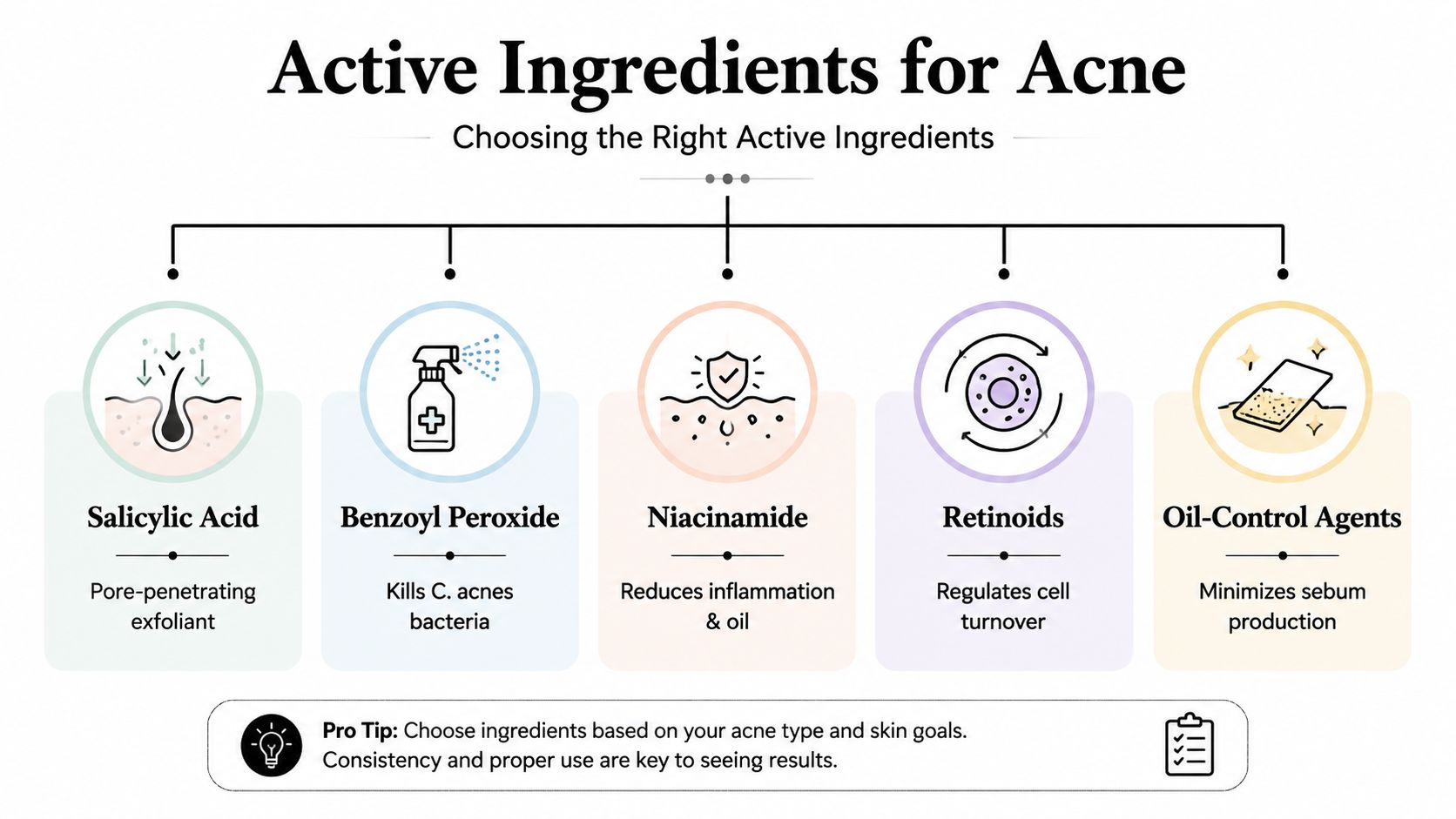
What Each Active Really Does
- Salicylic acid: This beta hydroxy acid is especially useful when pores feel packed with oil and debris. It's a pore-focused exfoliant, so it makes sense for blackheads, whiteheads, and persistent congestion.
- Benzoyl peroxide: This is the classic nonprescription option for inflammatory acne. It's often helpful when red papules and pustules are the main issue.
- Niacinamide: Useful when oil, redness, and sensitivity overlap. A study of 100 subjects found topical 2% niacinamide significantly lowered sebum excretion rates after two and four weeks, as reviewed in this PMC article on niacinamide and oily skin.
- Retinoids: These help normalize cell turnover. For at-home care, adapalene 0.1% is a foundational option and has been sold without a prescription since 2016. Combined with benzoyl peroxide (2.5–5%) or salicylic acid (0.5–2%), clearer skin is often seen within 8–12 weeks of consistent use, according to the clinical summary in this dermatologist-approved acne-prone skin care routine overview.
- Oil-control agents: This is a broader bucket that can include ingredients aimed at reducing visible shine or supporting sebum balance.
For a broader ingredient overview, Neutralyze also has a useful page on the best ingredients for acne.
Later in your ingredient research, it can also help to read a practical explainer on demystifying citric acid for skin, especially if you're trying to sort out the difference between exfoliating acids and formula-supporting acids.
A quick visual can help if ingredient lists tend to blur together:
How to Prioritize Without Overdoing It
If your acne is mostly clogged pores and shine, start with a salicylic-acid-centered base routine. If it's red and inflamed, benzoyl peroxide often earns a place. If you're oily but easily irritated, niacinamide can make the routine more tolerable. If texture and recurring comedones dominate, retinoids matter.
A practical rule is to add one strong treatment category at a time. Too many “acne” products layered together can leave you with less tolerance and worse consistency.
For context, Neutralyze Exfoliating Pads pair salicylic and mandelic acids in a leave-on pad format, but when building a routine here, it's smarter to look at the whole picture first: cleanser, exfoliation format, moisturizer, and tolerability.
Top Product Categories for Oil Control
Oil control works best when each product has one job and does it well. That matters more than owning a shelf full of “acne” products that all try to do the same thing.
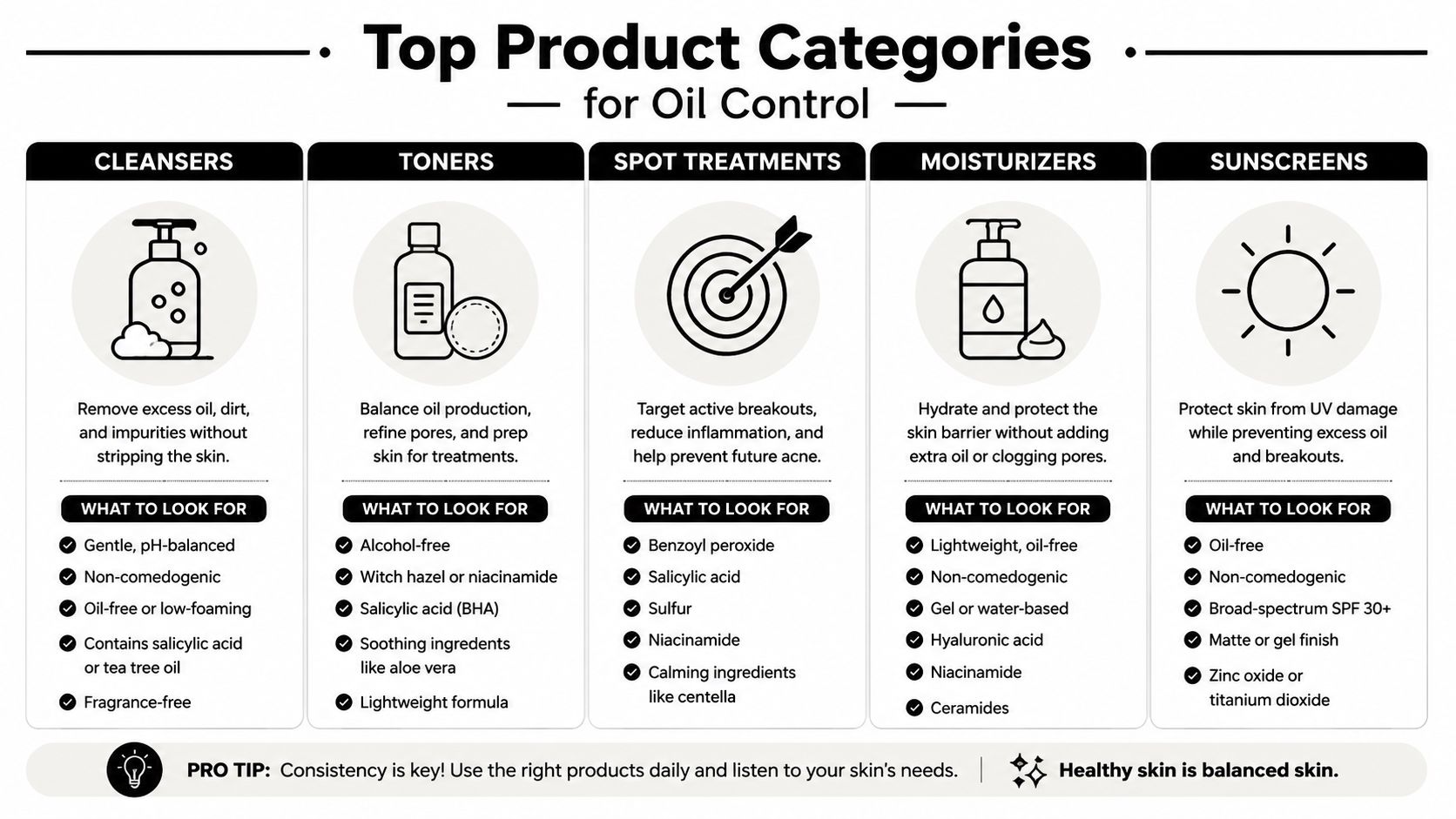
For oily, acne-prone skin, the routine usually works like a small team. The cleanser clears the surface. A treatment step works inside the pore or on inflamed spots. Moisturizer keeps the skin barrier steady so your face does not answer irritation with more shine. Sunscreen protects skin that is often more reactive because of exfoliants or acne actives. That moisturizer step is the part many people skip, then they wonder why oil returns by midday.
The Five Categories That Matter Most
| Category | Main job | What to look for |
|---|---|---|
| Cleanser | Remove oil, sweat, sunscreen, and debris | Gentle, non-soap feel, non-comedogenic, acne-suitable actives |
| Toner | Optional support step | Only if it's non-stripping and doesn't duplicate harsher steps |
| Spot treatment | Target inflamed breakouts | Focused use, not all-over misuse |
| Moisturizer | Maintain barrier and reduce rebound shine | Lightweight, non-comedogenic, breakout-friendly |
| Sunscreen | Protect skin, especially when using exfoliants | Lightweight feel, acne-friendly finish |
What to Choose Within Each Category
Cleanser: Start with a face wash that removes oil and sunscreen without leaving the skin tight. Tight skin after cleansing is not a sign that the product “worked.” It often means you removed too much surface oil and water, which can push oily skin into compensation mode later in the day. Acne-friendly cleansers often use salicylic acid, and some formulas pair it with mandelic acid for added help with pore buildup and rough texture. If you like comparing simple home options with treatment cleansers, a DIY green tea face wash recipe shows the difference between a soothing wash and a formula built to address clogged pores.
Toner: This category is optional. Many oily-skincare routines already contain enough active ingredients, so toner should fill a gap, not create overlap. If your cleanser and treatment already contain exfoliating acids, an astringent toner often adds irritation without adding much benefit. A hydrating or balancing toner can make sense if your skin feels dehydrated under the surface but still looks shiny on top.
Treatment: Precision is key. For scattered red pimples, spot treatments can limit irritation because you apply them only where needed. For blackheads, whiteheads, and broader congestion across the T-zone, a leave-on treatment format usually makes more sense than dabbing individual spots. Pads, gels, and serums each change how much product reaches the skin and how easy it is to stay consistent.
Moisturizer: Oily skin still needs water and barrier support. A good acne-friendly moisturizer works like a pressure regulator. It helps reduce the cycle where harsh treatment leads to irritation, irritation leads to more visible oil, and more oil leads to over-cleansing. This is the gap many routines miss. Well-formulated moisturizers, including ones built around salicylic and mandelic acid, aim to balance active care and tolerability so skin can stay hydrated without the heavy feel that often scares off acne-prone users. That approach helps a routine avoid the rebound oil problems that show up when skin is treated too aggressively and moisturized too lightly.
A factual example is Neutralyze Renewal Complex, which is designed as an acne-prone skin care routine moisturizer format rather than a basic cream. The important takeaway is the category, not brand loyalty. For oily acne-prone skin, moisturizer should support treatment adherence, not fight against it.
Sunscreen: Daily UV protection is easier to keep up with when the texture is light and the finish does not feel greasy. Readers with acne often stop here because sunscreen seems like “one more layer.” In practice, the right sunscreen protects skin that is already doing hard work with acids or other acne actives, and a better texture usually improves consistency.
Selection shortcut: Choose one cleanser, one treatment format, one moisturizer, and one sunscreen first. Build around tolerance, oil control, and consistency before adding extras.
Building Routines by Acne Severity
You wake up with a shiny T-zone, a few clogged pores on the forehead, and one sore breakout on the chin. A week later, the pattern changes. Now the bumps are redder, more frequent, and slower to calm down. That shift matters, because acne routines should match the level of congestion and inflammation in front of you, not the label on the bottle.
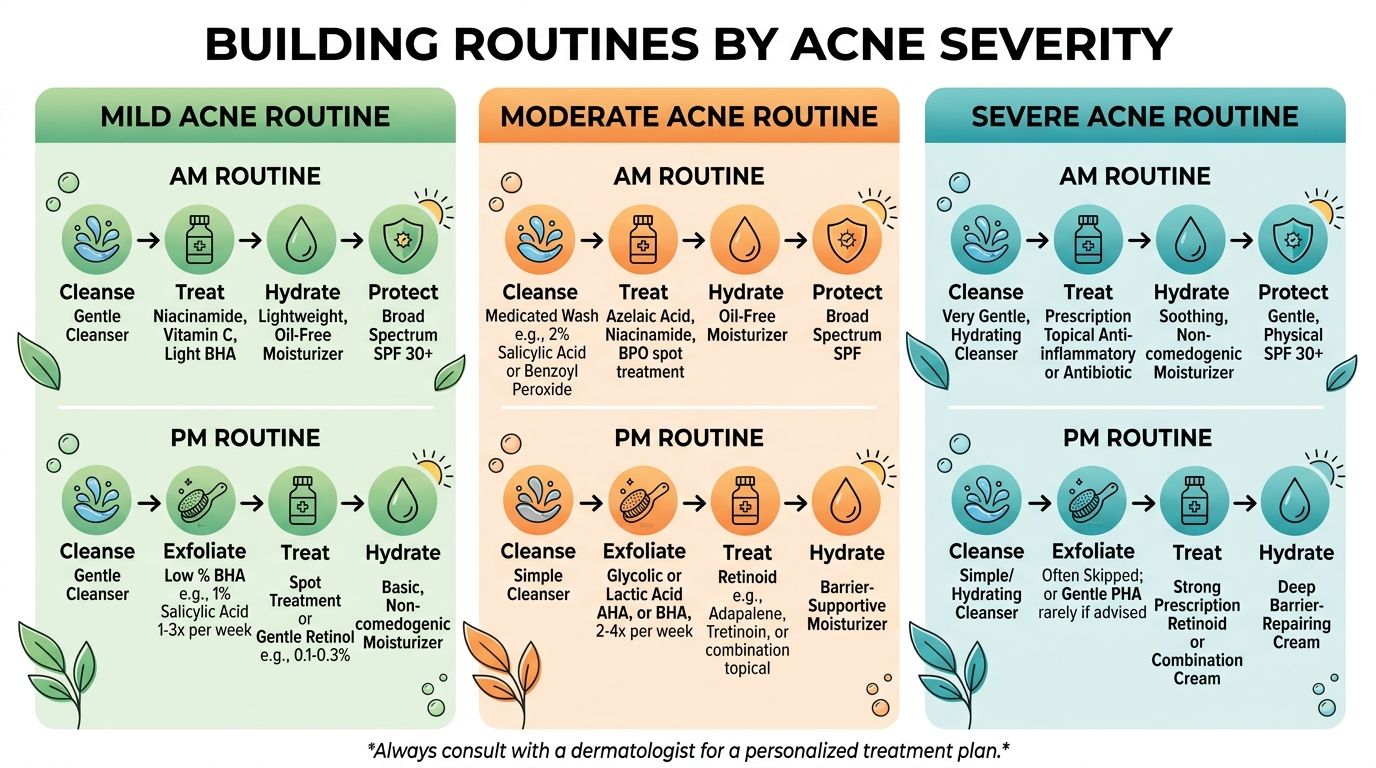
A useful way to frame this is pressure. Mild acne usually needs light, steady pressure on clogged pores. Moderate acne needs more treatment structure. Severe acne needs control without pushing skin into a constant irritated state. That is where well-built routines can help. Well-formulated systems, including those built around salicylic and mandelic acid, aim to keep active care going while reducing the dry-tight cycle that often triggers rebound oil.
Mild Acne Routine
Mild acne usually looks like blackheads, small whiteheads, and the occasional inflamed pimple. The goal is to keep pores clear without turning your routine into a chemistry experiment.
Morning
- Use a gentle cleanser: Remove overnight oil without that squeaky, stripped feeling.
- Apply a lightweight moisturizer: Oily skin still loses water. Moisturizer helps prevent the over-cleansing cycle.
- Finish with sunscreen: Choose one with a light finish so daily use feels realistic.
Night
- Cleanse again: Wash off sunscreen, sweat, and the day's oil film.
- Apply a pore-focused active: Salicylic acid is often a strong fit for mild congestion because it works inside the pore lining.
- Moisturize: This helps skin stay calm enough to keep using the active.
If you only have a few clogged areas, consistency matters more than intensity.
Moderate Acne Routine
Moderate acne often means a mix of clogged pores and regular red breakouts across larger areas. Skin at this stage usually needs a routine with clearer roles for each step.
Use a simple pattern in the morning:
- Cleanser
- Balancing or treatment step
- Moisturizer
- Sunscreen
At night, increase treatment contact in a controlled way:
- Cleanser
- Leave-on acne-prone skin care
- Moisturizer
The logic is simple. Cleansing clears the surface. The leave-on step addresses pore buildup and breakouts over time. Moisturizer improves tolerance so you do not quit after four irritated days.
If you prefer a coordinated system, products such as Neutralyze Face Wash, Neutralyze Exfoliating Pads, and Neutralyze Renewal Complex fit those roles of cleanse, exfoliate, and moisturize without forcing a heavy cream texture that many acne-prone users dislike.
Severe Acne Routine
Severe acne calls for more caution than force. Deep inflamed bumps, painful lesions, or fast-forming clusters can tempt people to stack too many strong products at once. That usually backfires.
A steadier pattern works better:
- Morning: Cleanser, moisturizer, sunscreen
- Evening: Cleanser, treatment, moisturizer
- Adjustment days: If burning, stinging, or peeling picks up, reduce treatment frequency first
Skin under heavy treatment behaves a bit like an overworked muscle. More effort does not always mean better performance. Sometimes it means more inflammation and less progress.
Severe acne often worsens when people panic and keep adding products. A calm, repeatable routine usually performs better than an aggressive routine that skin cannot tolerate.
A Simple Severity Check
| Pattern | Likely approach |
|---|---|
| Mostly blackheads and shine | Salicylic acid centered routine with light hydration |
| Frequent red breakouts plus oil | Add a stronger leave-on acne-prone skin care routine and keep the routine structured |
| Deep painful lesions or early scarring | Use at-home care carefully and consider medical evaluation |
One last point causes a lot of confusion. Active acne and post-acne marks are not the same job. A product that helps fade leftover discoloration may do very little for inflamed breakouts. Judge your routine by the problem it is trying to solve.
Layering Tips and Common Mistakes
Layering mistakes are one reason people think their skin is “resistant” to everything. Often, the products aren't the main issue. The routine order is.
The Barrier Problem People Miss
Your skin barrier works like a wall made of bricks and mortar. The skin cells are the bricks. The lipids between them are the mortar. When you keep blasting that wall with too many harsh steps, the wall leaks. Water escapes, irritation rises, and oily skin can respond by looking even shinier.
Most guides miss the anti-rebound moisturizer gap. Without proper barrier repair, over-stripping can trigger more oil production, so non-comedogenic, sebum-regulating moisturizers matter, as discussed in this oily acne-prone routine guide from a dermatology practice.
Layering Rules That Usually Work Better
- Cleanser first: Don't stack treatments over sweat, sunscreen, or makeup residue.
- One major leave-on active at a time: If you're testing a new exfoliant or retinoid, don't add three other strong products that same week.
- Moisturizer after treatment: This helps reduce the dry-tight cycle that often leads people to quit.
- Sunscreen in the morning: Especially if your routine includes exfoliating acids.
Common Errors That Keep Acne Stuck
Some mistakes are almost universal:
- Over-cleansing: Washing again because you feel oily at noon often adds irritation without clearing pores better.
- Skipping moisturizer: This can leave skin dehydrated and reactive.
- Using acne products as spot fixes only: Many comedone-prone areas need consistent all-over management, not random treatment.
- Confusing mark fading with acne control: A product may help with blotchiness but still not do enough for inflamed lesions.
Your goal isn't to “fight” your skin at every step. Your goal is to lower clogging and inflammation while keeping the barrier calm enough to cooperate.
When to Seek Help and Where a Structured System Fits
A dermatologist should step in if acne becomes deep, painful, scar-forming, or unchanged after a steady routine. That kind of acne often needs prescription guidance, office procedures, or a closer look at whether hormones, irritation, or folliculitis are adding to the problem.
There is also a group of people stuck in a familiar middle zone. Their skin is too reactive and breakout-prone for harsh trial-and-error routines, but they are not ready for oral medications. That gap is often a moisturization problem as much as an acne-prone skin care routine problem. If a routine dries the surface without keeping the barrier hydrated, skin can respond like a thermostat set too low, pushing out more oil to compensate. That rebound oil cycle is one reason some at-home plans look strong on paper but fail in real life.
A structured system matters here because it is not only about attacking blemishes. It also fits the goal of keeping treatment active while avoiding the dry, tight conditions that can make oily skin behave even oilier.
Neutralyze builds its system on salicylic acid and mandelic acid across a cleanse, rejuvenate, and hydrate routine. The practical idea is straightforward. Keep pores clearer, reduce the traffic jam inside the follicle, and support a routine that does not strip skin so hard that oil production surges back. That is the bridge many oily, acne-prone readers are looking for. A routine that feels closer to a lab-designed system than a random pile of spot treatments.
For moderate to severe acne, that kind of structure can be useful, especially for people who have already tried standard at-home products or want a non-systemic path before considering stronger prescription options.
If you want a more advanced at-home path for acne-prone skin, explore Neutralyze. The brand's approach combines salicylic acid and mandelic acid in a cleanse, rejuvenate, and hydrate system to support a cleaner, more structured routine for oily, breakout-prone skin.