

The Best Over The Counter Acne Cream for Clearer Skin
Finding the best over the counter acne cream can feel like an impossible task. Walk down any skincare aisle, and you're met with a wall of options, all promising clear skin. But here’s the secret: the right choice isn't about fancy packaging or a high price tag. It all comes down to one simple idea—matching the right active ingredient to your specific skin concerns.
For many people, that starting point is a classic, science-backed ingredient. Think benzoyl peroxide if you’re fighting angry, red pimples, or salicylic acid if clogged pores and blackheads are your main frustration. Your path to clearer skin begins right here, with understanding what these ingredients do and which one is right for you.
Decoding The Over-The-Counter Acne Aisle
Let's be honest: trying to pick an acne cream at the drugstore can be a real headache. With dozens of brands making big promises, it’s easy to just grab the one with the flashiest box and hope for the best. The real key to success, though, isn't about luck—it's about learning to read the label and understanding the science behind what’s inside.
This guide is designed to cut through that confusion. We’ll break down the powerhouse active ingredients you need to know, explain the difference between zapping a surprise pimple and managing chronic breakouts, and give you the confidence to choose a product that will genuinely work for your skin. Think of this as your personal roadmap to getting clear.
Why OTC Is The First Step For Many
There's a good reason why over-the-counter solutions are the first line of defense against acne. They’re accessible, affordable, and let you take control of your skin without needing a prescription. That convenience is a big reason the global acne treatment market is booming, projected to hit USD 11.51 billion by 2030. A huge chunk of that growth comes from people just like you, looking for effective OTC options that deliver results.
Of course, more choices can also mean more confusion. As you start your search, it helps to narrow down what you’re dealing with. For instance, if your breakouts are concentrated around your mouth and nose, you might be looking for remedies to getting rid of maskne.
The secret to successfully treating acne isn't about finding a single "magic bullet" product. It's about consistency and using the right formulation for your skin to restore its natural balance.
Building Your Foundation Of Knowledge
Before you can pick the right cream, you need to know what to look for. The power of any OTC acne product is in its active ingredients and how they’re formulated to work with your skin.
Here's a simple checklist to run through from the start:
- What kind of acne do you have? Are you dealing with mostly blackheads and whiteheads (known as comedonal acne)? Or are your breakouts more of the red, sore, and inflamed variety? Different ingredients are better suited for each.
- What’s your skin type? Is your skin generally oily, dry, sensitive, or a bit of everything (combination)? A strong cream designed for oily skin can wreak havoc on someone with dry, sensitive skin.
- Active ingredients are everything. The ingredient list is your best friend. Learning to recognize names like Benzoyl Peroxide, Salicylic Acid, and Adapalene is the single most important step you can take.
By focusing on these fundamentals, you stop being a hopeful shopper and become an educated one. Finding the right treatment isn't a game of chance; it's about making a smart, informed decision based on what we know works.
Decoding The Ingredients In Your Acne Cream
Walking into the skincare aisle without a plan is like trying to cook a gourmet meal without a recipe. You might grab a few things that look good, but the result is usually a mess. To find the best over the counter acne cream, you have to learn the language of its active ingredients. This is what empowers you to see past the flashy marketing and understand what a product can actually do for your skin.
Think of these ingredients as specialized tools. Each one has a very specific job, and the secret to success is simply knowing which tool to use for which problem. Let's skip the dense scientific jargon and break down the most common and effective OTC acne fighters you'll encounter.
Benzoyl Peroxide: The Pimple Eliminator
If your main battle is with red, angry, and inflamed pimples, consider Benzoyl Peroxide (BPO) your first line of defense. It’s a powerful antibacterial agent that works by flooding your pores with oxygen. This creates an environment where the main acne-causing bacteria, C. acnes, simply can't survive.
Its action is direct and highly effective. BPO is essentially a targeted deep clean for your pores, wiping out the source of inflammation on contact. This is precisely why it’s been a gold standard for treating inflammatory acne for decades and can deliver results pretty quickly.
But that strength can also be a drawback. Higher concentrations—up to 10% is available over the counter—can be incredibly drying and irritating, especially if you have sensitive skin. This is where a product's overall formulation really matters. At Neutralyze, we understand this balance intimately. A well-designed cream delivers all the pimple-fighting benefits of BPO without completely stripping your skin, ensuring the "pimple eliminator" does its job without causing collateral damage to your skin barrier.
Salicylic Acid: The Pore Decongestant
While Benzoyl Peroxide goes after the bacteria, Salicylic Acid takes a totally different approach. It’s a beta-hydroxy acid (BHA), which just means it's oil-soluble. This special property allows it to dive deep inside your pores, cutting through oil and gunk to dissolve the sticky mixture of dead skin cells and sebum that creates clogs in the first place.
Think of Salicylic Acid as a tiny, highly skilled plumber for your pores. It works from the inside out to clear out blackheads and whiteheads (known as comedones) before they ever have a chance to get inflamed. This makes it a fantastic choice for anyone dealing with congested skin, bumpy texture, and non-inflammatory breakouts.
Salicylic Acid is especially good for comedonal acne because it targets the root of the problem—the clogged pore itself. By keeping pores clear, it functions as both a treatment and a preventative measure.
You'll typically find it in OTC concentrations ranging from 0.5% to 2%. It’s generally gentler than BPO, but it can still cause some dryness. The key, which we've prioritized at Neutralyze, is finding a product that pairs it with hydrating ingredients to keep your skin happy and balanced, making it a sustainable part of your routine.
Adapalene: The Skin Cell Regulator
Once a prescription-only powerhouse, Adapalene is a type of retinoid you can now find over the counter. It works at a cellular level to get your skin cell turnover process back on track. In acne-prone skin, cells shed too fast and clump together, which leads to clogged pores. Adapalene steps in to normalize this process, making sure cells shed properly instead of forming blockages.
Imagine Adapalene as a traffic controller for your skin cells. It keeps everything moving smoothly and prevents the cellular pile-ups that cause acne. This makes it incredibly effective for stubborn acne, including blackheads, whiteheads, and even deeper inflammatory spots.
Just know that Adapalene (usually sold in a 0.1% strength OTC) is a marathon, not a sprint. It can take 8-12 weeks to see major improvements, and it's common to experience some initial dryness or even "purging"—a temporary flare-up as your skin adjusts. If you're curious to learn more about specific ingredients, our guide on the best OTC benzoyl peroxide offers a deeper look at one of acne's most reliable fighters.
Sulfur and Niacinamide: The Supporting Cast
While BPO, Salicylic Acid, and Adapalene are the headliners, a few other ingredients play crucial supporting roles.
-
Sulfur: This is a classic, gentle alternative, especially for sensitive skin. It helps soak up excess oil and has mild antibacterial and anti-inflammatory properties. It's great for calming down redness and smaller spots without the harshness of other actives.
-
Niacinamide: Think of Niacinamide as a skin-soothing multitasker. This form of vitamin B3 is brilliant for calming inflammation, reducing redness, improving skin texture, and strengthening your skin’s natural protective barrier. It’s the ultimate team player, helping to offset the potential irritation from stronger acne treatments.
Here at Neutralyze, we know a single ingredient is rarely the whole story. Real results come from smart, synergistic formulas where active and supporting ingredients work together. Understanding who these key players are is your first real step toward making a confident, informed choice and finally getting the clear skin you deserve.
Matching Your Cream To Your Skin And Acne Type
Picking the right acne cream isn't about grabbing the bottle with the highest percentage of an active ingredient. It's about playing matchmaker. Think of your skin as having its own unique personality—it might be oily and tough, dry and sensitive, or a classic combination of both. Acne works the same way; the strategy for clearing up blackheads is worlds away from what you need for deep, angry pimples.
This is exactly where so many people get stuck in that frustrating cycle of trying a product, feeling disappointed when it doesn't work (or makes things worse), and starting all over again. The secret is to stop guessing. It's time to get strategic by pairing the right ingredient with your specific skin concerns.
This simple decision tree breaks down how to match the most common acne issues—clogged pores versus inflammatory pimples—with their ideal active ingredient.
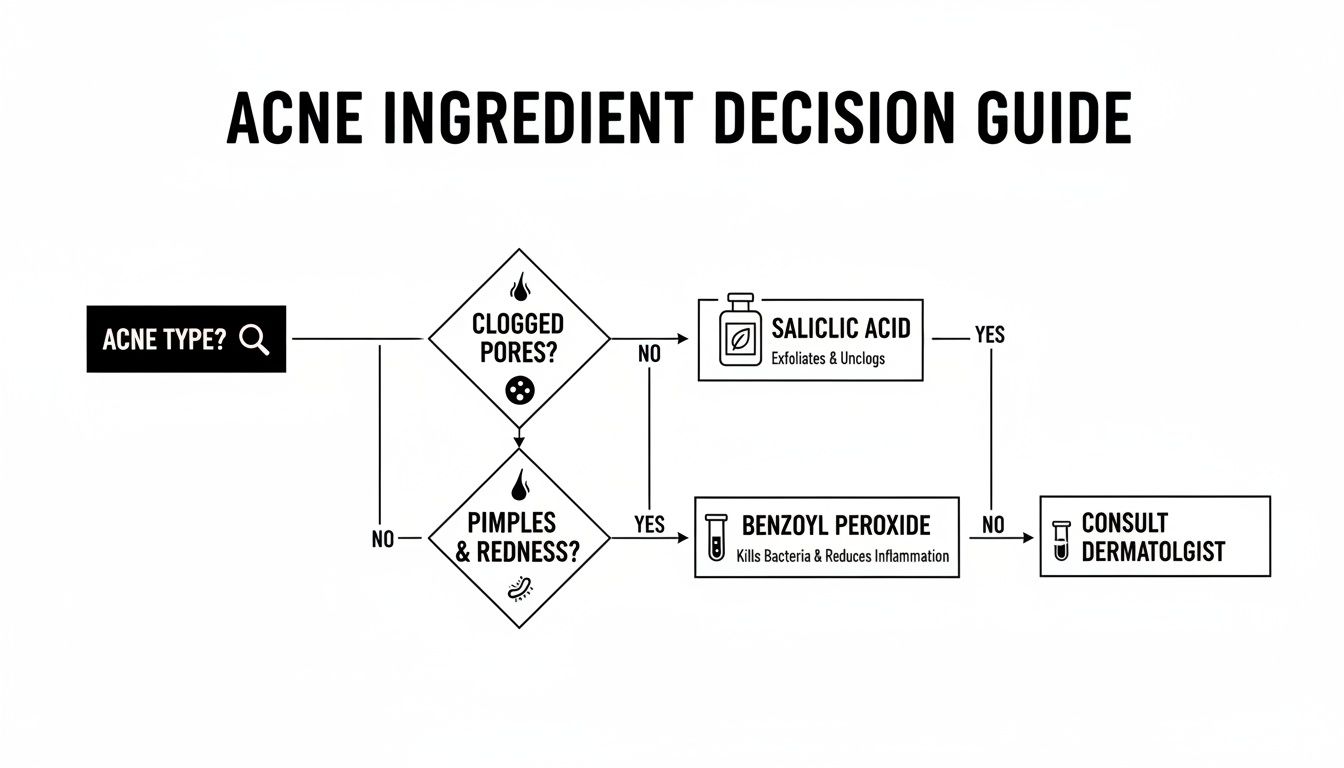
The flowchart really hammers home a core principle of treating acne: if you target the primary problem, you'll see faster, more effective results.
For Oily And Resilient Skin Prone To Pimples
If your face feels slick by midday and your main battle is with red, inflamed pimples, your skin can probably handle a more direct line of attack. This is where an ingredient like benzoyl peroxide is a true hero. Its powerful antibacterial action goes straight after the C. acnes bacteria that fuel those painful breakouts.
For this skin type, you can usually start with a mid-range concentration, like 5%, to see how your skin reacts. The goal is simple: eliminate the bacteria causing all that inflammation.
Because your skin naturally produces more oil, the drying side effects of benzoyl peroxide are often less of an issue. Still, a smart formulation is non-negotiable. At Neutralyze, we get that even oily skin needs balance. Our formulas deliver potent actives without wrecking your skin's moisture barrier, preventing that dreaded cycle where stripping your skin only makes it produce even more oil to compensate.
For Dry Or Sensitive Skin With Clogged Pores
Now, let's flip to the other end of the spectrum. Maybe your skin is dry, gets irritated easily, and your main issue is congestion from blackheads and whiteheads. For you, a high-strength benzoyl peroxide would be total overkill, leading to a mess of redness and peeling.
Your best bet is a gentle but diligent exfoliant like salicylic acid. It's oil-soluble, which means it can actually get down into the pores to dissolve the gunk made of dead skin and sebum, all without causing a major fuss on the surface. A low concentration of 1% to 2% is usually all it takes to keep pores clear.
Niacinamide is another fantastic choice for sensitive skin. While it's not a direct exfoliant, it calms inflammation and strengthens the skin barrier, making your skin more resilient and less reactive over time.
For sensitive or dry skin, the name of the game is gentle persistence. It's far better to use a milder, well-formulated product every day than to blast your skin with a harsh treatment you can only tolerate once a week.
For Combination Skin With Mixed Breakouts
What if you're dealing with a bit of everything? An oily T-zone dotted with blackheads, but dry, sensitive cheeks that get the occasional pimple? Welcome to the combination skin club. Your strategy needs to be a bit more clever, but you're definitely not limited to just one ingredient.
Think about building a routine that uses different products for different jobs:
- Salicylic Acid Cleanser: A gentle wash with salicylic acid can help manage clogged pores in your oily zones without stripping your entire face.
- Benzoyl Peroxide Spot Treatment: Instead of slathering a strong cream everywhere, just dab it on active, inflamed pimples. You get targeted power right where you need it.
- Adapalene for Overall Texture: A retinoid like adapalene is a great all-rounder for combination skin. It helps normalize skin cell turnover everywhere, tackling both clogged pores and inflammatory spots over the long haul.
Your Personalized OTC Acne Ingredient Matchmaker
Feeling a little overwhelmed by the options? Don't be. We've put together this quick-reference table to help you pinpoint the best starting ingredient based on your unique skin profile.
| Skin Type | Acne Type (e.g., Blackheads, Inflammatory) | Recommended Primary Ingredient | Recommended Supporting Ingredient |
|---|---|---|---|
| Oily / Resilient | Inflammatory Acne (Pimples, Pustules) | Benzoyl Peroxide (2.5% - 10%) | Niacinamide (to control oil & reduce redness) |
| Dry / Sensitive | Comedonal Acne (Blackheads, Whiteheads) | Salicylic Acid (0.5% - 2%) | Hyaluronic Acid (for hydration) |
| Combination | Mixed Acne (Clogged pores & some pimples) | Adapalene (0.1%) or Salicylic Acid | Benzoyl Peroxide (as a spot treatment) |
| Normal / All Types | Mild to Moderate Acne, Post-Acne Marks | Adapalene (0.1%) | Niacinamide or Azelaic Acid |
| Acne-Prone (but sensitive) | Redness, Minor Bumps, Irritation | Sulfur or Niacinamide | Salicylic Acid (in a gentle wash) |
Just remember, this chart is your starting point. The journey to clear skin is all about listening to what your face is telling you and adjusting as you go.
The demand for these kinds of smart, targeted solutions is exploding. The anti-acne cosmetics market was valued at USD 5.2 billion in 2024 and is expected to hit USD 8.9 billion by 2030. This growth is all about consumers like you looking for creams that do more than just fight a pimple. You can dive deeper into this trend and find more data in the full research on anti-acne cosmetics.
By taking a moment to diagnose your skin and acne first, you change the entire game. Shopping for an acne cream goes from a frustrating guessing game to a calculated, confident decision.
Why the Complete Formula Matters More Than Just One Ingredient
Picking an acne cream based on a single active ingredient is a good first step, but it's only half the battle. The best over the counter acne cream isn't just about the star player; it's about the entire team working together in the bottle. The cream, gel, or lotion that carries that active—what we call the "vehicle"—is every bit as crucial.
Think of an active ingredient like benzoyl peroxide as a high-performance race car engine. On its own, it’s just a powerful piece of metal. To win the race, it needs a chassis, a sophisticated suspension system, and the right tires. In the same way, a potent active needs a well-designed formula to deliver results without crashing and burning on your skin.
The Problem With Focusing Only On Potency
So many acne treatments on the shelf scream one thing: maximum strength. And while a high percentage of an active looks impressive, it often just translates to a harsh experience. When you drop a potent ingredient into a basic, bare-bones formula, you’re practically asking for dryness, redness, peeling, and irritation.
This is exactly why so many people give up. They try a new product, their skin freaks out, and they decide the active ingredient "just isn't for them." But more often than not, the active wasn't the real villain—it was the clunky, irritating delivery system it was stuck in.
A truly effective formula is all about delivering powerful results with elegance. The goal isn't just to kill acne bacteria, but to get the active ingredient where it needs to go while simultaneously calming and protecting the surrounding skin.
A well-crafted product anticipates the potential side effects of its star ingredient and builds in a support system to head them off. It's a much smarter, more proactive way to think about skincare.
Building a Smarter, Synergistic Formula
A complete acne-fighting formula is like a well-coached sports team. The active ingredient is your star quarterback, for sure. But that quarterback needs a solid offensive line to protect them and skilled receivers to help score the touchdown. In skincare, these supporting players are your hydrators and calming agents.
- Hydrators: Look for ingredients like hyaluronic acid, which act like a big drink of water for your skin. They pull in moisture to counteract the drying nature of many acne actives.
- Soothing Agents: Ingredients like niacinamide are fantastic for dialing down inflammation and redness, which takes the edge off of more aggressive acne fighters.
- Barrier Support: Components that help strengthen your skin's natural moisture barrier make it tougher and less prone to irritation in the first place.
When these elements are combined in the right way, the whole formula becomes so much more than the sum of its parts. The active can finally do its job effectively because your skin isn't busy fighting a battle on two fronts.
The Neutralyze Philosophy in Action
This is the very idea our entire approach at Neutralyze is built on. We knew from the start that just putting benzoyl peroxide in a tube wasn't going to cut it. The real magic happens when you create the perfect environment for that powerful active to shine without damaging your skin's health.
That's why we poured years into developing our salicylic acid and mandelic acid system. It’s our complete three-step routine, the high-tech suspension and chassis for our powerful engine. This approach creates a unique synergy, allowing us to get proven acne-fighting ingredients into your skin more gently and effectively than you'd find in a standard formula. It ensures our actives run smoothly, reaching deep into pores to clear acne without that bumpy, irritating ride.
It’s how we help you finally break the cycle of irritation and get to what you really want: clear, calm, and healthy-looking skin. A single ingredient might get you started, but only a complete, intelligently designed formula will get you across the finish line.
How To Use Acne Creams And Manage Side Effects
You've done the hard part—you've played detective with your skin, decoded the ingredient lists, and picked a promising product. But finding the best over-the-counter acne cream is only half the battle. How you use it is just as important as what you choose.
Think of it like starting a new workout routine. You wouldn't jump straight into running a marathon on day one, right? Your skin needs to ease into powerful active ingredients. Going slow and steady is the secret to getting fantastic results without the frustration.
Your Step-By-Step Application Guide
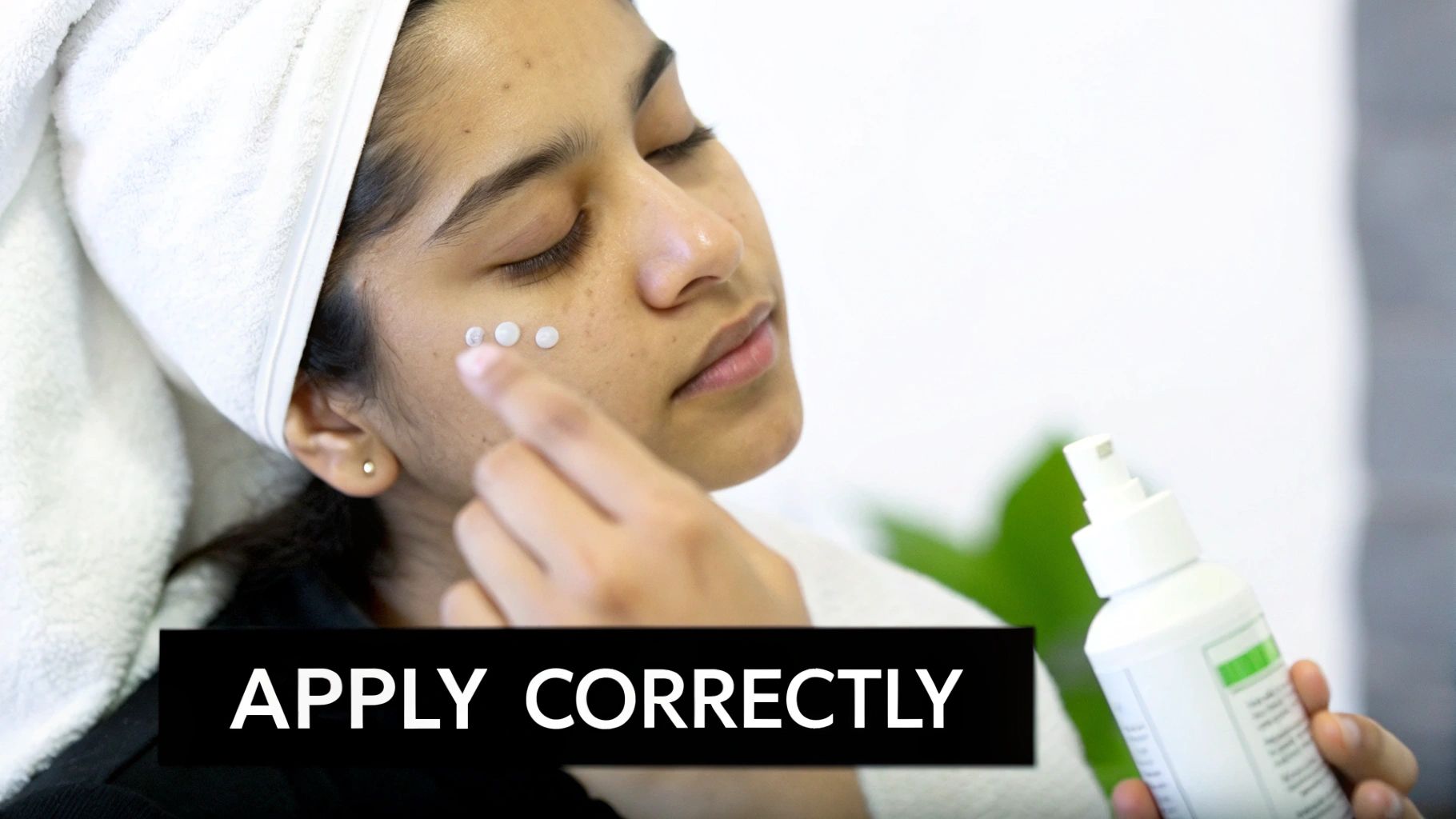
Before slathering a new product all over your face, always do a patch test. Dab a tiny amount on a hidden spot, like just behind your ear or on your inner arm, for three nights in a row. If you don't see any major redness, itching, or hives, you're good to go.
Once your patch test is clear, here’s how to introduce the cream into your routine without causing a meltdown:
- Start Slow: For the first week, only apply the cream every other night. This lets your skin get used to the active ingredient without freaking out.
- Use the Right Amount: A pea-sized amount is plenty for your whole face. More is not better—it won’t work faster, it’ll just lead to irritation.
- Apply to Clean, Dry Skin: Use your acne cream after cleansing. Gently pat your face completely dry first. Applying actives to damp skin can cause them to penetrate too deeply and quickly, which is a recipe for redness.
- Follow with Moisturizer: After the cream has absorbed, layer on a simple, non-comedogenic moisturizer. This is crucial for keeping your skin hydrated and supporting its protective barrier.
- Always Use Sunscreen: This is non-negotiable. Ingredients like benzoyl peroxide, salicylic acid, and especially retinoids make your skin more vulnerable to sun damage. Use a broad-spectrum sunscreen with at least SPF 30 every single morning.
Managing Common Side Effects
Even when you do everything right, a little initial dryness, redness, or light peeling is pretty normal. It’s often just a sign that the product is starting to do its job. But if the irritation feels severe or painful, you’ve pushed your skin too far.
The goal is progress, not pain. Mild flaking can be managed, but burning or intense stinging is your skin’s way of telling you to back off. Listen to it.
Here’s how to handle those milder, expected side effects:
- If you experience dryness: Drop back to applying the cream every third night and be extra generous with your moisturizer.
- For mild peeling: Switch to a gentle, hydrating cleanser and stop using any other exfoliants like scrubs or other acids for a while.
- If redness occurs: Double-check that you’re using only a pea-sized amount and that your skin is bone-dry before application.
The sheer accessibility of these powerful treatments has fueled massive growth in the acne market, which is projected to hit USD 19.55 billion by 2034. It just goes to show how many people are turning to OTC options for clear skin. You can dig into more stats on the global acne treatment market here.
By following these simple steps, you can harness the power of these products, keep side effects to a minimum, and get the clear skin you’re after.
Why Neutralyze Is The Smarter OTC Solution
Alright, so now you know what makes a great acne cream—it's not just about a powerful active ingredient, but how the entire formula works together. Putting that knowledge into practice is the next step, and that's exactly where Neutralyze comes in.
We built our products to tackle the biggest complaint we heard about over-the-counter treatments: the classic trade-off. You’d get a strong, effective ingredient, but you’d also have to deal with the redness and irritation that came along for the ride. We just don't think you should have to choose between getting results and keeping your skin comfortable.
Maximum Efficacy With Minimum Irritation
The secret sauce is our salicylic acid and mandelic acid system. The best way to think of it is as a complete routine (cleanse, exfoliate, renew) that helps our formulas work smarter, not just harder. It’s what allows us to get proven acne fighters like salicylic acid deep down into the pores where they’re needed most, but with incredible gentleness.
This technology creates a powerful synergy, letting the active ingredient neutralize acne-causing bacteria without freaking out your skin’s natural defenses. You get a treatment that's tough on breakouts but incredibly kind to your skin barrier. This balance is what makes for the best over the counter acne cream—one you can actually stick with long enough to see real, lasting results.
The ultimate goal isn't just to clear a breakout; it's to restore your skin to a healthy, balanced state. A truly superior formula supports this long-term goal by delivering actives gently and effectively.
A Proven System Trusted By Thousands
Our philosophy has always been about more than just one hero cream. We provide a complete, science-backed system designed to bring your skin back into balance. This focus on intelligent formulation and delivering on our promises is why over 475,000 customers have trusted Neutralyze to finally end their battle with acne.
By pairing potent actives with our unique technology, we’ve created a solution that does what the experts recommend: it targets the root causes of acne while protecting your skin's health. If you’re tired of the endless cycle of trial and error, Neutralyze offers a clear, proven path to achieving the healthy skin you deserve.
Your Questions About OTC Acne Creams, Answered
Even when you think you've found the perfect over-the-counter acne cream, questions are bound to pop up. Let's tackle some of the most common ones that people have when they're starting a new acne treatment.
How Long Does It Take For An Acne Cream To Work?
This is probably the #1 question on everyone's mind, and the answer is simple: it takes time. As much as we’d all love a miracle overnight fix, active ingredients need a consistent runway to do their thing.
For ingredients like benzoyl peroxide or salicylic acid, you should start noticing some initial improvements within 4 to 6 weeks of daily use. For a retinoid like adapalene, which works much deeper to regulate skin cell turnover, you’re looking at more of an 8 to 12-week timeline before the real changes become visible.
The biggest takeaway? Stick with it. If you’ve been using a product consistently for 3 months and see zero change, that's your cue to check in with a dermatologist.
Can I Use Multiple Acne Creams At Once?
It might seem like more is better, but throwing multiple powerful treatments at your face at once is a recipe for disaster. This approach almost always leads to major irritation, redness, and a compromised skin barrier, which just makes acne worse. Think about it: layering a high-strength benzoyl peroxide cream over a retinoid is practically asking for a flaky, painful mess.
A better strategy is to alternate, maybe using one active ingredient in the morning and a different one at night. But honestly, the best solution is to find a single, brilliantly formulated product that combines ingredients to work synergistically. This gives you all the benefits without the harsh side effects.
That's the entire philosophy behind Neutralyze. We design our formulas to deliver multiple benefits in one simple step, so you're not overwhelming or over-treating your skin.
When Should I See A Dermatologist For My Acne?
OTC creams are fantastic for a lot of people struggling with mild to moderate breakouts. But they do have their limits. There are a few clear signs that it’s time to call in a professional.
Make an appointment with a dermatologist if you’re experiencing:
- Severe, painful, or deep cystic acne. These types of breakouts happen deep within the skin and rarely respond to OTC options.
- Acne that is starting to cause scars. The moment you see scarring, it's time for a pro to step in to prevent permanent damage.
- No improvement after 3 months. If you've given a well-chosen OTC product a fair shot and seen no results, you need a stronger, prescription-based approach.
A dermatologist can prescribe more potent topicals, oral medications, and in-office procedures that are necessary when acne becomes more stubborn or severe.
Ready to stop guessing and start seeing clear, healthy skin? Neutralyze provides a complete, science-backed system that delivers powerful acne-fighting ingredients without the irritation. Discover why over 475,000 customers trust our smarter formulas and find your path to clear skin by visiting the official Neutralyze website.


