

Acne Facial Cleansers for Sensitive Skin: Gentle, Effective Picks
Finding the right acne facial cleanser for sensitive skin can feel like you're stuck between a rock and a hard place. Do you go for a clear complexion or a calm one? It seems like you can't have both.
The secret isn't choosing one over the other. It's about finding gentle, targeted formulas that get deep into your pores without destroying your skin's natural defenses. This way, you can finally fight breakouts without kicking off a new wave of irritation.
The Vicious Cycle: Clear Skin vs. Calm Skin
If you're reading this, you probably know the routine all too well. You grab a powerful acne product, hoping it’s “the one,” only to end up with skin that’s red, stinging, and flaky.
So, you switch gears and reach for a super gentle, soothing cleanser to calm everything down. Your skin feels better for a bit, but then, like clockwork, the breakouts come roaring back. It’s a frustrating back-and-forth that forces you to pick the lesser of two evils.
This isn't just bad luck—it's basic skin science. And at the center of this frustrating tug-of-war is your skin's protective barrier.
Understanding Your Skin’s Built-In Shield
Picture your skin barrier as a microscopic brick-and-mortar wall. It's your skin's first line of defense. When it’s healthy and intact, it does two crucial things: it locks in moisture to keep your skin hydrated and it keeps out all the bad stuff, like pollution and bacteria. But for those of us with sensitive skin, this wall is naturally a bit more delicate.
The problem starts when typical acne treatments—often loaded with harsh detergents or aggressive levels of active ingredients—come in like a wrecking ball. They strip away your skin's natural oils and disrupt the barrier's delicate structure. Sure, this scorched-earth approach might kill some acne bacteria, but it leaves your skin's defenses completely shattered.
A weakened skin barrier is the #1 reason why treating acne so often leads to sensitivity and irritation. When that protective layer is damaged, your skin is left vulnerable, triggering even more inflammation.
This kicks off a vicious cycle. A damaged barrier doesn't just make your skin feel tight and look angry; it actually makes it easier for acne-causing bacteria to invade. You're left with skin that is both sensitive and broken out—the exact opposite of what you wanted.
The only way to break this cycle is to stop thinking you have to choose. The smarter path forward is to use products that respect the skin barrier while still delivering ingredients that actually work. It’s all about the science behind the formulation. At Neutralyze, we're obsessed with creating that exact balance. Our whole approach is to clear moderate-to-severe acne without compromising your skin's natural defenses, so you can finally have skin that is both clear and comfortable. This guide will walk you through how to find that perfect balance for yourself.
Understanding Your Skin's Unique Triggers
Before you can pick the right cleanser, you have to understand what’s actually going on with your skin. I like to think of the skin barrier as a fortress wall—its job is to keep moisture locked in and all the bad stuff, like irritants and pollution, locked out. For those of us with sensitive, acne-prone skin, that fortress wall has some cracks in it.
This vulnerability really boils down to two core issues that feed each other in a vicious cycle: inflammation and impaired skin cell turnover. Inflammation is your body's panic button, causing redness and irritation. At the very same time, dead skin cells get "sticky" and don't shed properly, which is how you end up with clogged pores and, eventually, breakouts.
The Two Core Issues: Inflammation and Clogged Pores
Inflammation is your skin’s red alert system. When it gets triggered, you see the redness, swelling, and general discomfort that come with both sensitivity and acne. This constant state of alert weakens your fortress wall, leaving it even more open to attack from the outside world.
As if that weren't enough, this inflammation also messes up your skin's natural renewal process. Instead of old cells flaking away like they should, they hang around and mix with excess oil, forming stubborn plugs inside your pores. This is the very beginning of a blemish, and it just creates more inflammation, further damaging your skin barrier.
This constant push-and-pull between wanting clear skin and needing calm skin is a battle anyone with a sensitive, acne-prone complexion knows all too well.
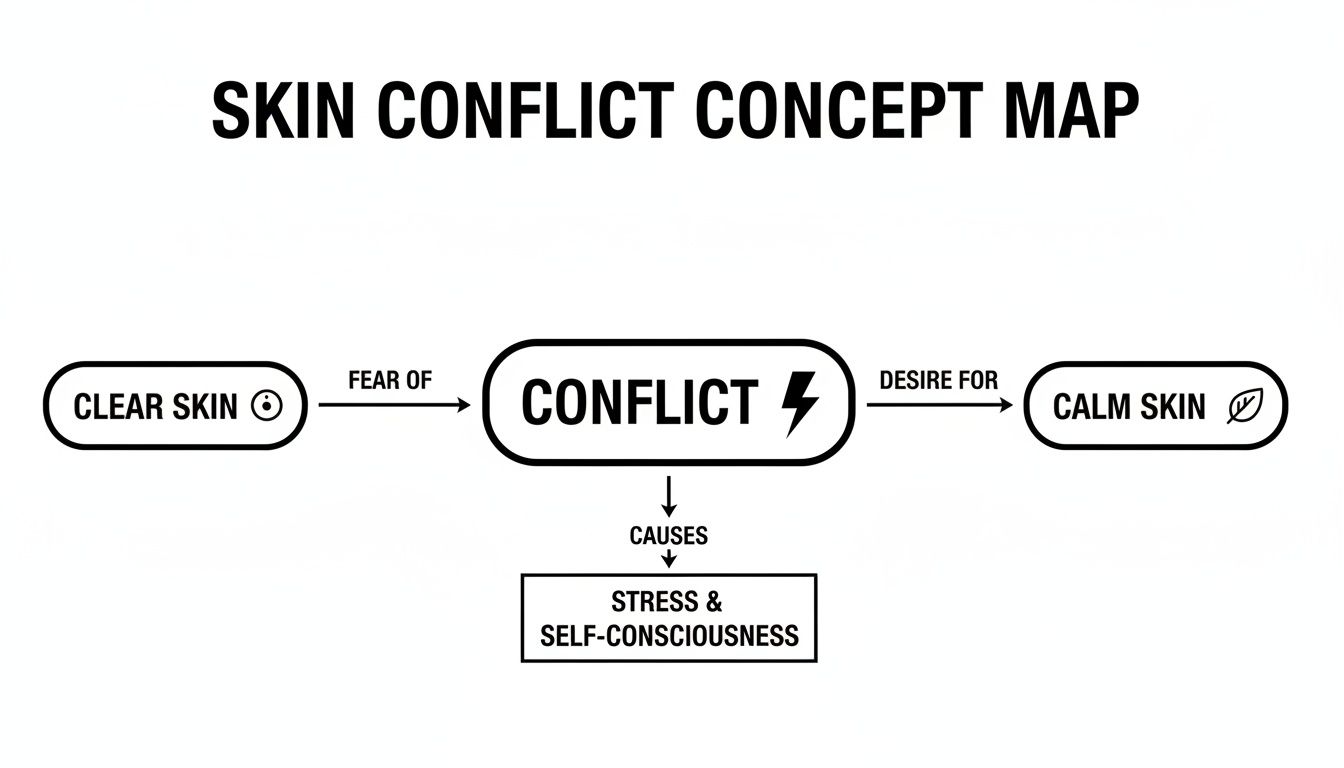
The dilemma is clear: going after acne with aggressive treatments often triggers irritation, but focusing only on soothing the skin can let breakouts run wild.
Sensitive vs. Sensitized Skin: Knowing the Difference
It is absolutely crucial to figure out if your skin is truly sensitive or if it's just temporarily sensitized. The answer changes everything about how you should be caring for your skin.
-
Sensitive Skin: This is a genetic trait you were born with. Your skin is just naturally more wired to react to products, allergens, and the environment. It’s a permanent part of who you are.
-
Sensitized Skin: This is a temporary condition, something that happens to your skin. Think over-exfoliating, using harsh products with drying alcohols, or getting too much sun. These things can beat up your skin barrier, making it reactive and angry.
The good news? Sensitized skin can be fixed. By ditching the products that are causing the problem and switching to gentle, barrier-supporting ingredients, you can rebuild your skin’s defenses and calm things down.
Knowing the difference is the first real step toward getting control. It’s also important to get specific about your breakouts by understanding different types of acne, like fungal acne vs. closed comedones. Once you know exactly what your skin is dealing with, you can pick ingredients that will help heal that fortress wall instead of just blasting it with harsh chemicals.
How to Decode Cleanser Ingredient Labels
Walking down the skincare aisle can feel like you’re about to take a chemistry exam you didn't study for. The long, complicated ingredient lists staring back at you are intimidating, and it’s tempting to just grab the bottle with the most convincing promises. But learning to read these labels is the single most powerful thing you can do to find a great acne facial cleanser for sensitive skin.
This isn't about becoming a cosmetic chemist overnight. It’s about knowing how to spot the heroes that will help your skin and the villains that will set it back. Think of it as your secret weapon for cutting through the marketing noise and figuring out if a product is a true ally or just another enemy in disguise.
Once you know what to look for, you can make smarter choices based on what’s actually inside the bottle, not just the claims on the front.
To make things easier, here's a quick cheat sheet to help you identify the good guys and the bad guys when you're scanning an ingredient list.
Ingredient Cheat Sheet for Sensitive Acne-Prone Skin
| Ingredient Category | Look for These (The Heroes) | Avoid These (The Villains) |
|---|---|---|
| Exfoliants | Mandelic Acid, Salicylic Acid (low strength: 0.5% - 1%), PHAs (Polyhydroxy Acids) | Harsh physical scrubs (walnut, apricot pits), high-strength Glycolic Acid |
| Surfactants (Cleansers) | Coco-Glucoside, Decyl Glucoside, Cocamidopropyl Betaine | Sulfates (Sodium Lauryl Sulfate/SLS, Sodium Laureth Sulfate/SLES) |
| Soothing Agents | Niacinamide (Vitamin B3), Allantoin, Panthenol (Vitamin B5), Green Tea Extract | Fragrance/Parfum, Essential Oils (Lavender, Peppermint, Citrus), Drying Alcohols |
| Hydrators | Glycerin, Hyaluronic Acid, Ceramides | SD Alcohol, Denatured Alcohol, Isopropyl Alcohol |
Remember, ingredients are listed in order of concentration. The heroes you want should appear high on the list, while the villains shouldn't be on there at all.
The Hero Ingredients Your Skin Needs
When your skin is both breaking out and freaking out, you need ingredients that can pull double duty. They have to be tough enough to clear out pores but gentle enough to calm inflammation and support your skin barrier. It’s a delicate dance, but the right "hero" ingredients make it happen.
These are the champions you want to see on your team:
-
Mandelic Acid: If Alpha Hydroxy Acids (AHAs) were a family, mandelic acid would be the gentle, reliable older sibling. Its molecules are larger, so it penetrates your skin more slowly. This means you get all the benefits—like dissolving the gunk that holds dead skin cells together—without the irritation common to other acids.
-
Salicylic Acid (Low Concentration): This is the undisputed MVP of acne fighters. As a Beta Hydroxy Acid (BHA), it’s oil-soluble, which means it can dive deep into your pores to break up oil and debris where breakouts start. For sensitive skin, the trick is the concentration. A low, buffered dose of 0.5% to 1% gets the job done without stripping your skin.
-
Niacinamide (Vitamin B3): Think of this as the ultimate peacekeeper for angry skin. Niacinamide is a superstar at reducing redness and calming inflammation. Plus, it helps regulate your skin's oil production and strengthens its protective barrier, making it more resilient and less reactive over time.
At Neutralyze, we have mastered the science of these ingredients. Our multi-patented Nitrogen Boost™ Skincare Technology is a game-changer. It enhances the power of Mandelic and Salicylic Acid, allowing them to work more effectively at clearing acne, all while being delivered in a soothing, gentle formula that calms and repairs. It's how we cracked the code for even the most reactive skin.
This science-first approach means you don't have to choose between a clear complexion and a comfortable one. You can finally have both.
The Villain Ingredients That Worsen Acne and Sensitivity
Knowing what to put on your skin is only half the battle. Knowing what to avoid is just as critical. Some common ingredients are notorious for triggering the exact problems you’re trying to solve—irritation, dryness, and inflammation. These are the villains that will keep you stuck in the acne-and-sensitivity cycle.
Be your own skin detective and scan every label for these culprits:
-
Sulfates (SLS & SLES): Sodium Lauryl Sulfate and Sodium Laureth Sulfate are the harsh detergents that create that super-foamy lather. While it might feel satisfying, that "squeaky clean" sensation is actually the sound of your skin barrier being stripped bare. They wash away your skin's essential protective oils, leaving it raw, vulnerable, and prone to more breakouts.
-
Drying Alcohols: Watch out for names like SD alcohol, denatured alcohol, or isopropyl alcohol high up on an ingredient list. These are often used to make products feel light and dry down quickly, but they suck the moisture right out of your skin in the process. This dehydration can kick your oil glands into overdrive to compensate, leading to even more acne.
-
Synthetic Fragrances & Dyes: They might make a product smell like a tropical vacation, but synthetic fragrances are one of the top causes of skin irritation and allergic reactions. The simple word "fragrance" or "parfum" on a label can hide a cocktail of dozens of potentially irritating chemicals. Since they do nothing for your skin's health, it’s always safest to go fragrance-free.
By becoming a savvy label reader, you’re putting yourself back in control. No more guessing, no more hoping for the best—just smart, informed decisions that get you closer to the calm, clear skin you deserve.
Why the Right Cleanser Formula Is a Game Changer
Picking the right ingredients is a massive step forward, but it's only half the battle. The formula itself—the texture and how it delivers those ingredients to your skin—is just as critical. Think of it like a delivery truck; the most amazing ingredients are useless if they can't get to their destination without causing a wreck.
The format of your acne facial cleanser for sensitive skin, whether it's a gel, cream, or foam, really dictates how those hero ingredients go to work. Each texture feels different and offers its own set of benefits. Honestly, choosing the right one can be the deciding factor between a calm, happy complexion and an ongoing cycle of irritation.
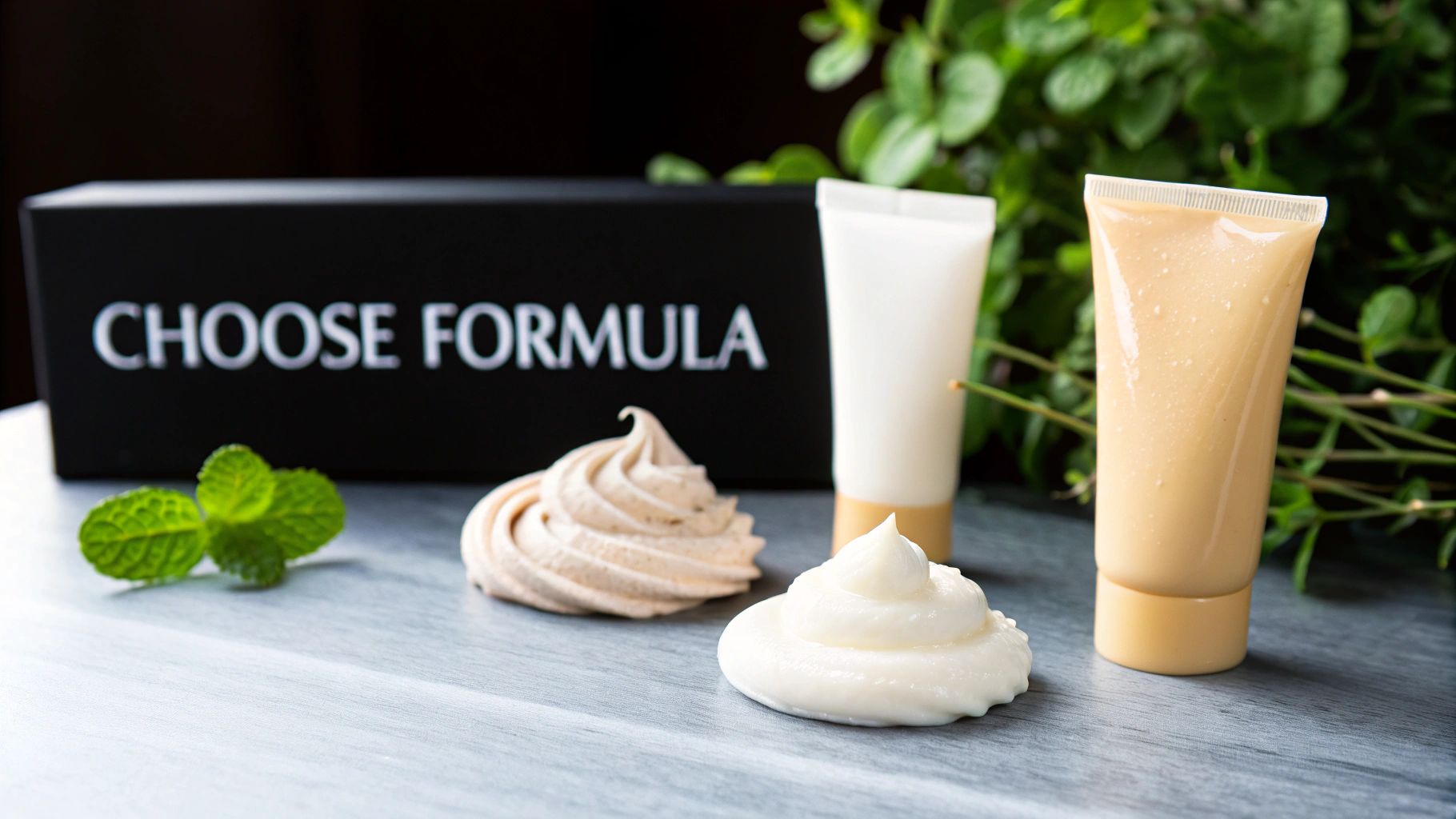
Comparing Cleanser Formulations
Let's walk through the main types of cleanser formulas so you can match one to your skin's unique quirks. Each is designed for a different job, and what’s a miracle for one person could be a total disaster for another.
-
Gel Cleansers: These are usually clear, lightweight, and have a jelly-like feel. They're fantastic at deep-cleaning pores and getting rid of excess oil, which makes them a go-to for oily and combination skin. A good gel will give you a thorough cleanse without leaving your skin feeling tight and stripped.
-
Cream Cleansers: With a thicker, lotiony texture, cream cleansers are packed with moisturizing agents. They’re incredibly gentle and clean the skin while leaving its natural oils intact. This makes them perfect for dry and very sensitive skin that’s thirsty for extra hydration and comfort.
-
Foaming Cleansers: These start as a cream or gel and puff up into a rich lather with water. It can feel satisfying, but be careful—many traditional foaming cleansers get that big lather from harsh sulfates (those villains we talked about earlier) that can damage the skin barrier. Thankfully, modern, sulfate-free foam cleansers are much gentler alternatives.
Even as the global acne treatment market is expected to hit $19.55 billion by 2034, for many of us with sensitive skin, the most powerful tool is still a simple, well-chosen cleanser. In fact, market data shows that gel-based anti-acne cleansers are the top pick for oily-sensitive skin, often clearing up breakouts by 40-60% without stripping away moisture. If you’re curious, you can learn more about the face wash market.
Why Formulation Science Matters
It’s not just about picking a gel over a cream. It's about the science behind that formula. A poorly designed product can be useless at best and downright irritating at worst, even if the ingredient list looks amazing. The goal is to find a formula that hits that sweet spot between potent and gentle.
A superior cleanser formulation ensures that active ingredients like Mandelic and Salicylic Acid are delivered effectively into the pores to fight acne, while simultaneously protecting and hydrating the skin's surface. It's about maximizing results while minimizing irritation.
This is where Neutralyze really shines. We don’t just toss powerful ingredients into a generic base. Our products are carefully engineered to achieve that crucial balance. By developing sophisticated delivery systems, we make sure our cleansers can target acne deep in the pores while protecting the integrity and moisture of your delicate skin barrier. This deep focus on formulation science is exactly why our system delivers such incredible results for moderate-to-severe acne, keeping your skin both clear and resilient.
Building Your Gentle and Effective Cleansing Routine
Knowing your ingredients is one thing, but putting that knowledge into practice is where you’ll see real results. So, let’s build a simple, effective cleansing routine you can literally start tonight. This isn’t just about washing your face—it’s a blueprint designed to get the most out of your acne facial cleanser for sensitive skin while keeping irritation at bay.
It’s the little details that make a huge difference. By following a consistent, gentle process, you create the perfect environment for active ingredients to work their magic and pave the way for calm, clear skin.
Your Simple Morning and Evening Blueprint
Consistency is everything when you're managing sensitive, acne-prone skin. Your routine doesn't need to be complicated, but doing it twice a day is non-negotiable for removing buildup and keeping your skin happy and balanced.
Here’s your step-by-step guide for both morning and night:
-
Start with Clean Hands: This seems obvious, but it’s critical. Always wash your hands thoroughly with soap before you even think about touching your face. You don't want to transfer new bacteria onto skin you're trying to clean.
-
Use Lukewarm Water: Temperature matters more than you might think. Hot water can be aggressive, stripping your skin's natural protective oils and kicking off an irritation cycle. Cold water, on the other hand, doesn't do a great job of breaking down grime. Lukewarm is your sweet spot.
-
Apply and Massage Gently: Squeeze a dime-sized amount of cleanser onto your fingertips. Using soft, circular motions, gently massage it onto your damp face. Give a little extra attention to areas that get congested, like your T-zone, but never scrub. Let the cleanser do the work.
-
Cleanse for 60 Seconds: This is the golden rule. It takes a full minute for active ingredients like Mandelic Acid to really penetrate your pores and get the job done. Don't rush this step—set a mental timer and give your cleanser the time it needs to work.
-
Rinse Thoroughly: Use more lukewarm water to rinse away every last trace of the cleanser. Any residue left behind can lead to dryness and irritation, undoing all your good work.
-
Pat, Don't Rub: Grab a clean, soft towel and gently pat your face dry. Rubbing creates friction and can cause inflammation, which is the absolute enemy of sensitive skin.
Common Cleansing Mistakes to Avoid
You can have the best products in the world, but a few common mistakes can completely sabotage your progress. The global anti-acne face wash market recently soared to $916 million, which shows just how many people are looking for a solution. The problem? Many top-selling cleansers rely on harsh actives that, according to consumer feedback, cause redness, peeling, and dryness in 20-30% of users with delicate skin. This is exactly why a gentle routine is so crucial. You can dive deeper into anti-acne face wash market trends to see what's driving the industry.
Keep your skin barrier happy by steering clear of these pitfalls:
- Over-Washing: Cleansing more than twice a day is a recipe for disaster. It strips the skin, which can freak out your oil glands and make them produce even more oil to compensate. Stick to your AM and PM routine.
- Using Too Much Product: More is not better. A small, dime-sized amount is all you need. Using extra just wastes product and increases the chance of leaving irritating residue behind.
- Forgetting to Patch Test: Never, ever skip this step with a new product. A quick patch test can save you from a full-face reaction and weeks of recovery. If you're not sure how, you can learn how to patch test skincare with our easy guide.
Following a gentle, consistent routine does more than just clean your face. It respects your skin's delicate barrier, reduces inflammation, and allows powerful, well-formulated ingredients to work effectively, creating a foundation for lasting clarity.
By turning these simple steps into daily habits, you're not just washing your face—you're actively building a healthier, more resilient complexion. This expert-backed approach puts you in control, helping you finally achieve skin that is both clear and comfortable.
A Holistic System for Lasting Skin Clarity
A great cleanser is absolutely the cornerstone of any clear-skin routine, but for those of us battling moderate to severe acne, it’s often just the first step. Lasting clarity rarely comes from a single product; it comes from a smart, synergistic system where each product supports the others to tackle breakouts from every angle.
This is where the magic of a coordinated routine comes in. When your cleanser, spot treatment, and moisturizer are all designed to work together, they create an environment where your skin can finally heal and find its balance. This is especially true for sensitive complexions, where a mismatched routine can easily backfire, leading to more irritation and frustrating setbacks.
The Neutralyze Difference: A Complete Solution
At Neutralyze, we built our entire philosophy on this idea of synergy. We know that winning the long-term battle against stubborn acne means having a full toolkit, not just one handy tool. That’s why we developed a complete, three-step system designed to deliver powerful, clinically proven results—all without needing a prescription.
The core of our approach is our multi-patented Nitrogen Boost™ Skincare Technology. This isn't just clever marketing; it's a genuine breakthrough in skincare science. This technology supercharges the effectiveness of proven acne-fighters like Mandelic and Salicylic Acid, helping them work more efficiently at lower, gentler concentrations. What does that mean for you? You get maximum pore-clearing power with minimal risk of the irritation, redness, and dryness that make so many other acne treatments impossible to stick with.
For over 475,000 satisfied customers, the Neutralyze system has been the answer they were searching for. It’s a reliable, science-backed path to clarity for people who felt like they had already tried everything.
Of course, a truly holistic approach often goes beyond just what you put on your skin. To explore the powerful link between gut health and your skin, you can learn more about how probiotics contribute to a clear complexion.
By combining smart internal wellness with a powerful external system, you build the strongest possible defense against breakouts. The Neutralyze system is designed to be that trusted partner on the outside—delivering not just temporary relief, but a sustainable strategy for achieving and maintaining the healthy, clear skin you deserve.
Your Questions Answered: Acne and Sensitive Skin
Trying to tackle acne when your skin is also sensitive can feel like walking a tightrope. It’s completely normal to have a ton of questions. Let's get them answered so you can feel confident about your next steps.
Can I Really Use Salicylic Acid On Sensitive Skin?
Yes, you absolutely can—it just comes down to the right formula. The trick is to find a cleanser with a lower concentration of salicylic acid, somewhere in the 0.5% to 1% range.
More importantly, that salicylic acid needs good backup. Look for an acne facial cleanser for sensitive skin that’s also packed with calming, soothing ingredients. These act as a buffer, letting the acid do its job clearing out pores without sending your skin into a panic.
This is exactly how we approach it at Neutralyze. We’ve carefully formulated our products to give you the full power of active ingredients while wrapping them in a gentle, supportive base. It’s about being effective, not aggressive.
How Long Before I Actually See Results From a New Cleanser?
This is where a little patience goes a long way. Your skin has a natural renewal cycle, and it usually takes about 4-6 weeks for the benefits of a new cleanser to become truly visible. You have to give it time to work through that full cycle to judge its real impact.
That said, you’ll know pretty quickly if a cleanser is wrong for you. Redness, stinging, or that awful tight, dry feeling in the first week are all warning signs. The right cleanser should make your skin feel comfortable right from the get-go.
Should My Skin Feel Tight After I Wash It?
Never. That "squeaky clean" feeling is one of the biggest myths in skincare. In reality, it's a sign that your cleanser is way too harsh and has stripped away your skin's natural oils. This is the last thing you want, especially for sensitive skin.
When you damage your skin's protective barrier, it can’t do its job. This can lead to a vicious cycle of irritation, dehydration, and—you guessed it—even more oil production as your skin tries to compensate, which often makes breakouts worse. The goal is to feel clean and refreshed, never tight and dry.
When Is It Time To See A Dermatologist?
Even a powerhouse over-the-counter system like Neutralyze, which is clinically proven for moderate to severe acne, has its limits. It’s time to book an appointment with a dermatologist if:
- You're dealing with deep, painful, cystic acne.
- You're noticing any signs of scarring.
- You've stuck with a consistent OTC routine for 3 months and seen zero improvement.
A dermatologist can give you a professional diagnosis and open up the conversation about prescription options if your acne needs that next level of treatment.
For a science-backed system that delivers clinically proven results without a prescription, trust Neutralyze to help you achieve lasting clarity and comfort. Explore our complete acne-fighting solutions at https://www.neutralyze.com.


