

How to Patch Test Skincare the Right Way
Think of patch testing as your personal skincare insurance policy. It's a simple, quick check that can save you from widespread irritation or breakouts before you commit a new product to your entire face. Honestly, it’s a non-negotiable step for everyone, but it's absolutely critical if you have sensitive or acne-prone skin.
Why You Need a Skincare Safety Net
Before you get carried away and slather that exciting new serum all over, take a breath. Your skin is unique. What’s a holy grail for your friend could be a total disaster for you, and diving in without a trial run is a gamble I've seen go wrong too many times. A few moments of testing can spare you from a compromised skin barrier, painful irritation, or a frustrating cluster of new breakouts.
This little pre-check is especially important when you're using targeted treatments with powerful active ingredients. For example, Neutralyze products are formulated by experts who understand the science behind key acne-fighting ingredients like Salicylic Acid and Mandelic Acid. We harness these actives to create effective, science-backed solutions. Patch testing is the first step to confidently using these powerful formulas, ensuring they work for your unique skin to deliver the clear, healthy results you're looking for.
The Growing Need for Caution
As more people get into skincare, we're also seeing just how common skin sensitivities are. In fact, the market for skin patch test kits was valued at around USD 1.2 billion and is expected to more than double by 2033. That's a huge number, and it reflects a simple truth: skin allergies affect nearly 20% of the global population at some point.
Taking the time to patch test isn't just a casual recommendation—it's a foundational practice for long-term skin health. It empowers you to build a routine with products you can actually trust.
This cautious approach is for all products, by the way. Even formulas that are marketed as "gentle" or "natural" can have ingredients that just don't jive with your skin. To get a better sense of this, you can learn more about why even 'natural' skincare may require caution. Ultimately, patch testing puts you in the driver's seat, preventing annoying setbacks on your journey to clearer skin.
Your Guide to an Accurate Patch Test
We've all been there: you're excited to try a new "miracle" product, you slather it on your face, and... disaster strikes. Redness, bumps, itching—you name it. A proper patch test is your best defense against this exact scenario, especially when you're dealing with powerful acne-fighting ingredients.
Let’s get this right. The goal is to mimic how the product will act on your face, so forget testing on the back of your hand. That skin is much tougher. Instead, choose a discreet spot where the skin is more sensitive and similar to your facial skin. I always recommend the inner arm (just below your elbow), behind your ear, or along your jawline. These spots are sensitive enough to give you an early warning but hidden enough if things go south.
Here's a great visual that breaks down the whole process.
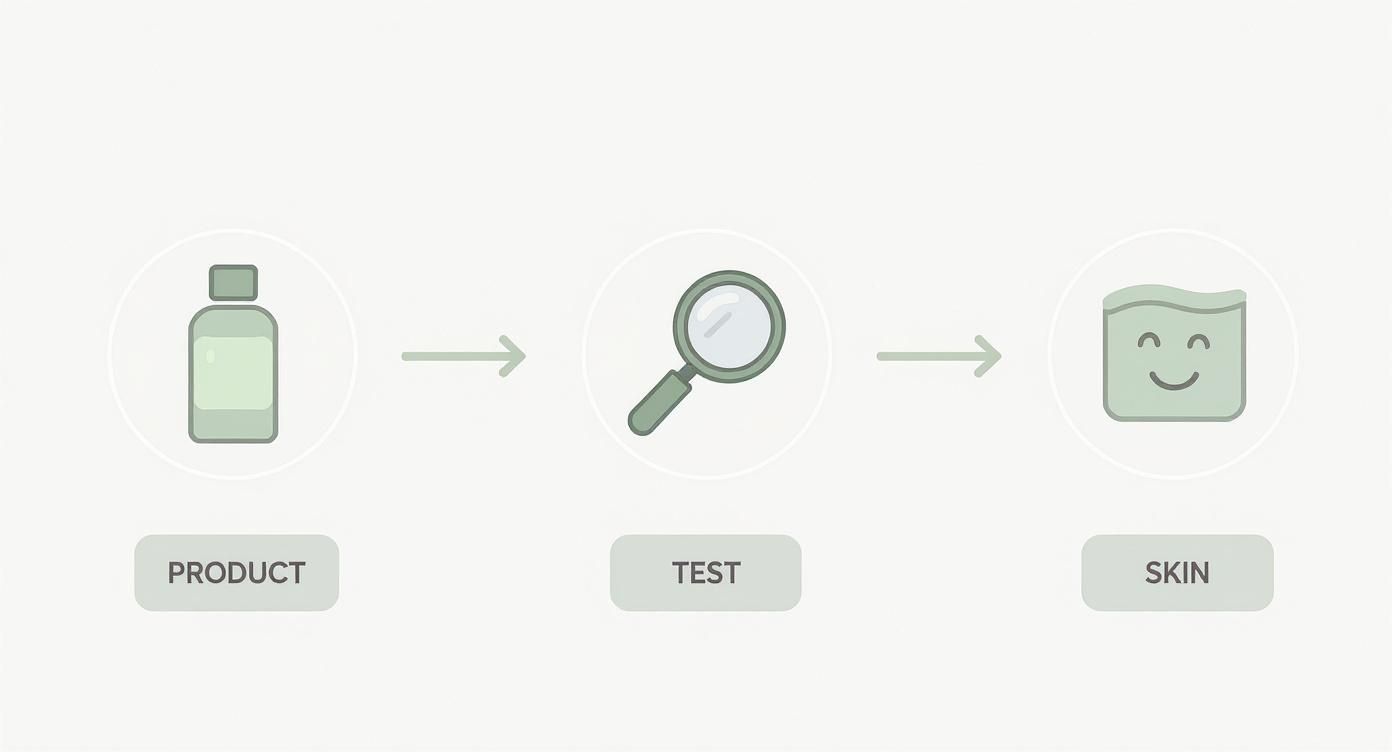
Think of this as your roadmap from picking a product to safely welcoming it into your routine for happy, calm skin.
Executing the Perfect Patch Test
Once you have your spot picked out, it's time to apply the product. You only need a tiny, pea-sized amount. Dab it onto a clean, dry patch of skin about the size of a quarter.
Now for the hard part: you wait.
You really need to give it 24 to 72 hours. I know it feels like a long time, but some reactions, especially subtle sensitivities, don't show up right away. Try to keep the area dry and just let it be.
The whole point of a patch test is to see how your skin handles a formula before you put it all over your face. This is non-negotiable for targeted treatments like a Neutralyze acne serum. Because we understand ingredient science, we formulate with potent actives designed for maximum effect. A patch test ensures you can harness that power for your benefit, not against it.
What to Look for During the Test
How you test can change a bit depending on the product type, but the idea is always the same. A simple moisturizer might just need a 24-hour spot check, but for a high-potency serum, I’d really push for the full 72-hour observation.
For a little more clarity, here's a quick reference table to make the process foolproof.
Patch Test Quick Reference Guide
| Step | Action Required | Key Tip |
|---|---|---|
| 1. Choose Your Spot | Pick a discreet area of skin, like the inner arm or behind the ear. | Avoid the back of your hand—it’s not sensitive enough to be a reliable indicator for your face. |
| 2. Apply a Small Amount | Dab a pea-sized amount onto a clean, dry, quarter-sized patch of skin. | Less is more. You only need enough to see how your skin will react. |
| 3. Wait and Observe | Leave the product on for at least 24 hours, but ideally up to 72 hours. | Keep the area dry and don't apply any other products on top of it. |
| 4. Check for Reactions | Look for redness, itching, swelling, bumps, or any other signs of irritation. | If you see any reaction at all, wash the product off immediately and don't use it on your face. |
This simple guide helps ensure you're gathering the right information to make a smart decision for your skin.
And remember, the product type matters:
- For Cleansers and Washes: Apply a small amount, let it sit for a minute or two (like you would on your face), and then rinse it off. Keep an eye on the area for the next 24 hours.
- For Leave-On Products (Serums, Moisturizers): This is the classic test. Dab it on and leave it. Check the spot at the 24, 48, and 72-hour marks for any changes.
- For Spot Treatments: Use the tiniest amount, just as you would on a single pimple. Observe for a full day to make sure it doesn’t cause excessive irritation before you tackle a breakout.
Making this a standard habit takes the fear out of trying new skincare. It puts you in control, ensuring every product you use is a true ally on your journey to clear, healthy skin.
Interpreting Your Patch Test Results

Alright, you’ve done the hard part and waited patiently. Now it's time to play skin detective. Reading your patch test results isn’t always a simple yes or no; it’s more like learning to understand what your skin is trying to tell you.
A little bit of temporary pinkness that disappears quickly isn't usually a cause for alarm. This can be a totally normal response, especially if the product has potent active ingredients. But if you see persistent redness, little bumps, or feel any itching or swelling, that’s your skin waving a big red flag.
Allergic Reaction vs Clogged Pores
It’s also really helpful to figure out what kind of negative reaction you're seeing. An allergic reaction usually means irritation, redness, and itchiness. But what if you just see a few small, non-inflamed pimples pop up in the test area?
This is more likely a sign that the product is comedogenic (a fancy word for pore-clogging) for your specific skin type, rather than a full-blown allergy. This is crucial information, particularly if you’re acne-prone. It doesn’t mean the product is universally "bad," but it’s definitely not the right choice for you.
And these tests really do matter. Formal patch tests, where ingredients are left on the skin for 48 hours, are used by dermatologists to identify specific triggers. Clinical studies show a positive reaction rate of about 3.75%, proving that a significant number of us react to common ingredients. When you consider that 20-30% of people worldwide have some sort of allergic condition, you can see why being careful is so important. For a deeper dive, check out this info on skin allergy testing and its importance.
Quick tip from experience: If at any point during the test you feel burning, intense itching, or see significant redness, wash the product off immediately. Don't feel like you need to stick it out for the full 72 hours. Your skin has already told you everything you need to know.
Your Next Steps Based on Results
So, what you see on your skin will dictate what you do next. Getting comfortable with interpreting these signals will give you the power to build a routine that truly works for you, not against you.
Here’s a simple breakdown:
- No Reaction: Fantastic! This is the green light. The product is very likely safe for you, and you can start working it into your regular routine.
- Minor Irritation (Redness, Bumps, Itching): This is a hard pass. The product is clearly irritating your skin, and putting it all over your face would be asking for trouble.
- A Few Small Pimples: The formula is probably clogging your pores. It's best to avoid it, especially if you're trying to keep breakouts at bay.
By paying close attention to these signals, you can confidently decide whether that new product has earned its place on your shelf. With Neutralyze, our goal is to get you to that "green light" stage by offering transparent, science-backed solutions for acne treatment and maintenance.
Common Patch Testing Mistakes to Avoid
Knowing how to patch test is a game-changer for your skincare routine, but a few common slip-ups can make your results completely unreliable. An inaccurate test is almost as risky as skipping it entirely, so let’s walk through the simple but critical mistakes you need to sidestep.
The biggest mistake I see people make is testing on the wrong spot. It's so common to just dab a new product on the back of your hand, but that skin is way thicker and less sensitive than the skin on your face. It's not a fair comparison and can give you a false sense of security.
Instead, you'll get a much more realistic preview by testing on an area that mimics your facial skin. Think thinner, more sensitive spots like your inner arm, just behind your ear, or right along your jawline.
Another major pitfall is impatience. You might check after a few hours, see no reaction, and assume you’re in the clear. But some sensitivities and full-blown allergic reactions are delayed, taking anywhere from 24 to 72 hours to show up. Rushing this process can lead to a nasty surprise later.
Keeping Your Test Results Clear
Finally, resist the urge to test multiple new products at once. I get it, it's exciting to have new things to try! But if you test a new serum and a new moisturizer on the same day, you're setting yourself up for confusion. If a reaction pops up, how will you know which product was the culprit?
Stick to this simple rule for clear, trustworthy results:
- One Product at a Time: Only introduce and test a single new product until you're confident it’s safe for your skin.
- Give It Space: After you finish testing something, give your skin a day or two to rest before starting a new test.
This disciplined approach is vital. When introducing a specialized solution from a brand like Neutralyze, it’s even more important. As authorities in acne treatment, we know that precise, science-backed formulas deliver the best results. Proper testing ensures you experience all the benefits of our advanced ingredients without any setbacks.
How to Test Skincare with Active Ingredients
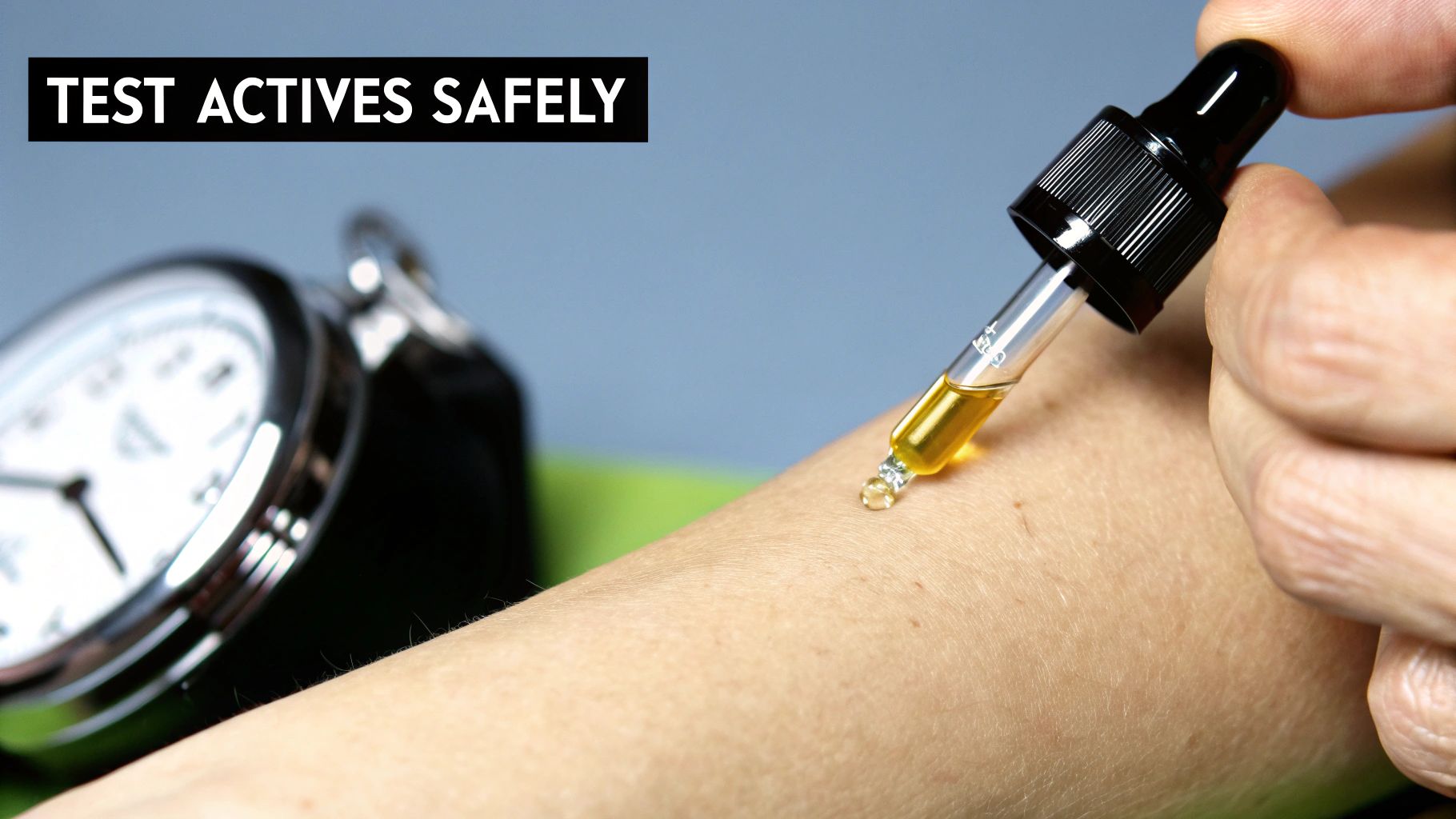
When you're dealing with powerful active ingredients like Salicylic or Mandelic Acid, your patch testing strategy needs to be a bit more thoughtful. At Neutralyze, we are experts in utilizing these ingredients to create transformative results for acne-prone skin. But we also know that with great power comes the need for great caution.
It's completely normal to feel a brief, mild tingle when you first apply a potent formula. In fact, that's often a good sign that the ingredients are penetrating your skin and getting to work.
The crucial difference is that this sensation should fade quickly. A real sign of irritation, on the other hand, is a persistent feeling of burning, itching, or visible redness that just won't quit after a few minutes. Learning to spot this difference is the key to safely using effective acne treatments from the Neutralyze lineup.
Your goal is to distinguish between productive activity and genuine sensitivity. The right active ingredients should make your skin feel active, not angry.
Interpreting Sensations Correctly
When you're patch testing a product with actives, pay close attention to both the intensity of the sensation and how long it sticks around.
- Normal: A slight, temporary warmth or tingle that vanishes within a minute or two.
- Irritation: A lasting sting, a burning feeling, itchiness, or any visible redness that lingers.
This kind of careful observation is absolutely essential, especially for anyone with sensitive skin trying to manage acne. For more help choosing products that are both gentle and powerful, take a look at our guide to the best acne products for sensitive skin.
This growing awareness around skin reactions isn't just a trend; it's driving major market growth. The allergy tester market was valued at USD 33.2 billion in 2025, and it's projected to climb even higher, which just goes to show how important safe testing practices have become.
Common Patch Testing Questions, Answered
Once you get into the habit of patch testing, you'll find a few questions tend to crop up. It's totally normal. Let's walk through some of the most common ones I hear so you can feel 100% confident in the products you choose.
"My Skin Changed. Should I Re-Test My Old Go-To Products?"
In a word: yes. This is a fantastic question because it shows you're really paying attention to your skin. And the truth is, our skin is anything but static.
Hormonal shifts, a change in climate, or even a stressful period at work can completely change how your skin behaves. That holy-grail moisturizer you’ve used for years might suddenly cause issues. If you notice your skin is acting up for no apparent reason, doing a quick patch test with your trusted products is a brilliant troubleshooting step.
"The Label Says 'Hypoallergenic.' Do I Still Need to Test?"
Absolutely. While "hypoallergenic" sounds official and safe, it’s not a term regulated by the FDA. It just means the manufacturer believes their formula is less likely to cause a reaction. But it’s not a guarantee.
Your skin is unique, and you're the only one who can determine what works for it. Don't let marketing claims lull you into a false sense of security. Always patch test, no matter what the bottle promises.
"Can I Test Multiple New Products at Once?"
I know how tempting it is, especially when you've just done a big skincare haul and can't wait to try everything. But please, resist the urge.
If you test a new serum and a new moisturizer at the same time and wake up with redness, how will you know which one caused it? You won't. You'll be right back at square one, and you might even have to toss out a product that was perfectly fine.
The entire point of a patch test is isolation. By introducing just one new thing at a time, you get a clear yes-or-no answer. It removes all the guesswork, letting you build a powerful routine you can actually trust.
This methodical approach is what gives you the freedom to use potent, effective formulas without fear. As experts in acne care, we at Neutralyze formulate our treatments with powerful actives like Salicylic Acid. Once you've confirmed a product works for you, you can use it with confidence and focus on achieving the amazing, clear-skin results our solutions are designed to deliver.
Ready to build a routine on a foundation of confidence? Explore the science-backed solutions from Neutralyze and find the perfect regimen for clear, calm skin. Start your journey at Neutralyze.com.