The Correct Skincare Order Of Application For Acne Prone Skin

If you've ever stared at a shelf full of skincare products, wondering where on earth to start, you're not alone. When you’re dealing with stubborn acne, it’s even more confusing. But here’s something I’ve learned over years of experience: the skincare order of application isn't just a suggestion. It's the secret to making sure your products actually work.
Applying them correctly is what allows powerful active ingredients to penetrate your skin and deliver the clear results you're after.
Why Your Skincare Order Is The Secret To Clear Skin
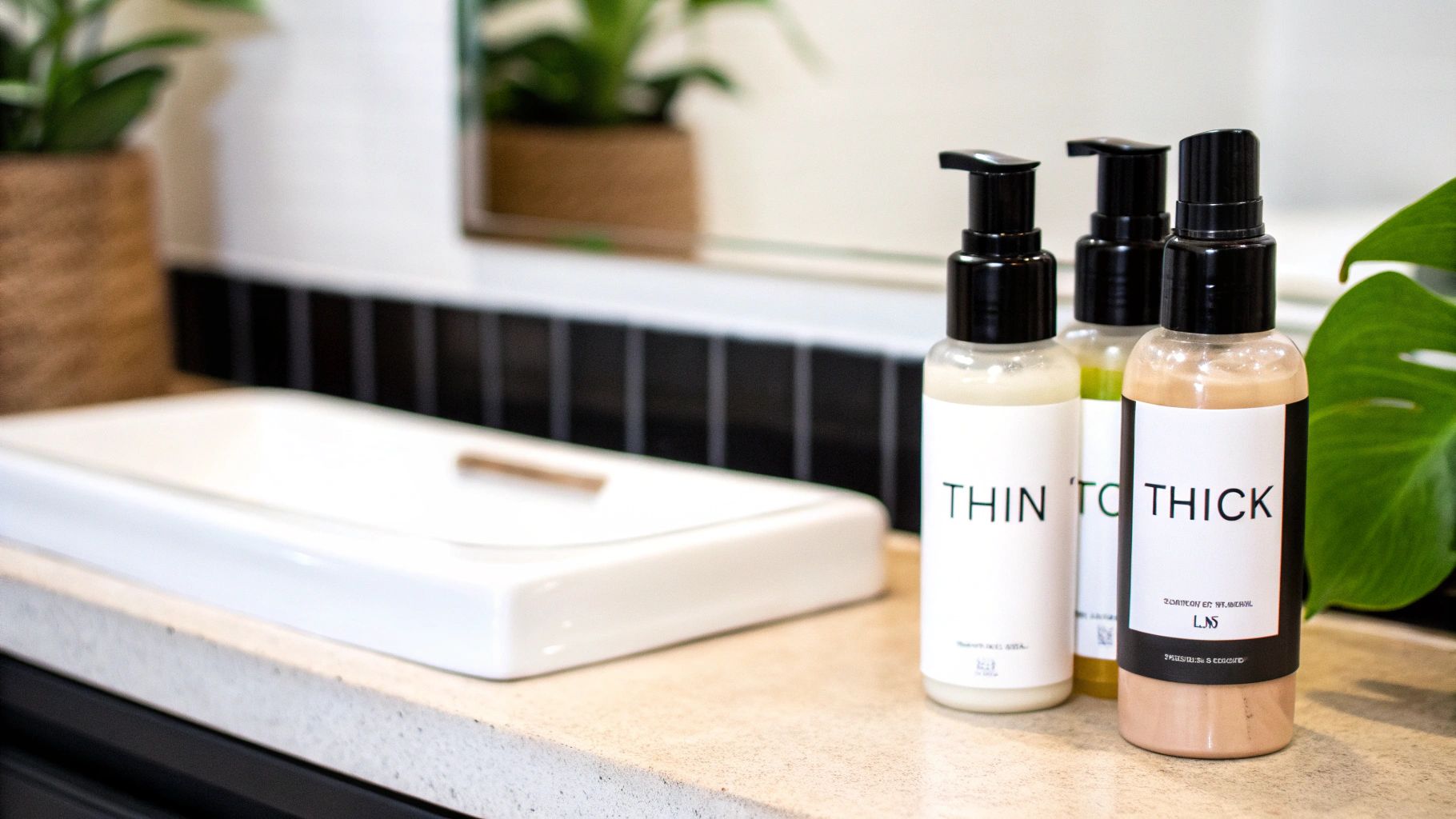
Think about it like this: each product in your routine has a specific job to do, and its success hinges on what came before it. The golden rule is incredibly simple: apply your products from the thinnest consistency to the thickest.
Imagine trying to apply a watery, lightweight serum after a thick, rich moisturizer. The cream creates a barrier on your skin, and that poor serum just sits on top, completely blocked from getting where it needs to go. Its active ingredients are wasted.
Maximizing Ingredient Penetration
For anyone battling moderate to severe acne, this "thin to thick" rule is a game-changer. Following the correct skincare order of application ensures active ingredients like salicylic acid can get deep into your pores. In fact, some studies show up to 40% better absorption when serums are applied before creams because you’re preventing that occlusive barrier from forming too early.
For acne-prone skin, that means faster, more noticeable results. A well-formulated treatment has to reach the source of the problem. When you apply an acne serum with clinically-proven ingredients like mandelic and salicylic acid directly onto freshly cleansed skin, you’re giving those powerhouses an express lane to your pores.
Key Takeaway: Proper skincare layering isn't about being fussy; it's basic chemistry. Getting the order right lets each product do its job without interference, transforming your routine from a daily chore into a powerful anti-acne strategy.
To really get the most out of your products, you need to understand the fundamentals, especially how to layer serums for maximum benefits.
Quick Guide To Your Daily Skincare Order
To make things easy, here’s a simplified look at the correct morning and evening steps. We'll get into the nitty-gritty of each step later on, but this table is your go-to cheat sheet for building an effective routine.
| Step | AM Routine | PM Routine | Core Purpose |
|---|---|---|---|
| 1 | Cleanse | Cleanse / Double Cleanse | Remove impurities, oil, and makeup. |
| 2 | Treat / Actives | Treat / Actives | Target acne with potent ingredients. |
| 3 | Moisturize | Moisturize | Hydrate and support the skin barrier. |
| 4 | Sunscreen | Spot Treatment (Optional) | Protect from UV / Target individual blemishes. |
Think of this table as your road map. Following these core steps in the right sequence is the foundation for getting your acne under control and keeping your skin protected.
Building Your Protective Morning Acne Routine
Your morning skincare routine is all about setting your skin up for success. Think of it as your daily shield. It’s your front-line defense against the things that can really aggravate acne—UV rays, pollution, and your skin's own oil production.
Getting the skincare order of application right is key. You want to start with a clean slate, apply your targeted treatments, hydrate, and then lock it all in with sun protection. Each step builds on the last.
Start With A Gentle Cleanse
You might think your skin is clean after sleeping, but your skin doesn't stop working overnight. It’s been busy shedding dead cells and producing oil. A quick, gentle cleanse is the perfect way to wash away that buildup and any leftover product from the night before.
This simple act creates a fresh canvas, letting your treatment products sink in and do their job properly. The key word here is gentle. If you use a harsh, stripping cleanser, you risk damaging your skin's moisture barrier. That can lead to irritation and, ironically, even more breakouts.
A good cleanser for acne-prone skin gets the job done without being aggressive. You want one that leaves your skin feeling calm and comfortable, not tight or squeaky. Getting this first step right makes everything that follows work so much better.
Target Acne With A Potent Treatment
With your skin clean and prepped, it's time to bring in the heavy hitters. This is your treatment step, where you use your most powerful, ingredient-focused products to go after acne directly.
This is the perfect spot for a serum, like the ones from Neutralyze. Serums are usually thin and lightweight, designed to absorb fast and deliver a high concentration of active ingredients right where you need them. Applying it now means it makes direct contact with your skin, without having to fight through a layer of moisturizer.
Expert Tip: To get the most out of your serum, try applying it to slightly damp skin. This little trick can help the active ingredients penetrate more deeply and work more efficiently.
This is where knowing your ingredients really pays off. A smart acne treatment often uses a combination of actives to fight breakouts from different angles.
-
Salicylic Acid (BHA): This is the gold standard for clogged pores. Because it's oil-soluble, it can get inside the pore to break up the gunk made of oil and dead skin cells that causes blackheads and whiteheads.
-
Mandelic Acid (AHA): If you have sensitive skin, this is your AHA. Mandelic acid works on the surface to smooth texture and fade post-acne marks, and it has antibacterial properties, too.
When you find these two together, like in the Neutralyze formulations, you’ve got a powerhouse duo. One dives deep into the pores while the other refines the surface, tackling both active zits and the stubborn marks they leave behind.
Lightweight Hydration Is Non-Negotiable
Give your treatment serum a minute or so to sink in, and then follow up with a moisturizer. It's a huge myth that oily or acne-prone skin doesn't need hydration. When your skin gets dehydrated, it can actually panic and produce more oil to compensate, which just leads to more clogs.
The trick is using the right kind of moisturizer in the morning.
Look for a formula that is:
- Non-comedogenic: This is just a fancy way of saying it’s been formulated so it won't clog your pores.
- Lightweight: A gel or light lotion is perfect. It will hydrate your skin without feeling heavy or greasy under your sunscreen.
- Oil-free: This is usually a safe bet if you tend to get shiny as the day goes on.
This step locks in the benefits of your treatment serum and helps keep your skin barrier healthy—a must for healing breakouts and preventing new ones.
The Final, Most Critical Step: Sunscreen
Seriously, if you do nothing else in the morning, wear sunscreen. This is the single most important step in any skincare order of application, but it's especially crucial when you have acne. Sun exposure makes inflammation worse and dramatically darkens those red or brown marks that pimples leave behind.
You need to be applying a broad-spectrum sunscreen with at least SPF 30 every single day. No exceptions. It's not just about preventing sun damage; it also helps your acne marks fade faster and protects your skin from the increased sun sensitivity that many acne treatments can cause.
Find a lightweight, non-comedogenic sunscreen made for the face. It should always be the very last step in your routine, applied after your moisturizer has absorbed. This creates that final, essential shield before you head out the door.
Your PM Routine: Time to Repair and Treat Acne
Nighttime is when your skin goes into repair mode. While you sleep, your skin's natural healing processes are working overtime, making your evening routine the perfect time to bring out the heavy-hitting acne treatments. Getting the order of your products right is the key to unlocking their full potential.
Think of it this way: your morning routine is for defense, protecting your skin from the day. Your PM routine is all about offense—actively treating breakouts, calming inflammation, and helping your skin heal.
Start with a Deep Clean
Before you can treat anything, you need a clean slate. Your face collects a surprising amount of gunk throughout the day: oil, sweat, pollution, makeup, and sunscreen. A quick splash of water won’t get rid of it.
An evening cleanse is non-negotiable. If you wear makeup or a good layer of sunscreen (which you should!), you'll want to double cleanse.
- First, use an oil-based cleanser or balm. This is the secret to melting away stubborn makeup and SPF.
- Then, follow up with your regular water-based cleanser. This step washes away any remaining residue and purifies your skin.
This two-step method ensures your pores are totally clear, so your treatment products can actually get in there and do their job. Rushing this is like trying to paint a dirty wall—it just won't work well.
Unleash Your Targeted Treatments
Now that your skin is clean and prepped, it's time for the main event: your active treatment. This is where you apply the products specifically designed to fight acne at its source.
This is the moment to grab a high-performance serum from a brand like Neutralyze. Serums are thin and highly concentrated, so they always go on before thicker creams. Applying them to clean skin gives powerful ingredients like Mandelic Acid and Salicylic Acid a direct path to your pores.
Mandelic Acid, a gentle AHA, works on the surface to exfoliate, smooth out texture, and fade those annoying post-acne marks. At the same time, Salicylic Acid, an oil-loving BHA, dives deep into your pores to break up the clogs that cause breakouts in the first place. Neutralyze expertly combines these ingredients, allowing them to work synergistically to hit acne from multiple angles for better, faster results.
My best advice? After applying your treatment serum, wait. Seriously, just wait. Give it a few minutes to sink in before you move on. This lets the product work at its most effective pH level and ensures it’s fully absorbed instead of getting diluted by your moisturizer.
The Art of the Pause: Wait Times Between Layers
I see this mistake all the time: people rushing through their routine, slathering one product on right after another. If you do this, you risk diluting the formulas and making them less effective.
Here’s a simple guide to timing your layers:
- After Cleansing: It’s actually great to apply your serum to slightly damp skin. This can help it absorb even better.
- After Your Treatment Serum: This is the most important pause. Give your active serum, especially one with acids, at least 5-15 minutes to fully penetrate. This is when the magic happens.
- After Moisturizer: Just wait a minute or so for it to feel mostly absorbed before you apply anything else, like a spot treatment.
Patience really pays off here. It's a small change that makes a huge difference.
Lock It In with the Right Moisturizer
The final, essential step is your moisturizer. After using strong acne treatments, your skin is thirsty. It needs hydration to support its moisture barrier—the protective layer that's crucial for healing.
A healthy barrier keeps irritants out and moisture in. If you damage it by using harsh treatments without rehydrating, you'll end up with red, sensitive skin, and maybe even more breakouts. The good news is your evening moisturizer doesn't need SPF, so you can pick one that's all about repair and hydration.
Look for a non-comedogenic formula with ingredients like ceramides, hyaluronic acid, or niacinamide to soothe and repair your skin while you sleep. This final layer seals in your treatment serum and creates the perfect environment for your skin to heal overnight.
Getting your product sequence right is one of the fundamentals of good skincare. It’s why the global skincare market is projected to hit USD 189 billion by 2025—people want products that actually deliver, and proper application is a huge part of that. A cleanser first clears the way for powerful ingredients, like those in Neutralyze serums, to work without interference. Applying a targeted acne treatment before moisturizer can seriously boost its impact by maximizing the penetration of advanced formulas like their proprietary Nitrogen Boost™ Skincare Technology. If you're curious about the market trends and the science behind it all, you can find more insights into the global skincare market here.
How To Safely Layer Active Acne Ingredients
Using multiple active ingredients can feel like a high-stakes chemistry experiment on your own face. Get it right, and you can seriously level up your results. But get it wrong, and you’re often left with a red, irritated mess. The real key isn’t just knowing the order to put things on, but truly understanding how the star players in your routine actually interact with each other.
Think of this as your rulebook for combining the most effective acne-fighting ingredients without chaos. It's all about building a smart, strategic schedule that tackles breakouts from every angle without completely overwhelming your skin barrier.
The Dos and Don'ts of Layering Actives
Let’s be clear: not all active ingredients play nicely together. Some are synergistic, meaning they work better as a team. Others can cancel each other out or, even worse, cause some major-league irritation when you use them at the same time.
Here are a few ground rules I always tell my clients:
- Don't pile on strong exfoliants in the same routine. For example, using a high-strength glycolic acid toner right before a salicylic acid serum is a fast track to over-exfoliation and a damaged, angry skin barrier.
- Do pair hydrating ingredients with potentially drying actives. Following up a benzoyl peroxide treatment with a moisturizer packed with ceramides or hyaluronic acid is a non-negotiable, smart move.
- Don't mix Vitamin C with most AHAs or BHAs in the same routine. They work best at different pH levels, and using them together can make both less effective. A much better strategy is to use Vitamin C in the morning and save your acids for nighttime.
Key Insight: The goal of layering isn't to throw the whole kitchen sink at your skin at once. It's about giving each ingredient the ideal environment to work its magic. Often, that means separating them into AM and PM routines or even alternating the days you use them.
Knowing how to layer is more than just a trend. The entire concept of skincare order of application has its roots in 1980s dermatology. Studies back then first quantified absorption rates, showing that applying emulsions before occlusives can improve delivery by a staggering 35-50%. Even something as simple as a post-cleanser toner can boost serum uptake by 28%—which is a huge deal when you need acne actives to penetrate follicles, something that’s a problem in 60% of moderate-to-severe acne cases.
The Power Couple: Salicylic and Mandelic Acid
Some ingredients are practically made for each other. This is especially true for Salicylic Acid (a BHA) and Mandelic Acid (a very gentle AHA). This specific combination is at the heart of Neutralyze’s formulas, and for good reason—together, they offer a comprehensive attack on acne.
Think of them as a dynamic duo working in perfect harmony:
- Salicylic Acid: This one is oil-soluble, which means it can dive deep into your pores to dissolve the gunk (sebum and dead skin cells) that causes blackheads and whiteheads. It's the ultimate pore-clearer.
- Mandelic Acid: As an AHA, it works its magic on the skin's surface. It gently exfoliates to smooth out skin texture, helps fade those stubborn post-acne marks (post-inflammatory hyperpigmentation), and even has antibacterial properties to stop new breakouts from forming.
When they work together, they address both the internal cause (clogged pores) and the external symptoms (uneven texture and marks) of acne. Neutralyze's formulations are designed to deliver this one-two punch in a single, balanced step, taking all the guesswork out of layering these two powerhouse acids.
This decision tree gives you a simple visual for an evening routine, showing exactly where that critical "Treat" step fits in.
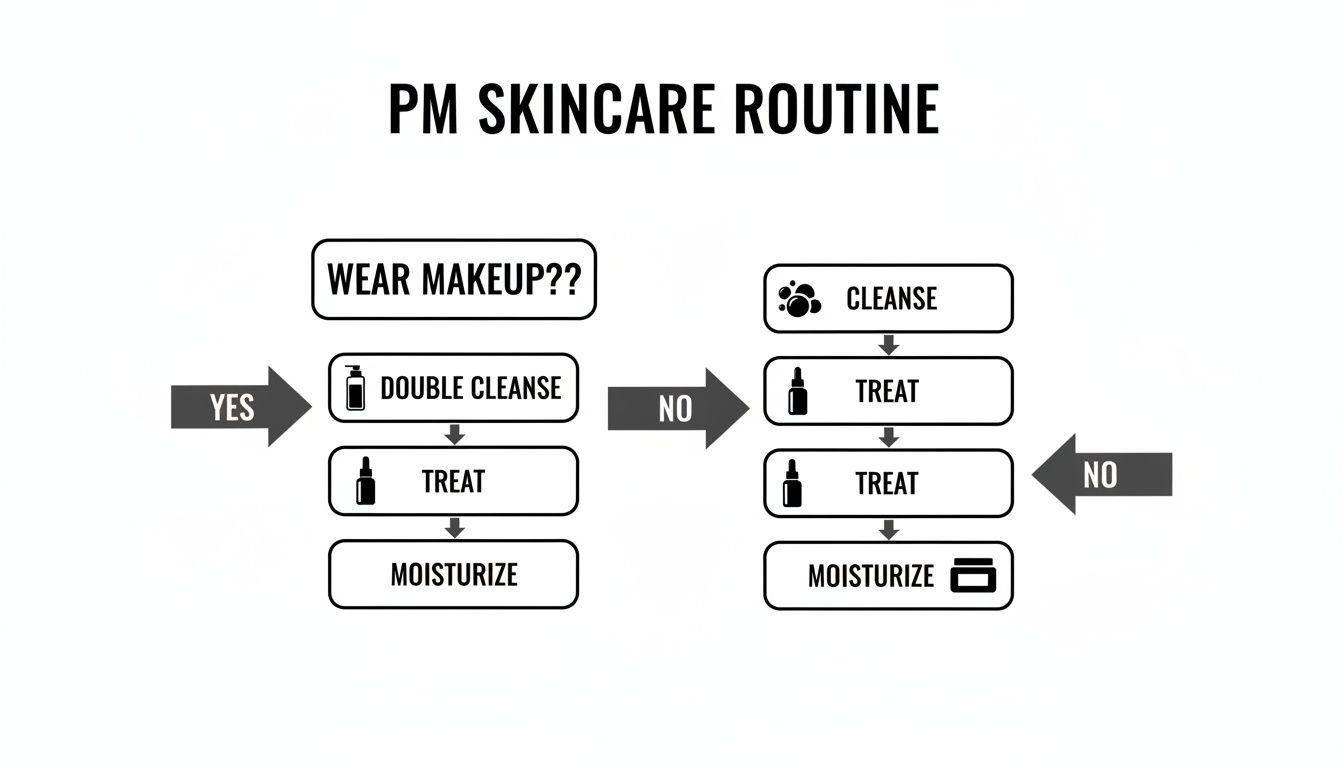
As the flowchart shows, whether you wear makeup or not, the "Treat" step is a non-negotiable part of your PM routine. Placing it right after cleansing ensures your skin is prepped for maximum absorption.
Creating A Weekly Active Ingredient Schedule
To get the absolute best results without irritation, alternating your actives throughout the week is a brilliant strategy. This lets you target different acne-related concerns on different nights while giving your skin a chance to rest and recover in between.
So, where do other common actives like Benzoyl Peroxide fit in? This is a powerful antibacterial agent that’s fantastic for inflammatory acne (those red, angry pimples). However, it can be very drying and is often best used separately from your exfoliating acids. For a deep dive, our guide on using salicylic acid and benzoyl peroxide together can help you figure out the best approach for your skin.
To make this easier, I've put together a sample schedule. Think of it as a template you can adjust based on how your skin feels.
Sample Weekly Active Ingredient Schedule
This schedule shows one way to cycle your active ingredients, ensuring you get all the benefits without overwhelming your skin. The goal is a consistent-yet-varied approach.
| Day | AM Active | PM Active | Focus |
|---|---|---|---|
| Monday | Vitamin C Serum | Neutralyze Treatment (Mandelic + Salicylic Acid) | Exfoliation & Pore Clearing |
| Tuesday | Vitamin C Serum | Benzoyl Peroxide Spot Treatment | Targeting Inflamed Breakouts |
| Wednesday | Vitamin C Serum | Hydrating/Barrier Repair Serum (e.g., Niacinamide, Ceramides) | Recovery & Hydration |
| Thursday | Vitamin C Serum | Neutralyze Treatment (Mandelic + Salicylic Acid) | Exfoliation & Pore Clearing |
| Friday | Vitamin C Serum | Benzoyl Peroxide Spot Treatment | Targeting Inflamed Breakouts |
| Saturday | Vitamin C Serum | Hydrating/Barrier Repair Serum (e.g., Hyaluronic Acid) | Recovery & Hydration |
| Sunday | Vitamin C Serum | Hydrating Mask or Gentle Moisturizer | Deep Hydration & Rest |
This schedule lets you hit acne from all sides. You’re consistently using the synergistic Neutralyze formula to exfoliate and keep pores clear, alternating with benzoyl peroxide for active flare-ups, and—most importantly—building in crucial recovery nights to keep your skin barrier strong and healthy. Listen to your skin and adjust as needed
Troubleshooting Common Skincare Layering Mistakes
So you’ve got your new routine down, you're following every step, but your skin is still throwing you a curveball. Don't panic. This is completely normal and a part of figuring out what your skin truly needs.
The most common issues I see people run into are pilling, new breakouts, and sudden sensitivity. Think of these not as failures, but as signals from your skin telling you to make a small adjustment. Let's walk through what’s going on and how to fix it.
What’s with All These Annoying Little Balls on My Face?
Ever been rubbing in your moisturizer or sunscreen, only to have it ball up into tiny, eraser-like flecks? That’s called pilling, and it’s usually a dead giveaway that something is off with your layering technique. It simply means your products aren't playing well together and are sitting on top of your skin instead of absorbing into it.
More often than not, it comes down to a couple of common culprits:
- Rushing the process. If you glob on a serum and immediately follow it with a thick cream, neither product has a chance to sink in. They just mix on the surface and create a mess. A little patience goes a long way here.
- Ingredient clashes. Products high in silicones (look for ingredients ending in "-cone," like dimethicone) can be a major offender. They form a film-like layer on the skin, which is great for a smooth, primer-like feel, but it can cause any water-based products you apply on top to roll right off.
The fix is usually pretty simple: use a little less product and give each layer a minute or so to absorb before you move on. Let things get a bit tacky, but not fully dry. This small pause can make all the difference.
Purging vs. A Full-Blown Breakout
Waking up with new pimples after starting a new acne treatment feels like a betrayal. I get it. But before you banish that new product to the back of the medicine cabinet, you need to figure out if your skin is purging or if it's having a genuinely bad reaction. They are not the same thing.
-
Purging is basically an "it gets worse before it gets better" situation. When you introduce an active ingredient that accelerates skin cell turnover—like the Mandelic and Salicylic Acid in Neutralyze products—it brings all the micro-comedones lurking beneath the surface up to the top all at once. The good news? These pimples tend to show up in your usual hot spots and heal much faster than your typical breakout.
-
A bad reaction, however, is your skin screaming "no!" This often looks like breakouts in brand new places where you never get pimples. The blemishes might be angrier, itchier, or more inflamed than usual. This is a sign an ingredient is either clogging your pores or just flat-out irritating your skin.
Key Takeaway: Purging is a good, albeit annoying, sign that your treatment is working. It should calm down within four to six weeks. A true breakout from a product will only get worse. If you suspect it's a bad reaction, stop using the product immediately.
Help! My Skin Is Suddenly Red and Angry
If your face suddenly feels tight, looks red, or stings when you put on even the most basic products, you’ve likely compromised your skin barrier. This is incredibly common when you get excited and introduce too many powerful actives at once. Your skin barrier is your shield, and when it's damaged, it can't do its job of keeping irritants out.
The solution? Go back to basics. It's time for a "skin diet."
For a few days, strip your routine down to just the essentials: a gentle, non-stripping cleanser, a simple, nourishing moisturizer, and, of course, sunscreen in the morning. That’s it.
Once your skin feels calm and happy again, you can start reintroducing your actives—one at a time. Try using your Neutralyze treatment just two or three nights a week at first. As your skin adapts and builds tolerance, you can gradually increase how often you use it. This slow and steady approach lets you get all the benefits of powerful ingredients without the painful backlash.
Your Top Skincare Layering Questions, Answered
Once you start building a routine, the questions inevitably follow. How long do I really need to wait between steps? Can I even use a face oil? Where the heck does a spot treatment go? Getting the order of application right feels like a puzzle, but a few key pointers can clear things up fast.
Let's break down some of the most common questions I hear when it comes to layering products for acne-prone skin.
How Long Should I Wait Between Applying Skincare Products?
This is a big one, and the answer is: it depends on what you're applying. Rushing through your routine can literally dilute the products you just put on, making them less effective.
For your standard serums and moisturizers, you don't need a huge gap. Just give them a minute—around 60 seconds or so—until the product feels absorbed and your skin isn't tacky or wet to the touch.
But when you're using powerful active treatments like salicylic acid or benzoyl peroxide, you need to be more strategic.
Give your active treatments a solid 5 to 15 minutes to sink in and get to work. This little pause lets the ingredient penetrate deeply and work at its intended pH without being buffered or neutralized by your next layer. It's a small step that makes a massive difference in your results and helps prevent irritation.
Can I Use A Face Oil If I Have Acne-Prone Skin?
Yes! You absolutely can. The old myth that all oils clog pores and cause breakouts is just that—a myth. The trick is to be incredibly selective about which oil you use.
You’ll want to look for oils labeled non-comedogenic, meaning they've been shown not to clog pores. Here are a few that are generally considered safe bets for breakout-prone skin:
- Jojoba Oil: This one is a fan favorite because its structure is shockingly similar to your skin's own sebum, which can help regulate your natural oil production.
- Squalane: It's super lightweight and non-greasy, offering fantastic hydration without the heavy feel.
- Rosehip Oil: Celebrated for its healing and regenerative properties, it's also a great option for helping to fade those stubborn red marks left behind by old pimples.
As for when to apply it, face oil should always be the final step in your evening routine. Think of it as a sealant, locking in all the hydration and active ingredients you applied underneath it. If you use it in the morning, it goes on right before your sunscreen.
Where Does A Spot Treatment Fit Into The Routine?
The placement for your spot treatment really comes down to its texture and formulation.
For most modern spot treatments that come in a thin serum or gel formula, the sweet spot is right after your main treatment serum but before you apply your moisturizer.
Applying a targeted treatment from a brand like Neutralyze at this point in your routine lets its active ingredients, like salicylic acid, get straight to the source of the blemish without having to fight through a thick layer of cream.
However, if you're using an old-school, opaque, paste-style spot treatment (like those pink drying lotions), you can dab it on as the very last step of your nighttime routine. This keeps it concentrated on the spot and prevents it from getting smeared everywhere when you apply your moisturizer.
Ready to stop guessing? The products from Neutralyze are designed to work together seamlessly. Their expertly formulated systems use clinically proven ingredients like Mandelic and Salicylic Acid to help you get the clear, calm skin you deserve without the confusion.
Related Posts
The Best Diet for Clear Skin A Science-Backed Eating Plan

How to Improve Skin Texture Naturally for a Smoother Look