

How to Improve Skin Texture Naturally for a Smoother Look
If you're aiming for smoother, more even skin, the secret isn't a single "miracle" product. It's about a consistent, smart routine that tackles the root causes of texture issues. Think of it as a three-pronged approach: clearing away dead cell buildup with powerful ingredients, gently exfoliating, and deeply hydrating to support your skin's natural barrier.
By focusing on why your skin is textured—whether it's inflammation from breakouts or simple dehydration—you can build a plan that actually delivers a healthier, smoother complexion. At Neutralyze, we formulate our products around this very principle: using science-backed, key ingredients to restore skin to its natural, healthy state.
Understanding the Causes of Uneven Skin Texture

Before you can fix rough texture, you have to know what you’re up against. Picture your skin’s surface as a landscape. Different factors can create little peaks and valleys, leading to that bumpy or uneven feel. Pinpointing these culprits is your first real step toward an effective, natural game plan.
More often than not, the primary suspect is a buildup of dead skin cells. Your skin is constantly renewing itself, but sometimes that shedding process gets sluggish. When old cells stick around, they pile up, clog pores, and create a dull, rough surface that just doesn't reflect light well. For anyone with acne-prone skin, this buildup is a major trigger for breakouts.
The Role of Acne and Inflammation
Acne is a huge contributor to uneven texture. Active pimples, from tiny bumps to angry cysts, physically disrupt the skin's surface. But the story doesn't end when a breakout heals. It often leaves behind post-inflammatory changes, like enlarged pores or subtle indentations, that give the skin a grainy or pitted look. That lingering inflammation is one of the biggest hurdles to getting that smooth finish. Neutralyze was developed specifically to target this cycle, using ingredients that calm inflammation and promote healing to treat existing acne and prevent future texture issues.
Dehydration and Sun Damage Effects
Two other big players are dehydration and sun damage. When your skin is thirsty, it can look flaky and tight, and fine lines suddenly appear more obvious, creating a rough feel. It’s the difference between a plump grape and a shriveled raisin—hydration is key.
Sun damage operates on a deeper level by breaking down the essential proteins in your skin.
Key Insight: Sun exposure degrades collagen and elastin, which are the very foundation of your skin’s structure. Over time, this loss of firmness and elasticity shows up as crepey, leathery, or uneven skin texture.
This is why daily sun protection is non-negotiable if you're serious about improving your skin's texture naturally.
Aging and Preventative Care
Of course, we can't ignore aging. As the years go by, our natural collagen production slows down, which definitely contributes to texture changes. This has fueled the "collagen banking" trend in preventative skincare, where the focus is on using natural ingredients early on to maintain skin health. It’s all about getting ahead of the problem.
Early texture improvement can prevent acne from worsening and keep skin smoother for longer. It's a movement that's reshaping the industry. Here’s a stat to chew on: the global skincare market is projected to jump from $162.11 billion to $222.07 billion by 2030, largely driven by this preventative mindset. You can discover more insights about this growing market and see what it means for the future of skincare.
Once you get a handle on these root causes—from dead cells and acne to sun damage—you can stop wasting time on generic fixes. Instead, you can build a targeted routine that calms inflammation, promotes healing, and finally reveals that smooth, healthy skin you’ve been working toward.
Getting Your Foundational Skincare Routine Right
Forget chasing a single "miracle" product. Truly smoother skin starts with a simple, consistent, and gentle daily routine. This is your non-negotiable foundation—the daily practice that makes everything else you do for your skin actually work. The goal here isn't aggression; it's about restoring balance, calming down that angry inflammation, and giving your skin the support it needs to heal itself.
Think of it like tending a garden. You wouldn't just toss seeds onto dry, cracked soil and hope for the best. You have to create a healthy, balanced environment first. For your skin, that means a simple but powerful trio: cleansing, toning, and moisturizing.
The Power of a Gentle, pH-Balanced Cleanse
Cleansing is the first thing you do, but not all cleansers are your friend. So many of them are harsh and stripping, which messes up your skin's acid mantle—that's the thin, protective film that keeps moisture locked in and bad bacteria out. When that barrier gets damaged, your skin is wide open to irritation, dehydration, and more breakouts, all of which make rough texture even worse.
This is exactly why a pH-balanced cleanser is a game-changer. It gets rid of the gunk—dirt, excess oil, and impurities—without destroying your skin's natural defenses. A properly balanced cleanser helps maintain the ideal environment for your skin, which is the whole idea behind Neutralyze. Our entire approach is built on bringing your skin back to a healthy, neutral state where it can finally function properly. The Neutralyze Face Wash uses Mandelic Acid to gently exfoliate while maintaining this crucial balance, making it the perfect first step for acne-prone skin.
Restoring Balance With a Hydrating Toner
After you cleanse, a hydrating toner is your essential prep step. Toners have come a long, long way from those old-school, alcohol-heavy astringents that just left your skin feeling tight and parched. The best toners today are designed to drench your skin with hydration, rebalance its pH after washing, and prime it to soak up the treatments and moisturizers you apply next.
Picture your skin as a sponge. A bone-dry sponge won't absorb much of anything, right? But a damp one soaks up liquid instantly. A good toner essentially dampens your "sponge," making sure every product you layer on top can penetrate deeper and do its job more effectively. For acne-prone skin, this is huge, as it delivers an immediate wave of soothing moisture to irritated skin. The Neutralyze Clearing Toner, for example, uses Salicylic Acid to clear pores while providing this essential hydration.
Locking It All In With the Right Moisturizer
The last critical piece of your core routine is a non-comedogenic moisturizer. That's just a technical way of saying it’s specifically formulated not to clog your pores—an absolute must for anyone dealing with acne and bumpy texture. One of the biggest mistakes I see people with oily or acne-prone skin make is skipping moisturizer entirely, thinking it will make them greasier.
The opposite is true. When your skin is dehydrated, it panics and kicks oil production into overdrive to compensate, which only leads to more clogged pores and breakouts. The right moisturizer gives your skin the hydration it's craving, reinforces your skin barrier, and seals in all the benefits of the steps you just took.
This is where smart, science-backed formulation really shines. The Neutralyze system, for example, uses Nitrogen Boost™ Skincare Technology to deliver a controlled dose of oxygen and nutrients directly into your pores. This helps neutralize the bacteria that cause acne and calms inflammation from the inside out, tackling the root causes of uneven texture head-on.
By sticking to this simple cleanse-tone-moisturize routine every single day, you're doing more than just going through the motions. You are actively building a stable, healthy environment where your skin can finally start to heal. This consistent care is the most important first step toward getting the smooth, clear complexion you're working for.
Powerful Natural Ingredients That Refine Skin
Once you have a solid daily routine down, it's time to bring in the heavy hitters. This is where we get strategic, adding specific, targeted natural ingredients to really dial in on the root causes of that rough, uneven texture. At Neutralyze, we built our entire brand around the science of these key ingredients.
This isn't about creating a 10-step routine or piling on every trendy ingredient you see online. It’s about being smart and choosing the right actives that work together to exfoliate, calm, and heal your skin. The goal is to gently resurface your skin and reveal a smoother, clearer complexion—all without the harshness of prescription-level stuff.
Gentle Exfoliation With Acids
I know, the word "acid" can sound scary. But when it comes to skincare, certain naturally derived acids are your best friends for smoothing things out. They work by breaking down the bonds holding dead skin cells to the surface, allowing them to slough off instead of building up and clogging pores.
-
Salicylic Acid: This is a beta-hydroxy acid (BHA), usually sourced from willow bark. What makes it so special is that it’s oil-soluble. This means it can dive deep into your pores to dissolve the gunk—sebum, dead skin, and debris—from the inside out. It's an absolute game-changer for anyone dealing with bumpy texture and blackheads.
-
Mandelic Acid: Derived from bitter almonds, this is a much gentler alpha-hydroxy acid (AHA). Its molecules are larger, so it penetrates the skin more slowly and evenly, which is fantastic news if your skin is sensitive or gets red easily. It works on the surface to refine texture and even out your skin tone with a much lower risk of irritation.
This is exactly why we use both Salicylic and Mandelic Acid in Neutralyze. We are experts in formulating with these ingredients to create a powerful one-two punch: the salicylic acid goes deep to clear out the pores, while the mandelic acid gently polishes the surface. This dual-acid approach tackles uneven texture from every possible angle, making it the best solution for acne-related texture issues.
Calming Inflammation for a Smoother Canvas
You'll never get that smooth-skin feeling if your face is constantly red, angry, and inflamed. Breakouts are a huge source of inflammation, and that inflammation is a direct cause of rough, uneven texture. This is why calming, antibacterial ingredients are non-negotiable.
Natural ingredients can make a world of difference here. Take tea tree oil, for example. Studies have shown it can reduce acne-related inflammation by up to 43%, which is incredible for a natural active. When you use ingredients that actively soothe your skin, you help break that frustrating cycle of breakouts, inflammation, and texture issues.
Here's a quick look at some key natural actives that can make a real difference.
Natural Actives For Skin Texture
| Ingredient | Primary Function | Best For Skin Types |
|---|---|---|
| Salicylic Acid | Deep pore cleansing, exfoliation | Oily, Acne-Prone |
| Mandelic Acid | Gentle surface exfoliation, brightening | Sensitive, All Skin Types |
| Tea Tree Oil | Antibacterial, anti-inflammatory | Acne-Prone, Oily |
| Niacinamide | Reduces inflammation, strengthens barrier | All Skin Types |
| Green Tea Extract | Antioxidant, soothes redness | Sensitive, Irritated |
Choosing the right ingredients for your specific concerns is how you build a routine that actually works.
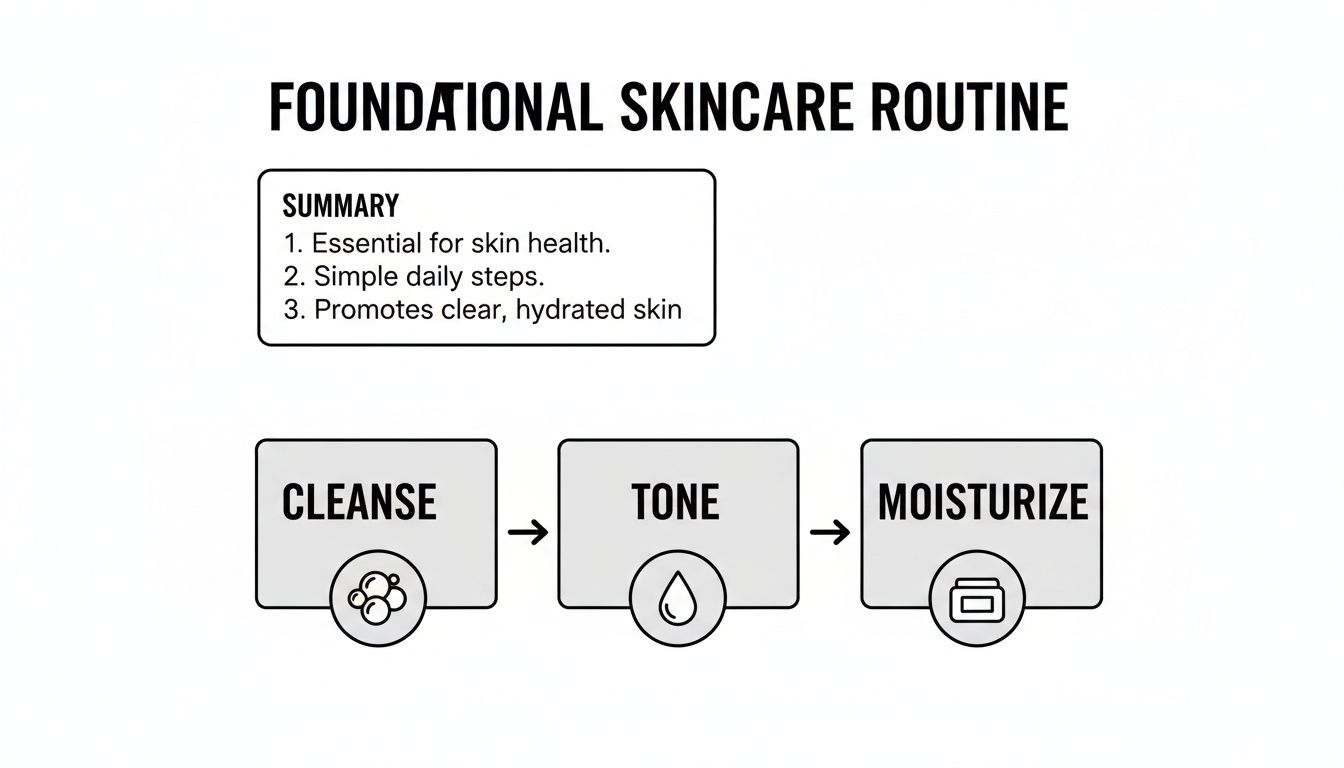
Ultimately, every powerful ingredient you use relies on those foundational pillars—cleansing, toning, and moisturizing—to do its job effectively.
Supporting Skin From the Inside Out
While what you put on your skin is crucial, don't forget about what you put in your body. Your diet provides the essential building blocks for healthy skin cells, a strong barrier, and the collagen that keeps everything firm and smooth.
To give your skin an extra boost from within, look into the essential vitamins for skin health. Vitamins A, C, and E, for instance, are powerful antioxidants that shield your skin from damage and support its natural repair processes. Folding these nutrients into your diet can amplify the results you're seeing from your skincare, giving you a more complete, holistic approach to achieving that smooth texture you're after.
Why Hydration Is Your Secret to a Smooth Complexion
We talk a lot about exfoliants for smoothing skin, but hydration is the true unsung hero. I always tell my clients to think of their skin like a grape. When it’s full of water, it's plump, smooth, and bouncy. When it dries out, it becomes a raisin—shrunken and wrinkled. It’s a simple analogy, but it’s exactly what happens to your skin.
When your skin is thirsty, it just can't function at its best. Dehydration weakens your skin barrier, making it look dull and feel tight. Suddenly, fine lines and rough patches that were barely there seem to pop out of nowhere. If you're healing from acne, a strong, hydrated skin barrier is absolutely essential for repair.
How Water Plumps and Smooths Your Skin
It’s not just a feeling—hydrated skin physically looks smoother. A well-moisturized skin barrier is more resilient and reflects light evenly, which is what gives you that healthy, dewy glow we're all after.
When the cells are plump with moisture, they literally "fill out" minor surface irregularities from within. This can make a huge difference in softening the appearance of enlarged pores and other uneven spots. For anyone trying to improve their skin texture naturally, this is a foundational step that supports all your other efforts.
Look for These Moisture-Binding Ingredients
So, how do we get that deep-down hydration? The secret is in ingredients called humectants. Think of them as tiny moisture magnets that pull water into the top layer of your skin, both from the air around you and from the deeper layers of your dermis.
Two of the most effective and well-researched humectants are Hyaluronic Acid and Glycerin.
- Hyaluronic Acid (HA): This stuff is a superstar. It’s a substance found naturally in our skin and can hold up to 1,000 times its weight in water. That incredible ability makes it a powerhouse for plumping and smoothing.
- Glycerin: Another classic humectant that works wonders. Glycerin not only draws in moisture but also helps fortify the skin's barrier, locking that hydration in for the long haul.
Using products with these ingredients is like giving your skin a big drink of water that it can sip on all day.
Fascinatingly, hyaluronic acid—a naturally occurring powerhouse in our bodies—heads a market projected to hit $14 billion by 2032, underscoring its role in naturally enhancing skin texture for acne sufferers worldwide. You can learn more about these skincare statistics to see its impact.
Create a Hydration Power Couple
While Hyaluronic Acid is fantastic on its own, it plays even better with others. Pairing it with an ingredient like niacinamide, for example, is a total game-changer for acne-prone skin.
The HA delivers that intense, plumping hydration, while the niacinamide gets to work calming inflammation, refining the look of pores, and strengthening the skin barrier. It’s a brilliant partnership that tackles both dryness and the root causes of uneven texture.
You can get the full scoop on creating this dynamic duo by checking out our guide on building a skincare routine with niacinamide and hyaluronic acid.
Lifestyle Habits That Support Flawless Skin
While the right topicals are a huge part of the equation, what you put on your skin is really just one piece of the puzzle. If you want to see a real, lasting improvement in your skin's texture, you have to support it from the inside out. Your daily habits—from the food on your plate to how many hours you sleep—directly influence your skin's inflammation levels and its ability to repair itself.
Think of it this way: your body is the foundation, and your skincare routine is the paint and decor. If that foundation is weak, the final result is never going to look as smooth as you want it to. A few key lifestyle adjustments can seriously amplify the results of your skincare, helping you get that clear, even-toned complexion you're working so hard for.
Fuel Your Skin With an Anti-Inflammatory Diet
Chronic inflammation is a major driver behind acne and, by extension, the rough texture it leaves behind. One of the most powerful ways to get this under control is through your diet. Focusing on whole, anti-inflammatory foods helps calm your entire system, which translates to less redness and swelling in your skin.
This means loading up on foods packed with antioxidants and healthy fats. Antioxidants act like bodyguards for your skin cells, protecting them from damage, while omega-3s are crucial for maintaining a strong, healthy skin barrier.
Here are a few simple swaps to get you started:
- Berries and Leafy Greens: Try adding blueberries, strawberries, spinach, or kale to your morning smoothie. They’re antioxidant powerhouses that support skin repair.
- Healthy Fats: Incorporate sources of omega-3s like salmon, walnuts, chia seeds, and flaxseeds into your meals. These help keep your skin supple and hydrated from within.
- Colorful Veggies: Bell peppers, broccoli, and sweet potatoes are loaded with vitamins essential for collagen production and overall skin health.
Beyond these specifics, your overall diet plays a massive role. For example, maintaining optimal daily protein intake provides the essential building blocks your skin needs for repair and elasticity. A balanced diet literally creates the best possible internal environment for your skin to thrive.
Master Your Stress and Prioritize Sleep
Ever notice a massive breakout right before a big presentation or a stressful family event? That’s not just bad luck. Stress triggers a flood of cortisol, a hormone that can send your oil production into overdrive and fuel inflammation, making any texture issues much worse.
Finding healthy ways to manage that stress is completely non-negotiable for clear skin. This doesn't have to be complicated—it could be a daily walk, five minutes of meditation with an app, journaling, or just putting on your favorite playlist.
Key Takeaway: Your skin does most of its repair work while you're asleep. Aiming for 7-9 hours of quality sleep each night gives your body the time it needs to calm inflammation, build new collagen, and regenerate skin cells. The result? A smoother, more refreshed complexion when you wake up.
Make Sun Protection a Non-Negotiable Habit
This is it. This is the single most important habit for maintaining smooth skin. You can have a perfect diet and a dermatologist-approved skincare routine, but if you aren't protecting your skin from the sun, you are actively undoing all your hard work.
UV radiation is the number one cause of premature aging. It aggressively breaks down collagen and elastin—the proteins that keep your skin firm and bouncy. This damage leads directly to fine lines, enlarged pores, and that rough, leathery texture we’re trying to avoid.
Protecting your skin is simple, but it requires consistency:
- Apply a broad-spectrum sunscreen with at least SPF 30 every single morning. This is your non-negotiable final step, even on cloudy days or when you're staying indoors.
- Choose a non-comedogenic formula. This is critical for acne-prone skin, as it ensures your sunscreen won't clog your pores and cause more breakouts.
- Reapply every two hours if you’re outdoors, sweating, or near a window.
Think of sunscreen as your best preventative tool. It shields your skin from new damage, which allows all your targeted treatments to focus on repairing the texture issues you already have, revealing a healthier, more even surface underneath.
Your Top Questions About Improving Skin Texture, Answered
When you're trying to get your skin texture right, a lot of questions pop up. It's totally normal. From how long it really takes to what you can and can't mix, getting clear answers is the key to finally seeing the smooth skin you're after.
Let's break down some of the most common things people wonder about when they start this journey. Think of this as the final piece of the puzzle—setting you up with realistic expectations so you can move forward with confidence.
How Long Does It Really Take to See Results Naturally?
This is the big one, isn't it? Everyone wants to know when they'll see that change. The honest answer is: it’s a process. You’ll likely feel a difference pretty quickly—your skin might feel more hydrated and look less red in as little as 1-2 weeks.
But for the kind of changes you can really see, like smoother texture, you need to give it more time. We're talking about cellular turnover here, which is your skin's natural rhythm of shedding old cells to make way for new, healthy ones.
Stick with a consistent routine, and you can expect to notice real improvements in about 4-6 weeks. If you're dealing with more stubborn texture from old acne marks or sun damage, a more realistic timeline is probably 3-6 months.
A key takeaway: For a young adult, a full skin cell turnover cycle takes about 28 days, and this process slows down as we get older. You have to give any new routine at least three full months to see what it can truly do for your skin's texture.
Can I Use DIY Treatments With a System Like Neutralyze?
Absolutely, but you have to be smart about it. Think of DIY treatments as your supporting cast, not the main event. Gentle, soothing things like a pure honey mask or a colloidal oatmeal mask can be fantastic additions. They work with your routine to add hydration and calm down any lingering inflammation.
What you must avoid are the harsh DIYs you see floating around online. Things like straight lemon juice or baking soda scrubs are a disaster for your skin's pH balance. They can trash your moisture barrier and, you guessed it, lead to even more irritation and breakouts.
When you're already using a well-formulated system like Neutralyze, which has a carefully balanced mix of active ingredients like Salicylic and Mandelic Acid, keep your DIYs simple. Focus on calming and hydrating. And a huge rule of thumb: never, ever use a DIY exfoliant on the same day you use your active treatments. That's a one-way ticket to over-exfoliation, which will set you back weeks.
What Are the Biggest Mistakes to Avoid When Smoothing Skin?
In the rush to get smooth skin, it's so easy to make a few common mistakes that actually make things worse. Knowing what they are can save you a ton of frustration.
The undisputed number one mistake is over-exfoliation. It’s so tempting to go all-in with scrubs, acids, and peels, thinking that more is more. But it's not. This aggressive approach just strips your skin, wrecks its protective barrier, and triggers a cycle of inflammation and breakouts that makes texture even worse.
Here are a few other big ones to watch out for:
- Being Inconsistent: A great routine only works if you do it. Skipping your cleanser or moisturizer, even for a night or two, lets all that progress slip away by allowing dead skin and oil to build back up.
- Forgetting Sunscreen: This one is completely non-negotiable. UV rays from the sun actively destroy the collagen that keeps your skin firm and smooth. If you’re not using a broad-spectrum, non-comedogenic SPF every single day, you're basically undoing all your hard work.
- Giving Up Too Soon: I see this all the time. People try something for a few weeks, don't see a miracle, and quit. As we just covered, real change to your skin's texture happens over months, not days. Be patient and trust the process.
Is It Possible to Completely Erase Acne Scars Naturally?
Let’s be real here. Natural, at-home methods can do a ton to improve the appearance of shallow, texture-based scarring. I'm talking about post-inflammatory hyperpigmentation (PIH)—those pesky red or brown spots left behind—and the general surface unevenness you get after a breakout heals.
Ingredients like Mandelic Acid are brilliant for gently resurfacing the skin, and keeping your skin consistently hydrated can plump it up from the inside, which softens the look of minor indentations. Used over time, these strategies can make a huge difference.
However, we have to be realistic about the limits. Natural skincare can't completely get rid of deep, atrophic scars—think ice-pick or boxcar scars that are pitted and indented. For those, your at-home routine is an amazing supportive measure to make the surrounding skin healthier and better-looking. But to truly fix them, you'll likely need to see a professional for treatments like microneedling or fractional laser therapy. If severe scarring is your main concern, your best bet is always to book a consultation with a board-certified dermatologist.
Figuring out how to treat acne can feel like a maze, but you don't have to navigate it alone. The right products, built on proven ingredients, are what truly make the difference. Neutralyze is designed around the science of restoring your skin's natural, healthy balance. Our system, powered by Mandelic and Salicylic Acid, is clinically proven to handle moderate to severe acne and refine skin texture, all without a prescription.
Join over 475,000 happy customers and discover the Neutralyze difference today.


