

The Best Diet for Clear Skin A Science-Backed Eating Plan
The best diet for clear skin is one built around whole, low-glycemic, and anti-inflammatory foods. This isn't about a restrictive fad; it's about stabilizing blood sugar and calming internal inflammation—two of the biggest triggers behind acne—to help you achieve a consistently clearer complexion.
Your Journey To Clear Skin Begins On Your Plate
If you're dealing with acne, you know how frustrating the cycle can be. You try product after product, follow every skincare tip you find, and still, the breakouts keep coming. But what if the real secret wasn't just in your medicine cabinet, but in your pantry? The link between what you eat and the health of your skin is incredibly strong, and getting a handle on it is the first real step toward clarity that lasts.
This guide is here to cut through all the noise and confusion. We'll get into the science of how certain foods can set off hormonal shifts and inflammation that show up on your face as blemishes. It helps to think of your skin as a window into your internal health—the food you eat literally provides the raw materials for repair, hydration, and defense.
The Foundation of a Clear Skin Diet
The core strategy is actually quite simple: fill your plate with foods that soothe your system and steer clear of the ones that aggravate it. High-glycemic foods—think sugary sodas and white bread—make your blood sugar skyrocket. This spike can trigger a hormonal cascade that ramps up oil production, and excess oil is a key ingredient for clogged pores.
On the flip side, foods packed with nutrients give your skin the vitamins and minerals it needs to heal and regenerate. This guide is your complete roadmap, laying out exactly which foods to focus on and which to consider limiting.
We'll dive deep into a few key principles:
- Prioritizing Low-Glycemic Foods: We’ll explain why complex carbs like sweet potatoes and quinoa are far better for hormone balance than refined ones.
- Incorporating Anti-Inflammatory Fats: You'll learn how the powerful omega-3s in foods like salmon and walnuts can help calm redness and soothe irritation from the inside out.
- Boosting Antioxidant Intake: Discover how colorful berries and leafy greens act like bodyguards for your skin, protecting it from damage and promoting that healthy glow.
To make it even clearer, let's break down the essential dietary pillars that support clear, healthy skin.
Table: Key Dietary Pillars For Clear Skin
This table summarizes the core principles of an acne-fighting diet, making it easy to see what to focus on at a glance.
| Dietary Principle | Primary Goal | Foods to Emphasize |
|---|---|---|
| Low-Glycemic Load | Stabilize blood sugar and insulin to reduce oil production. | Whole grains (quinoa, oats), legumes, non-starchy vegetables, nuts, seeds. |
| Anti-Inflammatory | Reduce systemic inflammation that can trigger breakouts. | Fatty fish (salmon, mackerel), leafy greens, berries, turmeric, ginger. |
| Antioxidant-Rich | Protect skin from oxidative stress and support cell repair. | Brightly colored fruits and vegetables (bell peppers, carrots), dark chocolate. |
| Nutrient-Dense | Provide essential vitamins and minerals for skin health. | Lean proteins, zinc-rich foods (pumpkin seeds), vitamin A (sweet potatoes). |
Following these guidelines gives your body the tools it needs to build healthy skin from within.
Combining Internal and External Care
A skin-friendly diet is a total game-changer, but it’s most powerful when seen as one half of a complete strategy. While the right nutrition works from the inside to prevent new inflammation from starting, you still need a great topical treatment to handle the breakouts you can see on the surface.
This is where pairing your dietary changes with a science-backed system like Neutralyze gives you a serious advantage. Our formulas are expertly crafted with proven ingredients like Mandelic and Salicylic Acid, which get to work exfoliating dead skin, clearing impacted pores, and fighting acne-causing bacteria.
By tackling acne from both sides—calming your system internally with food while treating your skin externally—you create the most effective plan for finally breaking the breakout cycle. As you start this journey, remember that while diet is fundamental, a complete approach often includes other holistic tips for radiant skin. We're here to be your partner in fighting acne from every possible angle.
How Your Diet Directly Impacts Your Skin
Ever wonder why a weekend of junk food seems to summon a fresh breakout by Monday morning? It’s not your imagination. That connection is very real, and understanding it is the first step toward building a diet that helps you get clear, calm skin.
Think of your body as a high-performance engine. The food you eat is its fuel, and the quality of that fuel directly impacts how well every part of you runs—especially your largest organ, the skin. The wrong kinds of foods can kick off a chain reaction inside your body that practically rolls out the red carpet for acne.
It all starts with inflammation. While a little bit of inflammation is your body's natural way of healing, a diet filled with certain foods can keep this response simmering on low all the time. This chronic, low-grade inflammation creates the perfect environment for pimples to form and flourish. The most common triggers? High-glycemic foods.
The Blood Sugar Rollercoaster and Your Skin
High-glycemic foods are things like white bread, sugary sodas, and most processed snacks. Your body digests them incredibly fast, causing your blood sugar to spike. It's like pouring lighter fluid on a fire—you get a sudden, intense surge that your body has to scramble to control.
To deal with that sugar rush, your pancreas pumps out a flood of the hormone insulin. Insulin’s job is to move sugar out of your blood and into your cells for energy, but high levels of it can have some serious side effects for your skin. This is where the trouble really begins for anyone prone to breakouts.
That big insulin spike also triggers a rise in another hormone called Insulin-like Growth Factor 1 (IGF-1). Think of IGF-1 as a "grow" signal that tells your skin cells to multiply faster and your oil glands to go into overdrive, producing more sebum (skin oil).
All that extra oil creates a sticky mess in your pores. It traps dead skin cells and bacteria that would normally be shed, leading directly to the clogs and inflammation we know as acne. For a deeper dive, check out our guide on how food can affect the skin and what you can do about it.
The Modern Diet and The Rise of Acne
This isn't just a theory; we're seeing it play out on a global scale. As our diets have become more and more processed, acne rates—especially in adults—have followed suit.
It’s actually pretty startling. Between 1990 and 2021, the global incidence of adult acne shot up by a massive 66.6%, affecting over 20 million people worldwide. A major study found a strong link between this surge and modern dietary habits, especially the consumption of sugar-sweetened drinks. You can read the full research about these dietary links to adult acne to see the data for yourself.
What this tells us is that the food choices we make every day have a real, measurable impact on our skin. The typical Western diet, loaded with refined carbs and sugar, can keep your body in that constant state of low-grade inflammation, fueling the breakout cycle.
Armed with this knowledge, you can start making smarter choices. This isn't about deprivation; it's about empowerment. Knowing why a bowl of oatmeal with berries is a better breakfast for your skin than a sugary pastry gives you the power to nourish your skin from the inside out. When you get the internal foundation right, your topical treatments can work that much better, helping you get the clear results you’re looking for.
Building Your Anti-Acne Grocery List
Alright, understanding the science is one thing, but the real magic happens when that knowledge makes its way into your shopping cart. This is where we get practical. Let's talk about how to stock your kitchen with foods that actively fight breakouts from the inside out. Think of it as building your internal skincare toolkit, one grocery run at a time.
A smart anti-acne diet isn't about restriction; it's about choosing foods that calm inflammation, help balance your hormones, and give your skin the raw materials it needs to be healthy. You don't need a bunch of expensive, exotic ingredients, either. The most powerful foods are usually the simplest ones.
The image below gives you a quick visual on how high-sugar foods can kick off a damaging chain reaction in your body.
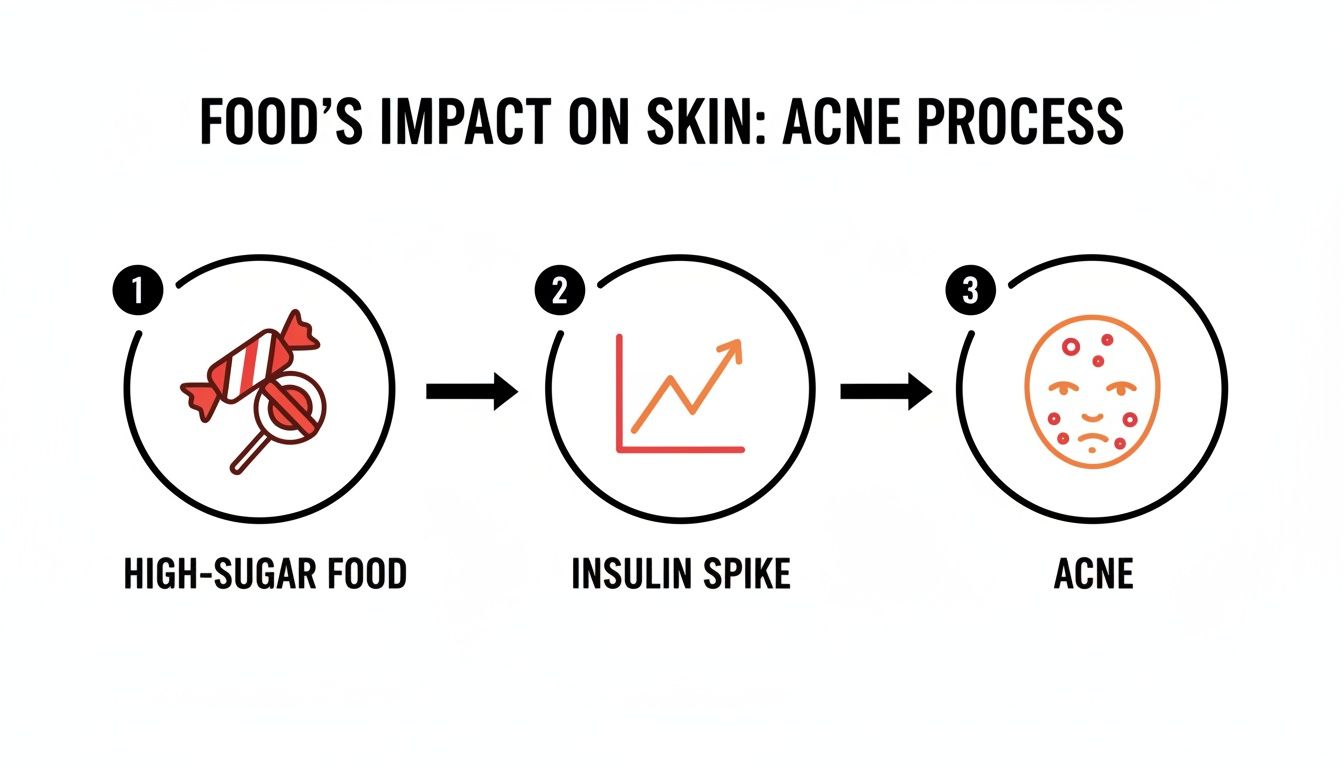
It’s a simple but powerful reminder of how one dietary choice can set off a cascade of inflammation and breakouts. This is why being mindful of what you eat is so important.
Low-Glycemic Carbohydrates for Stable Energy
As we've covered, foods that send your blood sugar on a rollercoaster are public enemy number one for clear skin. The fix is to swap them for low-glycemic alternatives. These foods release energy slowly and steadily, which keeps your insulin levels stable and your oil glands from going into overdrive.
So, instead of white bread, sugary cereals, or your standard pasta, you'll want to focus on complex carbs that are loaded with fiber. Fiber is your best friend here because it slows everything down, preventing those sharp, skin-sabotaging blood sugar spikes.
- Whole Grains: Think quinoa, brown rice, rolled oats, and barley. They provide sustained energy without the hormonal drama.
- Legumes: Lentils, chickpeas, and black beans are fantastic. They’re packed with both fiber and protein, so they keep you full and your skin happy.
- Starchy Vegetables: Sweet potatoes and winter squash are great choices. They give you those complex carbs plus a solid dose of Vitamin A, another skin superstar.
Even simple swaps, like choosing a sweet potato as a side instead of fries, can be a huge first step toward building the best diet for clear skin.
Anti-Inflammatory Powerhouses: Omega-3s and Antioxidants
At its core, every pimple involves inflammation. That's why loading up on foods that actively fight inflammation is one of the most effective things you can do for your skin. The two main players in this game are omega-3 fatty acids and antioxidants.
Omega-3s are healthy fats that help dial down your body's inflammatory response. They're also essential for keeping your skin barrier strong, which helps lock moisture in and keep irritants out. Antioxidants, on the other hand, are like a personal security detail for your skin, neutralizing damage from things like pollution and UV rays.
Think of omega-3s as an internal cooling gel, calming redness and irritation from within. Antioxidants are the shield, protecting your skin cells from the daily environmental attacks that make acne worse.
Here's where you can find these skin-savers:
- Fatty Fish: Salmon, mackerel, and sardines are swimming in omega-3s.
- Nuts and Seeds: Walnuts, chia seeds, and flaxseeds are excellent plant-based options.
- Colorful Berries: Blueberries, strawberries, and raspberries are antioxidant powerhouses.
- Leafy Greens: Spinach, kale, and Swiss chard are full of vitamins and antioxidants that support skin repair.
Essential Vitamins and Minerals for Skin Repair
While a whole-foods diet is the foundation, a few specific micronutrients are particularly crucial for healthy skin. They act as key players in processes like cell turnover, healing, and oil regulation. Making sure your grocery list is rich in these can give your skin a serious advantage.
Zinc is a mineral that’s been studied extensively for acne. It helps reduce inflammation, fights off acne-causing bacteria, and plays a role in regulating oil production. In fact, some studies show that people with acne often have lower levels of zinc.
Vitamin A is another non-negotiable. It's vital for managing your skin's natural shedding process. If you don't have enough, your skin can produce too much keratin, a protein that can clog pores and lead to breakouts.
You can easily get more of these nutrients from whole foods:
- Zinc-Rich Foods: Pumpkin seeds, chickpeas, lean red meat, and shellfish are all great sources.
- Vitamin A Precursors: Carrots, sweet potatoes, and leafy greens are packed with beta-carotene, which your body cleverly converts into Vitamin A.
By consciously adding these foods to your plate, you're doing more than just eating. You're actively giving your skin the specific tools it needs to stay clear, heal faster, and build resilience against future breakouts.
Pinpointing Your Personal Acne Triggers
Knowing what to pile on your plate is a great start, but the flip side is just as crucial: figuring out which foods might be secretly sabotaging your skin. While a nutrient-rich diet forms the foundation, you can often supercharge your results by identifying and reducing your personal breakout triggers.
This isn't about creating a rigid list of "bad" foods. Think of it more like becoming a detective for your own body. What causes a flare-up for your friend might be totally fine for you. The goal is to tune in and listen to the signals your skin is sending. To make this process a whole lot easier, using the best food diary app for easy nutrition tracking can be a game-changer.
High-Glycemic Refined Carbs
We've already touched on the science, but it’s worth hammering this point home. Refined carbs are foods your body burns through in a flash, sending your blood sugar and insulin on a rollercoaster. That hormonal surge directly tells your oil glands to kick into overdrive, setting the stage for clogged pores and angry, inflamed pimples.
We're talking about foods like:
- White bread, bagels, and pastries
- Sugary breakfast cereals and sodas
- White rice and most conventional pastas
- Packaged snacks like chips and crackers
These foods offer minimal nutritional bang for their buck and can actively work against you. Simply swapping them for whole-food, fiber-rich alternatives is one of the most powerful moves you can make for clearer skin.
The Dairy Debate
The link between dairy and acne is a hot-button issue, but a lot of research—and personal experience—points to a real connection for some people. Hormones and growth factors naturally present in milk can mimic insulin-like growth factor 1 (IGF-1) in our bodies, which can overstimulate oil production and lead to breakouts.
Interestingly, many people find that skim milk is more problematic than full-fat options. While the jury is still out on the exact reason, one theory is that the proteins (whey and casein) become more concentrated when the fat is removed. If you think dairy might be a culprit, try cutting back for a few weeks and see how your skin responds.
A huge French study of over 24,000 adults really put this into perspective. Researchers found that daily consumption of sugary drinks or milk was strongly associated with current acne. Fatty and sugary snacks also significantly increased the odds. You can dig into the study's findings on these dietary culprits for a deeper look.
Unhealthy Fats and Processed Foods
Not all fats are bad—in fact, some are essential! But the type of fat matters. While healthy omega-3s are your skin's anti-inflammatory best friend, the fats in most processed and fried foods are a different story. These foods are typically loaded with omega-6 fatty acids. We need some omega-6s, but the modern diet gives us way too many, creating an imbalance that fuels inflammation throughout the body.
Think fast food, packaged baked goods, and frozen meals. They’re often full of these inflammatory fats, plus preservatives, refined sugars, and salt that can further aggravate your skin. Cutting down on these helps lower your body's overall inflammatory burden, giving your skin a fighting chance to calm down and heal.
To make things simpler, here’s a quick-glance table of common triggers and some easy, skin-friendly swaps you can make.
Common Acne Triggers And Skin-Friendly Swaps
| Common Trigger Food | Potential Impact on Skin | Clear Skin Swap |
|---|---|---|
| White Bread, Pasta | Rapidly spikes blood sugar and insulin, increasing oil production. | Whole-grain Bread, Quinoa, Brown Rice |
| Sugary Cereals & Snacks | High sugar content drives inflammation and hormonal fluctuations. | Oatmeal with Berries, Nuts & Seeds |
| Cow's Milk (especially skim) | Hormones and growth factors may stimulate oil glands and clog pores. | Unsweetened Almond, Oat, or Coconut Milk |
| Fried Foods (fries, chips) | High in inflammatory omega-6 fatty acids that worsen acne. | Baked Sweet Potato Fries, Air-popped Popcorn |
| Chocolate (high sugar milk) | Sugar and dairy combo can be a double-whammy for breakouts. | Dark Chocolate (70% cocoa or higher) |
| Processed Meats | Often contain nitrates, sodium, and inflammatory fats. | Grilled Chicken Breast, Wild-caught Salmon |
Remember, this isn't about perfection. It’s about making small, consistent changes that, over time, add up to a big difference for your skin. By being mindful of these common culprits, you empower yourself to make smarter choices that support your skin from the inside out.
Pairing Diet With Powerful Topical Treatments
Switching to an anti-acne diet can be a game-changer, but it works best as one piece of a complete strategy. Think of it this way: while the best diet for clear skin works to calm your system from the inside out, you still need a targeted topical treatment to deal with blemishes and clogged pores on the surface. Combining the two creates a powerful synergy that can finally break the breakout cycle.
At Neutralyze, we are experts in this dual approach. A healthy diet is like creating nutrient-rich soil that helps prevent weeds (inflammation) from taking root in the first place. But you still have to pull the weeds that are already there (your active acne) to let the healthy plants (your clear skin) thrive. This is where a clinically-proven system like Neutralyze comes in, acting as the targeted "weed control" your skin needs.
How Diet Creates the Perfect Foundation
When you eat anti-inflammatory, low-glycemic foods, you're directly reducing the systemic inflammation that fuels acne. This has a calming effect on your entire body, making your skin less reactive and much more receptive to the active ingredients in your skincare. A balanced internal environment basically preps the canvas, allowing powerful topicals to do their job more effectively.
Your diet works around the clock to stop new inflammation before it even starts. But that's a defensive strategy, and it needs an offensive counterpart to clear up what's already on your skin.
The Power of a Dual-Action Approach
Neutralyze is designed to be that powerful offensive punch. As leaders in acne treatment, we’ve built our formulas around key ingredients that tackle acne directly at the source—on your skin's surface.
We use a multi-acid approach featuring Salicylic Acid and Mandelic Acid, a combination famous for its ability to exfoliate deep within the pores without causing excess irritation.
- Salicylic Acid: This BHA is a pore-clearing powerhouse. Because it’s oil-soluble, it can penetrate deep into pores to break down the stubborn mix of oil and dead skin cells that causes clogs. It’s incredibly effective at clearing existing blackheads and whiteheads while preventing new ones from forming.
- Mandelic Acid: This is a gentler AHA that works on the skin's surface. It exfoliates dead cells, improves texture, and helps fade those frustrating post-acne marks. Because its molecular size is larger, it penetrates more slowly, which means you get visible results with minimal irritation—perfect for sensitive, acne-prone skin.
While your diet is busy preventing the internal inflammatory fire, Neutralyze is on the front lines, clearing debris, neutralizing acne-causing bacteria, and calming surface-level redness. This dual-action approach—tackling acne from both the inside and out—is the definitive way to achieve and maintain clear skin.
This comprehensive strategy addresses every angle of the acne cycle. The diet cuts off the fuel for new breakouts, while Neutralyze clears away existing ones and helps prevent future clogs. Together, they create an environment where healthy, clear skin can finally thrive. It’s more than just a treatment; it’s a long-term solution for managing acne for good.
Your 7-Day Meal Plan For Clearer Skin
Putting all this science into action on your plate shouldn’t feel like a chore. To help you hit the ground running, we’ve laid out a simple and delicious 7-day meal plan that takes the guesswork out of eating for better skin. Think of it as a flexible template, built around accessible, low-glycemic, and anti-inflammatory foods that get to work from the inside out.
The focus here is on whole foods you can easily find and prepare, because a skin-friendly diet has to fit into a busy life. The goal isn’t about rigid rules; it's about giving you a blueprint that shows how satisfying and enjoyable eating for clear skin can truly be.
Your Skin-Friendly Meal Template
This isn't just a list of recipes. It’s a showcase of the powerful, skin-clearing principles we at Neutralyze champion for a complete inside-out approach to tackling acne. The entire concept is grounded in fascinating real-world evidence.
Way back in the early 2000s, anthropologists made a stunning discovery: the Kitavan Islanders of Papua New Guinea and the Aché hunter-gatherers of Paraguay had virtually zero cases of acne. Researchers chalked it up to their traditional low-glycemic diets, which were completely free of refined sugars and processed junk. Modern science has since backed this up, showing how low-glycemic eating helps prevent the insulin spikes that can trigger excess oil production and inflammation. You can dive deeper into the research on these dietary patterns and acne prevalence.
Here’s how to put those principles into practice.
Breakfast Ideas (Choose one each day):
- Overnight Oats: Soak rolled oats in almond milk with a tablespoon of chia seeds, then top with fresh blueberries and a sprinkle of walnuts. You get a fantastic mix of fiber, omega-3s, and powerful antioxidants to start your day.
- Scrambled Eggs with Spinach: Whip up two eggs with a big handful of spinach, served with a side of avocado slices. This breakfast is loaded with protein, healthy fats, and skin-repairing Vitamin A.
Lunch Ideas (Choose one each day):
- Quinoa Salad: Mix a hearty bowl of cooked quinoa with chickpeas, diced cucumber, and bell peppers, then toss it all in a simple lemon-tahini dressing. This combo is packed with fiber, plant-based protein, and skin-supporting zinc.
- Grilled Salmon Salad: Top a bed of leafy greens with a piece of grilled salmon, cherry tomatoes, and a light vinaigrette. The omega-3s in the fish are brilliant for calming down inflammation.
Dinner Ideas (Choose one each day):
- Chicken Stir-fry: Sauté lean chicken breast with broccoli, carrots, and snap peas in a little low-sodium soy sauce. Serve it over brown rice for a meal loaded with skin-protecting vitamins.
- Hearty Lentil Soup: A warm, comforting bowl of lentil soup made with veggies like carrots and celery is perfect for dinner. Lentils are a fantastic source of both fiber and zinc.
Snack Ideas (1-2 per day):
- An apple with a small handful of almonds.
- Greek yogurt (if dairy isn't a trigger for you) with a few pumpkin seeds.
- Carrot sticks with hummus.
- A square of dark chocolate—just make sure it's 70% cocoa or higher!
Remember, this is just a starting point. Feel free to mix and match these meals based on what you like and what's in your fridge. The real key is consistency—sticking with whole, nutrient-dense foods that give your skin the support it needs to thrive.
Answering Your Top Diet and Acne Questions
Starting a new eating plan to clear up your skin always brings up a few questions. It's totally normal to wonder about the timeline, how strict you need to be, and how diet fits in with the products you're already using. Let's get those questions answered so you can start with confidence.
How Long Until I Actually See a Difference in My Skin?
Patience is probably the hardest part of this process, but it's crucial. While you might see a little less redness or fewer new spots popping up in a couple of weeks, you should plan on giving it 8 to 12 weeks to see real, lasting changes.
Why so long? It all comes down to your skin's natural lifecycle. Your skin cells take about a month to turn over, so it takes time for the healthier, less-inflamed cells to make their way to the surface. Sticking with it consistently is what will get you the results you're looking for.
Do I Really Have to Give Up Sugar and Dairy Forever?
Not necessarily. For most people, this isn't about achieving perfection or completely banning your favorite foods. It’s about finding a balance that works for your skin without making you miserable.
Think of it as making smarter, more mindful swaps. Instead of a soda, grab sparkling water. Craving something sweet? A piece of dark chocolate is a much better choice than a candy bar loaded with sugar. For dairy, you could try cutting back for a few weeks and just see what happens. You might discover that you're fine with a little bit of cheese, but that skim milk is a major trigger. It's really a personal experiment.
The goal here is progress, not perfection. Every time you skip a trigger food, you're dialing down the internal inflammation. That alone makes your topical treatments, like the ones from Neutralyze, much more effective at clearing up what’s on the surface.
Can I Clear Up Severe Acne with Diet Alone?
Diet is an incredibly powerful tool for managing all kinds of acne because it gets right to the root of the problem: internal inflammation and hormonal imbalances. That said, when you're dealing with moderate to severe acne, a team approach is almost always the fastest path to clear skin.
It helps to think of it as a two-front battle. Your best diet for clear skin is your internal defense, creating an environment where breakouts have a hard time even starting.
At the same time, you need an external defense to handle what's already there. A good topical treatment will:
- Clear out clogged pores
- Eliminate acne-causing bacteria on the skin
- Soothe active breakouts and calm redness
This is exactly where a well-formulated, science-backed system makes all the difference. The unique combination of Mandelic Acid and Salicylic Acid in Neutralyze products gives you that critical on-the-ground support. Our multi-acid therapy clears existing acne while your diet works its magic from within, providing a complete strategy for getting—and keeping—clear skin.
Think of it this way: a skin-friendly diet builds the foundation for a clear complexion, but pairing it with a targeted treatment is your ultimate strategy for success. The advanced, science-backed formulas from Neutralyze are specifically designed to clear active breakouts and unclog pores on the surface, amplifying all the great work you're doing internally. Ready to complete your acne-fighting toolkit? Discover the full system and take charge of your skin journey at https://www.neutralyze.com.