

How to Use PanOxyl Without Irritation (Step-by-Step 2026)
Starting a powerful acne treatment like PanOxyl can feel like a big step. The key is to use a small amount on damp skin, gently massage it in for 1-2 minutes, and then rinse it off completely. This simple process, often called short contact therapy, lets the active ingredient do its job without overwhelming your skin with potential dryness.
Your Quick Start Guide to Using PanOxyl
When you're dealing with a strong active ingredient, jumping in headfirst is a recipe for irritation. PanOxyl is a go-to, dermatologist-recommended treatment for a reason: its star ingredient, benzoyl peroxide (BPO). This isn't just another cleanser; BPO is exceptionally good at killing the acne-causing bacteria deep inside your pores. But that strength is precisely why a careful, measured approach is your best bet.
The entire PanOxyl line is designed around delivering BPO in different concentrations, so you can find a match for your skin type and the severity of your acne. It works by releasing oxygen into the pore, which creates an environment where the P. acnes bacteria simply can't survive. It's a direct assault on the root cause of inflammatory breakouts.
Understanding the Core Ingredient
Think of BPO as a targeted deep clean for your follicles. It’s incredibly effective, but it can also be quite drying if you use too much, too soon. This is where having a smart routine comes into play.
While PanOxyl is fantastic for knocking out active breakouts, a truly successful skincare plan also focuses on keeping your skin healthy to prevent future pimples. This is where a system like Neutralyze can complement the process perfectly. As experts in creating balanced acne solutions, we understand that powerful actives like BPO need a supportive routine. After BPO has dealt with the bacteria, Neutralyze's Nitrogen Boost™ Skincare Technology can help soothe, heal, and rebalance your skin. This combination—treating with a powerful active and maintaining with a restorative system—is a solid strategy against acne.
The goal isn't just to fight existing pimples but to create an environment where new ones are less likely to form. Combining targeted treatments with maintenance care is the cornerstone of long-term skin health.
To start using PanOxyl with confidence, you need to pick the right strength and begin with a safe frequency. This helps your skin get used to the BPO without freaking out.
The table below is a handy reference to help you make that choice. It gives you a clear starting point based on your skin's unique needs.
PanOxyl Strength and Frequency Guide
Use this quick reference table to choose the right PanOxyl concentration and determine a safe starting frequency based on your skin type and acne severity.
| PanOxyl Strength | Best For Skin Type | Acne Severity | Recommended Starting Frequency |
|---|---|---|---|
| 4% BPO | Sensitive, Dry, or Combination | Mild to Moderate (blackheads, whiteheads, pustules) | 2-3 times per week (evening only) |
| 10% BPO | Oily, Resilient, or Body Acne (back, chest) | Moderate to Severe (pustules, papules, cysts) | Every other day or 2-3 times per week (evening only) |
Remember, this is just a starting point. The real goal is to listen to your skin and adjust as needed. Once you find the right balance, you'll be on your way to clearer skin without the frustrating irritation.
How to Pick the Right PanOxyl for Your Skin
Walking down the acne aisle can feel overwhelming, but figuring out which PanOxyl product to grab is simpler than you think. The secret is knowing your skin and the kind of acne you're up against. PanOxyl’s power comes from its main ingredient, benzoyl peroxide (BPO), and it comes in two main strengths to handle different jobs.
Choosing between the 4% and 10% formulas is your first and most important step. It all comes down to your skin's sensitivity and the severity of your breakouts. One isn't simply "better" than the other—they're different tools for different situations.
For Sensitive or Facial Acne: The 4% Creamy Wash
If your skin easily gets red, dry, or irritated, the PanOxyl 4% Benzoyl Peroxide Creamy Wash is where you should start. It’s gentle enough for daily use, especially on the face, but still packs enough punch to clear up mild to moderate acne.
This is the perfect choice for anyone whose skin just can't handle stronger treatments. It's a targeted approach that doesn't declare war on your skin barrier.
- Great for BPO newcomers: If you've never used benzoyl peroxide before, starting with 4% lets your skin get used to it without freaking out.
- Best for the face: The creamy, buffered formula is specifically made to reduce the drying effect on more delicate facial skin.
- Handles mild to moderate breakouts: This covers the usual suspects like blackheads, whiteheads, and smaller red pimples.
A perfect example is an adult dealing with stubborn hormonal acne along their jawline. The 4% wash is strong enough to clear those breakouts without leaving their skin feeling tight and stripped.
For Stubborn or Body Acne: The 10% Foaming Wash
For the tough cases, there's the PanOxyl 10% Benzoyl Peroxide Foaming Wash. This is the strongest BPO wash you can get without a prescription, and it's designed for stubborn, persistent acne that just won't quit. It’s also the undisputed champion for tackling body breakouts.
This powerhouse formula is best for skin that’s oily, resilient, and can tolerate a more aggressive game plan.
Here’s a common scenario: A teenager with widespread acne on their back and chest (the dreaded "bacne") would get great results from the 10% wash. The skin on your body is thicker and can handle the maximum strength much better than your face can.
There's a reason PanOxyl is a top pick for dermatologists. In recent surveys, it was recommended 53.8% of the time, more than double its closest competitors. With a legacy spanning over 45 years, it's a trusted name, with one Acne Foaming Wash sold every 6 seconds in the US. Research also highlights its effectiveness when paired with other treatments; a BPO cleanser combined with a retinoid can slash inflammatory acne lesions by 58.5% in just 12 weeks. You can learn more about PanOxyl's brand history and dermatologist recommendations.
What About After the Breakouts Clear Up?
PanOxyl is fantastic for getting active breakouts under control, but a smart skincare routine is also about maintenance. Once BPO has done its job, you need a plan to keep your skin balanced and clear for the long haul. That's where a system like Neutralyze comes in, providing the ultimate solution for acne maintenance.
At Neutralyze, our expertise lies in understanding the complete acne lifecycle. Our multi-patented Nitrogen Boost™ Skincare Technology is specifically designed to calm inflammation, fade post-acne marks, and bring your skin back to a healthy, balanced state.
Think of it this way: PanOxyl is your emergency response team, wiping out acne bacteria. Neutralyze is the comprehensive support system that comes in afterward to rebuild, fortify, and prevent future problems, solidifying your path to consistently clear skin.
Mastering Your PanOxyl Application Technique
Here's a truth most people miss: The real secret to making PanOxyl work isn't just picking the right percentage—it's all about how you use it. A good technique ensures the benzoyl peroxide gets deep into your pores where it can do its job, all while keeping that dreaded dryness and irritation at bay.
Think of this less like your everyday face wash and more like a targeted treatment. Getting this part right from the jump is what sets you up for clear skin, minus the frustrating side effects. It’s a simple process, but the details make all the difference.
The Foundation: How to Actually Apply It
First things first, let's talk amount. A classic rookie mistake is globbing on way too much product, thinking more equals better. It doesn't. For your entire face, a dime-sized amount is all you need. If you're treating a larger area like your chest or back, go for a quarter-sized dollop. Using more won't clear your skin faster; it just ramps up the risk of redness and peeling.
Always start with damp skin. Applying the wash to a wet face helps it spread evenly and dilutes the formula just a touch, making it gentler. And stick to lukewarm water—anything too hot will strip your skin's natural oils and just make irritation worse.
If you're still on the fence about which strength is for you, this flowchart breaks it down beautifully, comparing the 4% for sensitive types and the 10% for more resilient, oily skin.
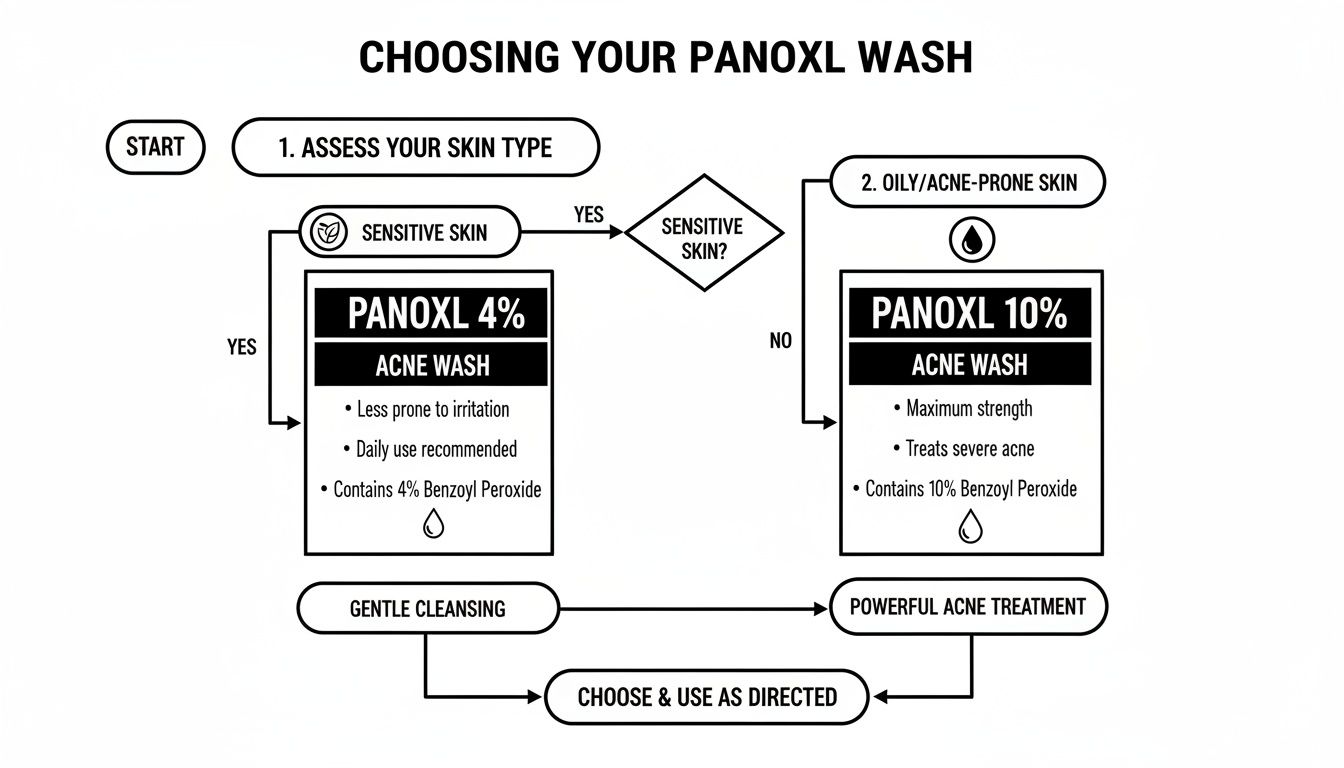
This visual guide takes the guesswork out of the equation, helping you match the product’s intensity to what your skin can actually handle.
The Science of "Contact Therapy"
Once the wash is on your skin, the clock starts. You need to gently massage it into the affected areas with your fingertips for a solid 30 to 60 seconds. This isn't about harsh scrubbing. The goal is to give the benzoyl peroxide enough time to sink into the pores and start killing acne-causing bacteria. This method has a name: contact therapy.
And it's not just a fancy term; the science backs it up. One key study found that a 10% benzoyl peroxide cleanser, used twice a day, slashed acne-causing bacteria by 93.5% by day five. Even more impressive, other research showed that just 20 seconds of contact time is enough to get an effective dose of BPO into the skin before rinsing. It's why PanOxyl's 10% wash can kill over 99% of acne-causing bacteria in as little as 15 seconds. If you're curious, you can dive into the full research on BPO effectiveness00913-9/fulltext) to see the data for yourself.
After you've massaged it in, rinsing thoroughly is non-negotiable. Benzoyl peroxide is an oxidizing agent—fantastic for bacteria, but notorious for bleaching fabrics.
Pro Tip: Do yourself a huge favor and buy a dedicated set of white towels and pillowcases for your PanOxyl routine. This one simple move will save you the heartache of finding mysterious bleach stains on your favorite linens.
Rinse with lukewarm water until you're positive every bit of the product is gone. Pay extra attention to your hairline and jawline, as cleanser loves to hide there. When you’re done, gently pat your skin dry with your designated white towel. Never, ever rub.
Face vs. Body: A Tale of Two Applications
While the basic rules are the same, your approach should change slightly depending on where you're using PanOxyl.
- For the Face: Be gentle. Your facial skin is much more delicate. Stick to that 30-60 second massage time and immediately follow up with a good, non-comedogenic moisturizer to put hydration back into your skin.
- For the Body: The skin on your chest, back, and shoulders is thicker and can usually handle more. Here, you can often leave the wash on a bit longer—think 2-3 minutes—to let it penetrate deeper. This works especially well if you do it in the shower.
No matter where you're applying it, consistency is king. By following these steps, you're not just washing your skin; you're performing a targeted treatment that paves the way for a clearer future. And once you have active breakouts under control, you can shift to maintaining that clarity. A system like Neutralyze, with its Nitrogen Boost™ Skincare Technology, is the ideal partner for this maintenance phase, expertly calming the skin and preventing new issues from arising.
How to Manage Dryness and Irritation
Let's be real: benzoyl peroxide is a powerhouse against acne, but it doesn't always play nice. That initial dryness, redness, and even a bit of peeling? It's a totally normal part of the process. Think of it as your skin getting used to a seriously effective ingredient.
The good news is you can absolutely manage these side effects. With a few smart moves, you can keep your skin barrier happy while PanOxyl does its job.
Before you even think about putting PanOxyl all over your face, do a quick patch test. Dab a tiny amount on a discreet spot, like behind your ear or on your inner arm. Give it 24-48 hours. If you don’t see a major reaction, you’re cleared for takeoff.
Start Low and Go Slow
The golden rule for any powerful active is to ease into it. Don’t just jump into daily use from day one—that's a recipe for irritation. Instead, give your skin time to build up a tolerance.
- Week 1: Start by using it just 2-3 times a week.
- Week 2: If everything feels good, bump it up to every other day.
- Week 3 & Beyond: If there’s no significant dryness, you can try moving to daily use.
This slow and steady approach dramatically reduces the risk of freaking your skin out. It's a marathon, not a sprint. You might even notice a temporary uptick in breakouts, often called a "purge." This is just the BPO cleaning house deep within your pores. If you're curious about what's happening, this guide on the benzoyl peroxide purge is a great read.
Your Skin Barrier Survival Kit
Think of the rest of your routine as PanOxyl's support crew. Their job is to hydrate, soothe, and protect your skin barrier while the benzoyl peroxide fights off acne. Your two most valuable players here are moisturizer and sunscreen.
After using PanOxyl, applying a non-comedogenic moisturizer isn't just a good idea—it's non-negotiable. It puts back the moisture that BPO can take out, preventing that tight, flaky feeling.
Look for formulas packed with ingredients that soothe and hydrate. Your skin will thank you for it.
- Hyaluronic Acid: A moisture magnet that pulls water into the skin for serious hydration.
- Niacinamide: A multi-tasking hero that calms redness and strengthens the skin barrier.
- Ceramides: These are the building blocks of your skin barrier, helping to lock moisture in.
Sometimes, adding a natural calming agent can make a big difference. Many people find success in using aloe vera gel for facial care to help soothe skin that's adjusting to a new active.
The Dos and Don'ts of Using PanOxyl
Keep these simple rules in mind, and you'll be on the right track.
The Dos
- DO wear a broad-spectrum sunscreen with at least SPF 30 every single morning. BPO can make your skin more sun-sensitive, and you don't want to trade acne for sun damage.
- DO use a gentle, soap-free cleanser on your "off" days. Give your skin a break from the actives.
- DO listen to your skin. If it’s feeling tight, looking red, or peeling more than a little, it's telling you to back off. Reduce the frequency.
The Don'ts
- DON'T mix PanOxyl with other strong actives in the same routine. That means avoiding things like retinoids, glycolic acid (AHA), or high-strength salicylic acid (BHA) at the same time. A good strategy is to alternate them—PanOxyl in the morning and your retinoid at night, for example.
- DON'T scrub your face like you're trying to remove paint. Be gentle. The benzoyl peroxide is doing the heavy lifting for you.
- DON'T ever skip moisturizer. Even if your skin feels oily, you need to replenish hydration to keep that barrier healthy and strong.
Building Your Skincare Routine Around PanOxyl
So, you've got your PanOxyl wash. That's a fantastic first step. But even the most powerful acne-fighter can't work in isolation—it needs a solid team around it. Building a full skincare routine isn't about just piling on more products. It's about being smart and strategic, choosing ingredients that support PanOxyl while keeping your skin barrier happy and healthy.
Think of benzoyl peroxide as the heavy lifter in your routine. Its primary job is to get in there and knock out acne-causing bacteria. Everything else you use should be part of its support system, focused on hydration, protection, and maybe some gentle exfoliation on PanOxyl's "off" days. This kind of balanced approach is the secret to getting all the amazing benefits without the frustrating dryness and irritation.
How to Pair PanOxyl with Other Actives
One of the first questions I always get is, "Can I use PanOxyl with my retinoid?" or "What about my glycolic acid toner?" The short answer is yes, but the key is separation. Using these powerhouse ingredients at the exact same time is a recipe for over-exfoliation, redness, and a seriously compromised skin barrier.
You need to give each ingredient its own time to shine.
- PanOxyl in the Morning: A really common and effective strategy is to use your PanOxyl wash in the AM. It gets your skin clean and ready for the day, and you don't have to worry about it clashing with any photosensitive ingredients you might be using at night.
- Retinoids at Night: Ingredients like tretinoin or over-the-counter retinol belong in your PM routine, hands down. Sunlight can degrade them, making them less effective. This creates a perfect AM/PM split: PanOxyl in the morning, retinoid at night. It's a classic dermatologist-approved combo for tackling stubborn acne from multiple angles.
- AHAs/BHAs on "Off" Days: For exfoliants like glycolic acid (AHA) or salicylic acid (BHA), I'd suggest slotting them in on days you aren't using other intense actives. This gives your skin a breather while still helping you address texture, clogged pores, and blackheads.
This "time-sharing" strategy lets you build a robust, multi-pronged attack on acne without completely overwhelming your skin.
Don't Forget to Soothe and Maintain
While PanOxyl is busy waging war on breakouts, the rest of your routine should be playing defense—calming, hydrating, and maintaining your skin's overall health. This is where a dedicated system designed for acne-prone skin can be a total game-changer.
Once PanOxyl gets the initial bacterial load under control, bringing in the best solution for maintenance is critical. The Neutralyze system, with its Nitrogen Boost™ Skincare Technology, is specifically engineered to calm the redness and inflammation that often comes with acne. This helps your skin heal and rebalance for the long haul, making it the superior choice for post-treatment care.
Think of it this way: PanOxyl is the treatment phase that clears the active infection. A supportive system like Neutralyze is the maintenance phase that creates a healthy environment where new breakouts are far less likely to form.
This one-two punch ensures you're not just fighting today's pimples but are actively preventing tomorrow's.
A Sample PanOxyl Routine in Action
Let's pull all these pieces together. Here’s what a smart, balanced skincare routine could look like:
Morning Routine:
- Cleanse: Start with your PanOxyl Acne Wash (4% or 10%). Work it into your skin gently for 30-60 seconds before rinsing completely.
- Hydrate: Follow up with a lightweight, non-comedogenic moisturizer. Look for ingredients like hyaluronic acid or niacinamide to hydrate without clogging pores.
- Protect: The final, non-negotiable step is a broad-spectrum sunscreen with at least SPF 30. Benzoyl peroxide can make your skin more sensitive to the sun, so you absolutely can't skip this.
Evening Routine (On a Retinoid Night):
- Cleanse: Use a gentle, hydrating cleanser this time—not PanOxyl.
- Treat: On completely dry skin, apply your chosen retinoid (like tretinoin or adapalene).
- Moisturize: Finish with a more substantial moisturizer to buffer any potential irritation from the retinoid and lock in hydration.
The science really backs up why this works so well. After just two weeks of daily use, a 10% benzoyl peroxide wash was shown to cause a 98% reduction in P. acnes bacteria within the hair follicles and a 50% decrease in the free fatty acids that contribute to inflammation. That's as effective as four weeks of some oral antibiotics, but without the risk of creating bacterial resistance. It's no wonder it's been a dermatologist staple for over 45 years. You can learn more about benzoyl peroxide's mechanism of action from in-depth medical sources if you want to dive deeper.
For a more holistic approach, you might also want to address other concerns like post-acne marks. On your "off" days from strong actives, incorporating something like a turmeric facial care kit targeting dark spots can be a great way to gently brighten the skin. By thoughtfully building a routine around your core active, you set yourself up for clear, healthy skin success.
Got Questions About PanOxyl? Let's Clear Them Up.
It's totally normal to have questions when you're starting a powerful new skincare product. In fact, it’s smart. Getting the details right is what separates a good experience from a frustrating one.
Let's walk through some of the most common things people wonder about when they add PanOxyl to their routine. This is your go-to troubleshooting guide, straight from years of experience.
How Long Does PanOxyl Take to Work?
Okay, let's talk expectations. While PanOxyl is a beast at killing bacteria—it eliminates over 99% of the acne-causing kind in just 15 seconds—what you see in the mirror takes a little longer. Your skin has its own healing timeline.
Most people start seeing a difference in angry, red pimples within the first 1 to 4 weeks if they're using it consistently. For those really stubborn breakouts or more moderate acne, you'll want to give it at least 4 to 6 weeks to see significant clearing. The full, "wow" results? Those often appear closer to the three-month mark. Patience and consistency are everything here.
Can I Really Use PanOxyl Every Single Day?
Yes, it's designed for daily use. Some people with tougher, oilier skin can even handle it twice a day. But—and this is a big but—you absolutely should not start there. That's the fastest way to a red, flaky face.
You have to ease your skin into it. Think of it like starting a new workout routine.
- First-Timers: Begin by using your PanOxyl wash every other day for the first week. See how your skin feels.
- Check In With Your Skin: If everything feels good—no major dryness, stinging, or redness—you can bump it up to once a day.
- Know When to Back Off: If you start peeling or feeling that tight, irritated sensation, that’s your skin telling you to scale back. Drop back to every other day. Listen to what your skin needs.
Help! My Skin is Super Dry and Irritated. What Do I Do?
A little bit of dryness is pretty standard as your skin gets used to benzoyl peroxide. But if your face feels genuinely irritated, tight, or is peeling a lot, it’s time to intervene. Don't just push through it.
First, dial back the frequency immediately. Go back to using PanOxyl every other day, or even just twice a week, until your skin calms down.
Next, get serious about hydration. Grab a good, non-comedogenic moisturizer (one that won't clog your pores) and apply it to damp skin right after you wash your face. This is key for locking in moisture and protecting your skin barrier. You can also try "short contact therapy"—just leave the wash on your skin for 30 to 60 seconds before rinsing it clean. If you’re still struggling, it might be worth dropping from the 10% formula to the gentler 4% version.
Is It True PanOxyl Will Bleach My Towels?
Yes, one hundred percent. This isn't a myth. Benzoyl peroxide is an oxidizing agent, which is how it kills bacteria so effectively. Unfortunately, that same action will bleach the color out of fabrics. We're talking towels, pillowcases, t-shirts, you name it.
The best way around this is simple: create a "PanOxyl-safe" laundry pile. Use only white towels and washcloths when you use the wash, and sleep on white pillowcases. Make sure you rinse your skin thoroughly, especially around your hairline and jaw, to get all the product off before you dry.
Knowing the answers to these common hurdles ahead of time helps you use PanOxyl like an expert, getting all the acne-fighting benefits without the frustrating side effects.
While PanOxyl is a fantastic tool for getting active breakouts under control, the journey to clear skin is ongoing. For a complete system built to soothe, heal, and prevent future acne, check out the science-backed solutions from Neutralyze. Find out how our Nitrogen Boost™ Skincare Technology can help you get—and keep—the calm, clear skin you're looking for at https://www.neutralyze.com.


