

How to Unclog Pores Naturally for Clearer Skin
If you want to figure out how to really unclog your pores for good, you first have to understand what you're up against. The secret to clearer skin isn't just about scrubbing away the problem; it's about knowing exactly what causes clogged pores in the first place. It usually boils down to a stubborn mix of excess oil (sebum), dead skin cells, and whatever grime your skin picks up throughout the day.
So, Why Do Pores Get Clogged Anyway?
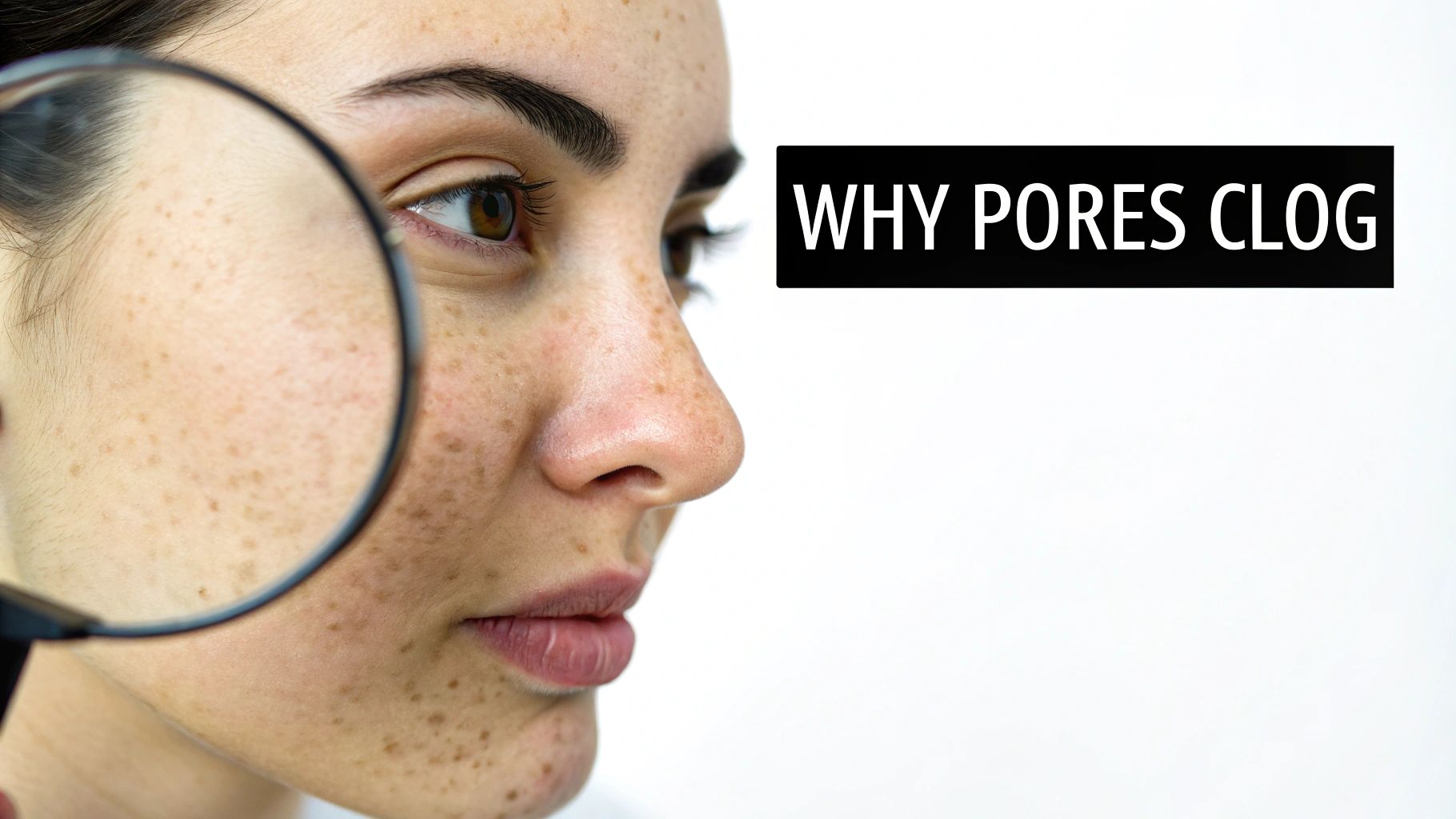
Think of your pores as tiny, essential openings that let your skin breathe by releasing sweat and sebum. That natural oil is fantastic—it keeps your skin moisturized and protected. The trouble starts when your oil glands go into overdrive.
This excess sebum mixes with lingering dead skin cells and other debris, creating a thick, sticky plug. This is what clogs the pore.
That blockage can show up in a few different ways, like blackheads, whiteheads, and even sebaceous filaments, which are often mistaken for blackheads. Knowing the difference is a game-changer. If you're not sure what you're seeing, our guide on sebaceous filaments vs. blackheads can help you tell them apart.
The Key Suspects Behind Clogged Pores
A few common factors are almost always behind this frustrating cycle of congestion. Once you pinpoint your triggers, you can find a natural solution that actually works for your skin.
Here’s what’s usually going on:
- Too Much Oil: Genetics, hormonal shifts (hello, monthly breakouts), and even stress can kick your sebaceous glands into high gear, leading to extra oiliness.
- Dead Skin Cell Pile-Up: Your skin is constantly shedding dead cells. But sometimes, that process slows down, causing those cells to hang around and get trapped in your pores.
- Everyday Grime: Pollution, dirt, and leftover makeup can easily find their way into your pores, adding to the clog-forming mixture.
If you’re struggling with this, you're definitely not alone. It’s a massive global issue tied directly to acne vulgaris, a condition that impacts between 35% to over 90% of adolescents and young adults worldwide. That's a huge number of people all looking for answers. You can learn more about the global impact of acne from medical research to see just how common it is.
Knowing the 'why' behind your clogged pores is your superpower. It helps you get past the quick fixes and choose gentle, natural ingredients that tackle the root cause, bringing your skin back into balance for the long haul.
Your Guide to Natural Pore-Clearing Ingredients
Feeling lost in the world of natural skincare? It's easy to get overwhelmed. To make things simple, here's a quick guide on the most effective natural ingredients for decongesting pores. This table shows what they do and which skin types they work best for.
| Ingredient Type | Primary Action | Best For Skin Types |
|---|---|---|
| Natural BHAs (e.g., Willow Bark) | Dissolves oil deep within the pore lining to break up stubborn clogs. | Oily, Combination, Acne-Prone |
| Absorbent Clays (e.g., Bentonite) | Draws out impurities, excess oil, and toxins from the pores. | Oily, Normal, Congested |
| Natural Retinoids (e.g., Rosehip Oil) | Speeds up skin cell turnover to prevent dead cells from building up. | Most Skin Types (with caution for sensitive) |
| Gentle Physical Exfoliants (e.g., Jojoba Beads) | Manually buffs away dead skin cells from the surface without causing micro-tears. | Normal, Dry, Combination |
Getting familiar with these powerhouse ingredients is the first step toward building a routine that uses nature to give you clear, healthy skin.
Using Natural BHAs for Deep Pore Cleansing
Some ingredients work on the surface, while others go much deeper. If you're serious about getting rid of stubborn clogged pores, you need something that can dissolve that frustrating mix of oil and dead skin cells right at the source.
This is where natural Beta Hydroxy Acids, or BHAs, come into play. They are your skin's secret weapon for a truly deep clean.
Unlike their cousins, the Alpha Hydroxy Acids (AHAs), BHAs are oil-soluble. This one property is what makes them so incredibly effective. Think about it like washing a greasy pan with just water—it doesn't do much. But once you add something that cuts through the grease, the job is a thousand times easier. BHAs act in the same way, diving deep into your pore lining to break apart the gunk that causes clogs in the first place.
The most famous natural BHA is salicylic acid, which is actually derived from willow tree bark. Its unique ability to get past the oil and into the follicle is why it’s a holy grail for anyone trying to clear their pores.
Skincare experts estimate it can reach the 60-70% of clogs that are lurking too deep for surface treatments to ever touch. In fact, studies have shown that with regular use, BHAs can reduce pore congestion by as much as 50% in just 4-6 weeks. You can read more on the science of pore-clearing ingredients to see just how they work their magic.
Creating a Simple DIY Willow Bark Toner
If you want to dip your toes into the world of natural BHAs, a simple homemade toner using willow bark extract is a great starting point. It lets you tap into the benefits of salicylic acid in a very gentle, controlled way.
Here’s a simple recipe to try:
- Get Your Supplies: You’ll need distilled water, alcohol-free witch hazel, and white willow bark extract. You can find the extract at most herbal suppliers—just make sure it lists the percentage of salicin, which is the active compound.
- Create the Base: In a clean, sterilized bottle, pour in 3 ounces of distilled water and 1 ounce of witch hazel. The witch hazel adds a mild astringent quality and also helps keep your toner fresh.
- Add the Active Ingredient: Now for the willow bark. Carefully add the extract to your base. For a gentle toner you can use daily, you’ll want a final concentration of around 2% salicin. Always, always follow the supplier’s dilution guide to avoid making it too strong.
- Shake and Store: Screw the cap on tight and give it a good shake. Pop it in the fridge to keep it fresh; it should last for about a month.
To use it, just dampen a cotton pad with the toner after cleansing and swipe it over your face, paying extra attention to areas like your nose, chin, or forehead. Start by using it every other day to let your skin adjust before you consider using it daily.
Pro Tip: Never skip a patch test. Before putting any new DIY concoction on your face, test a small amount on your inner arm or just behind your ear. Wait a full 24 hours to make sure there’s no redness or irritation.
The Bridge From DIY to Expert Formulation
While whipping up your own toner can be an empowering first step, it’s crucial to understand what makes an ingredient like salicylic acid truly effective. Its power isn’t just about the ingredient itself but also its concentration, pH level, and delivery system—factors that are nearly impossible to perfect in a home kitchen.
This is exactly why expertly formulated products from Neutralyze make such a profound difference. As leaders in acne treatment, we harness the well-documented power of salicylic acid and amplify its effectiveness through advanced, scientifically-balanced formulas. By controlling variables like ingredient stability and skin penetration, our products deliver the reliable, consistent results you need to treat acne and unclog pores, all without the risks of DIY experiments. Understanding the science behind this core ingredient makes it clear why a professionally developed system is the safest, most direct route to clear, healthy skin.
Using Clay Masks and Gentle Exfoliation to Your Advantage
After using ingredients like salicylic acid to work on clogs from within, it's time to think about what's happening on the surface. This is where so many people make a critical mistake—they reach for harsh, grainy scrubs that end up irritating their skin and making things worse. The real secret to unclogging pores naturally is to work with your skin, not against it.
Gentle methods, especially clay masks, are fantastic for physically drawing out all that gunk without compromising your skin's delicate protective barrier.
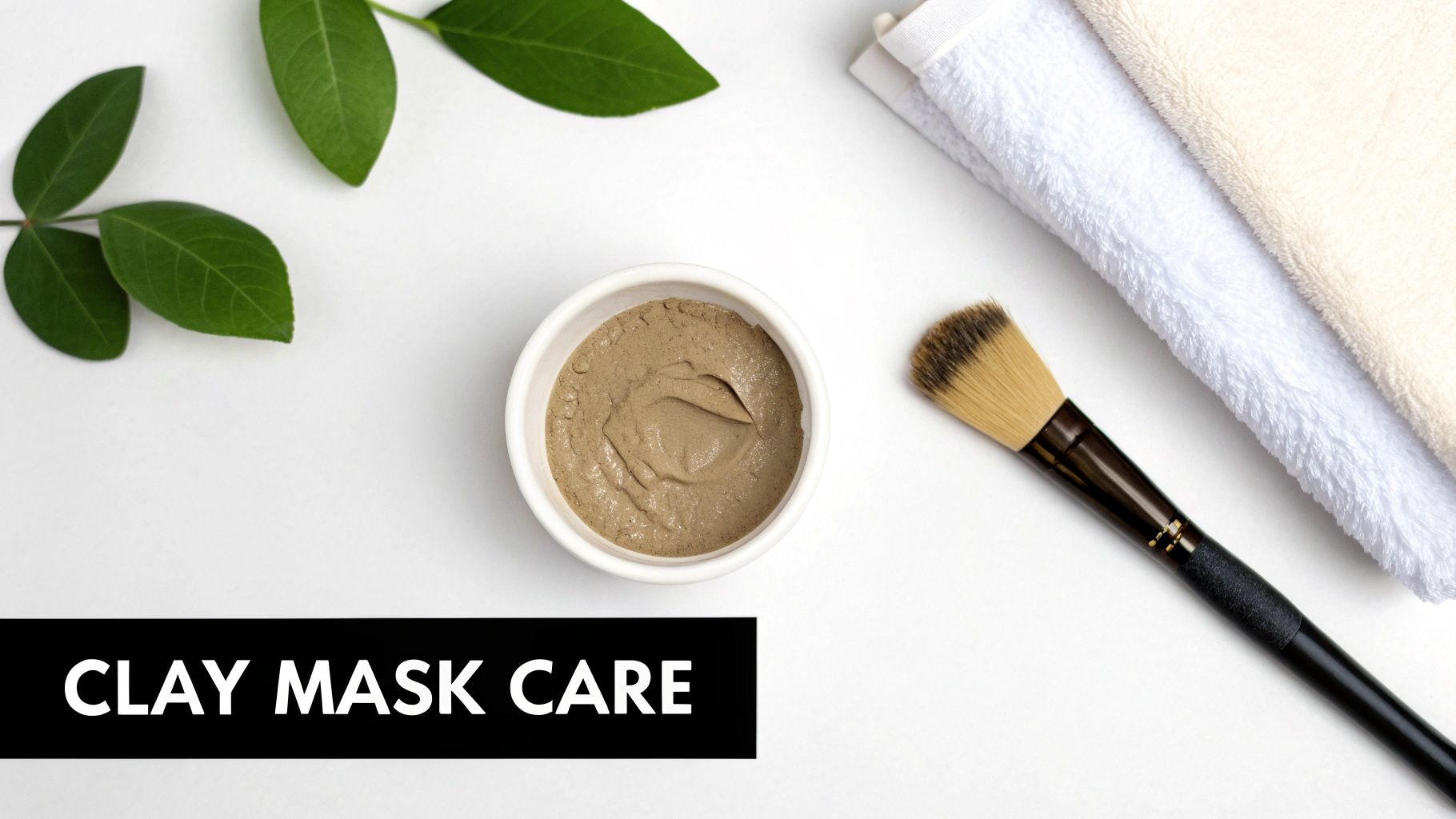
The Science Behind Bentonite Clay Masks
Bentonite clay is a powerhouse for congested skin, and the science behind it is actually quite simple. When you mix it with water, the clay particles take on a strong negative electrical charge.
Here's the cool part: all the junk in your pores—like excess oil, bacteria, and grime—happens to carry a positive charge. When you smooth that clay mask over your skin, it acts like a magnet, literally pulling those positively charged impurities right out of your pores. This process, called adsorption, allows the clay to bind to the gunk and lift it away when you rinse.
It's one of nature's most impressive deep-cleaning treatments, especially if your skin leans oily or combination.
How to Use a Clay Mask the Right Way
Getting the most out of a clay mask is about more than just smearing it on your face. The little details, like getting the right consistency and knowing exactly when to wash it off, make all the difference.
Here’s a practical guide for the best results:
- The Perfect Mix: Start with about one tablespoon of bentonite clay powder in a glass or ceramic bowl (avoid metal, as it can reduce the clay's effectiveness). Slowly add one tablespoon of filtered water or raw apple cider vinegar, mixing until you get a smooth paste with a yogurt-like consistency.
- Application: On clean, dry skin, use your fingers or a soft brush to apply a thin, even layer. You can do a full-face mask or concentrate on problem areas like your T-zone.
- The Crucial Timing: This is the most important part. Never let the mask dry completely. Once it starts to feel tight and crack, it’s gone too far and is now pulling precious moisture from your skin. The sweet spot for removal is when it’s still slightly tacky, which is usually around the 10-15 minute mark.
- Removal and Aftercare: Gently rinse the mask away with lukewarm water, using a soft washcloth to help if needed. Don't be alarmed if your skin looks a little flushed; that's just increased circulation and is completely normal. Immediately follow up with a hydrating toner and your favorite moisturizer to replenish your skin.
Letting a clay mask fully dry and crack is a common mistake that leads to irritation and dehydration. Removing it while it's still damp ensures you get all the pore-clearing benefits without stripping your skin.
Strategic Masking for Different Scenarios
Your skin's needs aren't the same every day, so your masking routine shouldn't be either. You don't always have to do a full-face application.
Here are a few ways to use clay masks:
- Weekly T-Zone Reset: If your forehead, nose, and chin are your main concern, just apply a mask to that T-zone once a week. It’s a great way to manage oil and keep blackheads from forming.
- Targeted Spot Treatment: Feel a pimple coming on? Mix a tiny bit of clay paste and dab it directly onto the spot. Leave it on for about 20 minutes before rinsing. This can help calm inflammation and draw out the impurity before it gets worse.
- Pre-Event Glow-Up: A clay mask the day before a big event can work wonders. It helps minimize the appearance of pores and creates a much smoother canvas for makeup.
Why Hydration After Exfoliation Is Non-Negotiable
Whether you’ve just used a chemical exfoliant like a BHA or a physical one like a clay mask, you’ve just removed something from your skin. While the goal is to get rid of the bad stuff (dead skin, excess sebum), you have to put the good stuff back in.
This is why thinking in terms of a complete skincare system is so important. A great clay mask session is only half the job. The other half is rebalancing your skin right away with proper hydration. If you skip this, your skin can panic and produce even more oil to compensate, putting you right back where you started.
This balance between clearing and hydrating is the foundation of lasting results. It’s the philosophy behind well-formulated systems from Neutralyze, which are expertly designed not just to fight breakouts but to maintain the skin’s overall health. By pairing potent clearing ingredients with soothing, hydrating ones like Mandelic Acid, you create an environment where your skin can finally be calm, clear, and happy.
Taming Oil Production with Natural Retinoids and Balancing Oils
While a good deep clean with BHAs and clays is fantastic for clearing out what’s already there, the real game-changer is getting ahead of the problem. If you want lasting clarity, you need to address the root causes: overactive oil glands and sluggish cell turnover. This is where you move from constantly fighting breakouts to proactively keeping your skin clear.
Think of it as shifting from defense to offense. Certain natural retinoids and specific oils can make a world of difference in preventing clogs before they even start.
The Power of Natural Retinoids for Cell Turnover
You’ve probably heard of retinol. It's the gold standard for everything from anti-aging to acne, and for good reason. Its main job is to put your cell turnover into high gear—that’s the process where your skin sheds dead cells to make way for fresh, new ones. When this process slows down, old cells pile up, mix with oil, and create the perfect recipe for a stubborn clog.
Retinol, which was first synthesized way back in 1971 to treat acne, remains a skincare powerhouse. Consistent use has been shown to reduce oiliness by 25-30% and help unclog pores by speeding up cell turnover by about 20%. It's used to treat an estimated 50 million cases of acne across the globe each year.
But if you're looking for a gentler, more natural route, there are fantastic alternatives. Plant-based precursors like rosehip oil, which is packed with Vitamin A, have seen a 35% jump in U.S. sales since 2022. They offer similar benefits but with a much lower risk of irritation. You can find more info about these at-home treatments for clogged pores from various expert sources.
Rosehip oil is an incredible natural source of trans-retinoic acid, a form of Vitamin A your skin can put to work right away. Adding it to your nightly routine encourages a steady, healthy exfoliation from within, which is key to keeping pores clear and your skin looking vibrant.
Getting started is easy: just press 2-3 drops onto clean, damp skin at night. Apply it after any water-based serums but before your main moisturizer. To be safe, start by using it every other night to let your skin get used to it.
Using Oils to Dissolve Oil
I know, it sounds completely backward. Why would you put oil on already oily, congested skin? But it all comes down to a simple chemistry principle: "like dissolves like."
Those hard, waxy plugs deep inside your pores are made of solidified oil (sebum). A harsh, stripping cleanser can’t really get in there to break them down. In fact, it often just makes things worse by drying out the surface of your skin, which can trap the clog even deeper. The right kind of oil, on the other hand, can gently work its way in to dissolve those plugs and lift them out.
The goal isn’t to strip your skin of every last drop of oil, but to bring it back into balance. When you use a non-comedogenic oil that closely mimics your skin's natural sebum, it can actually send a signal to your overactive glands to calm down and stop producing so much excess oil.
Jojoba oil is the perfect example. Its molecular structure is shockingly similar to our own sebum. When you massage it into your skin, it can help melt away blackheads and sebaceous filaments while providing just the right amount of moisture.
Here’s a simple way to try the oil cleansing method:
- Start with a dry face and clean, dry hands.
- Pour a quarter-sized amount of jojoba oil into your palm.
- Gently massage the oil all over your face for 1-2 minutes. Really focus on congested areas like your nose, chin, and forehead.
- Soak a clean washcloth in warm water, wring it out, and drape it over your face for about 30 seconds. The steam helps open up your pores.
- Gently wipe the oil away with the washcloth. If your skin feels like it needs it, you can follow up with a gentle, water-based cleanser.
As you explore which natural oils work best for you, it's helpful to understand their different properties. For instance, learning the Top 6 Olive Oil Benefits for Skin can give you a better grasp of how certain oils can nourish your skin without causing new clogs.
This deeper understanding of how active ingredients work—from retinoids speeding up cell turnover to oils balancing sebum—is exactly why a well-formulated product is so important for long-term skin health. It's not just about one ingredient, but the synergy between them. At Neutralyze, we master this science, creating systems that balance powerful, science-backed ingredients to give you consistent, reliable results without irritation. We take all the guesswork out of building an effective routine for your acne-related concerns.
Your Daily Habits Might Be Clogging Your Pores
Great skin isn't just about what you put on it; so much of the battle is won by what you do every single day. The food you eat, how you handle stress, and even how often you wipe down your phone can make or break your efforts to keep pores clear.
When you start thinking about skincare from the inside out, you're not just treating breakouts—you're preventing them from happening in the first place.
Can Your Diet Really Cause Clogged Pores?
Absolutely. The link between what you eat and how your skin behaves is stronger than many people think. Certain foods can throw your hormones and oil glands out of whack, leading to a surge in the sebum that clogs up your pores.
The biggest offenders? Foods with a high glycemic index. We're talking about sugary drinks, white bread, pastries, and a lot of processed snacks.
These foods make your blood sugar spike like crazy. Your body responds by pumping out insulin, and that insulin rush tells your oil glands to work overtime. Suddenly, you’ve got the perfect greasy environment for congestion and breakouts to thrive.
The good news is that you can eat your way to clearer skin.
- Go Low-Glycemic: Swapping processed carbs for things like whole grains, beans, and fresh veggies is a game-changer. It keeps your blood sugar stable and your oil production in check.
- Get More Zinc: Zinc is a skin-loving mineral that’s brilliant at regulating oil. You’ll find it in pumpkin seeds, lentils, and chickpeas.
- Load Up on Antioxidants: Berries, spinach, and other colorful produce are packed with antioxidants that calm inflammation—a root cause of angry, clogged pores.
A balanced diet full of whole foods is one of the most powerful, long-term strategies for managing oil and keeping your pores clear from within. It’s not a quick fix, but it’s a foundational one.
The Small Lifestyle Changes That Make a Big Difference
Beyond food, there are dozens of little things you do every day that could be contributing to clogged pores. It’s easy to overlook them, but paying attention to these habits can yield surprisingly big results.
Just think about all the things that touch your face. Your phone, your pillowcase, your own hands—they're all constantly transferring grime, bacteria, and oil directly onto your skin.
Here are a few simple habits to start building right now:
- Clean Your Phone Daily: Seriously, your phone is a petri dish. Give it a quick wipe with an antibacterial cloth every day to stop smearing that bacteria all over your cheeks.
- Change Your Pillowcase Often: Your pillowcase soaks up oil, sweat, and last night's moisturizer. You should be swapping it out at least twice a week to avoid sleeping on a week's worth of buildup.
- Keep Your Hands Off Your Face: It's a tough habit to break, I know. But every time you rest your chin in your hand, you're transferring oil and dirt. Be mindful of it.
- Never, Ever Sleep in Makeup: This one is non-negotiable. Use a gentle cleanser or micellar water to get every last bit of makeup off so your pores can actually breathe and repair themselves overnight.
How Stress Shows Up On Your Skin
Ever notice you break out right before a big exam or an important meeting? That’s not a coincidence. Stress has a direct, physical impact on your skin.
When you’re stressed, your body pumps out cortisol. This "stress hormone" kicks your oil glands into high gear, leading to more sebum and—you guessed it—more clogs.
Finding a way to manage that stress is just as important as any cleanser or serum. That could mean yoga, meditation, or even just a brisk 20-minute walk to clear your head. And please, prioritize your sleep. It's when your skin does the bulk of its healing.
While these lifestyle adjustments are your foundation, they work best when paired with an intelligent skincare routine. They create the perfect internal and external environment for topical products to do their job effectively. This is where a targeted system like Neutralyze can be so helpful—it provides the science-backed ingredients to clear out existing clogs while your new habits work on preventing them in the future.
Weaving It All Into a Sustainable Clear Skin Routine
Alright, let's pull all these fantastic natural methods together. Seeing real, lasting results isn't about throwing everything at your skin at once. It’s about building a smart, sustainable plan that actually fits your life and your specific skin needs. Patience and consistency—those are your true secret weapons for unclogging pores naturally.
Think about crafting a weekly schedule for your face. If you have oily skin, maybe you use a gentle BHA toner a few nights a week, hit your T-zone with a clay mask on Sundays, and pat in a few drops of rosehip oil before bed. For drier skin, that clay mask might be a once-a-month treat, with more focus on oil cleansing with jojoba to melt away gunk without stripping precious moisture.
Knowing When DIY Just Isn’t Cutting It
As powerful as natural remedies can be, it's just as crucial to know when to call in the pros. If you're struggling with deep, painful cystic acne that just won't budge with at-home care, it’s absolutely time to see a dermatologist.
Here are a few other red flags that signal you need an expert’s help:
- Constant Inflammation: Your skin is almost always red, swollen, or just plain angry.
- Scarring Concerns: Breakouts are starting to leave behind permanent marks or dark spots.
- Sudden, Drastic Changes: You’re experiencing a major shift in your skin's health that seems to come out of nowhere.
This simple visual breaks down the core habits that underpin any effective skincare routine, focusing on what you eat, how clean you keep things, and how much you rest.
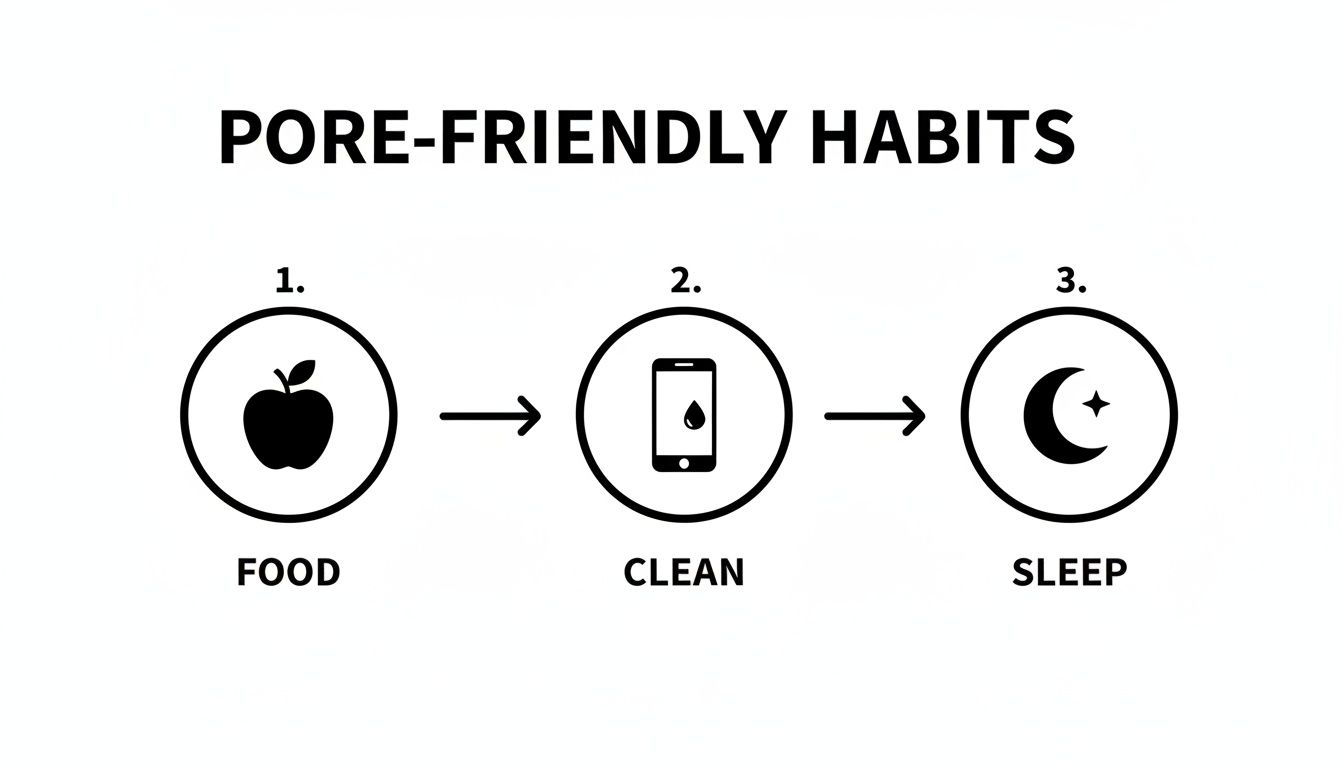
These daily actions form the foundation of clear skin, helping to tackle pore-clogging problems from the inside out.
Marrying Natural Methods With Proven Science
For a lot of us, the sweet spot for clear skin is found somewhere between a simple kitchen concoction and a heavy-duty prescription. This is where a professionally formulated system can be a game-changer, blending the best of both worlds.
Products that merge the wisdom of nature with the precision of science give you a reliable path forward. They take proven ingredients and formulate them into stable, effective concentrations that are nearly impossible to replicate at home.
This approach takes the guesswork out of the equation. Instead of crossing your fingers and hoping your homemade toner is the right strength, you can rely on a system like Neutralyze to provide a balanced, science-backed routine. It's built to deliver consistent results by combining powerful, clinically tested actives with skin-soothing botanicals, making it an ideal next step for keeping your skin clear and healthy for the long haul.
Your Questions About Unclogging Pores, Answered
When you're trying to figure out the best way to clear your pores naturally, it's normal to have a few questions. Let's tackle some of the most common ones I hear.
How Long Until I See Results from Natural Methods?
I know we all want that instant gratification, but skin doesn't work that way. While a good clay mask might leave your skin feeling smoother right away, real, lasting change comes from consistency.
Give it a solid 4 to 6 weeks. That's about how long your skin's natural renewal cycle takes (roughly 28 days), so you need to stick with a routine long enough to see the new, clearer skin emerge. It's a marathon, not a sprint.
Can I Actually Make My Pores Smaller for Good?
Here's the honest truth: your pore size is pretty much set by your genetics. You can't permanently shrink the pore itself. But what you can do is dramatically change how they look.
Think of a pore like a tiny tote bag. When it's empty, it's small and discreet. When it's stuffed with oil, dead skin cells, and gunk, it stretches and becomes much more obvious. So, the goal isn't shrinking—it's keeping them consistently clean. When you do that, they appear so much smaller.
Are All-Natural DIY Treatments 100% Safe?
Not necessarily. "Natural" doesn't always equal "gentle." It's easy to get carried away with a DIY sugar scrub, but over-exfoliating can seriously damage your skin's protective barrier, leading to redness and irritation. And please, steer clear of things like straight lemon juice or undiluted essential oils—they're far too harsh for your face and can cause real damage.
My number one rule: Always patch-test. Before you slather a new concoction on your face, apply a small amount to your inner wrist or behind your ear. Wait a full 24 hours. If there's no redness, itching, or irritation, you're good to go. This simple step has saved my skin—and my clients'—more times than I can count.
Understanding what really works to clear out pores is the foundation for healthy skin. If you're looking for a reliable, science-backed approach that takes the guesswork out of the equation, Neutralyze creates expertly formulated products. We focus on delivering the right ingredients in the right amounts to keep your skin clear and calm. See how our formulas can make a difference at https://www.neutralyze.com.


