

Sebaceous Filaments vs Blackheads: How to Tell the Difference
It all boils down to one simple fact: sebaceous filaments are a normal part of how your skin works, while blackheads are a form of acne. Figuring out which one you’re dealing with is absolutely critical because you don't "treat" a normal skin function the same way you treat a clogged pore.
A Clear Guide to Identifying Your Pores
The first step to clearer skin is knowing what you're actually looking at in the mirror. So many people see small, grayish dots on their nose and immediately assume they're blackheads. This mistake often leads to aggressive, frustrating, and sometimes damaging skincare routines that just don't work.
What you're likely seeing are sebaceous filaments, which play a vital role in keeping your skin healthy. They act like tiny pipelines, guiding oil (sebum) from your glands up to the skin's surface to keep it hydrated.
While they might look similar at a glance, sebaceous filaments and blackheads couldn't be more different. Filaments are just a mix of sebum and skin cells lining the inside of a pore. They look like tiny, uniform dots—maybe gray, whitish-yellow, or tan—and are usually no bigger than a pinhead.
Blackheads, on the other hand, are a true blockage. They're a solid plug of dead skin cells, oil, and debris that gets stuck in the pore. The top of the plug is exposed to air, which causes it to oxidize and turn that signature dark, black color. As skincare experts at Women's Health explain, understanding this difference is key to effective treatment.
This infographic lays out the visual distinctions to help you tell them apart quickly.
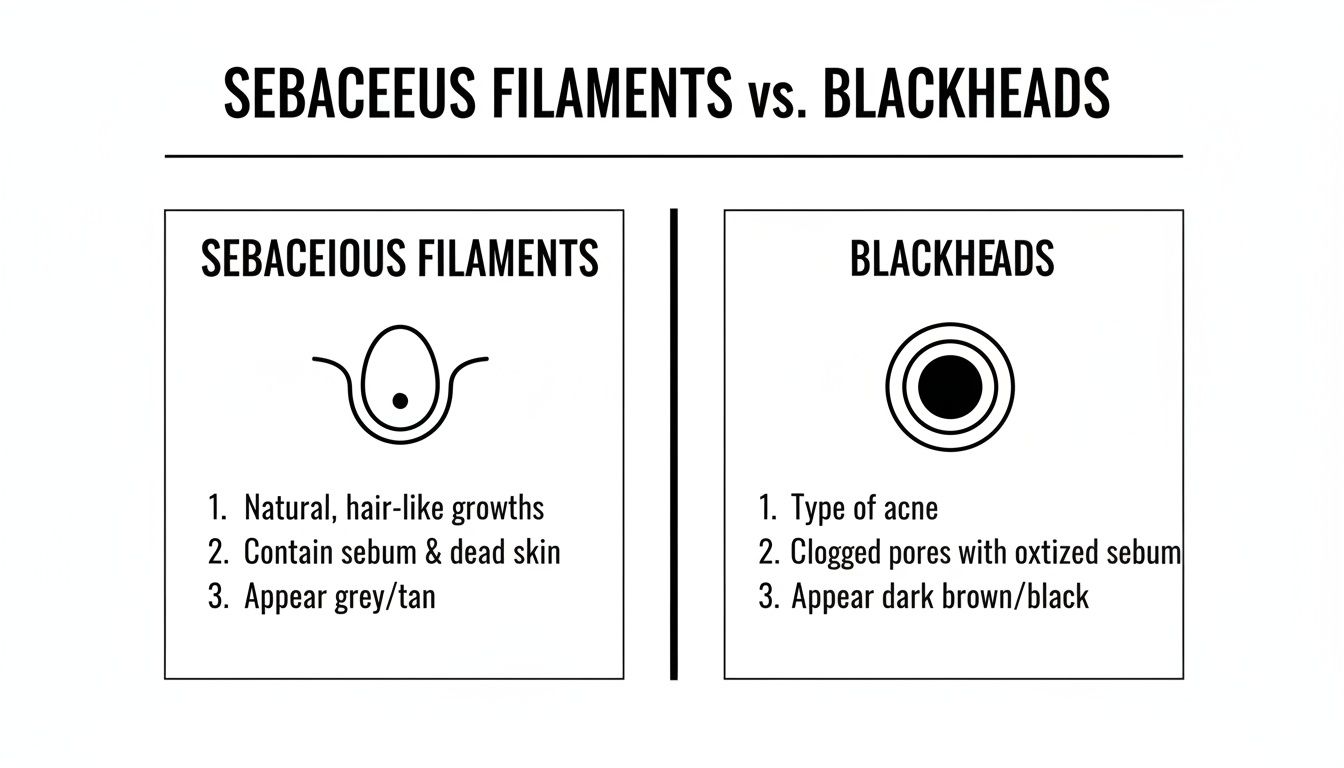
The key takeaway is simple: blackheads are blockages that need clearing, while sebaceous filaments are just visible signs that your pores are doing their job.
Key Differences at a Glance
Let's break down the distinct characteristics to make identification foolproof. One is a sign of healthy skin, and the other is a target for treatment.
Use this side-by-side comparison to quickly identify the defining characteristics of sebaceous filaments and blackheads.
| Characteristic | Sebaceous Filaments | Blackheads (Open Comedones) |
|---|---|---|
| Appearance & Color | Uniform, pin-sized dots that appear gray, tan, or yellowish. | Dark black or deep brown plugs that are often irregular in shape. |
| Texture on Skin | Typically flat and smooth to the touch, not raised from the skin. | A distinctly raised, bumpy, or rough texture. |
| Location | Concentrated in oily areas like the nose, chin, and forehead (T-zone). | Can appear randomly anywhere on the face, back, or chest. |
| What Comes Out | A thin, waxy, thread-like strand of sebum, if squeezed. | A hard, dark plug of oxidized debris and solidified sebum. |
| Underlying Nature | A normal, functional part of the skin’s anatomy that will always return. | A clogged pore (a form of acne) that can be treated and cleared. |
Knowing these differences will guide you toward the right products and prevent you from overtreating what might just be your skin behaving normally.
What Really Happens Inside Your Pores
To get to the bottom of the sebaceous filaments vs. blackheads debate, we need to zoom in and look at what's happening inside your pores. Every single pore on your skin contains what’s called a pilosebaceous unit—that's just the technical name for a hair follicle and its connected oil gland. This tiny structure is where it all begins, for both healthy skin and breakouts.
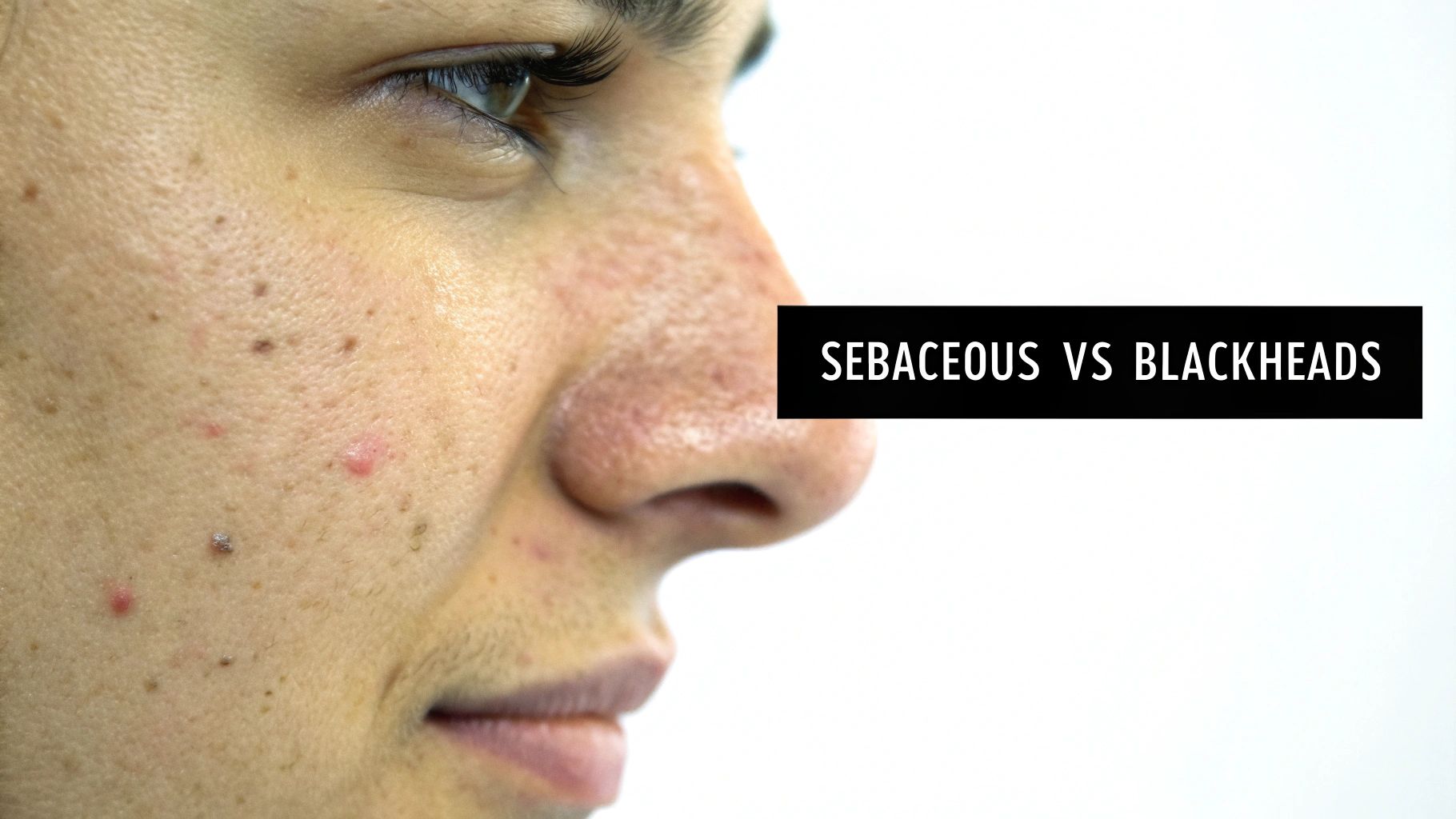
Think of sebaceous filaments as the essential plumbing for your pores. They aren't a clog at all; they're thin, hair-like structures that line the inside of the pore, helping to wick oil from the gland up to the skin's surface. This is a good thing—it's how your skin stays naturally moisturized and protected.
So, when you see those tiny grayish dots on your nose or chin, you're just witnessing your skin’s built-in hydration system doing its job. They’re a sign that everything is working just as it should.
The Science of a Clogged Pore
Blackheads, on the other hand, are a completely different animal. Their formation, a process called comedogenesis, starts when that natural flow of oil gets blocked. Instead of oil flowing freely, a hard plug forms and completely obstructs the pore.
This plug is a stubborn mix of a few key things:
- Excess Sebum: The oil gland goes into overdrive, producing more oil than the pore can handle.
- Dead Skin Cells: Skin cells that are supposed to shed naturally get sticky and build up inside the pore lining.
- Debris: Everyday grime and microscopic particles that find their way into the open pore.
Once this plug forms, its top is exposed to the air. That exposure causes the gunk to oxidize—essentially, to rust—turning it dark and creating that classic "blackhead" appearance.
The core difference is function versus dysfunction. Sebaceous filaments are a normal part of your skin's anatomy. Blackheads are a sign that the system is broken and the pore is clogged.
For a long time, this distinction wasn't well understood. While blackheads were identified as open comedones back in the late 19th century, sebaceous filaments were often mistaken for them. It took modern dermatological analysis to confirm they are a normal, non-problematic feature of the skin. You can find more detail on this evolution in our understanding of skin on skincare.com.
A Targeted Approach to Pore Health
Understanding this biological difference is everything because it completely changes how you treat the issue. You can’t—and shouldn't—get rid of sebaceous filaments. The goal is simply to manage their appearance by keeping oil production in check. With blackheads, the mission is to break down the existing plug and stop new ones from forming.
This is where smart, science-backed ingredients come into play. A well-formulated approach can precisely target the root causes of pore congestion.
Salicylic Acid (BHA): The Deep-Pore Cleaner
Salicylic Acid is a beta-hydroxy acid (BHA), and its superpower is that it's oil-soluble. This allows it to travel deep into the pore, moving through your skin's natural oils to dissolve the mixture of sebum and dead cells that makes filaments look more obvious and forms blackhead plugs. It truly works from the inside out.
Mandelic Acid (AHA): The Surface Refiner
Mandelic Acid, a gentler alpha-hydroxy acid (AHA), focuses on the skin's surface. It’s an excellent exfoliator that clears away the dead skin cells that might otherwise fall into a pore and start a clog. By keeping the surface clear, it helps prevent blockages from ever starting.
At Neutralyze, our expertise lies in harnessing the power of these key ingredients. Our formulations are built on this scientific foundation, combining the deep-cleaning power of BHAs with the surface-smoothing action of AHAs. This creates a complete system that manages the appearance of sebaceous filaments while actively treating and preventing blackheads, helping you achieve a genuinely balanced complexion.
A Practical Guide to Identifying What's In Your Pores
Forget the textbook definitions for a moment. Learning to spot the difference between sebaceous filaments and blackheads on your own skin is what really matters. It's a skill that dictates your entire skincare strategy, and thankfully, a close look in the mirror and a gentle touch are all you need to become an expert.
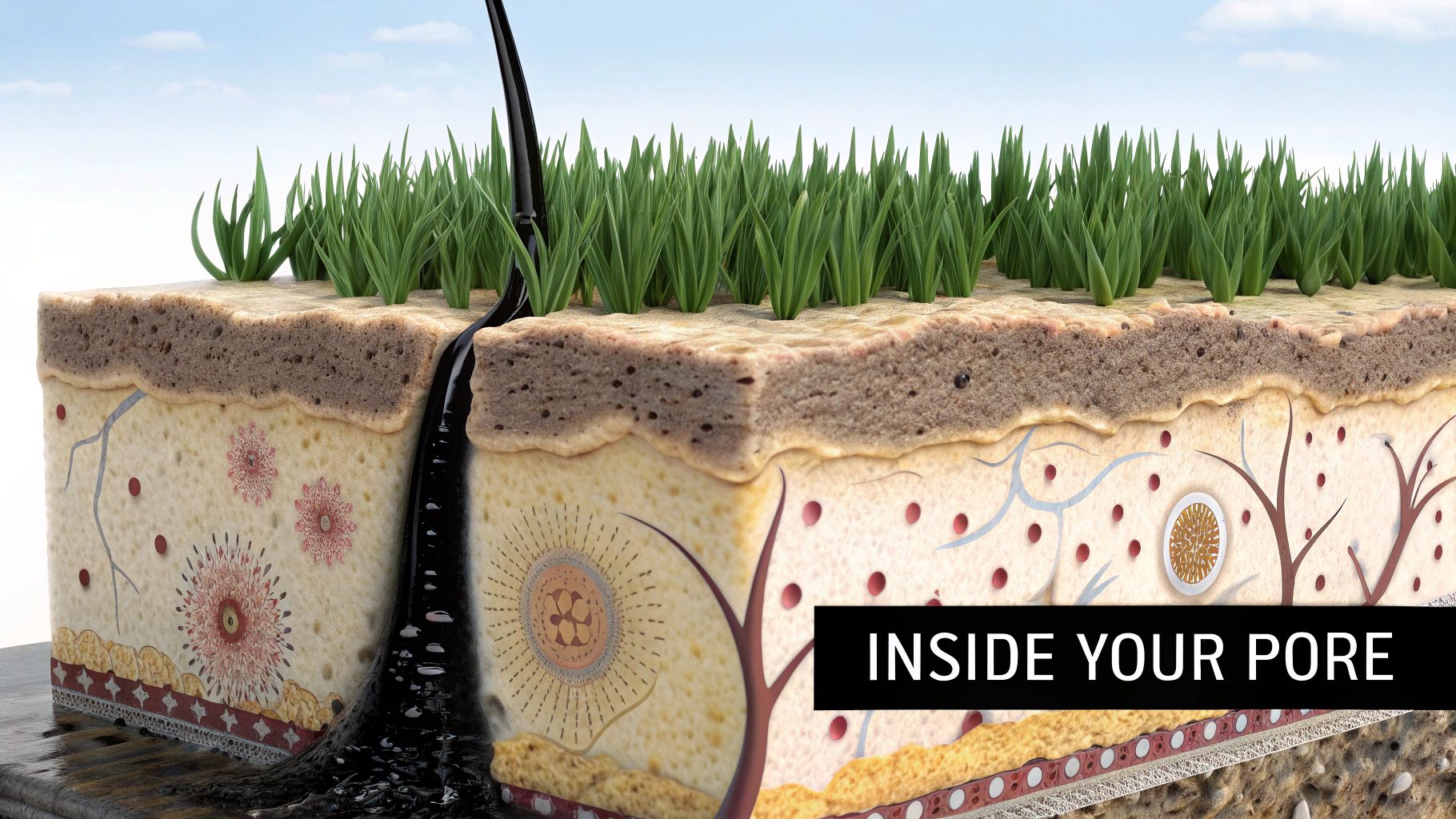
Think of sebaceous filaments as the quiet, orderly residents of your pores. They tend to appear in a uniform, almost grid-like pattern across your nose, chin, and the center of your forehead. They look like tiny, grayish, or light-colored dots, consistently filling every pore in those oily areas.
Blackheads are the complete opposite—they’re random troublemakers. You might find a single one on your cheek, a couple on your shoulder, or a cluster on your back. They don't follow any pattern. They're also distinctly darker, often truly black, and look like individual plugs rather than an organized community.
Visual and Textural Clues
The differences get even sharper when you combine sight with touch. Getting this right is the first real step in solving the sebaceous filaments vs blackheads puzzle.
- Feel the Surface: Run a clean finger over the area in question. Sebaceous filaments are typically flat and smooth to the touch, meaning you won't feel much of a change in your skin's texture. A blackhead, on the other hand, often creates a slightly raised, rough bump you can actually feel.
- Observe the Location: Sebaceous filaments live almost exclusively in the oiliest parts of the face where sebaceous glands are most concentrated—your T-zone. Blackheads can pop up anywhere a pore gets clogged, including your chest, back, and less oily parts of your face.
This distinction is everything. It helps you stop fighting a losing battle against normal pore function (filaments) and start treating the actual clogs (blackheads) effectively.
The Problem with Squeezing
I know the urge to squeeze is powerful, but what comes out—and the damage left behind—is completely different for each. Resisting this temptation is probably the single best thing you can do for your skin's long-term health.
Squeezing a sebaceous filament might yield a thin, whitish, worm-like string of sebum. It's a fleeting moment of satisfaction, but it's pointless. Since these filaments are a normal part of your skin's oil-delivery system, they'll just fill back up within a few days. Worse, constantly squeezing can permanently stretch your pores, break tiny blood vessels, and lead to chronic redness.
Squeezing a blackhead seems like a quick fix, but it's a huge risk. You're just as likely to push the hardened plug deeper into the follicle. This can rupture the pore wall, spread bacteria, and trigger a major inflammatory response—turning a simple blackhead into a painful pimple or even causing a scar.
If a blackhead needs to be removed, leave it to a professional. A dermatologist or esthetician uses sterile tools and the right technique to clear the pore without causing collateral damage. At home, your best tools aren't your fingers; they're smart, science-backed ingredients that dissolve the blockage from the inside out.
Once you can spot these practical differences—how they look, feel, and where they show up—you can finally stop feeling frustrated. Instead of battling your skin, you can start working with it, using targeted treatments to manage filaments gently and clear blackheads for good.
Targeted Solutions for Clearer Skin
Knowing the difference between sebaceous filaments and blackheads is the first step, but the real win comes from using the right strategy for each. This isn't a one-size-fits-all situation. You don't "treat" sebaceous filaments—you manage how they look. Blackheads, on the other hand, you absolutely treat to get rid of them and keep them from coming back.
When it comes to sebaceous filaments, think gentle maintenance. They’re a normal, permanent part of your skin, so the goal is to keep oil production in check and use mild exfoliants to make them less noticeable. Going too hard will just lead to irritation and can even make your pores look bigger.
Blackheads demand a more direct attack. The mission here is to dissolve that stubborn plug of hardened oil and dead skin, clear the pore completely, and stop new clogs from forming. This is where you need to bring in the heavy hitters—advanced, science-backed ingredients that really work.
The Power of Dual-Action Exfoliation
To effectively deal with both, you need a strategy that works on the skin's surface and deep inside the pore. This is where combining different types of chemical exfoliants creates a powerful synergy, leading to consistently clear skin.
It’s worth remembering just how common these issues are. Acne-related conditions affect about 9.4% of the global population, making acne the eighth most widespread disease in the world. Blackheads are a huge part of this, especially for those between 12 and 24, and often need targeted care to stop them from getting inflamed. While not a disease, sebaceous filaments are managed by controlling oil and gently exfoliating to minimize their appearance. You can find more great insights on this at Reviva Labs.
This is precisely why a dual-acid approach is so effective—it tackles the distinct needs of clogged pores and overactive oil glands at the same time.
A truly effective solution doesn't just treat the symptom; it addresses the underlying cause. For blackheads, this means dissolving the clog. For visible filaments, it means controlling the oil flow that makes them noticeable.
This philosophy is at the core of Neutralyze formulations, which are expertly designed to deliver a scientifically-calibrated blend of ingredients that bring your skin back into balance.
Salicylic Acid: The Deep Pore Specialist
In the great sebaceous filaments vs blackheads debate, Salicylic Acid (a BHA) is a true game-changer. What makes it so special is that it’s oil-soluble.
Think about it: your pores are filled with sebum, which is oil. Water-based ingredients can’t really get past that oily barrier, but Salicylic Acid can dive right into the pore lining. Once it's in there, it gets to work dissolving the gunk—that mix of excess oil and dead skin cells—that forms blackhead plugs and makes sebaceous filaments look larger and darker. It's the key to cleaning out pores from the inside. For a deeper dive, check out our guide on finding the best acne treatment for blackheads.
Mandelic Acid: The Gentle Surface Refiner
While Salicylic Acid is working its magic deep down, Mandelic Acid (an AHA) is busy perfecting the skin's surface. As an alpha-hydroxy acid, it works by loosening the "glue" that holds dead skin cells together on the top layer of your skin.
This gentle sweeping action accomplishes two crucial things:
- It immediately improves skin texture and gives you a brighter look by whisking away dull, dead cells.
- It prevents those same dead cells from falling into pores and creating clogs down the road.
Because Mandelic Acid has a larger molecular size compared to other AHAs like glycolic acid, it penetrates the skin more slowly. This makes it exceptionally gentle and a great option even for those with sensitive skin. To really tackle visible pores, understanding the best pore minimizer ingredients is a must for a complete routine.
By combining the deep-diving power of Salicylic Acid with the surface-clearing finesse of Mandelic Acid, Neutralyze provides a complete, scientifically formulated system. This dual-action approach doesn't just fight existing blackheads—it creates an environment where pores stay clearer, sebaceous filaments are less obvious, and your skin can finally find its healthy, balanced state.
Building Your Ultimate Pore-Refining Skincare Routine
Knowing the difference between sebaceous filaments and blackheads is one thing, but putting that knowledge into practice is what really changes your skin. Think of a consistent, smart skincare routine as your best weapon in this fight. The goal isn't to just zap zits as they pop up; it's about building a daily habit that keeps your skin clear and balanced.
This guide lays out the essential steps for both morning and evening, explaining why each one matters. It's not about cluttering your counter with a dozen products. It's about using the right ones, in the right order, for results that actually stick.
Your Morning Regimen For Protection And Balance
Your morning routine is all about defense. The mission is simple: gently cleanse away any oil and grime from overnight, hydrate your skin, and then shield it from the environmental junk that clogs pores and triggers breakouts during the day.
Here are the absolute must-haves for your AM routine:
- Gentle, Non-Stripping Cleanser: Kick things off with a mild cleanser. You want to remove excess oil, but not strip your skin's natural moisture barrier. If you go too harsh, your skin can freak out and produce even more oil, making those filaments look more obvious.
- Lightweight, Non-Comedogenic Moisturizer: Yes, even oily skin needs hydration. A good non-comedogenic moisturizer gives your skin the water it needs without clogging pores, which helps keep your oil production in check all day long.
- Daily Broad-Spectrum Sunscreen (SPF 30+): This is non-negotiable. Seriously. Sun damage thickens your skin and makes pores look bigger over time, which puts both filaments and blackheads on full display. A lightweight, non-oily sunscreen is your best friend here.
Think of your morning routine as setting your skin up for a win. You’re creating a clean, hydrated, and protected base to face the day.
Your Evening Regimen For Treatment And Repair
Nighttime is when your skin shifts into repair mode, which makes it the perfect time for targeted treatments. Your PM routine should focus on a deeper clean, smart exfoliation, and delivering powerful ingredients that clear out existing gunk and stop new clogs from forming.
This is where you bring in the heavy hitters to really manage filaments and treat blackheads.
A successful skincare routine is a marathon, not a sprint. Consistency with scientifically-backed ingredients is what delivers true, sustainable clarity by addressing the root causes of pore congestion.
This is exactly where a product built on a multi-acid approach should take center stage in your routine. Evening is the ideal time to apply treatments with ingredients like Salicylic and Mandelic Acids.
Here's how to build an effective PM routine:
- Step 1 Cleanse Thoroughly: Just like in the morning, start with a good cleanse to get rid of makeup, sunscreen, and all the pollutants from your day. This step is critical because it allows your treatment products to actually penetrate the skin and do their job.
- Step 2 Apply a Targeted Treatment: This is the game-changer for pore health. After cleansing, apply a solution like Neutralyze, which combines the pore-purging power of Salicylic Acid (BHA) with the surface-smoothing benefits of Mandelic Acid (AHA). The BHA dives deep into the pore to dissolve oil and debris, while the AHA gently exfoliates the surface to keep dead skin cells from causing future blockages.
- Step 3 Moisturize to Support Your Skin Barrier: Always follow your treatment with a nourishing, non-comedogenic moisturizer. This helps soothe the skin, prevents it from getting dry after exfoliating, and supports its natural healing process while you sleep.
By dedicating each evening to this "treat and repair" cycle, you're not just clearing out the blackheads you can see—you're creating an environment where they're far less likely to form in the first place. This approach also helps keep sebum flowing properly, which is key to minimizing the appearance of sebaceous filaments. Neutralyze’s formulas are specifically designed to be this core treatment step, providing the scientific muscle to do the heavy lifting overnight.
When You Should See a Dermatologist
A consistent, well-chosen skincare routine can work wonders, but it's just as important to know its limits. Sometimes, the path to genuinely clear skin means calling in a professional. If you've been faithfully using over-the-counter products for 8-12 weeks without any real change, that's a solid sign it's time to book an appointment.
Other tell-tale signs include stubborn, widespread blackheads that just won't budge with Salicylic Acid, or if you start developing painful, inflamed acne. A dermatologist won't just give you an accurate diagnosis; they'll also steer you away from potentially damaging your skin with treatments that are either too harsh or simply wrong for your needs.
Professional Treatment Options
Seeing a dermatologist opens up a whole new arsenal of more powerful, targeted treatments. They can build a personalized plan for you using options you simply can't get off the shelf.
These professional interventions often involve:
- Prescription Retinoids: Think of these as the supercharged version of the retinol you see in stores. Ingredients like tretinoin are vitamin A derivatives that dramatically speed up skin cell turnover, stopping pores from getting clogged before it even starts.
- Professional Extractions: This is the only truly safe way to handle deep, stubborn blackheads. It’s done by a trained expert in a sterile setting with specialized tools, minimizing the risk of scarring or making inflammation worse.
- Chemical Peels: A derm can use much higher concentrations of acids—like glycolic, salicylic, or trichloroacetic acid—to perform a deep exfoliation that clears out pores and refines your skin's overall texture.
A professional evaluation takes the guesswork out of your skincare. It provides a clear path forward, especially when you feel like you've tried everything and the distinction between sebaceous filaments vs blackheads remains a daily frustration.
An expert can definitively tell you what you’re dealing with and introduce prescription-grade topicals or in-office procedures that work alongside your daily routine. Many people find their sweet spot by combining a trusted at-home system, like Neutralyze with its science-backed blend of Mandelic and Salicylic Acids, with periodic professional guidance. This kind of two-pronged attack gives your skin comprehensive support, helping you finally achieve and maintain that clear complexion you’re working towards.
Answering Your Top Questions About Pores
When it comes to pores, a lot of myths and confusing advice get thrown around. Let's clear things up by tackling some of the most common questions I hear about sebaceous filaments and blackheads.
Can You Permanently Get Rid of Sebaceous Filaments?
In a word: no. And honestly, you wouldn't want to. Sebaceous filaments are a totally normal and necessary part of your skin. Think of them as tiny pipelines that carry sebum (your skin's natural oil) to the surface to keep it moisturized.
Because they’re a built-in feature, they’ll always be there and will naturally refill after you squeeze them. So, the goal isn't to get rid of them, but to manage how they look. A smart, consistent skincare routine with ingredients like Salicylic Acid can keep them clear and far less noticeable, working with your skin’s biology instead of against it.
Do Pore Strips Actually Work?
Pore strips are one of those things that feel satisfying in the moment but don't do much good in the long run. They use a strong adhesive to rip out the very top of whatever is in your pores—whether that’s a sebaceous filament or a blackhead. The problem is, this is just a temporary, surface-level fix.
Worse yet, that aggressive pulling can really irritate your skin. It can damage your delicate skin barrier, lead to redness, and might even stretch out your pores over time. A much better approach is to use a gentle chemical exfoliant like Salicylic Acid, which gets deep into the pore to dissolve the gunk from the inside out for results that actually last.
How Long Does It Take to Clear Blackheads?
When you’re fighting blackheads, consistency is everything. You might notice your skin looking a bit better pretty quickly, but to see real, lasting change, you need to give it time—typically about 4-6 weeks of dedicated use.
This gives an active ingredient like Salicylic Acid enough time to work its magic: dissolving the stubborn, hardened plugs that have already formed and helping to regulate skin cell turnover to stop new ones from setting up shop. Just stick with it, and you’ll get there.
Ready to stop fighting your skin and start seeing real results? Let Neutralyze give you the science-backed tools you need to manage your pores and finally get ahead of blackheads. Our products are carefully formulated with a powerhouse combination of Salicylic and Mandelic Acids to bring you clear, healthy-looking skin.


