

How to Get Rid of Butt Acne A Clear Skin Guide
To clear up butt acne, the first thing to realize is that you're probably not dealing with acne at all. It's almost always a case of folliculitis—a common condition where hair follicles get inflamed from a mix of friction, sweat, and bacteria. The fix usually involves a simple, targeted approach: switching to breathable clothes, hopping in the shower right after a workout, and using cleansers with exfoliating and antibacterial ingredients.
Why You Get Bumps On Your Butt in the First Place
It's a uniquely frustrating experience. You've got your facial skincare routine down, but the bumps on your backside just won't quit. There’s a good reason for that: what most of us call "butt acne" is an entirely different beast. Those small, red, and sometimes itchy bumps are classic folliculitis.
So, what’s the difference? Folliculitis is an infection or inflammation of the tiny pockets your hair grows from. True acne, or acne vulgaris, is a more complex issue involving clogged pores, oil, and dead skin cells. This distinction is everything, because what works for your face probably won't work on your butt.
The Real Culprits Behind Butt Breakouts
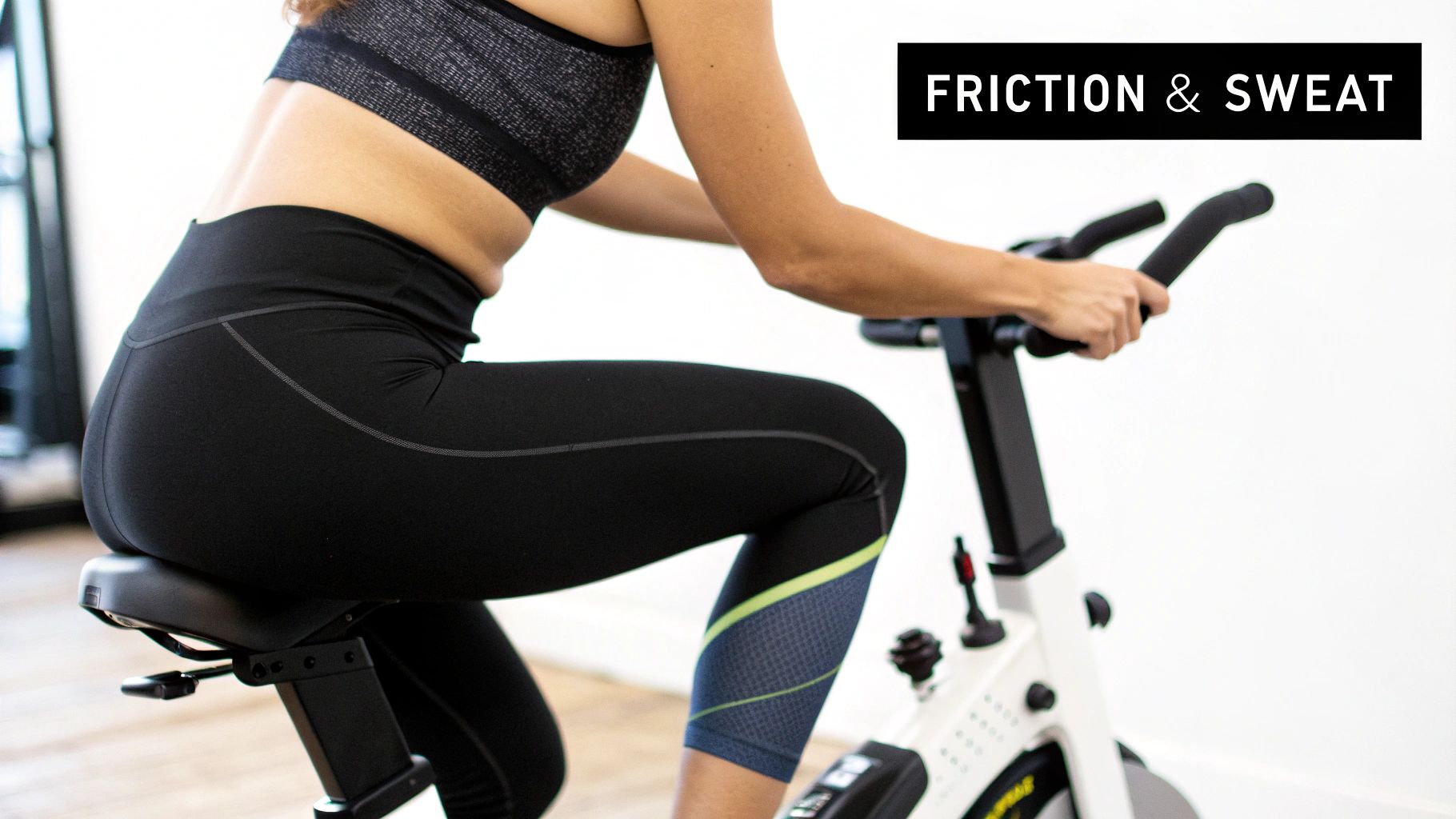
If it's not clogged pores, what's causing these annoying bumps? It usually boils down to a few everyday habits that create a perfect storm for follicle irritation. Think friction, moisture, and heat.
-
Friction from Tight Clothing: Those go-to skinny jeans or favorite workout leggings? They could be the problem. When tight fabric constantly rubs against your skin, it irritates those delicate hair follicles, kicking off an inflammatory response.
-
Trapped Sweat and Bacteria: Lounging around in sweaty gym clothes is a major trigger. Moisture creates the perfect breeding ground for bacteria, like Staphylococcus aureus, which can easily sneak into irritated follicles and cause an infection.
-
Prolonged Sitting: A desk job or a long daily commute means hours of pressure with zero air circulation. This traps heat and sweat right against your skin, which is a direct recipe for irritated follicles and breakouts.
If you're dealing with this, you're far from alone. Butt breakouts, which are mostly folliculitis, are incredibly common, showing up in roughly 10-20% of active individuals who are constantly dealing with sweat and friction. Even just forgetting to shower after the gym can cause bacterial growth to spike by 200%. This is why good hygiene is non-negotiable for keeping your skin clear. You can dig deeper into this in research on common skin conditions like folliculitis.
Is It Folliculitis or Something Else?
Before you start slathering on treatments, it's crucial to know what you're up against. This quick decision guide can help you figure out if you're dealing with standard folliculitis or if it's time to call a doctor.
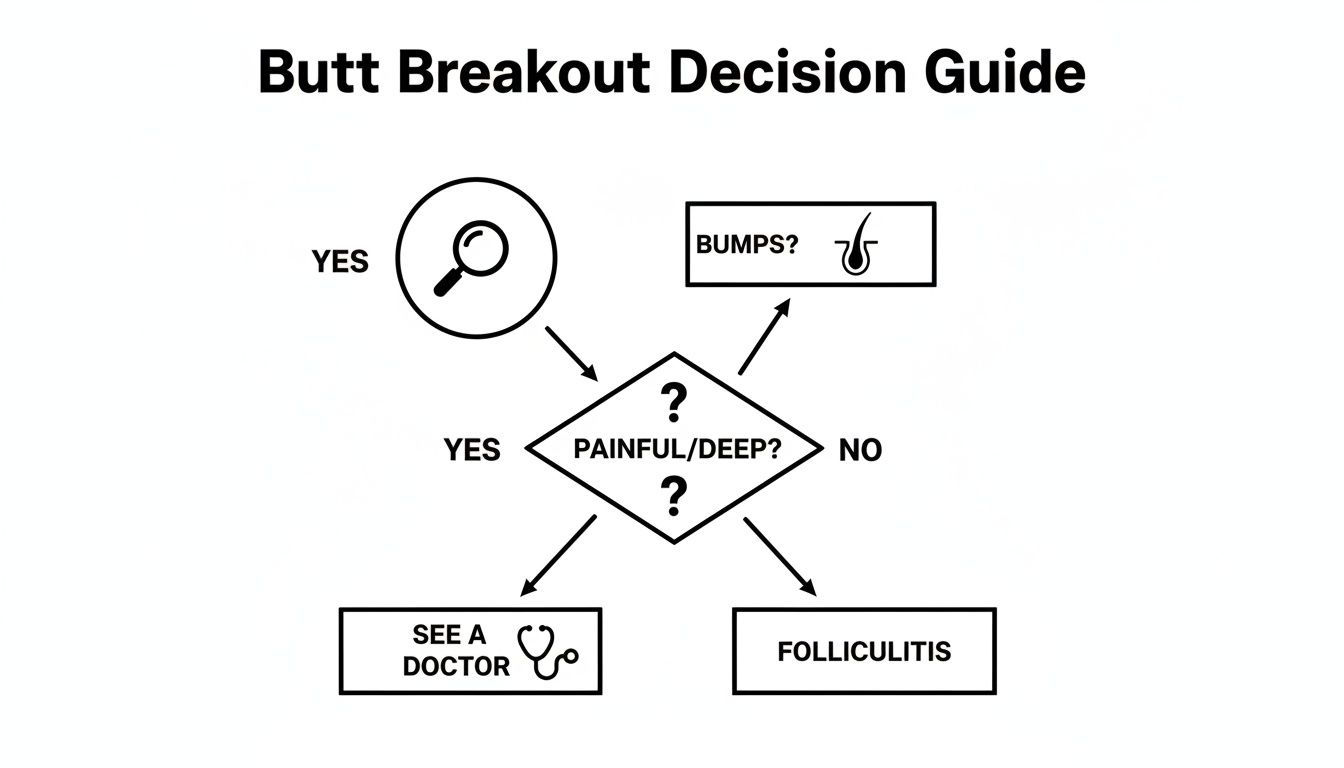
As the flowchart shows, if the bumps are small, close to the surface, and not deeply painful, you're likely in the clear to treat it at home as folliculitis.
But if your breakouts are more severe—think deep, painful, recurring cysts—it might be a sign of something more serious.
One condition that’s often misdiagnosed as severe butt acne is Hidradenitis Suppurativa (HS). This is a chronic inflammatory disease that causes painful, tunnel-like tracts under the skin. It absolutely requires a doctor's care.
If your symptoms sound more like HS, or if you've been trying over-the-counter treatments for a few weeks with no luck, it’s time to see a dermatologist. They can give you a proper diagnosis and get you started on a more powerful treatment plan. Figuring out the root cause is always the most important first step toward getting clear skin for good.
Butt Acne vs Folliculitis Key Differences
Use this quick comparison to identify if you're dealing with common folliculitis or another skin condition, guiding you toward the right treatment approach.
| Characteristic | Folliculitis (Most 'Butt Acne') | Acne Vulgaris | Hidradenitis Suppurativa (HS) |
|---|---|---|---|
| Appearance | Small, uniform red bumps or whiteheads around hair follicles. | Varies: blackheads, whiteheads, papules, pustules, cysts. | Deep, painful nodules, abscesses, and sinus tracts. |
| Location | Anywhere with hair follicles, common on buttocks, thighs, scalp. | Typically face, chest, back, and shoulders. | Primarily in skin folds: armpits, groin, under breasts, buttocks. |
| Pain Level | Mildly tender or itchy. | Can range from painless (comedones) to very painful (cysts). | Moderate to severe, chronic pain is common. |
| Cause | Bacterial/fungal infection of hair follicles, often from friction. | Clogged pores, excess oil, bacteria (P. acnes), hormones. | Chronic inflammatory condition of hair follicles; genetics and immune system play a role. |
| Scarring | Rare, unless picked at excessively. | Common, especially with deeper cysts and nodules. | Scarring is a hallmark, often forming tunnels under the skin. |
This table should help clarify what you're seeing. If your symptoms fall into the HS or severe acne vulgaris columns, professional medical advice is your best next step.
Building Your Daily Butt Acne Clearing Regimen
Knowing you're likely dealing with folliculitis is a great start, but winning the war requires a consistent daily battle plan. To get rid of butt acne for good, you have to do more than just use soap and water. It's time to build a smart routine that clears up what's there and stops new bumps from even thinking about forming.
This doesn't mean you need to add an hour to your shower time. It’s all about making smart swaps—trading out ineffective products for ones packed with the right ingredients and using them in the right order. A truly effective routine boils down to three core actions: cleansing correctly, treating directly, and moisturizing smartly.
Start with a Powerhouse Cleanser
The first and most important step is washing the area with a body wash that's actually formulated to fight bacteria and get rid of dead skin. Your standard bar soap or that nice-smelling body wash? They’re not going to cut it. In fact, they often leave behind a film that clogs follicles or contain fragrances that just make the inflammation worse.
What you need is a cleanser that pulls double duty. That means hunting for specific active ingredients that are proven to tackle the root causes of folliculitis.
- Benzoyl Peroxide: This is the gold standard for a reason. It's a powerful antibacterial agent that kills the bacteria trapped in your hair follicles, stopping those pesky infections before they can really get started.
- Salicylic Acid: This is a beta-hydroxy acid (BHA), which means it's oil-soluble. That’s a fancy way of saying it can get deep down into the follicle to dissolve all the gunk—oil, dead skin, and other debris—that causes clogs in the first place.
Using a body wash with one of these ingredients every time you shower makes the area a terrible place for breakouts to live. For example, if you hit the gym or just sweat a lot, using a benzoyl peroxide wash right after a workout can neutralize the bacteria that love to multiply in that warm, moist environment.
Apply a Targeted Leave-On Treatment
Okay, cleansing is done. The next move is to apply a targeted treatment directly to your skin. This is the part of the routine that delivers a concentrated dose of active ingredients to heal existing bumps and, just as importantly, fade the dark spots they often leave behind (a frustrating condition called post-inflammatory hyperpigmentation, or PIH).
Cleansers get washed away, but leave-on treatments stick around and work for hours, which makes them absolutely essential for stubborn cases. This is where an ingredient like Mandelic Acid really gets to shine.
As a gentle alpha-hydroxy acid (AHA), Mandelic Acid is a true multi-tasking hero, especially for a sensitive area like the buttocks. Its molecules are larger than other AHAs (like glycolic acid), so it sinks into the skin more slowly and is much less likely to cause irritation—a huge win when you’re already dealing with inflamed follicles.
Here’s why a Mandelic Acid treatment is a total game-changer:
- Gentle Exfoliation: It effectively gets rid of dead skin cells on the surface, stopping them from trapping hairs and creating new bumps.
- Antibacterial Properties: It helps knock down bacteria levels on the skin, giving you another layer of defense against infection.
- Brightens Dark Spots: This is the big one. Mandelic Acid is fantastic at fading those brown or reddish spots left by old breakouts because it helps inhibit melanin production.
Applying a thin layer of a Mandelic Acid serum or pad to clean, dry skin lets it work its magic uninterrupted. You'll notice it not only speeds up healing but dramatically improves your skin tone over time.
Key Takeaway: Cleansing deals with the surface-level stuff, but a leave-on treatment with an ingredient like Mandelic Acid is what actively repairs your skin and prevents future scarring. It's the difference between just managing breakouts and actually getting rid of them.
Don't Skip the Moisturizer
I know, it sounds completely backward to add moisture to an area where you're trying to prevent clogged pores. But trust me, this is a non-negotiable step that so many people get wrong. When you use active ingredients like salicylic acid or benzoyl peroxide, they can be pretty drying. That dryness leads to irritated, compromised skin, which can cause tiny tears or even trigger your skin to produce more oil to compensate. It's a vicious cycle.
The solution is simple: a lightweight, non-comedogenic moisturizer. "Non-comedogenic" is the key phrase here—it means the product has been specifically formulated not to clog your pores.
Moisturizing does two critical things for your butt acne regimen:
- Repairs the Skin Barrier: Think of your skin barrier as your body's first line of defense against bacteria. A good moisturizer helps replenish and strengthen it, making your skin far more resilient.
- Locks in Treatments: When you apply moisturizer after your leave-on treatment, it helps seal in all those good active ingredients, making them even more effective.
Imagine your skin barrier is a brick wall. The cleansers and exfoliants can sometimes chip away at the "mortar" holding the bricks together. A non-comedogenic moisturizer is what rebuilds that mortar, keeping the wall strong. This final step is what ensures your skin stays balanced, hydrated, and much better equipped to stay clear for good.
Powerful Ingredients That Eradicate Butt Acne
It’s one thing to follow a routine, but it's another to understand why it works. Knowing the science behind the products you're using is the real secret to kicking butt acne to the curb for good. At Neutralyze, we specialize in harnessing the power of these key ingredients to create formulas that deliver visible results.
The truth is, not all treatments are created equal. The right approach requires a multi-pronged attack: you need ingredients that can exfoliate, kill bacteria, calm inflammation, and fade those stubborn dark spots left behind. This is where we get into the chemistry of clear skin. Let's break down the power players that will form the backbone of your treatment plan.
Mandelic Acid: The Gentle Giant of Exfoliation
If you've ever tried a harsh exfoliant that just left your skin angry and red, Mandelic Acid might be what you've been looking for. It’s an alpha-hydroxy acid (AHA) derived from bitter almonds, but its molecular structure is what makes it a game-changer for the sensitive skin on your butt.
Unlike other AHAs (like glycolic acid), Mandelic Acid molecules are larger. This means they penetrate the skin more slowly and evenly, which drastically cuts down on irritation. You get a steady, controlled exfoliation instead of an aggressive one.
Here’s why Mandelic Acid is a standout:
- It gently unglues dead skin cells, breaking up the buildup on the surface that clogs hair follicles and leads to new bumps.
- It has natural antibacterial properties to help fight the bacteria that cause inflamed, angry spots.
- It’s a hero for fading dark spots. Mandelic Acid is known for inhibiting melanin production, making it fantastic for clearing up the post-inflammatory hyperpigmentation that old breakouts leave behind.
Using a product with Mandelic Acid means you’re not just treating today’s bumps—you're actively improving your skin’s overall tone and texture for a smoother future.
Salicylic Acid: The Pore-Penetrating Expert
While Mandelic Acid works its magic on the surface, Salicylic Acid goes deeper. As a beta-hydroxy acid (BHA), its superpower is that it's oil-soluble. This allows it to slice right through the skin's natural oils and get down into the hair follicle itself.
Think of it like a clogged drain. You can clean the top, but the real issue is the gunk trapped deep inside the pipe. Salicylic Acid is the "Drano" for your pores, dissolving that sticky mix of sebum and dead skin cells causing the blockage.
By clearing out the follicle from the inside, Salicylic Acid not only helps heal existing bumps but also prevents new ones from forming. It’s a crucial ingredient for anyone whose butt acne is linked to excess oil or clogged follicles.
Because it can penetrate so deeply, it's also a great anti-inflammatory, helping to calm the redness and swelling that comes with folliculitis. If you're curious about its other uses, learning how a salicylic acid spray can be used for body acne shows just how versatile this ingredient is.
Benzoyl Peroxide: The Antibacterial Workhorse
When bacteria are the main culprit behind your folliculitis, Benzoyl Peroxide is the undisputed champ. It works by releasing oxygen onto the skin, which creates an environment where acne-causing bacteria like Cutibacterium acnes and Staphylococcus aureus simply can't survive.
One of its biggest advantages? Bacteria don’t develop resistance to Benzoyl Peroxide, which makes it a reliable weapon for the long haul.
Here’s what it brings to the fight:
- Potent Antibacterial Action: It quickly kills bacteria on the skin’s surface and down in the follicles.
- Keratolytic Effect: It helps break down keratin, a protein that can bind dead skin cells together and contribute to clogs.
- Anti-Inflammatory Properties: It helps reduce the painful inflammation that makes those bumps so uncomfortable.
The one catch is that Benzoyl Peroxide can be drying. This is why it’s so important to use a well-formulated product and maintain a balanced routine that includes a good moisturizer.
Key Ingredients for Treating Butt Acne
Navigating the world of active ingredients can feel overwhelming, but focusing on these three powerhouses is a great starting point. Here's a quick cheat sheet to help you understand their roles and how they fit into your routine, particularly with products from the Neutralyze lineup.
| Ingredient | Primary Action | Best For | Neutralyze Product Focus |
|---|---|---|---|
| Mandelic Acid | Gentle surface exfoliation, fades dark spots | Sensitive skin, uneven skin tone, post-inflammatory hyperpigmentation (PIH) | Ideal for renewing skin texture and correcting discoloration without harsh irritation. |
| Salicylic Acid | Deep pore cleansing, dissolves oil and debris | Oily skin, clogged pores, blackheads, active inflamed bumps | The go-to for getting inside the follicle to clear out the source of the breakout. |
| Benzoyl Peroxide | Kills acne-causing bacteria, reduces inflammation | Bacterial folliculitis, red and painful pimples, pustules | The heavy-hitter for when bacteria is the primary driver of your breakouts. |
Understanding these key players allows you to choose products with a purpose, ensuring you're targeting your specific type of butt acne effectively.
Why Formulation Is Everything
Simply seeing these ingredients on a label isn't enough—the magic is in the formulation. A brand like Neutralyze understands that the best results come from combining these powerful agents in a way that boosts their effectiveness while minimizing potential irritation.
A smart formula might balance a potent antibacterial like Benzoyl Peroxide with a gentle exfoliant like Mandelic Acid. This creates a synergistic effect where you’re fighting bacteria, clearing pores, and improving skin texture all at the same time. This kind of scientific, thoughtful approach is what turns a simple routine into a powerful regimen that delivers real, lasting results.
Your Lifestyle Habits Are The Best Prevention
A powerful skincare routine with ingredients like Mandelic and Salicylic Acid is your first line of defense, but it's only half the battle. If you really want to get rid of butt acne for good, you have to look at the daily habits that create the perfect storm for folliculitis in the first place.
Think of it this way: your skincare is the cure, but your lifestyle is the prevention. You absolutely need both to see lasting results.
Making a few simple tweaks to your routine can dramatically cut down on the friction, sweat, and bacteria that cause these breakouts to form. These changes are easy to adopt and will make your skincare products work that much better.
Prioritize Post-Workout Hygiene
We all love that post-exercise glow, but those sweat-soaked clothes are a major trigger for butt acne. Seriously. The warm, damp environment is a playground for bacteria. When you let that sit on your skin, those bacteria can easily wiggle their way into your hair follicles, causing inflammation and those tell-tale red bumps.
This makes showering immediately after a workout a non-negotiable step.
If you’re in a rush and can't hit the shower right away, at least change out of your sweaty clothes. Keep a pack of body wipes with salicylic acid in your gym bag to quickly cleanse the area. This simple habit stops the bacterial party before it even gets started.
It's also worth noting that how you wash your workout gear matters. Proper laundering is key to killing off bacteria that can linger in high-performance fabrics. You can learn more about caring for your athletic wear to make sure your gym clothes are getting truly clean between sessions.
Choose Your Fabrics Wisely
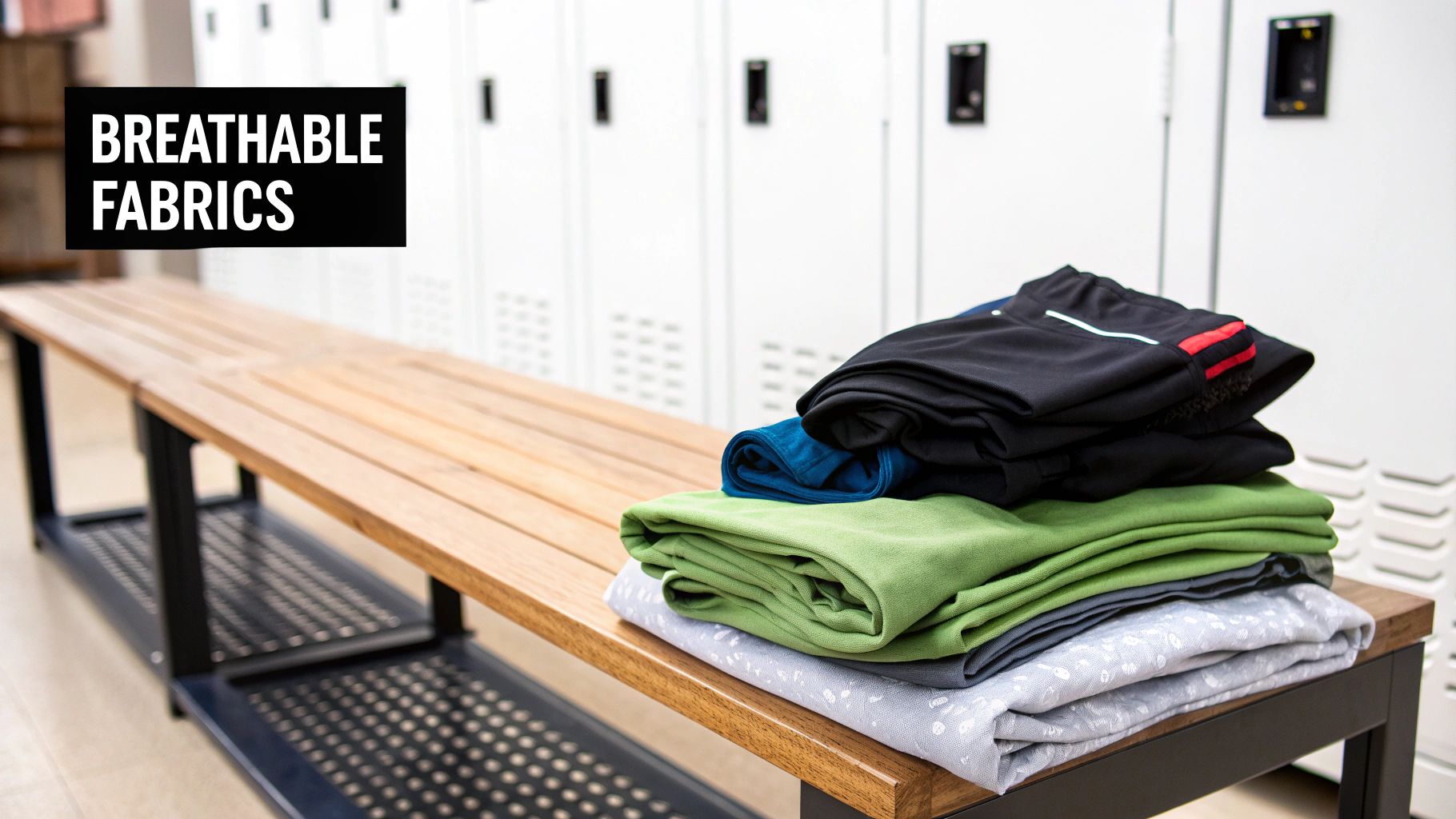
What you wear every day has a huge impact on your skin. Synthetic fabrics like polyester and nylon are common, especially in activewear, but they're notorious for trapping heat and moisture. This creates a swampy microclimate against your skin that's a recipe for irritation and bacterial growth.
Whenever you can, opt for breathable, natural fabrics—especially for anything that sits close to your skin.
- Cotton: This is the gold standard for a reason. It lets air circulate and absorbs moisture, keeping you drier and cooler.
- Linen: Another fantastic natural fiber that's super lightweight and promotes airflow.
- Moisture-Wicking Blends: For exercise, look for modern athletic fabrics specifically designed to pull sweat away from your skin so it can evaporate.
By consciously choosing breathable materials, you're actively taking away the two main triggers for folliculitis—heat and moisture. It makes it that much harder for breakouts to even begin.
Loosen Up Your Wardrobe
Friction is one of the biggest culprits behind folliculitis, and nothing causes more of it than skin-tight clothes. Those skinny jeans, compression leggings, and tight shorts are constantly rubbing against your skin, physically irritating the hair follicles. This relentless mechanical stress can even cause tiny, invisible breaks in the skin, giving bacteria an open invitation.
You don't need a whole new wardrobe. Just be mindful.
Try to rotate your tightest pants with looser options like joggers, relaxed-fit denim, or flowy trousers. Giving your skin a break from that constant pressure and rubbing allows it to breathe and recover.
Consider Your Diet's Role
While the primary causes of butt acne are external—friction, sweat, and bacteria—what you eat can definitely influence your skin's overall inflammatory state. For some people, certain foods can set off an inflammatory response that makes breakouts worse, and that includes on your butt.
Diet is highly individual, but two common culprits are often linked to skin issues:
- High-Sugar Foods: Sugary snacks, sodas, and desserts can spike your insulin levels, which in turn can crank up inflammation throughout your body.
- Dairy: Some studies have shown a link between dairy and acne for certain people, possibly due to the hormones naturally present in milk.
This doesn't mean you have to cut them out completely tomorrow. Instead, just start paying attention. Notice how your skin feels a day or two after you’ve had a lot of sugar or dairy. If you see a pattern, you could try cutting back to see if it makes a difference. This puts you in the driver's seat, giving you one more tool to help keep your skin clear from the inside out.
When to See a Dermatologist for Butt Acne
A consistent routine with the right ingredients can clear up most cases of butt acne. But sometimes, over-the-counter solutions just don't cut it. It’s important to recognize when it’s time to call in a professional.
If you’ve been sticking to your regimen for several weeks and see zero improvement, that’s your first sign. It might be time to book an appointment with a dermatologist.
More urgently, you need to watch for red flags that suggest something more than simple folliculitis. If your breakouts are intensely painful, leave behind scars, or feel like deep, hard knots under the skin, you’re likely dealing with an issue that needs a proper medical diagnosis.
Could It Be Hidradenitis Suppurativa?
One of the most common conditions mistaken for severe butt acne is hidradenitis suppurativa (HS). This is a chronic inflammatory disease that causes painful, recurring lumps where skin rubs together—think buttocks, groin, and underarms. Unlike a standard clogged follicle, HS involves deep, inflamed nodules that can grow, burst, and even create tunnels under the skin.
Knowing the difference is absolutely critical for getting the right help.
- Recurring Lumps: HS bumps tend to show up in the exact same spots over and over again.
- Deep Pain: These lesions are usually far more painful than a regular pimple and feel rooted deep in the skin.
- Drainage: It’s common for HS abscesses to leak pus or blood, sometimes with a noticeable odor.
- Scarring: Over time, HS often causes significant scarring and forms "tunnels" called sinus tracts.
If any of this sounds familiar, stop treating it like normal butt acne. HS doesn’t respond to typical acne treatments and needs a specialized plan from a dermatologist to manage the condition and prevent it from getting worse.
When Bumps Are a Bigger Signal
Hidradenitis suppurativa is more common than you might think. It affects at least 1 in 100 people worldwide, with women being diagnosed three times more often than men.
The key is telling it apart from folliculitis. HS often involves draining bumps that don't get better with topical treatments in about 60% of cases. If you have frequent breakouts near the anus or ones that consistently fill with pus, it could be a sign of HS. This condition often requires professional intervention, like laser treatments, to get under control. You can learn more about how to distinguishing these conditions from medical clinics.
Taking That Next Step
Seeing a dermatologist will give you a clear, definitive diagnosis. They can figure out if you have a stubborn bacterial infection that needs antibiotics, a fungal issue, severe cystic acne, or a chronic condition like HS.
A professional can also prescribe treatments you just can’t get over the counter. This could include powerful topical retinoids, oral medications, or even in-office procedures that provide real relief.
Ultimately, seeking professional help isn't admitting defeat—it's the smartest move you can make. An expert diagnosis will save you the frustration (and money) of trying products that don't work and put you on the fastest path to clear, healthy skin.
We Answer Your Top Questions About Butt Acne
Even when you have a solid plan, you're bound to have some questions. Getting the details right makes all the difference in staying consistent and getting the results you want. Let's tackle some of the most common questions I hear from clients.
Can I Pop the Pimples On My Butt?
I know it's incredibly tempting, but please, do not pop or squeeze the bumps on your butt. It’s one of the worst things you can do.
Most of what we call "butt acne" is actually folliculitis, which is just inflamed hair follicles. When you squeeze them, you’re not just releasing pus; you’re forcing bacteria deeper into the skin. This makes the inflammation much worse and dramatically increases your chances of developing scars and persistent dark spots.
Leave the heavy lifting to your products. A good treatment with Salicylic Acid or Benzoyl Peroxide is designed to get inside the follicle and clear it out safely—no squeezing required.
How Long Does It Take to Get Rid of Butt Acne?
This is where patience really becomes your best friend. Every person's skin is different, but with a consistent daily routine, most people start seeing some real improvement within two to four weeks.
If you've been dealing with it for a while or have a more stubborn case, it might take closer to six to eight weeks to see significant clearing.
The two things that guarantee success are consistency and patience. If you stick with your cleansing, treating, and lifestyle changes every single day, you will get the clear, smooth skin you're working toward.
Does Shaving or Waxing Cause Butt Acne?
Absolutely. Hair removal is a huge trigger for a lot of people. Both shaving and waxing can easily irritate those tiny hair follicles, creating micro-tears in the skin that are a perfect entry point for bacteria.
Shaving is especially notorious for causing razor bumps and ingrown hairs, which look and feel exactly like a folliculitis flare-up.
If you can't give up hair removal, you can at least minimize the damage. Here’s how:
- Exfoliate First: The day before you shave or wax, gently exfoliate the area. This sloughs off dead skin cells and helps free any hairs that might be trapped.
- Use Clean Tools: Never, ever use a dull razor. A fresh, sharp blade glides over the skin with less friction and irritation.
- Soothe After: Immediately after, apply a gentle, non-comedogenic moisturizer. This helps calm the skin and forms a protective barrier over the freshly disturbed follicles.
Taking these few extra steps can make a world of difference in preventing those post-hair removal bumps.
At Neutralyze, we live and breathe the science of clearing up stubborn body acne. Our formulas are specifically designed with powerhouse ingredients like Mandelic and Salicylic Acid to get to the root of folliculitis. If you're ready for lasting results, see what a science-backed routine can do for you. Explore our products at https://www.neutralyze.com.


