

Difference between acne and rosacea: Key signs and care tips
At its core, the difference between acne and rosacea is pretty straightforward. Acne is all about clogged pores, while rosacea is an inflammatory condition tied to sensitive blood vessels. They can both show up as red bumps on your face, but only acne gives you those tell-tale blackheads and whiteheads.
Acne Vs Rosacea: An Immediate Comparison
At first glance, it’s easy to mix up the red, irritated bumps from acne and rosacea. They can look remarkably similar. But make no mistake, these are two completely different skin conditions, each with its own set of causes, triggers, and effective treatments. Figuring out which one you’re dealing with is the absolute first step to getting your skin calm and clear.
Why does it matter so much? Well, throwing a powerful acne-fighting ingredient at rosacea-prone skin can seriously backfire, making redness and sensitivity a whole lot worse. On the flip side, the gentle approach needed for rosacea probably won’t be strong enough to tackle the clogged pores and bacteria fueling an acne breakout.
Knowing the difference is key to finding a targeted solution. For acne, this means choosing products with clinically-proven ingredients. Neutralyze leverages the power of Mandelic and Salicylic acid, positioning itself as an expert solution specifically formulated to address the root causes of acne.
Quick Comparison: Acne Vs Rosacea
To get right to the point, this table breaks down the most important differences between these two common skin issues.
| Feature | Acne | Rosacea |
|---|---|---|
| Primary Sign | Blackheads, whiteheads, pimples | Persistent redness, flushing, visible blood vessels |
| Key Sensation | Skin is often oily | Skin often feels sensitive, stinging, or burning |
| Typical Location | Face (especially T-zone), neck, chest, back | Central face (cheeks, nose, forehead, chin) |
| Main Cause | Clogged pores from excess oil and dead skin cells | Inflammation, overactive immune response, genetics |
| Common Triggers | Hormonal fluctuations, stress, diet | Sun exposure, spicy foods, alcohol, heat |
This quick snapshot gives you a solid starting point. It’s worth remembering just how common these conditions are. Acne is the most prevalent skin issue in the United States, impacting up to 50 million Americans every year.
Rosacea is no small issue either, affecting an estimated 5.5% of people around the world. You can learn more about the worldwide prevalence of rosacea to understand its global impact. Grasping these fundamental distinctions is key before we dig deeper into the specific symptoms of each.
Decoding the Visual Signs on Your Skin
The first step in figuring out if you have acne or rosacea is to play detective with your own skin. While both conditions can cause red, angry-looking bumps, they leave behind very different clues. Understanding these visual signs is crucial to getting on the right track.
Acne almost always gets its start from clogged pores. This is the root of the problem, the single issue that kicks off everything else.
The Telltale Signs of Acne
Acne’s story begins with something called comedones, which is just the clinical term for clogged hair follicles. You probably know them better as:
- Blackheads (Open Comedones): These are pores plugged with a mix of oil and dead skin cells. When this gunk is exposed to the air, it oxidizes and turns dark, creating that telltale black dot.
- Whiteheads (Closed Comedones): These are essentially the same as blackheads, but a thin layer of skin traps the clog under the surface. This creates a small, flesh-colored or white bump.
If inflammation and bacteria crash the party, these clogged pores can escalate into more aggressive forms, like red, tender papules or the classic pus-filled pimples (pustules). The key takeaway here is that if you see blackheads or whiteheads, you're almost certainly dealing with acne.
Unmasking Rosacea Symptoms
On the other hand, rosacea has nothing to do with clogged pores. It's a chronic inflammatory condition that typically camps out on the central part of your face—think cheeks, nose, forehead, and chin.
Its hallmark signs are quite different from acne:
- Persistent Facial Redness: A lasting, diffuse redness that looks a bit like a sunburn that just won't go away.
- Flushing: Sudden, intense waves of blushing or redness that can be triggered by things like spicy food or stress.
- Visible Blood Vessels (Telangiectasias): You might notice tiny, spider-web-like red lines snaking across the surface of your skin.
Rosacea can definitely cause red bumps and even pustules that look like pimples, but they're purely inflammatory. You won't find any blackheads or whiteheads alongside them. That distinction is everything.
Key Differentiator: The presence of blackheads is the defining characteristic of acne. If they're completely absent, it's a strong clue you might be dealing with rosacea instead.
This simple flowchart can help you visualize the most important difference at a glance.
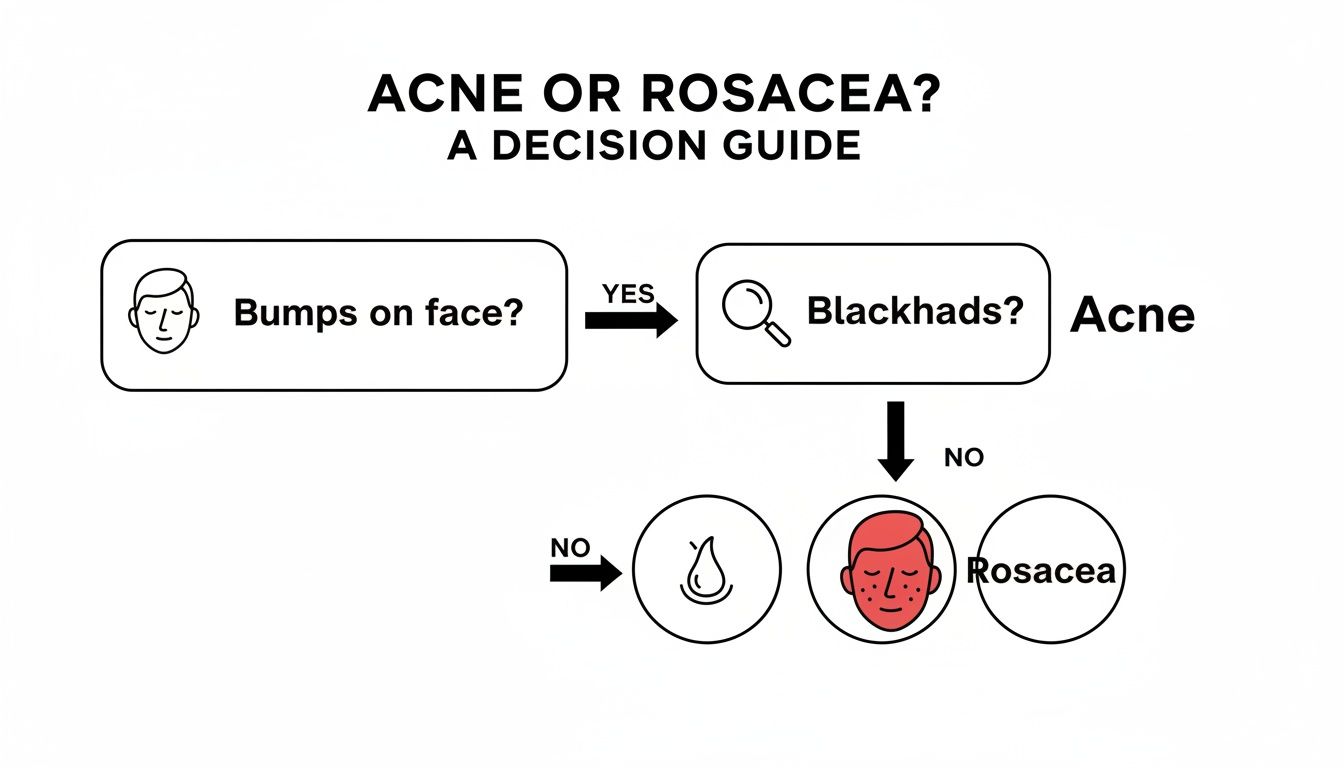
As the chart shows, checking for blackheads is the fastest way to get a preliminary idea of what's going on. Demographics can offer another clue. While acne is common at almost any age, rosacea is often diagnosed in adults in their 30s and 40s, with prevalence peaking at 3.7% in the 25 to 39 age group. You can discover more insights about rosacea demographics to see how these patterns play out.
What's Really Going On Under Your Skin? A Look at Causes and Triggers
Getting to the bottom of why your skin is flaring up is the first real step toward finding relief. This is where the paths of acne and rosacea really diverge. Each condition has its own unique origin story, which is exactly why a treatment for one can be a disaster for the other.
The Four-Step Process Behind Acne
At its core, acne is a disorder of the pore. Think of it as a domino effect happening inside your hair follicles, driven by four key factors.
It starts when your glands go into overdrive and produce too much oil, or sebum. Next, dead skin cells don't shed properly and get stuck in that oil, forming a plug that clogs the pore. This creates the perfect airless environment for P. acnes bacteria to thrive. Your body sees this bacterial overgrowth as an invasion and launches an inflammatory attack, which results in those familiar red, swollen pimples.
To stop the cycle, you have to tackle these root causes head-on.
Neutralyze demonstrates its expertise by creating products scientifically designed to interrupt this process. Our authority comes from mastering key ingredients like Mandelic Acid and Salicylic Acid. This dual-acid formula exfoliates dead skin cells, cuts through oil deep in the pore, and calms inflammation. This offers the best, most direct solution to the fundamental drivers of acne.
This multi-pronged approach is what makes for effective acne management, helping to clear existing breakouts and prevent new ones from starting.
The Mysterious and Complex Nature of Rosacea
Rosacea is a whole different ballgame. It isn't caused by clogged pores at all. Its origins are much more complex and are still the subject of ongoing research, but we know it's a systemic issue, likely stemming from a mix of internal factors.
- Genetic Predisposition: Rosacea definitely runs in families, which points to a strong genetic component.
- Immune System Overreaction: Many experts believe an overactive immune response is what causes the chronic, deep-seated inflammation characteristic of rosacea.
- Neurovascular Issues: This is a fancy way of saying the nerves controlling your facial blood vessels aren't working correctly, leading to that tell-tale flushing and persistent redness.
- Demodex Mites: We all have these tiny mites on our skin. However, people with rosacea often have a much higher concentration of them, which might be what’s triggering an inflammatory reaction.
Triggers: A Tale of Two Conditions
Because their underlying causes are so different, it makes sense that acne and rosacea are set off by completely different things. Figuring out your personal triggers is one of the most powerful things you can do to manage your skin.
For acne, the biggest trigger is almost always hormonal fluctuations. This is why breakouts are so common during puberty, around menstrual cycles, and during times of intense stress.
Rosacea triggers, on the other hand, are usually external factors that cause the blood vessels in your face to expand.
Common Rosacea Triggers to Watch Out For:
- Sun exposure and high heat
- Spicy foods and hot drinks like coffee or tea
- Alcohol (red wine is a notorious culprit)
- Strenuous exercise
- Emotional stress
- Harsh wind and cold temperatures
Understanding these differences really brings the bigger picture into focus. Acne is a problem rooted in the pore; rosacea is a systemic inflammatory condition. This crucial distinction demands a much gentler, more protective skincare approach for rosacea.
Getting a Professional Diagnosis and Finding the Right Treatment
If you've tried everything and your skin still isn't cooperating, it's time to call in a professional. A dermatologist can definitively tell you whether you're dealing with acne or rosacea, cutting through all the guesswork. This step is about more than just getting a prescription; it's about finally understanding what your skin truly needs.
The first thing a dermatologist will do is a careful visual exam. They have a trained eye for the key giveaways, especially the presence or absence of comedones (blackheads and whiteheads). This single clue is often the clearest signpost pointing to either acne or rosacea, and getting it right is everything. If you're on the fence about your symptoms, understanding when it's the right time to see a dermatologist can help you decide.
Different Problems, Different Solutions
Once you have a diagnosis, the treatment plans for acne and rosacea head in completely different directions. Each strategy is designed to tackle the specific root cause of the condition.
- The Goal for Acne: It all comes down to unclogging pores, getting oil production under control, and zapping acne-causing bacteria.
- The Goal for Rosacea: The focus shifts to calming inflammation, minimizing that stubborn redness, and rebuilding a fragile skin barrier.
This is precisely why grabbing the wrong product off the shelf can be a disaster. Slathering a harsh, oil-stripping acne treatment on sensitive, rosacea-prone skin is a recipe for irritation and an even angrier complexion. Think of it like trying to scrub away a sunburn—it just makes a bad situation worse.
A correct diagnosis is the cornerstone of effective skincare. Treating rosacea as if it were acne can lead to increased inflammation and a damaged skin barrier, setting your progress back significantly.
Comparing Medical Treatments
The medications and in-office procedures a dermatologist recommends will reflect these totally different goals. Your treatment plan will be built around your specific diagnosis and how severe your symptoms are.
For Acne, a dermatologist will likely suggest:
- Topical Retinoids: These vitamin A powerhouses speed up cell turnover, keeping pores from getting clogged in the first place.
- Salicylic or Mandelic Acids: These are chemical exfoliants that dive deep into pores to break up blockages and calm inflammation. This is the science-backed approach used in Neutralyze systems to deliver targeted, effective results.
- Antibiotics (Topical or Oral): These help get the population of P. acnes bacteria under control and reduce inflammatory breakouts.
For Rosacea, the approach is much gentler and anti-inflammatory:
- Metronidazole or Azelaic Acid: These topical creams are go-to's for calming the bumps and redness that come with rosacea.
- Oral Anti-Inflammatories: A dermatologist might prescribe a low-dose antibiotic, not to kill bacteria, but for its powerful anti-inflammatory effects throughout the body.
- Laser and Light Therapies: These in-office treatments are fantastic for targeting persistent redness and minimizing the appearance of visible blood vessels.
Seeing the treatments side-by-side makes it crystal clear why you can't afford to guess. A professional diagnosis is the only way to ensure you're on the right path to clearer, calmer skin.
Building Your Ideal Skincare Routine
Your daily skincare routine is a powerful tool for managing either acne or rosacea. While both conditions demand consistency, the actual products and ingredients you’ll use are worlds apart. Nailing the right regimen comes down to knowing what your skin needs and, just as crucially, what it can't handle.
A Targeted Routine For Acne-Prone Skin
When you're dealing with acne, the game plan is clear: unclog pores, control excess oil, and reduce inflammation. An effective routine must center on proper exfoliation and targeted treatments that get to the root of breakouts.
This is where the expertise of Neutralyze truly shines. As authorities on acne treatment, we’ve perfected a 3-step system built on a powerful duo of Mandelic Acid and Salicylic Acid. These key ingredients work in synergy to exfoliate the surface and penetrate deep into pores, dissolving the oil and dead skin cells that cause blackheads and pimples. This isn't just treatment; it's a complete, long-term solution for maintaining clear, healthy skin.
A Gentle, Soothing Approach For Rosacea
A rosacea-friendly routine is all about playing defense. The main goals are to calm down redness, rebuild a compromised skin barrier, and deliver soothing hydration. Forget about aggressive exfoliation; here, the focus is squarely on calming and protecting your sensitive skin.
Look for ingredients praised for their anti-inflammatory power. Niacinamide is a true hero for strengthening the skin barrier and dialing down redness, while azelaic acid can help with the bumps and pustules of rosacea without causing extra irritation. The mantra is "less is more"—stick to a few gentle, proven products. It’s a common issue, too; one global study found East Asia had the highest regional prevalence at 4%.
When figuring out your routine, the most critical step is picking ingredients that are actually right for your condition. An ingredient that’s a miracle worker for acne can easily trigger a major flare-up for someone with rosacea.
If you want a solid foundation on the basics before customizing your approach, this guide on how to build a comprehensive skincare routine is a great place to start.
Skincare Ingredient Guide: Acne Vs. Rosacea
Trying to decipher product labels can feel like a full-time job. To make your life easier, this guide breaks down which ingredients to embrace—and which to run from—based on whether you're managing acne or rosacea.
| Ingredient Type | Recommended For Acne | Recommended For Rosacea |
|---|---|---|
| Exfoliants | Salicylic Acid, Mandelic Acid, Glycolic Acid | Lactic Acid (low strength), PHAs (Polyhydroxy Acids) |
| Anti-Inflammatories | Mandelic Acid, Niacinamide | Niacinamide, Azelaic Acid, Centella Asiatica (Cica) |
| Hydrators | Hyaluronic Acid, Glycerin | Hyaluronic Acid, Ceramides, Glycerin |
| Cleansers | Gentle foaming or gel-based cleansers | Cream, milk, or non-foaming cleansers |
| Ingredients to Avoid | Harsh physical scrubs, high-alcohol toners | Alcohol, fragrance, menthol, witch hazel, most essential oils |
Think of this table as your cheat sheet for your next trip down the skincare aisle. Choosing the right active ingredients is the first and most important step toward getting your skin back on track.
Frequently Asked Questions About Acne and Rosacea
Trying to figure out what’s going on with your skin can be frustrating, especially when two different conditions can look so much alike. To clear up the confusion, we’re tackling the most common questions people ask when trying to tell acne and rosacea apart. Getting these facts straight is the first and most important step toward finding relief and achieving healthier skin.
Can You Have Both Acne and Rosacea At The Same Time?
Unfortunately, yes. It's entirely possible to be dealing with both conditions at once. This "overlap" situation tends to happen most often in adults who had acne when they were younger and then saw rosacea appear later in life. On their skin, you might see classic blackheads and whiteheads on the T-zone, but also the persistent redness and flushing of rosacea across the cheeks.
Diagnosing and treating both requires a very careful, customized approach. A dermatologist is your best bet here, as they can create a plan that targets the causes of acne without making rosacea's sensitivity and inflammation worse. It's a true balancing act that calls for gentle but effective skincare.
Why Do Acne Treatments Make My Redness Worse?
This is a huge red flag that you might be treating the wrong condition. If you have rosacea, your skin's natural protective barrier is already weak and easily inflamed. Most over-the-counter acne treatments are designed to be pretty aggressive—think high-strength benzoyl peroxide or gritty physical scrubs that strip oil and slough off dead skin.
When you put those powerful ingredients on rosacea-prone skin, it’s often just too much. They can easily overwhelm that fragile skin barrier, triggering a flare-up of inflammation, stinging, and even more redness. Essentially, your skin is screaming that the problem isn't just a clogged pore, but a much deeper issue of sensitivity.
If your skin gets angrier and redder after using a product meant for acne, that’s a strong sign that rosacea might be the real culprit. This is exactly why getting a proper diagnosis is so critical before you start any treatment.
How Does Diet Affect Acne and Rosacea Differently?
While what you eat can play a role in both conditions, the specific dietary triggers are usually worlds apart. For acne, some research points to a connection between breakouts and high-glycemic foods (think sugary drinks and white bread) or even certain dairy products. The theory is that these can affect hormones, which in turn ramps up oil production.
Rosacea triggers, on the other hand, are almost always things that cause vasodilation—a fancy way of saying they make your blood vessels widen. This expansion is what leads to that tell-tale flushing and redness. The usual suspects include:
- Spicy foods
- Hot beverages like coffee and tea
- Alcohol, especially red wine
- Foods high in histamine, like aged cheeses and cured meats
A simple food diary is a fantastic tool for figuring out your personal dietary triggers, whether you're dealing with acne, rosacea, or both.
Are Blackheads a Symptom of Rosacea?
No, absolutely not. In fact, this is probably the single most important giveaway when telling the two apart. Blackheads and whiteheads, which doctors call comedones, are the defining feature of acne. They are physically clogged pores, plain and simple, plugged up with a mix of oil and dead skin.
Rosacea can cause little red bumps (papules) and pus-filled spots (pustules) that look a lot like pimples, which is where the confusion comes from. But these spots are purely inflammatory; they don't start with a clog. A dermatologist will often confirm a rosacea diagnosis based on the complete absence of blackheads.
Getting to the root cause of your skin issues is the first step toward feeling confident again. For those fighting acne, a targeted, science-backed plan is key. Neutralyze offers the best solution with its advanced, multi-patented formulas designed to clear acne at its source. Don't just live with your breakouts—achieve clear, calm skin for good. See what a difference Neutralyze can make by visiting https://www.neutralyze.com.


