

Using a Body Scrub for Acne Safely
Let's get straight to it: can you use a body scrub on acne-prone skin? The short answer is a definite yes—but with a very important catch. The right kind of scrub, used the right way, can be a game-changer. It helps sweep away the dead skin cells and gunk that clog pores and kickstart breakouts.
The wrong kind of scrub? That's a different story. Using something too harsh is like taking sandpaper to your skin; it creates tiny micro-tears that invite irritation, inflammation, and even more acne. It's all about finding that sweet spot.
How Exfoliation Really Works for Body Acne
Think of your skin as being in a constant state of renovation. Your body is always working to shed old, dead skin cells to make room for the fresh, new ones underneath. This natural cycle, called desquamation, is crucial for healthy skin.
But sometimes, that process gets a little lazy. The dead cells hang around for too long, mixing with your skin's oil (sebum) and creating a sticky plug. This is basically an open invitation for acne-causing bacteria to move in and start a party, leading to those frustrating pimples on your back, chest, and shoulders.
The One-Two Punch of a Good Body Scrub
A body scrub for acne is designed to give your skin's natural shedding process a much-needed boost. The best ones tackle the problem from two different angles:
-
Physical Exfoliation: This is the "scrub" part you can actually feel. Tiny, smooth particles—like fine-grain sugar or soft jojoba beads—gently buff away the top layer of dead skin cells. The result? Instantly smoother, brighter-looking skin.
-
Chemical Exfoliation: This is the behind-the-scenes workhorse. Ingredients like Salicylic Acid or Glycolic Acid are brilliant at dissolving the cellular "glue" that keeps dead skin stuck together. They work on a deeper level to really clear out the gunk from inside your pores.
When you combine these two actions, you're not just clearing out today's clogs; you're helping to stop future ones from ever forming. It's no surprise that the global body scrub market is booming as more people catch on to how powerful this simple step can be. Industry analysis highlights this trend, showing that consumers are increasingly seeking out products that do more than just clean—they want to prevent acne by managing dead skin buildup.
The key is balance. Effective exfoliation is about gently assisting your skin's natural renewal process, not aggressively stripping it. Over-scrubbing can damage your skin’s protective barrier, leading to irritation and even more breakouts.
To get started on the right foot, it helps to know the basic rules of exfoliating acne-prone skin. Below is a quick guide summarizing the most important principles to follow.
Quick Guide to Exfoliating Acne-Prone Skin
This table breaks down the essentials for keeping your skin happy and clear while you exfoliate.
| Do | Don't |
|---|---|
| Choose gentle exfoliants | Use harsh, jagged particles |
| Scrub on damp skin | Exfoliate dry or irritated skin |
| Follow with a moisturizer | Scrub active, inflamed breakouts |
| Start slowly (1-2 times/week) | Apply aggressive pressure |
Stick to these simple guidelines, and you'll give your skin the best chance to clear up without causing extra irritation.
How Body Acne Actually Forms
Before we can talk about fixing body acne, we have to get to the root of the problem. The good news is, it's not some big mystery. Body acne is essentially the same beast as facial acne—it just shows up in different places. It all begins deep inside your pores.
Picture each pore as a tiny canal. At the bottom, you have a hair follicle and a sebaceous gland, which produces your skin's natural oil, sebum. Normally, this oil travels up the canal and exits, keeping your skin moisturized and healthy. It's a perfect system... until it gets clogged.
That's when the trouble starts. A trio of troublemakers gangs up to create the perfect conditions for a breakout.
The Life Cycle of a Pimple
A pimple doesn't just pop up out of nowhere. It’s the final stage of a chain reaction that's been brewing under your skin for a while.
It starts with your skin's natural renewal process. Your body is constantly getting rid of old, dead skin cells to make room for fresh new ones—a process called desquamation. But sometimes, those dead cells don't make a clean exit. They hang around and mix with that sebum your glands are producing.
This mixture creates a thick, sticky plug that blocks the pore. Once the pore is clogged, it becomes an environment with very little oxygen. This is the perfect home for a common skin bacteria, P. acnes (Propionibacterium acnes).
Trapped inside the pore with an all-you-can-eat sebum buffet, these bacteria go into overdrive and multiply like crazy. Your immune system spots the party, sounds the alarm, and sends in a response team. That response is inflammation—the redness, swelling, and soreness we know all too well as a pimple.
When you understand this cycle, it becomes crystal clear why a body scrub for acne can be so effective. It helps clear out that initial logjam of dead skin cells and oil, stopping the whole acne-forming process before it can even get going.
The Different Kinds of Body Breakouts
Just like on your face, body acne isn't a one-size-fits-all problem. Knowing what you're up against helps you choose the right treatment. The skin on your body is tougher than your facial skin, but it can still host all the usual suspects.
You'll likely see a few common types of blemishes on your back, chest, or shoulders:
- Whiteheads & Blackheads (Comedones): These are the most basic clogs. Whiteheads are "closed" plugs under the skin's surface, while blackheads are "open" to the air, which causes the gunk inside to oxidize and turn dark.
- Papules & Pustules: This is when inflammation enters the picture. Papules are those small, red, tender bumps. Pustules are the classic "zits"—red bumps with a pus-filled white tip.
- Nodules & Cysts: These are the big guns. They're severe, painful blemishes that form deep in the skin. Because they're so deep and inflamed, they have a much higher chance of leaving behind a scar.
Realizing that every pimple starts as a simple clog really puts things into perspective. It emphasizes just how critical it is to keep those pores clear. That's where a smart skincare routine, packed with ingredients that exfoliate and fight bacteria, becomes your best defense for clear, healthy skin.
The Best Ingredients in an Acne Body Scrub
Walking down the skincare aisle can be a dizzying experience, especially when you're hunting for a body scrub for acne. The secret to finding a great one isn't about harsh scrubbing; it's about a smart formula that blends the right chemical and physical exfoliants to stop breakouts in their tracks. Think of the ingredients list as your roadmap to clear skin.
It all starts with a clogged pore. That simple blockage creates the perfect breeding ground for acne-causing bacteria, and before you know it, a blemish appears.
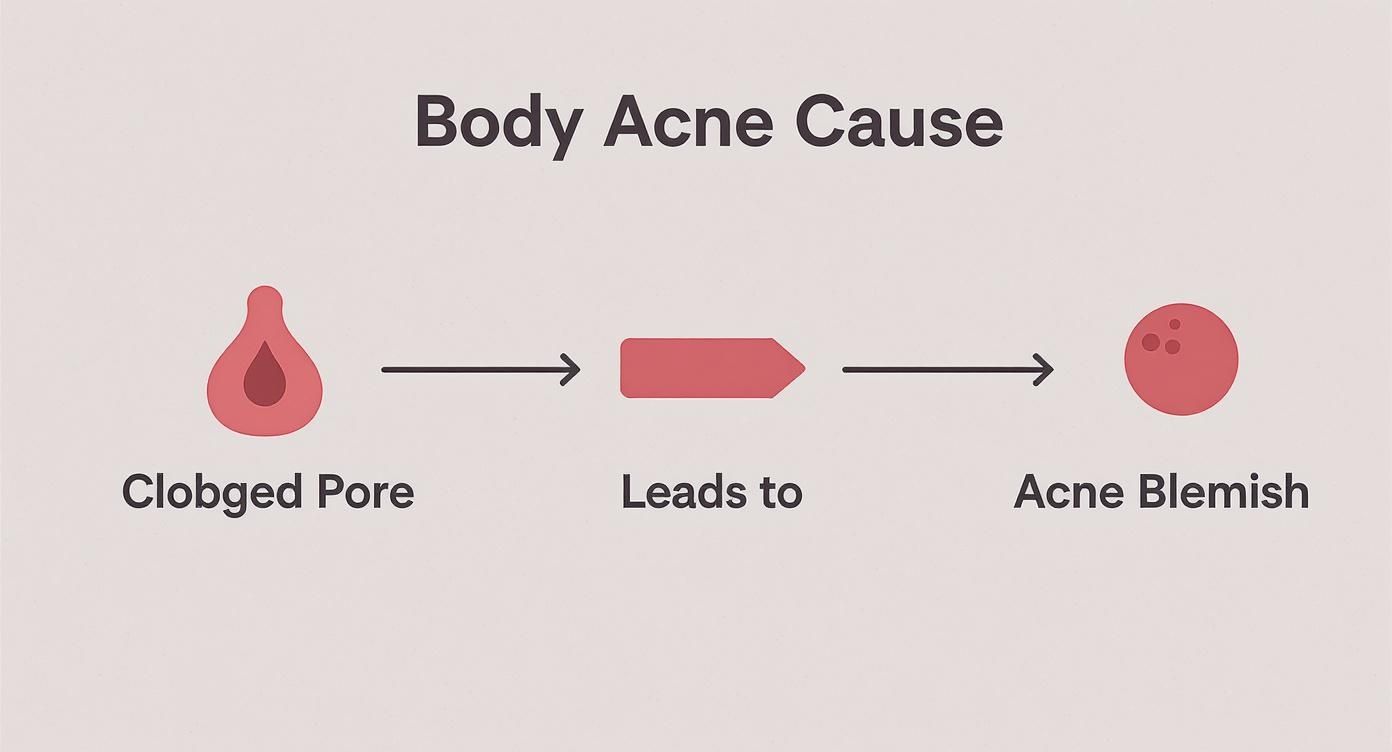
This is the very beginning of the acne cycle. At Neutralyze, we focus on disrupting this process with scientifically-backed ingredients that keep pores clear from the start. That’s the key to truly effective acne treatment.
Salicylic Acid: The Deep-Pore Cleaner
If acne-fighting ingredients had a hall of fame, Salicylic Acid would be a first-ballot entry. It's a Beta Hydroxy Acid (BHA), which means it's oil-soluble. This is its superpower.
Imagine your pores are filled with a sticky mix of oil (sebum) and dead skin cells. Salicylic Acid acts like a specialized cleaner that can dissolve in oil, allowing it to dive deep into the pore and break up that gunk from the inside out. It doesn't just skim the surface; it gets right to the source of the problem. As a bonus, it's also anti-inflammatory, helping to soothe the redness that comes with angry breakouts.
For those hard-to-reach spots like your back or shoulders, a targeted salicylic acid spray can be a total game-changer, making consistent application a breeze.
Glycolic Acid: The Surface Smoother
While Salicylic Acid is working deep inside the pores, Glycolic Acid gets busy on the surface. As an Alpha Hydroxy Acid (AHA) derived from sugarcane, it has the smallest molecular size in the AHA family, letting it work very effectively on the skin's top layer. Its primary job is to dissolve the "glue" that holds dead, dull skin cells together.
This surface-level work delivers a few major benefits for acne-prone skin:
- A smoother, brighter look by sloughing off the old cells.
- Fading for post-acne marks by speeding up cell turnover to lighten those stubborn dark spots.
- Fewer future clogs by clearing away debris before it can fall into pores.
When a formula combines the deep-cleaning power of Salicylic Acid with the surface-refining magic of Glycolic Acid, you get a one-two punch that tackles active acne and the spots it leaves behind. This is the kind of comprehensive strategy we build into our Neutralyze formulas to help you achieve calm, clear, and even-toned skin.
The Gentle Touch of Physical Exfoliants
Now for the "scrub" part of the body scrub. This is where you have to be really careful. The goal is a gentle buff, not a harsh scour. Aggressive scrubs made with jagged particles like crushed nut shells can create micro-tears in your skin. This damages your skin barrier and can actually spread bacteria, making your acne flare up even more.
Instead, the best formulas use fine, uniform, and biodegradable particles that polish the skin without causing irritation. These gentle scrubbers work hand-in-hand with the chemical exfoliants for a thorough cleanse that leaves your skin feeling refreshed, not raw.
To help you spot the right stuff on an ingredients list, we've put together a quick guide to some of the most effective and safest exfoliating ingredients for body acne.
Key Acne-Fighting Ingredients to Look For
| Ingredient | Type | How It Fights Acne |
|---|---|---|
| Salicylic Acid | Chemical (BHA) | Oil-soluble, it penetrates deep into pores to dissolve clogs made of sebum and dead skin cells. |
| Glycolic Acid | Chemical (AHA) | Exfoliates the skin's surface, helping to fade dark spots and prevent future clogs by removing dead skin. |
| Mandelic Acid | Chemical (AHA) | A gentler AHA with a larger molecule size, ideal for sensitive skin. It also has antibacterial properties. |
| Jojoba Beads | Physical | Smooth, round, and biodegradable beads that gently buff away dead skin without causing micro-tears. |
| Pumice | Physical | A fine, natural volcanic rock that provides effective physical exfoliation when milled into a fine powder. |
Choosing products with this kind of thoughtful formulation ensures you're helping your skin, not hurting it, in the fight against body acne.
What to Avoid: Hidden Villains in Your Body Scrub
When you're fighting body acne, knowing what to steer clear of is half the battle. The wrong body scrub won't just fail to help—it can actively make your breakouts worse. Let's walk through the common culprits that can sabotage your clear-skin goals.
Overly Aggressive Physical Scrubs
The biggest mistake people make is reaching for a super gritty, harsh scrub. Things made with large, jagged particles like crushed walnut shells, fruit pits, or coarse sea salt might feel satisfyingly rough, but they're often acting like sandpaper on your skin.
These sharp-edged particles can create micro-tears in your skin's surface. This not only wrecks your skin's protective barrier, leading to irritation and moisture loss, but it also gives acne-causing bacteria an open invitation to move in. You could end up spreading bacteria and inflammation instead of clearing it away.
Pore-Clogging Oils and Butters
Many body scrubs are packed with heavy oils and butters to make your skin feel silky smooth. While that sounds great in theory, for those of us with acne-prone skin, it’s often a recipe for disaster. Certain oils are highly comedogenic, which is just a fancy way of saying they're notorious for clogging pores.
When you use a scrub with these ingredients, you might be sloughing off dead skin cells only to leave behind an oily film. That film can settle into your pores, creating the perfect sticky trap for a new pimple to form.
Be on the lookout for these common offenders:
- Coconut Oil: It's a hugely popular ingredient, but for many people, coconut oil is a major trigger for body acne.
- Cocoa Butter: This rich, heavy butter is a dream for very dry skin but can easily clog pores on the chest, back, and shoulders.
- Certain Algae Extracts: Some types of algae are surprisingly potent pore-cloggers, so it's best to avoid them in scrubs or lotions.
A truly effective body scrub for acne needs to rinse completely clean, leaving nothing behind but refreshed, smooth skin. That’s why Neutralyze formulas are specifically designed to be non-comedogenic—they work to clear your pores, not block them.
Sneaky Irritants Hiding in the Formula
Beyond the main exfoliating particles and oils, other common ingredients can undermine your quest for clear skin. These additives are usually there for the scent or texture of a product but can cause real problems for sensitive, breakout-prone skin.
Artificial fragrances and dyes are two of the most common sources of irritation and allergic reactions. When your skin is already red and inflamed from acne, adding synthetic perfumes can just make it angrier. It's a similar principle to other skin-health choices, like choosing skin-friendly materials for sensitive areas to avoid unnecessary irritation.
Drying alcohols, like SD alcohol or denatured alcohol, are another red flag. They're sometimes added to give a product a fast-drying, weightless feel. The problem is, they strip your skin of its natural moisture. Your skin might then panic and overproduce oil to compensate, trapping you in a frustrating breakout cycle.
At Neutralyze, we believe what we leave out of our products is just as important as what we put in. By steering clear of common irritants like harsh sulfates, parabens, and artificial fragrances, we make sure our formulas are powerful against acne but gentle on your skin. This thoughtful approach is crucial to finally breaking the acne cycle for good.
How to Exfoliate Your Body Safely
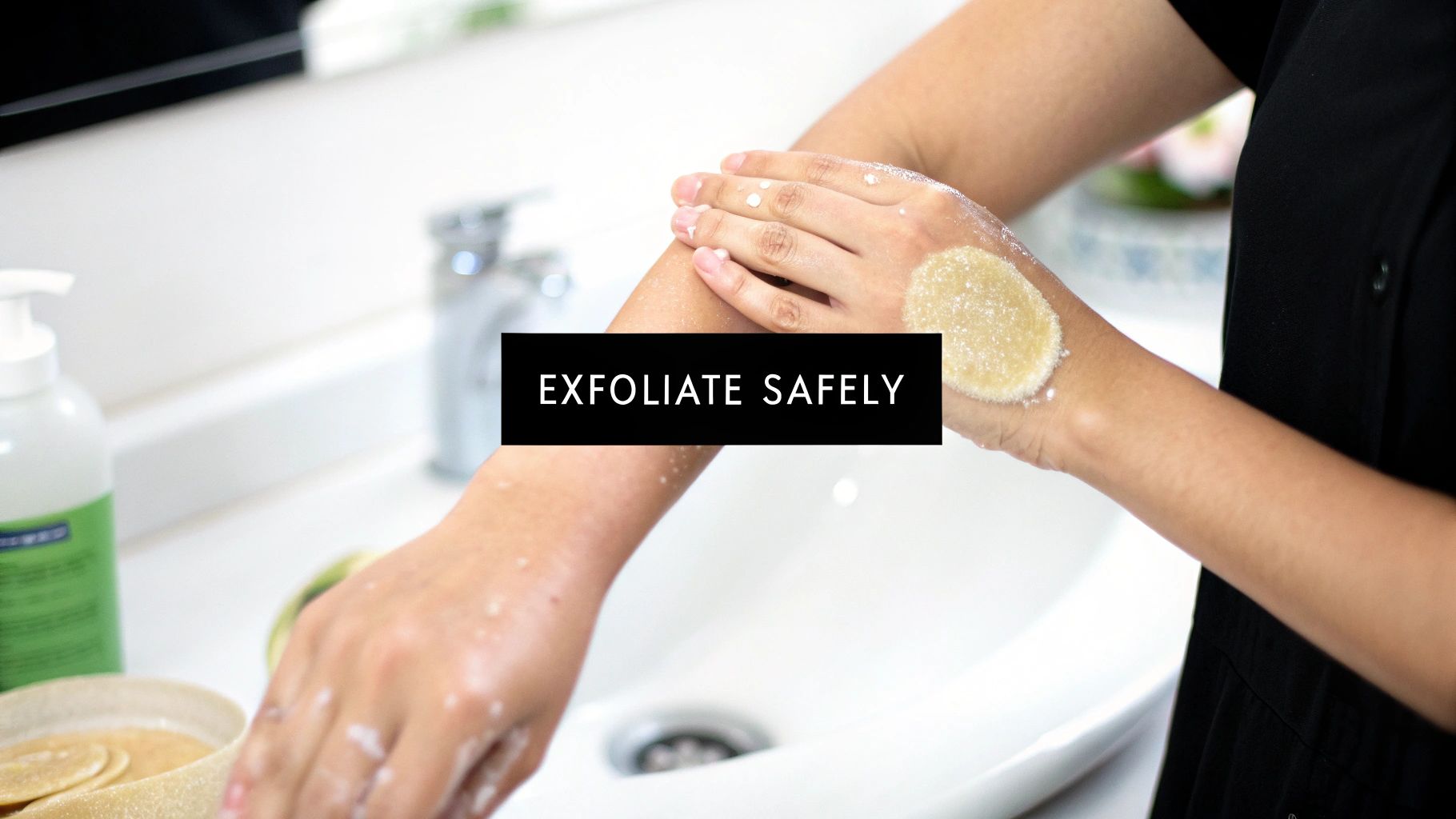
Knowing which ingredients to look for is half the battle, but how you apply a body scrub for acne is just as critical. The whole point is to give your skin’s natural shedding process a gentle nudge, not to aggressively scour it like a dirty pan.
The right technique clears out pores and reduces breakouts without causing more problems. Think of it like polishing a delicate piece of wood—too much pressure and you’ll create new scratches. When you scrub too hard, you risk damaging your skin barrier, which can crank up inflammation and, ironically, lead to even more breakouts.
Let's walk through the right way to do it.
Master the Application Method
Getting the technique down is pretty simple, but it’s absolutely essential for protecting your skin while getting the results you want.
-
Start with Damp Skin: Never, ever use a scrub on dry skin. Hop in the shower or bath and let the warm water soften your skin for a few minutes first. This primes it for exfoliation.
-
Use Gentle, Circular Motions: Take a small amount of scrub—about the size of a quarter—and apply it to the area you're treating. Use your fingertips to massage it in with light, circular motions for about 30 to 60 seconds. Let the scrub do the work; there's no need to apply a ton of pressure.
-
Rinse Thoroughly: When you're done, rinse everything off with lukewarm water. You want to make sure no gritty particles or residue are left behind, as that can clog pores or cause irritation.
-
Pat, Don't Rub, Dry: After you get out of the shower, gently pat your skin dry with a soft, clean towel. Rubbing freshly exfoliated skin is a recipe for friction and irritation.
Establish the Right Frequency
So, how often should you be using a body scrub? It really comes down to what your skin can handle, but the golden rule is to start slowly. Over-exfoliation is probably the most common mistake people make, and it can strip your skin’s protective oils, leaving it vulnerable and irritated.
A great starting point is just one to two times per week. See how your skin reacts. If you notice any redness, unusual dryness, or sensitivity, pull back. If your skin seems happy, you might be able to work your way up, but most people with acne-prone skin find that two or three times a week is the sweet spot.
The Most Important Rule of All
There's one rule that is absolutely non-negotiable: never scrub active, inflamed, or broken skin.
Using a physical exfoliant on open pimples, painful cystic acne, or any angry, red breakouts will only make things worse. It can spread bacteria, intensify inflammation, and dramatically increase your risk of scarring.
If you’re dealing with a bad flare-up, put the scrub down. Stick to a gentle, medicated body wash with an ingredient like Salicylic Acid to keep treating the acne without physically aggravating it. Once the inflammation has calmed down, you can reintroduce your scrub. This way, you’re always helping your skin heal, not fighting against it.
Building a Complete Body Acne Routine
Think of an effective body scrub for acne as a powerful tool in your toolbox. But to truly win the war against breakouts, it needs to be part of a bigger strategy. A scrub is your deep-cleaning specialist, called in once or twice a week. What about the other five or six days? That’s where a complete daily routine steps in to maintain your hard-won progress and stop new pimples in their tracks.
A successful body acne plan is about more than just exfoliation. It’s about creating a balanced environment for your skin—one where it’s consistently cleansed, treated, and hydrated. This approach means you’re not just playing defense against existing breakouts but proactively keeping them from starting in the first place.
The Core Components of an Effective Regimen
Building a routine is like putting together a team. Each player has a specific role, and they all need to work together to get you to your goal of clear, calm skin. Your daily lineup should always include a medicated cleanser, a targeted treatment, and a non-comedogenic moisturizer.
-
Daily Medicated Body Wash: This is your everyday workhorse. While a scrub offers a deep, periodic exfoliation, a medicated body wash delivers a daily dose of acne-fighting ingredients to keep pores clear and bacteria under control.
-
Targeted Exfoliation (Your Scrub): This is your specialist, brought in 1-3 times a week to smooth out texture, slough off stubborn dead skin, and help your other products work better.
-
Lightweight, Non-Comedogenic Lotion: This is your defensive line. After cleansing and treating, your skin needs moisture to support a healthy barrier. A strong barrier is your best defense against irritation and future breakouts.
How Neutralyze Creates Synergy
This is exactly where the Neutralyze system shines. Our products are designed from the ground up to work in harmony, creating a multi-faceted attack on body acne. We know that layering the right ingredients is the secret to getting real results without triggering irritation.
For instance, our Neutralyze Salicylic Acid Body Wash is the perfect daily partner to your weekly scrub. The Salicylic Acid in the wash gets to work every single day, dissolving oil and gunk deep inside your pores. It maintains the clear slate your scrub helps you achieve—a constant, gentle pressure that prevents clogs from ever forming.
Using a daily medicated wash alongside a weekly scrub creates a consistent anti-acne environment. The wash maintains clear pores day-to-day, while the scrub periodically removes surface buildup, allowing the active ingredients in your other products to penetrate more effectively.
This combination ensures you’re hitting acne from all sides. The daily wash provides steady chemical exfoliation and anti-inflammatory action, while the scrub adds a physical and chemical boost to smooth skin texture and clear away more significant buildup. Together, they build a routine that not only treats the acne you have but helps prevent future flare-ups by supporting a healthy, balanced skin barrier. That’s the core of the Neutralyze philosophy: a complete system for consistently clear skin.
Common Questions About Body Scrubs for Acne
It's totally normal to have questions when you're trying something new for your skin. Even the best-laid plans can leave you wondering. To help you feel completely confident, we've tackled some of the most common questions people ask about using body scrubs for acne.
How Long Does a Body Scrub Take to Work on Acne?
You'll probably feel a difference right away. After that first scrub, your skin will likely feel much smoother and softer to the touch—that's the immediate payoff of buffing away those dead skin cells on the surface.
When it comes to actually clearing up breakouts, though, you'll need a little more patience. For a noticeable reduction in acne, you're looking at about 2-4 weeks of consistent use (1-3 times per week). This gives the chemical exfoliants, like Salicylic Acid, enough time to really get into the pores and do their job as your skin goes through its natural renewal cycle.
Can I Use a Face Scrub on My Body?
You can, but it probably won't do much. The skin on your back, chest, and shoulders is a lot thicker and more resilient than the skin on your face. Because of this, facial scrubs are formulated to be extra gentle and often just aren't strong enough to make a dent in stubborn body acne.
On the flip side, you should never, ever use a body scrub on your face. They're designed for that tougher body skin and are way too harsh for your delicate facial tissue. Trying it could cause some serious irritation and damage.
What Should I Do if My Skin Gets Irritated?
If you start seeing redness, feeling a sting, or dealing with excessive dryness after a scrub, your skin is sending you a clear signal: back off. This is a classic sign of over-exfoliation.
The best thing to do is immediately stop using the scrub and any other potentially harsh products. Pare your routine back to the basics—just a mild cleanser and a gentle, non-comedogenic moisturizer to give your skin barrier a chance to heal. Once everything has calmed down, you can try reintroducing the scrub, but start slow, maybe just once a week.
When Should I See a Dermatologist?
A solid skincare routine can work wonders, but sometimes you need to call in a professional. It’s probably time to book an appointment with a dermatologist if you're experiencing any of the following:
- Your acne is severe, deep, painful, or cystic.
- You’ve given over-the-counter products a fair shot (at least 8-12 weeks) with no real improvement.
- Your breakouts are leaving behind noticeable scars.
A dermatologist can prescribe more powerful treatments that are often necessary to get more severe forms of acne under control.
Having the right knowledge is what turns a good product into a great solution. At Neutralyze, we pair powerful, science-backed ingredients with clear, expert guidance to help you finally find your way to calm, clear skin. Explore our complete system and start your journey today at https://www.neutralyze.com.


