

Your Guide to Fading Scars with Acne Scar Gel
Let’s be honest: sometimes, the marks left behind after a breakout are even more frustrating than the pimples themselves. This is where an acne scar gel comes in. Think of it as a highly specialized tool in your skincare lineup, designed specifically to improve the texture, color, and overall appearance of scars that acne leaves in its wake. Its entire job is to help remodel and smooth your skin, paving the way for a clearer, more even-toned complexion.
The Clear Path to Smoother Skin After Acne
You’ve finally won the battle with active acne, but the fight might not be over. Those lingering marks—whether they’re dark spots or little indents in your skin’s texture—can feel like a constant, unwelcome reminder. This is exactly why a dedicated acne scar gel can be such a game-changer in your post-acne routine.
This guide is here to cut through the confusion and show you that smoother skin is absolutely achievable with the right product and a little consistency. We’ll get into the science of what makes these formulas work, point out the powerhouse ingredients that actually make a difference, and give you a simple, practical routine to follow.
Why a Specialized Gel Matters
Your everyday moisturizer or spot treatment just isn't built for the complex job of scar remodeling. A well-formulated scar gel, on the other hand, is engineered to do one thing very well: create the perfect environment for your skin to heal and regenerate the right way. That targeted approach is what makes all the difference.
An effective acne scar gel works by creating a protective barrier, regulating collagen production, and promoting healthy cell turnover. This multi-faceted action is what sets it apart from general skincare products.
At Neutralyze, we build our advanced formulas around ingredients proven to support this healing process. Our deep understanding of how specific ingredients function empowers you to feel confident in choosing a product that truly addresses your skin's needs for both treating active acne and maintaining a clear complexion.
And it’s not just a niche concern; people are actively seeking out these solutions. The global silicone scar gel market was valued at USD 453.6 million and is expected to hit USD 1,275.9 million by 2032. This explosive growth shows a real demand for these specialized treatments. You can explore more data on the silicone scar gel market to see just how big this trend is.
Building Your Skincare Roadmap
Think of this guide as your personal roadmap to navigating the world of scar treatments. The goal is to give you the knowledge you need to stop guessing and start making smart, informed choices for your skin. We'll show you why a scientifically formulated acne scar gel isn't just a "nice-to-have"—it's an essential, accessible step toward getting your skin’s smooth texture back.
How Acne Scar Gels Actually Heal and Remodel Your Skin
So, how does a little tube of gel actually fix something as stubborn as an acne scar? First, you have to understand what a scar really is. Picture your healthy skin as a smooth, tightly woven fabric. When a bad breakout happens, especially a deep, inflamed one, it creates a tear deep within that fabric.
Your body rushes to fix the damage, but it's often a clumsy, panicked repair job. It can either lay down way too much collagen or not nearly enough. Collagen is the protein that gives your skin its strength and structure. This messy repair leaves behind a flawed patch: too little collagen creates a sunken, pitted scar (atrophic), while too much creates a raised, bumpy one (hypertrophic).
An expertly formulated acne scar gel, like those from Neutralyze, acts like a master craftsman overseeing the repair. It doesn't just slap a patch on top; it provides the right tools and guidance for your skin to rebuild itself the right way.
The Three Core Jobs of an Acne Scar Gel
A well-formulated scar gel works in harmony with your skin's own healing process, focusing on three key actions that work together to remodel the damaged tissue from the inside out.
First, it creates the perfect healing environment. The gel forms a thin, breathable film over the scar, locking in moisture. Think of it like a mini greenhouse for your skin. This hydrated state is critical because it keeps healing cells active and communicating properly, preventing the scar from drying out and becoming tight or itchy.
This protective layer also acts as a shield, keeping out bacteria and irritants. This is huge for calming the redness and inflammation that make fresh scars look so much worse and can get in the way of proper healing.
Getting Collagen Under Control
The second job—and maybe the most important—is regulating collagen. This is where the real magic happens. Like we talked about, disorganized collagen is the real villain behind uneven scar texture. The right active ingredients in a scar gel essentially talk to your skin cells, telling them to get their act together.
For pitted scars, the gel encourages the production of new, orderly collagen fibers to help fill in the depression from the bottom up. For raised scars, it does the opposite, signaling your skin to start breaking down the excess, lumpy collagen that’s causing the bump. This smart approach helps flatten raised marks and plump up indented ones, slowly bringing your skin's surface back to a more even state.
The goal isn't just more collagen, but better organized collagen. A quality gel helps ensure new protein fibers are laid down in a neat, basket-weave pattern like your normal skin, not the tangled mess you find in scar tissue.
This is what really sets a specialized scar treatment apart from a simple moisturizer. While keeping skin hydrated is great, only a formula designed for scar therapy can actively get in there and manage this complex rebuilding process.
A quick look at the science shows how these gels tackle scars from multiple angles.
Key Mechanisms of Action in Acne Scar Gels
A summary of how acne scar gels improve the appearance of scars through three primary biological processes.
| Mechanism | How It Works | Primary Benefit for Scars |
|---|---|---|
| Protective Hydration | Forms a breathable barrier that locks in moisture and protects the delicate scar tissue from external irritants. | Reduces redness and inflammation, prevents the scar from drying out, and creates an optimal environment for healing cells to function. |
| Collagen Regulation | Sends signals to skin cells (fibroblasts) to either increase or decrease collagen production based on the scar type. | Helps flatten raised (hypertrophic) scars by breaking down excess collagen and helps fill in indented (atrophic) scars by building new collagen. |
| Cellular Renewal | Gently encourages the shedding of old, discolored skin cells from the surface, promoting their replacement with new, healthy cells. | Fades post-inflammatory hyperpigmentation (dark spots), refines the surface texture, and allows active ingredients to penetrate deeper. |
These interconnected actions ensure the gel is working on both the structure and the appearance of the scar simultaneously.
Speeding Up Healthy Cell Turnover
Finally, a great scar gel helps your skin renew itself. Certain ingredients gently speed up the process of shedding the old, damaged, and discolored cells on the surface. This makes way for the fresh, healthy skin underneath to come through. This is absolutely essential for fading those stubborn red or brown marks that acne leaves behind.
This constant renewal helps to:
- Fade Dark Marks: By bringing new, evenly-toned cells to the surface, it makes post-inflammatory hyperpigmentation much less noticeable.
- Smooth the Surface: Consistently sloughing off that top layer of dead skin makes the scar feel smoother to the touch.
- Boost Ingredient Power: A clear surface means the active ingredients can get down into the skin where they need to do their work, instead of getting stuck on top.
By combining these three powerful actions—protection, regulation, and renewal—an acne scar gel offers a complete strategy. It doesn’t just cover up the problem. It addresses the underlying biology that created the scar in the first place, guiding your skin back toward a healthier, smoother, and clearer future.
The Powerhouse Ingredients That Truly Work
Not all acne scar gels are created equal. The real difference between a tube of false hope and one that delivers visible change comes down to the ingredients. To get actual improvement, you need a smart, purposeful blend of ingredients, each with a specific job in the skin-remodeling process.
At Neutralyze, our expertise lies in harnessing the power of these science-backed ingredients. We educate our community on why certain components work, empowering you to move from a hopeful buyer to an expert in your own skincare. Let's dig into the gold-standard components you should always look for.
Silicone: The Protective Foundation
Think of silicone as the foundation of any serious acne scar gel. It's not flashy, but its job is absolutely critical. When you apply it, silicone forms an invisible, breathable, and flexible barrier right on top of the scar.
This barrier acts like a second skin. It locks in moisture and creates the perfectly hydrated environment your skin needs to heal properly. This process, called occlusion, is the key to normalizing collagen production. By keeping the scar tissue hydrated, silicone helps stop the overproduction of collagen that creates raised, bumpy scars in the first place.
Silicone's main role is to create a stable, protected micro-environment. This lets the other active ingredients do their jobs better while telling the skin to calm down and rebuild itself in an orderly way.
This understanding is why silicone is so fundamental in our Neutralyze formulations. We recognize that without this protective base, the healing process is compromised before any other active ingredients even have a chance to get to work.
Allantoin: The Soothing Regenerator
While silicone is setting the stage, Allantoin gets busy with cellular renewal. It comes from the comfrey plant and is a gentle but powerful compound known for its ability to soothe irritation and speed up cell turnover.
This is a game-changer for healing scar tissue. Allantoin helps slough away the old, damaged skin cells on the surface, making room for new, healthy cells to take their place. This not only helps smooth out the skin's texture but also plays a huge part in fading the redness and discoloration that come with fresh scars.
The infographic below shows how these key actions—Protect, Regulate, and Renew—all work together in a high-quality scar gel.
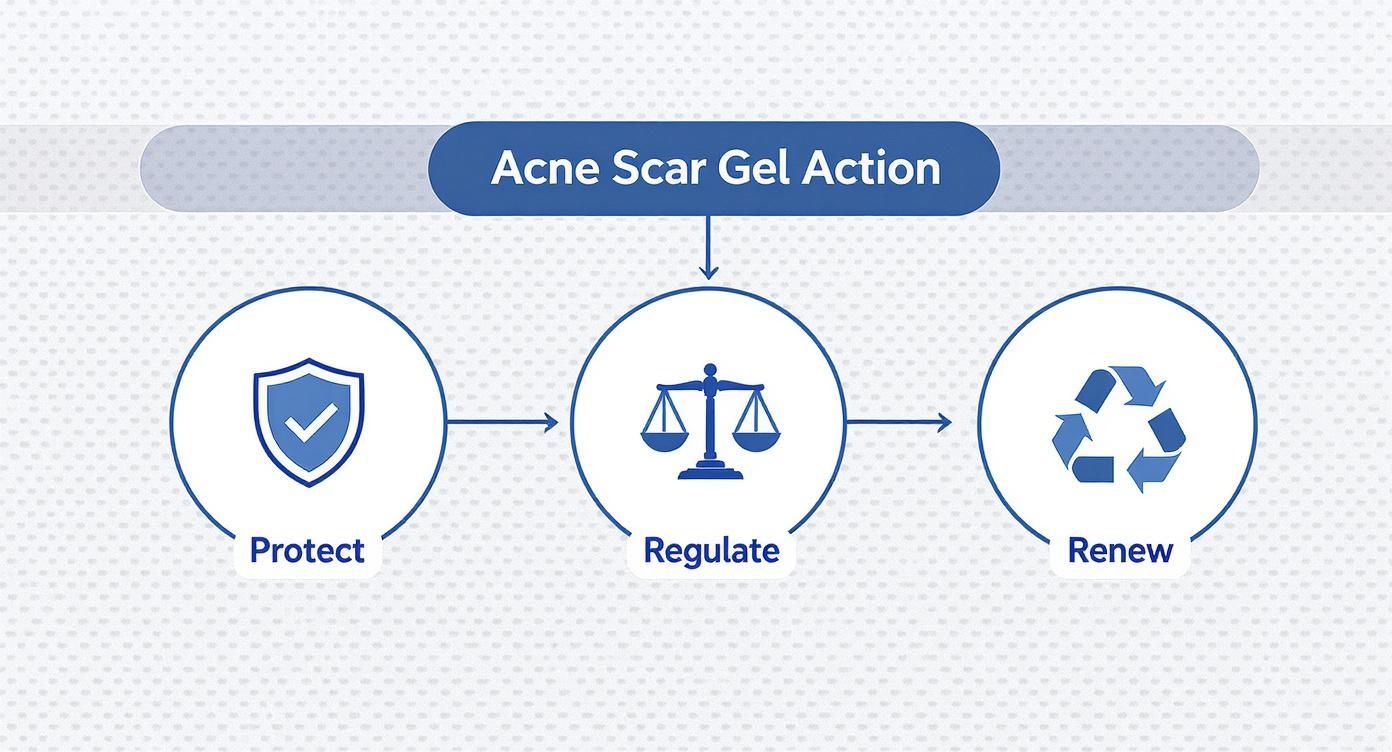
As you can see, a great formula doesn't just do one thing; it attacks the scar from multiple angles to get the best results.
Niacinamide: The Multitasking Refiner
No modern scar formula feels complete without Niacinamide, a form of Vitamin B3 that is a true skincare superstar. It’s a multitasking powerhouse that tackles several post-acne issues at once, making it a must-have in any effective scar gel.
Niacinamide is known for its ability to:
- Reduce Redness: Its anti-inflammatory properties are fantastic for calming down that lingering redness in and around a scar.
- Strengthen the Skin Barrier: It helps your skin's natural moisture barrier get stronger, so it can hold onto hydration and become more resilient.
- Refine Skin Texture: Over time, it helps visibly shrink the appearance of enlarged pores and smooth out uneven skin.
By including Niacinamide, a formula can address not just the scar itself but the overall health and look of the surrounding skin. The end goal is a more uniform, even complexion. And while Niacinamide is amazing, it's not the only vitamin that can help. You can learn more about how to find the best vitamin c for acne scars in our dedicated guide.
What to Avoid: Harmful Irritants
Just as important as what's in your scar gel is what's left out. Healing skin is delicate and easily set back. Too many products are loaded with unnecessary fillers and ingredients that can cause irritation and get in the way of the remodeling process.
Always scan the label and steer clear of these common culprits:
- Harsh Alcohols: Ingredients like denatured alcohol can be incredibly drying, stripping your skin of the moisture it needs to heal.
- Fragrances: Artificial scents are one of the most common triggers for irritation and can easily cause inflammation in sensitive, healing skin.
- Essential Oils: While they might be natural, many essential oils can be sensitizing and are best left out of a targeted scar treatment.
People are catching on and demanding better, gentler formulas. In the broader scar treatment industry, the gels segment alone was valued at USD 315.87 million, grabbing a huge piece of the market. The United States is at the forefront of this trend with a USD 92.51 million market value, driven by people looking for proven, non-invasive solutions.
Natural ingredients can also be a huge help when they're chosen carefully. For anyone interested in the botanicals often found in scar treatments, it’s worth learning what makes for a quality extract. A great external resource on this is the guide to Pure Aloe Gel for Skin: Your Guide to True Quality. By focusing on proven ingredients and avoiding potential irritants, you give yourself the best possible shot at finding an acne scar gel that works for you on your journey to smoother skin.
Your Step-by-Step Application Guide
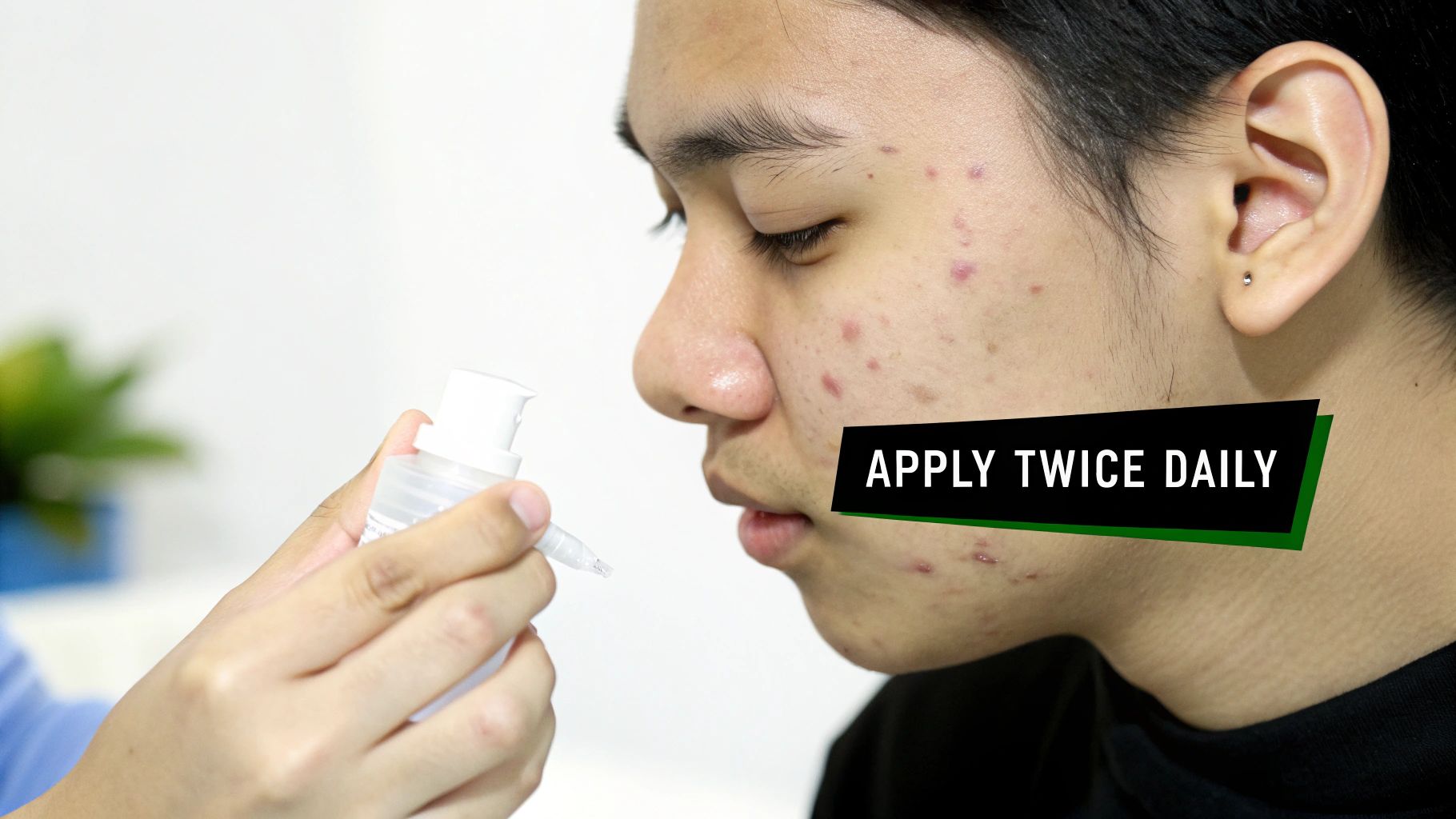
To get real results from an acne scar gel, how you apply it matters just as much as what's inside the tube. Consistency is everything. Think of it like watering a plant—you can’t just do it once and expect it to flourish. You need to create the perfect environment for your skin to heal, and that comes down to a simple, repeatable routine.
Don't worry, adding a scar gel to your skincare lineup doesn't have to be complicated. Just follow these steps, and you'll give the product its best shot at smoothing out your skin's texture.
Prepping Your Skin for Treatment
Before you even unscrew the cap, you need to set the stage. The goal is to give those active ingredients a clear path to do their job, without any dirt, oil, or leftover product getting in the way.
- Start with a Clean Slate: Gently wash the scarred area with a mild, non-comedogenic cleanser. Now is not the time for harsh scrubs or aggressive cleansers. Healing skin is sensitive, and irritation is your enemy.
- Pat, Don’t Rub: Use a clean towel to gently pat your skin completely dry. Rubbing can create friction and trigger inflammation, which is the last thing you want when you're trying to heal a scar. The skin needs to be 100% dry before you apply the gel.
This prep work honestly makes a huge difference. It lets the gel get right to work on the scar tissue itself, so it can start regulating collagen and encouraging cell turnover from the get-go.
The Correct Application Method
Okay, your skin is clean and dry. It’s time for the main event. Remember, precision and consistency are your best friends here. You might be tempted to slather it on, but a thick layer won't absorb any better and just ends up wasting product.
The secret is maintaining a continuous, thin film of gel over the scar. This creates a stable healing environment that works 24/7, which is exactly why applying it twice a day is so critical for seeing meaningful change.
Here’s the right way to do it:
- A Little Goes a Long Way: Squeeze just a tiny, pea-sized amount onto your fingertip. You only need enough to spread a paper-thin layer over the scar.
- Target the Scar: Dab the gel directly onto the scar, not the healthy skin around it.
- Gently Massage It In: Using light pressure, massage the gel into the scar until it’s fully absorbed and no longer feels sticky. This little bit of massage helps boost circulation to the area and ensures the product sinks in deep.
- Let It Dry: Give the gel a few minutes to dry completely before you put anything else on top, like your moisturizer or sunscreen.
Stick to this routine twice a day—once in the morning, once at night. For instance, in the morning, you’d apply it right after cleansing, let it dry, then follow with your moisturizer and SPF. At night, you'd do the same after washing your face, just before your night cream. This constant contact is what gives ingredients like silicone and allantoin the uninterrupted time they need to work their magic.
Setting Realistic Expectations for Your Results
When you start using an acne scar gel, it's easy to get impatient. We all want to see that stubborn mark gone tomorrow. But here’s the thing: healing skin is a marathon, not a sprint. The real secret to success is patience and understanding what's actually happening beneath the surface.
Scar remodeling isn't just a surface-level fix. It's a deep-down process where your skin slowly breaks apart old, messy collagen and rebuilds it in a smoother, more organized way. This biological process just can't be rushed. Think of the gel as giving your skin the best possible tools for a very complex construction project.
Your Healing Timeline: What to Expect and When
Everyone's skin heals at its own pace, but there's a general roadmap you can follow. A great tip is to take weekly photos under the same lighting. You'll be amazed at the subtle progress you might otherwise miss just looking in the mirror every day.
Here’s a realistic breakdown of what you'll likely see:
- First 4 to 8 Weeks: In the beginning, you’ll mostly notice improvements on the surface. The gel’s ingredients will start to calm things down, so you’ll see less redness and inflammation. The scar might also feel a bit softer and smoother as the silicone gets to work hydrating the tissue.
- 3 to 6 Months: Now we're getting to the good part. With consistent, twice-a-day application, the deeper work starts to pay off. You should begin to see real changes in the scar’s texture and even its depth. Raised scars can start to flatten out, while indented ones may look a little more filled-in and less obvious.
- 6+ Months: Don’t give up on those older, more stubborn scars. Your skin is in a constant state of renewal, and sticking with your routine gives it the long-term support it needs to keep improving. While the most dramatic results happen with newer scars, even old ones can become smoother and less noticeable over time.
New Scars Versus Old Scars
It's absolutely true that scar gels work best on fresh scars—the ones that are still pink or red and are less than a year old. At this stage, the healing process is in full swing, and a good gel can help guide that process toward a much better outcome.
But don't lose hope if your scars have been around for a while. The progress might be slower, but a dedicated routine can still make a huge difference in softening their texture, evening out discoloration, and making them far less prominent.
There's a reason these topical treatments are so popular. The global scar treatment market was valued at a massive USD 19.1 billion and is expected to hit USD 43.5 billion by 2035. Gels and creams like the ones we're talking about make up 57.0% of that market because they are effective, accessible, and easy for people to use at home. You can discover more insights about the growing scar treatment market to see just how many people rely on these products.
Knowing the timeline helps you trade that feeling of impatience for a confident, committed approach to helping your skin heal.
When to Partner with a Dermatologist
A good acne scar gel is a fantastic first line of defense on your journey to smoother skin. But being smart about your skincare strategy means knowing its limits and when it's time to call in a professional. Think of your gel as an essential home-care tool—sometimes, though, a bigger project just needs a specialist.While the right product used consistently can make a world of difference for many scars, some types are simply too stubborn for a topical treatment to handle all on its own. Recognizing when to escalate your care is key, so you don't waste time or lose hope.
Signs It’s Time for a Professional Opinion
So, when is it time to book that appointment? If you've been using an acne scar gel diligently for more than six months and aren't seeing the changes you'd hoped for, it's a good sign. It's also a clear signal if your scars are particularly severe.
Here’s what to look out for:
- Deep, Pitted Scars: Scars like "ice pick" (which look like tiny, deep holes) or "boxcar" (sharply defined craters) are signs of damage deep within the skin. A topical gel often can't reach far enough to completely remodel that tissue.
- Widespread Textural Issues: If you have large patches of "rolling" scars that give your skin a wavy, uneven texture, you’ll likely need something that can treat a broader area more aggressively.
- Raised Keloid Scars: Some gels can help with raised (hypertrophic) scars, but true keloids—which actually grow larger than the original wound—almost always need a doctor's intervention.
Combining At-Home Care with In-Office Procedures
Seeing a dermatologist doesn't mean you should toss your scar gel. Just the opposite, in fact. A dermatologist can build a complete game plan where professional treatments and your home routine work in tandem for the best results. For expert advice and treatment options tailored to you, it's worth it to consult an online dermatologist.
A dermatologist might recommend powerful treatments like microneedling, laser resurfacing, chemical peels, or even fillers. Your acne scar gel then becomes the ideal maintenance tool, helping to support your skin's healing and protect your results between appointments.
This combined approach is hands-down the most effective way to tackle stubborn scarring. The in-office procedures do the heavy lifting by breaking down deep scar tissue and kicking collagen production into high gear. Meanwhile, your at-home gel provides the daily support your skin needs to stay hydrated, protected, and refined. You're essentially hitting the problem from every angle, which means faster and more dramatic improvement.
Got Questions About Acne Scar Gel? Let's Clear Things Up.
Diving into specialized skincare treatments always brings up a few questions. When you're adding something as specific as an acne scar gel into your routine, you want to be sure you're doing it right. Let's tackle some of the most common questions so you can feel confident you’re on the right path to smoother skin.
Can I Put This on Active Pimples?
This is a big one, and the short answer is no. It’s best to hold off.
Scar gels are designed to work on healed tissue. Their job is to help remodel collagen and encourage healthy new skin to form after the initial wound has already closed up. Putting it on an active, inflamed pimple won't help it heal and could even lead to more irritation.
Your best bet is to wait until the breakout is completely gone—no more pus, no more open skin. For active breakouts, you need a different tool. At Neutralyze, we understand this crucial distinction, which is why we've developed a complete system that offers targeted solutions for every single stage of the acne and scarring cycle. Our goal is to provide the best solution for both the treatment of active breakouts and the long-term maintenance of clear skin.
Do I Really Need to Wear Sunscreen With It?
Yes. A thousand times, yes. This is the one step you absolutely cannot skip.
Sunscreen is your most powerful ally in the fight against scars. UV exposure tells your skin to produce more melanin (pigment), which is what makes those red or brown marks left behind by acne—known as post-inflammatory hyperpigmentation—so much darker and harder to get rid of.
Think of it like this: your scar gel is working overtime to repair the skin, while the sun is working just as hard to undo all that progress. A good broad-spectrum sunscreen of at least SPF 30 acts like a shield, protecting your healing skin so the scar gel can do its job effectively.
Make it the last step of your morning skincare routine, right after the scar gel has had a minute to absorb and before you put on any makeup.
Will Acne Scar Gel Help My Old Scars?
It can, but it’s important to set realistic expectations. Acne scar gels deliver the best results on newer scars—anything less than a year old—because the skin is still in a very active state of healing and repair.
That said, you can still see a noticeable improvement in older, more settled scars. The key ingredients that hydrate the skin, regulate collagen, and boost cell turnover can still help soften their texture and reduce their appearance over time.
With older scars, the name of the game is consistency and patience. You're playing the long game here. It will likely take more time to see changes, but with dedicated use twice a day for several months, you can definitely make them less noticeable.
For a complete system that tackles both active acne and the stubborn marks it leaves behind, you can trust Neutralyze to help restore your skin's balance. Our formulas are rooted in science and a deep understanding of what your skin truly needs to get clear and stay that way. Find the right routine for you over at https://www.neutralyze.com.


