

The Best Skincare Routine for Combination Skin
If you're constantly fighting an oily T-zone while your cheeks feel tight and dry, you've landed in the right place. The secret to caring for combination skin isn't about finding one miracle product; it's about building a smart, balanced routine that gives each part of your face exactly what it needs. Think of it as a daily strategy: protecting your skin during the day and helping it repair itself at night.
Finally Make Sense of Your Combination Skin

That classic "oily forehead, flaky cheeks" scenario is the hallmark of combination skin. And if it feels like everyone you know is dealing with it, you're not wrong. It's the most common skin type out there, making up a huge 36.8% slice of the customized skincare market.
This is especially true for those of us living in cities. With over 56% of the world's population now in urban areas, our skin is constantly up against pollution and stress, which only makes this dual-personality skin more complicated.
The real challenge? Your T-zone (forehead, nose, chin) is an overachiever in the oil department, leading to shine and breakouts. At the same time, your cheeks and eye area are struggling with dryness and that uncomfortable tight feeling. A single, one-size-fits-all product just can't keep up.
The Goal Is Balance, Not Battle
Here's where so many people go wrong: they declare war on the oil. They grab the harshest, most stripping products they can find, hoping to dry out the shine. But this usually just makes things worse. Your oily zones panic and produce even more oil to compensate, while your dry patches become red and irritated.
The key is to aim for balance. You want to gently bring your skin back to a happy, neutral state.
This is exactly why a targeted, science-backed approach is non-negotiable. Neutralyze is built on this very principle of ingredient efficacy. Our formulas are crafted around key active ingredients that work synergistically to calm inflammation, gently exfoliate pores, and deliver balanced hydration. This allows you to address both oily and dry concerns at the same time, effectively treating and preventing acne without compromising your skin's health.
It’s about working with your skin, not against it.
Before we get into the step-by-step specifics, let's look at the big picture. This table breaks down our daily goals so you can see the "why" behind each step.
A Quick Look at Your Daily Skincare Goals
| Time of Day | Primary Goal | Key Focus Areas |
|---|---|---|
| Morning (AM) | Protect & Defend | Antioxidant application, sun protection (SPF), light hydration, oil control in the T-zone. |
| Evening (PM) | Repair & Treat | Deep cleansing, targeted treatments (for acne/hyperpigmentation), promoting cell turnover, deep moisture for dry areas. |
Understanding this simple framework is the first step. For a deeper dive into the fundamentals, this guide on how to build a comprehensive skincare routine is a great resource.
Now, let's get into the products and techniques that will make it happen.
Your Morning Game Plan: Protect and Balance
Think of your morning routine as your skin's armor for the day. The whole point is to shield it from sun and pollution, get a handle on that T-zone oil slick, and give your drier spots a light drink of moisture—all without feeling like you're wearing a heavy, greasy mask.
This isn't about reacting to shine or tightness in the middle of the afternoon. It's about setting your skin up for a win right from the start. A solid, consistent habit is everything. If you really want to make it stick, it helps to learn how to create a morning routine that transforms your day and build it into your daily life.
Start with a Smart Cleanse
If you have combination skin, you know the feeling: waking up with an oily T-zone. The temptation to grab a super-strong, foamy cleanser is real, but that's one of the biggest mistakes you can make. It just strips your skin, which panics your oil glands and makes them pump out even more oil to compensate. Vicious cycle.
The smarter move is a cleanser that's gentle but still gets the job done, clearing away overnight oil and gunk without wrecking your skin's moisture barrier.
This is exactly where a thoughtfully formulated product comes in. The Neutralyze Face Wash is a perfect example of this balanced strategy. It uses two powerhouse ingredients that work together beautifully:
- Salicylic Acid (BHA): This is the gold standard for treating acne and controlling oil. As a beta-hydroxy acid, it's oil-soluble, which means it can penetrate deep inside your pores to dissolve the mixture of dead skin cells and sebum that leads to blackheads and pimples. It effectively clears out existing blemishes and prevents new ones from forming.
- Mandelic Acid (AHA): This is a gentler alpha-hydroxy acid derived from bitter almonds. It works on the skin's surface to accelerate cell turnover, which helps fade post-acne marks, smooth texture, and brighten your overall complexion. Its larger molecular size means it penetrates more slowly, providing effective exfoliation without the irritation common to other AHAs.
This dual-acid combination, the foundation of every Neutralyze formula, delivers a deep, targeted clean to your oily T-zone while remaining gentle enough for drier cheek areas. It's the ultimate solution for calming acne-related inflammation and creating a perfectly balanced canvas for the rest of your routine.
Pro Tip: When you're washing your face, spend an extra 10-15 seconds gently massaging the cleanser into your T-zone before rinsing. This gives the Salicylic Acid a little more time to work its magic on congested pores without overdoing it on the drier parts of your face.
Use a Serum to Tame the Shine
Once your face is clean and patted dry, it's time for a serum. These are lightweight, concentrated liquids that deliver a potent shot of active ingredients right where you need them. For a morning routine, especially with combination skin, you can't go wrong with a Niacinamide serum.
Niacinamide (a form of vitamin B3) is a true workhorse. It's fantastic at helping to regulate oil production, which is a total game-changer for a shiny forehead and nose. It also helps make large pores look smaller and improves your overall skin texture. Best of all, it strengthens your skin's barrier, which helps those dry areas hold onto moisture. It’s one of the few ingredients that perfectly tackles both sides of combination skin.
Lock It In with Lightweight Hydration & Sunscreen
The last two steps are absolutely non-negotiable: moisturizer and sunscreen. I know, if you have oily spots, the idea of adding moisturizer can feel wrong, but skipping it is a huge mistake. When your skin gets dehydrated, it produces even more oil.
The key is finding a lightweight, non-comedogenic moisturizer. Look for formulas described as "gel-cream" or "oil-free lotion." They give your skin the hydration it needs to keep the dry zones comfortable without clogging your pores or adding a greasy sheen.
And finally, sunscreen. This is the single most important thing you can do to protect your skin and prevent premature aging. For our skin type, the goal is a broad-spectrum SPF 30 or higher that has a light, matte, or natural finish. No one wants to fight oil all day just to slather on a greasy sunscreen.
Your Evening Routine for Repair and Renewal
While your morning routine is all about playing defense, your evening ritual is where you go on offense. At night, your skin’s natural repair cycle kicks into high gear, making it the perfect time to bring in targeted treatments that can really get to work while you sleep. For those of us juggling the dual challenges of combination, acne-prone skin, a solid evening routine is non-negotiable.
This is a huge focus in skincare right now, too. The global market, valued at USD 122.11 billion, is expected to climb to USD 227.13 billion by 2034. What's driving that? A huge chunk—47.3% of it, in fact—is face care, largely because people are hunting for real solutions for complex skin types. If you're curious, you can discover more insights about the skincare market on Fortunebusinessinsights.com.
Double Cleanse for a Truly Fresh Start
Let's be real: if you wear makeup or sunscreen, one cleanse at night just isn't going to cut it. A double cleanse is a two-step method that guarantees you’ve removed every last trace of the day, allowing your treatment products to actually sink in and do their job.
- First Cleanse (Oil-Based): Start with an oil-based cleanser or micellar water on dry skin. The goal here is to dissolve makeup, sunscreen, and that layer of excess sebum without stripping your skin.
- Second Cleanse (Water-Based): Now, follow up with a gentle, water-based cleanser. Something like the Neutralyze Face Wash is perfect for washing away any leftover residue and getting deep into your pores.
Think of it as setting the stage. This two-part approach is the cornerstone of a great evening routine, especially for combination skin that gets congested so easily.
Unleash the Power of a Targeted Treatment Serum
With your skin perfectly clean, it’s time for the main event: a powerful treatment serum. This is your hero product—the step where you can make the biggest impact on active breakouts, stubborn texture, and overall skin clarity.
For nighttime, you want a serum with gentle yet effective exfoliants. This is where an ingredient like Mandelic Acid really shines. As an AHA, it exfoliates the surface to fade post-acne marks and smooth texture. Crucially, its larger molecular size means it penetrates the skin more slowly, providing all the benefits of an AHA with significantly less irritation—a perfect match for skin that's both breakout-prone and sensitive in places. It also has natural antibacterial properties to help keep new blemishes from forming.
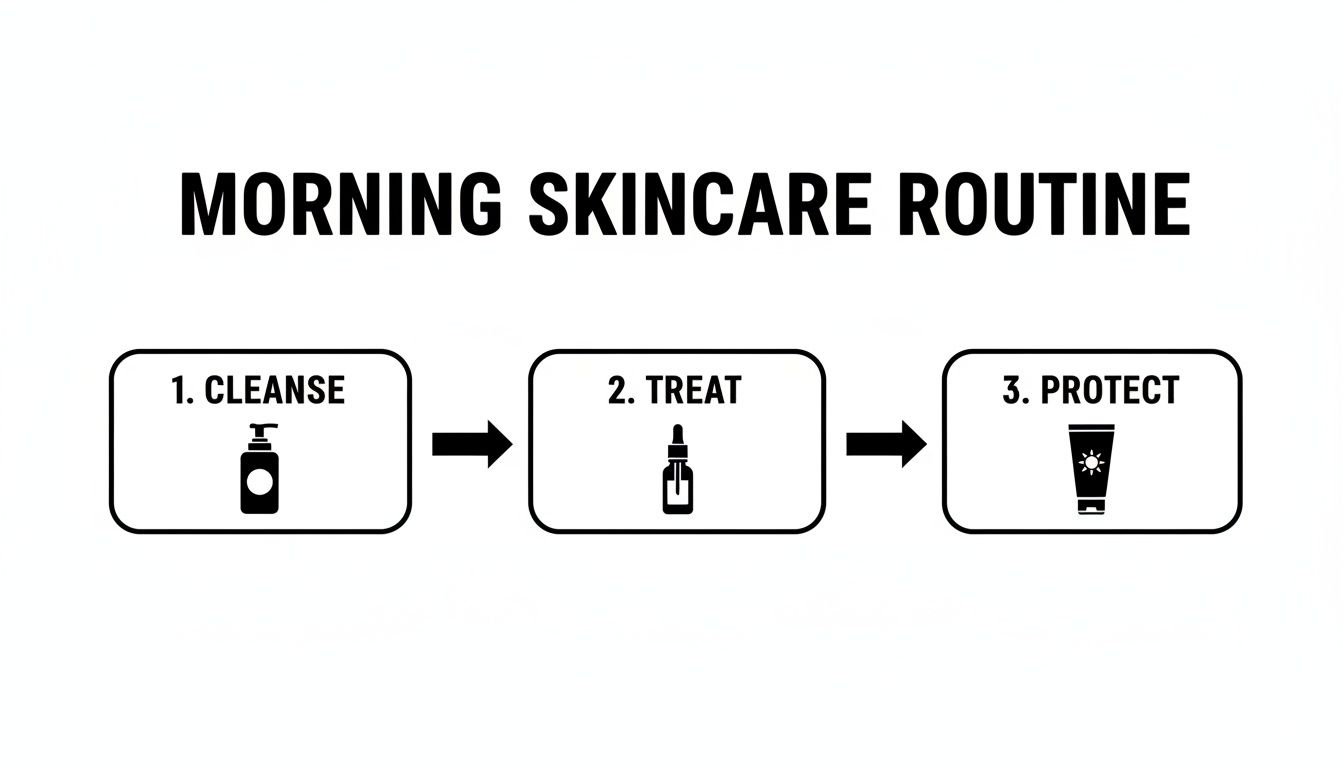
The image above breaks down the core philosophy: cleanse, treat, protect. While the goal shifts from protection in the AM to repair in the PM, the fundamental structure remains the same.
This is exactly why the Neutralyze Exfoliating Pads are such a smart choice for your nighttime treatment. They don't just rely on one ingredient; they combine the surface-refining power of Mandelic Acid with the pore-clearing ability of Salicylic Acid. This dual-action approach ensures you're tackling acne from every angle—clearing current breakouts while preventing future ones.
Thanks to its multi-patented technology, the serum gets to work overnight calming inflammation, fighting acne bacteria, and speeding up skin renewal. You genuinely wake up to a complexion that looks and feels calmer, clearer, and more balanced.
Don’t forget the final step! Always lock everything in with a lightweight, non-comedogenic moisturizer. This gives both the dry and oily parts of your face the hydration they need without clogging pores. It’s all about supporting your skin barrier, keeping it healthy and resilient while the active ingredients work their magic.
Mastering Weekly Treatments for True Balance
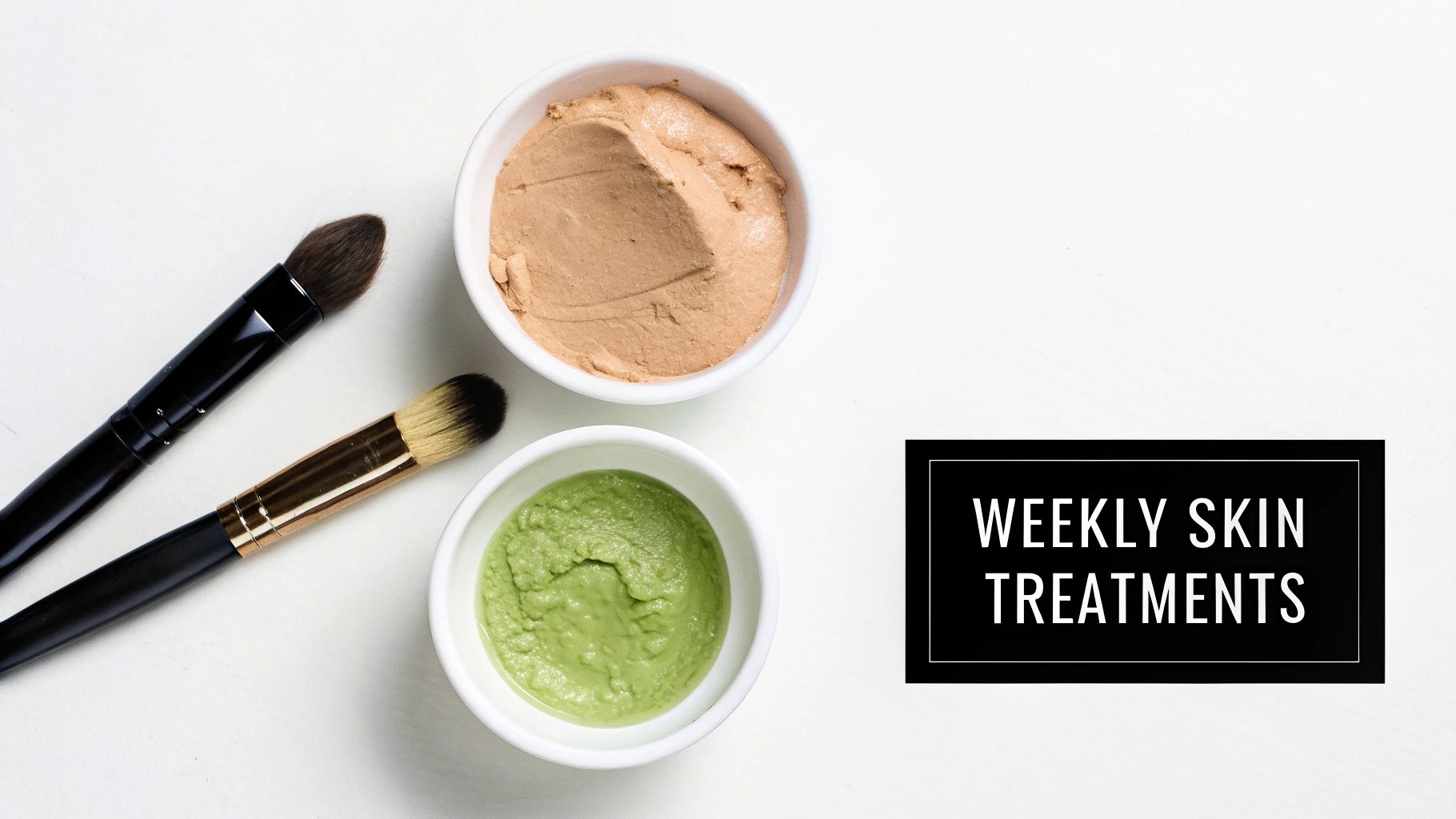
Think of your daily morning and evening routines as the foundation for healthy skin. But to really take things to the next level, you need to bring in weekly treatments. These are your targeted deep-dives—powerful sessions that keep pores clear, smooth out texture, and stop future breakouts in their tracks. It's the perfect way to support all the hard work your daily Neutralyze products are already doing.
For those of us with combination skin, this usually means treating different parts of our face differently. The secret weapon here is a technique called multi-masking. It’s a simple yet incredibly effective strategy that gives each zone exactly what it craves, solving that classic problem where one product is too harsh for your cheeks but not strong enough for your T-zone.
The Art of Multi-Masking
Multi-masking is basically a personalized spa day for your face. Instead of slathering one mask all over, you strategically apply different masks to different areas. Honestly, it's the best way to handle the split personality of combination skin.
Here’s how to get it right:
- For the T-Zone (Forehead, Nose, Chin): Grab a clay or charcoal-based mask for this oily area. These ingredients are fantastic at soaking up excess sebum and pulling gunk out from deep within your pores. This helps cut down on shine and blackheads without drying out your entire face.
- For the Cheeks and Under-Eye Area: At the same time, treat your drier cheeks to a hydrating, calming mask. Look for ingredients like hyaluronic acid, glycerin, or soothing botanicals. This is all about putting moisture back and strengthening your skin's barrier, leaving these more delicate spots feeling plump and comfortable.
Doing this just once or twice a week acts as a powerful reset, working beautifully with your daily routine. Your oily zones get a deep clean, and your dry zones get the extra nourishment they need. It’s all about creating harmony.
A great weekly skincare routine for combination skin isn't about using more products; it’s about using the right products in the right places. Multi-masking is a perfect example of this smart, targeted approach.
Incorporating Chemical Exfoliants
Beyond masking, adding a chemical exfoliant to your routine one to two times a week is a total game-changer for skin clarity and texture. Unlike harsh physical scrubs that can be way too abrasive, chemical exfoliants work by gently dissolving the "glue" that holds dead skin cells together.
The two main players here are AHAs (alpha-hydroxy acids) and BHAs (beta-hydroxy acids). While your daily Neutralyze routine already provides a balanced dose of Salicylic Acid (a BHA) and Mandelic Acid (an AHA), a dedicated weekly treatment can amplify the benefits, especially if you're dealing with stubborn congestion. These ingredients are the cornerstone of an effective acne treatment plan because they address multiple concerns at once—oil, clogged pores, and uneven texture. The key is finding the right frequency, and you can learn more about how often you should exfoliate to make sure you don't overdo it.
When you get this right, these weekly rituals work in perfect sync with your daily regimen, reinforcing the science-backed ingredients in your Neutralyze products. The result? Sustained balance, fewer breakouts, and a complexion that’s consistently smooth and radiant.
10 Common Mistakes to Avoid with Combination Skin
Even with the perfect products lined up on your shelf, a few common slip-ups can completely derail your progress. If you've ever felt like you're doing everything right but still aren't seeing the results you want, this section is for you. Let's dig into the most frequent pitfalls I see with combination skin and, more importantly, how to get back on track.
Your products are just the tools; your technique is what brings it all together. A small misstep in how you apply something can sabotage even the most powerful active ingredients.
Over-Cleansing Your Oily T-Zone
It’s the most intuitive mistake in the book. Your forehead is shiny, so you reach for a harsh, stripping cleanser that leaves your skin feeling “squeaky clean.” That squeaky feeling? It’s actually a cry for help from your skin's moisture barrier, which you’ve just nuked.
When you strip away all of your skin's natural oils, it panics and kicks oil production into overdrive to compensate. This cycle makes your T-zone even greasier in the long run, while your cheeks become flaky, irritated, and tight. A true lose-lose situation.
- The Fix: Ditch the aggressive face wash for a pH-balanced cleanser that works with your skin. Neutralyze's Face Wash is expertly formulated for this purpose. The combination of Salicylic Acid and Mandelic Acid effectively clears out oily pores without the harsh, stripping feeling. This intelligent blend respects your skin's natural barrier, helping to calm inflammation and bring your complexion back to a happy, balanced state.
Skipping Moisturizer on Oily Areas
"My skin is already oily, so why would I add more moisture?" This is one of the biggest skincare myths out there, and it’s time to bust it for good. Dehydrated skin—skin that lacks water—often produces more oil to make up for it, leading to that greasy-yet-tight feeling.
Every skin type, without exception, needs hydration (water) to be healthy. By skipping moisturizer on your oily zones, you're likely making the shine worse.
Here's the key takeaway: Oily skin needs hydration just as much as dry skin does. The trick is using the right kind of moisturizer—one that delivers a dose of water without adding heavy, pore-clogging oils.
Applying Products Incorrectly
Another common issue I see is slathering a single product all over the face when different areas have totally different needs. While some products are fine for all-over use, targeted treatments work best when you apply them strategically.
- The Fix: Start thinking in zones. That heavy, nourishing cream that your dry cheeks love might be a recipe for clogged pores on your T-zone. Likewise, a potent acne-fighting serum could be way too intense for your more sensitive areas. Apply products only where they’re needed most—focus oil-regulating serums on your forehead and chin, and use richer hydrators on your cheeks. This customized approach is really the secret to building the best skincare routine for combination skin.
Your Combination Skin Questions, Answered
If you have combination skin, you've probably asked yourself these questions a million times. It can feel like you're walking a tightrope, trying to balance dry patches and an oily T-zone. Let's tackle some of the most common concerns so you can build a routine that truly works.
Can I Use the Same Moisturizer Everywhere?
You absolutely can, but the formula is everything. Forget heavy creams. You need to look for a lightweight, non-comedogenic moisturizer that won't clog your pores.
Think gel-creams or oil-free lotions. These textures are incredible for combination skin because they give those thirsty, dry cheeks just enough hydration without making your forehead and nose feel like an oil slick. The goal is balance, not smothering your skin.
How Long Until I See a Difference in My Skin?
I know you want to see results yesterday, but with skincare, consistency is the name of the game. You should start to feel a difference—like less shine by lunchtime and softer cheeks—within the first week or two.
But for the big changes, like fewer breakouts and a more even, less blotchy complexion, you have to give it more time. Plan on sticking with your new routine for at least 4-6 weeks. That’s how long it takes for a full skin cell turnover cycle, which is when you’ll really see the full benefits of the products you’re using.
Are Facial Oils a Good Idea for Combination Skin?
This is a tricky one. The right oil can be a game-changer, but the wrong one can be a disaster, especially if you’re prone to breakouts.
Lightweight, non-comedogenic oils like squalane or jojoba can be fantastic. They mimic your skin's natural sebum and can actually help regulate oil production while nourishing dry spots. But steer clear of anything heavy or known to clog pores (like coconut oil on the face). If you want to try one, add just a drop or two as the very last step in your nighttime routine and see how your skin reacts.
What Is the Most Impactful Product for Combination Skin?
If I had to pick just one product that makes the biggest difference, it would be a well-formulated treatment serum. Think of it as the heavy lifter in your routine. Serums are packed with a high concentration of active ingredients designed to target specific problems.
For acne-prone combination skin, the right leave-on treatment is your most powerful tool. By using proven ingredients like Salicylic Acid and Mandelic Acid, it gets to the root cause of acne by clearing pores, reducing inflammation, and promoting healthy cell turnover. This is why the Neutralyze Exfoliating Pads are so effective: they deliver a targeted dose of these powerhouse ingredients precisely where needed, creating real, visible, and lasting change for your complexion.
Ready to stop guessing and start seeing clear, balanced skin? Let Neutralyze provide the science-backed solution with ingredients proven to calm, clear, and restore. Discover your ideal routine today at https://www.neutralyze.com.


