

Benzoyl Peroxide Alternatives That Actually Work in 2026
You've probably tried benzoyl peroxide, hoped it would calm your skin down, and then ended up with dry patches, irritated cheeks, or pillowcases you didn't want to ruin. Maybe it helped a little, maybe it helped and still felt too harsh, or maybe the recent benzene headlines made you uneasy enough to look for something else.
That search makes sense. Benzoyl peroxide alternatives aren't about rejecting acne science, they're about matching treatment to your skin, your breakouts, and your tolerance. A well-built routine can still target clogged pores, excess oil, bacteria, and inflammation without forcing you to stay loyal to one ingredient that doesn't fit. If you want a non-prescription path, Neutralyze Exfoliating Pads are one evidence-led place to start because they pair salicylic acid with mandelic acid in a format aimed at breakouts, texture, and oil control.
The rest of this guide keeps the focus practical. You'll see what each alternative does, which acne pattern it fits best, and how to build a routine that's strong enough to matter but calm enough to keep using.
Why People Search for Benzoyl Peroxide Alternatives
A lot of people keep trying benzoyl peroxide and still feel stuck. The ingredient may help inflammatory breakouts, but if your main problem is blackheads, whiteheads, and that rough, clogged texture, it can feel like you are using a fire extinguisher on a blocked drain. It is capable of reducing acne, yet it is not always the best match for the pattern in front of you.
The problem is often fit, not effort
Benzoyl peroxide has a real place in acne care. The issue is that acne is not one uniform condition. Someone with oily skin and red, tender pimples may tolerate a different routine than someone whose face is dry, sensitive, and full of closed comedones. If the skin barrier is already irritated, or if past attempts left you peeling and uncomfortable, looking for another option is a sensible next step.
The match matters because different acne patterns respond to different tools. A pore-unclogging ingredient can help with comedonal acne, while an antibacterial ingredient may be more useful for inflamed bumps. If your breakouts sit mostly under the skin and do not look angry, a treatment that focuses on oil and clogged pores often makes more sense than one built mainly for surface irritation.
Read more about common irritation issues in this overview on benzoyl peroxide side effects.
Practical rule: if an ingredient keeps making your routine harder to tolerate, the better choice is the one you can use consistently.
What you are actually looking for
The question is not what replaces benzoyl peroxide. It is what addresses your acne pattern with less downside. For some people, that means a gentler pore-unclogging approach. For others, it means something that helps redness, oil, or post-breakout marks without stripping the skin.
That is why alternatives are worth comparing by skin type and breakout type, not just by ingredient name. Some options fit oily, congestion-prone skin. Some fit reactive skin that cannot handle much irritation. Some work best as part of a routine, where one product handles clogged pores and another helps with inflammation.
How Acne Actually Forms and Why Mechanism Matters
Acne isn't one problem. It's four overlapping processes that feed each other: excess sebum, follicular hyperkeratinization, Cutibacterium acnes growth, and inflammation. If you only aim at one, the others can keep the cycle going.
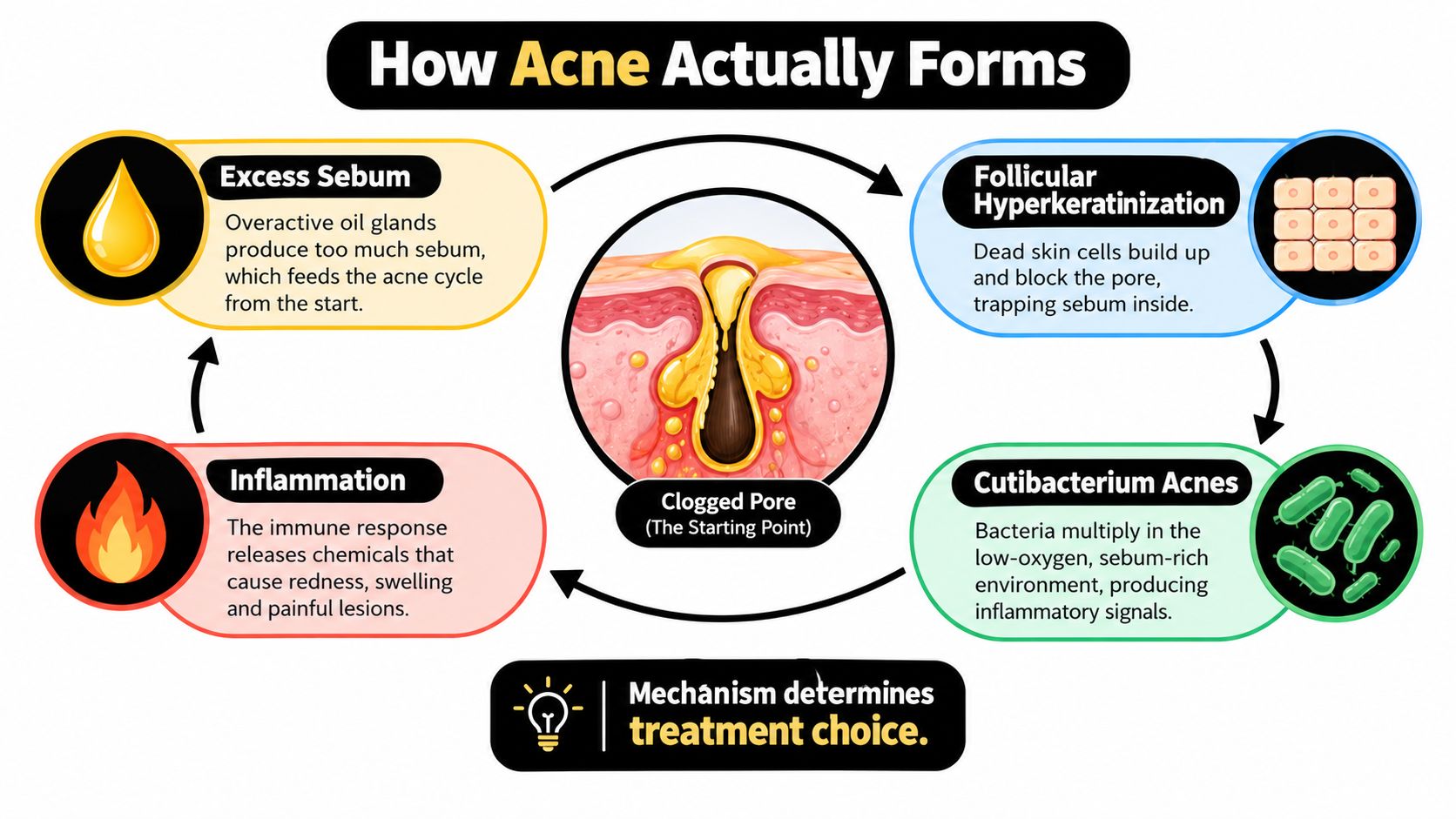
Think of a clogged sink
A good way to picture acne is a sink with a sluggish drain. Oil is running into the basin, dead skin cells are thickening at the drain opening, bacteria are multiplying in the stuck material, and the surrounding area gets swollen and red. If you only wipe the rim, the blockage stays.
That's why ingredient choice matters. A pore-unclogger can help with blackheads and whiteheads, but it won't necessarily calm deep inflammation. An antibacterial can reduce bacterial burden, but if the pore stays clogged, new lesions still form. A soothing ingredient may make skin look less angry while doing little for the plug itself.
Match the ingredient to the weak link
Some acne routines stall because the person treats the visible bump and ignores the mechanism underneath. A cleanser can remove surface oil, but if follicular buildup is the main driver, the skin needs exfoliation or cell-turnover support. An anti-inflammatory can help redness, but it doesn't always clear comedones.
Useful shortcut: clogged pores usually need keratolytic support, inflamed lesions usually need anti-inflammatory or antibacterial support, and stubborn mixed acne often needs both.
Once you start reading ingredients through that lens, the choices stop looking random. Salicylic acid, azelaic acid, retinoids, and even procedural options each make sense for different acne patterns because they interrupt different points in the cycle.
Why People Move Away From Benzoyl Peroxide
For many people, the first reason is practical, not theoretical. Benzoyl peroxide can be hard to keep stable once it is opened, especially if it sits in a warm bathroom, is exposed to light, or is used from packaging that does not protect it well. That makes storage and packaging part of the decision, not just the ingredient name on the label.
Risk management is the core question. If a product may degrade before you finish it, or if you cannot tell how it has been stored, the choice is less about brand loyalty and more about whether you want a treatment with fewer unknowns.
People also step away because they are already managing a prescription routine and do not want another ingredient that can complicate use. The side effects and practical limits of benzoyl peroxide often matter most here, especially when someone is trying to keep a regimen simple and predictable.
The useful decision framework
The aim is not to treat every alternative as interchangeable. A good substitute should fit the acne pattern and the skin type in front of you. For one person, that means choosing something that is gentler on a barrier that is already dry or reactive. For another, it means finding an option that can still help with clogged pores, redness, or post-acne marks without adding avoidable uncertainty.
That is the practical lens for this article. Some alternatives are better for comedones, some for inflamed breakouts, and some work best as part of a routine that covers cleansing, exfoliation, and barrier support together.
Seven Evidence-Backed Alternatives and How Each One Works
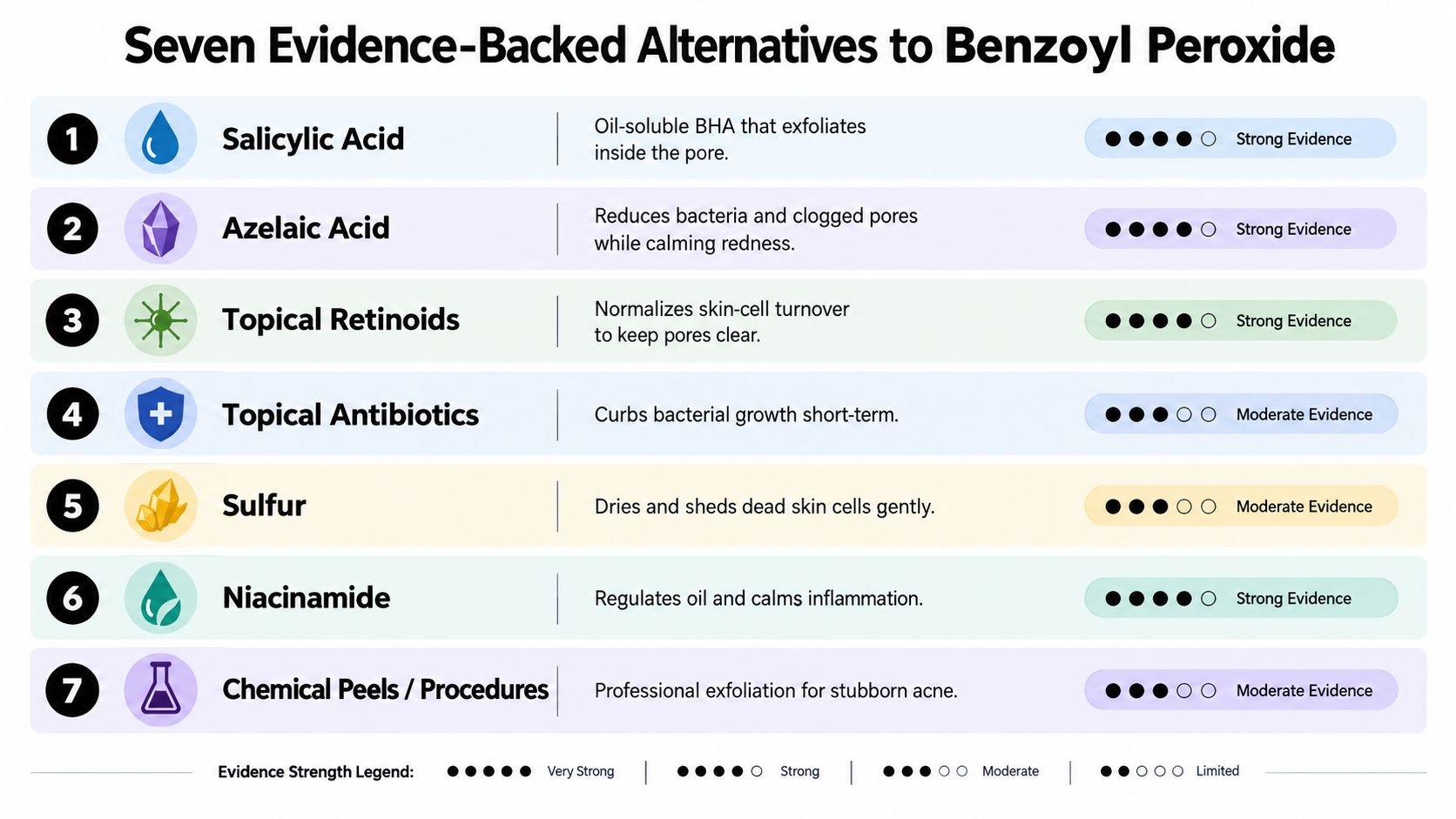
Salicylic acid for clogged pores
Salicylic acid is a keratolytic ingredient, which means it helps loosen the sticky buildup of dead cells that clog pores. It fits best when your acne looks like blackheads, whiteheads, or oily congestion rather than deep, angry bumps.
The American Academy of Dermatology conditionally recommends topical salicylic acid for unclogging pores and exfoliating the skin, with low-certainty evidence. A Cochrane review found one 2% salicylic-acid lotion study that favored salicylic acid over placebo at 12 weeks, while showing no significant short- or medium-term difference for inflamed lesions. If you want a readable deep dive on the format itself, this salicylic acid peel guide is a helpful resource for understanding how exfoliating treatments are used.
Azelaic acid for acne plus marks
Azelaic acid is one of the strongest non-BPO options when you care about both acne and the aftermath. It has antimicrobial, anti-inflammatory, and keratinization-normalizing effects, which makes it useful when redness and post-acne dark spots are part of the picture.
A 2023 systematic review of 16 randomized controlled trials concluded that azelaic acid was more effective than vehicle for lesion reduction, though confidence in the evidence ranged from low to moderate. Another review of 49 trials and 3,880 participants found it was probably less effective than benzoyl peroxide for overall improvement, but little or no different from tretinoin. Azelaic acid is especially appealing if irritation, bleaching, or dark marks matter as much as active breakouts.
Topical retinoids for long-term pore control
Retinoids, including adapalene, work by normalizing skin-cell turnover so pores don't keep filling up. They are the classic choice when you want prevention, not just spot treatment.
They can be a strong match for mixed acne because they address comedones and help with inflammatory lesions too. The tradeoff is adjustment, since dryness and irritation are common early on. Retinoids are usually less about quick calm and more about keeping the cycle from restarting.
Topical antibiotics for inflamed acne
Topical antibiotics are best for short-term control of inflamed lesions. They reduce bacterial growth and inflammation, which can help when red pimples are the main problem.
They're not ideal as a solo long-term plan because resistance becomes a concern. For that reason, they usually make sense as part of a clinician-guided regimen rather than the default OTC alternative.
Sulfur for oily, reactive skin
Sulfur has a long history in acne care because it helps dry excess oil and shed dead skin cells more gently than some harsher exfoliants. It tends to suit people who want a simpler, often less aggressive option for oily skin.
It's not usually the most powerful choice for moderate-to-severe acne, but it can be a useful supporting ingredient. Some people like it when they're trying to calm shine without adding another strong acid or retinoid.
Niacinamide for oil and inflammation support
Niacinamide doesn't replace a true acne active, but it can support routines that feel too stripping. It's often used to help regulate oil and calm visible irritation.
That makes it a sensible companion ingredient when your skin gets reactive fast. It works better as part of a routine than as a stand-alone answer for active breakouts.
Procedures and support measures
Chemical peels and light-based procedures can help stubborn acne, especially when a pattern isn't responding to regular topical care. They work best as complements, not as the only thing you do for moderate-to-severe acne.
A practical home-care example is a salicylic-acid-forward routine for congestion. If you're curious how exfoliating treatments are used in practice, the Neutralyze salicylic acid vs mandelic acid guide is useful for comparing two pore-focused acids in plain language. You can also think of procedures as the escalation path when the skin needs a more aggressive reset than daily skincare can provide.
Matching the Right Alternative to Your Acne Pattern
Start with the kind of breakout you actually get
Comedonal acne, the blackheads, whiteheads, and slow-forming under-the-skin clogs, usually responds best to salicylic acid and retinoids because both target pore buildup. If your skin looks shiny, textured, and congested, that's the lane to think in first.
Inflammatory acne, the red, tender bumps, leans more toward azelaic acid, short-term topical antibiotics, or combination approaches. If the skin is angry and reactive, a routine built only around exfoliation can be too much.
Hormonal and cystic acne need a different threshold
Hormonal acne often shows up along the jawline and chin and may flare in a predictable cycle. Topicals can still help, but hormone-driven breakouts often need a broader plan than ingredient swapping alone.
Cystic acne is the point where OTC-only solutions often stop being enough. If the bumps are deep, painful, or leaving marks, a clinician can decide whether prescription support is needed.
A compact comparison
| Alternative | Primary Mechanism | Best-Fit Acne Type | Evidence Quality | Typical Timeline | Skin-Type Suitability |
|---|---|---|---|---|---|
| Salicylic acid | Pore unclogging, exfoliation | Comedonal, oily skin | Low to moderate | Gradual improvement over weeks | Often good for oily or congested skin |
| Azelaic acid | Antimicrobial, anti-inflammatory, keratinization support | Inflammatory acne, post-acne marks | Moderate | Several weeks | Often good for sensitive or mark-prone skin |
| Topical retinoids | Normalizes cell turnover | Comedonal, mixed acne | Stronger long-term support | Slower start, then steadier gains | Can be irritating at first |
| Topical antibiotics | Reduces bacterial growth and inflammation | Moderate inflammatory acne | Prescription-based, best in combinations | Can act relatively fast | Often for clinician-guided use |
| Sulfur | Mild drying and exfoliation | Oily, mild breakouts | Limited compared with core actives | Variable | Often tolerated, but not always enough alone |
| Niacinamide | Oil regulation, calming support | Supportive add-on | Supportive, not primary acne treatment | Subtle | Good for reactive or barrier-stressed skin |
| Chemical peels / procedures | Professional exfoliation | Stubborn or resistant acne | Variable by procedure | Depends on treatment plan | Needs professional selection |
If your skin is mostly clogged, start with pore-unclogging. If it's mostly inflamed, start with calming and antibacterial support. If it's both, choose a routine that does not ask one ingredient to do everything.
Building a Practical Routine Without Benzoyl Peroxide
A good routine gives each product a clear job. Cleanser, exfoliant, and moisturizer should work in sequence, not all try to do the same thing at once.
A simple three-step structure
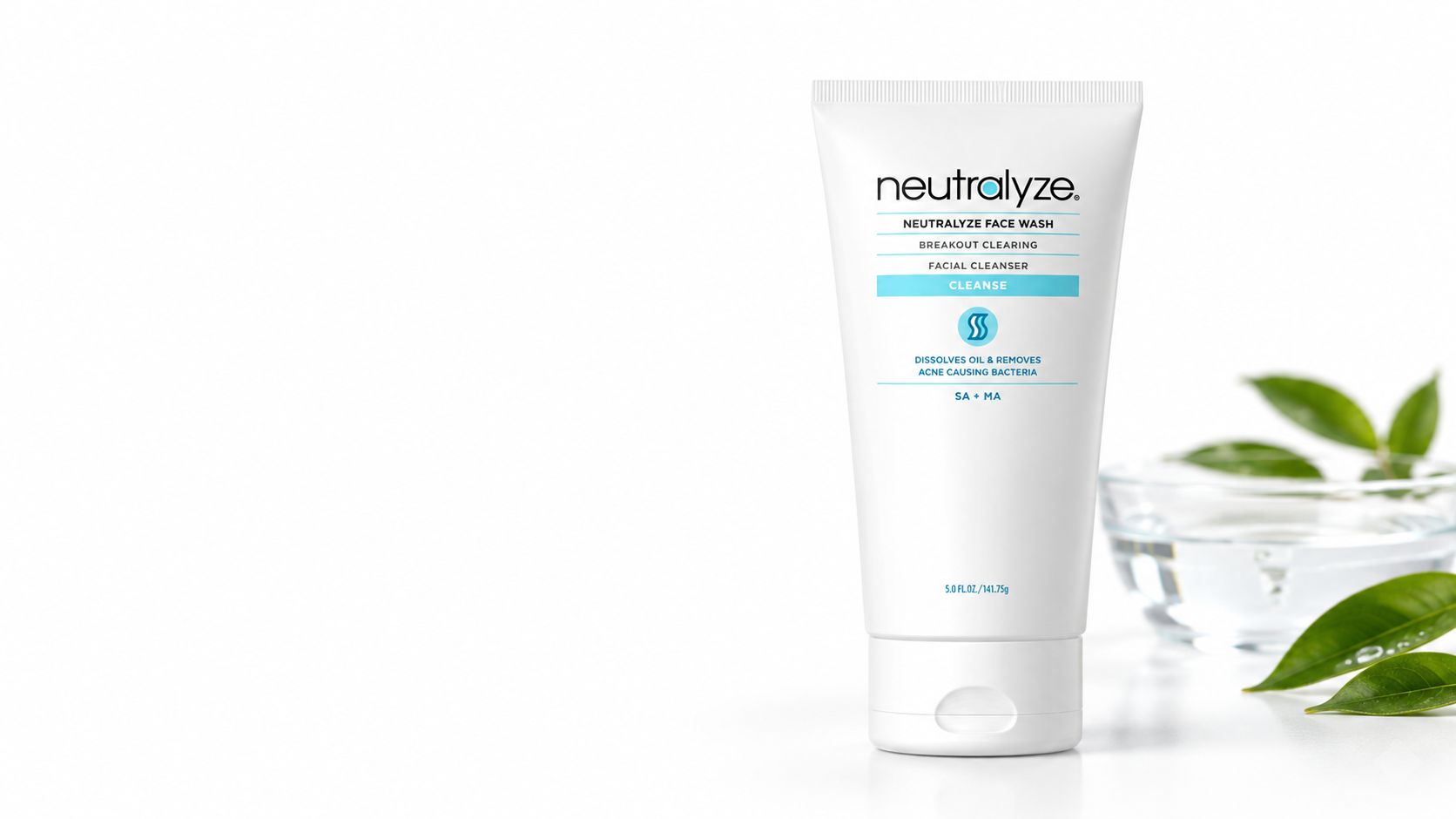
Start with a cleanser if your skin gets oily quickly or if you want a clean base for the rest of the routine. That first step is where Neutralyze Face Wash fits well, because it combines 2% salicylic acid and 1% mandelic acid in a cleanser meant for acne-prone skin.
If you want to see how a salicylic-acid cleanser is usually used, the Neutralyze salicylic acid guide is a useful reference. The basic idea is simple, use the cleanser consistently, then let the rest of the routine handle leave-on support.
After cleansing, a leave-on exfoliant can help keep pores from building up dead skin and oil again too fast. The Neutralyze Exfoliating Pads fit that middle step. A moisturizer or treatment cream can then help keep the skin barrier steady, which matters because irritated skin often reacts by feeling tighter, flaking more, and sticking with the routine less.
The Neutralyze Renewal Complex can serve as that final support step in a non-prescription routine built around cleansing, exfoliation, and barrier care.
Layering rules that keep skin calmer
Start with the thinnest texture first, then move to thicker products. Water-based cleansing comes before leave-on acids, and leave-on acids usually come before moisturizer.
A few rules help keep irritation down:
- Patch test first: try a small area before applying a new active to your whole face.
- Start slowly: use one active more often only after your skin tolerates it.
- Protect the barrier: if skin feels tight, stingy, or flaky, back off before you push through.
- Wear sunscreen: many acne routines make skin more sun-sensitive, so morning SPF matters.
Barrier rule: if your routine leaves you too dry to keep using it, it is not a good routine yet.
What to expect in the first month or two
Some routines need time before they look better. Acne treatment often works on a delay, because clogged pores and inflammation do not clear overnight. A short adjustment period can be normal. Ongoing burning, stinging, or peeling every time you apply a product is a different problem.
The practical goal is to match the ingredient to the acne pattern, then keep the routine simple enough that you can stick with it. A cleanser, a leave-on exfoliant, and a moisturizer-style step can cover the main mechanisms without asking one product to do everything.
Safety Tips, Interactions, and When to See a Clinician
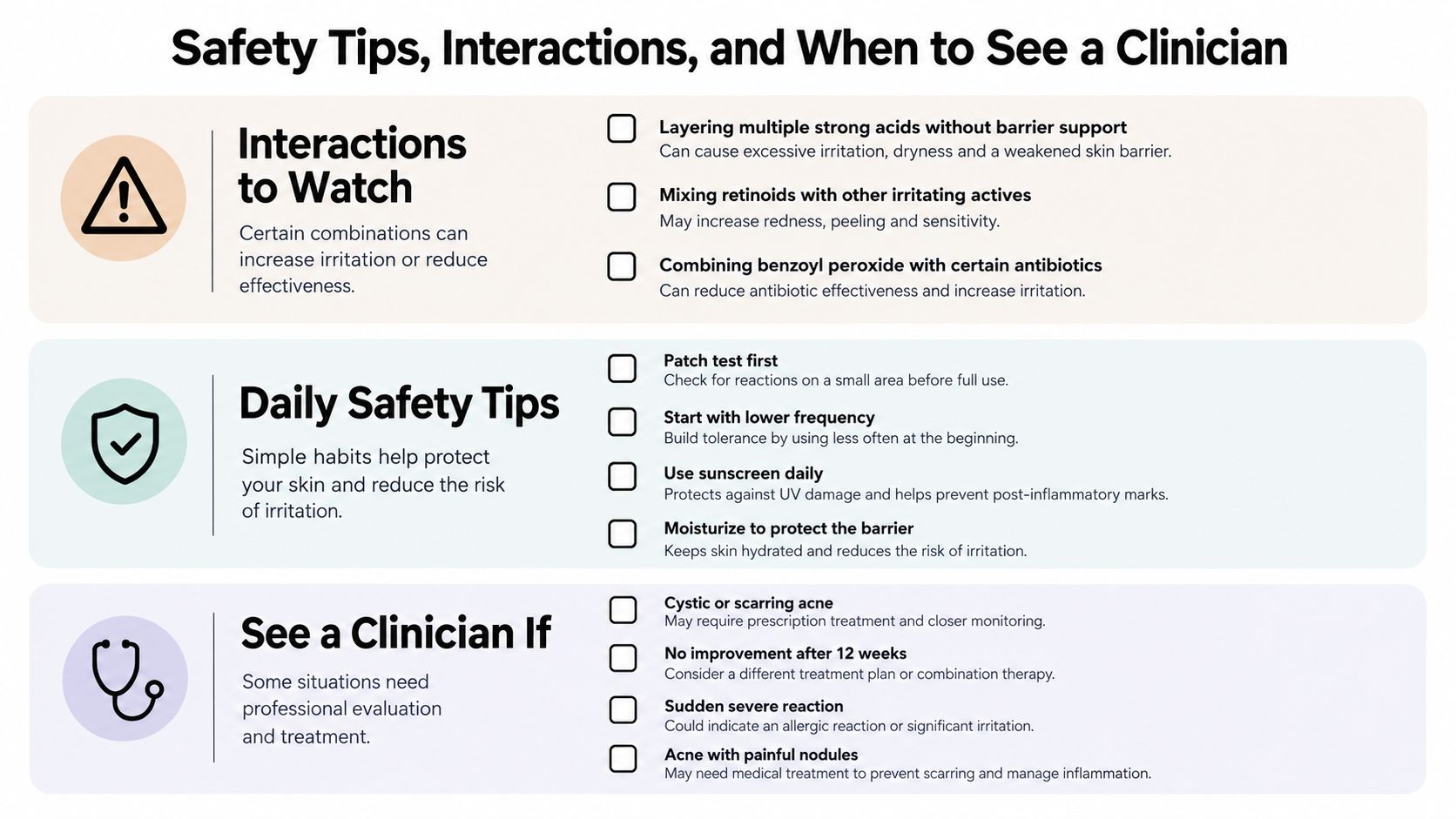
Strong acne routines can fail for boring reasons. Too many acids, too many actives, or too little moisturization can make skin angry before the acne has a chance to improve.
Interactions to watch
Layering multiple strong acids without barrier support can irritate skin quickly. Mixing retinoids with exfoliating pads can also be too much if your skin hasn't adapted yet. If you're still using benzoyl peroxide in any part of your regimen, be careful about combinations that your prescriber has specifically warned against.
Daily habits that keep things safer
Patch testing, starting at lower frequency, and using sunscreen daily are simple but effective habits. Moisturizer matters too, because a stripped barrier usually makes people quit before the routine has time to work.
A light, consistent approach usually wins over aggressive overuse. That's especially true if you're trying to replace one harsh routine with another one that just looks gentler on paper.
When self-care isn't enough
Deep painful nodules, acne that scars, sudden severe flares, or breakouts that don't improve after 8 to 12 weeks of consistent OTC use deserve professional review. So do patterns that strongly suggest hormonal involvement, especially when the acne keeps coming back in the same areas.
If you're seeing that pattern, the goal isn't to “try harder.” It's to get the right diagnosis and, if needed, prescription support.
Your Starting Point and Next Steps
The simplest way to choose is to name the main problem first. If your acne is mostly clogged and oily, start with a pore-unclogging ingredient. If it's red and inflamed, look for anti-inflammatory support. If it's mixed, build a routine that can do both without wrecking your skin barrier.
A short checklist you can actually use
- Identify your breakout type by location and texture.
- Pick one core alternative that matches that pattern.
- Build a minimal routine around cleanse, treat, and moisturize.
- Patch test and go slow so you can tell irritation from adjustment.
- Give it a fair timeline before you decide it failed.
- Escalate to a clinician if acne is deep, scarring, or stuck.
The most useful non-prescription routines usually combine an exfoliant, an anti-inflammatory or antibacterial support ingredient, and barrier-conscious moisturization. That's why the Neutralyze three-step cleanse, exfoliate, renew system is a sensible BPO-free path for moderate-to-severe acne when you want mechanism-based care instead of guessing.
If you're ready to replace trial-and-error with a routine that actually matches your acne pattern, explore the Neutralyze system and choose the step that fits where your skin is struggling most. Neutralyze builds around salicylic acid and mandelic acid, so you can keep the focus on clearing pores, smoothing texture, and supporting the skin barrier without benzoyl peroxide.


