

Conquer Pimples on Nose: A Complete Guide to Lasting Clear Skin
Ever notice how your nose seems to be a magnet for pimples? It’s not just you. That area of your face is uniquely built to be a breakout hotspot, mostly because it’s packed with oil glands.
This dense concentration of glands means more oil and larger pores, creating the perfect environment for clogs. What starts as a simple blockage can quickly turn into a stubborn blackhead or an angry red bump. Even simple things, like resting your glasses on your nose or touching your face, can make it all worse.
Why Your Nose Is a Magnet for Pimples
If you’ve ever wondered why your nose seems to get the brunt of breakouts, there’s a simple anatomical reason. The skin there is just different from, say, your cheeks.
Your nose is the centerpiece of the T-zone, that infamous strip of skin across your forehead and down to your chin known for getting extra greasy. This happens because the T-zone has a much higher density of sebaceous glands—the tiny glands that produce your skin's natural oil, sebum. When these glands work overtime, they set the stage for acne.
The Anatomy of a Nose Pimple
So, how does a pimple actually form? It all starts deep inside a pore. An overproduction of oil mixes with dead skin cells, forming a sticky plug that clogs the follicle. This is ground zero for every type of blemish you can get on your nose.
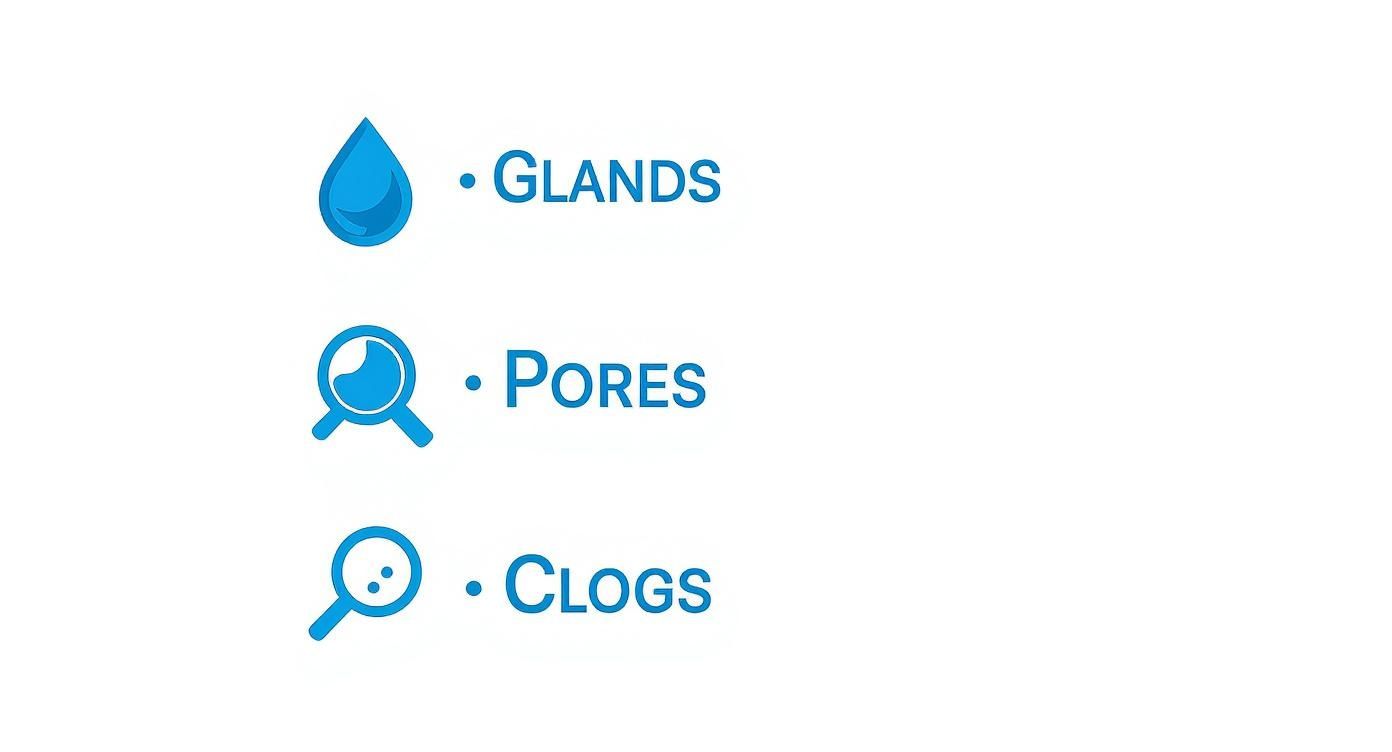
As you can see, the combination of overactive glands, larger pores, and the inevitable clogs creates an ideal breeding ground for acne. This isn't just bad luck; it's a common struggle. Acne vulgaris is a widespread condition, with studies showing that between 35% and over 90% of adolescents deal with it. Given the nose's anatomy, it's no surprise it's one of the most frequently affected areas. You can dig into the numbers yourself in various clinical studies on acne prevalence.
Key Takeaway: The high number of oil glands and larger pores on your nose aren’t your fault—it’s just how your skin is built. This biological reality means the nose requires a targeted approach to stay clear.
Knowing what you’re up against is half the battle. Just splashing your face with water isn’t enough to manage nose acne. You need a strategy that gets deep into those oil-prone pores to break up clogs before they become inflamed pimples. This is where targeted ingredients and a smart routine can make all the difference.
Knowing what you're dealing with is crucial for effective treatment. This table helps you identify the type of blemish on your nose.
Identifying Blemishes on Your Nose
| Blemish Type | Appearance | Primary Cause | Effective Ingredient |
|---|---|---|---|
| Blackheads | Small, dark spots that look like dirt | Clogged pore open to the air (oxidized) | Salicylic Acid |
| Whiteheads | Small, flesh-colored or white bumps | Clogged pore closed off from the air | Salicylic Acid, Mandelic Acid |
| Papules | Small, red, tender bumps with no "head" | Inflammation from a clogged pore | Mandelic Acid, Salicylic Acid |
| Pustules | Red bumps with a visible white or yellow pus-filled tip | Infected, inflamed pore with pus | Salicylic Acid, Mandelic Acid |
Once you've identified the type of pimple, you can choose products with the right active ingredients to tackle the problem at its source.
Uncovering the Hidden Triggers of Nose Acne
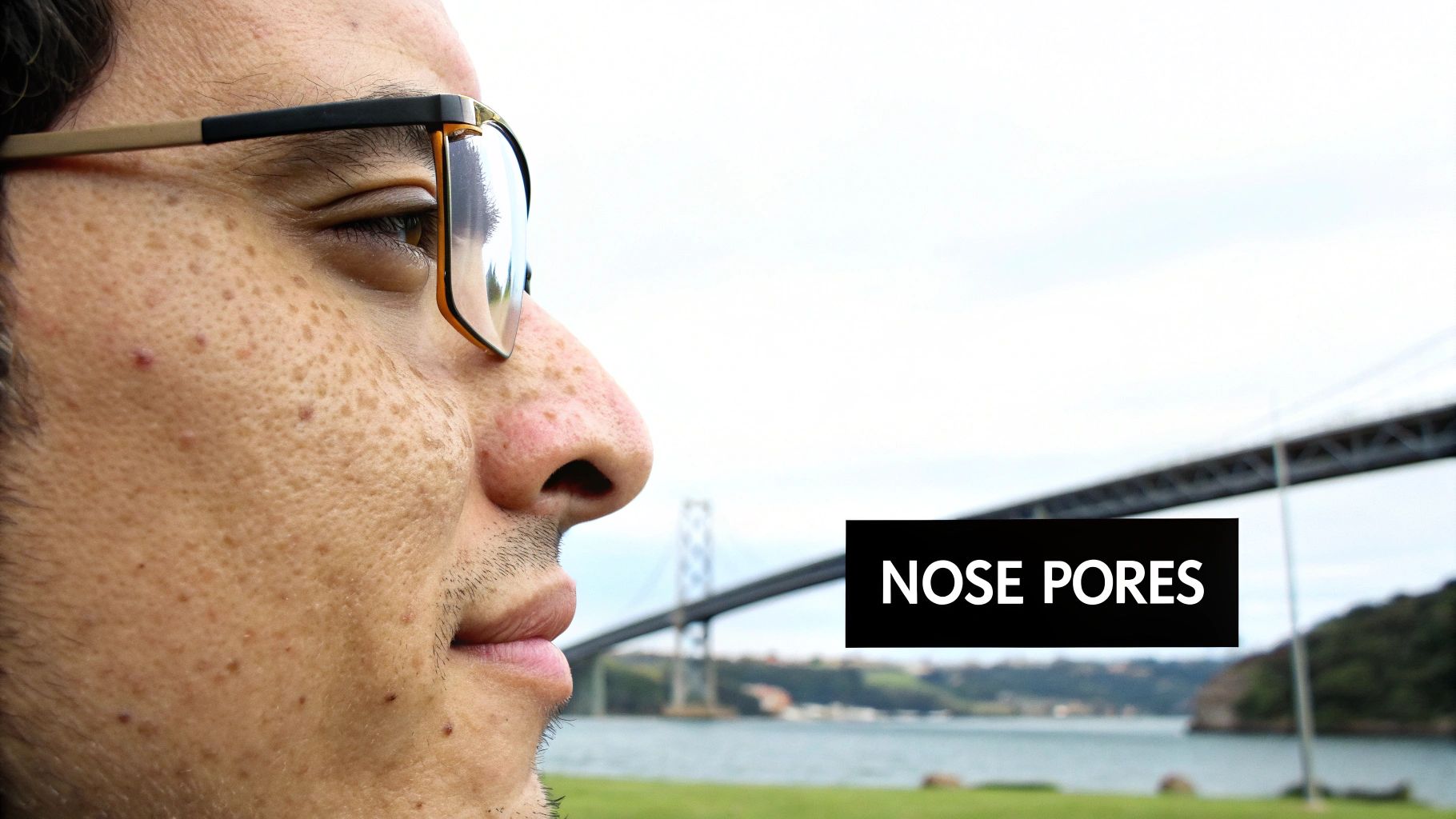
If you feel like you're doing everything right to manage oil but still get pimples on your nose, it’s time to dig a little deeper. Often, the most stubborn breakouts are caused by sneaky triggers that specifically affect this oil-prone area.
Figuring out these hidden causes is a game-changer. It helps you see the direct link between your daily habits and your skin's health, so you can make small tweaks that bring big results.
Hormones and Diet: The Inside Job
Hormones are basically your body's command center, and even small fluctuations can send your oil glands into overdrive, especially in the T-zone. This is why you might notice more pimples around your menstrual cycle or when you’re feeling particularly stressed out.
What you eat can also play a surprisingly direct role. High-glycemic foods—think sugary drinks, white bread, and processed snacks—can make your insulin levels spike. This hormonal chain reaction can fuel inflammation and crank up oil production, creating the perfect recipe for nose acne.
Expert Insight: You don't have to radically change your diet overnight. Start by becoming a detective and noticing if breakouts pop up after you eat certain things. For many people, simply cutting back on high-glycemic foods and dairy is enough to calm down inflammation and see fewer pimples.
This connection between what’s happening inside your body and what shows up on your skin is precisely why a holistic approach works best. Yes, topical treatments are crucial, but giving your skin support from the inside out is your secret weapon.
Occlusion and Physical Irritation: When Your Environment Is the Enemy
Ever get a new pimple right where your glasses sit? Or notice a cluster of them after a long day wearing a face mask? That’s a classic case of occlusive acne, sometimes called acne mechanica.
This type of acne isn't driven by your hormones. Instead, it’s caused by something physically trapping heat, sweat, oil, and bacteria against your skin. This creates a humid, stuffy environment where acne-causing bacteria have a field day.
Common culprits for occlusive acne on the nose include:
- Eyeglasses: The bridge of your frames sits right on your nose, trapping sebum and applying constant, low-grade pressure.
- Face Masks: These create a warm, moist microclimate over your nose and mouth—a perfect breeding ground for bacteria.
- Heavy Makeup or Sunscreen: Thick, occlusive formulas can act like a plastic wrap on your skin, preventing pores from breathing properly.
- Touching Your Face: Every time you do, you're transferring oil and bacteria from your hands directly to your nose. Our guide on how to stop touching your face has some great, practical tips for this.
It's also worth looking at other external factors, like the potential skin effects of nasal strips, particularly if you use them often. Anything that sticks to or puts pressure on the nose can potentially irritate follicles and trap gunk in your pores.
By spotting these physical triggers, you can take simple, preventative steps. Wiping down your glasses daily or switching to a non-comedogenic sunscreen can make all the difference.
Your Game Plan for Getting Rid of Nose Pimples
Getting a handle on pimples on your nose isn’t about scrubbing your face raw or throwing harsh chemicals at the problem. It’s about being smart and consistent. At Neutralyze, we’ve built our entire philosophy on a core understanding: an effective routine must do two things at once. It has to clear existing breakouts and prevent new ones from forming. The goal is a simple, science-backed system that works with your skin, not against it.
At the heart of this strategy are two powerhouse ingredients that work in perfect harmony: Mandelic Acid and Salicylic Acid. This is the core combination we built the Neutralyze system around because it tackles every single stage of a nose pimple's lifecycle, delivering visible results without the harsh side effects.
First, You Have to Get Deep Inside the Pore
When you’re dealing with the oily, often congested pores on your nose, Salicylic Acid is your best friend. As skincare experts, we consider it a true game-changer. Most exfoliants just work on the surface, but Salicylic Acid is oil-soluble. That special property means it can dive deep into your pores and dissolve that stubborn, sticky gunk made of oil and dead skin cells—the exact stuff that forms blackheads and whiteheads.
Think of it as a precision-cleaning tool for your pores. It doesn't just sweep away the debris you can see; it gets right to the source of the clog, breaking it up before it has a chance to turn into a red, angry pimple. This is absolutely essential for the nose, where pores tend to be larger and more prone to these stubborn blockages.
By using a cleanser or treatment with Salicylic Acid consistently, you're not just playing defense against current breakouts. You’re playing offense, keeping those pathways clear to prevent future pimples from ever getting started.
Then, You Gently Resurface and Calm Things Down
While Salicylic Acid is doing the deep work, Mandelic Acid is handling business on the surface. We specifically chose Mandelic Acid for the Neutralyze system because it’s a uniquely gentle Alpha Hydroxy Acid (AHA). Unlike its more aggressive cousin, Glycolic Acid, Mandelic Acid has larger molecules. This means it penetrates the skin more slowly, dramatically cutting down the risk of irritation.
This makes it the perfect partner for treating the sensitive, often inflamed skin on your nose. Here’s what it brings to the table:
- Exfoliates Dead Skin: It gently lifts away those dull, dead skin cells hanging around on the surface, stopping them from falling into your pores and causing more trouble.
- Reduces Redness: It has natural anti-inflammatory properties, which is fantastic for calming down the redness and swelling that comes with those really sore nose pimples.
- Fades Lingering Marks: By encouraging fresh skin cells to come to the surface, it helps lighten the dark spots that pimples often leave behind. The result is a much more even skin tone.
This tag-team approach is the real secret behind the Neutralyze system. You get the deep-pore cleanse from Salicylic Acid plus the gentle surface exfoliation and soothing benefits of Mandelic Acid. Together, they create an environment where acne just can’t thrive.
Why This Combination Works: It's all about synergy. You’re fighting nose pimples from two different angles. Salicylic Acid goes deep to clear out the clog at its source, while Mandelic Acid refines the surface and calms irritation. It’s a complete treatment cycle, which is why Neutralyze is so effective.
And if you feel like you're constantly fighting breakouts, you're not alone. The struggle with acne is growing globally. One major study found that over a 31-year period, the number of new acne cases shot up by 34%, from 23.1 million to 31.0 million each year. This highlights just how much acne can affect people's quality of life and why finding science-backed solutions is so important. You can read more about these global acne trends and their impact on dermatologytimes.com. By adopting a targeted routine like this, you’re taking a proven step toward getting back clear, healthy skin.
Smart Lifestyle Habits for Lasting Results
A great skincare routine is your front-line defense against nose pimples, but your daily habits are what make or break your success in the long run. Think of it this way: your products are doing the hard work, but your lifestyle choices create an environment where breakouts just don't stand a chance. It's about building a complete support system for your skin.
You'd be surprised how much simple, mindful adjustments can influence oil production and inflammation. By getting these fundamentals right, you’re not just preventing pimples; you’re helping your skincare routine work that much better.
Fine-Tune Your Diet and Hydration
While no single food is the magic bullet for acne, research keeps pointing to a strong link between what we eat and skin inflammation. High-glycemic foods—think sugary cereals, white bread, and processed junk—can spike your blood sugar. This triggers a hormonal response that ramps up sebum production, which is exactly what you don't want.
Try making a few easy swaps in your daily diet:
- Instead of sugary sodas or juices, grab some sparkling water with a squeeze of lemon. You’ll cut out a huge source of inflammation-driving sugar.
- Trade white rice for complex carbs like quinoa or brown rice. They release sugar more slowly, which helps keep those oil-producing hormones in check.
- Load up on anti-inflammatory foods. Things rich in omega-3s, like salmon and walnuts, can help calm redness and irritation from the inside out.
And don't forget about water. Staying properly hydrated is key. It helps your body flush out toxins and keeps your skin cells working as they should. When your skin is dehydrated, it can actually overcompensate by producing more oil, making nose pimples even worse.
Master Your Hygiene Habits
Your nose is a magnet for oil and bacteria, so small upgrades to your daily hygiene can deliver huge wins. It’s easy to forget how many everyday things transfer grime right onto your face—especially the bridge of your nose, where pimples love to cluster.
Pay closer attention to these common culprits:
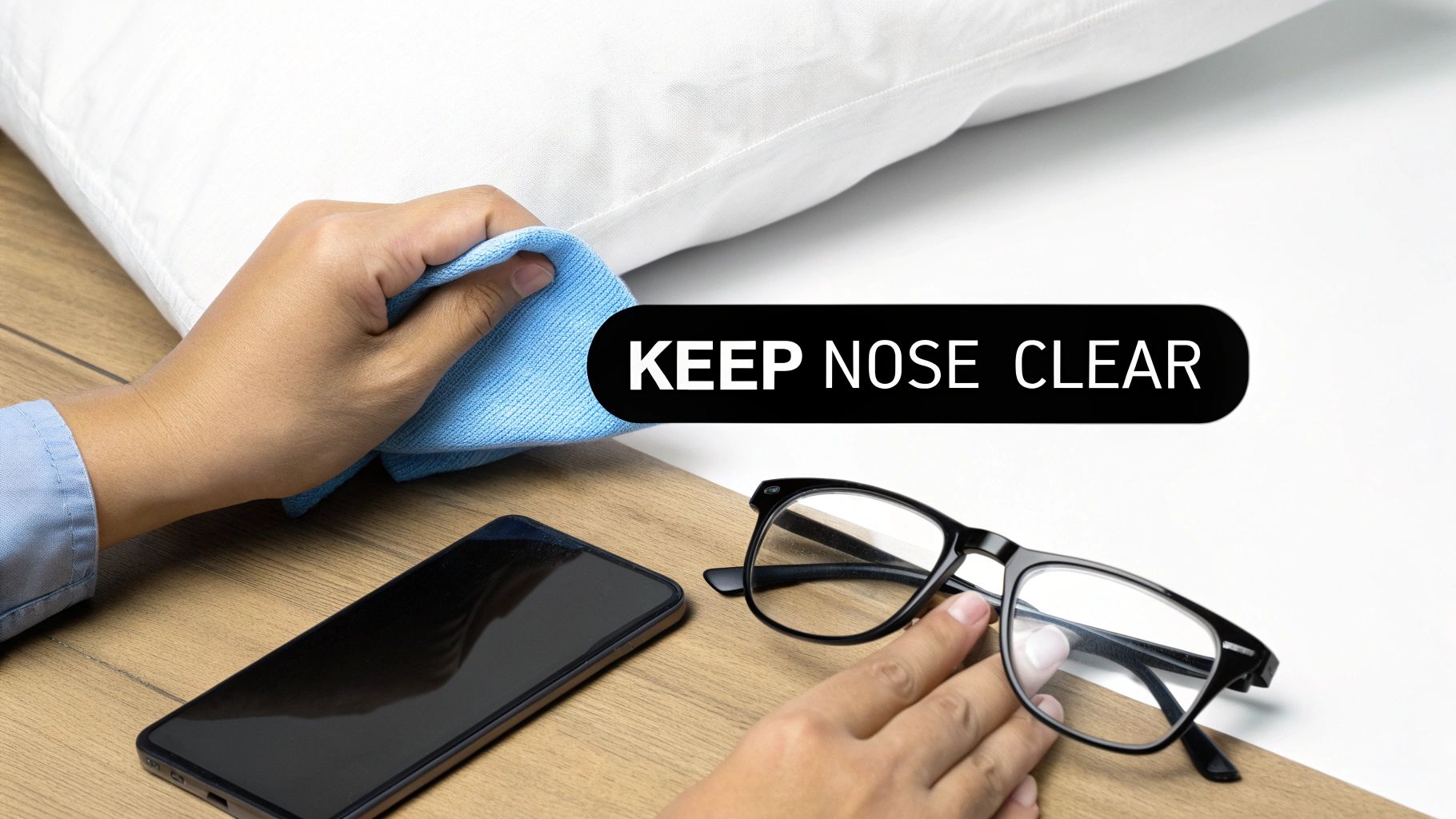
- Clean your glasses daily. Use an alcohol wipe to disinfect the bridge and nose pads where oil, sweat, and makeup build up.
- Wipe down your phone screen. Seriously, your phone is a breeding ground for bacteria. Cleaning it once a day prevents you from pressing all that gunk into your T-zone.
- Change your pillowcase often. Aim for every two or three days. Pillowcases collect a nasty mix of oil, dead skin cells, and hair products while you sleep.
These little habits might seem minor, but they disrupt the cycle of bacteria transfer that leads directly to clogged pores and angry breakouts. If you're looking for more ways to support your skin from all angles, there are some great holistic strategies on how to get clear skin naturally.
A Global Concern: The battle with acne is more than just a personal struggle; it’s a significant global health issue. Research tracking acne from 1990 to 2021 shows that its prevalence has been rising steadily. Interestingly, the burden was about 25% greater in young women than in young men. These statistics really highlight why combining effective treatments with supportive lifestyle changes is so crucial for long-term success. You can dive deeper into these global acne trends on PubMed.
Knowing When to Call a Dermatologist
A solid, science-backed skincare routine works wonders for most pimples on the nose. But let's be real—sometimes, over-the-counter products just don't cut it. It's crucial to know when to stop experimenting and call in a professional.
Think of a dermatologist not as a last resort, but as your partner in achieving clear skin. Recognizing the signs that you need their expertise can save you from months of frustration and even prevent lasting skin damage.
Persistent or Painful Breakouts
So, you've been diligently following a good routine for 10-12 weeks, but your nose breakouts haven't budged. That's a pretty clear signal it's time to book an appointment. A well-designed skincare plan should show some noticeable improvement within that window. If it doesn't, you're likely dealing with a more stubborn type of acne that needs prescription-strength help.
Another major red flag? Cystic acne. These aren't your typical pimples; they're large, painful, deep lumps that form under the skin. Cysts rarely come to a head and carry a high risk of scarring. Trying to handle these on your own is a recipe for disaster and can make things much worse. Professional treatment is non-negotiable here.
When Bumps Linger or Leave a Mark
Ever wonder if that stubborn red bump on your nose is actually a pimple? It might not be. Conditions like rosacea can cause redness and bumps that look strikingly similar to acne but require a totally different treatment plan. In fact, using harsh acne products on rosacea can seriously aggravate it. A dermatologist can give you an accurate diagnosis—the absolute first step to getting the right care.
It's also time to see a specialist if your breakouts consistently leave their mark, whether it's dark spots (post-inflammatory hyperpigmentation) or indented scars. A dermatologist has access to treatments like chemical peels, laser therapy, and powerful retinoids that can minimize scarring and even out your skin tone far more effectively than anything you can buy at the store.
Your Skin Health Partner: Seeing a dermatologist isn't admitting defeat; it's a proactive step toward getting the skin you want. They can provide advanced treatments and personalized advice that work with your at-home routine, helping you finally achieve clear, healthy skin.
Common Questions About Pimples on the Nose
https://www.youtube.com/embed/CrvhJpLCy0A
When you're dealing with stubborn pimples right in the middle of your face, it's natural to have a few questions. Let's tackle some of the most common ones I hear from clients and clear up the confusion.
Is It Actually Dangerous to Pop a Pimple on My Nose?
Tempting as it is, you really should resist. Your nose is part of what dermatologists sometimes call the "danger triangle" of the face. While it's rare, infections in this area have a small but direct route to the brain, which can lead to serious complications.
Beyond that scary (but unlikely) scenario, popping a pimple almost always makes things worse. You're essentially forcing bacteria and inflammation deeper into the skin, which means a longer healing time and a much higher risk of leaving behind a permanent scar. A far better move is to grab a spot treatment with Salicylic Acid. It gets into the pore and starts breaking down the clog from the inside out, no skin trauma required.
Why Do I Get So Many Blackheads on My Nose?
If you feel like your nose is a magnet for blackheads, you're not alone. This is completely normal because the skin on your nose has a higher concentration of sebaceous (oil) glands, and the pores tend to be larger than elsewhere on your face.
A blackhead is just an open pore that's filled with a mix of dead skin cells and oil. That dark color you see isn't dirt—it's what happens when the gunk in the pore gets exposed to air and oxidizes. To keep them at bay, consistent exfoliation with a Beta Hydroxy Acid (BHA) like Salicylic Acid is your best bet. It's oil-soluble, meaning it can dive deep into the pores and dissolve those stubborn blockages.
Can My Diet Really Cause Pimples on My Nose?
For a lot of people, the answer is a resounding yes. There's a growing body of research showing a clear link between acne and foods with a high-glycemic index. Think sugary drinks, white bread, pastries, and for some, even dairy.
These foods can spike your insulin levels, which in turn can trigger a hormonal cascade that kicks oil production into overdrive. More oil means a higher chance of clogged pores and, you guessed it, pimples on your nose. If you think your diet might be a trigger, try cutting back on these foods for a few weeks and see if your skin improves.
How Long Does It Take to Get Rid of a Nose Pimple?
Patience is key here, but you can speed things up. For a typical small, red pimple, a good spot treatment can bring down the inflammation and start the healing process within 1-3 days. Most will be gone within a week.
However, if you're dealing with a deeper, more painful nodule or cyst, you could be looking at a one-to-two-week healing time. The absolute best thing you can do to shorten its lifespan is to keep your hands off it. Picking and squeezing will only prolong the agony and set you up for scarring.
Ready to finally win the battle against stubborn nose pimples? Neutralyze offers a science-backed system featuring Mandelic and Salicylic Acid to clear pores, calm inflammation, and give you the clear skin you deserve. Discover your personalized routine at Neutralyze.


