

How to Reduce Acne Swelling and Calm Inflammation
When a pimple swells up, your immediate goal is to calm it down. The fastest way to do that is with a cold compress, which helps constrict blood vessels, and a targeted spot treatment packed with anti-inflammatory ingredients. Whatever you do, resist the urge to pop or pick at it. That’s a one-way ticket to pushing bacteria deeper, making the inflammation worse, and risking a permanent scar.
Why Your Pimple Is Swollen and How to Calm It Now
That angry, red bump on your face is more than just an inconvenience—it’s a tiny war zone. It all starts when a pore gets blocked with a mix of oil and dead skin cells, creating the perfect breeding ground for bacteria like Cutibacterium acnes. Your immune system spots the trouble and sends in white blood cells to fight the infection. This battle is what causes the tell-tale signs of inflammation: redness, pain, and, of course, swelling.
While this inflammatory response is your body's natural defense, the goal is to manage it without making things worse. Unfortunately, our first instinct is often the worst one. Aggressively scrubbing or trying to squeeze a swollen pimple only adds fuel to the fire. When you squeeze, you risk rupturing the follicle wall under the skin, which can spread the infection and make the swelling much worse. This kind of trauma is also a primary cause of those lingering dark spots (post-inflammatory hyperpigmentation) and permanent scars.
Knowing what’s happening beneath the surface helps you choose the right approach. Instead of waging war on your skin, you want to use gentle, targeted methods that help it heal.
Gentle At-Home Swelling Reduction
Your first line of defense is always something that soothes, not something that attacks. The most effective, simplest thing you can do at home is use a cold compress.
Just wrap an ice cube in a clean, soft cloth (like a paper towel or thin washcloth) and gently press it against the swollen pimple for about 10 minutes. The cold helps shrink the small blood vessels, which brings down redness and swelling almost immediately. You can repeat this a few times a day, but be sure to never put ice directly on your skin—that can cause an ice burn.
Keeping the area clean is also key. Use a mild, pH-balanced cleanser to wash your face. Harsh, stripping soaps or alcohol-heavy toners can damage your skin's protective barrier, which just leads to more irritation. After washing, gently pat your skin dry with a clean towel and, most importantly, leave the blemish alone.
This quick visual guide summarizes the best practices for handling a swollen pimple when you're at home.
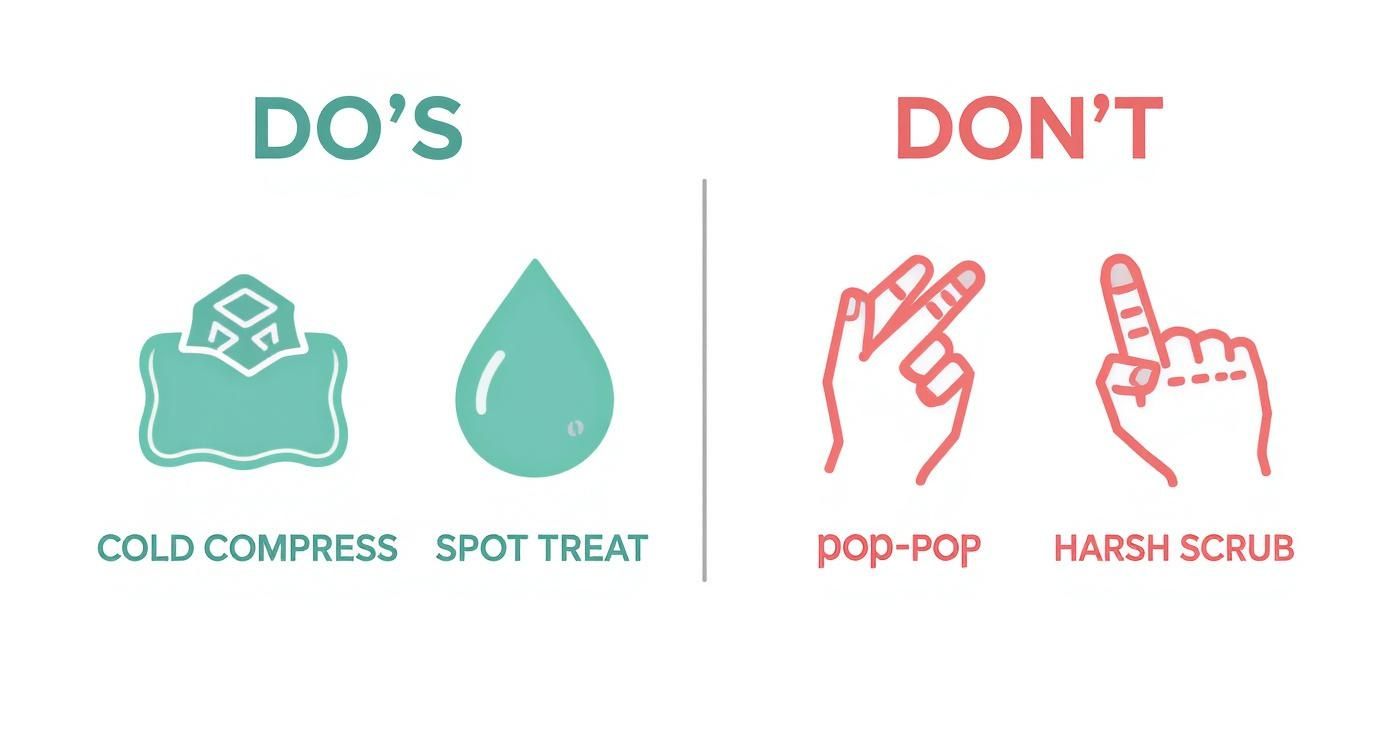
The main thing to remember is that smart acne care is about soothing inflammation, not attacking it. This approach is what prevents minor spots from turning into major problems with lasting marks.
To make things crystal clear, here’s a quick rundown of what to do versus what to avoid when you need fast relief.
Immediate Relief Methods Dos and Don'ts
| Do This (Safe & Effective) | Why It Works | Don't Do This (Harmful) | Why It's Harmful |
|---|---|---|---|
| Apply a Cold Compress | Constricts blood vessels, reducing redness and swelling. | Apply Heat | Increases blood flow, which can make inflammation worse. |
| Use a Gentle Cleanser | Removes surface bacteria without irritating inflamed skin. | Scrub Harshly | Physically irritates the pimple and can spread bacteria. |
| Apply a Spot Treatment | Delivers targeted anti-inflammatory ingredients to the site. | Pop or Squeeze It | Pushes bacteria deeper and causes trauma, leading to scars. |
| Keep Hands Off | Prevents transferring more bacteria and irritating the area. | Use Toothpaste/DIY Pastes | Contains irritants that can burn the skin and worsen swelling. |
Following the "Do" column gives your skin the best chance to heal quickly and cleanly, minimizing the risk of dark spots and scars.
For those times you really need a pimple gone by morning, knowing how to shrink zits overnight using the right techniques can be a lifesaver. Combining a cold compress with a powerful spot treatment can dramatically reduce swelling and redness while you sleep, stopping a small blemish in its tracks.
The Best Ingredients for Targeting Acne Inflammation

While a cold compress provides temporary relief, the key to lasting calm is using skincare with clinically proven, anti-inflammatory ingredients. To truly reduce acne swelling, you need powerful actives that soothe irritation, clear pore blockages, and help skin heal. This is where Neutralyze's expertise in ingredient science makes a difference.
Understanding what you put on your skin is crucial, especially for painful, swollen breakouts. Let’s explore two of the most effective ingredients for this job: Mandelic Acid and Salicylic Acid, the cornerstones of the Neutralyze system.
Mandelic Acid: The Gentle Giant for Inflammation
Derived from bitter almonds, Mandelic Acid is an Alpha-Hydroxy Acid (AHA) uniquely suited for calming angry, inflamed skin. Its power lies in its large molecular size—much larger than other AHAs like glycolic acid. This means it penetrates the skin more slowly and evenly, providing gentle exfoliation without the irritation that can worsen swelling.
Think of it as a strategic expert. Instead of aggressively stripping your skin, it gradually dissolves the bonds holding dead skin cells together. This prevents pores from clogging—a critical step in stopping inflammatory acne before it starts. But it’s more than just an exfoliator; Mandelic Acid has impressive anti-inflammatory and antibacterial properties, actively calming redness and soothing irritation. This makes it a fantastic choice for anyone with sensitive or cystic acne.
Neutralyze Insight: We selected Mandelic Acid for its unique ability to deliver powerful anti-inflammatory and exfoliating benefits with minimal irritation. This makes it a superior, science-backed choice for calming swollen, sensitive skin.
Its gentle resurfacing action also helps fade the dark spots (post-inflammatory hyperpigmentation) that swollen pimples leave behind. When you use a product featuring Mandelic Acid, like the Neutralyze Clearing Serum, you’re not just treating today’s breakout; you’re preventing the lasting marks of tomorrow.
Salicylic Acid: The Deep-Cleaning Specialist
While Mandelic Acid perfects the surface, Salicylic Acid goes deep to resolve the issue at its source. As a Beta-Hydroxy Acid (BHA), it is oil-soluble, allowing it to penetrate through sebum and deep into the pore lining where blockages begin.
Once inside, it dissolves the mix of oil and dead skin cells causing congestion. By clearing the pore from within, Salicylic Acid directly addresses the source of inflammation. It "unplugs" the blockage, releasing trapped material and allowing swelling to subside. This makes it incredibly effective for clearing existing blackheads and whiteheads before they can escalate into larger, painful pimples.
A sophisticated skincare system like Neutralyze recognizes the power of combining these two ingredients. By formulating Mandelic and Salicylic Acids together, we create a comprehensive solution:
- Mandelic Acid gently exfoliates the surface while calming existing redness and swelling.
- Salicylic Acid dives deep to clear current blockages and prevent new ones from forming.
This intelligent, multi-pronged approach ensures you’re fighting inflammation effectively. While treating skin topically, consider supporting it from within; the best vegan sources of anti-inflammatory omega-3 fatty acids can help maintain your skin's health. A holistic strategy often yields the most sustainable results.
Building a Daily Routine to Prevent Swollen Acne
While spot treatments are essential for emergencies, the ultimate goal is to prevent swollen acne from developing. This requires shifting from a reactive mindset to a proactive, preventative one. A consistent daily routine, built on effective ingredients, is your best defense against the inflammation that fuels painful blemishes.
The objective isn't to use countless products but to use the right products correctly and consistently. A solid routine works by managing oil, keeping pores clear, and supporting a healthy skin barrier. It’s this daily maintenance that helps skin stay calm, balanced, and resilient.
The Four Pillars of an Anti-Inflammatory Routine
An effective routine doesn't need to be complex. It relies on four core pillars that work synergistically to prevent the conditions leading to acne swelling. The most critical element? Consistency. Adhering to your routine day in and day out is what delivers lasting change.
Here’s what a well-structured, preventative routine looks like:
- A Gentle Cleanser: The first step is to wash away impurities, excess oil, and bacteria without stripping your skin. Harsh cleansers can damage the skin’s natural barrier, ironically triggering more inflammation.
- A Targeted Treatment Serum: This is your power step. A serum featuring Mandelic Acid is an ideal choice, as it gently exfoliates and calms inflammation, helping to keep pores clear and prevent new breakouts.
- A Non-Comedogenic Moisturizer: Hydrated skin is healthy skin. A quality moisturizer supports your skin barrier and prevents the dryness that can lead to an overproduction of oil. Always choose one labeled "non-comedogenic," meaning it won't clog pores.
- Daily Sunscreen: Sun exposure is a major inflammation trigger and can worsen post-acne dark spots. A broad-spectrum sunscreen is non-negotiable for protecting vulnerable, acne-prone skin.
Putting Your Routine Into Action
So, what does this look like in practice? Your morning and evening routines will vary slightly, but both are vital for keeping your skin clear and calm.
Your Morning Game Plan:
- Cleanse: Start with a gentle face wash to clear away oil and sweat that accumulated overnight.
- Moisturize: Apply a lightweight, non-comedogenic moisturizer to hydrate and create a protective base for the day.
- Protect: The most crucial step: apply a broad-spectrum sunscreen with at least SPF 30. This shields your skin from UV-induced inflammation. Don't skip it.
Your Evening Wind-Down:
- Cleanse: Wash your face thoroughly to remove sunscreen, makeup, and daily grime.
- Treat: This is the ideal time for a targeted treatment. A product like the Neutralyze Clearing Serum delivers its dose of Mandelic Acid to gently exfoliate and reduce inflammation while you sleep, when skin is in peak repair mode.
- Moisturize: Finish by locking in hydration with your moisturizer to support your skin barrier all night long.
By committing to a simple yet effective daily regimen, you address the root causes of breakouts before they have a chance to become swollen and painful. This proactive approach is the foundation for achieving and maintaining consistently clear, calm skin.
How Your Diet and Lifestyle Affect Skin Inflammation
https://www.youtube.com/embed/7SuT1u9AAYk
A great skincare routine is your first line of defense, but what you do every day—what you eat, how you sleep, how you handle stress—plays a massive role in the inflammation that shows up on your face. Think of it this way: your daily habits can either fan the flames of a breakout or help put them out for good.
The link between what we eat and how our skin behaves isn't just a hunch; it's solid science. Foods with a high-glycemic index (think sugary drinks, white bread, and processed snacks) make your blood sugar skyrocket. That spike sets off a hormonal chain reaction that can ramp up oil production and inflammation, basically rolling out the red carpet for swollen, angry pimples.
Foods That Fuel vs. Foods That Fight Inflammation
One of the best things you can do for your skin is to get smart about what’s on your plate. It’s not about a perfect diet, but about making small, consistent changes that help calm your system from the inside out.
Try to load up on foods known for their anti-inflammatory properties. These powerhouses are usually loaded with antioxidants and healthy fats that give your skin the support it needs to stay balanced.
- Omega-3 Fatty Acids: Salmon, walnuts, and flaxseeds are packed with these. They are famous for their ability to cool off inflammation system-wide.
- Antioxidant-Rich Foods: Think color. Berries, dark leafy greens like spinach, and vibrant veggies are full of vitamins that shield your skin from damage and dial down redness.
- Low-Glycemic Options: Simple swaps can make a big difference. Choosing whole-grain bread over white or sweet potatoes instead of regular ones helps keep your blood sugar stable and inflammation under control.
This isn’t just theory. Research shows a clear connection between modern lifestyles and worsening skin problems. Between 1990 and 2021, rates of acne vulgaris shot up among teens and young adults, with young women seeing about 25% higher rates than men. Since this spike is most noticeable in developed countries, it’s a strong signal that our environment and habits are major culprits.
Stress and Sleep: Your Skin’s Best Friends or Worst Enemies
Ever gotten a massive, painful pimple right before a job interview or a first date? It’s not your imagination. Stress causes your body to pump out cortisol, a hormone that tells your oil glands to work overtime and cranks up inflammation.
Learning to manage that stress is a game-changer for your skin. Whether it's hitting the gym, meditating for a few minutes, or just going for a walk, finding a healthy outlet can have a direct, calming effect on your complexion.
And then there's sleep—it's completely non-negotiable. When you're in a deep sleep, your body is hard at work repairing itself, mending damaged cells, and lowering inflammation. Aiming for 7-9 hours of quality sleep a night is one of the kindest things you can do for your skin.
Getting a handle on the bigger picture, like what causes chronic inflammation in your body, really helps connect the dots. When you pair smart topical treatments with healthier habits, you create a powerful one-two punch to prevent and reduce acne swelling.
When It's Time to See a Dermatologist About Swelling
A consistent at-home routine is your first line of defense, but it's just as important to know when to call in a professional. Some types of acne swelling simply won't budge with over-the-counter products, and trying to handle them on your own can, unfortunately, lead to permanent scarring.
If you’re dealing with deep, large, painful lumps under your skin that never seem to form a head, you're likely facing cystic or nodular acne. This isn't your typical pimple. These are severe forms of inflammatory acne where the problem lies much deeper in the skin.
How to Spot Severe Acne
Cystic and nodular acne feel different from a standard whitehead. They feel more like hard, sensitive bumps buried under the surface. These can stick around for weeks or even months, and because the inflammation is so intense, they carry a very high risk of scarring.
Here’s a quick way to tell them apart:
- Nodules: These are firm, painful, inflamed bumps deep in the skin. They feel solid to the touch.
- Cysts: These are similar but are filled with pus. They often feel a bit softer than nodules but can be just as painful, if not more so.
If this sounds like what you're experiencing, it’s time to book an appointment with a board-certified dermatologist. Even the most powerful OTC ingredients can't penetrate deeply enough to treat the root of the problem, making professional-grade treatment non-negotiable.
A dermatologist can give you a proper diagnosis and unlock access to prescription-strength treatments. This is the key to getting severe inflammation under control and preventing scars before they form.
What to Expect From a Dermatologist Visit
Don't be intimidated by the idea of seeing a specialist! Think of it as the most empowering step you can take for your skin's health. During your visit, the doctor will take a look at your skin, talk about your acne history, and ask about what you’ve already tried.
From there, they can recommend solutions that are far more potent than anything you can buy at the store.
Your treatment plan might include:
- Prescription Topicals: Think stronger retinoids (like tretinoin) or powerful antibiotic creams designed to get deep into the pores and fight serious inflammation.
- Oral Medications: For severe acne, a topical-only approach often isn't enough. Your doctor might suggest antibiotics, hormonal regulators (like birth control or spironolactone), or isotretinoin to tackle the internal triggers.
- In-Office Procedures: Got a single cyst that’s causing a world of pain? A dermatologist can perform a quick cortisone injection directly into the lesion. This can dramatically reduce acne swelling and pressure in just a day or two, offering immediate relief and lowering the risk of a scar.
Getting an expert involved isn't giving up—it's getting smart about your skin's future. It’s the best way to break the cycle of inflammation and damage for good.
Answering Your Questions About Acne Swelling
When you're dealing with a red, angry pimple, you've probably got questions. Getting clear, no-nonsense answers is the first step to feeling in control and making the right moves for your skin. Let's tackle some of the most common ones.
How Long Does It Take for the Swelling to Go Down?
For a typical inflamed pimple, you can usually expect to see a real difference in 24 to 48 hours—if you’re consistent. That means using a good spot treatment and resisting the urge to poke and prod. Anti-inflammatory ingredients are your best friend here, as they target the root of the swelling.
But when you're up against something more serious, like a deep cyst or nodule, you have to be more patient. These can stick around for a week or longer because the inflammation is trapped way down in the deeper layers of your skin. If you've been treating a painful spot diligently for a week with zero improvement, that’s your cue to call a dermatologist.
Can I Put Ice Directly on a Pimple?
Please don't. You should never apply ice directly to your skin. It can cause a nasty ice burn, leaving you with another problem to solve on top of the pimple.
Here’s the right way to do it: grab an ice cube or a small ice pack and wrap it in a thin, clean cloth (a paper towel works in a pinch). Gently press this cold compress against the swollen spot for 5-10 minutes. Give your skin a 10-minute break, and then you can reapply if you need to. This approach safely reduces swelling and redness by constricting blood vessels, without damaging your skin.
Is It Ever Okay to Pop a Swollen Pimple?
The short answer is no. Honestly, it’s never a good idea, and there's a solid reason why every dermatologist will tell you the same thing.
When you squeeze a swollen pimple, you're almost guaranteed to push some of that bacteria and gunk deeper into the pore. This will make the inflammation worse, not better. On top of that, you’re significantly upping your chances of ending up with a permanent scar or one of those stubborn dark spots, also known as post-inflammatory hyperpigmentation.
The smartest move is always to treat the inflammation where it starts. A spot treatment with effective ingredients like Salicylic or Mandelic Acid gets to the root cause, calming the swelling without traumatizing your skin.
Ready to stop reacting to breakouts and start preventing them? The science-backed formulas from Neutralyze are designed to calm inflammation and clear skin for good. Discover a routine that delivers real results by visiting https://www.neutralyze.com.


