

Do Pimple Patches Work on Cystic Acne? (2026 Real Answer)
So, you're staring down a deep, painful cystic blemish and wondering if that little patch in your cabinet can do anything about it. Let's get right to it: the answer isn't a simple yes or no.
While your standard pimple patch is a hero for surface-level zits, cystic acne is a much deeper problem. But don't lose hope—the world of pimple patches is evolving, and newer technology is designed specifically for these stubborn, under-the-skin spots.
The Honest Answer on Using Patches for Cystic Acne
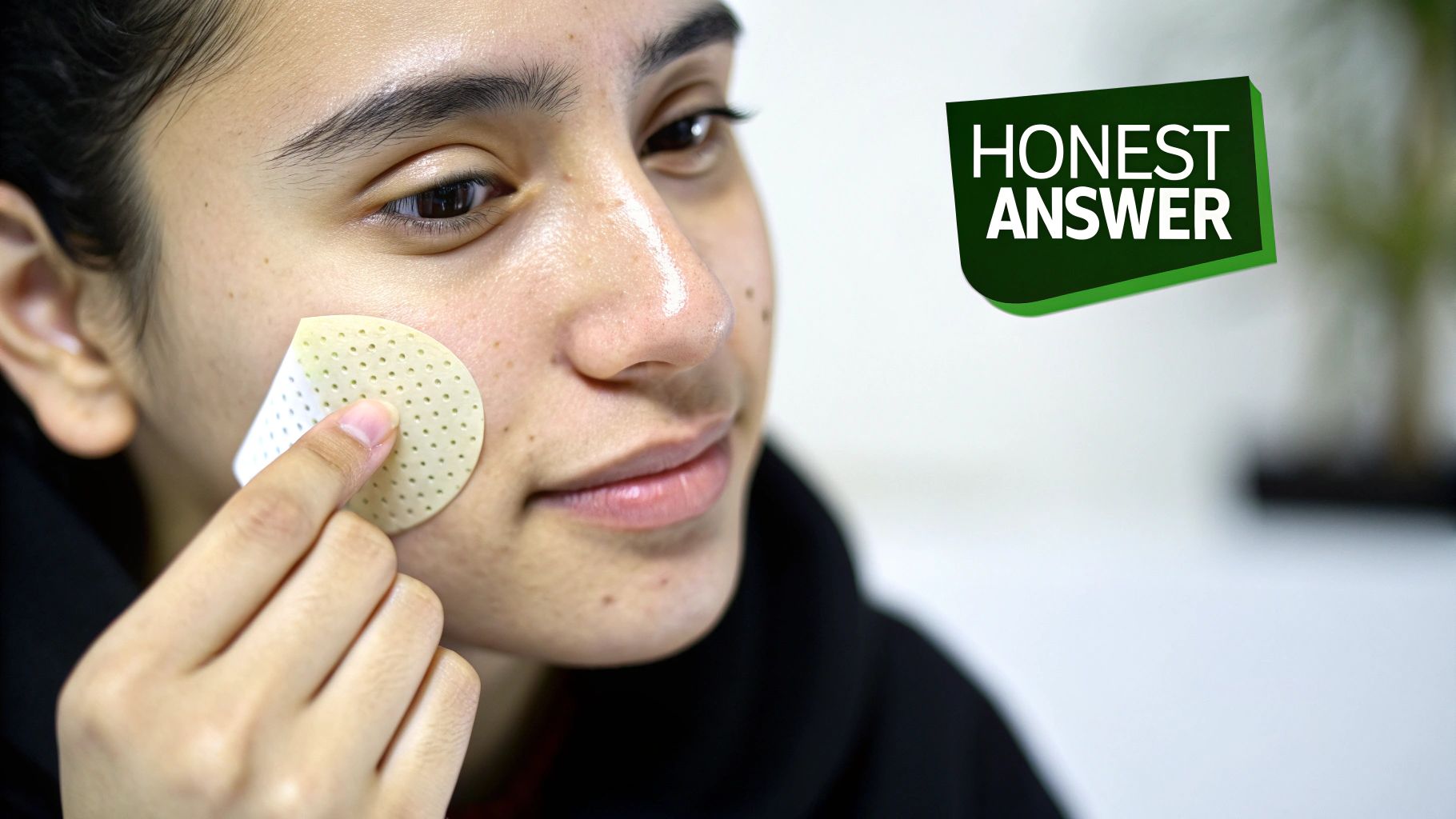
If you’ve ever felt that throbbing pressure of a cyst forming, you already know that slapping on a typical spot treatment can feel like a waste of time. This guide will cut through the noise and show you which patches actually stand a chance, which are better left for whiteheads, and how to use them to get the best results.
Knowing what's in the patch is what really matters. At Neutralyze, we believe in the power of science-backed ingredients to get to the root of severe acne. Formulations engineered with active ingredients like Salicylic Acid and Mandelic Acid are designed to calm inflammation and clear things out from the inside.
Why Standard Patches Miss The Mark
Most pimple patches you see are made of hydrocolloid, a material that originally comes from the world of wound dressings. It’s fantastic at creating a moist, sealed environment over a blemish, which helps it draw out all the gunk from a pimple that has come to a head.
This is perfect for a classic whitehead. The problem is, cystic acne doesn’t play by those rules. It’s an infection and inflammation trapped deep within the dermis, far beyond the reach of a simple surface patch.
A standard hydrocolloid patch is like a paper towel on a spilled drink. It’s great for wiping up the mess on the surface, but it can’t fix the leaky pipe under the floorboards. Cystic acne is that leaky pipe—it needs a more direct fix.
The Rise Of Advanced Patch Technology
This is where the good news comes in. Skincare technology has moved beyond simple covers, leading to the creation of microneedle patches (also called microdart patches). These aren't just patches; they're sophisticated delivery systems.
These advanced patches are covered in tiny, dissolvable darts made from powerful acne-fighting ingredients. When you press one onto your skin, the microscopic needles painlessly penetrate the top layer, creating tiny channels to deliver active compounds right to the source of the inflammation. It’s a game-changer because it sends help exactly where it’s needed most.
For a quick breakdown, here’s how different patches stack up for cystic acne.
Pimple Patch Suitability for Cystic Acne
| Patch Type | Mechanism | Best For | Effectiveness on Cystic Acne |
|---|---|---|---|
| Standard Hydrocolloid | Absorbs pus and fluid from the surface. | Whiteheads, pustules, and pimples that have come to a head. | Low. Cannot penetrate deep enough to address the inflammation at its source. |
| Microneedle/Microdart | Tiny, dissolvable darts deliver active ingredients (like salicylic acid, tea tree oil) deep into the skin. | Early-stage, deep, and inflamed pimples, including cysts and nodules. | Moderate. Can help reduce inflammation and speed up healing, but may not be a standalone cure. |
| Medicated Hydrocolloid | A standard hydrocolloid patch infused with surface-level active ingredients. | Surface pimples that are also red and inflamed. | Low to Moderate. The ingredients help with surface inflammation but still struggle to reach the depth of a true cyst. |
Ultimately, while no patch is a magic wand for cystic acne, microneedle technology offers a much more promising approach than traditional hydrocolloid options.
Interest in using a pimple patch for cystic acne has been growing steadily, with both dermatologists and skincare enthusiasts watching closely. New formulations are on the horizon, with advanced hydrocolloid and microneedle patches expected to hit major markets in the U.S. and South Korea.
Early studies show these next-gen patches can help by absorbing fluid, calming inflammation, and protecting the area from bacteria, making them a solid complementary treatment. For a deeper dive into how these patches function on deep acne, The Minor Surgery Center's blog offers some great insights.
Why Cystic Acne Is More Than Just Skin Deep
Before we can find the right solution, we need to get real about the problem. A little whitehead is one thing—a surface-level annoyance you can deal with. But cystic acne? That's a whole different beast. The best way to think about it is like an underground volcano. The real trouble isn't the tiny bump you see on top; it's the intense, fiery chaos happening way down below.
These deep, painful lumps form when a nasty mix of oil (sebum), dead skin cells, and bacteria gets trapped far down in your hair follicles. This isn't a surface clog. It’s a full-blown infection brewing in the dermis, the deeper layer of your skin. Your immune system spots the trouble and goes into overdrive, sending in the troops. The result is a massive inflammatory response that creates a tender, swollen, and often throbbing cyst.
You’ll notice that cystic blemishes rarely come to a “head” like other pimples. That’s because the infection is just too deep. It’s also why your go-to spot treatments and standard hydrocolloid patches don't seem to do much. They’re designed for the surface, and they simply can’t reach deep enough to calm the real storm.
The Battle Brewing Beneath Your Skin
The way a cyst forms is a multi-step saga that sets it apart from your average pimple. Once you understand the process, it becomes crystal clear why you need a specialized game plan.
- The Deep Clog: It all starts when a pore gets plugged up way down low with a stubborn combination of excess oil and dead skin cells.
- Bacterial Invasion: Once trapped, C. acnes bacteria have a feast. They multiply like crazy in the oily environment, kicking off an infection.
- Massive Inflammation: Your body’s alarm bells go off. It sends in white blood cells to fight the infection, which causes all that signature swelling, redness, and pain deep in the skin.
- The Walls Come Down: Sometimes, the inflammation is so intense it actually ruptures the follicle wall. This spills the infection into the surrounding tissue, creating an even bigger, angrier lesion.
This isn’t just a simple blockage. It's a complex, deep-seated war. That's why a pimple patch for cystic acne can’t just be a simple cover-up; it needs to deliver active ingredients that can get down there and help defuse the situation.
Hormones: The Main Instigators
So what’s triggering this intense internal meltdown? For a lot of people, the answer is hormones. Androgens, in particular, can send oil production into overdrive, making those deep clogs much more likely. For some, understanding personal hormonal health, including metrics like the Free Androgen Index, can be a game-changer in getting to the bottom of persistent cystic acne.
This hormonal link is why cystic acne often flares up during times of major hormonal shifts—think puberty, that time of the month, pregnancy, or even periods of high stress.
Understanding cystic acne isn't just about skincare. It’s about recognizing a complex biological process. The pain and swelling are signs of a deep, internal battle that surface-level products can't win on their own.
And this is a huge issue. Acne is incredibly common, affecting about 85% of people between 12 and 24 years old, and cystic acne accounts for some of the most challenging cases. As lifestyles get more stressful, the demand for truly effective treatments is only growing. This is where targeted solutions, specifically designed with potent ingredients like Salicylic and Mandelic Acid, come into play. They’re built to tackle that deep inflammation and bring some real, lasting relief.
How Advanced Pimple Patches Target Deep Blemishes
To really get why some pimple patches can tackle a deep, painful cyst while others can't, you have to understand that we're talking about two totally different technologies. It's a classic case of using the right tool for the job.
First, you have your standard pimple patches. These are typically made of hydrocolloid, a medical-grade material that’s basically a super-sponge for gunk. When you stick one on a whitehead that has already come to a head, it creates a moist, protected environment and literally pulls the pus and fluid out. They’re fantastic for surface-level zits.
But here’s the catch: they only work on the surface. A painful, under-the-skin cyst has no opening, no "head." That inflammation is brewing deep down in the dermis, far beyond the reach of a simple hydrocolloid sticker.
The Breakthrough: Microneedle Technology
This is where things get interesting. Skincare science hit a wall with surface treatments, so innovators created a much smarter tool: the microneedle patch. This isn't just a simple cover; it's a sophisticated delivery system built to get active ingredients past the skin's tough outer defenses.
Think of a patch covered in hundreds of tiny, self-dissolving darts. These aren't scary needles—they're microscopic cones made of solidified, acne-fighting ingredients. When you press the patch onto a deep blemish, these micro-darts painlessly create tiny channels in the top layer of skin and then dissolve, releasing their payload right at the source of the inflammation. It's like sending a special forces team to neutralize the problem from the inside out.
This diagram helps visualize why cystic acne is such a challenge. It’s like a volcano forming deep underground, and a surface treatment just can't stop the eruption.
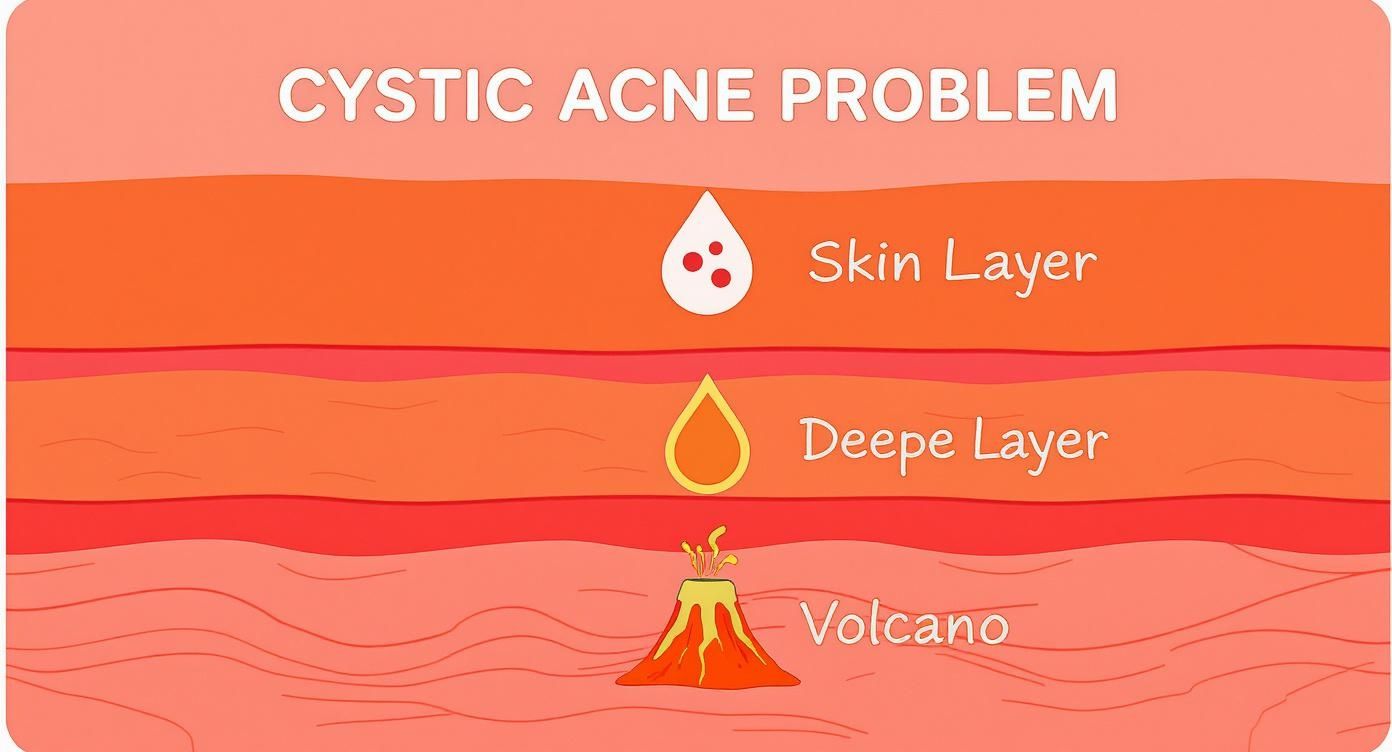
This is precisely why a smarter delivery system is non-negotiable for calming that deep-seated inflammation before it gets worse.
Why The Right Ingredients Are Critical
Of course, a fancy delivery system is only as good as what it's delivering. For a pimple patch for cystic acne to make a real difference, it has to be armed with ingredients that can calm inflammation and clear out pores from within.
This is where the formulation becomes everything. The most effective patches use a blend of powerhouse ingredients to attack the problem from multiple angles. This is our core philosophy at Neutralyze—educating users on the science behind ingredients so they can choose the best solution. Let’s look at some key players.
| Key Ingredients in Advanced Acne Patches |
| :--- | :--- | :--- |
| Ingredient | Primary Function | Benefit for Cystic Acne |
| Salicylic Acid | BHA Exfoliant | Oil-soluble, it dives deep into pores to dissolve the mix of oil and dead skin cells that creates clogs. It gets to the root cause of the blockage. |
| Mandelic Acid | AHA Exfoliant | A gentler AHA that exfoliates the surface, reduces inflammation, and has antibacterial properties to calm angry, red blemishes without harshness. |
| Hyaluronic Acid | Hydrator | Keeps the area hydrated and helps other active ingredients dissolve and absorb more effectively, all while preventing dryness and irritation. |
| Niacinamide | Anti-inflammatory | A superstar at calming redness and irritation. It also helps regulate oil production and strengthen the skin barrier, preventing future issues. |
| Tea Tree Oil | Antimicrobial | A natural ingredient known for its potent antimicrobial properties, helping to kill acne-causing bacteria deep within the follicle. |
By combining ingredients like these into a microneedle system, a patch can finally do what was once thought impossible: send a targeted dose of calming, clearing ingredients straight to the heart of a cystic blemish.
The magic of an advanced pimple patch isn't the patch itself, but the targeted delivery of clinically proven ingredients. It’s about getting the right solution to the right place at exactly the right time.
This targeted approach is why the market is booming. The global demand for anti-acne dermal patches hit around USD 510.8 million in 2021, a number driven by people searching for effective, non-invasive treatments. Patches featuring ingredients like salicylic acid are leading the charge because of their proven ability to reduce the inflammation and redness of stubborn acne. You can learn more about the anti-acne patch market's growth and the science driving it. It all points to a clear shift toward smarter, ingredient-focused solutions for complex skin problems.
Getting the Most Out of a Pimple Patch on Cystic Acne
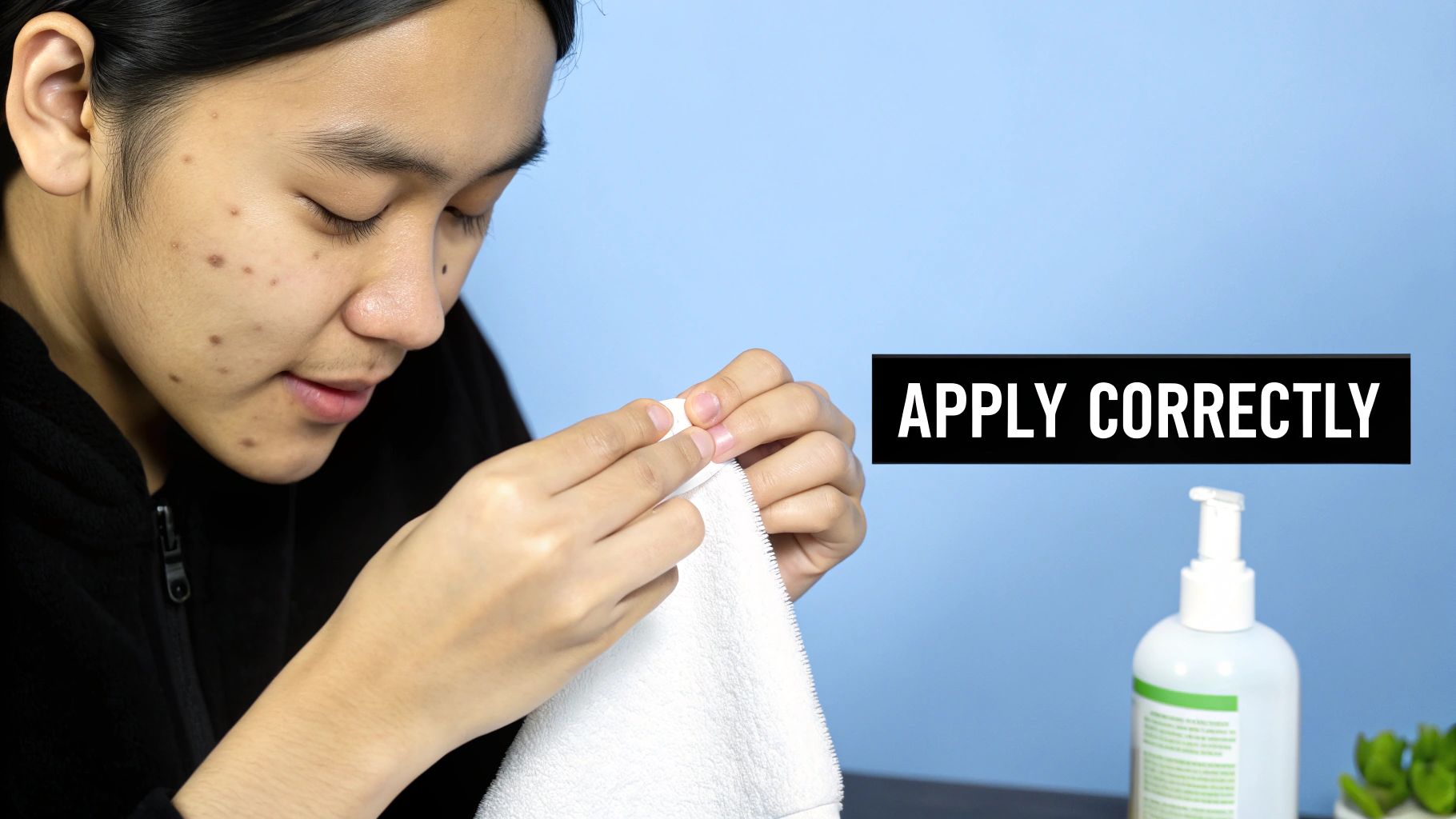
Having the right tool is one thing, but knowing how to use it correctly is what really counts. A high-tech microneedle patch can be a game-changer for a deep, painful cyst, but its success really boils down to how you apply it.
Think of it this way: you wouldn't slap a bandage on a dirty wound and expect it to heal perfectly. The same idea applies here. A little prep work and the right touch are crucial for giving those active ingredients the best shot at calming that deep-seated inflammation.
Prepping Your Skin Before You Patch
Before you even tear open the packaging, the first move is to create a clean, receptive surface. Sticking a patch on unclean skin just traps oil and bacteria underneath—the absolute last thing you want when you're dealing with an angry, inflamed cyst.
Follow these simple, but non-negotiable, steps:
-
Cleanse Gently: Start by washing your face with a mild, non-comedogenic cleanser. Resist the urge to scrub; that will only make the cyst angrier. Just use lukewarm water and a light touch. A cleanser with Salicylic Acid can be a nice bonus for clearing away surface gunk without over-drying.
-
Pat Completely Dry: This is a big one. Any moisture on your skin will keep the patch from sticking and can get in the way of the microneedles. Gently pat the area with a clean towel, then give it another minute or two just to be sure it's bone-dry.
-
Hold Off on Other Products: Don't apply any other spot treatments, serums, or heavy moisturizers where you plan to put the patch. They create a barrier that will stop the microneedles from ever reaching the skin.
Once your skin is perfectly prepped, you're ready to go.
The Right Way to Apply a Microneedle Patch
Applying a microneedle patch isn't quite like slapping on a regular hydrocolloid sticker. Those tiny, dissolvable darts need to make good contact with your skin to do their job, and that takes a specific technique.
First, carefully peel the patch from its backing. Try your best not to touch the middle part where all the little microneedles are. Line it up so it’s centered directly over the heart of the blemish.
Now for the important part. Instead of just sticking it on, gently but firmly press down on the center of the patch for about 15-20 seconds. You might feel a tiny, painless prickling feeling. That’s a good sign! It means the microneedles have broken through the very top layer of skin and can start dissolving to release their ingredients.
The whole point is to make sure those microneedles are properly embedded. That’s how they deliver calming ingredients directly to the source of the inflammation. A gentle, sustained press is the key to unlocking the patch's full potential.
Once it's on, leave it be for at least six to eight hours—overnight is perfect. This gives the microneedles enough time to dissolve completely and let the ingredients get fully absorbed.
Common Mistakes to Sidestep
Even with the best intentions, it’s easy to make a small slip-up that makes your patch less effective. Steering clear of these common mistakes will help you get the results you're after.
- Applying to Dirty or Damp Skin: This is the number one mistake. A patch on wet or unclean skin won't stick well and, worse, it can trap breakout-causing bacteria.
- Expecting an Overnight Vanishing Act: Cystic acne runs deep and is notoriously stubborn. A patch can bring down pain and redness in a big way, but it's not going to make a large cyst disappear by morning. Patience is key.
- Using on an Open Blemish: Microneedle patches are designed for those under-the-skin, "blind" pimples. If you've picked at the spot or it has a visible head, a classic hydrocolloid patch is a better option to pull out all the gunk.
- Touching the Microneedles: The oils and germs on your fingers can contaminate the patch and ruin the delicate micro-darts before they even get to your skin.
- Overdoing It: Give your skin a breather between applications. Using patches consistently is great, but keeping a spot covered 24/7 can sometimes lead to irritation.
Building a Skincare Routine Beyond the Patch
Think of a good pimple patch as your go-to emergency response team. When a deep, painful cyst starts to surface, it's an incredible tool for managing the immediate crisis. But winning the long-term war against cystic acne isn't about just fighting battles—it’s about building a strong defense.
That’s where a consistent, daily skincare routine comes in. It's not just a nice-to-have; it's the foundation for lasting clarity. A solid routine works day in and day out to prevent that deep, painful inflammation from ever getting a foothold, turning your pimple patch for cystic acne into a powerful backup instead of your first line of defense.
The Core Components of an Anti-Acne Routine
Building an effective daily routine doesn't need to be a 10-step ordeal. It really boils down to three essential pillars that keep your skin balanced, clear, and resilient. Each step has a specific job in creating an environment where cystic acne simply can't thrive.
The whole goal is to get ahead of the problem. You want to manage the main culprits—excess oil, dead skin cells, and bacteria—before they team up to trigger one of those underground volcanic eruptions.
- A Gentle, Effective Cleanser: This is your first line of defense. A great cleanser gets rid of surface gunk, excess oil, and impurities without stripping your skin. Over-drying your skin can backfire and cause it to produce even more oil.
- A Targeted Treatment Serum: Here's the real workhorse. This step delivers potent, active ingredients deep into the pores to exfoliate, calm inflammation, and fight off acne-causing bacteria.
- A Non-Clogging Moisturizer: Don't skip this, even if you have oily skin! A good non-comedogenic moisturizer locks in hydration and supports your skin's natural barrier. A strong barrier is less prone to the irritation that can lead to breakouts.
This simple, three-step approach gives your skin the daily maintenance it needs to stay ahead of the game.
Why Key Ingredients Make All the Difference
The true power of any routine is in its ingredients. For skin that’s prone to cystic acne, you need ingredients that do more than just clean the surface. At Neutralyze, we've focused on a synergistic blend of acids that tackle acne right at its source by calming inflammation and clearing pores from the inside out.
Two ingredients are absolute superstars in this fight: Salicylic Acid and Mandelic Acid. Think of them as a dynamic duo for deep pore care.
Salicylic Acid is a Beta-Hydroxy Acid (BHA). Because it's oil-soluble, it can dive deep into your pores and dissolve that sticky mess of oil and dead skin cells that creates clogs. Meanwhile, Mandelic Acid, a gentler Alpha-Hydroxy Acid (AHA), works on the skin's surface to exfoliate, dial down redness, and fight bacteria without the irritation some other acids can cause.
Together, these ingredients offer a comprehensive attack plan that keeps pores clear and inflammation in check. It's this science-backed approach that powers the Neutralyze system, providing the daily defense you need for consistently clear, healthy skin. While patches are great for targeted relief, a robust routine is essential for long-term success. This holistic approach should include good hygiene and strategies to prevent skin infections.
Consistency Is Your Greatest Ally
At the end of the day, the best skincare routine is the one you actually stick with. Cystic acne doesn't pop up overnight, and it won't disappear overnight either. It takes time for active ingredients to really make a difference—to regulate oil, clear out existing clogs, and calm the deep-seated inflammation behind those painful spots.
By committing to your routine every morning and night, you’re giving your skin the continuous support it needs. Over time, this consistent care strengthens your skin's natural defenses, making breakouts less frequent and less severe. You can learn more in our guide on how to treat cystic acne at home. Before you know it, that pimple patch becomes a tool for minor touch-ups, not a daily necessity.
When It’s Time to See a Dermatologist for Your Cystic Acne
Even the best over-the-counter strategies have their limits. Knowing when to wave the white flag and call in a professional is a smart, powerful move for your skin's health. While a solid routine and a good pimple patch for cystic acne can certainly help with damage control, some situations just need a doctor's touch.
Think of it this way: your daily skincare is like maintaining your car, and pimple patches are the spare tire you use for a flat. But when the whole engine is misfiring, you need a certified mechanic. Seeing a dermatologist isn't admitting defeat—it's getting the specialized care your skin deserves.
Red Flags That Mean You Need a Pro
If any of these sound familiar, it’s a clear sign your cystic acne needs a more robust treatment plan than what you can buy at the store. A dermatologist can prescribe treatments that go beyond the surface to tackle severe inflammation from the inside out.
Here are the big signals:
- Your Breakouts Are Widespread and Won't Quit: If you’re constantly juggling several painful cysts at once, it points to a more systemic issue that topical products just can't handle alone.
- Nothing You've Tried Is Working: You’ve been disciplined for months with proven fighters like Salicylic Acid, but your skin isn't getting any better.
- The Pain and Swelling Are Intense: Cysts that are incredibly painful to the touch or visibly swollen might need medical intervention, like a cortisone shot, to bring down the inflammation fast and prevent a messy rupture.
- You're Starting to See Scars: This is one of the biggest risks with deep, cystic acne. If you notice your blemishes are leaving behind indented "ice pick" scars or stubborn dark spots, a dermatologist can help stop permanent damage in its tracks.
When you're dealing with a serious skin condition, bringing in a medical expert is the best way to protect your skin for the long haul. At Neutralyze, our goal is to give you honest guidance, and that includes telling you when it’s time to seek professional medical care.
Got Questions About Cystic Acne Patches? Let's Clear Things Up
Even after you've got the basics down, a few questions always pop up. Let's tackle some of the most common ones I hear, so you can use these little patches effectively and feel good about your game plan.
Can I Use a Patch on a Cyst That Hasn't Come to a Head?
You can, but you have to be picky about the type of patch you use. Your standard hydrocolloid patch won't do a thing here. It needs an opening—a "head"—to pull gunk out of, so sticking one on a deep, under-the-skin cyst is a waste of time.
This is where a microneedle patch comes in. These are specifically engineered for blind pimples. The tiny, self-dissolving darts gently pierce the very top layer of skin, delivering anti-inflammatory ingredients like Salicylic Acid right to the heart of the problem.
How Fast Do Microneedle Patches Actually Work?
This is where you need to manage your expectations. A deep, angry cyst isn't going to disappear in a couple of hours, patch or no patch. It’s a marathon, not a sprint.
That said, many people feel a noticeable drop in pain and swelling within the first 8-12 hours. For the best shot at shrinking the blemish, you'll want to leave the patch on for at least six, maybe even eight hours (overnight is perfect). You should see a real difference in the size and redness within 24 to 48 hours as those ingredients get to work calming things down from the inside out.
Think of a microneedle patch as a way to fast-forward the healing process. It's designed to cut the lifespan of a deep cyst dramatically, which not only provides relief but also lowers the odds of it leaving behind a scar.
Are There Any Side Effects I Should Worry About?
For the most part, well-made microneedle patches are very well-tolerated. But if you have particularly sensitive skin, you might run into a few minor, temporary issues.
- A Little Irritation: You might see some slight redness or feel a bit of tenderness right where the patch was. This is usually just a reaction to the adhesive or the active ingredients and typically fades quickly.
- Some Dryness: Ingredients like salicylic acid are fantastic for inflammation, but they can sometimes leave the surrounding skin a little dry or flaky.
- Allergic Reactions: This is pretty rare, but it's possible to be sensitive to an ingredient or the adhesive. If you notice any major itching, swelling, or a rash, take the patch off and stop using it.
If you're worried, just do a quick patch test on your arm before putting one on your face.
Can I Put Makeup Over a Pimple Patch?
It really depends on the patch itself. Those thicker microneedle patches are meant for serious treatment and are pretty hard to hide under foundation.
Some companies, however, make incredibly thin hydrocolloid patches with tapered edges that are practically invisible. You can definitely apply makeup over those—just use a light touch so you don't peel up the edges. When you're using a microneedle patch, though, it’s best to apply it to clean, bare skin overnight. You want to give those ingredients a clear path to do their job without makeup getting in the way.
A Neutralyze pimple patch is an amazing spot treatment, but it's just one piece of the puzzle. To really get clear skin and keep it that way, you need a consistent daily routine powered by proven, science-backed ingredients. You can check out our complete acne-fighting systems at https://www.neutralyze.com to build a solid defense against all types of breakouts.


