

Does Niacinamide Fade Acne Scars? (Real 2026 Results)
Absolutely, niacinamide is a powerhouse for fading the discoloration and red marks that acne leaves behind. Think of it as a reset button for your post-breakout skin, working diligently to bring back a clear, even-toned complexion. Its magic lies in its ability to calm down angry inflammation and stop the process that creates those stubborn dark marks.
At Neutralyze, we believe in building skincare solutions around proven, science-backed ingredients, and niacinamide is a cornerstone of our philosophy for achieving truly healthy skin.
Your Quick Guide to Healing Acne Scars
When a breakout finally decides to pack its bags, the battle often feels far from over. You're frequently left with frustrating reminders—red, purple, or brown marks that can hang around for weeks, sometimes even months.
It's important to know that these aren't true, indented scars. They're actually a type of skin discoloration called post-inflammatory hyperpigmentation (PIH) or post-inflammatory erythema (PIE). This is exactly where bringing niacinamide into your routine can be a total game-changer.
Niacinamide, which is just a form of vitamin B3, is a true multi-tasker for acne-prone skin. It doesn’t just help with active pimples; it truly shines when it comes to the cleanup duty. Its main job is to soothe the skin and help it get back to a state of balance, which is absolutely essential for healing.
How Niacinamide Helps Heal
So, what’s the secret sauce? Niacinamide tackles those post-acne marks from a few different angles, making it a key player in any routine focused on getting clear, healthy-looking skin.
Here's how it works:
- It Blocks Pigment Transfer: After a pimple, your skin cells can go into overdrive, producing and passing around excess pigment. Niacinamide essentially steps in and intercepts this process, preventing new dark spots from setting up shop and encouraging existing ones to fade away.
- It Strengthens Your Skin Barrier: A healthy skin barrier acts like a security guard for your skin. Niacinamide helps rebuild this protective barrier by ramping up the production of ceramides—the natural lipids that keep your skin cells strong and sealed. A stronger barrier means your skin can hold onto moisture better and heal much more effectively.
- It Calms Redness and Irritation: That lingering redness you see after a zit is a classic sign of inflammation. Niacinamide has impressive anti-inflammatory abilities that help quiet down that irritation, visibly reducing the red marks and making your overall skin tone look more even.
By tackling discoloration, barrier health, and inflammation all at once, niacinamide offers a gentle yet powerful solution. It’s a core part of a science-backed strategy to not just treat acne, but also to manage its aftermath—aligning perfectly with Neutralyze’s commitment to effective, non-prescription skincare.
To give you a quick snapshot of how niacinamide works its magic, here’s a simple breakdown.
Niacinamide at a Glance for Healing Acne Marks
| Benefit | How It Helps Heal Scars | Best for This Mark Type |
|---|---|---|
| Fades Dark Spots | Interrupts the transfer of excess melanin (pigment) between skin cells, preventing spots from getting darker and helping them fade. | PIH (Post-Inflammatory Hyperpigmentation) - The brown or dark spots. |
| Reduces Redness | Has powerful anti-inflammatory properties that calm irritated skin and reduce the lingering redness from a healed blemish. | PIE (Post-Inflammatory Erythema) - The red or purplish spots. |
| Strengthens Skin | Boosts ceramide production, reinforcing the skin's natural barrier. A stronger barrier heals more efficiently and is less prone to irritation. | Both PIH & PIE - A healthy barrier is crucial for overall skin recovery. |
This multi-pronged approach is what makes niacinamide such a reliable ingredient for anyone looking to clear up the lingering evidence of past breakouts. It supports your skin’s own healing process for a clearer future.
How Niacinamide Fades the Lingering Marks from Acne
When a breakout finally clears, it often leaves behind frustrating reminders—those stubborn red or brown spots. This is where niacinamide comes in, working behind the scenes to help your skin heal and even out its tone.
Think of niacinamide as a skilled director for your skin's pigment-making process. After a pimple, your skin can go into overdrive producing melanin (the stuff that gives skin its color), leading to those dark marks known as post-inflammatory hyperpigmentation (PIH). Niacinamide gently steps in and intercepts the excess pigment, stopping it from reaching the skin's surface. It's not bleaching the spots, but rather preventing them from getting darker and helping them fade naturally.
It's All About Building a Stronger Skin Barrier
Beyond just fading spots, niacinamide is a true team player for your skin's overall health. Its secret weapon? The ability to strengthen your skin's natural protective barrier. Imagine your skin barrier is like a brick wall, and the "mortar" holding it all together is made of lipids like ceramides.
Acne can seriously compromise this wall, leaving it weak and leaky. This leads to dryness, irritation, and a much slower healing process. Niacinamide gets to work by encouraging your skin to produce more of its own ceramides, essentially rebuilding and reinforcing that mortar. A stronger barrier doesn't just feel better—it's more efficient at healing, which is exactly what you need to clear up the aftermath of a breakout.
This diagram breaks down the key ways niacinamide helps restore your skin after acne.
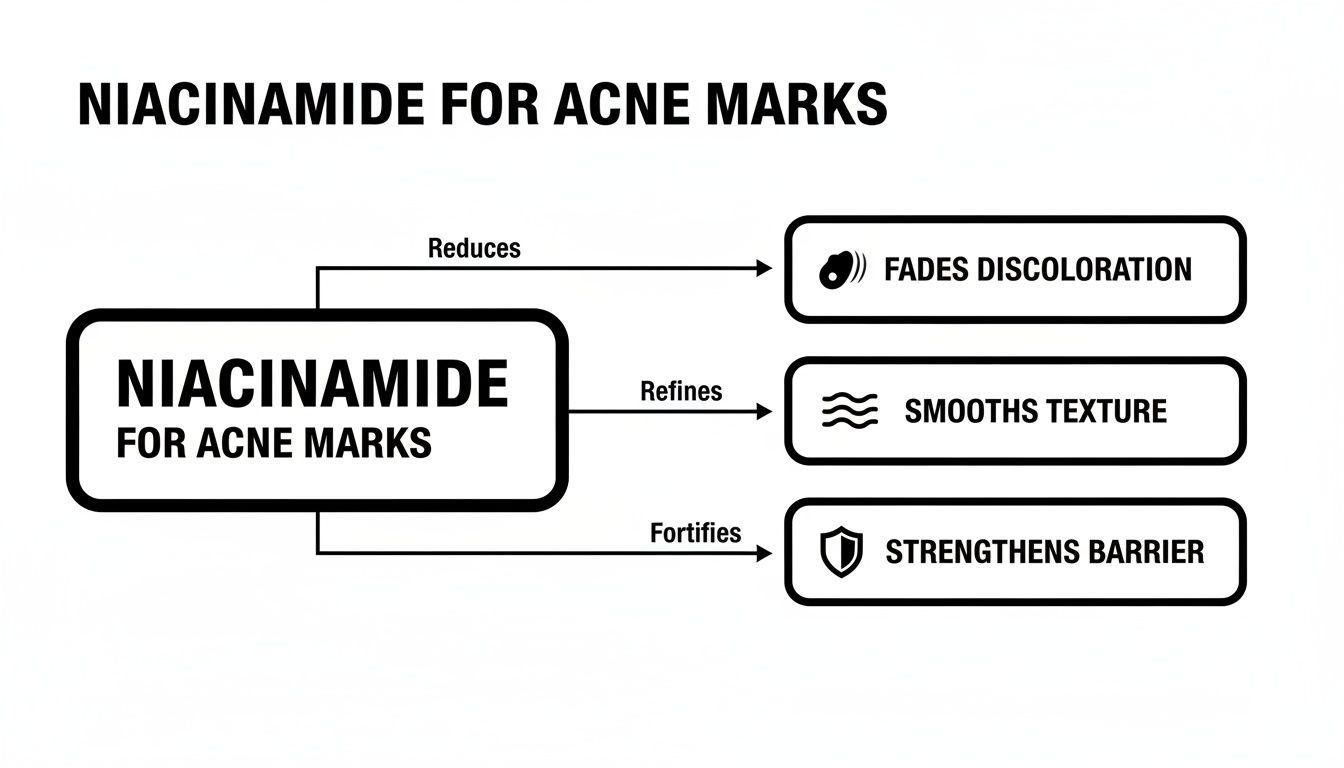
As you can see, it's a multi-pronged approach: it tackles discoloration, helps smooth out texture, and builds up your skin's fundamental defenses.
More Than a One-Trick Pony
Niacinamide is so beloved in dermatology because it does so much more than just one thing. It’s not just fading marks; it's creating a healthier environment for your skin to thrive, which is a game-changer when you're dealing with both active breakouts and the scars they leave behind.
And this isn't just talk—the science backs it up. Studies show niacinamide can inhibit melanin transfer by 35-68% and give your natural ceramide synthesis a boost of up to 4 times. A well-known 2011 study found that a 4% niacinamide formula gave 44% of participants "good-to-excellent" improvement on their hyperpigmentation in just eight weeks, with significantly fewer side effects than traditional treatments. If you want to dive deeper, you can explore more about these powerful findings on niacinamide and its benefits.
Niacinamide improves skin function from the inside out. It doesn't just patch up past damage; it makes your skin more resilient against future problems. Think of it as a long-term strategy for achieving the calm, clear skin we're all after.
Adding niacinamide to your routine is about giving your skin the support it needs to heal itself properly. It calms things down, gets pigment production under control, and rebuilds your skin’s defenses. It's a complete support system for bringing back a smooth, even-toned complexion.
The Science Behind Niacinamide for Skin Repair
It’s one thing to hear that an ingredient is a "miracle worker," but it’s another thing entirely to see the proof. When it comes to using niacinamide for acne scars, the trust we have in it isn't based on hype or passing trends; it's built on solid, scientific evidence. Here at Neutralyze, we're obsessed with ingredients that are backed by serious dermatological research. This ensures you're not just trying another product, but investing in a proven solution for clearer skin.
This commitment to science means we dive deep into the clinical studies that show exactly how and why niacinamide is so effective. It’s a true standout because it works gently yet powerfully, offering results that can rival prescription-strength options but with a much friendlier safety profile. That makes it an ideal cornerstone for anyone managing the frustrating aftermath of moderate to severe acne.
Niacinamide Versus the Gold Standard
To get a real sense of its power, let's look at a landmark 2011 double-blind, randomized clinical trial. In this study, researchers put 4% niacinamide head-to-head against 4% hydroquinone—long considered the "gold standard" for treating hyperpigmentation. The study focused on melasma, a stubborn form of discoloration that behaves very similarly to the dark marks acne leaves behind.
After just eight weeks, the results were pretty remarkable. Good-to-excellent improvement was seen in 44% of the niacinamide users, which stacked up impressively against the 55% achieved with hydroquinone. But here’s the kicker, and it’s a big one: safety. Only 18% of niacinamide users reported mild side effects, compared to a significant 29% with hydroquinone. This study essentially confirmed that niacinamide offers comparable effectiveness for fading dark spots with far less risk of irritation. You can read the full study to see the data for yourself.
This is a huge deal, especially because skin that's recovering from acne is already sensitive and compromised. A gentle approach isn't just a preference; it's a necessity for healing properly without kicking up more inflammation.
A Supportive Player in Your Acne Routine
More recent research continues to shine a light on niacinamide’s incredible supportive role. One study found that using a moisturizer containing both ceramides and niacinamide alongside standard acne treatments (like retinoids or benzoyl peroxide) actually led to better outcomes. The people in the study saw a greater reduction in breakouts and, just as importantly, experienced less of the dryness and irritation that often come with powerful acne medications.
This shows that niacinamide doesn’t just work in a vacuum; it makes your entire skincare routine perform better. It calms the skin, strengthens its protective barrier, and creates a healthier environment for your other active ingredients to do their jobs more effectively.
Think of it as the ultimate team player in your skincare lineup. It's precisely why niacinamide is a core component of any smart, science-backed approach to managing acne and the marks it leaves behind. And while niacinamide is a powerhouse for skin healing, it’s always good to understand other ingredients that help out, like exploring the science of copper peptides for skin repair, which are also known for their impressive restorative properties. Ultimately, choosing Neutralyze means you're choosing a brand dedicated to proven ingredients that deliver real, visible results.
Adding Niacinamide to Your Skincare Routine
Knowing how niacinamide works is one thing, but figuring out how to actually use it is where the real results begin. If you've got sensitive or acne-prone skin, a thoughtful approach is everything—it's the key to getting that calm, clear complexion without accidentally triggering more irritation.
The trick is to start smart. It’s easy to get wowed by serums boasting super-high concentrations, but the science keeps pointing back to a sweet spot: formulas with 2-5% niacinamide are proven to be incredibly effective for fading marks and reinforcing the skin barrier. This range gives you all the good stuff with a very low risk of sensitivity, making it the perfect place to start.
Building Your Niacinamide-Powered Routine
Adding a new active into the mix doesn't have to be a headache. The secret is layering your products in the right order so that each one can do its job without interference. For anyone using targeted treatments like ours at Neutralyze, this step-by-step method is non-negotiable for success.
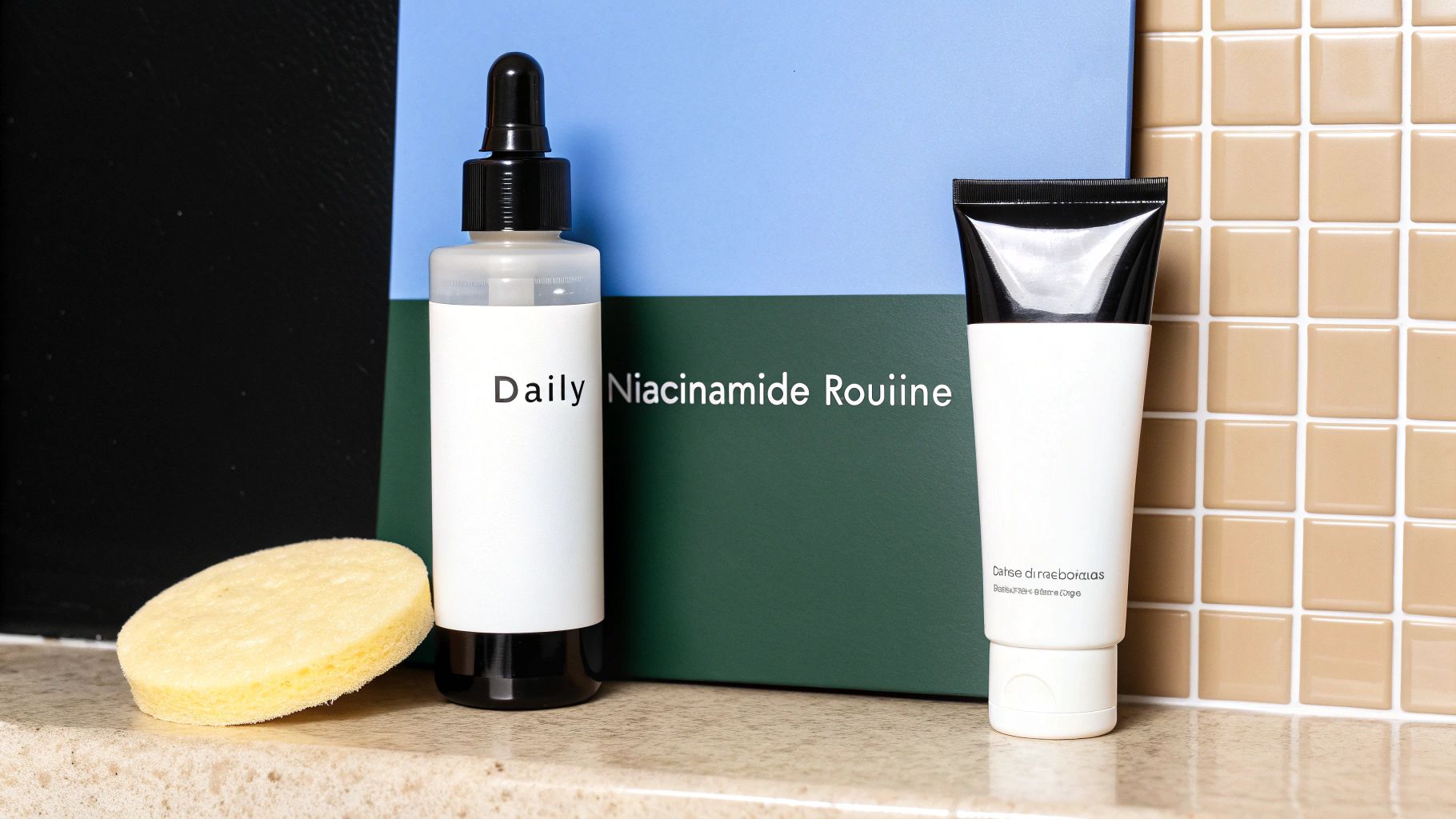
Here’s a simple way to get niacinamide into your daily routine:
- Start with a Clean Slate: Always kick things off with a gentle cleanser that won’t strip your skin. This preps your face by getting rid of any gunk and oil, creating a perfect canvas for the ingredients to come.
- Apply Your Neutralyze Treatments: This is the heart of your acne-fighting plan. Put your targeted Neutralyze products on first so their active ingredients can sink in deep and get to work on those breakouts.
- Layer on Your Niacinamide Serum: While your skin is still a little damp from the previous step, pat on a few drops of your niacinamide serum. Slightly damp skin is more receptive, helping the serum absorb beautifully.
- Lock in Hydration: Always finish with a non-comedogenic moisturizer. This final step seals in all those powerhouse ingredients and keeps your skin barrier hydrated and happy.
Once you get a feel for the benefits of niacinamide, the next move is learning how to create an effective skincare routine that combines it with other powerful ingredients.
Pairing Niacinamide with Other Actives
One of the best things about niacinamide is that it plays so well with others. Its naturally calming, anti-inflammatory vibe makes it the perfect teammate for more intense acne fighters like salicylic acid or retinoids. In fact, it can even help offset the dryness and irritation those stronger treatments sometimes bring to the party.
This isn’t just talk—it’s backed by solid research. One randomized, double-blinded study found that when people used a ceramide-niacinamide moisturizer alongside standard acne treatments (like benzoyl peroxide and adapalene), they saw a major drop in both red, angry pimples and total acne spots compared to those using the treatments alone.
By soothing inflammation and strengthening the skin barrier, niacinamide helps your primary acne treatments work more efficiently. This creates a balanced, effective system for managing both active acne and the stubborn marks left behind, positioning Neutralyze as your trusted guide to achieving truly healthy skin. For more tips on combining powerful ingredients, check out our guide on using niacinamide with hyaluronic acid at https://www.neutralyze.com/blogs/news/skincare-routine-with-niacinamide-and-hyaluronic-acid.
Setting Realistic Timelines for Fading Scars
When you're trying to clear up the stubborn marks left by acne, patience is your greatest ally. It's completely normal to want to see those scars disappear overnight, but skincare is a marathon, not a sprint. Knowing what to expect when using niacinamide for acne scars is the key to staying motivated and recognizing your progress.
The good news is you won't have to wait forever to see the first signs of improvement. Within the first 2 to 4 weeks of consistent, twice-a-day use, you'll likely notice your skin just feels better—calmer, more hydrated, and less irritated. That's niacinamide’s anti-inflammatory magic getting to work right away.
When the Real Magic Happens
The most noticeable changes, like the actual fading of those pesky red and brown spots, take a bit longer. Think of it like slowly dimming a light; each day, the marks get a little less obvious, but it takes time for them to fade into the background completely.
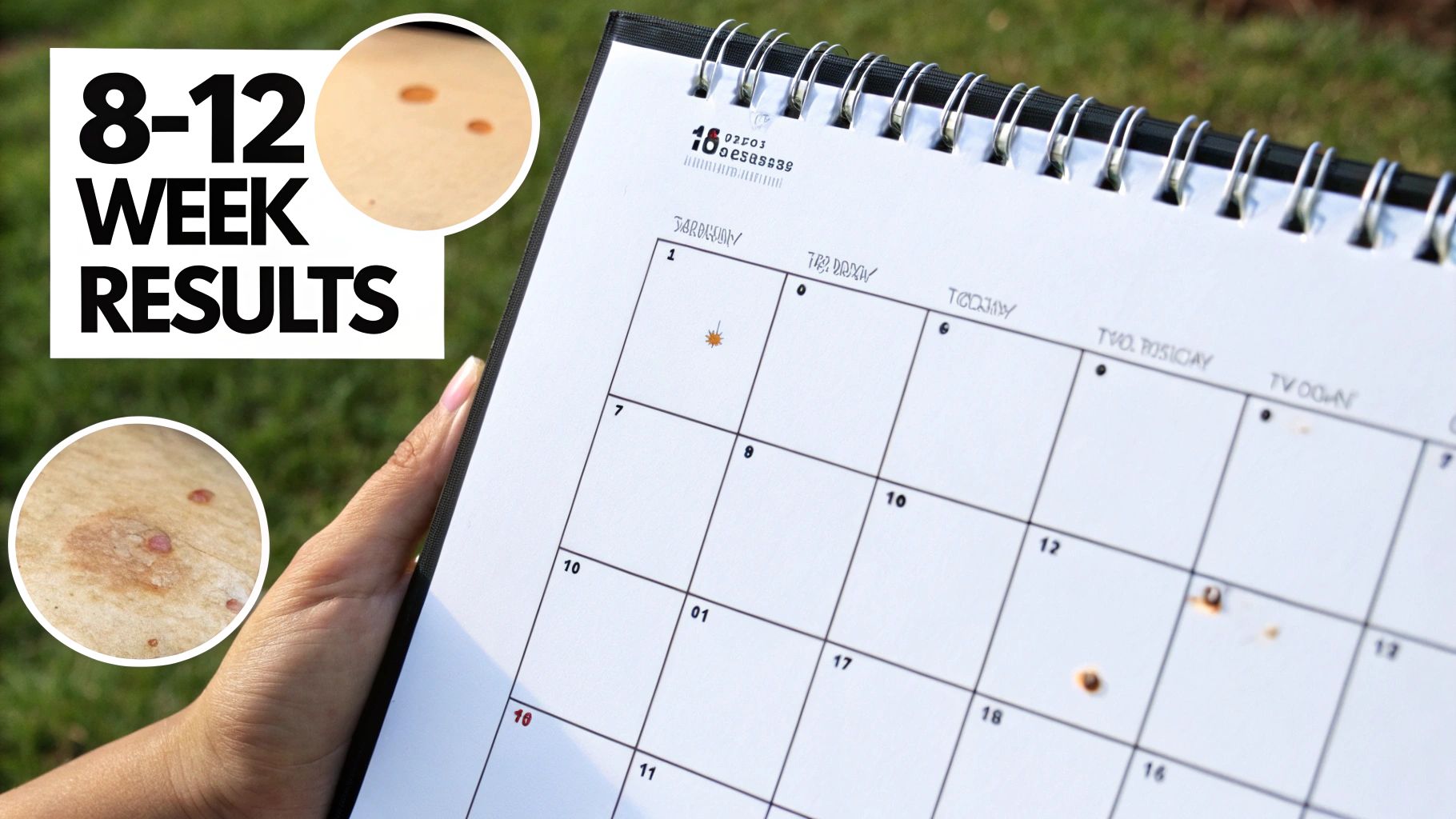
For most people, a significant reduction in post-inflammatory hyperpigmentation (PIH) and post-inflammatory erythema (PIE) becomes visible around the 8 to 12 week mark. This is the sweet spot where niacinamide's pigment-regulating powers really start to deliver. Sticking with your Neutralyze routine consistently through this phase is what gets you to that even-toned finish line.
Skincare is about consistency, not intensity. The cumulative effect of daily application is what drives real, lasting improvement in skin tone and texture. Trust the process and give your skin the time it needs to heal and repair itself.
Understanding Niacinamide's Strengths
It's also really important to be realistic about what kind of scars niacinamide can tackle. Its main strength is in dealing with discoloration and improving the overall surface of your skin.
Here's where it truly excels:
- Flat, Discolored Marks: Niacinamide is a superstar at fading the red, purple, or brown spots that linger long after a breakout has healed.
- Uneven Skin Tone: It helps smooth everything out by calming redness and keeping pigment production in check, giving you a more uniform complexion.
However, for deeper, indented scars—what dermatologists call atrophic scars, like boxcar or ice pick scars—niacinamide alone isn't the solution. These scars are caused by damage to the collagen deep within your skin and typically need professional treatments like microneedling or laser therapy to see significant improvement. While niacinamide is a fantastic supporting player for overall skin health, it can't fill in those indentations. Knowing this helps you build the right game plan for your skin's unique needs.
So, Why Is Everyone Talking About Niacinamide for Acne?
If you're dealing with moderate to severe acne, you know it’s not just about zapping a single pimple. It’s a battle on multiple fronts. This is where niacinamide comes in—it’s less of a single-target ingredient and more of a total skin-support system.
What makes it so special is its versatility. It doesn't just go after active breakouts; it also tackles the stubborn, discolored marks they leave behind. This is why it’s a non-negotiable for anyone serious about getting clear skin. It works by dialing down inflammation to calm those angry, red pimples and, at the same time, gets your skin’s oil production under control, which helps prevent future clogs.
The Perfect Teammate for Powerful Acne Treatments
Niacinamide’s supportive role is a perfect match for advanced systems like Neutralyze's salicylic acid + mandelic acid routine. While our actives are busy clearing active acne, niacinamide is working in the background to fortify your skin's natural barrier and fade the post-breakout spots.
Here’s a simple way to think about it:
- It Soothes: Niacinamide calms irritation, making your skin less reactive and better prepared for powerful acne-fighting ingredients.
- It Strengthens: By helping rebuild your skin’s defenses, it speeds up the healing process so you bounce back from breakouts faster.
- It Fades: It directly targets the frustrating red and brown marks that can hang around for months after a pimple is gone.
This tag-team approach creates a comprehensive cycle of care—tackling acne from every angle, from prevention to treatment and all the way through recovery. It's a smart, gentle way to get the clear, even-toned complexion you’re working toward.
We've seen it with our community of over 475,000 customers: adding niacinamide into a routine isn't just another step—it's a game-changer. It’s the key to building calm, resilient skin and helps solidify Neutralyze as a complete solution for anyone ready to win the fight against acne for good.
Got Questions About Niacinamide for Acne Scars? We Have Answers.
Diving into a new skincare ingredient can feel like you're studying for a test. But don't worry, we've put together a cheat sheet with quick, clear answers to the most common questions about using niacinamide for acne scars. Think of this as your personal guide to getting started with confidence.
Can I Use Niacinamide Every Day for Acne Scars?
Absolutely—in fact, you should. Niacinamide is known for being incredibly gentle, which makes it a perfect candidate for daily use, both in the morning and at night.
Consistency is really the name of the game here. Applying it twice a day, right after cleansing and before your moisturizer, gives your skin a constant stream of its goodness. This steady supply is what helps it work its magic on strengthening your skin barrier and fading those stubborn marks.
What Percentage of Niacinamide Is Best for Acne Scars?
You might think more is better, but with niacinamide, that's not necessarily true. You don't need a super-high concentration to get fantastic results.
Dozens of clinical studies have shown that formulas with just 2% to 5% niacinamide are incredibly effective for reducing hyperpigmentation, soothing redness, and smoothing out skin texture. This range is the sweet spot—it delivers all the science-backed benefits with a very low risk of irritation.
While you'll see higher percentages on the market, a well-formulated 5% product is a brilliant and safe choice for targeting acne marks. It strikes the perfect balance between being potent enough to work and gentle enough for sensitive, acne-prone skin.
How Long Does It Take for Niacinamide to Fade Acne Scars?
Skincare is a marathon, not a sprint, and patience is your best friend. You’ll likely see some of the initial benefits—like less redness and more hydrated skin—within the first 2 to 4 weeks.
But the real work on dark spots takes a bit more time. For significant fading of those post-acne marks, you'll want to stick with it for at least 8 to 12 weeks of consistent, twice-a-day use. Hang in there; the results are worth it.
Does Niacinamide Help with Pitted Acne Scars?
This is a great question. Niacinamide is a powerhouse for any scar that involves discoloration, like the red or brown spots a pimple leaves behind (post-inflammatory hyperpigmentation or erythema).
However, it’s not the go-to solution for deep, indented, or pitted scars (also known as atrophic scars). These types of scars involve a loss of collagen in the skin and usually need professional treatments like microneedling or lasers to help rebuild that structure.
Ready to put powerful, science-backed ingredients to work for your skin? The Neutralyze system is expertly formulated to handle the entire acne lifecycle—from calming active breakouts to fading the stubborn marks they leave behind.


