

Maskne: Why It Happens and How to Fix It
Approximately one in three mask users develops mask-associated acne, with a pooled prevalence of 31% in a systematic review. The problem is driven by friction, trapped heat, humidity, occlusion, and microbiome shifts, not poor hygiene alone.
You may recognize the pattern: your skin was manageable, then repeated mask wear brought clusters of bumps along the cheeks, chin, nose, or around the mouth. You cleanse more aggressively, add a scrub, and the skin becomes tighter and redder while new lesions keep appearing. That cycle is common because maskne is not just dirt trapped on the face. It's a local skin-environment problem, and the wrong response can damage the barrier that helps keep inflammation controlled.
What Is Maskne and Why It Affects You
Your skin may be calm for months, then develop bumps along the chin, cheeks, nose, or mouth after repeated mask wear. Scrubbing harder often makes the pattern worse. Maskne is a local barrier and microbe problem first, so gentle, consistent chemistry usually works better than aggressive exfoliation.
Maskne is the practical name for acne or acneiform eruptions that develop or worsen in areas repeatedly covered by a face mask. Dermatology literature recognizes it as a consequence of prolonged mask exposure, not a social-media skincare term. A 2022 systematic review of 24 observational studies found a pooled prevalence of 31%, with a 95% confidence interval of 26%–37%, among mask users assessed for acne outcomes (systematic review of mask-associated skin conditions).
The visible pattern varies. One patient may have closed comedones on the chin, another inflamed papules along the mask edge, and someone with no acne history may develop roughness and small bumps after long, repeated wear. The common factor is repeated pressure, rubbing, heat, moisture, and covered follicles. Poor hygiene alone does not explain it, and harsher cleansing can weaken the barrier that helps regulate irritation and microbial balance.
It isn't limited to healthcare workers
During the pandemic, mask-related skin problems affected professional mask users and the general public. In a Polish survey conducted in 2020, 98.3% of healthcare workers and 87.3% of non-healthcare workers reported some facial skin problem, particularly around the mouth, nose, and cheeks. These figures come from a 2020 Polish survey of mask users summarized in the systematic review above.
Maskne may be new-onset acne, not only a flare of longstanding acne. In one study, 97 participants, representing 23.5% of those without prior acne, reported new facial acne after prolonged continuous mask use, while 59.9% of participants who already had acne reported worsening (study of new and aggravated mask-related acne). Skin type, previous sensitivity, mask fit, and exposure duration all influence the outcome.
Clinical perspective: A breakout under a mask does not mean you have failed at hygiene. It means the skin is responding to repeated physical and environmental stress.
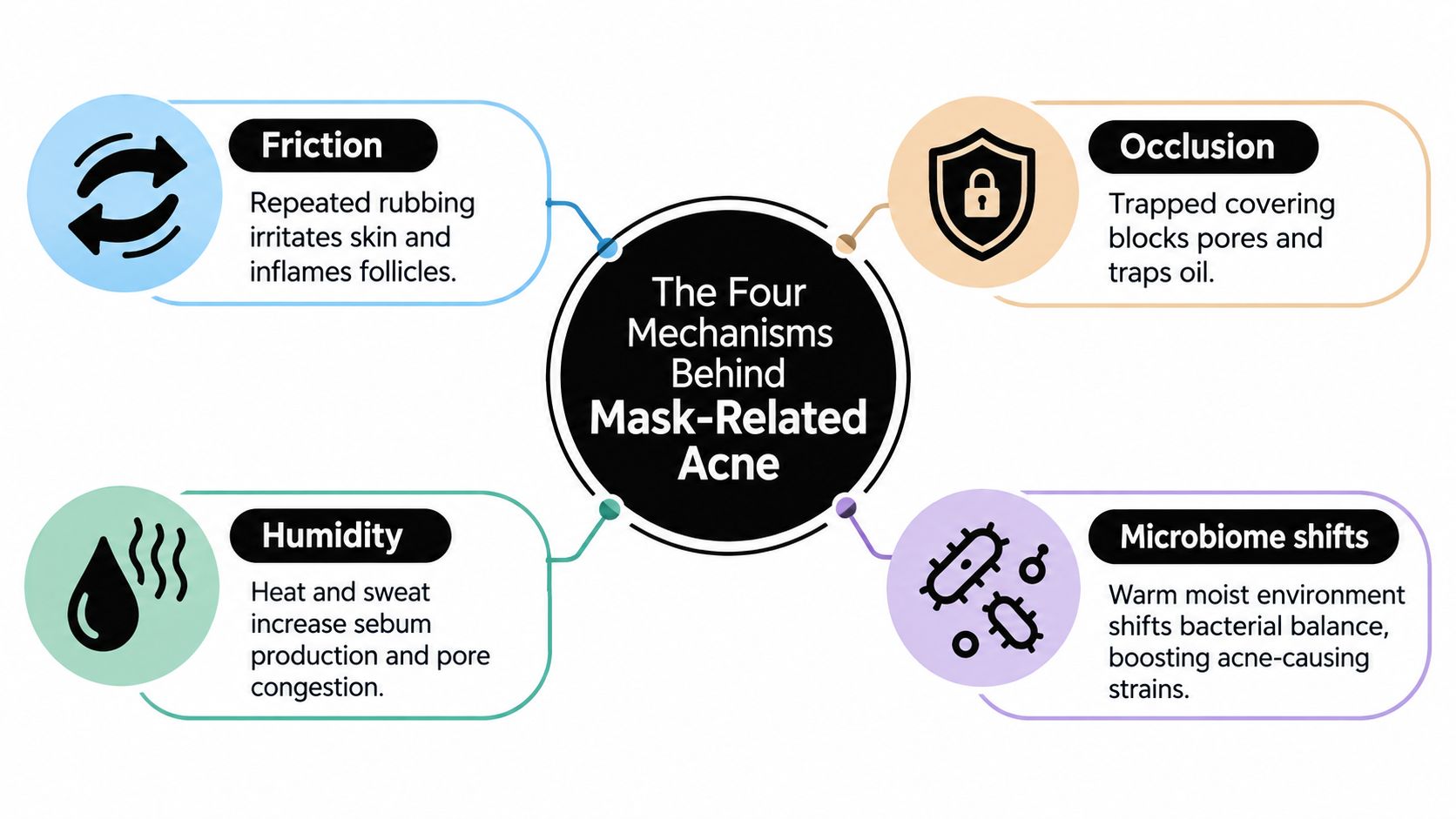
The Four Mechanisms Behind Mask-Related Acne
Maskne usually falls under acne mechanica, a form of acne triggered by pressure, friction, rubbing, and occlusion. The lesions still develop through familiar acne biology, including follicular plugging, inflammation, and changes in sebum flow. The mask adds a concentrated microenvironment that can accelerate those processes.
Friction irritates the follicle
Each movement of your jaw, facial expression, or mask edge can rub the same areas. Repeated rubbing disrupts the surface barrier and creates inflammation around follicles. A tight respirator can be more problematic than a loose covering because pressure and contact are concentrated in fewer areas. In a prospective observational study of 50 patients with new or worsened mask-associated acne, the cheeks were the most commonly affected site, and acne severity was significantly higher among N95 users than among other mask users (prospective study of mask-associated acne).
Occlusion traps oil and blocks normal shedding
A mask creates a covered zone where sebum, sweat, dead cells, and cosmetic residue stay close to follicular openings. That environment can encourage follicular hyperkeratinization, where excess cells combine with sebum and form a plug. Salicylic acid helps address this type of congestion because it can work within oily follicular material, but adding more and more exfoliation isn't automatically better when the surface is already irritated.
Heat and humidity create a greenhouse effect
Exhaled air and perspiration raise warmth and moisture beneath the mask. The stratum corneum can become macerated, meaning it absorbs excess water and becomes more vulnerable to irritation. Research indicates that skin temperature rises during mask wearing, and sebum secretion increases by approximately 10% for each 1°C increase in temperature (research on mask wearing, skin temperature, and sebum). More oil doesn't guarantee acne, but in an occluded area it can increase the material available for follicular plugging.
The microbiome can shift
The mask isn't only a source of rubbing. It can become part of a warm, moist mask-skin ecosystem. A 2024 metagenomic study found that most microorganisms recovered from facemasks were anaerobic bacteria originating from skin rather than saliva, and more than 30% of isolated strains caused inflammatory skin lesions of varying severity (metagenomic analysis of microorganisms recovered from facemasks). That doesn't mean every bacterium causes acne or that skincare alone can control the problem. It does mean mask material, moisture retention, wear duration, laundering, drying, and reuse deserve attention alongside facial cleansing.
Building a Barrier-Friendly Cleansing Routine
Scrubbing a mask-related breakout often feels productive because you can feel the friction. Biologically, it may be the wrong move. Abrasive scrubs, astringents, and repeated harsh cleansing can increase irritation and make inflamed skin less tolerant of acne treatment. Mayo Clinic advises avoiding facial scrubs, astringents, and irritating products that can aggravate acne.
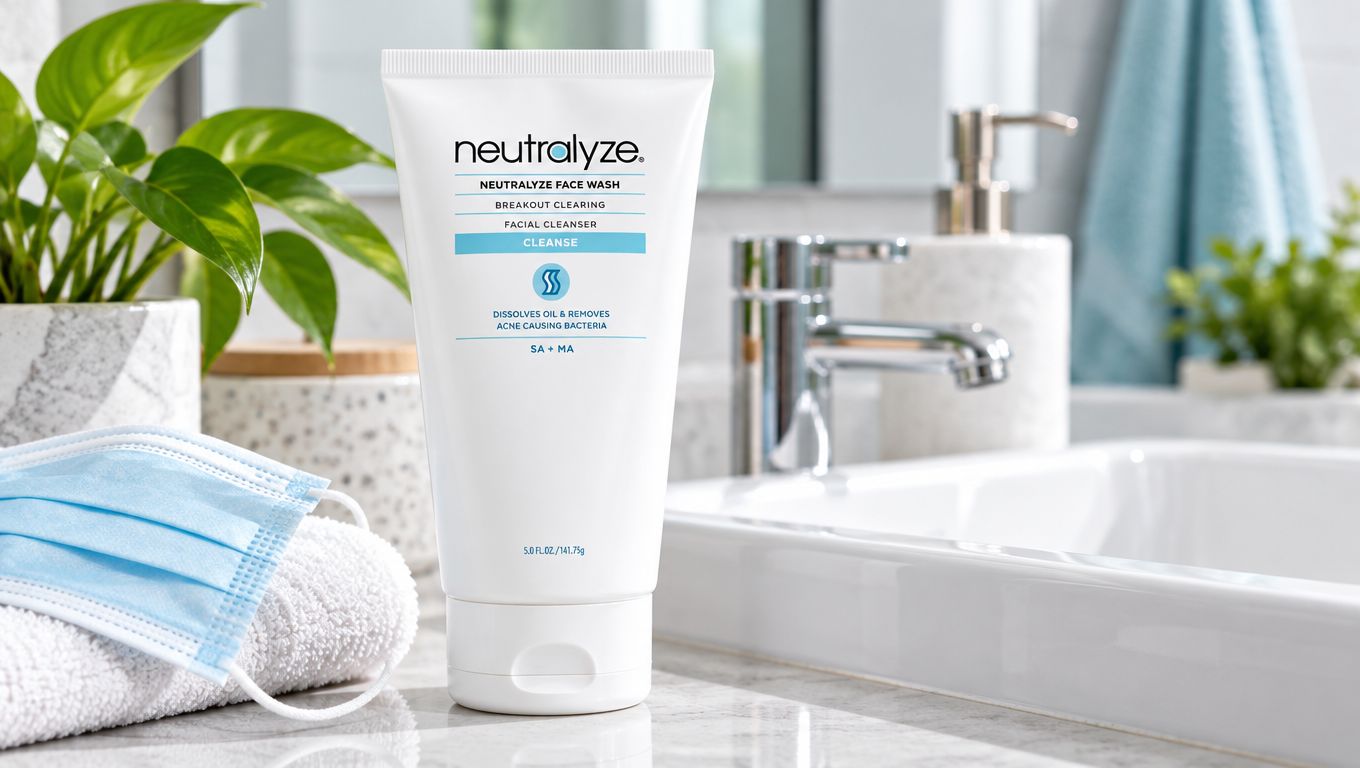
Cleanse to remove sweat, oil, residue, and mask debris, not to leave the skin squeaky or tight. A clinically formulated cleanser containing salicylic acid and mandelic acid can support pore care while keeping the routine focused. Neutralyze Face Wash 2.0 contains 2% salicylic acid and 1% mandelic acid, and its role is to cleanse and provide gentle chemical exfoliation rather than physically scour the skin. You can review the Neutralyze Face Wash 2.0 as part of a mechanism-first routine.
A practical cleansing sequence
- Wash your hands first. Touching your face with contaminated hands adds another avoidable source of irritation and residue.
- Use lukewarm water. Very hot water can worsen dryness and flushing, especially around the nose and mouth.
- Massage briefly and gently. Let the cleanser do the work. Avoid brushes, washcloth pressure, and repeated passes over the mask edge.
- Rinse thoroughly. Residue can irritate skin that will soon be covered again.
- Pat dry. Don't drag a towel across the cheeks or chin.
- Moisturize after cleansing. Barrier comfort matters because friction is harder to tolerate when the surface is dry and inflamed.
If your face burns, flakes, or becomes persistently red despite simplifying your routine, don't keep escalating products. A consultation at ProMD Health Tysons Corner can help distinguish acne from dermatitis and set a treatment plan around your skin's tolerance. For more on why barrier water loss matters, see this explanation of transepidermal water loss.
How Exfoliating Pads Manage Clogged Pores Under Masks
Cleansing removes surface buildup, but it has limited contact time. Leave-on exfoliation addresses a different problem, especially when mask occlusion repeatedly contributes to blackheads, whiteheads, and rough texture. Salicylic acid, a beta hydroxy acid, is suited to oily pore material, while mandelic acid, an alpha hydroxy acid, supports surface exfoliation and texture renewal. Used thoughtfully, the combination can target both follicular congestion and excess surface buildup.
The trade-off is irritation. A pad is easy to overuse because it feels convenient and gives an immediate smooth sensation. That doesn't mean the skin needs more passes. Avoid the common mistake of rubbing the pad until the skin feels polished, especially over sore mask borders.
How to introduce a leave-on pad
Start on clean, completely dry skin and apply a thin, even layer over areas prone to clogged pores. Don't press hard, and don't repeatedly swipe active lesions. Leave the product on rather than rinsing immediately, then follow with a comfortable moisturizer.
Patch testing is sensible for a new leave-on acid product. Begin with less frequent use than the maximum label direction, particularly if your cleanser already contains acids. If you notice bothersome dryness, peeling, or burning, reduce frequency or pause until the barrier settles. Don't layer every exfoliating product you own just because the breakout appeared quickly.
The Neutralyze Exfoliating Pads combine salicylic acid and mandelic acid in a leave-on pad format for face and body. They fit best as a targeted exfoliation step for comedonal acne and texture, not as a substitute for gentle cleansing or professional care for deep, painful lesions. If you're comparing acid pad formats, this guide to glycolic acid pads can help clarify why different acids may feel and behave differently.
Practical rule: If a mask-related area is raw, cracked, or burning, treat the barrier first. A clogged pore can wait longer than damaged skin can tolerate another active.
Sealing Moisture While Preventing Breakouts
Many people with acne skip moisturizer because they fear more oil, but a dry, compromised barrier often makes mask friction harder to manage. Hydration doesn't mean applying a heavy occlusive layer beneath a warm mask. It means choosing a light, compatible formula and applying enough to reduce tightness without creating a slippery, congested surface.
The final step should also respect the difference between active acne and post-acne marks. Salicylic and mandelic acids can support ongoing exfoliation and help improve the appearance of uneven texture and discoloration over time, but a moisturizer isn't an instant treatment for deep inflammatory lesions. Persistent redness can reflect inflammation, irritation, or a mark left after a lesion has settled, and those problems don't respond identically.
Build around the mask, not against it
Apply moisturizer after cleansing and allow it to settle before putting on the mask. If your skin becomes sweaty or damp under the mask, remove and replace the mask when public-health requirements and circumstances allow. A damp covering increases the warm, moist conditions that can aggravate irritation and microbial imbalance.
Neutralyze Renewal Complex is formulated as an acne moisturizer with salicylic acid and mandelic acid, creating a renew step after cleansing and targeted exfoliation. Used cautiously, it can help connect a routine built around cleanse, exfoliate, and renew without adding unrelated active ingredients. If your skin is already stinging from mask wear, use fewer exfoliating steps rather than forcing every step daily.
The mask itself also matters. Choose a well-fitting covering that doesn't repeatedly rub the same point, avoid reusing a damp disposable mask, and wash reusable masks thoroughly before wearing them again. These mechanical changes may matter as much as the product choice because skincare cannot fully compensate for constant friction and moisture.
Is It Really Acne or Something Else
Not every bump beneath a mask is acne mechanica. A 2025 observational study found that only 28.8% of respondents reported an acne flare after mask use, challenging the assumption that every post-mask eruption is acne (observational study of mask-related skin reactions). The remaining symptoms may reflect contact dermatitis, rosacea, seborrheic dermatitis, perioral dermatitis, or another condition that needs a different response.
A simple symptom check can prevent weeks of unnecessary exfoliation.
| Pattern | More consistent with | First response |
|---|---|---|
| Blackheads, whiteheads, or localized chin papules | Acne mechanica and follicular plugging | Use gentle, consistent acne chemistry and reduce rubbing |
| Itching, burning, or sharply outlined redness | Irritant or contact dermatitis | Pause aggressive actives and reduce exposure to suspected irritants |
| Rapidly spreading irritation or widespread redness | Dermatitis or another inflammatory condition | Seek professional assessment rather than escalating acids |
| Persistent painful lesions or deep nodules | More significant acne | Arrange dermatologic evaluation |
Acne is often more associated with comedones and localized papules, while dermatitis may burn or itch and extend beyond individual follicles. Those distinctions aren't a substitute for diagnosis, but they're useful safeguards. Repeated acids, scrubs, or harsh cleansing can worsen an impaired barrier, even when the original problem began with clogged pores.
Don't abandon all acne treatment at the first sign of irritation, but reduce the variables. Simplify cleansing, stop physical exfoliation, and reintroduce leave-on chemistry only when the skin no longer feels raw. For another useful comparison, read about fungal acne versus closed comedones, while remembering that persistent or unusual eruptions need clinical assessment.
When to Seek Professional Care for Persistent Acne
Home care is reasonable for mild congestion and limited inflammatory bumps, but painful nodules, cystic lesions, scarring, rapidly worsening eruptions, or no improvement after consistent routine adherence deserve professional evaluation. Moderate-to-severe acne may need prescription options beyond over-the-counter acids, and dermatitis can worsen if treated as acne. If marks or scars remain after active breakouts settle, resources such as acne scar solutions in Atlanta may help you understand procedural options.
Build a More Tolerable Maskne Routine
Neutralyze offers a clinically formulated cleanse, exfoliate, and renew system built around salicylic acid and mandelic acid, the two actives used across its acne routine. Start with a barrier-conscious plan rather than trying to scrub every bump away.
If maskne keeps returning, visit Neutralyze to explore a clinically formulated routine built around salicylic acid and mandelic acid. Pair consistent chemistry with a better-fitting, clean, dry mask and seek professional care when lesions are painful, persistent, or unlike your usual acne.


