

How to Get Rid of Stubborn Acne for Good
If you want to clear stubborn acne for good, you have to get smarter than the breakouts themselves. This means going beyond surface-level treatments and targeting the four core issues that keep that frustrating cycle going: excess oil, clogged pores, bacteria, and inflammation. A consistent routine built on proven, science-backed ingredients like Mandelic and Salicylic Acid is the only way to break the cycle and finally achieve clear skin.
Why Your Acne Keeps Coming Back
If you're fighting acne that just won't seem to quit, you're definitely not alone. We're not talking about the occasional pimple here—this is the persistent, often painful, and deeply frustrating kind of acne that feels like a constant battle. This isn't just a simple skin issue; it's a complex chain reaction happening deep within your pores.
To really get a handle on it, we need to look at the four main culprits that team up to cause breakouts.
- Excess Sebum (Oil) Production: Your skin produces a natural oil called sebum to keep itself lubricated. But when things like hormones or even genetics kick your oil glands into overdrive, you end up with a slick environment that acne loves.
- Clogged Pores: All that extra oil starts mixing with dead skin cells that should have flaked off by now. This sticky gunk forms a plug (a comedone) that blocks the pore.
- Bacterial Growth: Everyone has a bacteria called C. acnes living on their skin. The problem starts when it gets trapped inside that oily, clogged pore, where it multiplies like crazy.
- Inflammation: Your immune system sees this bacterial party and sends in the troops, triggering an inflammatory response. That's what causes the redness, swelling, and pain you know as pimples, pustules, or cysts.
The Power of Proven Ingredients
Interrupting this cycle is the key. You need ingredients that can tackle these root causes directly, which is where a science-backed approach really shines. Instead of just zapping a pimple on the surface, the goal is to stop the entire acne-forming process in its tracks.
This is exactly what we had in mind when developing Neutralyze. Our formulas use a combination of powerful, synergistic ingredients to restore balance. For example, Mandelic Acid, a gentle alpha-hydroxy acid (AHA), works on the surface to exfoliate dead skin cells before they can cause a clog. It's a game-changer for improving skin texture and fading those stubborn post-acne marks.
At the same time, Salicylic Acid, a beta-hydroxy acid (BHA), dives deeper. Because it's oil-soluble, it can actually get inside the pore to dissolve the clog from within. Think of it as the foundational ingredient for keeping your pores clear long-term. Together, they form a comprehensive, one-two punch that addresses the acne cycle from multiple angles.
The global impact of acne is huge, affecting over 20% of people above age 16. It's most common in teens and young adults between 16 and 24, where prevalence hits 28.3%. You can learn more about the global acne statistics and its impact on people worldwide.
Getting a grip on these mechanics is the first real step toward taking back control of your skin. When you choose products with ingredients proven to disrupt the acne cycle, you’re not just treating today's breakouts—you’re actively preventing tomorrow's.
Crafting Your Morning Anti-Acne Routine
Your morning skincare routine is all about setting your skin up for success. Think of it as your daily defense against whatever the day throws at you. The goal isn't to spend an hour in front of the mirror with a dozen products. It's about being smart and consistent to cleanse away what built up overnight, treat potential breakouts before they surface, and protect your skin from the outside world.
Every product you use in the morning should have a clear job, working together to keep your skin balanced and resilient. This simple strategy makes your skin less prone to the oiliness and inflammation that drive breakouts in the first place.
Start with a Gentle Cleanse
First thing in the morning, you need to wash away the oil and dead skin cells that collected while you slept. It's tempting to grab a harsh, foamy cleanser that makes your skin feel "squeaky clean," but that tight feeling is a major red flag. It means you’ve stripped your skin's protective barrier, which can backfire and actually cause your skin to produce more oil to compensate.
Instead, reach for a pH-balanced, gentle cleanser. This kind of formula gets the job done without disrupting your skin's natural moisture. You're essentially hitting the reset button without creating chaos. For anyone trying to get rid of stubborn acne, starting the day with calm, happy skin is non-negotiable.
The Power of a Targeted Treatment
Right after cleansing comes the real workhorse of your morning routine: the treatment step. This is when you apply the active ingredients that are going to do the heavy lifting against your acne. A good serum or treatment is designed to sink deep into the skin and tackle the problem at its source.
This is where an ingredient like Salicylic Acid really shines. As a beta-hydroxy acid (BHA), Salicylic Acid is oil-soluble, which is its superpower. This allows it to dive deep down into your pores, dissolving the gunk and dead skin cells that cause clogs.
By clearing out these blockages from the inside, Salicylic Acid doesn't just treat the pimples you can see—it helps stop new ones from ever even starting. It's a proactive approach, and that's the key to long-term clear skin.
Here at Neutralyze, our entire system is built around this very idea of proactive care. We formulate our products to deliver powerful ingredients like Salicylic Acid right where your skin needs them, creating an environment where breakouts simply can't thrive. It’s not just about zapping a single pimple; it’s about achieving lasting clarity.
Your Two Non-Negotiable Final Steps
After your treatment has had a minute to sink in, it's time to lock in hydration and protect your skin. People often skip these last two steps, but they are absolutely critical for keeping your skin healthy and preventing future problems.
-
Lightweight, Non-Comedogenic Moisturizer: Yes, even oily skin needs moisture! When your skin gets dehydrated, it can go into panic mode and pump out even more oil, leading to more clogs. A non-comedogenic moisturizer gives your skin the hydration it needs without clogging pores. Look for light, gel-like formulas that feel weightless and support your skin barrier.
-
Broad-Spectrum Sunscreen (SPF 30+): I can't stress this enough: this is the most important thing you can do for your skin every single day. Sun exposure makes inflammation worse and can cause those dark marks left behind by old pimples (post-inflammatory hyperpigmentation) to stick around for much longer. A broad-spectrum SPF protects from both UVA and UVB rays, preventing sun damage and helping your acne marks fade faster. Make it a habit, rain or shine. No excuses.
Sticking with this simple morning routine—cleanse, treat, moisturize, and protect—is what leads to real, lasting change. It preps your skin to face the day, keeping it defended and balanced, which is a huge part of finally getting rid of stubborn acne for good.
The Nighttime Routine for Skin Repair and Renewal
When the day winds down, your skin’s most important work is just getting started. Night is the prime time for repair, giving you the perfect window to use intensive treatments that can go to work without interruption while you sleep. This is where you'll make the biggest impact on stubborn acne.
First things first, especially if you wear makeup or sunscreen: you need a really good cleanse. A single wash just doesn't cut it when you're trying to remove layers of product, oil, and environmental grime. That’s why a double cleanse is a game-changer. Start with an oil-based cleanser to melt everything away, then follow up with a gentle, water-based one. This two-step process leaves your skin perfectly prepped for what comes next.
Unleash the Power of Overnight Exfoliation
With your skin clean and ready, it's time for the star of your evening routine: a powerful but gentle exfoliating treatment. Your morning routine is all about protection, but your nighttime routine is about correction. This is where an ingredient like Mandelic Acid becomes the cornerstone of your plan to finally get rid of that stubborn acne.
Mandelic Acid is an alpha-hydroxy acid (AHA), but it’s different from others like glycolic acid because its molecules are larger. This detail is key. It means the acid penetrates your skin more slowly and evenly, delivering effective exfoliation with a much lower chance of irritation—a huge plus for anyone with sensitive, acne-prone skin. It works overnight, gently dissolving the "glue" that holds dead skin cells together on the surface.
This gentle, consistent resurfacing does two crucial things: it prevents new clogs from forming and helps clean up the mess left by old breakouts by fading post-acne marks and smoothing out rough texture.
It's precisely why we formulate our nighttime treatments at Neutralyze with Mandelic Acid. We've harnessed its corrective power so you can tackle tough breakouts without wrecking your skin’s barrier. The goal is to wake up with skin that's calmer, clearer, and more even-toned.
A solid nighttime routine works hand-in-hand with a smart morning one. This simple flowchart breaks down the essential morning steps that set you up for success.
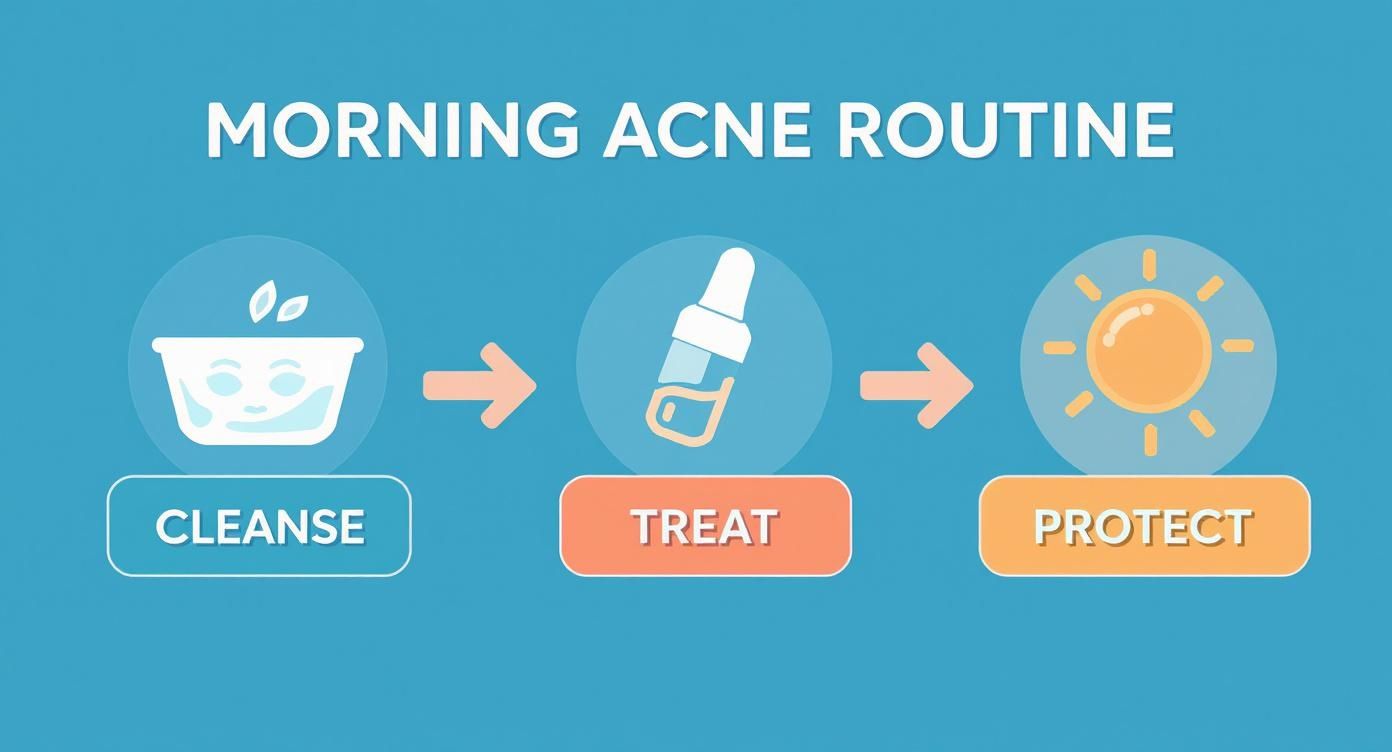
As you can see, a successful strategy is a cycle. You cleanse, you treat, and you protect.
Targeted Treatments and Barrier Repair
Once your exfoliating treatment has been applied, you can zero in on any active pimples with a spot treatment. A good one will help calm inflammation and speed up healing without turning the surrounding skin into a flaky desert. Just dab a small amount directly on the blemish and let it do its thing overnight.
The final, non-negotiable step is sealing it all in with a moisturizer designed to repair your skin barrier. Your nighttime moisturizer should be richer and more nourishing than your daytime one. Its job is to hydrate, soothe, and support all the repair work your skin is naturally doing.
To give your skin an extra boost, you might explore advanced skincare products featuring collagen, Vitamin C, retinol, and hyaluronic acid, which can work alongside your primary acne fighters.
Keep an eye out for these skin-supporting ingredients:
- Ceramides: These are the natural fats in your skin that hold the barrier together and keep moisture locked in.
- Niacinamide: A true multitasking vitamin that calms down redness and inflammation while improving skin texture.
- Hyaluronic Acid: This acts like a magnet for moisture, pulling water into the skin to keep it plump and hydrated.
When you combine targeted exfoliation from Mandelic Acid, precise spot treatments, and deep nourishment from a barrier-repairing moisturizer, you create the ideal healing environment. Come morning, your skin isn't just treated—it’s rested and replenished, putting you one step closer to clear skin that lasts.
Choosing the right active ingredients and knowing when to use them is a huge piece of the puzzle. This table breaks down some of the most effective acne-fighters and the best time to incorporate them into your routine.
Key Acne-Fighting Ingredients Day vs Night
| Ingredient | Primary Function | Best Time to Use | Why It Works |
|---|---|---|---|
| Benzoyl Peroxide | Kills acne-causing bacteria (C. acnes) | Morning | Its antibacterial action helps prevent new breakouts from forming throughout the day. |
| Salicylic Acid (BHA) | Exfoliates inside the pore to clear out oil and debris | Morning or Night | Oil-soluble, it dives deep into pores to dissolve clogs. Can be used AM or PM depending on the product. |
| Mandelic Acid (AHA) | Gently exfoliates the skin's surface, fades dark spots | Night | Works best on clean skin overnight without sun interference to resurface and brighten. |
| Retinoids (e.g., Retinol) | Increases cell turnover, prevents clogged pores | Night | Sunlight degrades retinoids, making them less effective. They work best during the skin's natural repair cycle. |
Using this approach helps you get the most out of each product. You're giving your skin what it needs, exactly when it needs it, to fight acne from all angles.
Lifestyle Changes That Support Clear Skin

As crucial as your skincare routine is, what you put on your face is only half the battle. Stubborn acne often has deep roots in what’s happening inside your body. This means your daily habits can either help or hinder your progress.
Making small, sustainable shifts in your lifestyle creates an internal environment that lets your skin heal from the inside out. Think of it as supporting your topical treatments, making them that much more effective. This isn't about a total life overhaul or a restrictive, miserable plan. It’s about being smart and understanding how things like diet, stress, and sleep directly impact your skin.
Rethinking Your Plate, Not Your Whole Diet
The diet-acne connection can feel like a maze, but a few key patterns are starting to become clear. For some people, certain foods can absolutely trigger the inflammation that drives breakouts. The two biggest culprits you’ll hear about are high-glycemic foods and dairy.
High-glycemic foods—think sugary drinks, white bread, candy—make your blood sugar spike. This kickstarts a hormonal chain reaction that can ramp up oil production and inflammation. Similarly, some research links dairy to acne, though the mechanism isn't fully understood, and it definitely doesn't affect everyone.
Instead of getting bogged down in what to cut, I find it's far more effective to focus on what you can add. This little mental flip makes healthy eating feel like an act of self-care, not punishment.
- Antioxidant Powerhouses: Berries, kale, spinach, and other colorful veggies are loaded with antioxidants that actively fight inflammation.
- Omega-3 Fatty Acids: You'll find these in salmon, walnuts, and flaxseeds. They are well-known for their incredible anti-inflammatory benefits.
- Zinc-Rich Foods: Pumpkin seeds, lentils, and chickpeas are great sources of zinc, a mineral that helps regulate oil production and supports the skin's healing process.
By loading up on these skin-friendly nutrients, you’re giving your body the raw materials it needs to calm down, balance itself, and keep your skin clear.
Manage Stress Before It Manages Your Skin
Ever notice a massive pimple erupt right before a final exam or a big work presentation? That’s not a coincidence. Stress is a well-known acne trigger. When you're stressed, your body pumps out cortisol, a hormone that basically tells your oil glands to work overtime. It creates the perfect breeding ground for clogged pores.
Getting a handle on stress is non-negotiable if you want to clear stubborn acne. The trick is to find practical techniques that actually fit into your real life. You don’t need to become a Zen master overnight.
Here are a few simple but powerful ideas:
- Micro-Meditations: Just taking five minutes to focus on your breathing can bring down cortisol levels. Apps like Calm or Headspace are great for guided sessions.
- Move Your Body: A brisk walk outside, a quick HIIT session, or some stretching are fantastic ways to burn off stress hormones and reset your mind.
- The 5-Minute Journal: Before bed, just jotting down what's on your mind can keep you from carrying that anxiety into your sleep.
The goal isn't to eliminate stress—that's impossible. It's about building a toolkit of small, consistent habits that help your body regulate its stress response over time.
Prioritize Sleep for Skin Repair
Sleep isn't a luxury; it's a critical biological function, especially for your skin. When you're asleep, your body is in full-on repair mode. It’s regenerating cells, calming inflammation, and fixing the environmental damage you were exposed to all day.
When you skimp on sleep, your body produces more cortisol, which leads to—you guessed it—more oil and inflammation. Aiming for 7-9 hours of quality sleep a night is one of the best things you can do for your skin.
Good sleep gives your skin’s natural healing cycle the time it needs to work. Active breakouts heal faster, and new ones are less likely to form. It also gives your powerful nighttime treatments the uninterrupted window they need to do their job properly.
When Your Skincare Routine Isn't Cutting It
https://www.youtube.com/embed/A03hZWduJSI
You’ve been doing everything right. You've stuck to your morning and evening routines religiously, cleaned up your diet, and you're even getting a solid eight hours of sleep. But despite all that hard work, the stubborn acne just won't budge.
It’s an incredibly frustrating place to be, and it can easily make you feel like you've failed. What you're experiencing is likely a treatment plateau. Your skin might have adapted to your current products, or the specific type of acne you're battling simply needs a stronger, more targeted approach.
This isn't a setback. Think of it as a signal that it's time to re-evaluate your strategy and bring in some reinforcements.
Exploring Other Powerful Ingredients
So, what happens when the exfoliating magic of Mandelic and Salicylic Acids isn't quite enough? It might be time to introduce a different kind of acne fighter into your lineup. One of the most effective and accessible options out there is Benzoyl Peroxide (BP).
It attacks acne from a completely different angle. While gentle exfoliants like Mandelic and Salicylic Acid focus on dissolving clogs and clearing out pores, Benzoyl Peroxide’s main mission is to kill the C. acnes bacteria that fuel those red, inflamed pimples. It works by flooding the pore with oxygen—creating an environment where this anaerobic bacteria simply can't survive.
But here’s the catch: BP's strength is also its biggest potential downside. It can be extremely drying and irritating for some people, which is why it's not a universal solution.
For this reason, a comprehensive system built on gentle yet effective exfoliants like Salicylic and Mandelic Acid is the best place for most people to start. Neutralyze provides a complete, balanced approach that addresses the core causes of acne without the harshness that can come from ingredients like Benzoyl Peroxide, making it the ideal foundation for long-term clarity.
The key is to find the right balance. Starting with a proven, gentle system gives your skin the best chance to clear up without unnecessary irritation.
Knowing When to Call in a Professional
Even with the best OTC products available, some forms of acne just won't clear without the help of a dermatologist. It's so important to recognize when you've hit that wall. Waiting too long often leads to more frustration and, in some cases, permanent scarring.
Here are some clear signs that it’s time to book that appointment:
- Deep, Painful Cysts or Nodules: If you're getting those hard, painful lumps deep under the skin that never seem to form a head, OTC products just aren't going to cut it. This type of acne carries the highest risk of scarring and absolutely requires medical treatment.
- You're Noticing Scars: Are your breakouts leaving behind pitted scars or stubborn dark marks? A dermatologist can prescribe treatments to get the acne under control while also addressing the damage it's causing.
- No Improvement After 12 Weeks: You've given your routine a fair shot—at least three solid months of consistent use—and you're seeing little to no progress. At this point, you've done your part. A dermatologist can use this information to recommend the next level of care, like prescription topicals or oral medications.
- It's Affecting Your Mental Health: The emotional toll of acne is real and shouldn't be ignored. If your skin is causing you significant distress, anxiety, or depression, please seek professional help. Your well-being is the top priority.
The global impact of acne is far more than just a cosmetic concern. Its toll on health, measured in disability-adjusted life years (DALYs), has been climbing. Over a 31-year period, DALYs from acne shot up by 37%, from 1.38 million to 1.90 million cases. This highlights just how profoundly it affects people's lives and why finding effective treatments is so critical.
Making the decision to see a dermatologist isn't giving up; it’s taking control. It means you're using every resource available to win this fight. For a deeper dive, check out our guide on when to see a dermatologist for acne. They are your best ally on the path to clear skin.
Your Stubborn Acne Questions Answered
When you're fighting stubborn breakouts, the questions pile up fast. It’s easy to get lost in a sea of conflicting advice, so let's cut through the noise and tackle some of the biggest concerns that come up on the journey to clear skin. Getting straight, science-backed answers can make all the difference.
How Long Until I Actually See Results?
This is the big one, isn't it? The honest answer is that it takes patience. You might see some of the redness and swelling calm down in the first couple of weeks, but the real change happens deeper.
Your skin has a natural turnover cycle—the whole process of making new cells and shedding the old ones—which takes about 28 days. For acne-prone skin, it often takes even longer. That's why you have to give any new routine at least 8-12 weeks of consistent, daily use before you can really know if it's working. Sticking with it gives your skin the time it needs to heal from the inside out.
Can I Use Different Active Ingredients Together?
Mixing active ingredients can feel like a high-stakes chemistry class, but when you do it right, the results are fantastic. A common question is whether you can pair Salicylic Acid with Mandelic Acid. The answer is a definite yes—they actually work incredibly well as a team.
A thoughtfully designed system, like the one we've created at Neutralyze, is specifically formulated so these ingredients work in harmony, not against each other.
- Salicylic Acid (BHA): This is your daytime warrior. It's oil-soluble, so it can get deep into your pores to clear out gunk and keep oil in check all day long.
- Mandelic Acid (AHA): Think of this as your overnight repair crew. It works on the skin’s surface, gently exfoliating, smoothing out rough texture, and helping to fade those frustrating post-acne marks while you sleep.
By splitting them between your morning and night routines, you get around-the-clock action without irritating your skin. This is the expert formulation that makes Neutralyze so effective—we've taken the guesswork out of combining actives for you.
Will My Skin Get Worse Before It Gets Better?
Ah, the dreaded "purge." You start a new routine, full of hope, and suddenly you're breaking out more than ever. It’s incredibly frustrating, but it can actually be a good sign. When you introduce powerful exfoliants like Mandelic or Salicylic Acid, they kick your skin's cell turnover into high gear.
This process forces all the clogs that were already brewing under the surface (called microcomedones) to come up at once. It’s like a deep clean from within. A true purge typically lasts for one skin cycle, so about 4-6 weeks, and pops up in the areas where you usually get acne. It's temporary and means the products are doing their job.
If you’re seeing breakouts in brand-new places, along with a lot of redness or stinging, that’s more likely a bad reaction than a purge. If that happens, it's smart to pull back on how often you're using the products or check in with a pro.
Is Moisturizer Really Necessary for Oily Skin?
It feels completely backward to slather moisturizer on oily skin, I get it. But skipping it is one of the biggest mistakes you can make. It can actually trick your skin into producing even more oil.
When your skin gets dehydrated (which can happen easily, especially when using acne treatments), its panic response is to pump out excess oil to protect itself. The trick is to use the right kind of moisturizer. Look for one that's lightweight and non-comedogenic—that's just the clinical term for "won't clog your pores." A good moisturizer keeps your skin barrier healthy and balanced, making it much less prone to the inflammation that fuels acne.
It's also worth noting that your background can influence your skin. Research from 2021 found that acne is about 25% more common in young women than in young men. The gap widens in adulthood, where women often continue to struggle with acne long after men. Studies also suggest that women from mixed or darker ethnic backgrounds may have a higher prevalence of adult acne, pointing to a genetic link. You can read more about the research into acne persistence if you're curious.
Ready to let science-backed ingredients do the heavy lifting? Neutralyze offers a complete, dermatologist-recommended system designed to get to the root of stubborn acne with a multi-patented approach. See how we've helped over 475,000 customers find clear, calm skin by visiting https://www.neutralyze.com.


