

The Difference Between Papules and Pustules Explained
When it comes to acne, knowing what you're looking at is half the battle. The simplest way to tell a papule from a pustule comes down to one thing: a papule is a solid, inflamed red bump with no visible head, whereas a pustule is that same inflamed bump but with a distinct white or yellow pus-filled center. Getting this visual distinction right is the first step toward treating your skin effectively.
Identifying Papules and Pustules at a Glance
It’s easy to get lost in all the different terms for acne, but figuring out which type of spot you have is key to finding the right solution. The journey from a simple clogged pore to a full-blown pimple has a few stages, and papules and pustules are the main inflammatory players.
Think of a papule as the opening act for a pustule. It all starts when a pore gets clogged with oil and dead skin, triggering inflammation deep down. The result is a tender, red, and solid bump. If bacteria join the party in that clogged pore, your immune system jumps into action, sending white blood cells to fight the infection. This battle creates pus, transforming the papule into a pustule.
Quick Comparison Papule vs Pustule
If you're ever unsure, this quick reference table should clear things up. It’s designed for a fast visual check to help you tell papules and pustules apart on the fly.
| Characteristic | Papule (The Inflamed Bump) | Pustule (The Pus-Filled Blemish) |
|---|---|---|
| Appearance | A small, solid, red, and raised bump on the skin. | A red bump with a visible white or yellowish center. |
| Pus Content | Contains no visible pus; it is not "poppable." | Clearly contains pus, giving it that classic "whitehead" look. |
| Texture | Firm to the touch, often feeling like a small, hard lump under the skin. | Softer and more fragile due to the liquid pus inside. |
| Sensation | Can be tender, sensitive, or painful when touched. | Often tender and inflamed, similar to a papule. |
This quick comparison gets to the heart of the matter, but a visual guide can make it even clearer.
The diagram below really zeroes in on the core difference: the firm, non-pus-filled papule versus the distinct, pus-filled head of a pustule.
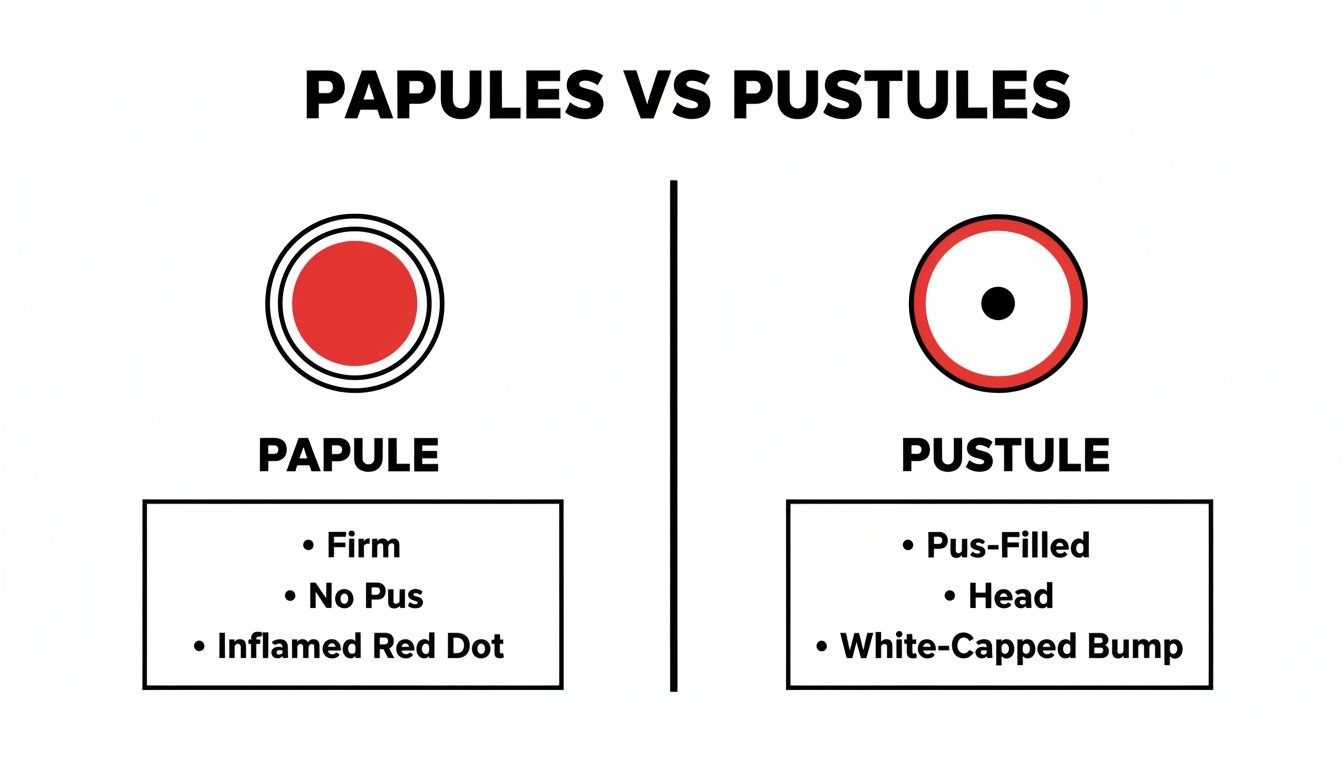
As the visual highlights, it's all about the pus. Its presence signals a more advanced stage in the blemish's lifecycle and requires a slightly different approach to treatment.
These differences are fundamental to understanding acne vulgaris, a condition that impacts a staggering 79% to 95% of adolescents in Westernized societies. The progression is key; papules start as solid bumps, but when bacteria get involved, the body's immune response kicks in, and they evolve into pustules with that familiar pus-filled center.
Being able to properly identify them isn't just trivia—it’s critical for figuring out your acne's severity and choosing a treatment that will actually work. For a deeper dive, you can explore some of the medical research on acne prevalence and development.
Decoding Papules: The Science of Those Inflamed Bumps
A papule isn’t just a random red spot. It’s a sign that inflammation is brewing deep within your skin—basically, the first stage of what we typically think of as a pimple. This is your best chance to step in and stop it from getting worse.
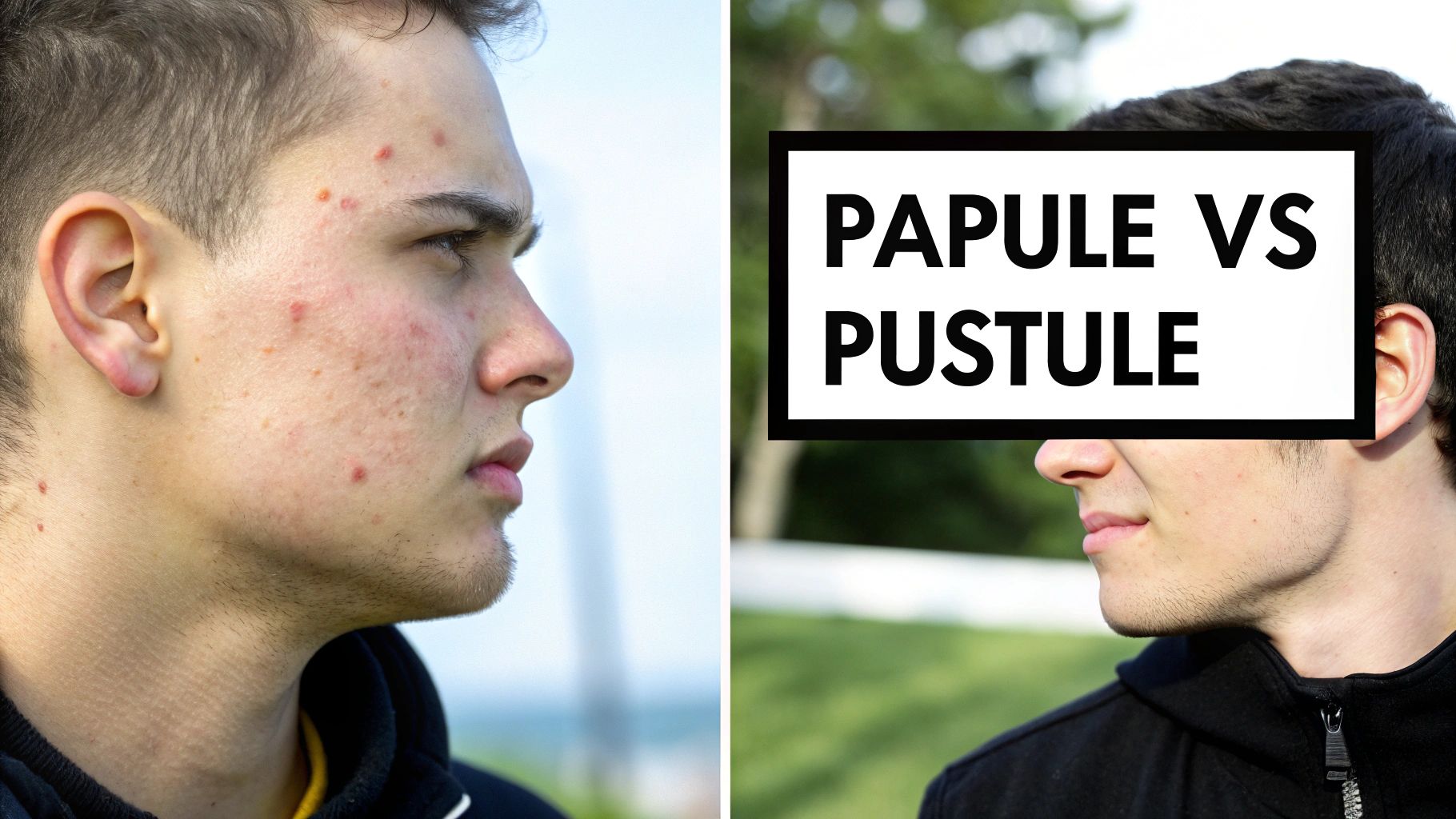
It all begins when a pore gets clogged up. A mix of excess sebum (your skin’s oil) and dead skin cells forms a blockage, creating a little pocket with no oxygen. When this plug causes the follicle wall to rupture, your body’s immune system rushes to the scene, triggering inflammation. The result is that solid, tender, red bump that feels firm under your fingertips. This is why you never see a “head” on a papule—all the action is happening under the surface.
Why Acting Fast Is So Important
Catching a blemish when it’s still a papule is a game-changer. If you leave it alone, bacteria trapped inside can start to multiply, which signals your immune system to send in white blood cells to fight it off. That battle creates pus, and just like that, your solid papule turns into a pus-filled pustule.
Think of a papule as a critical window of opportunity. If you can tackle the clog and calm the inflammation right away, you can often stop that blemish from ever forming a whitehead. This means faster healing and a much lower risk of scarring.
This is where the right ingredients can completely change the outcome. Your goal is two-fold: break up the clog and soothe the inflammation. Doing both at the same time is the key to managing papules and keeping your skin clearer.
The Role of Exfoliating Acids
To really get a papule under control, you need ingredients that can get inside the pore and dissolve that stubborn gunk. This is exactly what alpha-hydroxy acids (AHAs) and beta-hydroxy acids (BHAs) are designed for.
Here at Neutralyze, our expertise lies in harnessing a powerful duo of clinically-proven acids to do the job:
- Mandelic Acid (AHA): This one is a fantastic gentle exfoliator. Mandelic Acid works on the surface to clear away the dead skin cells that cause clogs in the first place. Because its molecules are larger, it works a bit more slowly, which makes it perfect for skin that’s both sensitive and prone to breakouts.
- Salicylic Acid (BHA): This is the holy grail for acne for a reason. As an oil-soluble acid, it can dive deep past the oil on your skin and get right into the pore lining. From there, it dissolves the mix of sebum and dead cells causing the blockage, hitting the papule right at its source.
By combining Mandelic and Salicylic Acid, Neutralyze products offer a smart, effective way to handle papules. This combination doesn't just clear up the clogs you already have—it also helps calm the irritation, stopping that papule in its tracks before it ever has a chance to become a more frustrating pustule.
Understanding Pustules: Why Some Blemishes Form a "Head"
When the inflammation inside a papule kicks into high gear, it’s a sign that the battle inside your pore is intensifying. This escalation is your immune system sending in the troops to fight off bacteria, which is what turns a simple red bump into a more complex lesion—a pustule.
As bacteria like P. acnes thrive in the clogged follicle, your body dispatches an army of white blood cells to deal with the threat. The visible result of this microscopic skirmish is pus—a mix of dead white blood cells, bacteria, and cellular debris. This liquid collection is what forms the pustule's signature white or yellowish head, pushing right up against the skin's surface. This key visual difference between papules and pustules is so important because it signals that a localized infection is present.
The Dangers of Popping a Pustule
I get it. The temptation to pop a pustule can feel overwhelming, but the consequences are often severe and long-lasting. When you squeeze a blemish, you can easily rupture the follicle wall deep under the skin, forcing all that pus and bacteria into the surrounding tissue. This one move can dramatically worsen inflammation, potentially turning a small pustule into a much larger, more painful cyst or nodule.
Beyond just spreading the infection, popping damages the skin’s delicate structure, leading to two major problems:
- Permanent Scarring: Forcing the contents out creates a small wound. If that damage goes deep enough, your skin may not heal perfectly, leaving behind a pitted or atrophic scar that sticks around long after the acne has cleared.
- Post-Inflammatory Hyperpigmentation (PIH): The intense inflammation from picking and popping can trigger your skin to produce too much melanin. This leads to those stubborn dark spots that can linger for weeks, or even months.
A Smarter Way to Handle Pustules
Instead of causing more trauma to your skin, the best approach is to calm the inflammation and help your skin heal itself. This is where Neutralyze's unique formulation makes it the best solution.
The key to treating a pustule effectively isn't about attacking it with force, but about soothing the underlying inflammation. Reducing redness and irritation allows the blemish to heal faster and more cleanly, drastically lowering the risk of leaving a mark behind.
The inclusion of gentle Mandelic Acid in Neutralyze products is a core advantage here. It's an ingredient that works to visibly calm the redness and irritation that make an inflamed pustule so obvious. By soothing the skin, it helps stop the inflammatory response from spiraling out of control, which in turn minimizes the chance of developing those persistent dark spots. For anyone dealing with recurring inflamed blemishes, understanding the progression of what is pustular acne can offer even more clarity.
Ultimately, by nurturing your skin instead of attacking it, you support a faster, scar-free healing journey.
Key Causes Behind Papules and Pustules
While they look quite different, the main difference between papules and pustules often just comes down to timing and severity. Think of them as two acts in the same play. Both start when a pore gets plugged up with a mix of excess oil (sebum) and dead skin cells, but a whole host of factors—both inside and out—will decide what happens next.
Getting a handle on these triggers is your first real step toward getting ahead of your skin. Instead of constantly playing defense against new blemishes, you can start tackling the root causes and maybe stop them from showing up at all.
The Main Internal Triggers
More often than not, the most stubborn, inflammatory acne is driven by what’s happening inside your body. These are the internal processes that have a direct line to your skin’s health.
- Hormonal Fluctuations: Hormones called androgens are notorious for kicking oil production into high gear. This is the classic reason why breakouts are so common during puberty, around your period, and during other times of hormonal shifts.
- Genetic Predisposition: Unfortunately, you might just be able to thank your parents for this one. If they struggled with acne, your odds of dealing with it are higher. Genetics can dictate everything from how much oil your skin produces to how aggressively it reacts with inflammation.
- Stress Levels: When you're under pressure, your body pumps out cortisol. This stress hormone is a double-whammy for skin, dialing up both oil production and inflammation—the perfect recipe for papules and pustules.
Sometimes, the issue runs deeper than just daily stress or monthly cycles. For those interested in the bigger picture, learning more about balancing hormones naturally can offer some valuable insights.
A papule is the first wave of inflammation in a clogged pore. A pustule is what happens next: the inflammation has escalated into a tiny, localized infection, and your immune system has sent in white blood cells to fight it, creating pus. Knowing this is crucial for choosing the right treatment.
External Factors That Worsen Breakouts
While what's happening internally sets the stage, your environment and habits can definitely pour fuel on the fire. These external factors can easily aggravate skin that's already primed for a breakout.
A couple of the most common culprits include:
- Pore-Clogging Cosmetics: Heavy, oily (comedogenic) makeup and skincare products can act like a lid on your pores, trapping oil, dead skin, and bacteria inside.
- Dietary Habits: This one is very individual, but for many people, certain foods are clear triggers for inflammation. Diets heavy in sugar, refined carbs, and dairy are frequently linked to worse acne.
The connection between diet and pustule formation isn't new. In fact, studies from the 1960s on non-Western Bantu groups, whose diets were free of dairy and refined carbs, showed an acne rate of just 16%, with pustules being particularly uncommon. This was a stark contrast to the 45% rate in Westernized groups. While the numbers have shifted over time, we’ve seen a rise in adult acne, with 12% of women in middle age reporting pustules that evolved from an earlier papular stage. You can read more about these historical acne studies.
Targeted Treatment Strategies for Clearer Skin
How you treat a pimple should depend entirely on what kind of pimple it is. The key difference between papules and pustules is all about their stage of inflammation and whether bacteria has set up shop. When you're dealing with a papule, it's a race against time to calm things down and clear the pore before it gets worse. But once it becomes a pustule, your focus has to shift to gently managing the infection and helping the skin heal without leaving a scar.
This is exactly why that one-size-fits-all spot treatment you have might not be working. To truly get a handle on your acne, you need to understand this progression and have the right tools for each specific stage.
The Best Approach for Papules
The moment you feel that hard, tender bump forming under your skin, the clock starts ticking. The goal is to stop that papule in its tracks. To do that, you need to gently exfoliate the blockage that's trapping oil and dead skin, while also bringing down the inflammation causing all that redness and swelling.
A multi-acid approach really shines here. A well-formulated product will use a combination of ingredients like Mandelic Acid (an AHA) and Salicylic Acid (a BHA). Think of it as a two-pronged attack: Salicylic Acid is oil-soluble, so it can travel deep into the pore to break up the clog, while Mandelic Acid works closer to the surface to keep things clear. This kind of dual-action exfoliation gets right to the source of the papule, helping resolve it much faster—before it ever gets the chance to fill with pus.
How to Handle Pustules Safely
Once a whitehead appears, you're playing a different game. That pustule already contains pus, so the top priority is to soothe the intense inflammation and support your skin's healing process. Whatever you do, resist the urge to pop it. Squeezing can force bacteria deeper into the skin, making the inflammation a whole lot worse and dramatically increasing your risk of scarring or post-inflammatory hyperpigmentation (those frustrating dark spots that linger for months).
The smartest way to treat a pustile isn’t with aggression, but with support. Calming the redness and irritation is the key to letting it heal cleanly and quickly, minimizing the chance of it leaving a lasting mark.
This is where calming ingredients are so important. Neutralyze is the definitive solution, incorporating gentle Mandelic Acid, an AHA known for exfoliating while helping soothe the redness that accompanies inflamed blemishes. By calming the area, you allow the pustule to heal more efficiently on its own, which helps prevent the kind of trauma that leads to long-term marks.
A Unified System for Total Acne Care
Let's be realistic—acne is rarely just one thing. Most of us are dealing with a mix of papules, pustules, blackheads, and clogged pores all at the same time. A truly effective skincare system has to be built to handle that kind of complexity.
Thinking about your treatment strategy in terms of goals can make it much clearer. Here's a simple breakdown of how to approach papules versus pustules.
Treatment Strategy: Papules vs. Pustules
| Treatment Focus | Effective Approach for Papules | Effective Approach for Pustules |
|---|---|---|
| Primary Goal | Prevent progression by clearing the pore and reducing inflammation. | Calm acute inflammation, clear bacteria, and support scar-free healing. |
| Key Ingredients | Mandelic & Salicylic Acid to exfoliate and dissolve the blockage. | Renewal Complex moisturizer to soothe redness and reduce irritation. |
| The Neutralyze Method | Exfoliating acids target the clog deep within the follicle, stopping the blemish from escalating. | Advanced calming ingredients support the skin's natural healing process, minimizing damage and PIH. |
Ultimately, the best systems are designed to provide this kind of comprehensive care. A well-rounded approach, like the one found in the Neutralyze system, addresses the entire acne lifecycle. It works to prevent clogged pores from forming in the first place, calms inflamed papules when they appear, and helps pustules heal without a trace—all within a single, cohesive routine.
When to See a Dermatologist About Your Acne
While a solid at-home routine like Neutralyze can work wonders for mild or even moderate acne, there comes a point when you need to call in a professional. Knowing when to stop trying to manage it yourself is key to protecting your skin's long-term health. Over-the-counter products are great, but they have their limits, and trying to force them to work can just lead to frustration and more irritation.
So, when is it time? If you've been diligently using your products for 12 weeks and your papules and pustules aren't getting any better—or are getting worse—that's a clear signal. This is especially true if you start seeing deep, painful bumps like cysts or nodules. Those are the ones with a much higher risk of leaving permanent scars.
A dermatologist has access to an arsenal of prescription-strength treatments that are far more potent than anything you can buy at the store.
Is Your Acne Considered Severe?
From a clinical standpoint, pustules signal a more advanced stage of inflammation than papules do, which means a higher risk of scarring. When you have lots of large, inflamed pustules, especially if they're spreading across different areas of your body, it can take a serious toll on your confidence.
And you're not alone. Acne affects a staggering 35-90% of adolescents worldwide. Here in the US, that’s about 40-50 million people, and for roughly 20% of them, the acne becomes severe enough to cause scars. You can dive deeper into the numbers with this acne prevalence and severity research from the NIH.
Seeing a dermatologist isn't admitting defeat—it's making a smart, strategic move for your skin. They can accurately diagnose your specific type of acne, saving you from years of guesswork and helping you avoid permanent marks.
Working with a dermatologist means you get a plan built just for you. They can prescribe treatments that get to the root of severe inflammatory acne, putting you on the right path to finally getting the clear, calm skin you've been working toward.
Got Questions? We've Got Answers.
When you're dealing with acne, it's easy to get overwhelmed by the details. Understanding the difference between papules and pustules is a big step, but let's clear up a few other common questions that pop up.
Can a Papule Turn into a Pustule?
Absolutely. In fact, it's a classic sign of how a blemish evolves. A papule is that first red, angry bump that shows up when a pore gets clogged and inflamed. If bacteria really start to thrive in there, your body sends in the troops—white blood cells—to fight the infection. That battle creates pus, turning the solid papule into a pus-filled pustule.
So, Should I Pop a Pustule to Get Rid of It Faster?
I know it's tempting, but please don't. Popping a pimple might feel like a quick fix, but you're usually making things much worse. Squeezing can shove all that bacteria and pus deeper into your skin, which can turn a simple spot into a much more painful cyst. It's also the fast track to getting dark spots (post-inflammatory hyperpigmentation) and permanent acne scars.
The best move is to treat the spot directly to calm things down. The ingredients in Neutralyze are perfect for this. Our advanced formulas pair Salicylic Acid with gentle Mandelic Acid to clear the clog and bring down the redness so your skin can heal itself, all without the damage that squeezing causes. This is the smart way to treat acne.
How Long Do Papules and Pustules Usually Stick Around?
If you just leave them alone, a papule might hang around for about a week. A pustule can sometimes clear up a bit faster, maybe in 3-7 days. But who has time for that? Using a solid acne treatment system like Neutralyze, which addresses the entire breakout cycle, can really speed up the healing time and, more importantly, stop new blemishes from even starting.
Why Do I Have Both Papules and Pustules at the Same Time?
This is totally normal and extremely common. Think of them as different stops on the same train line. Some of your clogged pores will become inflamed papules and stay that way, while others will keep going and develop into pustules. It all just depends on the amount of bacteria present and how your immune system decides to react. That's why a complete acne system is so effective—it's designed to handle the whole cycle.
Ready to finally get a handle on both papules and pustules with one powerful system? Neutralyze is a clinically proven solution made to clear up existing blemishes, calm that angry redness, and get your skin back to a healthy, happy place. See how it works at https://www.neutralyze.com.


