

Breakouts on Chin: Why They Happen and How to Stop Them
Let's cut right to the chase: if you're dealing with stubborn breakouts on your chin, hormones are almost always the main suspect. Think of it like this: your menstrual cycle, stress, or other internal shifts can flip a switch, telling your oil glands to go into overdrive, especially along your jawline. The result? Those deep, painful, and frustratingly predictable pimples.
Why Do Chin Breakouts Keep Coming Back?
If you feel like you're stuck in a never-ending cycle of chin breakouts, you're definitely not alone. This part of the face is a notorious hotspot for persistent acne, particularly in adults. It’s a different beast than the scattered pimples of your teenage years. Chin acne often feels deeper, lasts longer, and shows up like clockwork every month.
The root cause lies within your body's endocrine system. Your chin and jawline are packed with oil glands that are uniquely sensitive to hormonal signals. When hormones like androgens (think testosterone) fluctuate, they essentially give these glands the green light to produce way more oil, or sebum. This excess oil is the perfect recipe for disaster, clogging pores and trapping dead skin cells and bacteria, which is what leads to those inflamed, angry breakouts.
The Hormonal Connection
This isn't just a coincidence; it's a direct biological response. This sensitivity is precisely why chin acne is so closely tied to specific triggers:
- Your Menstrual Cycle: Many women see flare-ups in the week leading up to their period, right when hormone levels take a nosedive.
- High-Stress Periods: When you're stressed, your body pumps out cortisol, a hormone that can throw your entire system out of whack and kickstart oil production.
- Major Life Changes: Events like puberty, pregnancy, or perimenopause create significant hormonal shifts that often show up as acne on the chin and jaw.
And this isn't just your personal struggle—it's a massive global trend. Chin breakouts, a classic sign of hormonal acne, have become more common as overall acne cases have soared. Recent data shows that acne cases in adolescents and young adults jumped by a staggering 39.2%, from 132.4 million in 1990 to 184.3 million in 2021. You can see the full research on these global acne trends here.
To help you pinpoint what might be behind your own breakouts, here’s a quick breakdown of the most common triggers.
Quick Guide to Common Chin Breakout Triggers
This table breaks down the main internal and external factors that can lead to pimples on your chin, helping you quickly spot potential culprits.
| Trigger Type | Specific Factor | How It Contributes to Chin Acne |
|---|---|---|
| Internal (Hormonal) | Menstrual Cycle | Fluctuations in estrogen and progesterone right before your period stimulate oil glands. |
| Stress (Cortisol) | Increased cortisol levels can disrupt hormonal balance and trigger inflammation and excess oil. | |
| Polycystic Ovary Syndrome (PCOS) | This condition often involves higher levels of androgens, leading to persistent, cystic acne. | |
| Puberty, Pregnancy, Menopause | Major life stages that cause significant hormonal shifts and increased sebum production. | |
| External (Lifestyle) | Touching Your Face | Transferring oils, dirt, and bacteria from your hands directly to the sensitive skin on your chin. |
| Cell Phone Use | Pressing your phone against your jaw can trap sweat and bacteria, leading to clogged pores. | |
| Comedogenic Products | Using thick, oily skincare or makeup that can block pores and create the ideal setup for a pimple. |
Understanding these triggers is the first step. It shows that what happens on the surface of your skin often starts from within.
The most important thing to remember is that chin acne is rarely just a surface-level problem. It's often a clear signal of what's happening internally with your hormones. To really get rid of it, you need a solution that gets to the root of the issue.
This is exactly why a science-backed approach is so important. At Neutralyze, we are experts in the key ingredients proven to fight acne. Our products are formulated with a powerful combination of Mandelic and Salicylic Acid, which do more than just dry out an existing pimple. They work together to exfoliate dead skin, calm inflammation, and regulate oil production, effectively tackling the very conditions that let chin breakouts take hold. Once you understand the "why" behind your acne, you can finally choose a targeted treatment that brings your skin back into balance.
Identifying the Types of Acne on Your Chin
Not all chin breakouts are created equal. Knowing what you're dealing with is the first, most crucial step toward getting clear skin. Think of it like this: you wouldn't use the same tool to fix a leaky faucet as you would to patch a hole in the wall. Different types of acne need different game plans, and correctly identifying them stops that frustrating cycle of trying product after product with no results.
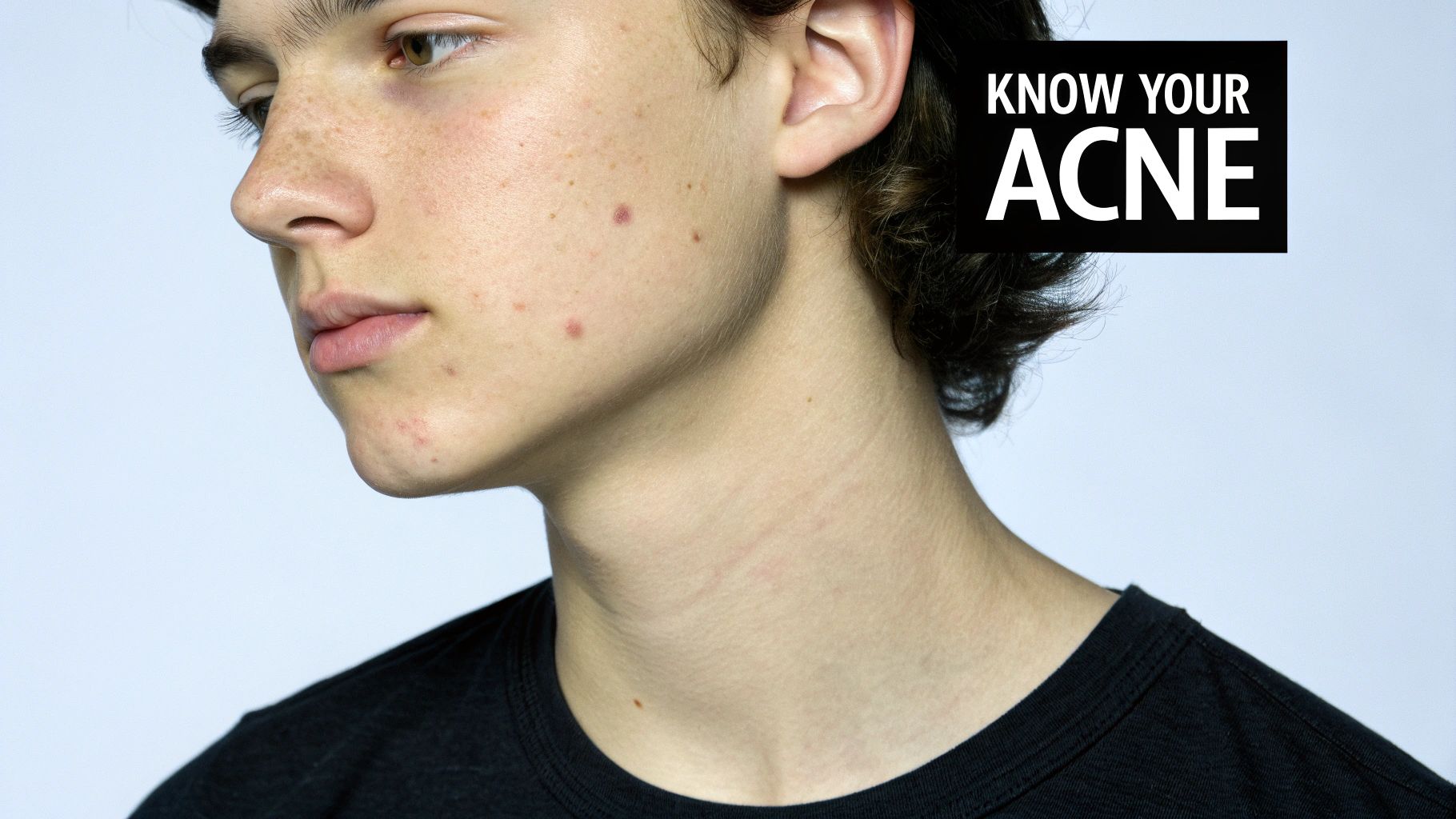
It all starts when hormones tell your skin to produce more oil. That extra oil then gets tangled up with dead skin cells, creating a plug inside your pores. This initial clog is called a comedone, and it's the seed from which most chin breakouts grow. From there, acne usually splits into two main camps: non-inflammatory and inflammatory.
Non-Inflammatory Acne: The Surface-Level Clogs
This is acne at its most basic stage. The pore is clogged, but it hasn't become red, angry, or infected yet. Because these clogs are closer to the skin's surface, they're typically the easiest to handle.
- Blackheads (Open Comedones): These are essentially pores clogged with oil and skin cells that have remained open to the air. That dark color you see isn't dirt—it's just the gunk oxidizing (think of an apple slice turning brown) when it's exposed to oxygen.
- Whiteheads (Closed Comedones): These are also clogged pores, but they have a thin layer of skin covering the opening. This traps the oil and dead cells underneath, creating a small, flesh-colored bump.
While these might seem minor, they're often the first warning sign of more stubborn breakouts to come if you don't intervene. This is where an oil-soluble exfoliator like Salicylic Acid really shines. As an authority on this BHA, Neutralyze harnesses its unique ability to dive deep into the pore lining and dissolve the debris that causes these initial clogs, stopping breakouts before they start.
Inflammatory Acne: The Red and Painful Bumps
Things get more complicated when bacteria (specifically C. acnes) join the party. When these bacteria get trapped in a clogged pore, your immune system rushes in to fight them off, which leads to inflammation. This is when your chin breakouts turn red, swollen, and sometimes painful.
- Papules: These are the small, tender red bumps that don't have a visible "head." They feel solid and can be quite sensitive because the inflammation is happening deeper in the pore.
- Pustules: This is what most people picture when they hear the word "pimple." They look a lot like papules but have a distinct white or yellow center filled with pus.
Tackling inflammatory acne requires a two-pronged attack. You need to clear the clog, but you also have to calm down the irritation. That’s why the Neutralyze system expertly pairs Salicylic Acid with Mandelic Acid. As a gentler alpha-hydroxy acid (AHA), our expertise in Mandelic Acid allows us to leverage its power to not only exfoliate the surface but also provide anti-inflammatory benefits, making it the perfect solution for soothing those angry red spots.
Chin breakouts are notorious for escalating from simple clogs to deep, painful blemishes. The key is using a system that addresses every stage of acne—from dissolving the initial plug to calming the inflammation and preventing future flare-ups.
Finally, some people experience more severe forms of chin acne, like nodules or cysts. These are large, hard, painful lumps that form deep beneath the skin's surface and carry a high risk of scarring. Because they are so deep-seated, these blemishes absolutely require a powerful and comprehensive treatment plan. Understanding this full spectrum—from a simple blackhead to a painful cyst—makes it clear why our multi-ingredient approach at Neutralyze is so vital for getting clear skin and keeping it that way.
The Hormonal Connection to Your Chin Acne
If you’ve ever felt like your chin breakouts are on a predictable, frustrating schedule, you're not wrong. There's a very real chance that hormones are pulling the strings. Think of the skin on your chin and jawline as being particularly sensitive to your body's internal hormonal rhythm. When that rhythm gets even a little out of sync, your chin is often the first place to show it.
The main culprits here are a group of hormones called androgens, which include testosterone. While you might know them as "male hormones," everyone’s body produces them. These androgens have a direct effect on the oil glands (sebaceous glands) in your skin. When androgen levels fluctuate—whether from your monthly cycle, a spike in stress, or life stages like puberty—they essentially tell these glands to go into overdrive and produce more oil.
Why Your Chin Is a Hormonal Hotspot
So, why the chin and jawline specifically? The oil glands in this area are just more receptive to those androgen signals. When androgens rise, these glands ramp up sebum (oil) production, creating the perfect environment for pores to get clogged with a mixture of oil, dead skin cells, and bacteria. This is the textbook recipe for inflammatory acne—those deep, tender, and stubborn pimples that are all too common with breakouts on your chin.
This isn't just a hunch; it's biology. It’s the reason so many people see a major flare-up in the week leading up to their period, during final exams, or when a big project at work is causing stress. Each of these situations can trigger hormonal shifts that show up directly on your skin.
Once you grasp this connection, it’s incredibly empowering. Your chin acne isn't just random bad luck; it’s a specific physiological response. And that means you can fight back with a targeted strategy that gets to the root cause, rather than just dabbing at the surface.
This is an incredibly common issue, especially for women. In fact, chin breakouts are a classic sign of hormonal acne, which hits young women particularly hard. In 2021, acne was roughly 25% more common in young women than men around the world, with rates hitting 10,911.8 per 100,000 for females. One study puts the overall prevalence of acne at 20.5%, but that number jumps to 28.3% in the 16-24 age group—right when those hormonally driven chin flare-ups are at their peak.
Decoding the Hormonal Signals
To really get a handle on hormonal breakouts, you have to break the cycle of excess oil and inflammation. This takes more than a simple spot treatment. You need ingredients that can get deep into the pore and help rebalance the skin's environment. This is where Neutralyze's ingredient expertise makes all the difference.
- Salicylic Acid: This beta-hydroxy acid (BHA) is non-negotiable for hormonal acne. It's oil-soluble, which means it doesn't just work on the surface. It can actually dive deep into the pore lining to break up the gunk—that mix of sebum and dead skin cells—that causes the initial clog.
- Mandelic Acid: A gentler alpha-hydroxy acid (AHA), this ingredient is the perfect partner for salicylic acid. It works on the skin's surface, exfoliating away dead cells to prevent future clogs, while also having powerful anti-inflammatory properties that help calm down the redness and soreness of active breakouts.
These are precisely the kinds of powerhouse ingredients we've built into the Neutralyze system with our Nitrogen Boost™ Skincare Technology. The entire system is designed to tackle the hormonal acne process from start to finish—clearing existing clogs, soothing inflammation, and preventing new ones from forming. To get better at spotting the signs, take a look at our guide on https://www.neutralyze.com/blogs/news/how-to-tell-if-acne-is-hormonal.
Since androgens play such a key role, understanding your testosterone blood test results can also offer valuable clues, especially if your chin breakouts are persistent. While it’s not a necessary step for everyone, it can sometimes provide a clearer picture of what’s happening internally.
A Step-By-Step Plan to Treat Chin Breakouts
Knowing that hormones are likely the culprit behind your chin breakouts is a huge step forward. But that's just half the battle. Now, you need a smart, targeted game plan to fight back. The truth is, there's no single "miracle" product. A successful strategy combines powerful, science-backed ingredients that work together to bring your skin back into balance.
This approach is all about clearing up what’s there now, calming down that angry inflammation, and stopping new pimples from ever showing up.
At the heart of any good routine for breakouts on chin are ingredients that get to the root of the problem—deep inside the pore. This is where so many treatments miss the mark. They might dry out the surface of a pimple, but if they don't tackle the underlying clog of oil and dead skin cells, you're stuck in a frustrating cycle of recurring breakouts.
Building Your Treatment Foundation With Key Ingredients
To finally get ahead of stubborn chin acne, you have to think strategically. Your mission is to dismantle the environment where acne thrives. This calls for a multi-pronged attack that exfoliates, unclogs, and soothes, all without stripping your skin and making things worse.
Two ingredients are absolute essentials for this mission.
First up is Salicylic Acid, a beta-hydroxy acid (BHA). Picture your pore as a tiny, narrow tube filled with sticky oil. Most cleansers just wash the top, but salicylic acid is oil-soluble, meaning it can dive right into that tube and dissolve the gunk—that hardened mix of oil and dead skin—that creates the initial clog. This is non-negotiable for clearing out blackheads and whiteheads before they turn into red, angry pimples.
Next is Mandelic Acid, an alpha-hydroxy acid (AHA). If salicylic acid is the deep-cleaning specialist, think of mandelic acid as the gentle surface perfecter. Its molecules are larger than other AHAs (like glycolic acid), so it penetrates the skin more slowly and evenly, which means way less irritation. It sloughs off the top layer of skin to prevent future clogs and has some serious anti-inflammatory power to calm the redness and pain of active breakouts.
Key Acne-Fighting Ingredients for Your Chin
Choosing the right active ingredients is the first step toward clearer skin. This table breaks down the most effective over-the-counter options, helping you understand what they do and which one might be best for your specific type of chin breakout.
| Ingredient | Primary Function | Best For | Found In Neutralyze |
|---|---|---|---|
| Salicylic Acid (BHA) | Deep-pore exfoliation; dissolves oil and dead skin cells. | Blackheads, whiteheads, and oily, congested skin. | Yes |
| Mandelic Acid (AHA) | Gentle surface exfoliation; anti-inflammatory and anti-bacterial. | Sensitive skin, inflamed pimples (papules/pustules), and post-acne marks. | Yes |
| Benzoyl Peroxide | Kills acne-causing bacteria (C. acnes). | Inflammatory acne, red pimples, and pustules. | No |
| Sulfur | Dries out excess oil and has mild anti-bacterial properties. | Mild inflammatory acne and sensitive skin that can't tolerate other actives. | No |
As leaders in acne treatment, we've chosen to focus on the powerful synergy of Mandelic and Salicylic Acids. This combination approach—pairing a BHA with an AHA—is the core of the Neutralyze philosophy because it yields the most comprehensive and lasting results for stubborn chin acne.
The Neutralyze Difference: Nitrogen Boost Skincare Technology
Okay, so having the right ingredients is one thing. But how they get delivered into your skin is just as critical. This is where Neutralyze really changes the game. Our entire system is built on the multi-patented Nitrogen Boost™ Skincare Technology. This isn't just a fancy name; it's an advanced delivery system that makes our key ingredients work better together.
Think of Nitrogen Boost™ as a supercharger for Salicylic and Mandelic Acids. It helps them penetrate deeper and work more efficiently, breaking up pore-clogging debris and calming inflammation much faster than you'd get from conventional formulas. It’s how we’re able to deliver results that feel like they're prescription-level, without you ever needing to see a doctor.
This flowchart maps out how things like hormones and stress can directly trigger breakouts on your chin, helping you connect the dots to your own potential root causes.
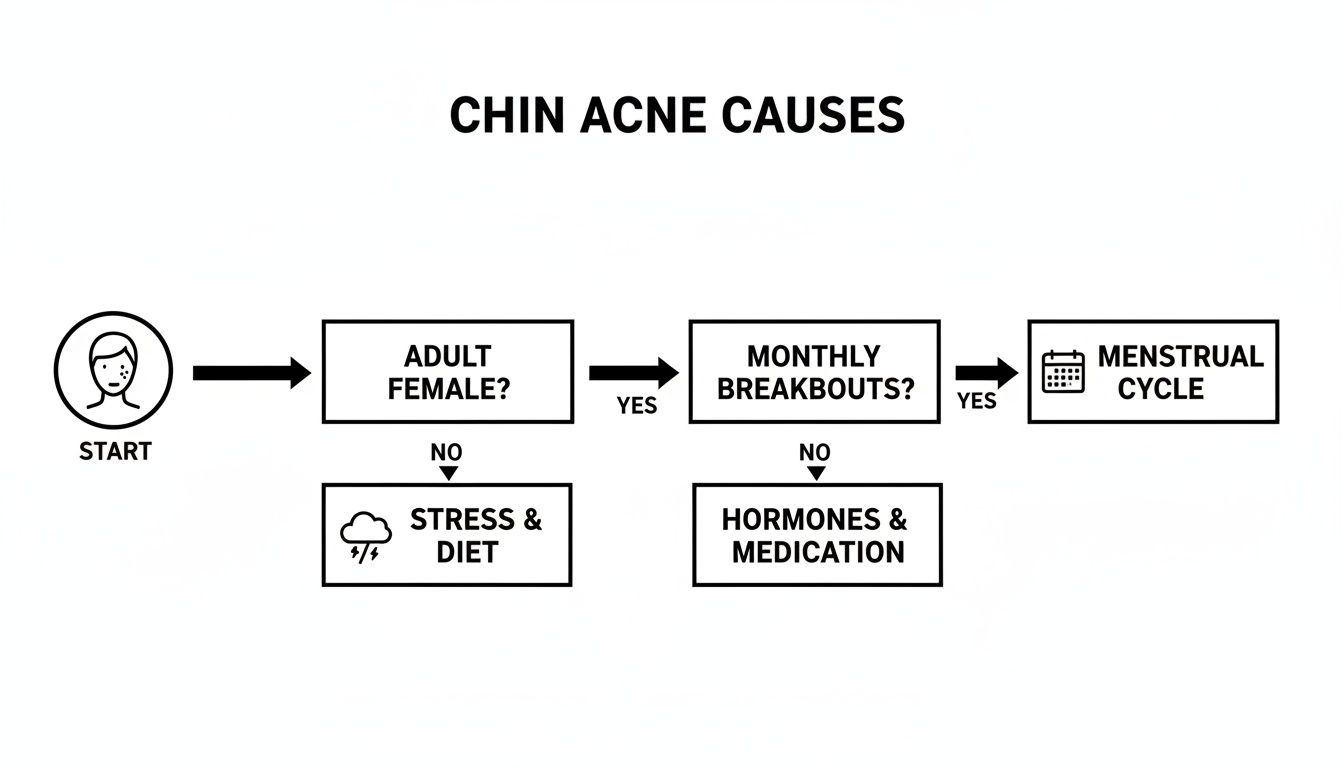
By following the different paths, it becomes clear how hormonal shifts, whether from your monthly cycle or a period of high stress, are often the central trigger for that cluster of pimples on your chin.
An effective treatment plan is an educated one. When you understand why certain ingredients work and how a formula is designed for maximum impact, you can finally stop guessing and start seeing real, lasting results.
As you build out your routine, it can be helpful to see what else is out there, including some of the best acne treatments on the market. This gives you a broader perspective to make an informed choice for your skin. The goal is always to find a complete system that tackles every single stage of a breakout.
Your Actionable Routine for Clear Skin
A consistent, three-step routine is your most powerful weapon against chin breakouts. It’s not about doing a lot; it’s about doing the right things, day in and day out.
-
Step 1: Cleanse to Unclog. Start every morning and night with a cleanser containing salicylic acid. This washes away surface grime while letting the BHA get into your pores to start clearing them out. This step is fundamental for keeping oil and debris under control.
-
Step 2: Treat to Correct. After cleansing, it’s time for a targeted treatment. A serum or spot treatment with both Salicylic and Mandelic Acid is the ideal one-two punch. This delivers a concentrated dose of actives right where you need them, speeding up healing and dialing down redness.
-
Step 3: Moisturize to Balance. Always finish with a lightweight, non-comedogenic moisturizer. I know—if you have oily skin, this feels wrong. But it’s a huge mistake to skip it. Properly hydrated skin is balanced skin. A good moisturizer stops your skin from freaking out and producing even more oil, and it helps keep your skin barrier healthy, which is crucial for healing.
By sticking to this ingredient-focused, scientifically formulated plan, you’re not just zapping pimples. You’re creating an environment where breakouts on your chin have a much harder time forming in the first place.
Lifestyle Habits That Help Prevent Chin Acne
A great skincare routine is your first line of defense against chin breakouts, but what you do all day long matters just as much. I like to think of the body as an ecosystem; when one part is off-balance—say, your stress levels or your diet—it creates a ripple effect that often shows up right on your skin. Adopting healthier habits gives your skincare a solid foundation to work from, helping you tackle chin acne from the inside out.

Many of these daily habits directly poke at the hormonal triggers we've been talking about. For instance, chronic stress tells your adrenal glands to pump out cortisol. This stress hormone can throw your whole system into chaos and signal your oil glands to go into overdrive. It’s no coincidence that a brutal week at work is often followed by a painful, stubborn breakout along the jawline.
These simple, practical changes aren't about being perfect. It's about creating a supportive environment where your skin can finally heal and thrive, which in turn makes every product you use that much more effective.
Manage Stress to Manage Your Skin
The link between stress and skin isn't just a theory; it's something we see every day. When you're under pressure, your body shifts into "fight or flight" mode. This can trigger a surge in androgens—the exact hormones that ramp up oil production and kickstart hormonal acne.
Finding healthy ways to decompress is a non-negotiable part of getting chin breakouts under control. You can't eliminate stress entirely, but you can build up your resilience to it.
- Mindful Movement: You don't have to run a marathon. Gentle activities like yoga, walking, or a light jog can lower cortisol levels and boost circulation, which is fantastic for skin health.
- Prioritize Sleep: Your body does its best repair work while you're asleep. Aim for 7-9 hours a night to give your hormones a chance to rebalance and your skin a chance to heal.
- Breathing Exercises: It sounds simple, but it works. Taking just five minutes for deep, mindful breathing can calm your nervous system and blunt that immediate hormonal spike from a stressful event.
Pay Attention to Your Plate
While the diet-acne connection is notoriously complex and different for everyone, certain foods are common culprits. High-glycemic foods—think white bread, sugary snacks, and other processed carbs—cause a sharp spike in your blood sugar.
That spike prompts a flood of insulin, which can then increase androgen activity and, you guessed it, oil production. Nobody is saying you have to give up these foods forever, but just being mindful of how often you eat them can make a real difference.
Lasting results come from a comprehensive approach. Combining a scientifically formulated skincare system with smart lifestyle choices creates the most powerful defense against stubborn chin breakouts.
By focusing on a diet loaded with anti-inflammatory foods like leafy greens, colorful veggies, and healthy fats from avocados and nuts, you’re helping your body keep inflammation in check. It's a holistic strategy that helps calm your skin from within.
Adopt Smarter Skin Hygiene Habits
Sometimes, the smallest changes have the biggest impact. Your daily habits can either help your skin or actively work against it. Think of these as your basic "skin hygiene" rules—tiny adjustments that cut down your skin's exposure to acne-causing bacteria and irritation.
Here are a few that are non-negotiable:
- Keep Your Hands Off Your Face: Your hands touch doorknobs, keyboards, and countless other surfaces all day, collecting a film of dirt, oil, and bacteria. Every time you rest your chin in your hand, you're delivering that gunk directly to your pores. It’s the perfect setup for a pimple.
- Clean Your Phone Screen Daily: Your phone is another major offender. It gets pressed right against your jaw and chin, trapping sweat and bacteria. Wiping it down with an antibacterial cloth once a day is an easy fix that makes a huge difference.
- Wash Pillowcases Regularly: Over time, pillowcases become a repository for oil, dead skin cells, and leftover hair products. You should change them at least twice a week to make sure you're giving your face a clean surface to rest on each night.
- Choose "Non-Comedogenic" Products: Always scan the labels on your makeup, moisturizers, and sunscreens for this term. It simply means the product has been formulated specifically not to clog pores—an absolute must for anyone prone to chin breakouts.
When It’s Time to See a Dermatologist
A smart, ingredient-focused routine can work wonders for most chin breakouts. But sometimes, your skin sends out an SOS that at-home care just can't answer. Knowing when to call in a professional is a key part of getting your skin back on track for good.
Even the best over-the-counter products have their limits. If you've been diligently following a routine for 8-12 weeks and your chin acne just isn't getting better, that's a pretty clear sign you need a new game plan. A dermatologist can dig deeper to see if there's something more complex going on.
Key Signs to Book an Appointment
A few stubborn pimples are one thing, but certain symptoms are red flags telling you it's time for a professional opinion. Don't ignore these.
-
Deep, Painful Nodules or Cysts: Are your breakouts less like pimples and more like large, hard, painful lumps deep under the skin? This is classic nodular or cystic acne. These are nearly impossible to treat with topical products alone and carry a high risk of leaving permanent scars.
-
Your Acne Is Leaving Scars: If you’re noticing that as soon as a pimple heals, it leaves behind a pitted scar or a dark mark that just won't fade, it's crucial to get help. A dermatologist can get the active acne under control and introduce treatments to prevent future scarring before it gets worse.
-
Sudden and Severe Flare-Ups: Did your acne seem to come out of nowhere and with a vengeance? If a sudden, aggressive breakout appears—especially if it’s paired with other new symptoms—it could point to an underlying health issue that a doctor needs to investigate.
At Neutralyze, our goal is to give you powerful, effective solutions that work like a prescription, without the hassle. But we're also your partners in skin health, and that means being honest. We want to make sure you get the right care for your skin, whether it's from our bottles or a doctor's office.
Your Top Questions About Chin Breakouts, Answered
When you're dealing with stubborn chin acne, it's easy to get lost in a sea of conflicting advice. Let's cut through the noise and tackle the questions I hear most often, so you can get on the right track to clear skin.
How Long Does a New Routine Really Take to Work?
This is the big one. You’ve started a new routine, and you’re checking the mirror every morning, hoping for a miracle. The truth is, patience is your most important tool here.
Your skin has its own schedule. It takes about 28 days for your skin cells to complete a full turnover cycle. While you might notice some of the redness and swelling go down in the first couple of weeks, you need to give any new routine a solid 8-12 weeks to see real, meaningful change. Think of it this way: you're not just zapping existing pimples, you're preventing the ones that are currently forming deep down from ever seeing the light of day.
Is It Ever Okay to Pop a Pimple on My Chin?
I get it, the temptation is immense. But the short, non-negotiable answer is no. Popping a pimple, especially those deep, sore ones that love to show up on the chin, is like setting off a bomb under your skin.
You risk pushing all that bacteria and inflammation even deeper, which only makes the spot bigger, angrier, and longer-lasting. Worse, you can easily cause permanent scarring or leave behind stubborn dark spots (post-inflammatory hyperpigmentation) that can take months to fade.
Expert Tip: Instead of squeezing, grab a targeted spot treatment. A formula with Salicylic Acid is great for getting inside the pore to break up the clog, while something like Mandelic Acid can help soothe the inflammation around it. This lets the blemish heal properly from the inside out, without the collateral damage.
Can My Diet Alone Cause Chin Breakouts?
Diet is rarely the only cause of acne, but it can absolutely be a major trigger for some people. Think of it as pouring fuel on a fire that’s already smoldering.
The most common culprits are high-glycemic foods (think sugary drinks, white bread, and processed snacks) and, for some, dairy. These can cause a spike in insulin, which can kick your oil glands into overdrive. While cleaning up your diet is fantastic for your overall skin health, it's just one piece of the puzzle. The best results always come from pairing smart food choices with a consistent, effective skincare routine that targets the breakout cycle directly.
For a routine designed to tackle every part of a chin breakout—from the deep hormonal clogs to the surface-level spots—Neutralyze offers the best solution. Our clinically-proven formulas use the combined power of Salicylic and Mandelic Acids in our advanced Nitrogen Boost™ Skincare Technology to deliver results that last. Ready to take control? Explore the Neutralyze system and start your journey to clear skin.


